
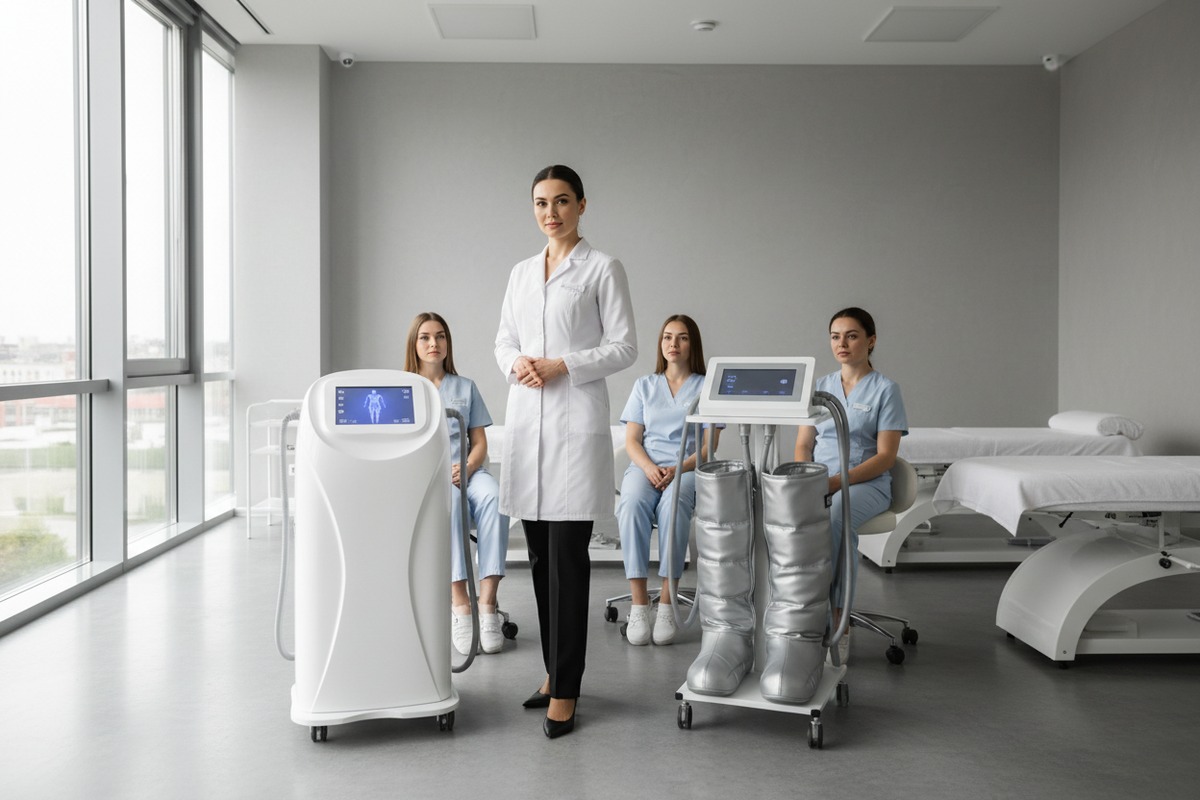
Every week, our production team receives calls from training centers struggling with the same dilemma. They want pressotherapy machines 1 that can handle hundreds of student sessions without breaking down. They need systems that look professional enough for their brand. The wrong choice wastes thousands of dollars and frustrates both instructors and learners.
For education purposes, split-type pressotherapy machines generally offer better longevity, easier maintenance, and simpler part replacement. However, integrated machines provide streamlined training experiences with preset protocols. Your choice depends on curriculum goals, budget constraints, space availability, and whether you prioritize versatility or simplicity in student instruction.
This guide breaks down the key factors that educators, spa academy owners, and training program directors must consider. We will examine durability, branding options, technical support needs, and shipping logistics to help you make a confident decision.
Which configuration will provide the longest lifespan for my student training sessions?
When we test machines on our factory floor, student-use simulation runs differ vastly from spa scenarios. Students learn by trial and error. They connect garments incorrectly. They adjust pressure settings repeatedly. This heavy use demands machines built for endurance.
Split-type pressotherapy machines typically last longer in educational settings because individual components can be replaced without discarding the entire system. When boots, sleeves, or controllers wear out, you swap only that part. Integrated machines require full-unit repairs, increasing downtime and cost over a three-to-five-year training program lifecycle.
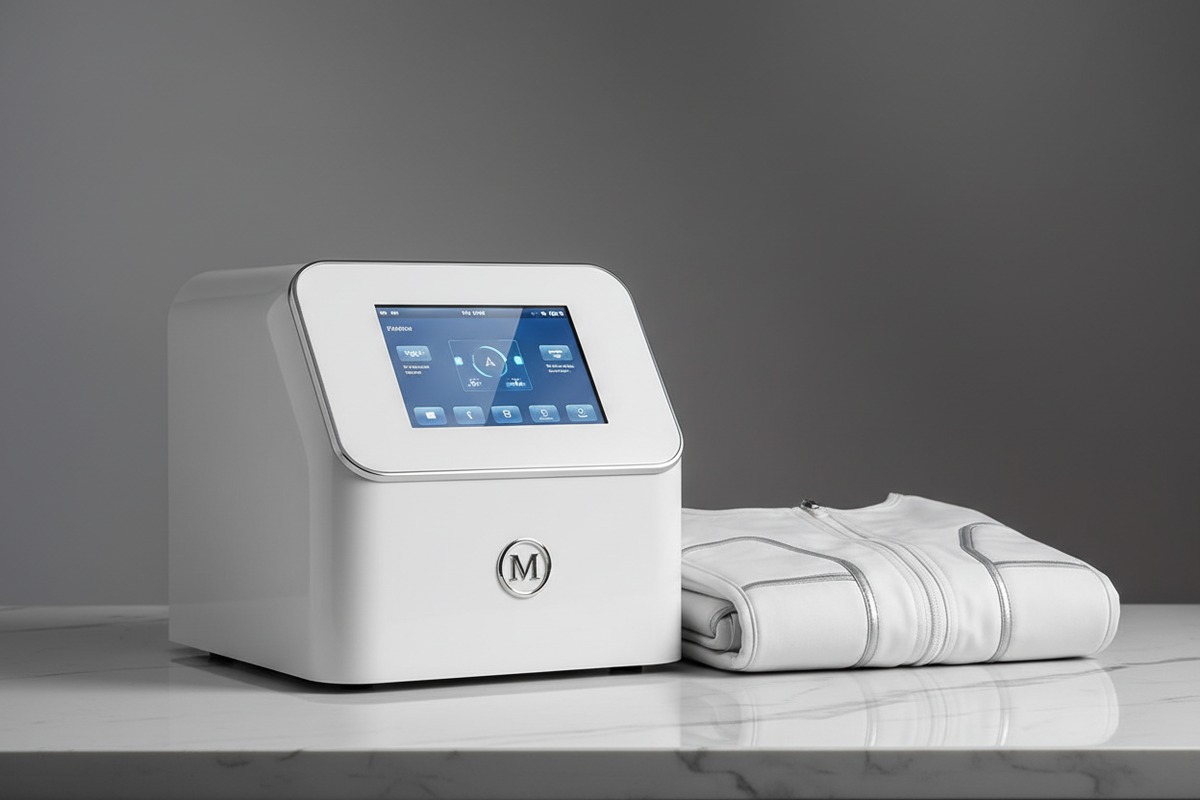
Understanding Wear Patterns in Training Environments
Training environments differ from commercial spas. Students connect and disconnect garments dozens of times per day. They experiment with pressure levels. They learn proper positioning through repeated practice. This frequency accelerates wear on connectors, hoses, and control interfaces.
Our engineering team tracks failure rates across both machine types. Split-type systems 2 show predictable wear at connection points. These parts cost between $15-50 to replace. Integrated systems, however, often fail at internal junctions where multiple technologies merge. Repairing these requires factory service or complete unit replacement.
Component Durability Comparison
| Component | Split-Type Lifespan | Integrated Lifespan | Replacement Ease |
|---|---|---|---|
| Compression boots 3 | 2-3 years | 2-3 years | Easy (split) vs. Moderate (integrated) |
| Air hoses | 3-4 years | 3-4 years | Easy (both) |
| Control unit | 5-7 years | 4-6 years | Easy (split) vs. Difficult (integrated) |
| Internal pump | 5-8 years | 4-6 years | Moderate (split) vs. Difficult (integrated) |
| LCD interface | 5-7 years | 5-7 years | Moderate (both) |
Material Quality Matters
Double-layered suit materials resist punctures and tears better than single-layer alternatives. When evaluating machines for education, check the garment construction. High-denier fabrics with reinforced seams handle student use better than lightweight materials designed for gentle spa environments.
Our quality control process 4 includes stress testing at 150% normal pressure levels. This reveals weak points before machines ship. For education buyers, we recommend requesting sample garments and testing them with aggressive handling before committing to bulk orders.
Session Volume Considerations
A typical spa runs 8-15 pressotherapy sessions daily. A training center with 20 students might run 40-60 sessions per day during intensive courses. This four-to-six times higher volume demands machines rated for commercial-plus durability. Split-type systems handle this better because worn components get replaced individually, keeping the core system operational.
How can I private-label these different designs to match my brand's high-end aesthetic?
Our design team works with brand owners daily to create custom appearances. The machine type you choose directly affects your branding options. Some configurations offer extensive customization. Others limit what you can change without major tooling investments.
Integrated machines typically offer more cohesive branding opportunities with single-panel customization, unified color schemes, and streamlined logos. Split-type systems require branding across multiple components—control units, garments, carrying cases—but allow greater flexibility in mix-and-match aesthetics. Budget approximately $500-2,000 for professional private-labeling depending on complexity.

Branding Surfaces and Options
Integrated machines present one main surface: the control unit housing. This makes branding straightforward. Your logo, colors, and design language appear on a single cohesive piece. The visual impact is immediate and professional.
Split-type systems require multi-surface thinking. The controller needs branding. Garments can feature embroidered or printed logos. Carrying cases and accessory bags offer additional brand touchpoints. This distributed approach costs more but creates a complete branded ecosystem.
Customization Cost Comparison
| Branding Element | Integrated Cost | Split-Type Cost | Lead Time |
|---|---|---|---|
| Logo placement (laser/print) | $200-400 | $300-600 | 2-3 weeks |
| Custom housing color | $800-1,500 | $400-800 | 4-6 weeks |
| Garment embroidery | N/A | $150-300 | 1-2 weeks |
| Custom packaging | $300-500 | $400-700 | 2-4 weeks |
| Interface skin/software | $500-1,000 | $500-1,000 | 3-5 weeks |
Design Language Considerations
High-end aesthetics communicate quality. When our clients target premium education markets, they focus on three elements: material finish, color consistency, and interface design. Matte finishes hide fingerprints better than glossy surfaces. Neutral colors (white, gray, black) project medical professionalism. Clean interface graphics reinforce brand sophistication.
MOQ Reality Check
Minimum order quantities affect branding feasibility. For full custom housing molds, most manufacturers require 500+ units. Color changes on existing molds typically require 100-200 unit minimums. Logo placement and packaging customization often start at 50 units. Education buyers purchasing 5-20 machines should focus on lower-MOQ options like logo placement and custom packaging rather than housing modifications.
Building Brand Consistency
Consider your full product ecosystem. If you already sell other beauty equipment, your pressotherapy machines should match that visual language. We help clients create brand guidelines that translate across product categories. This consistency builds recognition and perceived value in competitive education markets.
Will choosing a split-type model simplify my technical support and part replacement process?
Supporting machines in educational settings presents unique challenges. When equipment fails mid-lesson, instructors need fast solutions. Our technical support team has identified clear patterns in how machine types affect troubleshooting speed and part availability.
Yes, split-type models generally simplify technical support because problems isolate to specific components. Technicians diagnose issues faster when they can test individual parts separately. Replacement parts ship quickly and install without specialized tools. Integrated machines require more complex diagnostics and often need factory-level repairs for internal component failures.

Diagnostic Simplicity
When a split-type system malfunctions, troubleshooting follows a logical path. Does the controller power on? Test the power supply. Do garments inflate? Test the hose connections. Does compression sequence correctly? Test individual chamber valves. This modular approach allows non-technical staff to identify problems quickly.
Integrated machines complicate diagnostics. When pressotherapy, EMS, and infrared share internal components, failures can cascade. A power supply issue might affect all functions. A software glitch might disable specific features while others work. Pinpointing root causes requires deeper technical knowledge.
Part Replacement Workflow
| Scenario | Split-Type Resolution | Integrated Resolution | Downtime |
|---|---|---|---|
| Torn boot | Replace boot (in-house) | Replace boot (in-house) | 5 minutes |
| Faulty hose | Replace hose (in-house) | Replace hose (in-house) | 10 minutes |
| Controller error | Swap controller (in-house) | Factory diagnosis required | 1-3 weeks |
| Pump failure | Replace pump module (technician) | Full unit repair (factory) | 2-4 weeks |
| Software bug | Firmware update (remote) | Firmware update (remote) | 30 minutes |
Spare Parts Inventory Strategy
Education centers should stock common replacement parts. For split-type systems, this means extra boots, sleeves, hoses, and basic connector fittings. A $200-400 spare parts kit covers most common failures. For integrated systems, stocking meaningful spare parts is harder because failures often involve non-replaceable internal components.
Remote Support Capabilities
Modern machines include remote diagnostic ports. When problems arise, manufacturers can connect remotely, download error logs, and guide local staff through repairs. Both machine types support this technology. However, the repair actions differ. Split-type issues often resolve with part swaps guided remotely. Integrated issues may still require factory return even after remote diagnosis.
Training Your Technical Staff
Consider who will maintain your machines. Split-type systems allow basic staff training covering connection checks, seal replacements, and hose swaps. Integrated systems demand more technical training or reliance on external service contracts. For education centers without dedicated technicians, split-type machines reduce ongoing support complexity.
Which machine design is most cost-effective for me to ship internationally without compromising on packaging safety?
Our logistics team ships thousands of pressotherapy units annually to over 40 countries. Shipping costs depend heavily on machine type, packaging requirements, and fragility considerations. The wrong packaging approach damages machines or inflates freight costs unnecessarily.
Split-type machines typically cost 20-35% less to ship internationally because components pack efficiently into smaller, lighter boxes. They also survive transit better because damage to one component does not ruin the entire system. Integrated machines require larger, heavier protective packaging and carry higher damage risk during handling, increasing total landed cost.

Dimensional Weight Calculations
International freight charges use dimensional weight 6 when packages are large but light. Integrated machines often trigger dimensional weight penalties because their bulky housings require oversized boxes with extensive padding. Split-type components pack into multiple smaller boxes that optimize dimensional weight ratios.
Packaging Comparison by Machine Type
| Factor | Split-Type | Integrated | Cost Impact |
|---|---|---|---|
| Average package weight | 8-12 kg | 15-25 kg | Higher freight for integrated |
| Package dimensions | Multiple small boxes | One large box | Dimensional penalties for integrated |
| Padding requirements | Moderate | Heavy | Material cost higher for integrated |
| Fragility risk | Lower (distributed) | Higher (concentrated) | Insurance costs differ |
| Customs complexity | Multiple line items | Single line item | Paperwork varies |
Damage Risk Assessment
When integrated machines suffer transit damage, the entire unit may become unusable. A cracked housing, bent internal frame, or dislodged component affects the complete system. Insurance claims involve full unit replacement costs.
Split-type damage typically affects individual components. A crushed boot ships separately from a controller. Damage to one box does not destroy the other shipment contents. Replacement costs and insurance claims stay proportionally smaller.
Packaging Best Practices
We recommend double-wall corrugated boxes 7 for all components. Foam inserts should cradle control units with at least 50mm clearance on all sides. Garments can pack in standard poly bags with silica gel for moisture control. Include handling instruction labels in the destination language.
For integrated machines, custom foam cradles specific to the housing shape prevent shifting during transit. Corner protectors guard against drop damage. "Fragile" and "This Side Up" markings should appear on all visible surfaces.
Total Landed Cost Calculation
Consider shipping as part of your total machine cost. A split-type system costing $800 FOB might land at $950-1,050 including freight, duties, and local delivery. An integrated system costing $1,200 FOB might land at $1,450-1,600 with its higher shipping requirements. The percentage difference narrows at higher price points but remains significant for education buyers purchasing multiple units.
Insurance Considerations
Shipping insurance 8 typically runs 1-3% of declared value. For fragile integrated units, insurers may require higher premiums or impose packing standards. Split-type shipments often qualify for standard rates because damage risk distributes across multiple packages rather than concentrating in one vulnerable unit.
Conclusion
Choosing between integrated and split-type pressotherapy machines requires balancing durability, branding goals, support needs, and shipping logistics. For most education programs, split-type systems offer practical advantages in longevity, maintenance, and cost-effectiveness. Evaluate your specific curriculum requirements and budget constraints to make the right decision for your training center.
Footnotes
1. Provides a comprehensive, medically reviewed explanation of pressotherapy machines and their function. ↩︎
2. Describes pressotherapy machines with modular components, aligning with the concept of split-type systems. ↩︎
3. Provides a comprehensive guide to compression boots, including their benefits and usage. ↩︎
4. Replaced with an authoritative Wikipedia article defining and explaining the quality control process. ↩︎
5. Illustrates an integrated pressotherapy system combining multiple functions like EMS and infrared. ↩︎
6. Provides a comprehensive definition and explanation of dimensional weight in freight transport. ↩︎
7. Explains the structure and uses of corrugated fiberboard, a common material for shipping boxes. ↩︎
8. Defines shipping insurance and explains its purpose in protecting goods during transit. ↩︎

 English
 Español de México
 Deutsch
 Français
 العربية
 Русский
