
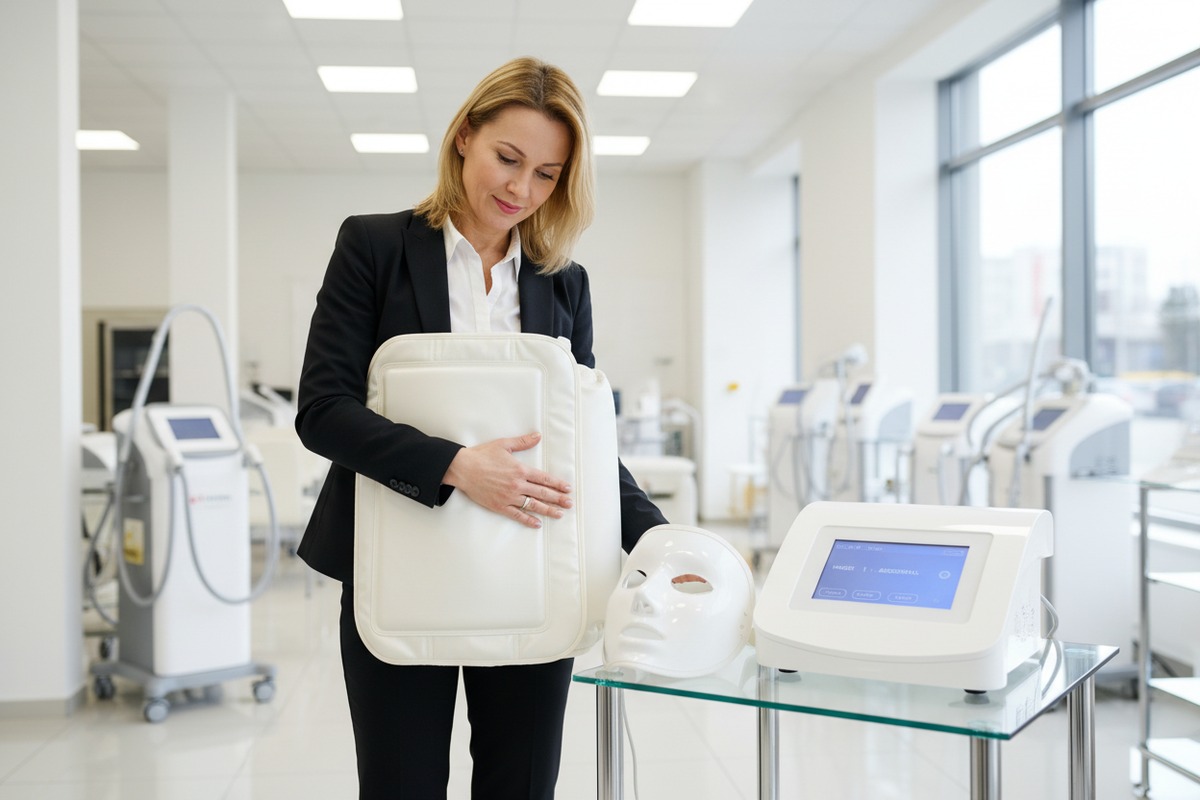
Have you ever received complaints from your salon clients about discomfort during pressotherapy sessions 1? Our production team has seen this problem countless times—attachments that look great on paper but fail the comfort test on real skin. The issue often traces back to one thing: not asking the right questions before placing an order.
To verify pressotherapy eye and abdominal attachment comfort, ask suppliers about material composition, hypoallergenic certifications, air chamber count, pressure distribution patterns, ergonomic design features, and request physical samples for client testing before committing to bulk orders.
The following guide walks you through exactly what to ask and how to evaluate supplier responses. Each section targets a specific comfort concern, from material softness to long-term durability.
Getting the material question right is where many purchasing managers stumble. Our engineers have spent years testing different fabric combinations for pressotherapy garments. The wrong material choice can turn a relaxing treatment into an irritating experience for your clients.
Request detailed material specifications including fabric composition (PU, nylon, polypropylene TNT), hypoallergenic certification, breathability ratings, and waterproof properties. Ask for material samples to conduct touch tests and check for any rough seams or edges that could cause skin irritation.

Understanding Material Types and Their Comfort Properties
Different materials serve different purposes in pressotherapy attachments. Here is what you need to know about the common options:
| Material Type | Comfort Level | Durability | Ease of Cleaning | Best Use Case |
|---|---|---|---|---|
| PU (Polyurethane) 2 | High | Medium-High | Easy (waterproof) | Professional salons |
| Nylon Fabric | Medium-High | High | Easy | High-volume clinics |
| Polypropylene TNT | High | Medium | Moderate | Disposable/single-use |
| Elastic Blends | High | Medium | Moderate | Adjustable fits |
According to industry findings, the material of pressotherapy attachments made from PU material is easy to clean, soft and smooth, waterproof, and breathable with multi-segment design.
Key Questions to Ask Your Supplier
Start with these specific material-related questions:
- What is the exact fabric composition of the eye and abdominal attachments?
- Do you have hypoallergenic certifications 3 for the materials used?
- What is the breathability rating of the attachment fabric?
- Are the inner linings smooth enough to prevent chafing during extended sessions?
- Can you provide a material sample for tactile testing?
Quality materials made from high-quality nylon fabric are comfortable, breathable, easy to clean, and durable for long-term use. This combination matters because your clients will be wearing these attachments for 30-45 minutes per session.
The Double-Layer Construction Advantage
Quality garments made from PU material are easy to clean, with a double layer for added durability, and connectors designed for ease of use. This double-layer approach provides a soft inner surface against the skin while maintaining structural integrity on the outer layer.
When evaluating samples, run your fingers along all seams. Any rough edges or hard plastic components that contact skin directly will cause problems during treatments. Our quality control team rejects attachments if we can feel any seam ridges that exceed 1mm in height.
What technical details should I request to ensure the abdominal wrap provides even pressure without causing my clients discomfort?
The abdominal area presents unique challenges for pressotherapy. Unlike legs or arms, the abdomen has varying contours and sensitivity levels. Our testing facility processes dozens of abdominal wrap designs each year, and pressure distribution is the number one factor that separates good designs from problematic ones.
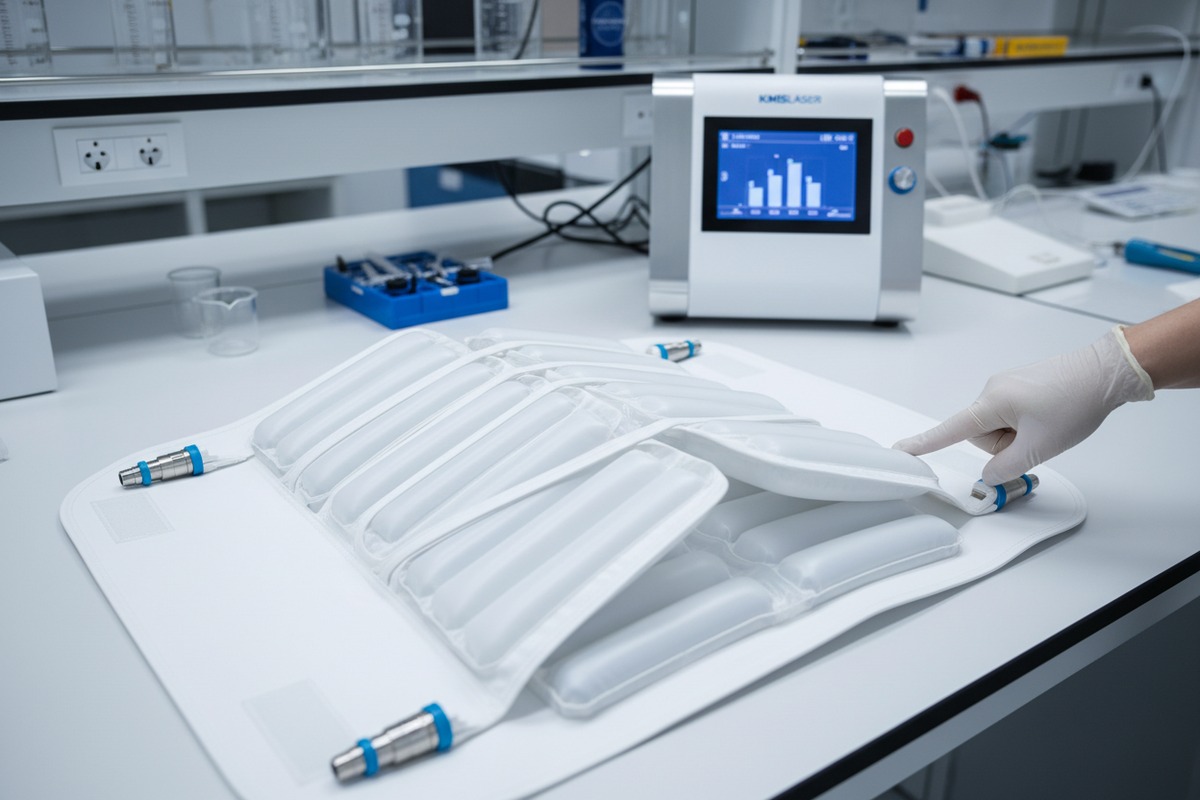
Request information on air chamber count (ideally 6-8 chambers for abdominal wraps), inflation sequence patterns (sequential or peristaltic), pressure range specifications (20-220 mmHg typical), and overlapping chamber systems that prevent pressure gaps or concentration points.
Pressure Distribution Fundamentals
Pressotherapy treatment involves the application of controlled pressure to different parts of the body using inflatable garments connected to a sophisticated device that inflates and deflates them in a specific sequence, creating a gentle wave-like massage effect that stimulates the lymphatic vessels.
For abdominal attachments specifically, the chamber count and layout matter tremendously:
| Chamber Count | Pressure Coverage | Comfort Rating | Best Application |
|---|---|---|---|
| 4 chambers | Basic coverage | Medium | Budget systems |
| 6 chambers | Good coverage | High | Standard professional |
| 8 chambers | Excellent coverage | Very High | Premium treatments |
| 12+ chambers | Full coverage | Highest | Clinical-grade systems |
Sequential vs. Peristaltic Compression
Ask your supplier which compression pattern their abdominal attachments use:
Sequential compression involves applying pressure sequentially from the distal to proximal parts, starting at the extremities and gradually moving upward. Peristaltic compression 5 applies pressure in a wave-like motion, creating a pumping effect that stimulates lymphatic flow and aids in toxin removal.
For abdominal treatments, peristaltic patterns often feel more comfortable because they mimic natural digestive movements. However, sequential patterns may work better for lymphatic drainage 6 goals.
Pressure Range Specifications
Professional devices generate pressure in the range of 20-220 mmHg. For abdominal applications, you want a system that allows fine-tuned adjustments within this range. The abdomen is more sensitive than the legs, so clients typically prefer lower pressure settings (30-80 mmHg) compared to leg treatments.
Ask these specific questions:
- What is the minimum and maximum pressure range for the abdominal attachment?
- How many incremental pressure adjustments are available?
- Does the system allow different pressure settings for different chambers?
- What is the inflation/deflation cycle timing?
Thanks to intelligent gradient function, interval, hold, setting individual pressure for each chamber in the cuff and the possibility of programming treatment algorithms, advanced devices allow you to adjust the parameters to the needs of each patient.
Preventing Common Abdominal Discomfort Issues
Against the abdomen, care should be aimed so that the abdominal airbag's inflatable parts target the abdomen and the air bag positioned down as far as possible, snapping into abdominal position, to prevent the air bag from direct compression of the heart, causing discomfort to the customer.
This is a critical safety and comfort point. Make sure your supplier can explain how their abdominal attachment design prevents upward pressure migration toward the chest cavity.
How do I evaluate if the eye attachment design is ergonomic enough to fit different face shapes comfortably?
Eye attachments require the most delicate engineering of any pressotherapy accessory. The periorbital area 7 is extremely sensitive, and a poor fit can cause discomfort, ineffective treatment, or even client anxiety. Our R&D team approaches eye attachment design with extra caution because mistakes here are immediately noticeable.
Evaluate eye attachment ergonomics by checking for adjustable elastic bands, 180-degree opening flexibility, cushioned eye padding, pressure customization options, and multiple size offerings. Request supplier data on face shape compatibility testing and ask about pressure limits specific to the orbital area.

Face Shape Compatibility Features
Thanks to ergonomic design and opening up to 180 degrees, eye massage glasses fit perfectly to any face shape, ensuring a comfortable and effective massage experience.
The best eye attachments include these adjustability features:
| Feature | Purpose | Comfort Impact |
|---|---|---|
| Adjustable elastic band | Fits various head sizes | High |
| 180° opening design | Accommodates different nose bridges | High |
| Cushioned eye padding | Protects delicate orbital area | Critical |
| Temple contour design | Fits cheekbone variations | Medium |
| Foldable construction | Easy storage and portability | Low (convenience) |
Pressure Considerations for the Eye Area
The eye area cannot tolerate the same pressure levels as the abdomen or legs. Acupressure around the eyes is done by means of air pressure, providing a very gentle and delicate pressure.
Ask your supplier:
- What is the maximum pressure limit for the eye attachment?
- Are there safety cut-offs to prevent excessive orbital pressure?
- How does the pressure compare between temple and direct eye coverage zones?
- Can pressure be adjusted separately for different facial zones?
Multi-Function Eye Attachment Considerations
Many modern eye attachments combine multiple comfort technologies. Quality eye massagers feature rechargeable battery and foldable design, with heated massaging technology combined with innovative intelligent air pressure system providing a pleasant and therapeutic experience.
If your supplier offers heated eye attachments, verify:
- Temperature range settings (typically 38-42°C for comfort)
- Auto-shutoff features for safety
- Heat distribution evenness
- Combined heat and pressure timing coordination
Practical Fitting Evaluation
When you receive samples, test them on at least 5 different face shapes:
- Narrow/long faces
- Wide/round faces
- Prominent cheekbones
- Deep-set eyes
- Prominent brow ridges
The adjustable elastic band and five predefined massage modes allow for the customization of the intensity and type of massage according to individual preferences, providing relief tailored to specific needs.
Document which face types experience pressure points or gaps. This information helps you negotiate design modifications with your supplier or choose between competing products.
What should I ask my supplier to confirm the attachments stay flexible and comfortable after repeated professional use?
Durability testing is where our production line differs from competitors who cut corners. We run each attachment design through 500+ compression cycles before approving it for mass production. The question is not whether attachments work on day one—it is whether they still feel premium after three months of daily salon use.
Ask suppliers about material fatigue testing data, warranty terms on attachments (minimum 2 years for professional use), reinforced seam construction, air chamber integrity testing cycles, and replacement part availability. Request information on expected lifespan based on daily professional usage scenarios.

Durability Testing Standards
Built to meet rigorous professional standards, pressotherapy machines incorporate multiple safety features and durability elements with construction using medical-grade materials 8 that withstand repeated use while maintaining hygienic standards. The garments are designed with reinforced seams and durable air chambers that maintain their integrity over numerous treatment cycles.
Ask your supplier to provide:
- Number of compression cycles tested before failure
- Material degradation testing results (elasticity retention %)
- Seam strength testing data
- Air chamber leak rate over time
Warranty and Replacement Considerations
Quality devices come with warranty of 2 years for the device, manufacturer's, international, with service support available.
| Warranty Component | Minimum Acceptable | Preferred Standard |
|---|---|---|
| Device warranty | 1 year | 2-3 years |
| Attachment warranty | 6 months | 12 months |
| Air chamber coverage | 3 months | 6 months |
| Seam/zipper coverage | 3 months | 6 months |
| Replacement part lead time | 2 weeks | 1 week or less |
Maintenance and Cleaning Impact on Longevity
Professional use means daily cleaning. Ask how cleaning affects material integrity:
Crafted from special material, air suits are a testament to durability and convenience with unique fabric that ensures longevity and simplifies the cleaning process, making maintenance a breeze.
Verify with your supplier:
- Recommended cleaning agents and methods
- Maximum cleaning temperature tolerance
- Expected lifespan with daily professional cleaning
- Material warranty coverage when following recommended care
Construction Quality Indicators
Look for these specific durability features:
Zipper Quality: Full length, high-quality zipper for quick and easy dressing/undressing and changing size indicates professional-grade construction.
Connector Design: Quick-connect fittings reduce wear and tear. Look for durable materials, easy cleaning, a variety of sizes, and quick-connect fittings to reduce downtime between patients.
Air Bag Independence: 24 air bags that are independent and easy to change means if one chamber fails, you can replace it without discarding the entire attachment.
Professional Use Stress Points
Based on our factory experience, these areas fail first under heavy professional use:
- Tube connection points (flexing fatigue)
- Velcro closures (adhesive degradation)
- Elastic waistbands (stretch loss)
- Zipper teeth (metal fatigue)
- Air chamber seams (weld separation)
Ask your supplier specifically about reinforcement measures at each stress point.
Conclusion
Asking the right questions before ordering pressotherapy attachments saves you money, protects your reputation, and keeps your clients coming back. Focus on material composition, pressure distribution, ergonomic design, and long-term durability. Request samples, run your own tests, and never accept vague answers from suppliers who cannot provide specific technical data.
Footnotes
1. Explains what pressotherapy is and its benefits. ↩︎
2. Replaced with the Wikipedia page for Polyurethane, providing a comprehensive definition and properties. ↩︎
3. Replaced with the Asthma and Allergy Foundation of America’s certification program page, an authoritative source for hypoallergenic standards and certifications. ↩︎
4. Replaced with the Wikipedia page for Double Cloth, which describes a type of double-layer fabric construction. ↩︎
5. Describes peristaltic compression in the context of dynamic compression therapy. ↩︎
6. Defines lymphatic drainage and its purpose in medical contexts. ↩︎
7. Replaced with the Wikipedia page for Orbit (anatomy), offering a comprehensive anatomical definition. ↩︎
8. Defines medical-grade materials and relevant standards for medical applications. ↩︎

 English
 Español de México
 Deutsch
 Français
 العربية
 Русский
