

Every week, our production team ships pressotherapy equipment 1 to salons in the US, Canada, and Europe. One question keeps coming up during buyer calls: “Can I just use a home-use machine for my spa clients?” The problem is clear. Salon owners want to save money. But the wrong machine leads to complaints, refunds, and lost clients Electrical muscle stimulation (EMS) 2. The stakes are high when your business reputation depends on treatment results.
Professional pressotherapy machines differ from home devices in compression power, chamber count, build durability, and programming features. Professional models reach 120–240 mmHg pressure, use 20–48 air chambers, withstand daily multi-client use, and offer advanced customization. Home units limit pressure to 20–80 mmHg with fewer chambers and simpler presets for safe personal use.
This guide breaks down each key difference. You will learn what makes a machine salon-ready versus home-friendly. By the end, you can make the right choice for your business needs.
How does the compression power of a professional system differ from my home-use options?
Our engineers test every unit before it leaves the factory. During calibration, we measure how much pressure each machine can deliver consistently. Many buyers assume all pressotherapy machines do the same thing. They don't. Pressure power is the core factor that separates salon-grade equipment from home devices. Too little pressure fails to move lymph. Too much pressure on untrained hands creates risks.
Professional pressotherapy systems deliver adjustable pressure up to 120–240 mmHg, while home devices typically operate between 20–80 mmHg. Higher pressure allows professionals to provide intensive lymphatic drainage treatments for edema, cellulite, and post-surgical recovery. Home units use lower, safer presets to prevent misuse by untrained users.

Why Pressure Matters for Treatment Results
Pressure is measured in millimeters of mercury (mmHg) 3. This number tells you how hard the air chambers squeeze the body. Higher pressure creates stronger compression waves. These waves push lymph fluid through the lymphatic vessels 4 more effectively.
For medical-grade treatments like lymphedema management 5, practitioners need pressure above 100 mmHg. Aesthetic treatments for cellulite also benefit from higher intensity. Home users doing maintenance sessions need much less.
Professional vs. Home Pressure Ranges
| Feature | Home Pressotherapy | Professional Pressotherapy |
|---|---|---|
| Pressure Range | 20–80 mmHg | 120–240 mmHg |
| Adjustability | Limited presets | Fully adjustable per chamber |
| Target Users | Self-care at home | Trained therapists in clinics |
| Safety Controls | Fixed limits | Manual override available |
| Treatment Intensity | Gentle maintenance | Intensive therapeutic |
How Higher Pressure Supports Better Outcomes
Professional machines let therapists set pressure for each body zone. Legs may need 200 mmHg. The abdomen stays lower around 40 mmHg for safety. This precision comes from having a wider pressure range and individual chamber controls.
Home units lock users into preset programs. This prevents injury but limits results. For salon clients who pay for real improvement, preset-only machines fall short.
The Risk of Underpowered Equipment in Commercial Settings
When our sales team talks to distributors in the US market, they share horror stories. Some salon owners bought cheap home-grade machines to save money. Clients complained results were weak. Treatment times stretched too long. Staff got frustrated. The machines broke within months from overuse.
Professional equipment costs more upfront. But it delivers the pressure needed for visible results and survives heavy daily use.
Why do I need more air chambers in a professional pressotherapy machine for my brand?
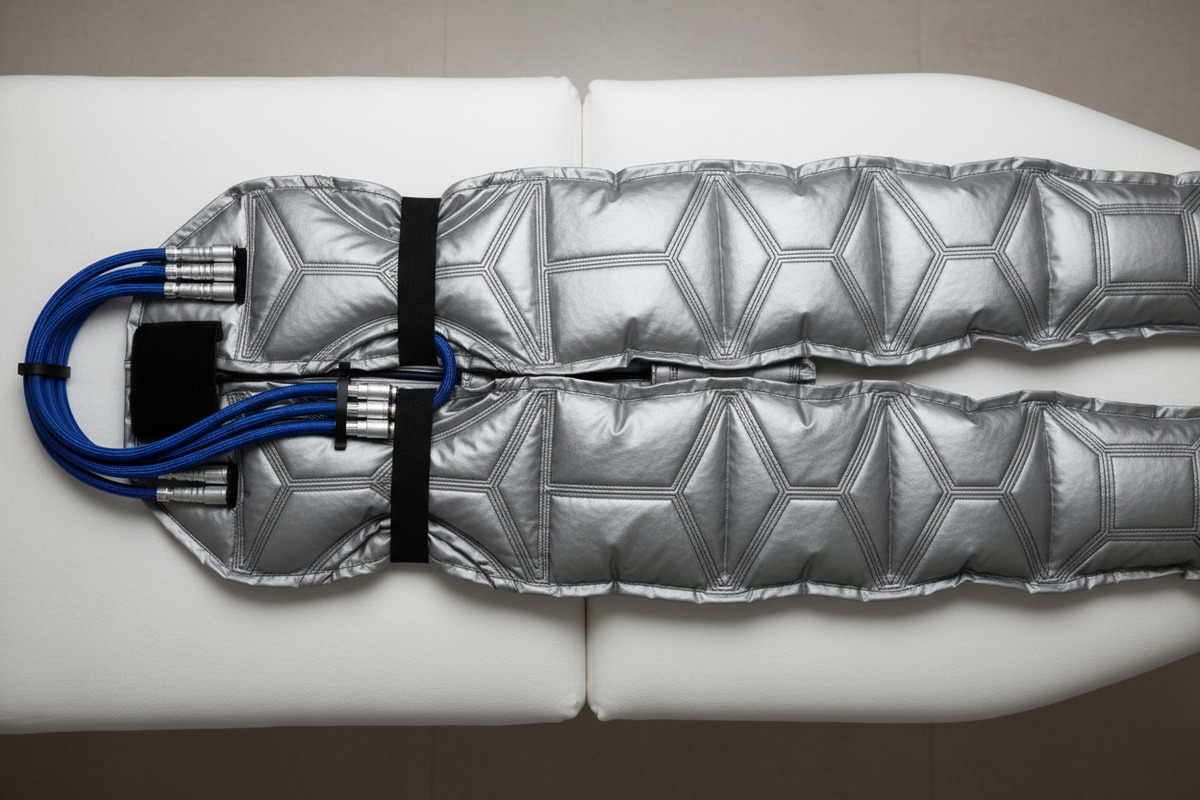
When we design compression suits for our professional models, chamber count is a top priority. More chambers mean smoother compression waves. This creates a massage that feels natural and moves lymph effectively. Home machines cut costs by using fewer chambers. That works for basic relaxation but fails for professional treatment protocols 7.
Professional pressotherapy machines feature 20–48 air chambers, while home units typically have 4–8. More chambers provide finer sequential compression, better pressure distribution, and enhanced lymphatic drainage. For brand owners serving discerning salon clients, higher chamber counts deliver the premium results that justify treatment prices.
How Chamber Count Affects Treatment Quality
Each chamber in a pressotherapy suit inflates and deflates in sequence. This creates a wave that pushes fluid toward the heart. With more chambers, the wave moves smoothly. With fewer chambers, the massage feels choppy and skips sections.
Think of it like a conveyor belt. A belt with many small rollers moves items smoothly. A belt with few large rollers creates jerky motion. Your clients feel this difference during treatment.
Chamber Count Comparison Table
| Chamber Count | Equipment Type | Treatment Quality | Best For |
|---|---|---|---|
| 4–6 chambers | Basic home use | Choppy compression | Leg-only relaxation |
| 8–12 chambers | Advanced home/entry salon | Moderate smoothness | Light maintenance |
| 20–24 chambers | Professional salon | Smooth sequential waves | Full aesthetic treatments |
| 32–48 chambers | Premium professional | Ultra-smooth coverage | Medical-grade protocols |
Individual Chamber Control: A Professional Necessity
Professional machines let therapists turn individual chambers on or off. They can also set different pressure levels for each chamber. This matters when treating clients with:
- Varicose veins in specific areas
- Post-surgical swelling in localized zones
- Uneven fluid retention patterns
Home machines lack this control. They inflate all chambers at the same pressure. This one-size-fits-all approach limits treatment precision.
Why Chamber Quality Matters as Much as Quantity
At our facility, we build chambers from double-layered PU material. This prevents leaks and extends suit life. Cheap home machines use single-layer chambers that tear easily. When a chamber fails, the whole suit loses effectiveness.
For salon owners buying equipment to build their brand, chamber durability determines long-term ROI. A 20-chamber suit that lasts years beats a 24-chamber suit that fails in months.
The Business Case for High Chamber Counts
Clients in the US and European markets expect premium experiences. They compare spa treatments to what they see online. When a competitor offers 24-chamber full-body coverage and you offer 6-chamber leg-only treatment, they notice. High chamber counts help justify premium pricing and attract repeat clients.
Will a home-grade device withstand the continuous daily operation my salon customers expect?
Our quality control team sees the damage when home machines come back for repair. Burned compressors. Torn suits. Failed connectors. The root cause is always the same. Home machines are built for occasional use, not all-day operation. Running them at salon pace destroys them fast.
Home-grade pressotherapy devices are not built for continuous commercial use and will fail under salon workloads. Professional machines feature heavy-duty compressors, metal casings, double-layered suits, and robust air tubing designed for multi-client daily operation. Investing in commercial-grade equipment protects your business from downtime and repair costs.

Understanding Duty Cycle and Workload
Every machine has a duty cycle 9. This is how long it can run before needing rest. Home machines assume 2–4 sessions per week, maybe 30–45 minutes each. That's under 3 hours weekly.
A busy salon runs 8–12 sessions daily, 6 days a week. That's 40+ hours weekly. Home machines operating at this pace overheat. Compressors burn out. Air tubing cracks. Suits wear through in weeks.
Build Quality Differences: Home vs. Professional
| Component | Home-Grade | Professional-Grade |
|---|---|---|
| Machine Casing | Plastic housing | Metal body construction |
| Compressor | Single, lightweight | Single or dual, heavy-duty |
| Air Tubing | Thin, fixed mount | Thick, elastic, reinforced |
| Suit Material | Single-layer fabric | Double-layer PU or nylon |
| Connector Type | Removable, fragile | Stationary, durable |
| Warranty | 6–12 months | 24–36 months |
Why Multi-Compressor Systems Matter
Entry-level professional machines use one compressor. High-end units use two or more. Multi-compressor systems pump air more evenly across all chambers. They also share workload, reducing strain on each component.
When our team exports to high-volume spas, we recommend dual-compressor models. These units handle back-to-back sessions without overheating.
Suit Durability: A Hidden Cost Factor
Suits take the most abuse in daily salon use. Clients with different body types stretch the fabric. Cleaning chemicals break down cheap materials. Sweat degrades single-layer construction.
Professional suits use double-layered elastic material. The inner layer handles compression. The outer layer protects against wear. Our suits include reinforced seams and easy-clean PU coating. These last through hundreds of sessions.
The True Cost of Choosing Home Equipment for Business
A home machine costs $200–$500. It fails after 3–6 months of salon use. You replace it twice a year. That's $400–$1,000 annually, plus lost revenue during downtime.
A professional machine costs $1,500–$4,000. It lasts 3–5 years with proper maintenance. Total cost of ownership is lower. Client satisfaction stays high. Your brand reputation stays intact.
Maintenance Requirements for Commercial Use
Professional machines need regular maintenance. This includes:
- Cleaning suits after each client
- Checking air tube connections weekly
- Calibrating pressure sensors annually
- Replacing worn suits as needed
Home machines rarely offer serviceable parts. When they break, you discard them. Professional systems come with replacement parts and technical support.
What advanced programming features am I missing if I opt for a standard consumer model?
During product development, our engineers spend weeks programming treatment protocols. Professional machines need dozens of modes for different client needs. Home machines get 3–5 preset programs. The gap in software capability shapes what treatments you can offer and how much you can charge.
Consumer pressotherapy models offer 3–5 basic preset programs with limited customization. Professional systems provide 8–13+ specialized treatment modes, individual chamber control, adjustable pressure gradients, programmable protocols, and sometimes infrared or EMS integration. These features enable therapists to tailor treatments precisely to each client’s needs.

Standard Consumer Programming Limitations
Home machines prioritize simplicity. Users select a program and press start. They might choose between "legs," "arms," or "full body." Intensity levels stay low and fixed.
This works for maintenance sessions at home. It fails for professional treatment where each client presents different:
- Edema patterns
- Cellulite severity
- Recovery needs
- Sensitivity levels
Professional Programming Capabilities
| Feature | Consumer Model | Professional Model |
|---|---|---|
| Treatment Programs | 3–5 presets | 8–13+ specialized modes |
| Chamber Control | All chambers same | Individual on/off per chamber |
| Pressure Adjustment | 2–3 intensity levels | mmHg precision per zone |
| Session Duration | Fixed times | Customizable 10–60 min |
| Program Memory | None | Save 20–100 custom protocols |
| Gradient Function | Not available | Adjustable distal-proximal flow |
Why Custom Protocol Saving Matters
A professional therapist creates a custom protocol for a client with leg lymphedema. She sets higher pressure on ankles, lower on thighs, and skips the abdomen. This protocol works perfectly.
Professional machines let her save this protocol. Next visit, she loads it in seconds. She can save dozens of custom protocols for different client conditions.
Home machines force manual reprogramming every session. This wastes time and risks inconsistent treatment.
Specialized Treatment Modes Explained
Professional systems include modes developed with medical experts. Common specialized modes include:
- Lymphatic drainage mode: Gentle, wave-like compression for detox
- Anti-cellulite mode: Higher intensity with longer hold times
- Sports recovery mode: Rapid cycling for muscle fatigue
- Post-surgical mode: Low pressure with slow progression
- Edema reduction mode: Strong distal-to-proximal gradient
Home machines might label programs similarly but lack the underlying parameter differences that make each mode effective.
Integration with Other Technologies
Top professional systems combine pressotherapy with:
- Far infrared (FIR): Heats tissue for deeper effect
- Electrical muscle stimulation (EMS): Tones muscles during treatment
- App connectivity: Remote monitoring and control
These integrations create premium service packages. Clients pay more for combined treatments. Home machines lack these capabilities entirely.
Data Tracking and Treatment Monitoring
Some advanced professional systems track treatment parameters over time. Therapists see pressure levels, session durations, and areas treated. This data helps:
- Adjust protocols based on progress
- Document treatment history for client records
- Justify results with objective measurements
Home machines offer no data tracking. Each session exists in isolation.
The Business Value of Programming Features
Advanced programming lets you offer more services. More services mean more revenue streams. When you can customize every treatment, clients feel the personalized attention. They return. They refer friends. Your salon builds reputation on results, not just relaxation.
Conclusion
Choosing between home and professional pressotherapy machines comes down to business needs. Home devices work for personal maintenance with limited features. Professional systems deliver the pressure, chamber count, durability, and programming that salon clients expect. For brand owners building their reputation, investing in commercial-grade equipment pays off through better results, longer equipment life, and higher client satisfaction.
Footnotes
1. Provides a comprehensive overview of pressotherapy, its mechanism, and benefits. ↩︎
2. Describes the process and potential benefits of electrical muscle stimulation. ↩︎
3. Defines the unit of pressure (mmHg) and its historical context. ↩︎
4. Replaced HTTP 404 with authoritative NIH (StatPearls) page on lymphatic system anatomy, including vessels. ↩︎
5. Replaced HTTP 404 with authoritative Mayo Clinic page on lymphedema diagnosis and treatment. ↩︎
6. Explains the purpose and benefits of lymphatic drainage massage. ↩︎
7. Highlights pressotherapy as a therapeutic technique requiring structured application. ↩︎
8. Explains how sequential compression works in pressotherapy devices. ↩︎
9. Provides a clear definition of duty cycle in an engineering context. ↩︎

 English
 Español de México
 Deutsch
 Français
 العربية
 Русский
