
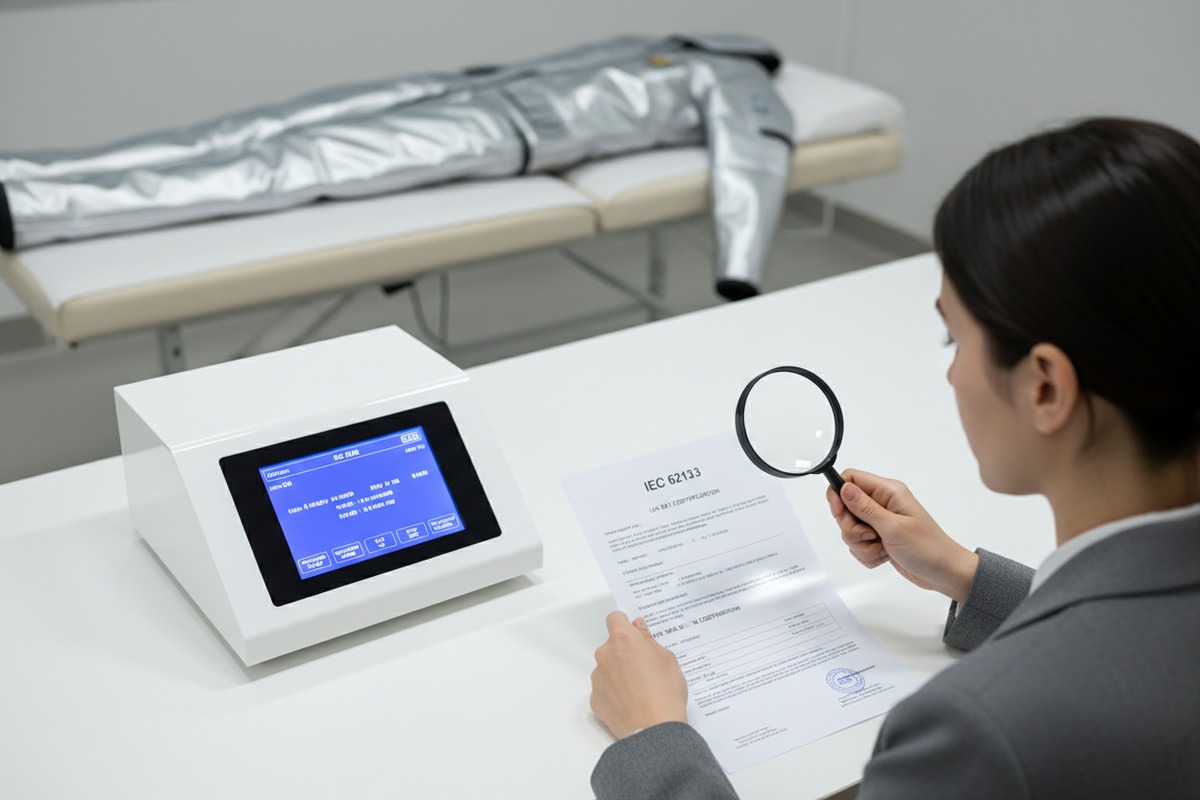
When our R&D team first developed portable pressotherapy machines, we quickly learned that battery claims on paper rarely match real-world performance UN 38.3 test reports 1. Buyers trust supplier specs without verification—only to face complaints from salons about short run times and dead batteries within months.
To verify battery life and certifications for battery-powered pressotherapy machines, request IEC 62133 and UN 38.3 test reports from accredited labs, confirm FDA-recognized standards like UL 2054 for US market compliance, and conduct real-world battery cycle tests under typical operating conditions before placing bulk orders.
This guide breaks down every step. You will learn how to test battery claims, which certifications matter for legal US sales, how to audit a manufacturer’s quality process, and what customization options exist for your private-label brand.
How can I verify that the battery life matches the technical specifications provided by my supplier?
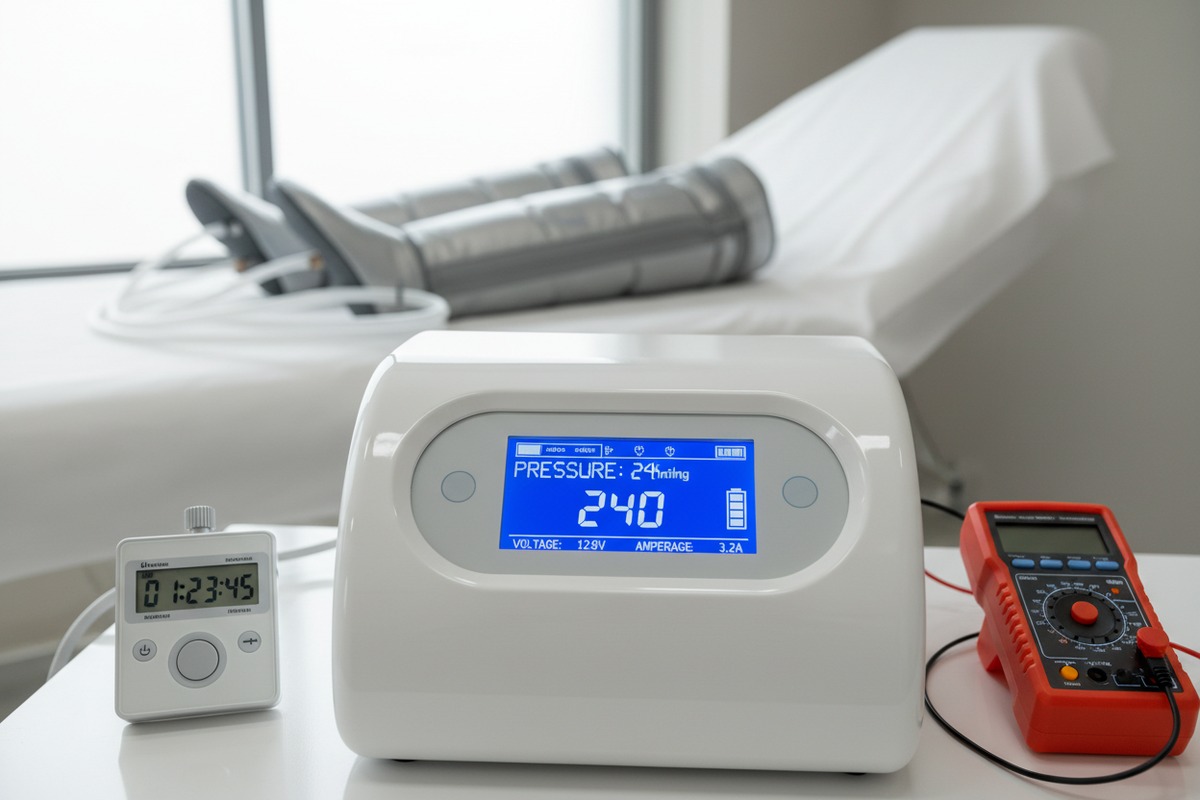
In our experience testing battery-powered units before shipment, we have seen suppliers claim 3-hour battery life when actual run time under standard pressure settings barely reaches 70 minutes Battery Management System 2. This gap creates serious problems for salon operators who depend on consistent performance.
Verify battery life by requesting third-party test reports showing discharge cycles under specified conditions, conducting in-house tests at actual operating pressures (typically 180-240 mmHg), and tracking performance over 50+ cycles to confirm long-term consistency with supplier claims.
Why Supplier Specs Often Mislead
Most battery life claims are measured under ideal laboratory conditions. The supplier tests at the lowest pressure setting with minimal chamber inflation. Real salon use involves higher pressures, multiple chambers inflating simultaneously, and continuous operation. These factors drain batteries much faster.
Our testing shows a clear pattern. A pressotherapy device rated for "3 hours" under ideal conditions often delivers just 60-80 minutes at full treatment pressure. This is not fraud—it is a difference in testing methodology. But it creates real problems when your customers cannot complete back-to-back sessions.
Key Verification Steps
| Verification Method | What to Request | Why It Matters |
|---|---|---|
| Third-Party Lab Reports | IEC 62133 3-2 test certification | Confirms battery passed safety and performance tests |
| Discharge Curve Data | Voltage vs. time graphs at rated load | Shows actual capacity under real conditions |
| Cycle Life Testing | Capacity retention after 300+ cycles | Proves long-term durability |
| Real-World Demo | On-site testing at your specified pressure | Validates claims before bulk purchase |
How to Conduct Your Own Battery Tests
Before finalizing any order, request sample units. Run them through your own testing protocol:
- Fully charge the battery using the provided charger
- Set the machine to your typical treatment pressure (most salons use 180-200 mmHg)
- Run continuous 30-minute treatment cycles with all chambers active
- Record the total run time until the low-battery warning appears
- Repeat this test 10 times to confirm consistency
Document everything. If the supplier claims 180 minutes and your testing shows 75 minutes, you have clear evidence for renegotiation or supplier change.
Understanding Battery Degradation
Lithium batteries 4 naturally lose capacity over time. A quality medical-grade battery should retain at least 80% capacity after 300 charge cycles. Some low-cost batteries drop below 70% after just 100 cycles. This matters because a pressotherapy machine used 5 times daily in a busy salon will go through 300 cycles in about two months of steady use.
Request documentation showing capacity retention curves. Reputable suppliers test this and can provide data showing how their batteries perform over extended use periods.
Which safety certifications must I confirm to ensure my battery-powered machines are legal for the US market?
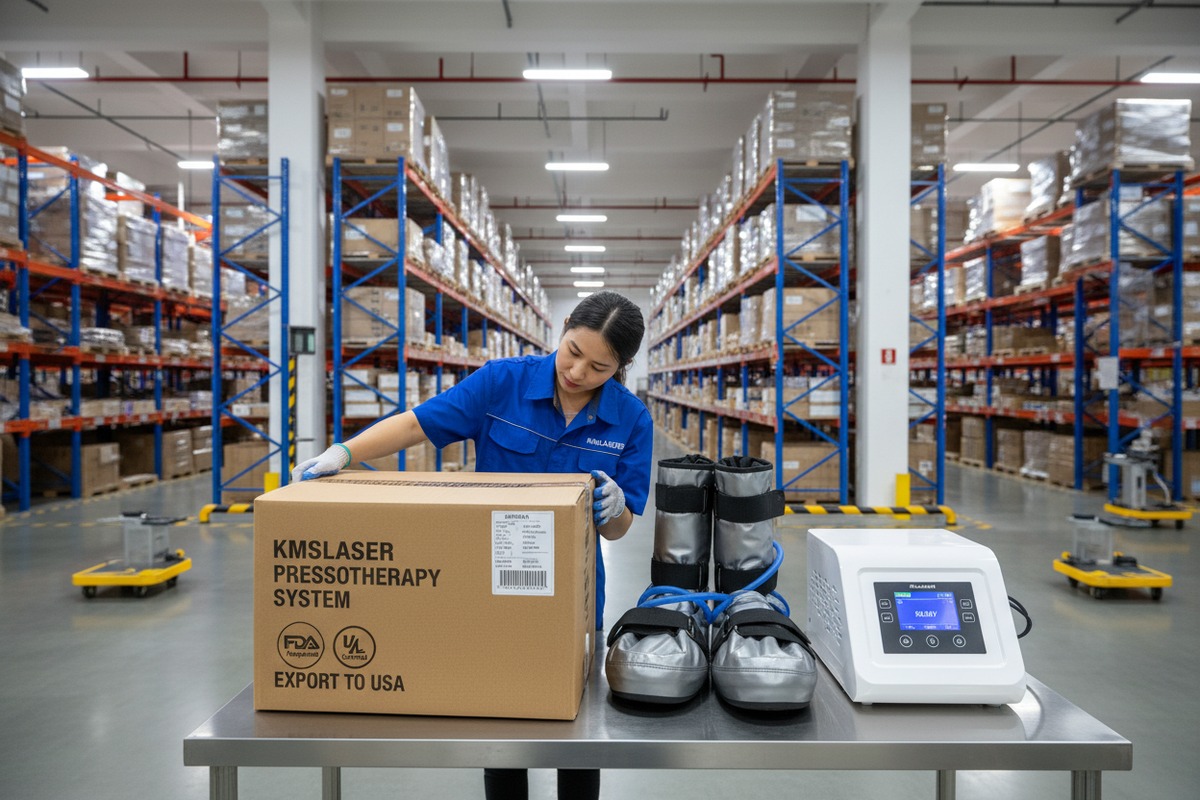
Our export team learned the hard way that shipping battery-powered devices to the US without proper certifications can result in customs seizures and costly delays. The US has specific requirements that differ significantly from European CE marking.
For legal US market entry, battery-powered pressotherapy machines must comply with FDA-recognized standards including IEC 62133 for rechargeable batteries, UL 2054/1642 for lithium battery safety, and ANSI/AAMI ES 60601-1 for medical electrical equipment—with all documentation ready for FDA premarket review.
Understanding the US Regulatory Landscape
The US market has layered requirements. The FDA regulates medical devices through premarket review processes. Battery safety falls under additional consensus standards. Transport regulations add another layer for lithium batteries classified as dangerous goods.
Essential Certifications Breakdown
| Certification | What It Covers | Who Requires It |
|---|---|---|
| IEC 62133-2 | Rechargeable lithium battery safety | FDA, international markets |
| UL 2054 5 | Household and commercial battery packs | FDA, US retailers |
| UL 1642 | Lithium battery cells | FDA, US distribution |
| ANSI/AAMI ES 60601-1 6 | Medical electrical equipment safety | FDA premarket submission |
| UN 38.3 | Lithium battery transport safety | DOT, airlines, shipping |
| ISO 13485 | Quality management systems | FDA, EU, Canada |
The FDA Recognition System
The FDA maintains a database of recognized consensus standards. When a battery-powered medical device manufacturer demonstrates compliance with these standards, it streamlines the premarket review process. As one industry source notes, "FDA recognizes that batteries that meet these standards have a much greater chance of being safe in a medical application."
This recognition matters because compliance with UL 2054 and IEC 62133 can substitute for extensive individual device testing. However, you still need the documentation. Never accept a supplier's verbal claim—demand actual test reports from accredited laboratories like UL, SGS, Intertek, or CSA.
Why CE Marking Is Not Enough
Many Chinese suppliers prominently display CE marks on their pressotherapy machines. While CE marking indicates European compliance, it does not satisfy US requirements. Some key differences:
- CE allows self-declaration for certain device classes
- FDA requires submission of actual compliance documentation
- UL certification involves ongoing factory inspections
- CE and FDA classify devices differently
A device legally sold in Europe may require additional certification for US sales. Always verify that your supplier has specific US-market documentation, not just European approvals.
Transport Compliance: The Hidden Requirement
Lithium batteries are classified as Class 9 dangerous goods for transport. UN 38.3 testing covers altitude simulation, thermal cycling, vibration, shock, external short circuit, impact, overcharge, and forced discharge. Without UN 38.3 certification, your shipments may be refused by airlines and freight carriers.
Request UN 38.3 test summary sheets from your supplier. These documents must accompany lithium battery shipments. Missing documentation can delay your entire order at customs.
How do I audit a manufacturer's quality control process for battery stability and long-term durability?
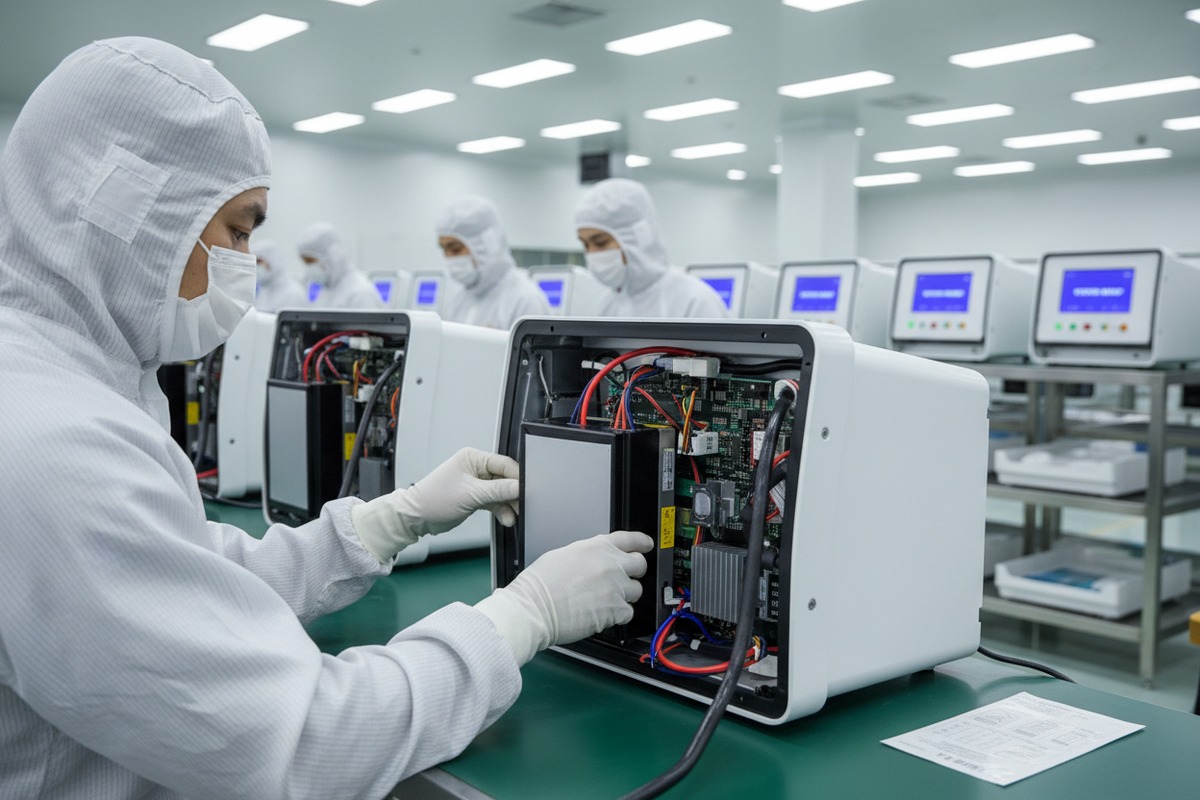
When we set up our own quality control protocols, we discovered that many battery failures trace back to poor manufacturing practices rather than defective designs. A good battery design can still fail if the factory lacks proper quality systems.
Audit a manufacturer’s battery quality control by verifying ISO 13485 certification for medical device QMS, reviewing their documented procedures for cell selection and incoming inspection, confirming Battery Management System (BMS) testing protocols, and conducting on-site inspections of production and testing facilities.
Why ISO 13485 Matters for Battery Quality
ISO 13485 establishes quality management system requirements specifically for medical device manufacturing. Unlike the general ISO 9001 standard, ISO 13485 emphasizes risk management, traceability, and regulatory compliance that apply directly to battery-powered medical devices.
The standard requires manufacturers to implement documented procedures for design, production, and service. For batteries, this means controlled processes for cell selection, assembly, testing, and final inspection. A manufacturer without ISO 13485 certification 8 may lack the systematic quality controls needed for consistent battery performance.
Key Quality Control Checkpoints
| Quality Area | What to Verify | Red Flags |
|---|---|---|
| Cell Selection | Documented supplier qualification process | Uses random cell sources without testing |
| Incoming Inspection | Cell capacity and internal resistance testing | No incoming quality checks |
| BMS Testing | Functional verification of protection circuits | BMS untested before assembly |
| Assembly Process | Controlled environment, trained operators | No documented procedures |
| Final Testing | 100% discharge/charge cycling before shipment | Only spot-check testing |
| Traceability | Batch records linking cells to finished units | No serial number tracking |
Conducting an Effective Supplier Audit
Plan your audit in advance. Request documentation before the visit so you can focus on-site time on verification. Key documents to review include:
- ISO 13485 certificate (verify it is current and issued by accredited body)
- Cell supplier qualification records
- Production work instructions for battery assembly
- BMS functional test procedures
- Final inspection checklists and acceptance criteria
- Nonconformance and corrective action records
During the on-site visit, observe actual production. Watch operators perform assembly and testing. Ask to see calibration records for test equipment. Request to review recent quality records showing test results.
Battery Management System Verification
The BMS protects the battery from overcharge, over-discharge, short circuit, and thermal runaway. A failed BMS can cause fires or explosions. Quality manufacturers test every BMS board before installation. They verify that protection circuits activate at correct thresholds.
Ask your supplier to demonstrate BMS testing. They should show you:
- Overcharge protection test results
- Over-discharge cutoff verification
- Short circuit protection response time
- Temperature monitoring accuracy
- Cell balancing functionality
Long-Term Durability Assurance
Quality batteries maintain performance over hundreds of cycles. Ask for accelerated life testing data. This testing subjects batteries to repeated charge-discharge cycles at elevated temperatures to simulate years of use in weeks. Results should show capacity retention above 80% after the equivalent of 2-3 years of typical use.
Review warranty terms carefully. A supplier confident in their battery quality will offer at least a 1-year warranty. Shorter warranties or excessive exclusions suggest quality concerns.
Can I customize the battery capacity and performance for my private-label pressotherapy brand?
Our ODM clients often ask about custom batteries. They want longer run times, faster charging, or specific form factors that match their brand positioning. The good news is that battery customization is absolutely possible—with proper planning.
Yes, manufacturers can customize battery capacity, voltage, form factor, and BMS features for private-label pressotherapy brands. This requires minimum order quantities (typically 500+ units), engineering collaboration on specifications, and additional certification testing if the custom design differs significantly from standard configurations.
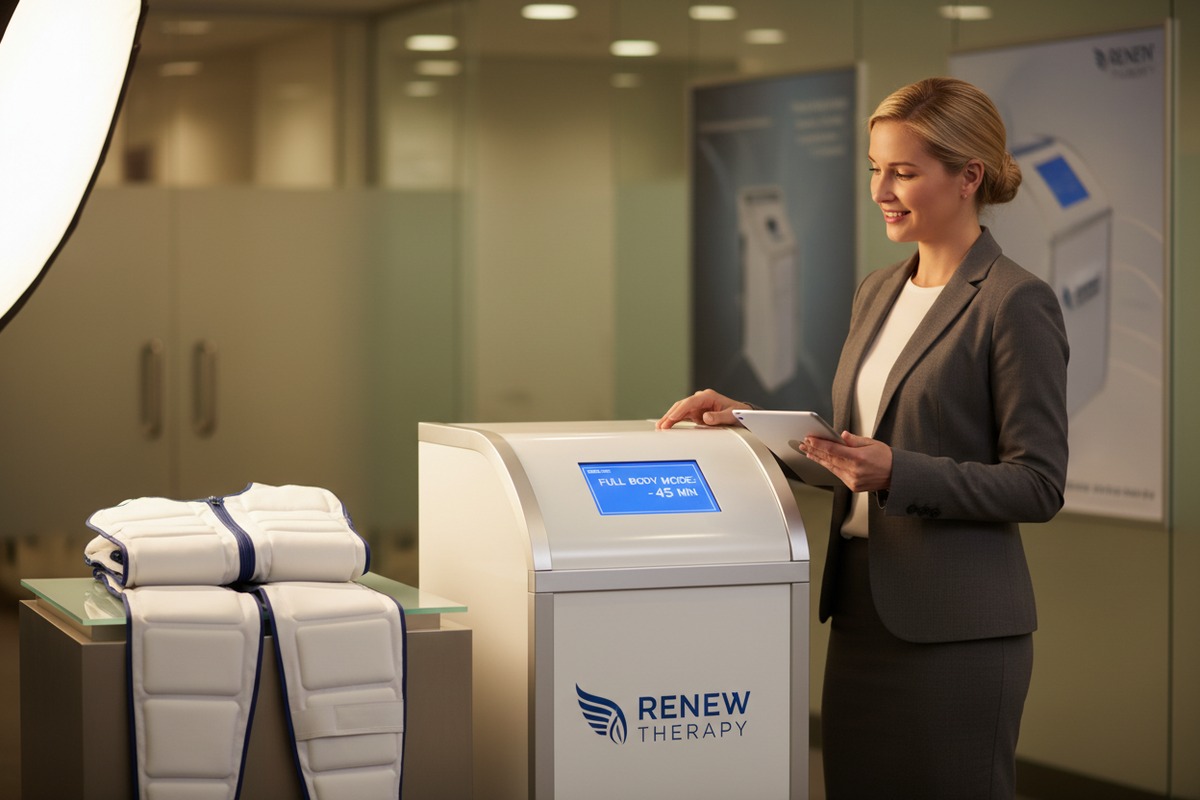
What Can Be Customized
Battery customization ranges from simple capacity increases to complete custom designs. Understanding your options helps you balance performance goals against cost and timeline impacts.
| Customization Type | Complexity | Typical MOQ | Lead Time Impact |
|---|---|---|---|
| Capacity upgrade (same form factor) | Low | 300-500 units | +2-4 weeks |
| Custom connector or housing | Medium | 500-1000 units | +4-6 weeks |
| Modified BMS features | Medium | 500-1000 units | +6-8 weeks |
| Complete custom design | High | 1000+ units | +12-16 weeks |
| New cell chemistry selection | High | 1000+ units | +8-12 weeks |
Capacity and Run Time Optimization
The most common customization request is increased battery capacity for longer treatment sessions. Higher capacity means either larger physical battery size or different cell chemistry. LiFePO4 cells 9 offer excellent cycle life (often 2000+ cycles) but lower energy density. Lithium-ion provides higher capacity in smaller packages but typically fewer total cycles.
Work with your manufacturer to calculate actual power requirements. A pressotherapy machine drawing 50W at full operation needs a 150Wh battery pack for 3 hours of continuous use. Add 20% margin for degradation over time.
BMS Customization Options
Advanced BMS features can differentiate your brand. Options include:
- Accurate fuel gauge showing remaining treatment time
- Bluetooth connectivity for battery status monitoring
- Customized charging profiles for faster or gentler charging
- Temperature monitoring with automatic shutdown protection
- Cycle counting for maintenance scheduling
These features add cost but create value for end users. A fuel gauge showing "45 minutes remaining" is more useful than a simple LED indicator that turns red at 20%.
Certification Implications
Custom batteries may require new certification testing. If your custom design uses different cells, capacity, or BMS than an existing certified configuration, expect to invest in additional IEC 62133 and possibly UL testing. Budget $15,000-30,000 for complete battery pack certification depending on complexity.
Some customizations qualify as "design variants" under existing certifications. Your manufacturer should advise which changes require new testing. Generally, using the same cells in different quantities within the same family does not require complete recertification, but documentation must support the equivalence.
Working with Manufacturers on Custom Projects
Start the conversation early. Provide clear specifications including:
- Target run time at specific operating conditions
- Maximum acceptable battery weight and dimensions
- Required certifications for your target markets
- Volume forecasts to ensure appropriate MOQ discussions
- Timeline requirements for market entry
Request engineering samples before production commitment. Test these samples thoroughly under real-world conditions. Validate that the custom battery meets your specifications before approving mass production.
Conclusion
Verifying battery life and certifications requires hands-on testing, document review, and supplier audits. Never trust paper specs alone. Request lab reports, test samples yourself, and visit factories when possible. Your due diligence protects your brand reputation and keeps your customers satisfied with reliable, compliant pressotherapy equipment.
Footnotes
1. Details the international standard for safe transport of lithium batteries. ↩︎
2. Explains the critical role of BMS in battery safety and performance. ↩︎
3. Official IEC website providing information on the IEC 62133-2:2017 standard. ↩︎
4. Provides general information about lithium battery technology. ↩︎
5. Describes the safety standard for household and commercial battery packs. ↩︎
6. Covers the essential safety standard for medical electrical equipment. ↩︎
7. Explains the FDA’s system for recognizing industry standards. ↩︎
8. Specifies the quality management system for medical device manufacturing. ↩︎
9. Informative guide explaining LiFePO4 cells from a specialized battery company. ↩︎

 English
 Español de México
 Deutsch
 Français
 العربية
 Русский
