
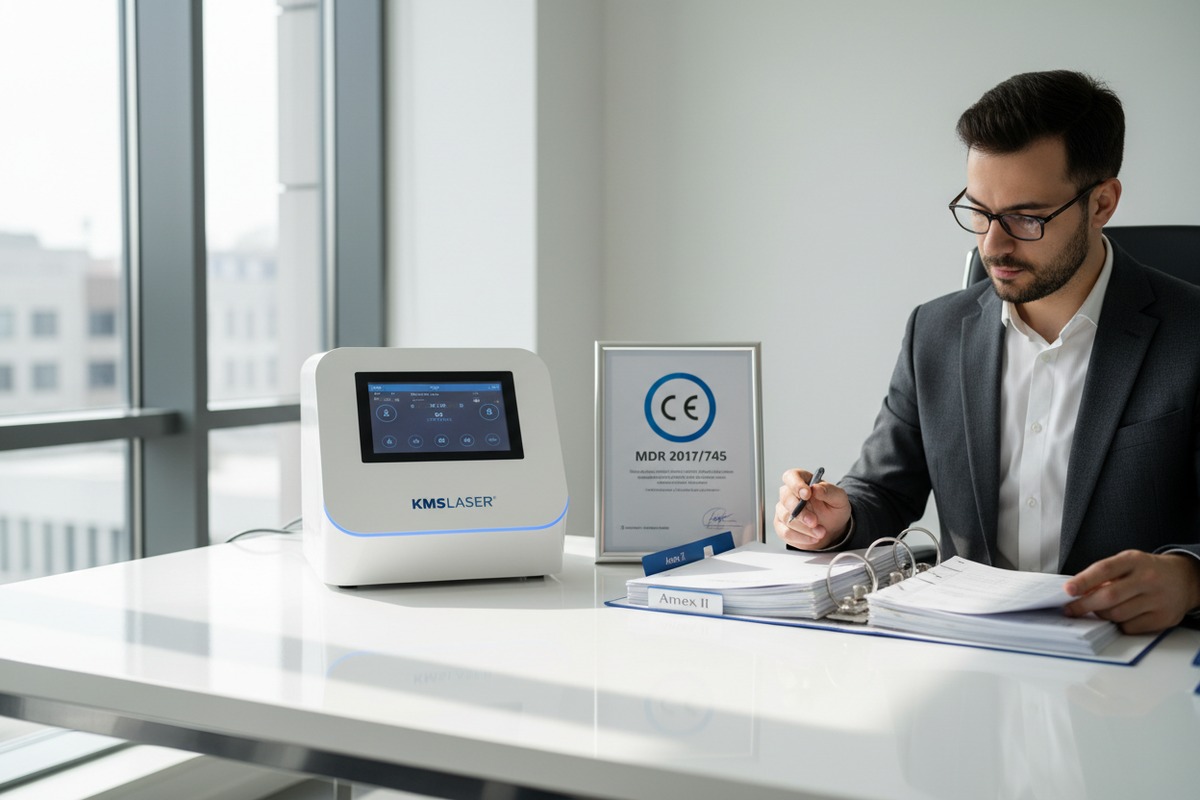
Working on our production floor in Guangzhou, I see the same question appear in emails week after week ISO 13485 quality management 2. Buyers want pressotherapy machines for EU salons. They want them fast. But most do not know the certification maze ahead Low Voltage Directive 2014/35/EU 3. Skip one step, and customs holds your shipment. Miss one document, and your business faces serious fines.
Pressotherapy machines intended for the EU market must comply with the Medical Device Regulation (EU) 2017/745 (MDR) and bear a valid CE mark. Most pressotherapy devices classify as Class IIa medical devices, requiring Notified Body certification, ISO 13485 quality management, and complete technical documentation per Annex II and III of the MDR.
The sections below break down each certification requirement step by step. You will learn which directives apply, how to verify authentic CE mark 4s, what private labeling means for your compliance, and which technical files you must collect before your shipment clears EU customs.
How do I determine which specific CE directives apply to the pressotherapy machines I source?
When our engineers design a new pressotherapy system, the first question is always classification. Get this wrong, and every step that follows becomes a compliance nightmare. Many buyers assume all beauty machines follow the same rules. They do not.
Pressotherapy machines used for medical indications such as lymphedema treatment or post-operative recovery fall under the Medical Device Regulation (EU) 2017/745. Classification depends on intended use, invasiveness, and duration of contact. Most pressotherapy devices classify as Class IIa under Annex VIII rules, requiring Notified Body involvement for conformity assessment.

Understanding the MDR Classification System
The EU MDR replaced the older Medical Device Directive (MDD) and introduced stricter requirements. Under this framework, medical devices fall into four risk classes: Class I, Class IIa, Class IIb, and Class III.
Classification matters because it determines your regulatory pathway. A Class I device can often be self-certified. A Class IIa device cannot. The classification rules in Annex VIII consider several factors: how the device contacts the body, whether it delivers energy, and what therapeutic claims you make.
Pressotherapy machines typically apply air compression to limbs. They contact intact skin. They use pneumatic pressure to improve circulation or reduce swelling. These characteristics place them firmly in Class IIa territory for most intended uses.
Key Directives Beyond MDR
Your pressotherapy machine may need to satisfy more than one directive. Consider these overlapping requirements:
| Directive | Applies When | Key Requirements |
|---|---|---|
| MDR 2017/745 | Device has medical intended use | Full technical documentation 5, clinical evaluation, Notified Body certification 6 for Class IIa+ |
| Low Voltage Directive 2014/35/EU | Device operates on 50-1000V AC | Electrical safety testing, insulation verification |
| EMC Directive 2014/30/EU 7 | Device contains electronic components | Electromagnetic compatibility testing, immunity testing |
| RoHS Directive 2011/65/EU | Device contains electronic components | Restriction of hazardous substances in materials |
Each directive that applies must be addressed in your Declaration of Conformity. Your Chinese supplier should provide test reports covering all applicable standards.
Medical vs. Wellness Classification
Here lies a common trap. Some suppliers claim their pressotherapy machines are "wellness only" devices to avoid MDR requirements. This classification depends entirely on intended use.
If marketing materials mention lymphedema, edema reduction, post-surgical recovery, or circulation improvement for medical conditions, the device is medical. Period. Wellness claims alone might allow a non-medical pathway, but EU authorities look at all marketing, not just product labels.
How can I verify that my Chinese manufacturer's CE certification is authentic and valid?
In our years of exporting to Europe, we have seen fake CE certificates more times than I can count. Some look professional. Some even include real Notified Body numbers. But customs officials and market surveillance authorities know how to spot fakes. You should too.
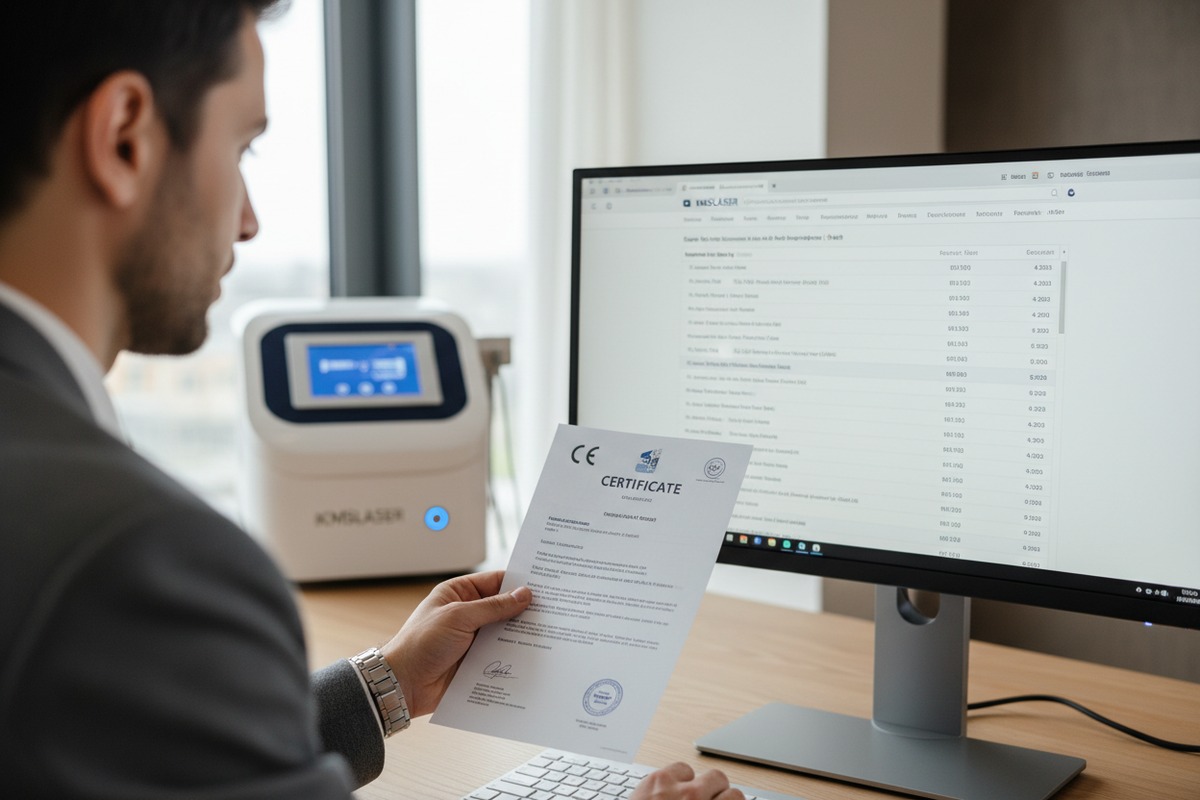
Verify CE certification by cross-referencing the Notified Body number in the EU NANDO database, checking certificate details in EUDAMED, requesting the full EU Declaration of Conformity, and reviewing the technical documentation summary. For Class IIa pressotherapy machines, a four-digit Notified Body number must appear next to the CE mark.
Using Official EU Databases
The European Commission maintains databases that list all legitimate Notified Bodies and registered certificates. These are your primary verification tools.
The NANDO database (New Approach Notified and Designated Organisations) lists every Notified Body authorized to certify medical devices under MDR. EU NANDO database 9 Search by the four-digit identification number that should appear next to the CE mark on Class IIa devices.
EUDAMED 10 is the European Database on Medical Devices. As of May 2026, four modules become mandatory to use. Notified Bodies must register certificates they issue. You can search for manufacturers, devices, and certificate status.
Step-by-Step Verification Process
Follow this process before placing any order:
| Step | Action | What to Look For |
|---|---|---|
| 1 | Check CE mark format | Correct proportions, minimum 5mm height, Notified Body number for Class IIa+ |
| 2 | Search NANDO database | Verify Notified Body is designated for MDR medical devices |
| 3 | Request EU Declaration of Conformity | Must reference MDR 2017/745, include device identification, manufacturer details |
| 4 | Check EUDAMED registration | Confirm manufacturer SRN, device registration, certificate status |
| 5 | Request ISO 13485 certificate | Should be from accredited certification body, valid dates |
| 6 | Review technical file summary | Gap analysis of GSPRs, clinical evaluation, risk management |
Red Flags That Signal Fake Certification
Watch for these warning signs when evaluating supplier documentation:
Self-declared CE for Class IIa devices is invalid. A Class IIa pressotherapy machine requires Notified Body certification. If your supplier cannot provide a certificate with a valid Notified Body number, the CE mark is fake.
References to MDD instead of MDR raise concerns. The Medical Device Directive certificates expired. New certifications must reference Regulation (EU) 2017/745.
Missing or inconsistent Notified Body numbers are problematic. The number on the CE mark must match the certificate. Cross-check both against NANDO.
Generic declarations without specific device identification suggest problems. The Declaration of Conformity should identify the exact device model, Basic UDI-DI, and manufacturing address.
The EUDAMED Mandatory Timeline
Understanding EUDAMED timing helps you verify legitimate suppliers. The EU Commission confirmed functionality of four EUDAMED modules in November 2025. From May 28, 2026, these modules become mandatory: Actor Registration, UDI/Device Registration, Notified Bodies and Certificates, and Market Surveillance.
This means legitimate manufacturers must be registered. Their devices must have UDI assignments. Their Notified Body certificates must appear in the database. If you cannot find your supplier in EUDAMED after May 2026, consider that a major red flag.
Will my private label branding require me to re-certify the pressotherapy equipment for the EU market?
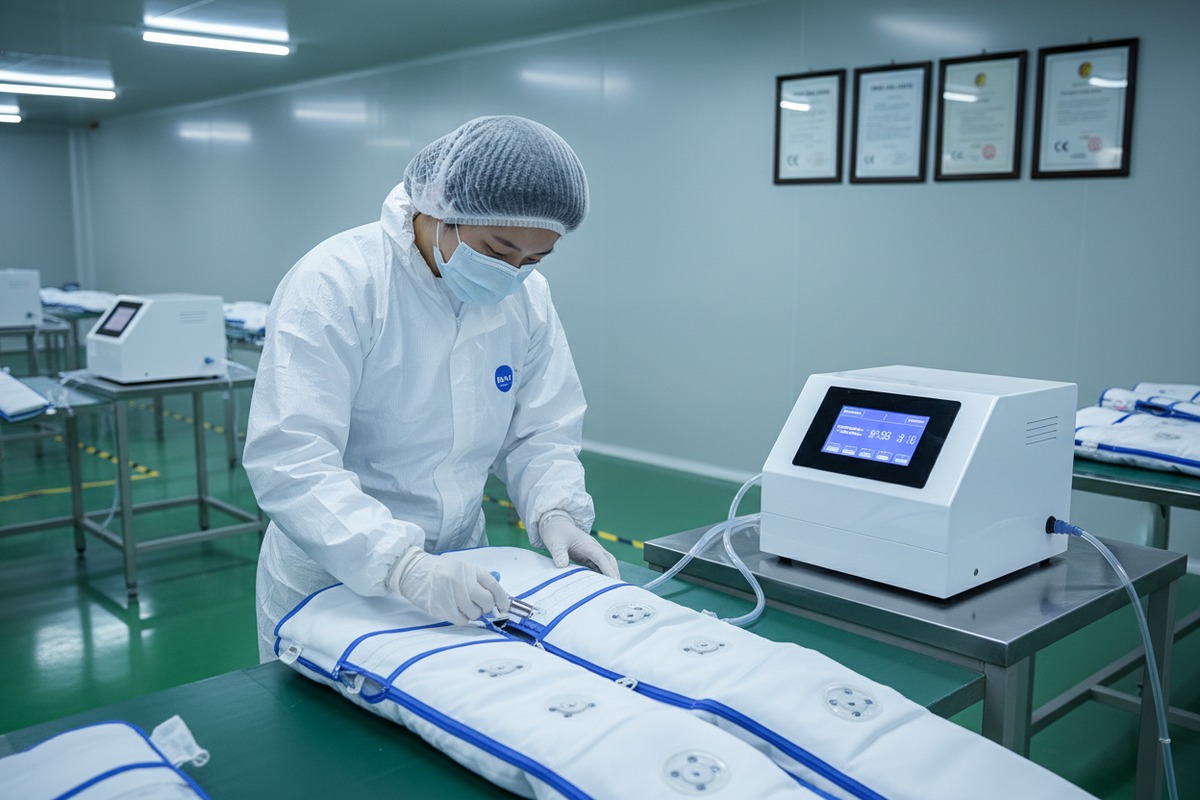
Our private label clients often assume they can simply swap logos and ship. The reality under MDR is more complex. Your responsibilities as the entity placing the device on the EU market depend on how significantly you change the product and how you present yourself to the market.
Private labeling a pressotherapy machine may require new CE certification if you become the legal manufacturer under MDR. Adding your brand while keeping the original manufacturer's name may not require re-certification. However, changing the intended purpose, making significant modifications, or placing your name alone as manufacturer triggers full MDR compliance obligations including new Notified Body assessment.
Understanding Legal Manufacturer Status
The MDR defines a manufacturer as the entity who places the device on the market under their own name. This definition has major implications for private label arrangements.
If you add your brand but keep the original manufacturer's name on labels and documentation, you may act as a distributor or importer. Your obligations are limited to verifying compliance, maintaining traceability, and ensuring proper labeling.
If you present the device under your name alone, you become the legal manufacturer. You inherit all manufacturer obligations under the MDR. This includes maintaining the technical file, conducting post-market surveillance, reporting vigilance events, and ensuring continued compliance.
Scenarios and Certification Requirements
| Scenario | Your Role | Certification Impact | Documentation Needed |
|---|---|---|---|
| Keep original manufacturer name, add co-brand | Distributor/Importer | No re-certification needed | Verify existing DoC, maintain importer records |
| Remove original name, use only your brand | Legal Manufacturer | Full re-certification required | New technical file, QMS certification, Notified Body assessment |
| Modify device features or intended use | New Product | Full re-certification required | New clinical evaluation, updated risk analysis, new Notified Body certificate |
| Change only packaging and IFU languages | Distributor with modifications | May need Notified Body notification | Documentation of changes, impact assessment |
The Re-Labeling Pathway
MDR Article 16 addresses situations where an entity markets a device under their own name. The regulation treats such entities as manufacturers with full obligations.
You must implement a Quality Management System compliant with ISO 13485. You must appoint a Person Responsible for Regulatory Compliance. You must ensure the technical documentation meets all MDR requirements. You must engage a Notified Body for conformity assessment of your Class IIa device.
The original manufacturer may agree to transfer documentation and support your certification. Alternatively, you may need to generate your own technical file based on the device specifications. Either path requires significant investment.
Working with Your OEM Supplier
At our facility, we support private label clients through the certification process. The key is structuring the relationship correctly from the start.
Ask your supplier if they will remain as legal manufacturer with your co-branding. This minimizes your regulatory burden. You act as importer, with corresponding obligations under Article 13 of the MDR.
If you want exclusive branding, discuss documentation transfer. The supplier should provide access to technical files, test reports, clinical evaluation data, and risk management files. You will need these to support your own certification.
Budget for the certification timeline. Notified Body assessments for Class IIa devices typically take 12-18 months. Plan your market entry accordingly.
What technical files must I request from my supplier to ensure my shipment passes EU customs?
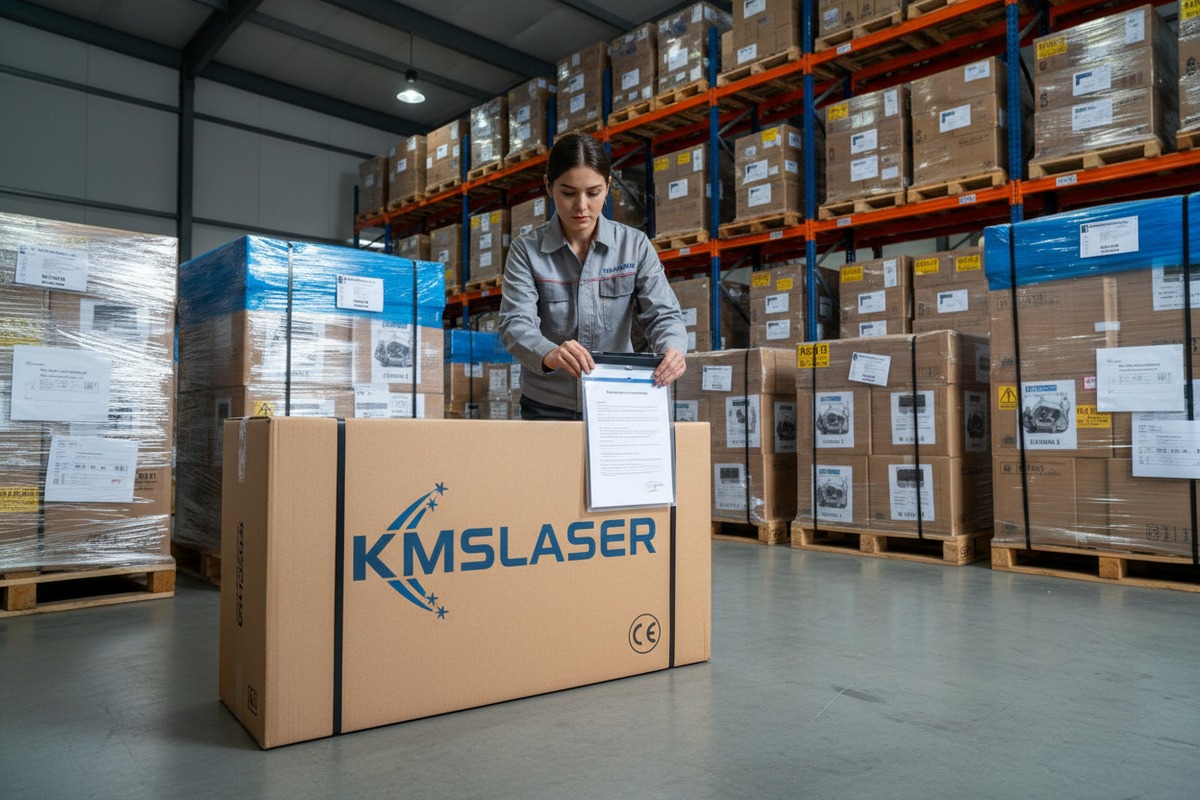
Every week, I receive calls from buyers whose shipments are stuck at EU ports. Customs requested documents they never knew existed. The goods sit in warehouses, incurring fees. Some shipments get returned. This section tells you exactly what to collect before shipping.
Request the EU Declaration of Conformity, CE certificate from Notified Body (for Class IIa), technical documentation summary, ISO 13485 certificate, test reports for electrical safety and EMC, UDI assignment documentation, and labeling samples. EU customs authorities may request any of these documents to verify compliance before releasing medical device shipments.
Essential Documents for Customs Clearance
EU customs authorities have the power to stop and inspect any shipment of medical devices. They verify that products bear proper CE marking and that supporting documentation exists. The importer must provide documentation upon request.
Start by collecting these core documents before your shipment leaves China:
| Document | Purpose | Key Contents to Verify |
|---|---|---|
| EU Declaration of Conformity | Legal declaration of compliance | Reference to MDR 2017/745, device identification, manufacturer signature, date |
| CE Certificate (Class IIa+) | Notified Body certification | Valid dates, Notified Body ID matching NANDO, device scope |
| ISO 13485 Certificate | QMS compliance | Accredited certification body, valid dates, manufacturing site address |
| Technical Documentation Summary | Evidence of GSPR compliance | Risk management, clinical evaluation, verification and validation |
| Test Reports | Proof of safety testing | Electrical safety, EMC, biocompatibility as applicable |
| UDI Documentation | Traceability compliance | Basic UDI-DI, EUDAMED registration confirmation |
Technical Documentation Requirements Under MDR
The MDR specifies technical documentation requirements in Annex II and Annex III. Your supplier should maintain a complete technical file. You need access to at least a summary for your records.
Annex II covers the device technical documentation: device description and specification, design and manufacturing information, general safety and performance requirements compliance, benefit-risk analysis, product verification and validation, and clinical evaluation.
Annex III covers post-market surveillance documentation: PMS system description, periodic safety update reports, and post-market clinical follow-up plans.
For pressotherapy machines, key test reports include:
- Electrical safety testing per IEC 60601-1
- Electromagnetic compatibility testing per IEC 60601-1-2
- Biocompatibility testing for patient-contact materials per ISO 10993
- Pressure calibration and accuracy verification
- Software validation for programmable devices
Labeling Requirements for EU Market
Labels must meet MDR Annex I requirements. Check these elements before shipping:
The CE mark must appear correctly formatted with the Notified Body number adjacent for Class IIa devices. The manufacturer name and address must appear clearly. If the manufacturer is outside the EU, the Authorized Representative name and address must also appear. The importer name and address is required for imported devices.
Instructions for use must be available in the official languages of target member states. The UDI carrier must appear on the device or its packaging.
Creating Your Import Documentation Package
As the importer, you have specific obligations under MDR Article 13. Document your compliance with a structured file:
Maintain a copy of the EU Declaration of Conformity. If the device is Class IIa or higher, keep a copy of the CE certificate. Keep records of your supplier verification process. Document that you verified the manufacturer registration in EUDAMED.
Store records of incoming shipments including batch numbers, quantities, and UDI data. Implement a system to trace devices forward to distributors and backward to the manufacturer.
If customs requests documentation, respond within the timeframe specified. Failure to provide documentation can result in shipment seizure, destruction orders, or market withdrawal requirements.
Conclusion
Sourcing CE-compliant pressotherapy machines for the EU requires understanding MDR classification, verifying authentic certification through official databases, recognizing private label implications, and collecting complete technical documentation. Start your verification process early, work with transparent suppliers, and build your documentation package before shipment. Your EU market success depends on getting certification right from the start.
## Footnotes

<span id="footnote-1">
1. Official consolidated text of the EU Medical Device Regulation. <a href="#ref-1" class="footnote-backref">↩︎</a>
</span>

<span id="footnote-2">
2. Official information on ISO 13485 Quality Management System for medical devices from a recognized standards body. <a href="#ref-2" class="footnote-backref">↩︎</a>
</span>

<span id="footnote-3">
3. Official text of the EU directive on electrical equipment safety. <a href="#ref-3" class="footnote-backref">↩︎</a>
</span>

<span id="footnote-4">
4. Explains the meaning, purpose, and requirements of the CE marking. <a href="#ref-4" class="footnote-backref">↩︎</a>
</span>

<span id="footnote-5">
5. Details the requirements for technical documentation under the EU Medical Device Regulation. <a href="#ref-5" class="footnote-backref">↩︎</a>
</span>

<span id="footnote-6">
6. Explains the role, requirements, and process of Notified Body certification under EU MDR. <a href="#ref-6" class="footnote-backref">↩︎</a>
</span>

<span id="footnote-7">
7. Official text of the EU directive on electromagnetic compatibility. <a href="#ref-7" class="footnote-backref">↩︎</a>
</span>

<span id="footnote-8">
8. Provides detailed information on the classification of medical devices under EU MDR. <a href="#ref-8" class="footnote-backref">↩︎</a>
</span>

<span id="footnote-9">
9. Official EU database for finding Notified Bodies designated under EU legislation. <a href="#ref-9" class="footnote-backref">↩︎</a>
</span>

<span id="footnote-10">
10. Official EU database for medical devices, enhancing transparency and information exchange. <a href="#ref-10" class="footnote-backref">↩︎</a>
</span>

 English
 Español de México
 Deutsch
 Français
 العربية
 Русский
