

When our engineering team first encountered a batch of pressotherapy control boards damaged by static discharge during assembly, the financial hit was painful. Weeks of lost production and client complaints followed. This experience taught us a hard lesson: ESD compliance 1 is not optional in medical-grade beauty equipment.
To verify ESD compliance for pressotherapy machine suppliers, demand IEC 60601-1-2 EMC test reports, ISO 13485 quality certifications, ESD TR53 compliance verification records, and documented ESD control programs. Remote audits, third-party testing labs, and on-site ESD verification kits can confirm factory-floor adherence to static control standards.
This guide breaks down the exact certifications, testing methods, and audit strategies you need to ensure your pressotherapy machine supplier meets ESD safety standards for the US salon market. Let’s dig into the specifics.
What specific ESD certifications should I demand from my pressotherapy machine manufacturer?
When our sales team fields inquiries from US beauty brand distributors, one question comes up repeatedly: which certifications actually prove ESD protection? The confusion is understandable. Different standards cover different aspects of device safety.
Demand IEC 60601-1-2 EMC test reports for electrostatic discharge immunity, ISO 13485 quality management certification, and evidence of ANSI/ESD S20.20 compliance on the factory floor. For US market entry, FDA 510(k) clearance confirms the device meets safety performance standards, while CE marking proves European regulatory conformity.

IEC 60601-1-2: The Core EMC Standard
To address an increase in the threats of damage related to device exposure to electrostatic discharge (ESD), ESD immunity levels under IEC 60601-1-2, 4th Edition, have been significantly increased. This standard is the gold standard for medical electrical equipment. IEC 60601-1-2 EMC Standard 2
The most notable changes to the immunity standard are: the increased electrostatic discharge (ESD) level, increased from 6KV/8KV to 8KV/15KV, contact and air discharge respectively. This means your supplier's test reports must show compliance with these higher thresholds.
The IEC 60601-1-2 standard specifies test limits for emissions, immunity, electrostatic discharge (ESD), radiated radio-frequency electromagnetic fields, bursts, and surges. Any pressotherapy machine intended for salon use must pass these tests.
Essential Certifications Breakdown
| Certification | Purpose | Who Needs It |
|---|---|---|
| IEC 60601-1-2 | EMC and ESD immunity testing | All medical electrical equipment |
| ISO 13485 | Quality management system | Manufacturers and suppliers |
| FDA 510(k) | US market clearance | Devices with medical claims |
| CE Marking 3 | EU regulatory conformity | European market entry |
| ANSI/ESD S20.20 | Factory ESD control program | Manufacturing facilities |
ISO 13485: The Quality Management Foundation
ISO 13485 certification 4 is a formal recognition that a company's QMS meets the rigorous requirements of the medical device industry. It demonstrates a commitment to maintain high standards for the safety, quality, and consistency of medical devices throughout their lifecycle.
ISO 13485:2016 is designed to respond to the latest quality management system practices, including changes in technology and regulatory requirements and expectations. The new version has a greater emphasis on risk management and risk-based decision making.
FDA 510(k) Clearance for US Salon Market
Submitters must compare their device to one or more similar legally marketed devices and make and support their substantial equivalence claims. Each person who wants to market in the U.S., a Class I, II, and III device intended for human use, for which a Premarket Approval application (PMA) is not required, must submit a 510(k) to FDA.
Technically, the FDA does not approve medical devices for sale under the 510(k) process; the agency gives clearance for them to be sold in the U.S. FDA 510(k) process 5, having found them to be substantially equivalent to a legally marketed predicate device already legally on the market.
Red Flags to Watch For
- Certificates without model-specific identification
- Test reports from non-accredited labs
- Missing EMC test sections in documentation
- Self-declared compliance without third-party verification
- Expired certifications
How can I remotely verify that my supplier's factory floor follows strict ESD control protocols?
Our quality control managers learned that certification documents only tell half the story. A supplier may hold ISO 13485 certification but still lack proper ESD controls on the production line. Remote verification has become essential, especially when travel is impractical.
Remote ESD verification requires video factory tours showing ESD workstations and grounding systems, photographs of ESD floor mats and wrist strap monitors, documented compliance verification plans per ESD TR53, and evidence of personnel training records. Third-party audit reports from accredited bodies provide independent confirmation.

Understanding ESD TR53 Compliance Verification
The purpose of this document is to provide compliance verification procedures and troubleshooting guidance of test equipment and test setup when used for ESD control items that have been implemented in ESD control programs ESD TR53 Compliance Verification 6, such as those specified in ANSI/ESD S20.20. The procedures are based on standards, standard test methods, and standard practices currently published by the EOS/ESD Association Inc.
Developing a good Compliance Verification of ESD Control Elements program requires more than just putting ESD controls into place, it requires a plan to verify that the controls are working as intended.
What to Look for in Factory ESD Controls
This document describes compliance verification testing for the following ESD Protective Equipment and Materials: Grounding / Bonding Systems, Worksurfaces, Wrist Straps, Footwear.
| ESD Control Element | Verification Method | Acceptable Range |
|---|---|---|
| Wrist straps | Resistance measurement | < 35 megohms |
| Work surfaces | Point-to-point resistance | < 1 x 10⁹ ohms |
| Floor mats | Surface to ground resistance | < 1 x 10⁶ ohms |
| ESD footwear | Footwear/flooring system | < 3.5 x 10⁷ ohms |
| Personnel grounding | Body voltage measurement | < 100V peak |
Remote Audit Checklist
It is recommended that written procedures are created for the different test procedures. It is the company's responsibility to ensure anybody performing the tests understands the procedures and follows them accordingly.
Request the following from your supplier:
- Video walkthrough of the assembly area showing ESD mats, ionizers, and grounding points
- Timestamped photos of wrist strap testers and floor monitors
- Compliance verification logs with measurement dates and results
- Training certificates for production line workers
- Calibration records for ESD test equipment
Third-Party Verification Options
EOS/ESD Association, Inc. established ESD Compliance Verification Technician, which is based on the ESDA's technical report, ESD-TR53 Compliance Verification of ESD Protective Equipment and Materials. This important document supports and maintains static control programs designed around ANSI/ESD S20.20 Standard 7.
ESD Compliance Verification Technician to TR53 Certification recipients will be able to understand and make compliance verification measurements and demonstrate advanced skill using measurement apparatus and trouble-shooting techniques.
Digital Verification Tools
Modern suppliers should offer:
- Access to quality management portals showing real-time compliance data
- Digital copies of ESD audits conducted by certified technicians
- Photographic evidence of ESD packaging materials
- Live video calls showing equipment grounding verification
Which ESD testing reports are essential for ensuring my private-label beauty machines are safe for US salons?
When we prepare documentation packages for our US clients, the testing report requirements often catch first-time importers off guard. Not all EMC test reports carry equal weight with regulators and liability insurers.
Essential ESD testing reports include IEC 61000-4-2 electrostatic discharge immunity tests at 8kV contact and 15kV air discharge levels, IEC 60601-1-2 comprehensive EMC assessment reports from accredited laboratories, and ISO 14971 risk management documentation addressing electromagnetic disturbances. Reports must reference specific device models and serial numbers.
IEC 61000-4-2: The ESD Test Standard
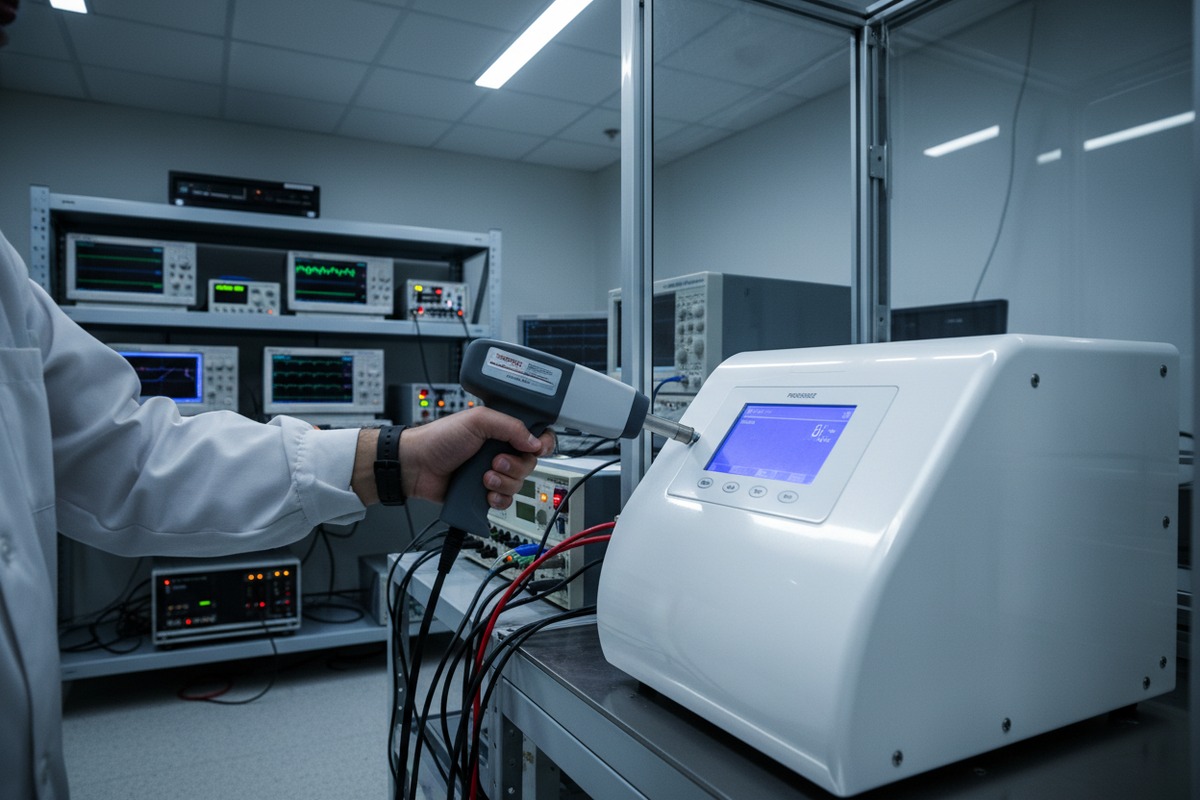
ESD Testing, under IEC 60601-1-2 is likely the most difficult measurement of the process. Electrostatic Discharge, as per IEC 61000-4-2:2008 8, is a test of "zapping" your medical device with simulated electrostatic pulses (like when you walk over carpet and touch a metallic object).
Unlike with consumer product tested to other CE limits, medical devices are required to be significantly more immune to electrostatic discharge.
Required Test Report Components
| Test Category | Standard Reference | Pass Criteria |
|---|---|---|
| ESD Immunity | IEC 61000-4-2 | 8kV contact, 15kV air |
| Radiated Emissions | CISPR 11 | Class A or B limits |
| Radiated RF Immunity | IEC 61000-4-3 | 3V/m (10V/m for life-support) |
| Burst/EFT | IEC 61000-4-4 | ±2kV power, ±1kV signal |
| Surge | IEC 61000-4-5 | Per risk class |
Understanding Test Lab Accreditation
IEC-60601-1-2 is a collateral standard that mandates EMC testing on any electronic medical device. As part of the FDA submission, you need a recognized laboratory to perform the IEC-60601-1-2 testing.
Keystone Compliance provides laboratory certification testing for IEC 60601-1-2 per the European Union Medical Device Directive (93/42/EEC) and/or FDA 510k requirements.
Look for test labs with:
- NVLAP or A2LA accreditation (US)
- UKAS accreditation (UK)
- DAkkS accreditation (Germany)
- CNAS accreditation (China)
Common Testing Challenges
Undoubtedly, most medical devices encounter issues during IEC-61000-4-2 (simulated ESD Testing). Isolating ESD from microcontrollers and other sensitive integrated circuits can be very challenging, potentially causing failure in this part of the testing.
Risk Management Integration
Part of what makes IEC 60601-1-2 testing difficult is not primarily the EMC measurements, but it is adapting to the language and thought process of IEC 60601 and applying the concepts of Risk Management under ISO 14971 ISO 14971 risk management 9 and then applying those concepts as it relates to the EMC testing of your medical device.
Ensure your supplier provides:
- Risk analysis documentation showing ESD hazards identified
- Mitigation measures implemented in design
- Test evidence confirming mitigation effectiveness
- Post-market surveillance plan for ESD-related failures
How do I ensure my OEM partner maintains ESD compliance throughout the entire production and packaging process?
In our experience shipping pressotherapy systems to North American distributors, the biggest compliance gaps often appear in areas buyers never think to check—component handling, assembly transitions, and final packaging. ESD damage can occur at any stage.
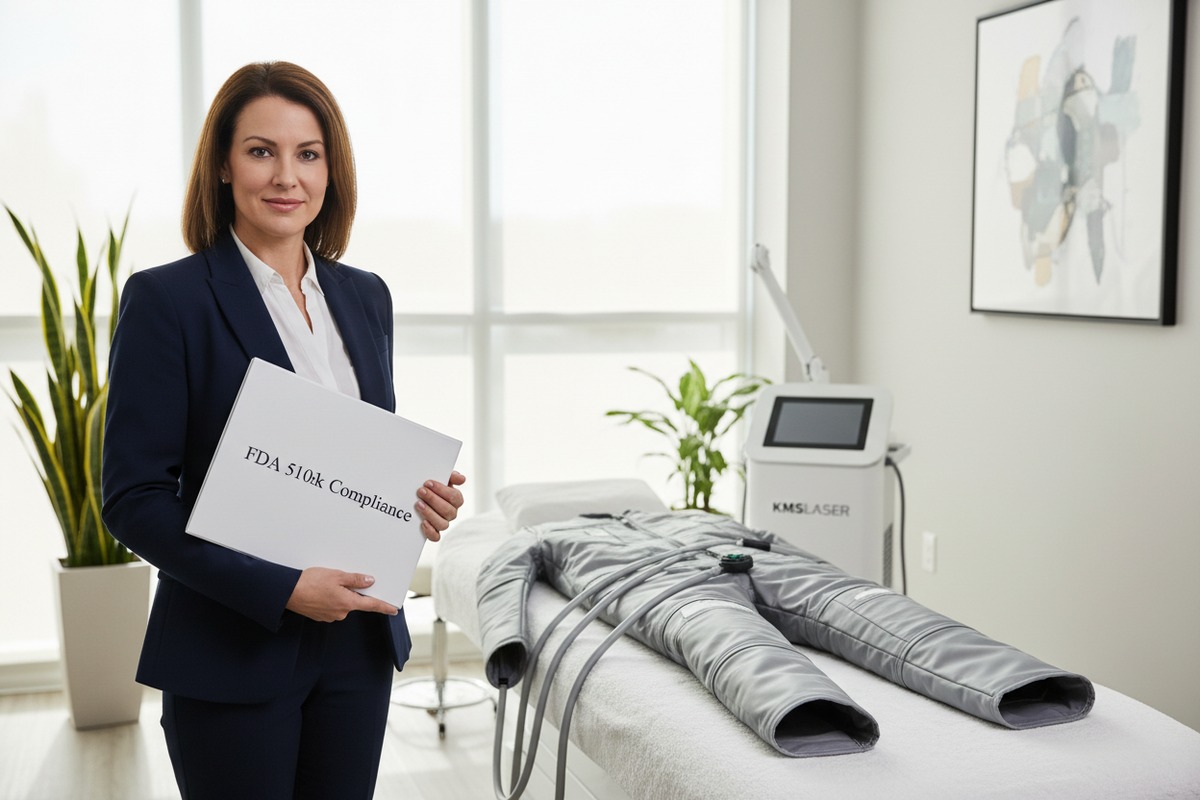
Ensure production-wide ESD compliance by requiring documented ESD control plans covering incoming inspection, assembly, testing, and packaging. Mandate ESD-protective packaging specifications, component traceability records, and periodic compliance verification audits. Integrate post-market surveillance systems to track field failures potentially linked to latent ESD damage.
The Complete Production Chain
ESD-sensitive components in pressotherapy machines include:
- Air compressor controllers
- LCD display modules
- Touch panel interfaces
- Power supply circuits
- Pressure sensor arrays
- Main control boards
Each component requires protection from receipt through final shipment.
ESD Control Plan Requirements
A few suggestions for the selection process: Each individual is required to know the ESD Standard ANSI/ESD S20.20 AND the company's individual ESD program.
| Production Stage | ESD Control Measure | Verification Method |
|---|---|---|
| Incoming inspection | Shielded bags, grounded workstation | Visual check, resistance test |
| Component storage | ESD-safe bins, humidity control | Periodic resistance measurement |
| Assembly | Wrist straps, ionizers, ESD mats | Daily wrist strap testing |
| Testing | Grounded test fixtures | Equipment calibration logs |
| Packaging | Static shielding bags, foam | Packaging material verification |
| Shipping | ESD labels, cushioning | Pre-shipment audit |
Personnel Training Requirements
Training programs exist that provide extensive training on how to audit your ESD controls to verify that they are functioning correctly. The training goes in depth on the operation of test instruments, correct procedures for testing and trouble shooting when the measurements do not meet expectations.
Request evidence of:
- Initial ESD awareness training for all production staff
- Annual refresher courses
- Training completion records with dates
- Competency assessments
Packaging Specifications
ESD-safe packaging for pressotherapy machines should include:
- Inner packaging: Pink anti-static poly bags for control units
- Static shielding: Metallized bags for PCB assemblies
- Cushioning: ESD-safe foam inserts
- Outer carton: ESD warning labels, humidity indicators
- Documentation: Handling instructions in multiple languages
Supply Chain Traceability
Companies make significant investments in ESD control, in an effort to greatly reduce the chance that electronic components are damaged or destroyed by electrostatic discharges. Significant dollars are spent on ESD control elements such as work surfaces, packaging, flooring, ionization, testing and monitoring, smocks and grounding.
Require your OEM partner to provide:
- Component source documentation
- Lot traceability for critical ESD-sensitive parts
- Sub-supplier ESD compliance certificates
- Incoming inspection records
Post-Market Surveillance Integration
As medical devices grow more connected and complex, electromagnetic compatibility is under sharper scrutiny.
Establish a feedback loop that includes:
- Field failure analysis for ESD-related symptoms
- Warranty claim categorization
- Root cause investigation protocols
- Corrective action implementation
Continuous Verification Schedule
| Verification Item | Frequency | Responsible Party |
|---|---|---|
| Wrist strap testing | Daily | Production operators |
| Work surface resistance | Weekly | Quality technician |
| Floor resistance | Monthly | Maintenance team |
| Ionizer calibration | Quarterly | External service |
| Full ESD audit | Annually | Third-party auditor |
Conclusion
Verifying ESD compliance protects your brand reputation and your clients' safety. Demand IEC 60601-1-2 test reports, ISO 13485 certification, and documented factory ESD control programs. Remote verification, third-party audits, and ongoing surveillance ensure your pressotherapy machines meet the highest standards for the US salon market.
Footnotes
1. Explains the importance and key standards for ESD compliance in electronics manufacturing. ↩︎
2. Defines the key EMC standard for medical electrical equipment, including safety and performance. ↩︎
3. Official EU information explaining CE marking for products sold within the European Economic Area. ↩︎
4. Explains ISO 13485 certification as a formal recognition of a quality management system for medical devices. ↩︎
5. Official FDA resource explaining the 510(k) premarket notification process for medical devices. ↩︎
6. Replaced with an authoritative page from the EOS/ESD Association, Inc. regarding TR53 compliance verification. ↩︎
7. Provides an overview of the ANSI/ESD S20.20 standard for developing effective ESD control programs. ↩︎
8. Official standard defining immunity requirements and test methods for electrical equipment subjected to static discharges. ↩︎
9. Replaced with an authoritative page from BSI Group on ISO 14971 risk management for medical devices. ↩︎

 English
 Español de México
 Deutsch
 Français
 العربية
 Русский
