Every week, our production team packages dozens of pressotherapy systems 1 for overseas buyers. And every week, at least a few clients are surprised by their final shipping invoice. The reason? They calculated their freight cost based on actual weight—not the volumetric weight 2 that carriers actually charge. This common mistake can inflate your landed cost by 30% or more, especially for bulky equipment like full-body compression suits and control units.
To calculate volumetric weight for air freight, multiply your package’s length × width × height in centimeters, then divide by 6000 (for airlines) or 5000 (for express couriers like DHL/FedEx). Compare this volumetric weight to your actual weight—carriers will charge based on whichever is greater, this is your “chargeable weight.”
Understanding this calculation is critical before you request a shipping quote carrier’s divisor 3. Let’s break down the exact formulas, divisors, and cost components so you can budget accurately for your next pressotherapy machine import.
How do I calculate the specific volumetric weight for my pressotherapy machine shipment?
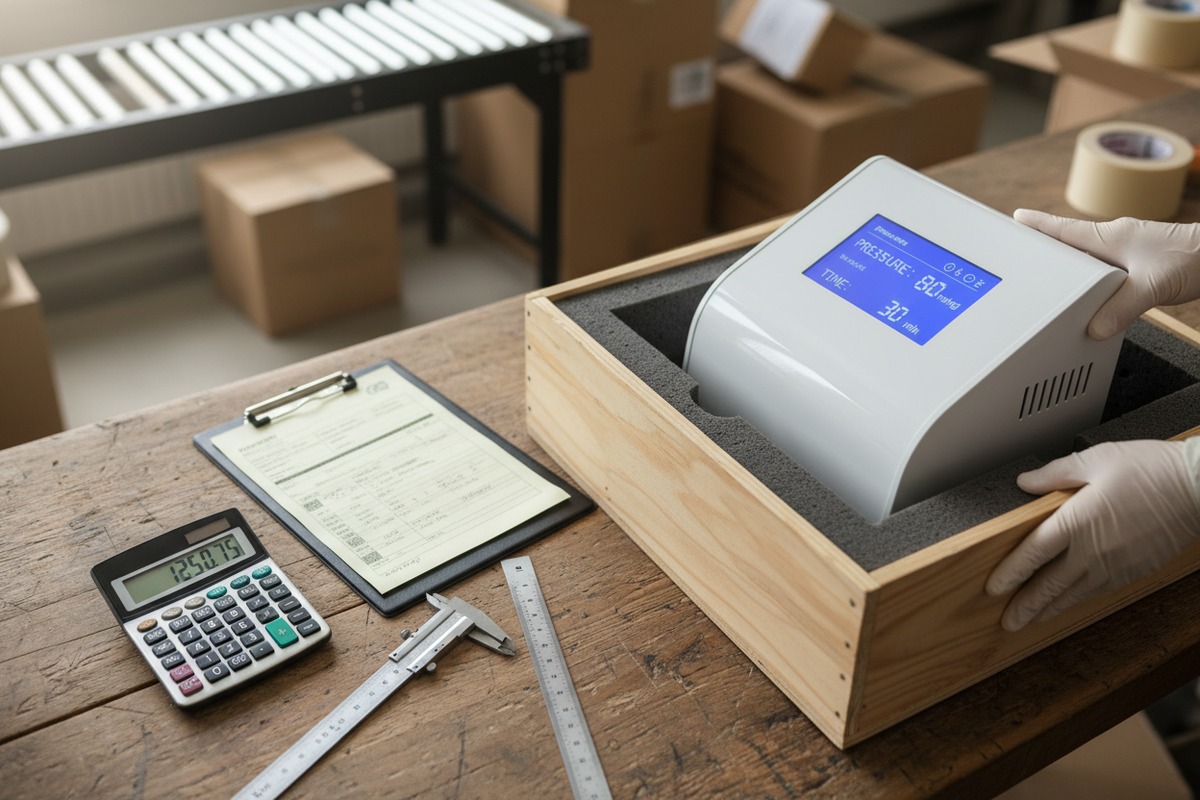
When we ship pressotherapy machines from our Guangzhou facility, we always measure packaging dimensions carefully. Many buyers assume a 10kg machine will cost the same to ship as 10kg of steel parts. This is not true. Pressotherapy systems include bulky boots, air hoses, and controllers that take up significant aircraft space.
To calculate volumetric weight, measure your packaged pressotherapy machine's length, width, and height in centimeters. Multiply these three dimensions together, then divide by the carrier's divisor—6000 for standard air freight or 5000 for international express couriers. The result is your volumetric weight in kilograms.
Understanding the Core Formula
The volumetric weight formula is straightforward once you know it:
Volumetric Weight (kg) = (Length × Width × Height in cm) ÷ Divisor
The divisor varies depending on your carrier type. This matters a lot for your total cost.
| Carrier/Service Type | Divisor (cm³/kg) | 1 CBM Equivalent |
|---|---|---|
| Airlines / Standard Air Freight | 6000 | 167 kg |
| DHL, FedEx, UPS (International Express) | 5000 | 200 kg |
| Road Freight (Reference) | 3000-3333 | 300-333 kg |
Let me show you a real example from our warehouse.
Practical Calculation Example
A typical pressotherapy machine from our production line measures 60 × 45 × 35 cm when fully packaged. The actual weight is 8 kg.
Step 1: Calculate volume: 60 × 45 × 35 = 94,500 cm³
Step 2: Apply the divisor. For DHL Express (divisor 5000): 94,500 ÷ 5000 = 18.9 kg
Step 3: Compare to actual weight. 18.9 kg > 8 kg
Result: The chargeable weight is 19 kg (rounded up), not 8 kg.
This means you pay for 19 kg even though the machine only weighs 8 kg. The volumetric weight is more than double the actual weight.
Measuring Tips for Accurate Calculations
Our logistics team follows these rules for every shipment:
- Always measure the longest point of each dimension
- Include all packaging materials in your measurement
- Round each dimension up to the nearest whole centimeter
- For irregular shapes, measure the maximum dimensions as if the item were boxed
For pressotherapy systems with multiple components (boots, wraps, hoses), measure each box separately. Then add all volumetric weights together.
Why is my air freight cost often based on dimensional weight instead of actual weight?
Our clients often ask us this question after receiving their first shipping quote. They see a 10 kg pressotherapy machine quoted at rates for 25 kg or more. It feels unfair at first. But there is a clear reason behind this pricing structure.
Aircraft have limited cargo space, not just weight limits. Lightweight but bulky items like pressotherapy machines occupy valuable space that could hold denser cargo. Carriers use volumetric weight to ensure they are fairly compensated for the space your shipment occupies, even if it weighs very little.

The Space vs. Weight Problem
Picture an aircraft cargo hold. It has two constraints:
- Maximum weight capacity
- Maximum volume capacity
If an airline fills a plane with lightweight boxes of cotton, the plane's weight capacity is barely used—but the space is full. The airline loses money because they cannot add more cargo.
Now imagine that same space filled with steel machinery. The weight limit is reached, but there is still room inside. The airline earns more per flight.
Volumetric pricing solves this imbalance. It creates a theoretical weight based on your package dimensions. This way, bulky items pay for the space they use.
Why Pressotherapy Machines Are Particularly Affected
Pressotherapy systems are the perfect example of "light but bulky" cargo:
| Component | Typical Dimensions | Actual Weight | Volumetric Weight (÷5000) |
|---|---|---|---|
| Control Unit | 50 × 40 × 30 cm | 5 kg | 12 kg |
| Leg Boots (pair) | 80 × 30 × 25 cm | 3 kg | 12 kg |
| Arm Sleeves (pair) | 60 × 25 × 20 cm | 1.5 kg | 6 kg |
| Full Kit (one carton) | 100 × 50 × 50 cm | 12 kg | 50 kg |
In this example, a 12 kg full pressotherapy kit is charged as 50 kg—more than four times the actual weight. This is why packaging optimization 6 matters so much.
The Chargeable Weight Decision
Here is the simple rule that governs all air freight pricing:
Chargeable Weight = Higher of (Actual Weight OR Volumetric Weight)
Airlines and couriers will always choose the larger number. There is no negotiation on this point. The only way to reduce costs is to either:
- Reduce the actual weight
- Reduce the package dimensions
- Choose a carrier with a more favorable divisor
How Divisor Differences Affect Your Bill
The divisor your carrier uses makes a real difference. Let's compare using a standard pressotherapy machine package (60 × 45 × 35 cm, actual weight 8 kg):
| Carrier Type | Divisor | Volumetric Weight | Chargeable Weight | Rate ($5/kg) |
|---|---|---|---|---|
| Standard Air Freight | 6000 | 15.75 kg | 16 kg | $80 |
| DHL/FedEx/UPS | 5000 | 18.9 kg | 19 kg | $95 |
| Difference | – | – | 3 kg | $15 more |
That $15 difference per package adds up fast. For 100 units, you pay $1,500 more simply because of a different divisor.
How can I optimize my machine packaging to lower my total air freight expenses?
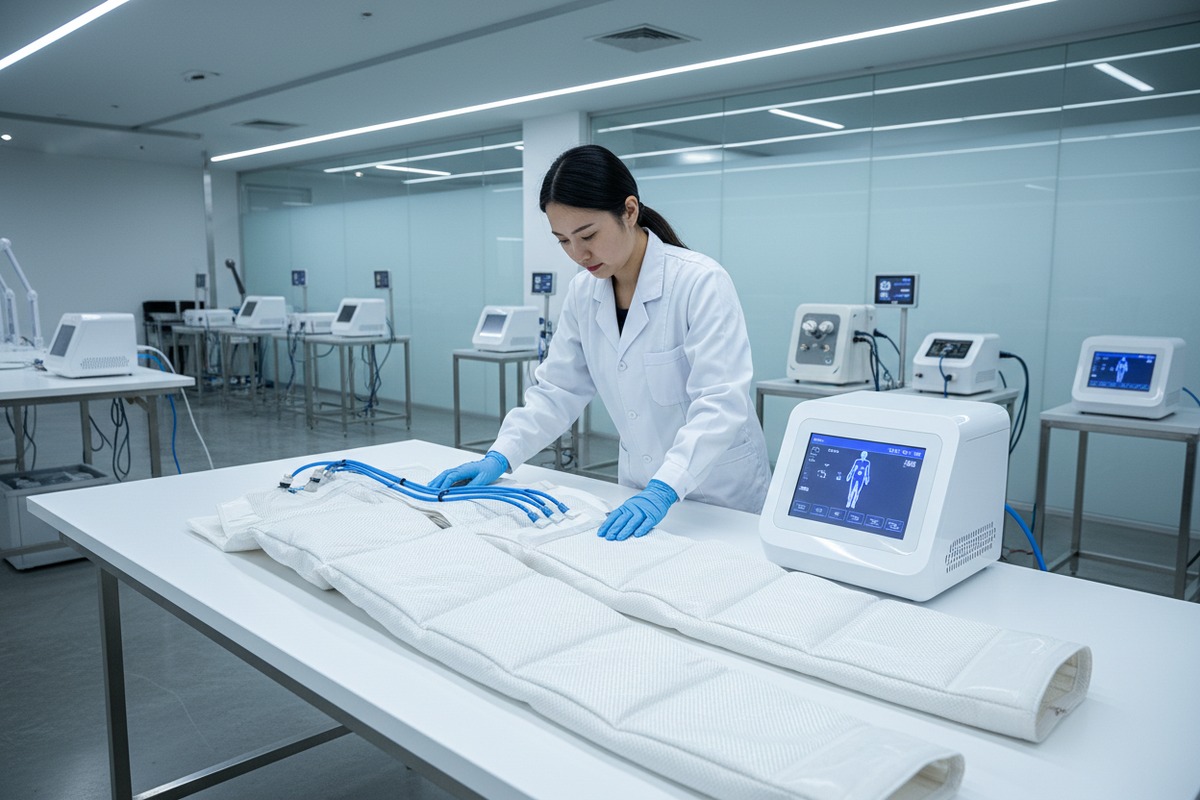
When we redesigned our pressotherapy packaging last year, our clients saw shipping costs drop by up to 25%. We learned that small changes in box dimensions have massive impacts on volumetric weight. You do not need to compromise product protection. You need smarter packaging design.
To lower air freight expenses, reduce your package dimensions by using form-fitted packaging, compressing air from inflatable boots before shipping, removing unnecessary void fill, and nesting components together. A 10% reduction in each dimension can lower volumetric weight by approximately 27%.
The Dimensional Reduction Strategy
Here is the math that makes packaging optimization so powerful:
If you reduce each dimension by just 10%:
- Original volume: 60 × 45 × 35 = 94,500 cm³
- Reduced volume: 54 × 40.5 × 31.5 = 68,890 cm³
- Volume reduction: 27%
Your volumetric weight drops by more than a quarter. And you did not change the actual product at all.
Practical Packaging Tips for Pressotherapy Systems
Our packaging engineers use these techniques:
1. Deflate Air Components
Pressotherapy boots and sleeves are inflatable. Ship them deflated. This can reduce height by 30-50% in some cases.
2. Nest Components
Place smaller items inside larger ones when possible. The control unit cable can coil inside the unit housing. Tubes can fold inside boots.
3. Use Custom-Fit Foam
Avoid excessive bubble wrap or loose fill. Custom foam inserts protect the product while minimizing empty space.
4. Right-Size Your Boxes
Never use a larger box just because it is available. Every extra centimeter costs you money.
Before and After Comparison
Here is a real example from our production line:
| Packaging Approach | Dimensions | Volume | Vol. Weight (÷5000) | Savings |
|---|---|---|---|---|
| Standard Carton | 70 × 50 × 40 cm | 140,000 cm³ | 28 kg | – |
| Optimized Design | 55 × 40 × 32 cm | 70,400 cm³ | 14.1 kg | 50% |
This optimization halved the chargeable weight without changing the machine inside.
Palletization Strategies for Bulk Orders
When shipping 10 or more units, palletization becomes critical:
- Stack machines vertically when safe to do so
- Use pallet dimensions that maximize space (standard euro pallet 7: 120 × 80 cm)
- Consider consolidation services that combine multiple small shipments
- Calculate whether multiple small packages cost less than one large pallet
When to Accept Higher Volume
Sometimes larger packaging is necessary:
- Fragile electronics require cushioning
- Certain products cannot be deflated or compressed
- Client branding requires retail-ready packaging
In these cases, factor the higher volumetric cost into your pricing. Do not sacrifice product safety for minor shipping savings.
What should I expect for door-to-door air freight pricing when importing from China?
Our clients regularly ask for all-inclusive quotes. They want to know the final landed cost, not just the base freight rate. This makes sense. Hidden fees can add 30-50% to your expected total. Understanding each cost component helps you budget accurately and avoid surprises.
Door-to-door air freight for pressotherapy machines from China to the USA typically costs $4.50-$9.50 per chargeable kilogram for standard air cargo, plus $100-$500 in handling, customs brokerage, and documentation fees per shipment. Total landed cost includes duties (HS code 9019.10 for therapy devices), fuel surcharges (20-30% of base rate), and last-mile delivery ($200-$1,000+ depending on destination).
Breaking Down the Cost Components
Every air freight invoice includes multiple line items. Here is what you should expect:
Base Freight Rate
This is the per-kilogram charge for moving your cargo from origin airport to destination airport. Current market rates for China to USA vary by service level.
| Service Type | Rate per kg (2025) | Transit Time |
|---|---|---|
| Economy/Consolidated Air | $3.10 – $4.70 | 5-7 days |
| Standard Air Freight | $4.50 – $5.50 | 3-5 days |
| Express (DHL/FedEx/UPS) | $6.00 – $9.50 | 1-3 days |
Fuel Surcharges
Airlines add a fuel adjustment factor (FAF) or bunker adjustment factor (BAF). This typically adds 20-30% to your base freight charge. It fluctuates monthly based on jet fuel prices.
Security and Handling Fees
These cover X-ray screening, cargo handling at origin and destination airports, and documentation processing. Expect $50-$150 per shipment.
Customs Clearance
US customs brokerage services cost $100-$300 for standard entries. Complex shipments or those requiring FDA review for medical devices may cost more.
Import Duties and Taxes
Pressotherapy machines typically fall under HS code 9019.10 8 (massage apparatus). Duty rates range from 0-5% depending on specific classification and trade agreements. Since May 2025, all Chinese imports require formal customs entry regardless of value.
Last-Mile Delivery
Getting your goods from the US airport to your warehouse or customer adds $200-$1,000+ depending on distance and service level.
Sample Cost Calculation
Let's calculate a complete shipment for one pressotherapy machine (60 × 45 × 35 cm, 8 kg actual, 19 kg chargeable via DHL Express):
| Cost Component | Calculation | Amount |
|---|---|---|
| Base Freight | 19 kg × $7.50/kg | $142.50 |
| Fuel Surcharge | 25% of base | $35.63 |
| Security/Handling | Flat fee | $75.00 |
| Customs Brokerage | Flat fee | $125.00 |
| Import Duty (3%) | $300 product value × 3% | $9.00 |
| Last-Mile Delivery | Los Angeles area | $85.00 |
| Total Landed Cost | $472.13 |
This is for a single unit. Bulk shipments often achieve better per-unit rates through volume discounts.
Incoterms and Cost Responsibility
Your purchase agreement determines who pays for what:
- EXW (Ex Works): Buyer pays all freight from factory door
- FOB (Free on Board): Seller covers origin costs to port; buyer pays from there
- DAP (Delivered at Place): Seller pays freight to destination; buyer handles customs
- DDP (Delivered Duty Paid): Seller pays everything including customs duties
When requesting quotes, always confirm the Incoterm 9. DDP quotes are higher but include everything. EXW quotes are lower but require you to manage all logistics.
Tips for Getting Better Rates
Based on years of shipping pressotherapy equipment, here are our top recommendations:
- Book early – Rates spike during peak seasons (pre-Christmas, before Chinese New Year)
- Consolidate shipments – Combining multiple orders reduces per-unit costs
- Compare carriers – Get quotes from at least three different forwarders
- Use economy air for non-urgent orders – Savings of 30-40% over express
- Work with experienced forwarders – They can negotiate better rates and handle customs smoothly
Conclusion
Calculating volumetric weight correctly is essential for budgeting your pressotherapy machine imports from China. Remember to use the right divisor for your carrier, optimize your packaging to reduce dimensions, and account for all cost components beyond the base freight rate. With careful planning, you can control logistics costs and protect your profit margins.
Footnotes
1. Provides information about pressotherapy systems as medical devices. ↩︎
2. Explains the definition and calculation of volumetric weight in shipping. ↩︎
3. Explains how air carriers use a divisor to calculate volumetric weight. ↩︎
4. Lists major global express delivery companies. ↩︎
5. Provides an overview of IATA’s manuals, standards, and regulations for air cargo. ↩︎
6. Replaced with an article discussing packaging optimization strategies and benefits. ↩︎
7. Provides official specifications and details for the EPAL Euro pallet. ↩︎
8. Classifies and describes the Harmonized System (HS) code for massage apparatus and mechano-therapy appliances. ↩︎
9. Defines Incoterms and explains their role in international trade, clarifying buyer and seller responsibilities. ↩︎

 English
  Español de México
  Deutsch
  Français
  العربية
  Русский