
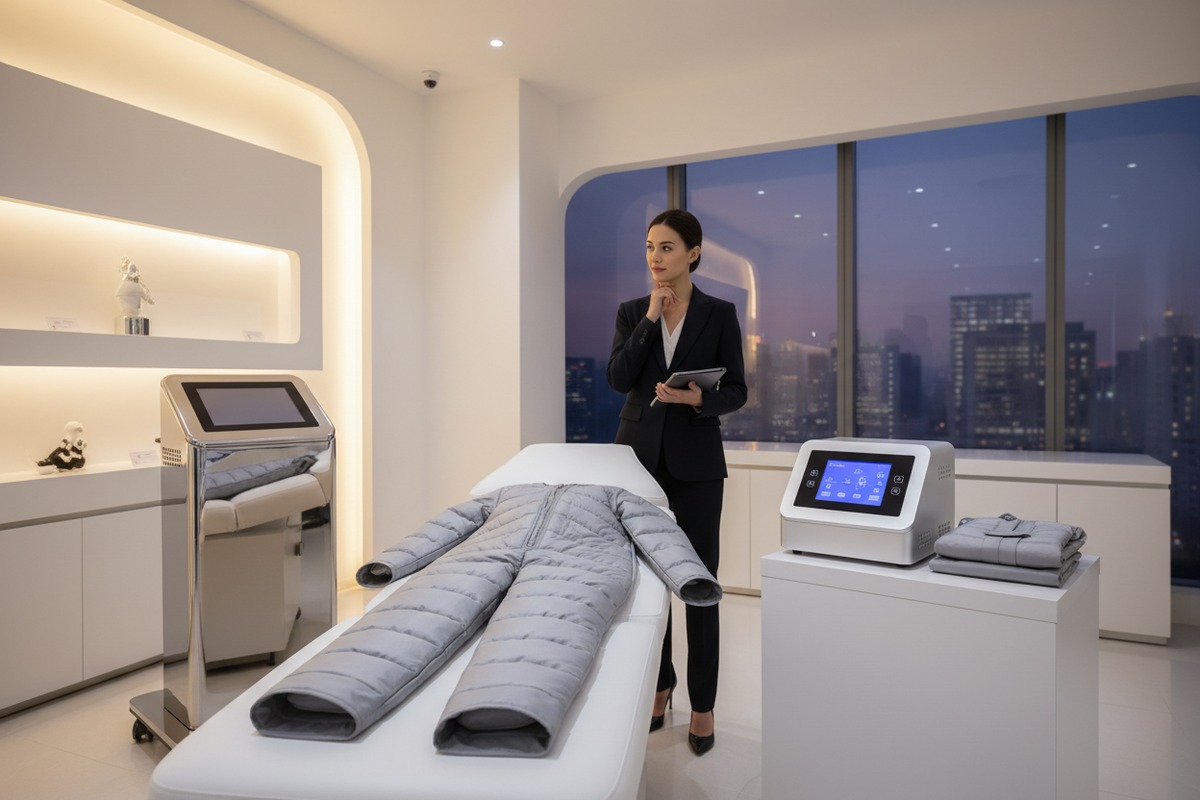
When our production team first designed pressotherapy systems 1 for the European market, buyers often asked one question: should I stock portable units or standing machines? Both have loyal supporters. But the wrong choice can tie up capital in slow-moving inventory—or worse, leave your European salon clients looking elsewhere.
To compare sales potential, evaluate client space constraints, shipping costs, durability standards, and OEM/ODM branding flexibility. Portable units suit smaller European salons and e-commerce channels. Standing machines appeal to high-end clinics needing intensive daily use. Sourcing success depends on matching product form factor to your target buyer segment.
This guide breaks down each factor. We will cover how to gauge European salon preferences, manage import logistics 2, verify quality, and leverage customization for brand positioning. Let us start with client preferences.
How do I determine if my European salon clients prefer the space-saving portable design or the professional look of a standing pressotherapy machine?
Our export team has shipped hundreds of units to Germany, France, and the UK ISO 13485 quality management documentation 3. One pattern stands out: smaller salons love portability, while large spas and clinics want impressive floor units. But guessing is risky. You need data and direct feedback before placing a bulk order.
Survey your target clients about treatment room size, daily client volume, and brand positioning goals. Small salons under 50 square meters often prefer portable models. Clinics with multiple treatment rooms and premium pricing favor standing units that communicate professionalism and justify higher service fees.
Understanding European Salon Space Realities
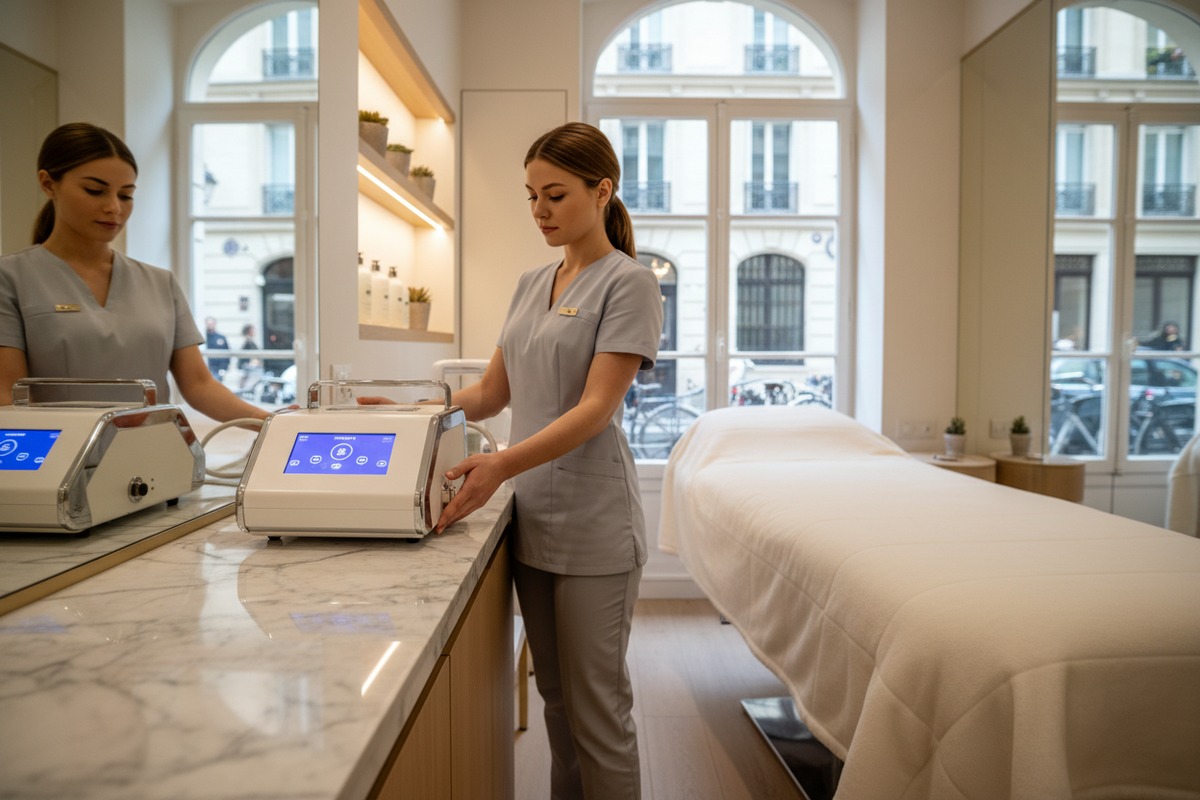
European urban salons face steep rent costs. In cities like London, Paris, and Berlin, treatment rooms are often compact. A standing pressotherapy machine with a large console can consume valuable floor space. Portable units solve this by fitting into closets or rolling between rooms.
On the other hand, destination spas and medical wellness centers in Germany or Switzerland prioritize visual impact. A sleek standing unit signals clinical credibility. Clients paying €150+ per session expect to see serious equipment.
Key Questions to Ask Your Buyers
Before sourcing, send a short questionnaire to your existing customers or prospects:
- What is your average treatment room size?
- How many pressotherapy sessions do you perform daily?
- Do you want the machine visible to clients or stored away?
- What price point do you charge per session?
These answers segment your market quickly.
Comparing Client Segments
| Client Type | Typical Space | Preferred Format | Key Buying Factor |
|---|---|---|---|
| Urban boutique salon | Under 40 m² | Portable | Compact storage, easy transport |
| Suburban day spa | 60–100 m² | Either | Price vs. features balance |
| Medical wellness clinic | 100+ m² | Standing | Clinical appearance, high pressure output |
| Mobile beauty service | N/A | Portable | Lightweight, battery or quick-setup |
Regional Preference Trends
Western European markets like the UK and France favor luxury and organic wellness. Standing machines fit this premium positioning. Eastern European markets—Poland, Czech Republic, Latvia—are growing fast. Portable units with lower price points gain traction in these expanding regions.
An industry survey from 2025 found that more than 57% of salons have already started using eco-friendly chairs and salon stools. This signals openness to modern, space-efficient equipment across the board.
What are the differences in shipping costs and logistics complexity when I import standing units versus portable models to Europe?
Our logistics coordinators manage door-to-door shipments daily. They see the real numbers. Standing machines cost more to ship—sometimes 40–60% more per unit. But the story goes beyond freight rates. Customs, packaging, and warehousing all differ.
Portable pressotherapy machines ship at lower cost due to smaller volumetric weight and simpler packaging. Standing units require palletized freight, higher insurance, and specialized handling. Import duties remain similar, but total landed cost per unit favors portables by 20–40% depending on destination country.
Volumetric Weight Matters
Freight carriers calculate charges using either actual weight or volumetric weight 4—whichever is higher. Standing machines have bulky consoles. A typical standing unit might occupy 0.5 cubic meters. A portable unit fits in 0.15 cubic meters. This difference multiplies quickly on a full container.
Packaging Requirements
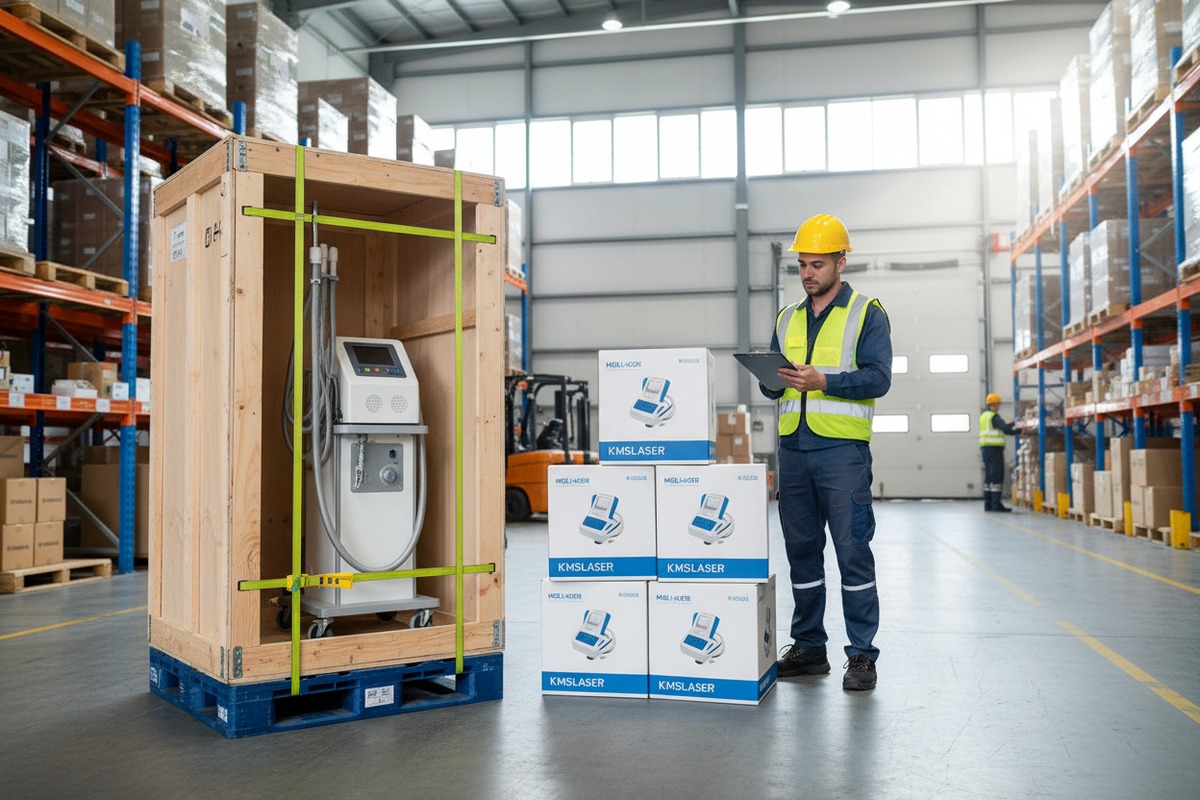
Standing units need custom foam inserts, wooden crates, and anti-vibration protection. Portable units ship in standard cartons with molded foam. The packaging cost per standing unit can be €30–50 higher.
Shipping Cost Comparison
| Factor | Portable Unit | Standing Unit |
|---|---|---|
| Average package volume | 0.10–0.20 m³ | 0.40–0.60 m³ |
| Typical air freight cost (China to EU) | €80–150 | €200–350 |
| Sea freight per CBM | €50–80 | €50–80 (but uses more CBM) |
| Packaging cost | €15–25 | €45–75 |
| Insurance premium | 0.5–1.0% of value | 1.0–1.5% of value |
Customs and VAT Considerations
Import duties for medical or aesthetic devices entering the EU depend on HS code classification 5 and declared value. Both portable and standing units typically fall under similar tariff headings. VAT applies at destination—usually 19–21% depending on country. The key difference is that higher unit values for standing machines mean higher absolute VAT amounts.
Warehouse and Distribution
Standing machines need more warehouse space. If you use a 3PL in Europe, storage fees are cubic-meter-based. Portable units stack efficiently. You can hold more SKUs in the same footprint.
For e-commerce distribution, portable units also ship direct-to-consumer via express couriers. Standing machines usually require freight forwarding and liftgate delivery.
How can I verify that a portable pressotherapy machine meets the same high-end performance and durability standards as a larger standing unit?
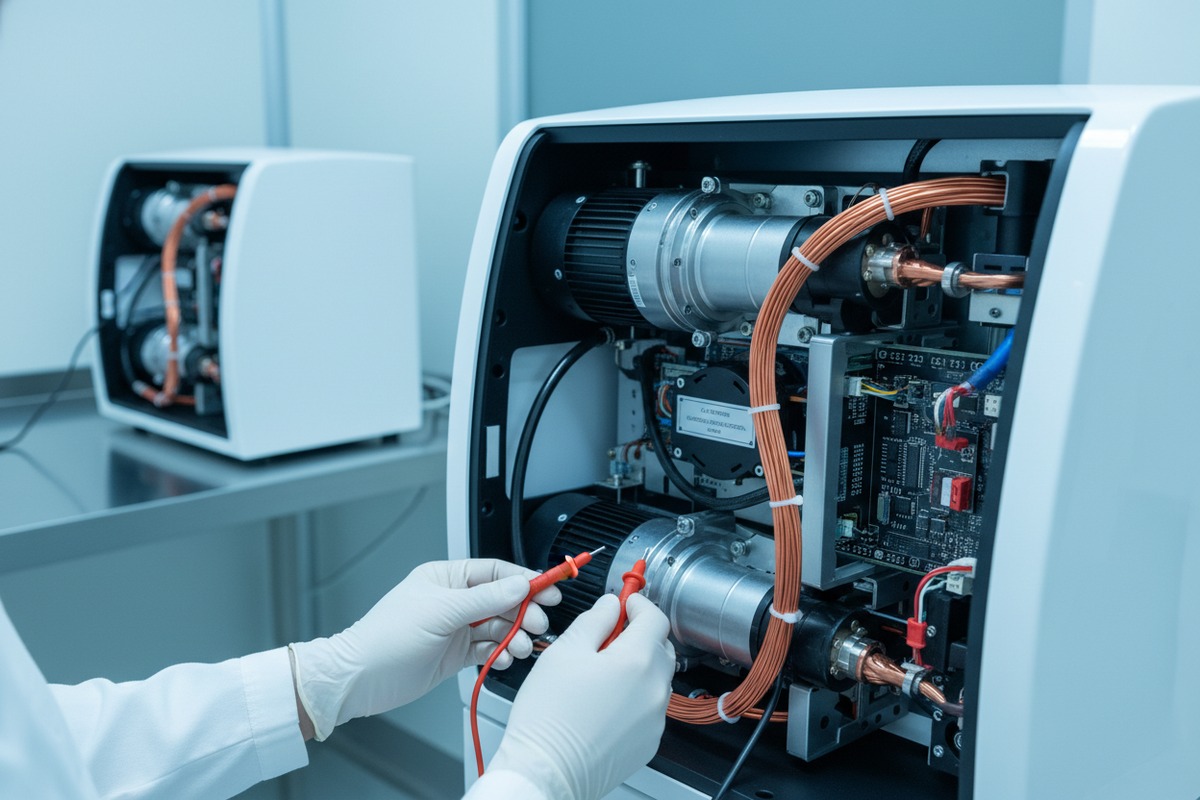
Our quality control engineers test every machine before it leaves the factory. But buyers often wonder: can a small portable unit really match a big clinical machine? The answer is yes—if you know what to check. Size does not equal quality. Specifications do.
Verify portable machine quality by reviewing pressure output range, airbag chamber count, compression cycle programmability, and material certifications. Request ISO 13485 quality management documentation. Demand sample testing and third-party lab reports. Durability depends on component sourcing—not machine size.
Core Performance Specifications
Pressotherapy effectiveness depends on several technical factors:
- Pressure range: Professional units deliver 0–300 mmHg or higher. Ensure the portable unit reaches clinical thresholds.
- Chamber count: More chambers mean finer sequential compression. A 20-chamber suit offers precision. Budget units may have only 8–10 chambers.
- Cycle programs: Advanced machines offer 10+ preset programs plus custom modes.
- Inflation speed: Fast inflate/deflate cycles improve treatment efficiency.
Material and Build Quality
The compression suit material affects lifespan. Nylon and TPU coatings resist wear. Cheap PVC cracks after months. Ask for material specs and supplier certifications.
Control unit housings should be ABS or metal-reinforced plastic. LCD screens should be tempered glass or high-grade acrylic.
Quality Verification Checklist
| Verification Step | What to Request |
|---|---|
| ISO 13485 certification | Certificate copy with scope and validity |
| CE marking 6 documentation | EU Declaration of Conformity, Notified Body number if applicable |
| Pressure calibration report | Third-party lab test showing mmHg accuracy |
| Airbag seam strength test | Burst pressure and cycle fatigue data |
| Control board sourcing | Component brand names (e.g., Omron relays, Siemens chips) |
On-Site and Remote Inspection Options
Before bulk production, request factory video inspections or hire a third-party QC firm like SGS or Bureau Veritas. They can verify assembly processes, component bins, and calibration equipment.
For ongoing orders, implement in-production checkpoints. Our team provides photo and video updates at key stages—PCB assembly, suit stitching, final calibration.
CE Marking and EU MDR Compliance
Pressotherapy devices sold in Europe must bear CE marking. According to EU MDR requirements, manufacturers must demonstrate that devices meet General Safety and Performance Requirements outlined in Annex I. If the device is classified above Class I, a Notified Body must audit the documentation.
Always request the Declaration of Conformity. Verify the Notified Body number if listed. Register the product in EUDAMED if required.
Our R&D and design teams customize both portable and standing units. But each format offers different branding opportunities. Portable machines allow faster iteration and lower MOQs. Standing machines give more surface area for visual branding. Your choice depends on how you want your brand perceived.
Standing pressotherapy machines offer larger branding surfaces—control panels, housing, and integrated screens. Portable units enable faster customization cycles and lower minimum order quantities. For premium European positioning, standing units create clinical authority; portable units suit agile brands targeting e-commerce and home-use segments.

OEM vs. ODM: Understanding the Difference
OEM (Original Equipment Manufacturer) 7 means you provide specifications, and we manufacture to your design. ODM (Original Design Manufacturer) 8 means we design the base product, and you add your branding. Both approaches work for pressotherapy.
For new brands, ODM offers faster market entry. You select from our existing models, add your logo, and adjust the interface. For established brands with unique features, OEM lets you control every detail.
Branding Surfaces by Machine Type
| Branding Element | Portable Unit | Standing Unit |
|---|---|---|
| Logo on housing | Yes (smaller area) | Yes (larger panels) |
| Startup screen logo | Yes | Yes |
| Custom UI colors | Yes | Yes |
| Packaging design | Full customization | Full customization |
| Control panel labels | Limited | Extensive |
| Compression suit branding | Yes | Yes |
Minimum Order Quantities and Lead Times
Portable units typically have lower MOQs—sometimes 50–100 pieces for logo branding. Standing units may require 20–50 pieces for OEM, but custom shell molds push MOQs to 200+.
Lead times for standard branding (logo, UI, packaging) run 3–4 weeks. Full ODM development with custom features takes 8–12 weeks.
Premium Positioning Strategies
For European markets, premium positioning requires more than a logo. Consider:
- Multilingual interface: Support English, German, French, Spanish, Italian out of the box.
- Exclusive color finishes: Matte white, matte black, or metallic accents signal high-end design.
- Premium packaging: Custom foam inserts, branded carry cases, and printed quick-start guides.
- Certification display: Prominently feature CE marks and ISO references.
Case Example: Custom Interface for Germany
One German distributor requested a custom UI with specific treatment protocols for varicose vein prevention and sports recovery. We developed these presets and added German-language instructions. The customized standing unit sold at 30% higher margins than generic imports.
Conclusion
Choosing between portable and standing pressotherapy machines for Europe comes down to knowing your buyers. Assess salon space, shipping economics, quality verification, and branding goals. Both formats can succeed—when matched to the right market segment. Start with clear buyer data, verify quality rigorously, and leverage customization to build your brand's premium identity.
Footnotes
1. Explains the medical application and benefits of pressotherapy. ↩︎
2. Provides an overview of international trade and supply chain processes. ↩︎
3. Details the international standard for medical device quality management systems. ↩︎
4. Defines volumetric weight and its importance in freight calculations. ↩︎
5. Explains the Harmonized System codes for international trade. ↩︎
6. Describes the mandatory European conformity marking for products. ↩︎
7. Clarifies the definition and role of an Original Equipment Manufacturer. ↩︎
8. Explains the concept of an Original Design Manufacturer in manufacturing. ↩︎

 English
 Español de México
 Deutsch
 Français
 العربية
 Русский
