

Every year, our production team sees buyers lose thousands of dollars to damaged pressotherapy machines 1. The culprit? Inadequate packaging that fails during 30-45 day sea voyages. High humidity, salt corrosion, rough handling, and temperature swings inside shipping containers can destroy sensitive pneumatic components, airbags, and control units silica gel desiccant packs 2. This problem hits hard when you only discover damage after customs clearance thousands of miles away.
To verify pressotherapy machine packaging for long-distance sea freight, inspect outer crates for ISPM 15 compliance, confirm internal foam cushioning protects all airbags and the control unit, check for desiccant packs and moisture barriers, verify clear handling labels, and request pre-shipment inspection reports with photographic documentation from your Chinese manufacturer.
Below, we break down exactly what you need to check before your pressotherapy equipment leaves the factory floor. From international standards to moisture protection, each section gives you actionable steps to protect your investment.
How do I verify that my pressotherapy machine packaging meets international sea freight standards?
When we prepare shipments bound for the US or Europe, our quality team runs through a strict protocol. Many buyers assume "standard factory packaging" is enough. It rarely is. Sea freight 3 puts equipment through conditions that domestic shipping never encounters.
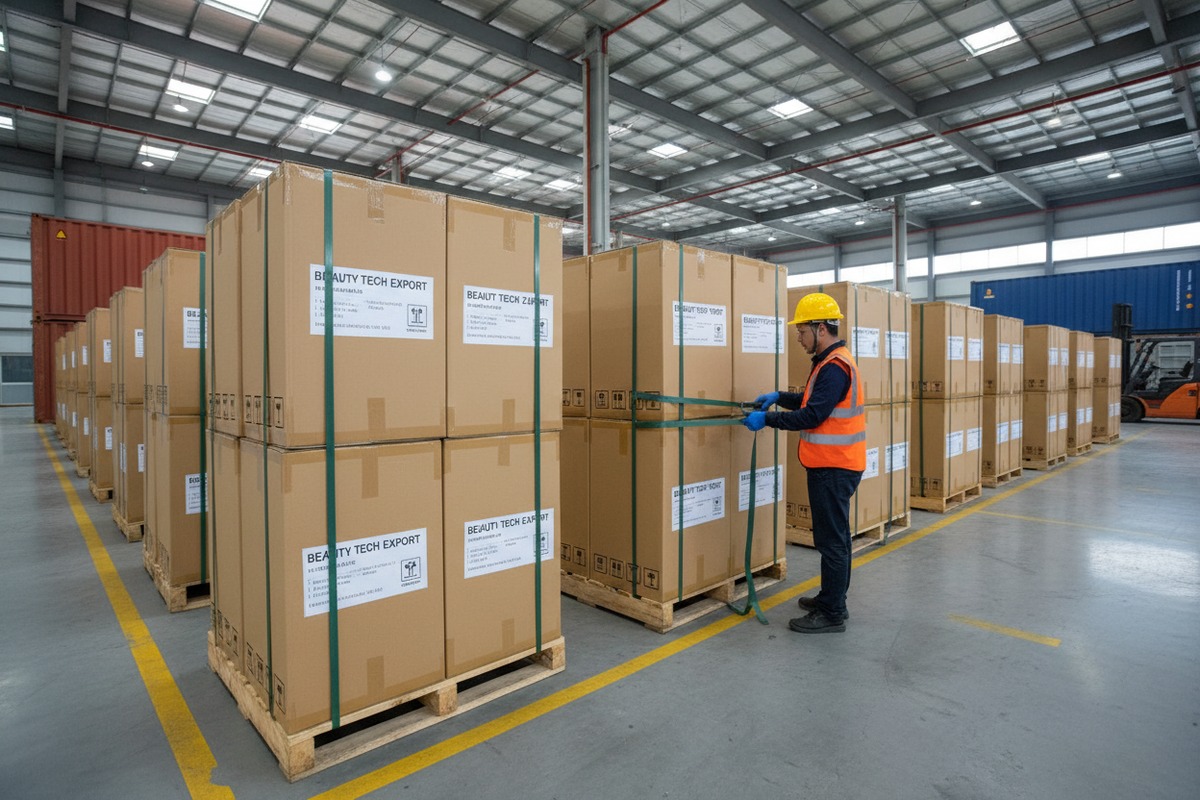
Your pressotherapy machine packaging meets international sea freight standards when it uses ISPM 15 compliant wood materials, double-walled corrugated cartons rated for stacking, moisture-resistant sealing tape, clearly visible handling labels, and palletization that allows forklift access and container stacking without compression damage.

Understanding Sea Freight Packaging Requirements
Sea freight creates unique challenges for pressotherapy machines. Cargo needs to adhere to multiple handling stages, from loading to unloading, and goods should be shielded from external forces, vibrations, and crushing. Your pressotherapy system—typically weighing 40-60kg gross—will be stacked, shifted, and exposed to temperature variations throughout a 30-45 day voyage.
Some cargo types require packaging that prevents water damage or humidity exposure, and many countries enforce wood packaging regulations, requiring compliance with ISPM-15 standards.
ISPM 15 Compliance for Wood Packaging
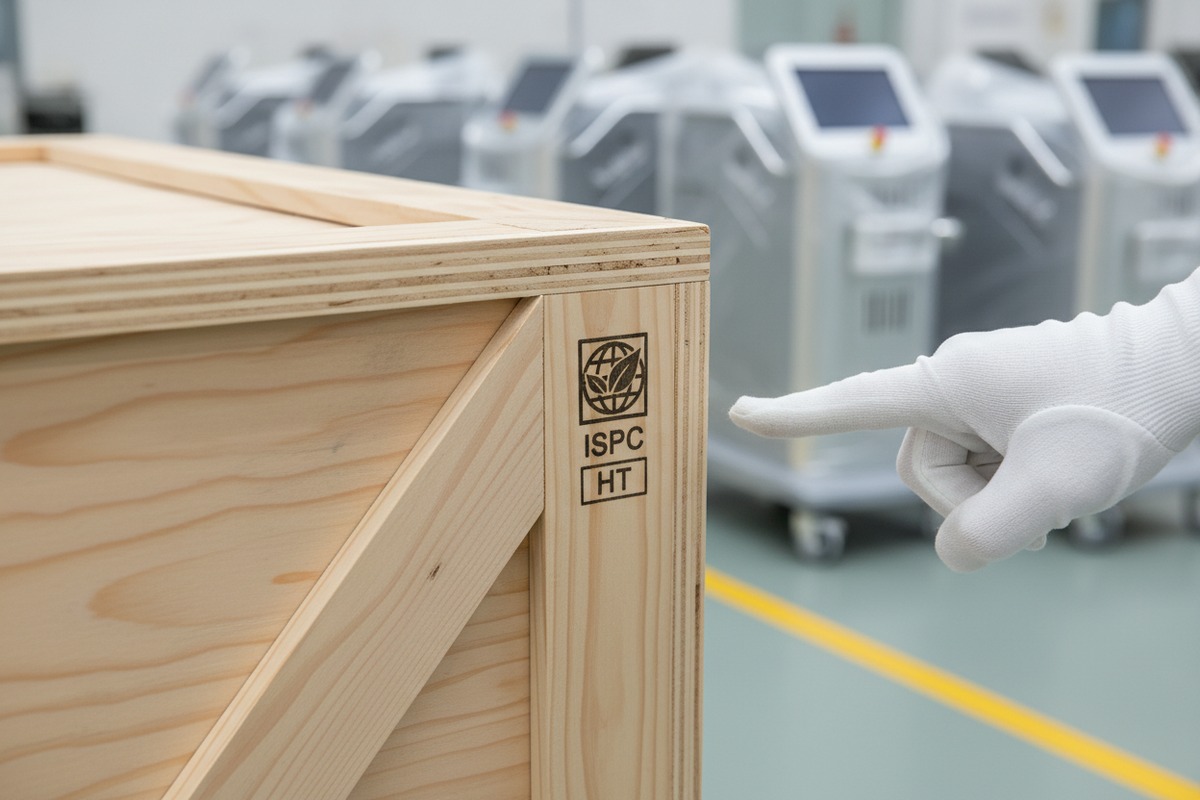
As an importer, you must ensure that all wood packaging material 4 (WPM) entering or transiting the United States is pest-free, debarked, heat-treated or fumigated, and marked with an ISPM 15 logo certifying that it has been appropriately treated. Shipments containing noncompliant WPM will not be allowed to enter the country.
The regulations require that all non-exempt wood packaging material must be heat treated to the core for 30 minutes at 56 degrees Celsius or be fumigated with Methyl Bromide.
Key Packaging Components to Inspect
| Component | What to Check | Pass Criteria |
|---|---|---|
| Outer Carton | Double-walled construction, intact corners | No tears, dents, or water stains |
| Wood Crate/Pallet | ISPM 15 stamp visible | HT or MB treatment code marked |
| Sealing Tape | Moisture-resistant type | No peeling or gaps |
| Labels | Fragile, This Side Up, handling icons | Visible on at least 3 sides |
| Strapping | Metal or heavy-duty plastic bands | Evenly tensioned, secured with seals |
Regulatory Standards Beyond ISPM 15
Proper packaging ensures regulatory compliance and prevents costly delays in the supply chain. Ignoring these rules can lead to customs holds, fines, or rejection of your shipment during customs clearance.
For medical-grade pressotherapy equipment, additional standards apply. Medical devices are used to diagnose, treat, and monitor patients, so their safety is of paramount importance. Package testing helps ensure that the packaging adequately protects the device from physical damage, contamination, and other environmental factors.
ASTM 4169 5 requires definition of acceptance criteria and assurance levels prior to packaging testing. With respect to a medical device, the crucial acceptance criteria are that the product is still fully functional and sterile.
What specific internal padding and moisture protection should I demand for my high-end equipment?
Our engineers learned early that pressotherapy machines need more than basic foam corners. The airbags, pneumatic tubing, and LCD control panels are vulnerable in different ways. Each component requires specific protection strategies.
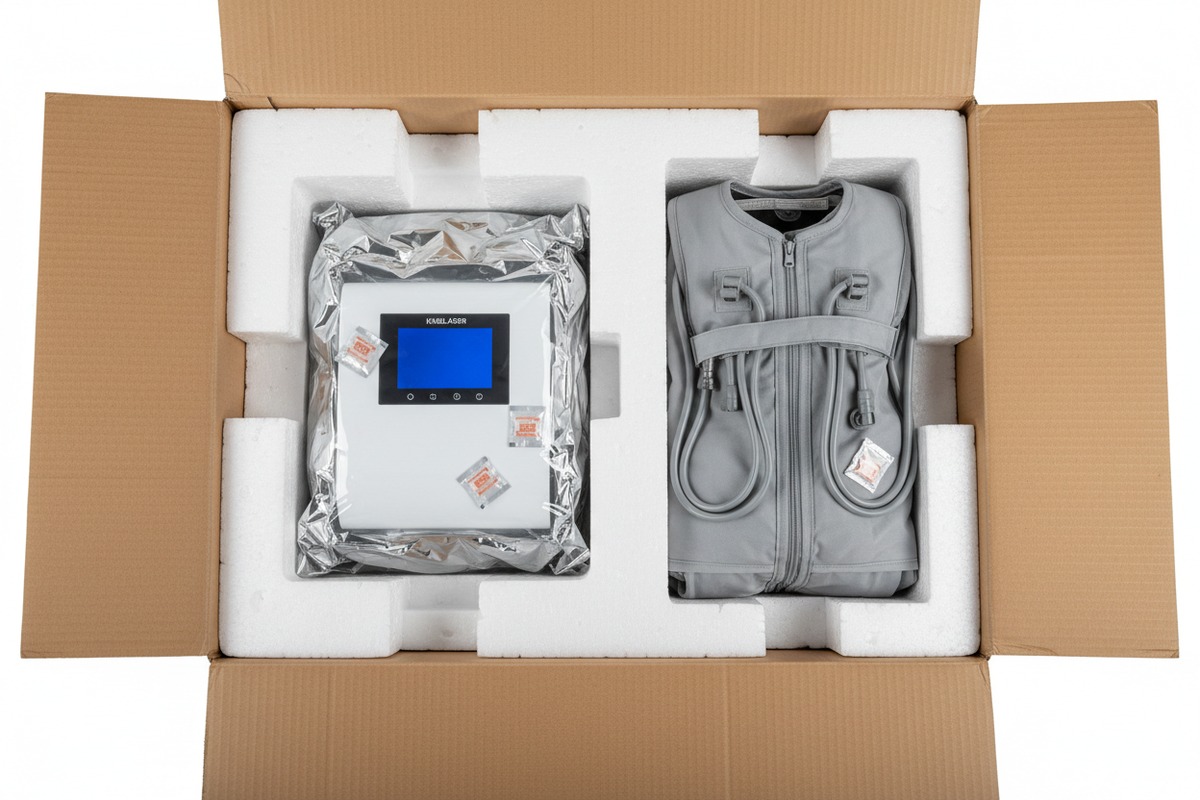
For high-end pressotherapy equipment, demand custom-cut foam inserts for the control unit, individual polyethylene bags for each airbag chamber, silica gel desiccant packs at 10-20g per kilogram of cargo weight, vapor barrier film wrapping the entire unit, and separate compartments for accessories like power cords and fuses to prevent scratching and tangling.
Internal Cushioning Requirements
Pressotherapy machines typically include a host control unit, power cords, 16-44 airbag chambers, full-body compression suits, and accessories like fuses and manuals. Each component faces different risks.
Forces in transit, in addition to load shifting and vibration, may cause shipments to move in virtually any orientation and angle. Bridging occurs when a long package is only supported near its ends. Damage can occur if the bridged package is struck near its center.
Foam and Cushioning Material Options
| Material Type | Best For | Minimum Thickness | Cost Level |
|---|---|---|---|
| EPE Foam | Control units | 50mm | Medium |
| EPE Custom Inserts | Irregular shapes | Custom-fit | Higher |
| Bubble Wrap | Airbag chambers | Double layer | Low |
| Corner Protectors | Carton edges | 75mm arms | Low |
| Shock-Absorbing Foam | Heavy units | 75-100mm | Higher |
Moisture Protection Essentials
Desiccant packs are used in the electronics manufacturing and distribution industry during cargo or shipping to control moisture exposure and prevent products from forming rust or mold.
Silica Gel is a highly effective sustainable material great at absorbing moisture which is up to 40% of its weight, is versatile to use with different products, and is non-toxic, regenerable, and reusable after drying.
Shipping Container Desiccants are heavy-duty moisture-absorbing pouches formulated with high-performance Calcium Chloride compounds 6. Designed for long-haul maritime and inland shipping, these desiccants can absorb up to 300% of their weight in moisture.
Desiccant Selection Guide
Montmorillonite Clay absorbs around 30-40% of its weight in moisture. While it has a lower absorption capacity than calcium chloride, it remains dry even when fully saturated, making it safer for sensitive items like electronics.
For a typical 60kg gross weight pressotherapy shipment:
- Place 600-1200g of silica gel desiccant inside the packaging
- Use indicating silica gel (blue-to-pink color change) for visual verification
- Position desiccant packs near the control unit electronics
- Add container-level desiccant strips if shipping FCL
Vapor Barrier Implementation
Once your equipment has been disassembled, the first step is to wrap the entire surface of the equipment in a layer of plastic film. vapor barrier film 7 This protective layer serves as a barrier against moisture and contaminants during transit.
Packing and shipping products in crates provides protection from the elements. For items that are particularly fragile or delicate, the product inside the crate can be encapsulated with moisture barriers, desiccants, and rust-inhibiting films.
Can I customize the outer crates with my brand logo without compromising the structural durability?
When our customers ask about branded packaging, the answer is yes—with conditions. We work with buyers who want their logo visible on arrival. The key is choosing the right branding method that does not weaken the crate structure.
You can customize outer crates with your brand logo without compromising structural durability by using silk-screening, laser engraving, heat branding, or stenciling methods. These techniques apply logos to the wood surface without removing material from load-bearing components. Ensure branding is applied to side panels rather than structural joints or reinforcement straps.
Branding Methods for Shipping Crates
Branding, silk-screening, or laser engraving make your product or logo stand out. Cut-out handles and stackable shapes allow easy handling. Hinges, clasps, and hardware can be added for securing closure.
For businesses looking to add a custom touch to their wood boxes and crates, multiple printing and branding options are available, allowing for sharp, high-quality logos and designs on the surface of the box. This is perfect for branded packaging. Stamping and heat branding create a more permanent mark. Custom labeling options are also available for retail and commercial packaging needs.
Comparing Branding Options
| Method | Durability | Cost | Detail Level | Structural Impact |
|---|---|---|---|---|
| Silk-Screening | High | Medium | High | None |
| Laser Engraving | Very High | Higher | Very High | Minimal surface |
| Heat Branding | Very High | Low | Low | None |
| Stencil Painting | Medium | Low | Medium | None |
| Adhesive Labels | Low | Lowest | High | None |
Maintaining Structural Integrity
When designing a custom wooden crate, businesses should evaluate several factors. Ensure the crate snugly fits the product without excessive space. Weight will impact material thickness and structural reinforcements.
Different transit methods—road, sea, air—introduce different handling stresses. Crates can be tailored to absorb these dynamics with internal bracing or skid reinforcements.
Best Practices for Logo Placement
We consider that shipping ability and artwork are two key issues when developing a custom crate. Deep knowledge of wood products allows advising on the most attractive visuals while keeping in mind maximum protection.
Recommended logo placement zones:
- Front and back panels (most visible on palletized cargo)
- Side panels above the forklift slot line
- Avoid structural corners and reinforcement joint areas
- Keep branding at least 50mm away from metal strapping lines
ISPM 15 Compliance with Branded Crates
ISPM 15 states the need to treat wood materials of a thickness greater than 6mm and affects all wood packaging material requiring that they be debarked and then heat treated or fumigated with methyl bromide and stamped or branded with a mark of compliance before being shipped internationally.
All certified crates meet ISPM-15 export compliance standards, including heat treatment and official HT stamp markings. This ensures shipments are accepted by customs authorities worldwide without delays or quarantine risks.
Your custom logo can coexist with required ISPM 15 stamps. Position your branding on a different panel than the compliance markings for clarity.
What kind of pre-shipment packaging inspection reports should I expect from my Chinese manufacturer?
In our experience exporting to the US and Europe, buyers who skip pre-shipment inspections face the highest damage claim rates. When we produce pressotherapy machines, we encourage third-party verification. A proper inspection report protects both parties.
From your Chinese manufacturer, expect a pre-shipment inspection report that includes photographic documentation of packaging at multiple stages, quantity verification matching the packing list, dimensional and weight confirmation, carton drop test results following ISTA 1A protocols, desiccant placement verification, seal integrity checks, and a clear pass/fail status with defect classification.
What a Pre-Shipment Inspection Covers
Pre-shipment inspection (PSI) 9 is a part of supply chain management and an important quality control method for checking the quality of goods clients buy from suppliers. PSI helps ensure that production complies with the governing specification, contract, or purchase order.
A Pre-Shipment Inspection is a systematic quality control measure conducted when goods are 80% to 100% complete in production. This inspection process involves an independent verification of product quality, quantity, and compliance to ensure that all items align with the purchase order and contract specifications.
Key Inspection Checkpoints
| Checkpoint | Verification Method | Documentation |
|---|---|---|
| Quantity | Physical count vs. packing list | Photo + count record |
| Packaging Materials | Visual inspection | Photos of carton, foam, desiccants |
| Weight/Dimensions | Scale and measuring tape | Gross/net weight, dims in mm |
| Seal Integrity | Tamper-evidence check | Photos of seals and closures |
| Drop Test | ISTA 1A protocol | Video or sequential photos |
| Labeling | Visual verification | Photos of all labels |
| Product Function | Power-on test | Video of operation |
Understanding AQL Sampling
Pre-shipment inspection prevents costly returns and ensures goods meet buyer, regulatory, and packaging standards. Inspections follow ISO 2859-1 / ANSI/ASQ Z1.4 sampling procedures, with defect classification (critical, major, minor) to decide pass/fail.
ANSI / ASQC Z1.4 (ISO 2859-1) is the international standard for the inspection process. The Acceptable Quality Limit, AQL, is previously determined by agreement of importer and manufacturer and is a necessary part of the contractual agreement.
Packaging-Specific Tests
Cartons are dropped from a specified height following internationally accepted protocols like ISTA 1A to test the durability of the packaging. This drop checks whether the products inside can withstand the transit without damage.
Conducting a carton drop test determines packaging resilience against dropping, piling, tearing, or rupturing during shipment. Typically following globally recognized protocols like ISTA 1A, inspectors determine the appropriate drop height to gauge packaging strength effectively.
Report Deliverables and Timeline
Deliverables include same-day illustrated report with defect counts, photos, and recommendations.
At each stage of the production cycle, the inspector provides a complete and detailed inspection report within 24 hours along with images that enable you to visualize the work developed.
After completing the inspection, the inspection company compiles a comprehensive report detailing all conducted tests and their outcomes, with accompanying photographs of defects or areas of concern. This report assigns a pass, fail, or hold status to the shipment.
What to Request from Your Manufacturer
Before production begins, confirm these documentation requirements:
- Packing list with net/gross weights and dimensions
- Photos of inner packaging (foam placement, desiccant position)
- Photos of outer packaging (carton condition, labels, seals)
- Carton drop test results with before/after photos
- ISPM 15 certificate for wood packaging materials
- Weight verification slip from factory scale
- Certificate of conformity for the pressotherapy unit itself
The process for preparing for packaging inspection can be split into three clear steps: Set packaging inspection requirements in your purchase order when placing your order. Provide both supplier and inspection staff with a QC checklist before production. Provide all retail packaging design files to supplier and inspection staff.
Conclusion
Verifying pressotherapy machine packaging for sea freight requires attention to ISPM 15 wood compliance, proper internal cushioning, adequate moisture protection, and documented pre-shipment inspection. By demanding these standards from your Chinese manufacturer, you protect your investment across 30-45 day voyages. Take action now—review your supplier's packaging protocols and request detailed inspection reports before your next shipment leaves the factory.
Footnotes
1. Explains what pressotherapy is and how the machines work. ↩︎
2. Replaced HTTP 403 with an academic/conservation wiki, an authoritative source. ↩︎
3. Defines sea freight and its role in international shipping. ↩︎
4. Details regulations and requirements for wood packaging in trade. ↩︎
5. Explains the standard for performance testing of shipping containers. ↩︎
6. Replaced HTTP 404 with Wikipedia, a general authoritative source for chemical compounds. ↩︎
7. Defines vapor barrier packaging and its use for moisture protection. ↩︎
8. Official standard for wood packaging in international trade. ↩︎
9. Replaced HTTP unknown with a comprehensive guide from an authoritative quality control company. ↩︎

 English
 Español de México
 Deutsch
 Français
 العربية
 Русский
