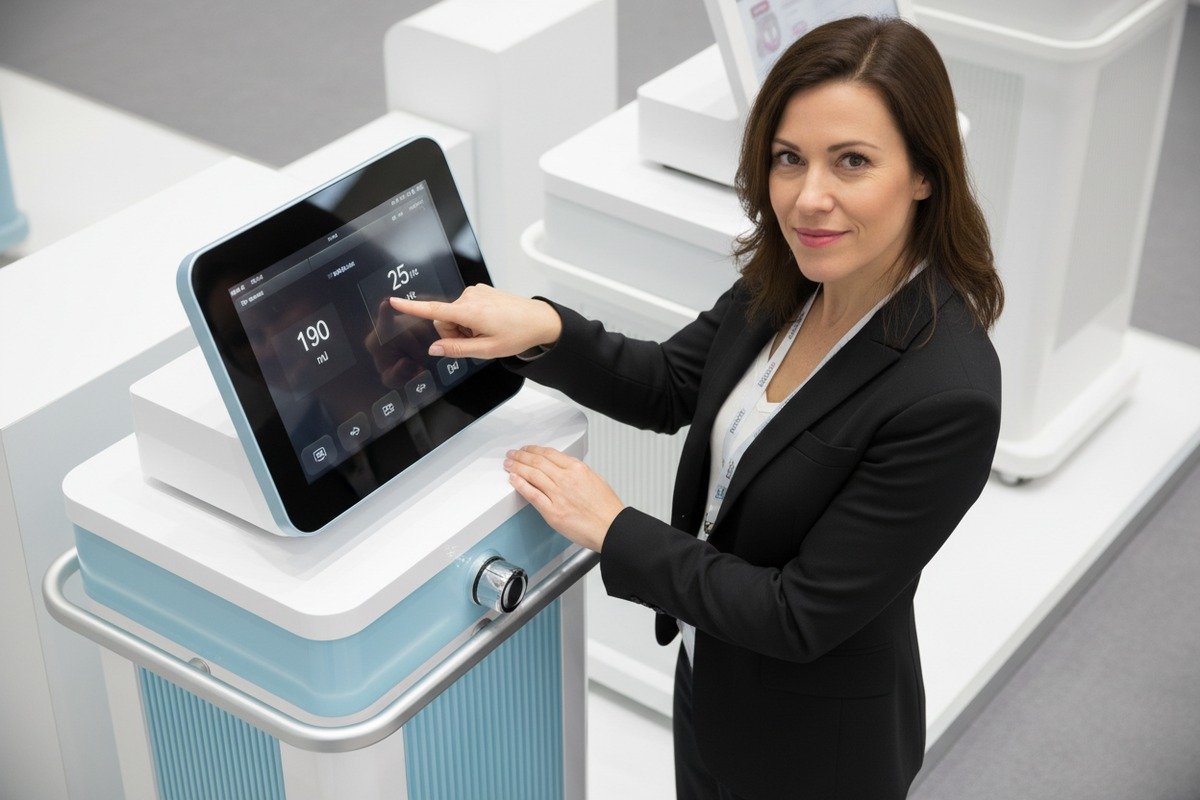
Every week at our Guangzhou production facility, we receive inquiries from brand owners who feel overwhelmed by confusing specifications thermal management specifications 1. They want to import a quality shockwave therapy device 2 but struggle to separate marketing claims from genuine technical value. The wrong choice means unhappy salon clients and costly returns.
When purchasing a shockwave therapy machine, the key technical parameters include energy output range, frequency settings, penetration depth, handpiece durability ratings, cooling system efficiency, and interface customization options. These specifications directly determine treatment effectiveness, device longevity, and your ability to differentiate your private-label product in competitive markets.
Let me walk you through each critical parameter. By the end, you will know exactly what to ask suppliers and how to evaluate their answers.
How do I evaluate the energy output and frequency range to ensure the machine meets my brand’s performance standards?
Many distributors tell us they purchased devices that looked impressive on paper but failed to deliver consistent results. Their salon clients complained about uneven treatments. The problem usually traces back to poorly understood energy specifications.
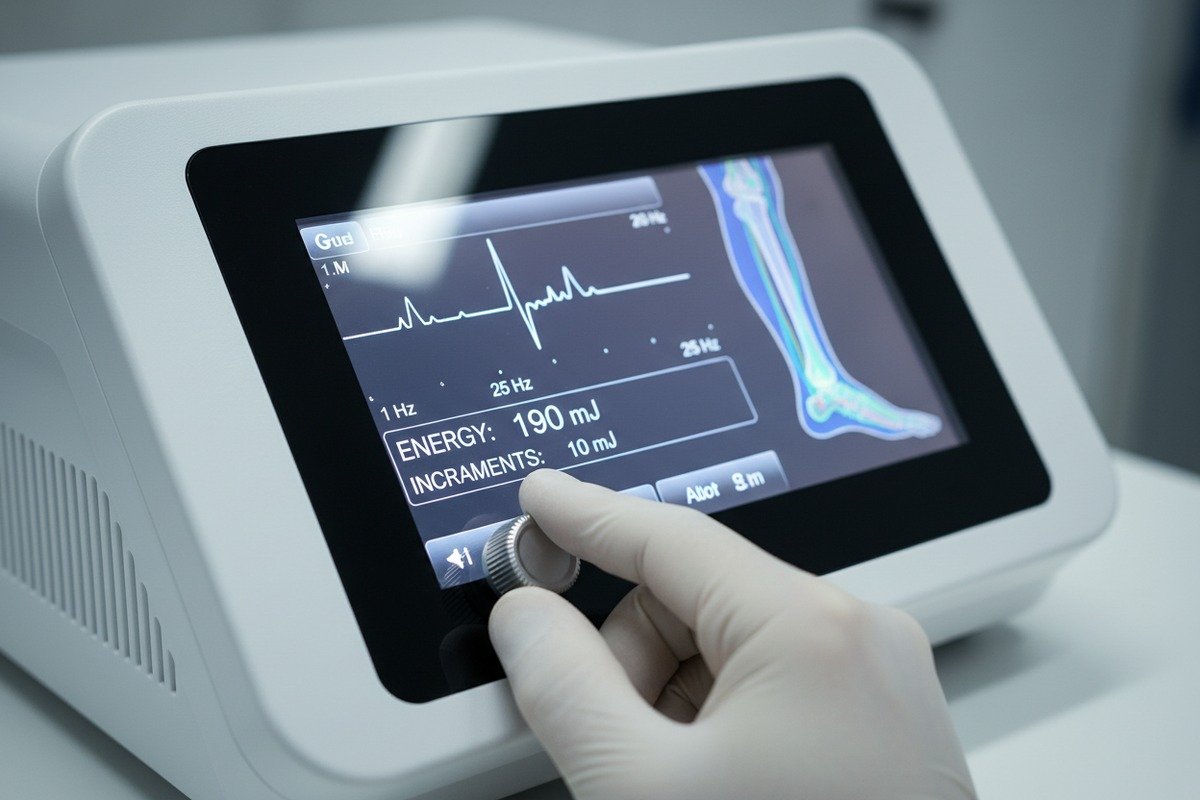
To evaluate energy output and frequency range, examine the adjustable energy range (10-190 mJ for radial systems or 0.01-0.55 mJ/mm² for focused systems), frequency span (1-25 Hz), adjustment increment precision, and intensity consistency guarantee. These four factors determine whether the machine can treat diverse conditions while maintaining performance over millions of shocks.
Understanding Energy Output Measurements
Our engineering team emphasizes that energy output 3 is measured differently across device types. Radial shockwave systems 4 express energy in millijoules (mJ), typically ranging from 10 to 190 mJ. Focused systems 5 use energy flux density (mJ/mm²), which accounts for concentrated energy delivery at specific tissue depths.
When we calibrate our shockwave devices, we ensure 10 mJ adjustment increments. This precision matters because different patient tolerances require fine-tuned settings. A machine jumping from 50 mJ to 100 mJ cannot accommodate sensitive patients properly.
| Parameter | Radial Systems | Focused Systems |
|---|---|---|
| Energy Range | 10-190 mJ | 0.01-0.55 mJ/mm² |
| Frequency Range | 1-22 Hz | 1-25 Hz |
| Penetration Depth | 4-6 cm | Up to 12.5 cm |
| Peak Pressure | 0.1-1 MPa | 35-120 MPa |
| Typical Applications | Surface conditions, trigger points | Deep tissue, chronic conditions |
Frequency Range and Clinical Flexibility
Frequency determines how many shocks the device delivers per second. Higher frequency ranges give clinicians more treatment options. In our experience working with US distributors, they prefer devices offering at least 1-22 Hz for radial systems.
Why does this matter for your brand? Your downstream salon clients treat various conditions. A narrow frequency range limits their treatment protocols. They may need slower frequencies for sensitive areas and faster frequencies for large muscle groups.
Intensity Consistency Over Time
Here is something many buyers overlook. Some devices lose energy output intensity after extensive use. When we design our systems, we focus on maintaining 100% consistent intensity throughout the device lifespan. Premium machines guarantee constant performance across 3 million focused shocks.
Ask your supplier directly: Does energy output remain stable after 500,000 shots? After 1 million? Request documentation proving consistent intensity delivery over time.
What technical specs should I look for to guarantee the durability of the handpiece and internal components?
I recall a conversation with a Canadian distributor who replaced three handpieces within six months. His supplier quoted low prices but used inferior internal components. The replacement costs exceeded what he saved on the initial purchase.
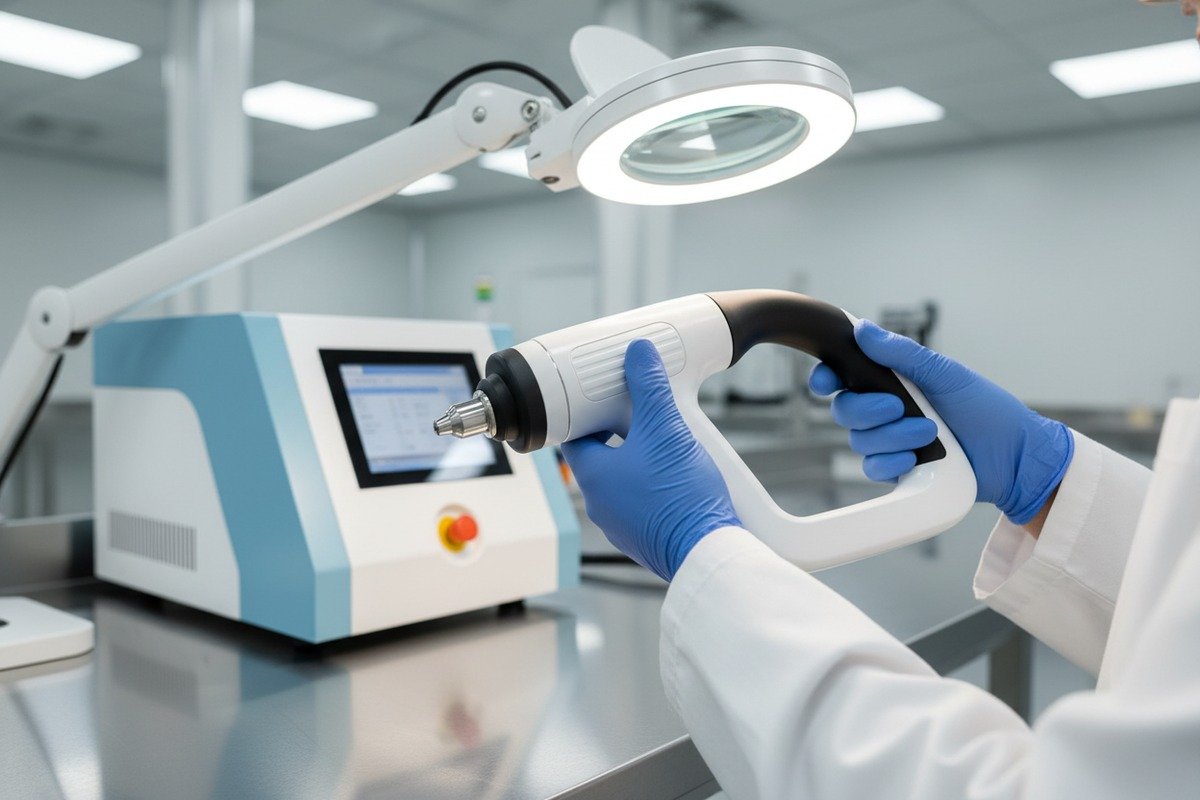
For handpiece and component durability, prioritize devices rated for 2 million or more shots per handpiece, electromagnetic ballistic mechanisms over cheaper alternatives, medical-grade housing materials, and projectile durability certifications. Additionally, verify internal component sourcing and request stress-test documentation from the manufacturer.
Handpiece Lifespan Metrics
Handpiece durability is measured in total shots before replacement becomes necessary. Our production line tests handpieces extensively before shipment. We rate our premium models for 2 million shots per handpiece, which translates to years of high-volume salon use.
Consider this calculation: If a salon performs 500 treatments monthly with 2,000 shots per treatment, that equals 1 million shots annually. A handpiece rated for only 500,000 shots needs replacement twice yearly. At $300-500 per replacement, costs accumulate rapidly.
| Durability Factor | Budget Devices | Mid-Range Devices | Premium Devices |
|---|---|---|---|
| Shots Per Handpiece | 300,000-500,000 | 1,000,000-1,500,000 | 2,000,000+ |
| Projectile Material | Standard alloy | Hardened steel | Aerospace-grade |
| Housing Material | Basic plastic | ABS composite | Medical-grade polymer |
| Warranty Period | 6-12 months | 12-18 months | 24+ months |
| Replacement Cost Impact | High long-term | Moderate | Low long-term |
Internal Component Quality
Beyond the handpiece, internal components determine overall device longevity. At our facility, we source electromagnetic coils 6 from certified suppliers who provide material traceability documentation. This matters because coil degradation causes inconsistent energy delivery.
Ask potential suppliers about:
- Compressor specifications for pneumatic systems
- Electromagnetic coil sourcing and certification
- Circuit board quality standards
- Power supply reliability ratings
Housing and Build Quality
The external housing protects internal components from dust, moisture, and impact damage. When we ship devices internationally, they experience significant handling stress. Medical-grade polymer housings 7 withstand this better than standard plastics.
Our devices use glossy black glass front panels housing integrated LCD screens. This design choice is not purely aesthetic. Glass surfaces resist scratching and allow easy cleaning between patients, maintaining a professional appearance in salon environments.
Can I customize the machine’s technical parameters and interface to differentiate my private-label product?
Brand differentiation 8 concerns most of our clients. When we discuss OEM partnerships, the first question is usually about customization depth. They want their branded device to feel unique, not like a generic white-label product.
Yes, reputable manufacturers offer extensive customization including interface branding, protocol libraries, energy parameter presets, color schemes, physical control layouts, and software features. Customization typically includes logo placement, startup screens, preset treatment protocols, and language options. Advanced customization extends to unique frequency ranges and specialized applicator configurations.
Interface Customization Options
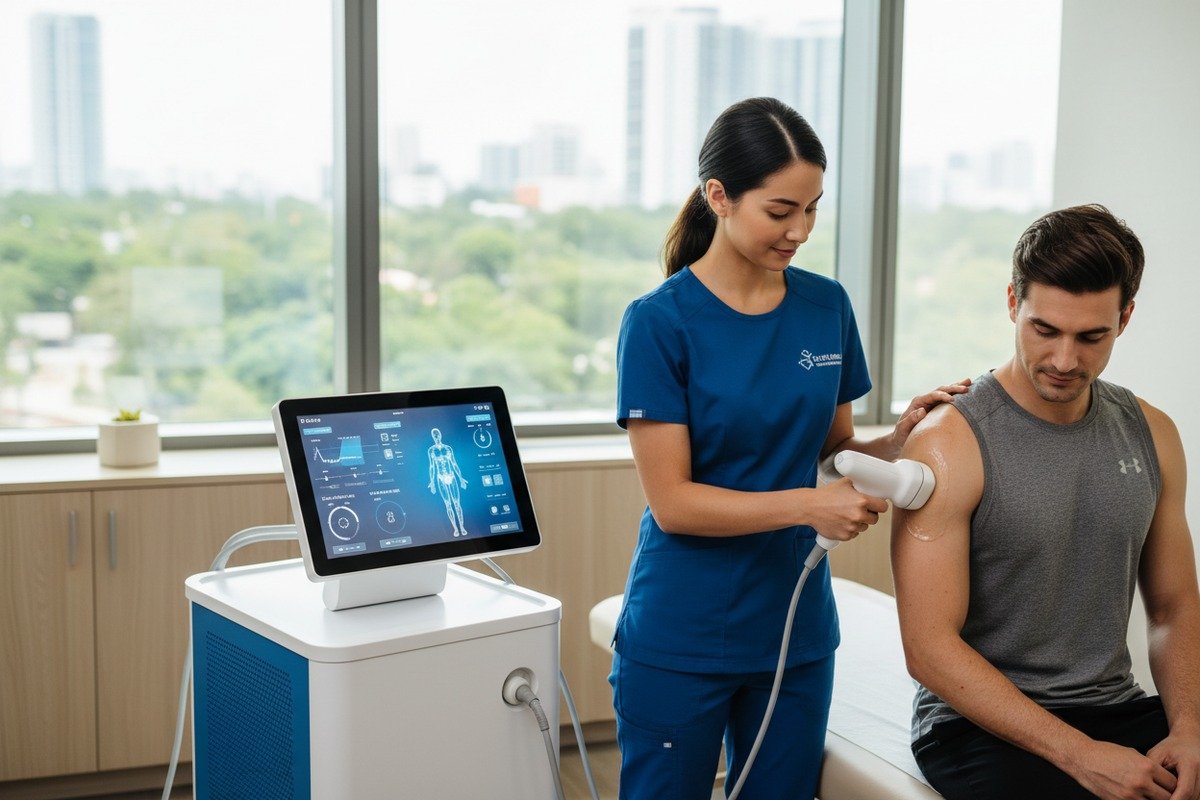
Modern shockwave devices feature 7-12.1 inch color touchscreens. These interfaces offer significant branding opportunities. When we develop private-label versions for distributors, we customize:
- Startup screen logos and animations
- Menu color schemes matching brand identity
- Language options for target markets
- Protocol naming conventions
Our standard interface displays anatomical body diagrams and technical data on the glossy black glass panel. The single metallic circular control knob below the screen provides tactile feedback for energy and frequency adjustments. This dual-control approach (touchscreen plus physical knob) accommodates different user preferences.
Protocol Library Customization
Standard devices include 30-38 preset treatment protocols. However, your brand can benefit from customized protocol libraries. During our OEM discussions, we work with distributors to create protocols specific to their market needs.
| Customization Area | Standard Option | Premium Customization |
|---|---|---|
| Logo Placement | Screen only | Screen, housing, handpiece |
| Startup Screen | Generic animation | Custom branded video |
| Protocol Library | 30-38 presets | Unlimited custom protocols |
| Language Support | 5-8 languages | Custom language additions |
| Color Scheme | Fixed options | Full RGB customization |
| User Interface Layout | Standard layout | Modified navigation flow |
Technical Parameter Presets
Beyond visual customization, technical parameters can be preset for your target applications. If your brand focuses on sports rehabilitation, we can configure default settings optimized for athletic injuries. If aesthetic treatments are your focus, preset parameters can favor those applications.
Some distributors request locked parameter ranges to simplify operation for salon staff. Others want maximum flexibility. We accommodate both approaches based on your downstream customer needs.
Physical Customization Possibilities
Physical customization includes housing colors, panel textures, and control element styles. Our standard models feature smooth white plastic bodies with light blue tapered side panels showing horizontal ribbed texture. This aesthetic choice creates a sleek, futuristic appearance suitable for high-end salons.
For private-label products, we can modify these elements. Custom applicator head configurations are also possible, with diameter options typically ranging from 6 mm to 36 mm for different treatment areas.
How do I verify that the cooling system is efficient enough for my clients’ high-volume salon use?
High-volume salons cannot afford equipment downtime. One European distributor shared that his previous supplier’s device required 15-minute cooling periods between treatments. During peak hours, this created unacceptable delays and frustrated clients.
Verify cooling system efficiency by examining thermal management specifications, continuous operation ratings, handpiece temperature monitoring features, and dual-handpiece availability. Effective systems maintain safe operating temperatures during back-to-back treatments. Request stress-test data showing performance after 20+ consecutive treatment sessions without extended cooling breaks.
Thermal Management Fundamentals
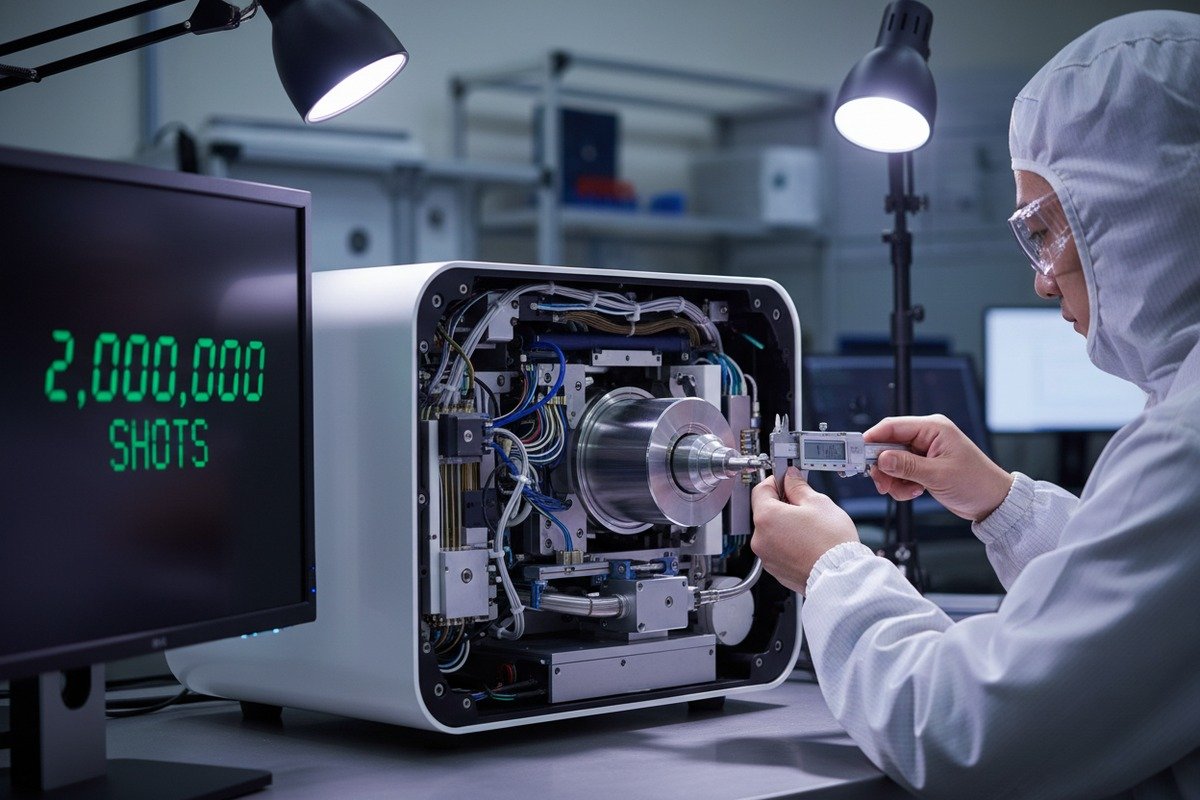
Shockwave devices generate significant heat during operation. The electromagnetic components and projectile mechanisms create friction that accumulates over consecutive treatments. Without adequate cooling, devices overheat, trigger safety shutoffs, and may suffer accelerated wear.
Our engineering approach incorporates active cooling systems that dissipate heat continuously during operation. Temperature sensors monitor handpiece temperature in real-time, displaying readings on the interface. Operators can see exactly when rest periods might be needed.
Continuous Operation Ratings
Ask suppliers for continuous operation specifications. How many treatments can the device perform consecutively without cooling breaks? Premium devices designed for high-volume environments should handle 15-20 treatments back-to-back.
Consider typical salon scheduling:
- Standard treatment duration: 5 minutes
- Changeover time between clients: 2-3 minutes
- Peak hour demand: 8-10 treatments per hour
- Daily treatment volume: 40-60 sessions
A device requiring cooling breaks every 4-5 treatments cannot sustain this pace.
Dual-Handpiece Advantage
Dual-handpiece systems offer elegant solutions to cooling challenges. When one handpiece reaches elevated temperatures, operators switch to the second handpiece while the first cools. This alternating approach eliminates downtime entirely.
At our facility, we manufacture both single and dual-handpiece configurations. For distributors serving high-volume salons, we consistently recommend dual-handpiece models despite higher initial costs. The productivity gains justify the investment.
Temperature Monitoring Features
Modern interfaces should display:
- Current handpiece temperature
- Cumulative shot count for the session
- Operating time since last rest
- Temperature trend indicators
These features help operators manage device health proactively. When our devices detect temperatures approaching safe limits, warning indicators prompt brief pauses before automatic shutoffs become necessary.
Stress Testing and Documentation
Before purchasing, request stress-test documentation. Reputable manufacturers conduct extended operation tests simulating high-volume clinic conditions. This data reveals real-world performance expectations.
Our quality control process includes 48-hour stress testing on sample units from each production batch. We document temperature curves, performance consistency, and component behavior under sustained load. This documentation accompanies shipments to distributors who request it.
Conclusion
Technical parameters determine everything from treatment effectiveness to long-term profitability. Focus on energy output consistency, component durability, customization depth, and cooling efficiency. These factors separate devices that build your brand reputation from those that damage it.
Footnotes
- Discusses the critical role of thermal management in medical device design and safety. ↩︎
- Explains shockwave therapy definition, core function, and clinical uses. ↩︎
- Discusses energy consumption and measurement in various medical devices. ↩︎
- Explains how radial shockwave therapy works, its mechanism, and applications. ↩︎
- Describes how focused shockwave therapy works and its specific applications. ↩︎
- Explains the engineering and applications of electromagnetic coils in medical devices. ↩︎
- Discusses the properties and benefits of medical-grade polymers for device housings. ↩︎
- Defines brand differentiation and its importance in competitive markets. ↩︎

 English
  Español de México
  Deutsch
  Français
  العربية
  Русский