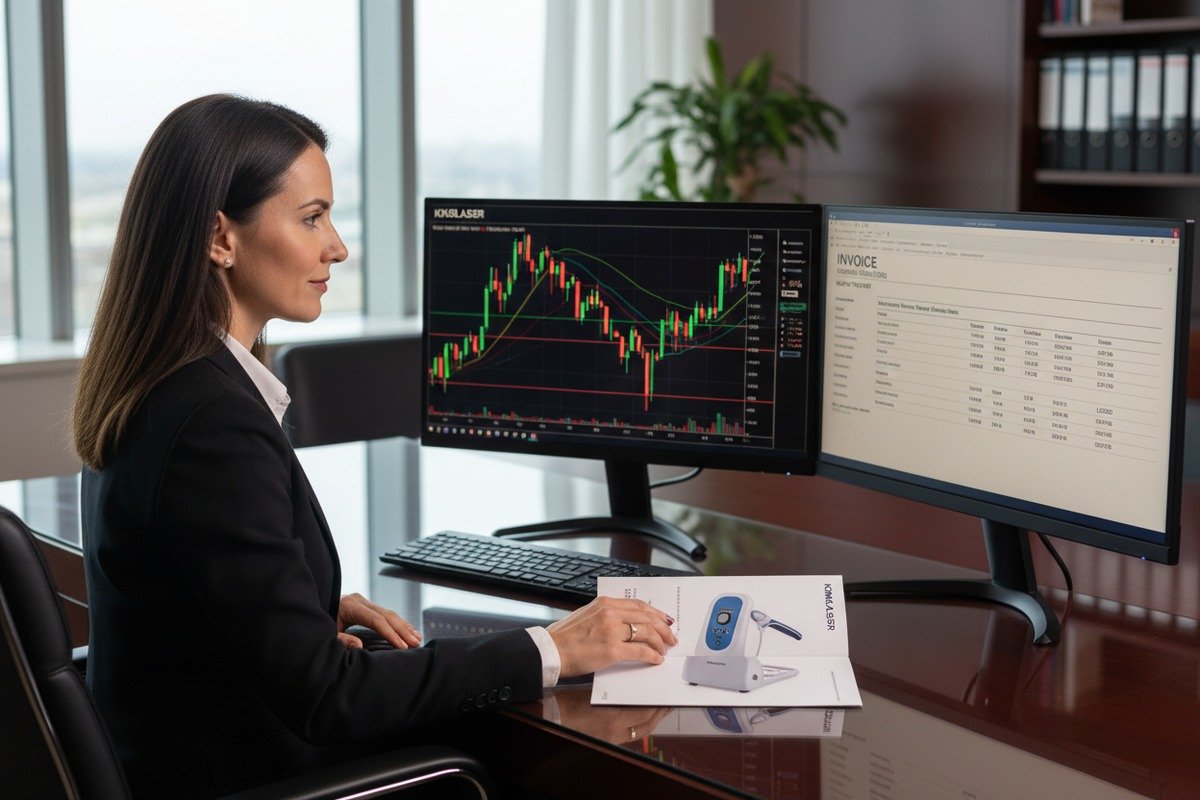
Every week, our production floor ships dozens of shockwave therapy machines 1 overseas. Yet the price buyers pay rarely matches the price we quote. Currency swings create this gap. For importers, this silent cost can destroy margins overnight.
Exchange rate fluctuations directly alter the domestic currency value required for international payments. When your local currency weakens against CNY, EUR, or CHF, the landed cost of shockwave therapy equipment rises—sometimes by 10-30% during volatile periods. This impacts budgets, supplier relationships, and long-term purchasing strategies.
Let me walk you through exactly how these currency shifts hit your bottom line—and what practical steps you can take to protect your business.
How do sudden currency shifts impact my final landed cost for shockwave therapy equipment?
Our export team has seen buyers face $15,000 cost increases on a single order simply because they waited two weeks to send payment. Currency shifts are that powerful. The problem is real, and it catches many first-time importers off guard.
Sudden currency shifts directly increase your final landed cost by changing how much domestic currency you need to complete payment. A 10% weakening of USD against CNY can add $5,000-$15,000 to a $50,000-$150,000 shockwave therapy machine order, depending on the exact rate movement and invoice timing.
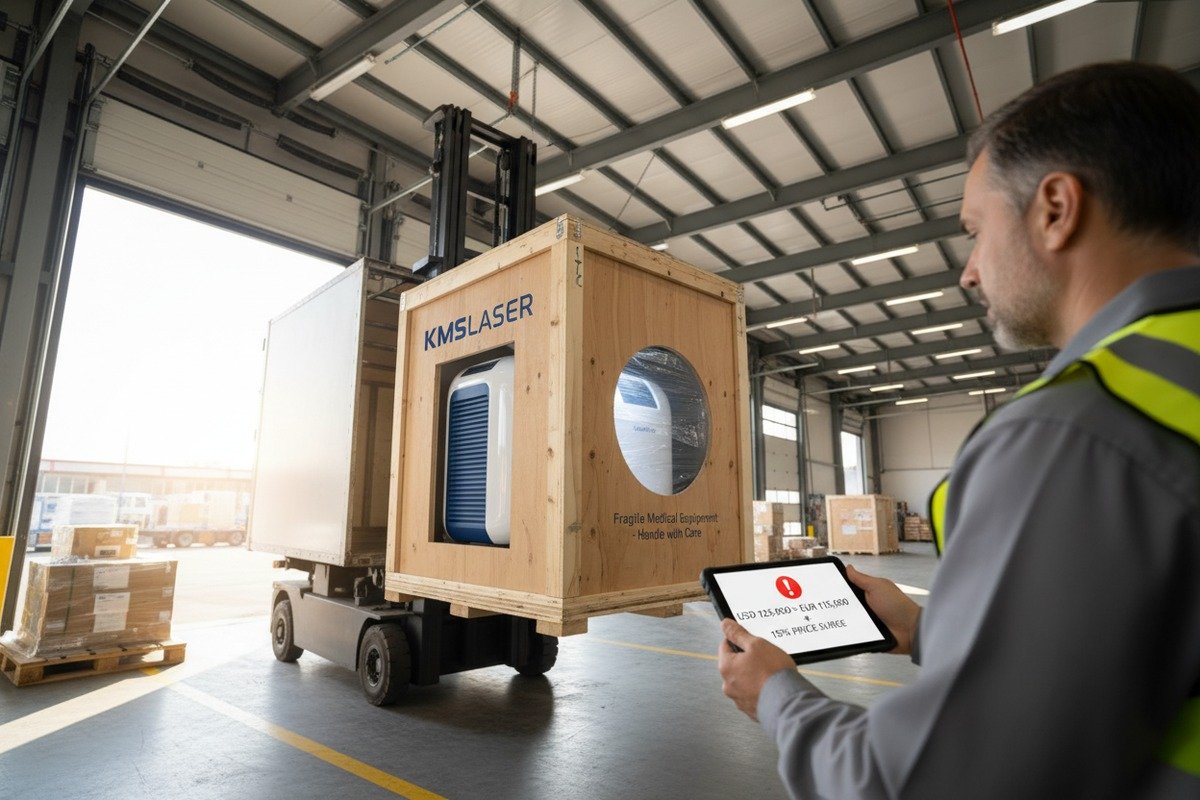
Understanding the Direct Payment Exposure
When you order a shockwave therapy machine from China, the invoice is typically in CNY or USD. If priced in CNY, any strengthening of the yuan against your currency means you pay more.
Here is a simple example. You agree to buy a machine for ¥700,000 CNY. At the time of agreement, the exchange rate is 7.0 CNY per USD. Your expected cost is $100,000 USD.
But payment is due 30 days later. By then, the rate shifts to 6.5 CNY per USD. Now the same ¥700,000 costs you $107,692 USD. That is $7,692 extra—just from waiting.
Real-World Cost Swing Scenarios
| Invoice Amount (CNY) | Rate at Quote (CNY/USD) | Rate at Payment (CNY/USD) | USD Cost at Quote | USD Cost at Payment | Difference |
|---|---|---|---|---|---|
| ¥350,000 | 7.2 | 6.8 | $48,611 | $51,471 | +$2,860 |
| ¥700,000 | 7.0 | 6.5 | $100,000 | $107,692 | +$7,692 |
| ¥1,400,000 | 7.1 | 6.6 | $197,183 | $212,121 | +$14,938 |
These numbers are not rare. In Q1 2026, CNY appreciated 5-7% against USD amid trade tensions. That swing alone pushed many importers into budget overrun territory.
The Compounding Effect of Tariffs
Currency fluctuations do not act alone. Current US tariffs on Chinese components 2—semiconductors up to 50%, for example—add another layer. If the base machine price rises due to tariffs, the percentage impact of currency shifts grows proportionally.
Suppose tariffs add 15% to your machine cost. Now a 10% currency swing applies to a higher base. The absolute dollar impact is larger.
Pass-Through Effects: What Suppliers Absorb vs. Pass On
Not all currency movement hits you directly. Chinese exporters sometimes absorb part of the fluctuation to stay competitive. Research shows suppliers pass through only 30-50% of currency changes in stable markets.
However, during high volatility, this cushion shrinks. Suppliers face their own cost pressures. They cannot absorb unlimited swings.
Why Shockwave Machines Are High-Risk Items
Shockwave therapy equipment typically costs $50,000 to $300,000 per unit. Compare this to consumables like syringes or masks priced under $1,000 per shipment. The higher the unit value, the greater the absolute currency risk.
A 5% swing on a $100,000 machine is $5,000. The same swing on a $500 consumable order is just $25. This is why capital equipment importers need to pay closer attention to FX timing than those buying low-value goods.
What strategies can I use to lock in pricing when the USD to CNY exchange rate is unstable?
In our experience exporting to the US, the buyers who avoid budget surprises share one thing in common: they plan ahead. They do not leave currency exposure to chance. The tools exist. You just need to use them.
To lock in pricing during USD-CNY instability, use forward contracts to fix exchange rates at order placement, negotiate USD-denominated invoices with your supplier, or purchase currency options for flexibility. These hedging tools can save 2-5% compared to unhedged bank transfers and prevent budget overruns.

Forward Contracts: Your First Line of Defense
A forward contract locks in today's exchange rate for a future payment date. You agree with your bank or FX provider to exchange a specific amount of USD for CNY at a fixed rate, regardless of where the market moves.
For example, you sign a forward contract today at 7.0 CNY/USD for payment due in 60 days. Even if the rate drops to 6.5 by then, you still pay at 7.0. Your cost stays predictable.
Forward contracts 3 typically require no upfront payment. You settle on the agreed date at the agreed rate.
Currency Options: Flexibility with Protection
Options work differently. You pay a premium upfront for the right—not the obligation—to exchange at a set rate.
If the rate moves in your favor, you can skip the option and use the spot market 4. If it moves against you, the option protects you.
| Hedging Tool | Upfront Cost | Rate Protection | Flexibility |
|---|---|---|---|
| Forward Contract | None | Full protection at locked rate | Low—must execute |
| Currency Option | Premium (1-3% of value) | Protection with upside potential | High—choose to exercise |
| Spot Payment | None | No protection | None |
Negotiating Invoice Currency
Another strategy is asking your supplier to invoice in USD instead of CNY. This shifts the currency risk to the seller.
Our team handles this regularly. When buyers request USD invoicing 5, we factor in some buffer for our own protection. But it removes uncertainty from your side.
Not all suppliers agree, especially during volatile periods. But it is always worth asking. Larger orders have more negotiating power.
Multi-Sourcing to Diversify Risk
Some importers spread orders across suppliers in different countries. A shockwave machine from Germany priced in EUR and another from China priced in CNY creates natural diversification.
If USD weakens against one currency but strengthens against another, your overall exposure is balanced.
However, this adds complexity. You manage multiple supplier relationships, quality standards, and shipping logistics. It suits larger distributors better than small clinics.
Working with FX Specialists vs. Banks
Traditional bank wire transfers 6 often include hidden markups of 2-4% on exchange rates. Specialized FX providers 7—like OFX, Wise Business, or Western Union Business—offer better rates and lower fees.
Since 2023, hedging adoption in healthcare has grown 40%. FX providers report doubled inquiries for forward contracts. The market is responding to volatility.
How does the timing of my wire transfer affect the actual price I pay for my bulk order?
When we finalize production and send shipping notices, some buyers wire payment immediately. Others wait a week. That delay has cost some customers over $10,000 on a single transaction. Timing is not a minor detail.
The timing of your wire transfer directly determines which exchange rate applies to your payment. Rates fluctuate hourly, so delaying payment by even a few days during volatile periods can increase costs by 2-5%. Paying promptly after invoice receipt minimizes exposure to adverse currency movements.

How Exchange Rates Move Day to Day
Currency markets operate 24 hours a day, five days a week. Rates respond to economic data, central bank announcements, trade policy news, and geopolitical events.
In early 2026, US-China trade tensions caused CNY to swing 1-2% within single trading days. A $100,000 payment sent Monday could cost $2,000 more or less than the same payment sent Friday.
The Hidden Cost of Delayed Payments
Many importers wait for internal approvals, budget reviews, or simply postpone wire transfers due to workload. Each day of delay adds currency risk.
Consider this scenario:
| Day | CNY/USD Rate | Cost of ¥700,000 in USD |
|---|---|---|
| Monday (Invoice Received) | 7.10 | $98,592 |
| Wednesday | 7.05 | $99,291 |
| Friday | 6.95 | $100,719 |
| Following Monday | 6.85 | $102,190 |
Waiting one week cost $3,598 in this example. That money disappears silently into the exchange rate spread.
Payment Windows and Supplier Expectations
Most suppliers offer 7-30 day payment windows. But "window" does not mean "wait until the last day." It means you have flexibility to choose the optimal moment.
Smart buyers monitor rates and act when conditions favor them. If the rate is good on day three, they pay on day three—not day 28.
Working Hours and Cut-Off Times
Wire transfers processed after your bank's cut-off time roll over to the next business day. Weekend transfers wait until Monday. Each rollover extends your exposure.
If you send payment Friday afternoon US time, it may not process until Monday or Tuesday in China. Three extra days of rate risk.
Batch Payments vs. Single Transfers
For bulk orders involving multiple units, some buyers split payments. One payment at deposit, another at production completion, a third at shipment.
Each payment faces its own rate. Splitting can average out volatility—or compound it if rates move consistently in one direction.
| Payment Structure | Rate Risk Profile | Best For |
|---|---|---|
| Single Full Payment | Concentrated on one date | Stable rate environments |
| Split 30/30/40 | Averaged across multiple dates | Volatile periods |
| Weekly Installments | Highly averaged | Very large orders |
Practical Steps to Optimize Timing
- Set rate alerts through your bank or FX provider
- Pre-authorize payments to reduce internal approval delays
- Coordinate with your supplier on flexible invoice dates
- Avoid end-of-week transfers when possible
- Build payment timing into your procurement calendar
Can I negotiate fixed-rate contracts with my manufacturer to protect my budget from exchange volatility?
Our sales team receives this request monthly. Buyers want price certainty. They ask for contracts that hold firm regardless of where CNY moves. It is a reasonable ask. And yes, arrangements exist—but they require trade-offs.
Fixed-rate contracts with manufacturers are negotiable, especially for large or recurring orders. Suppliers may agree to USD-denominated pricing, include price adjustment clauses, or share currency risk through hybrid arrangements. These contracts protect your budget but may require longer commitments or slightly higher base prices.
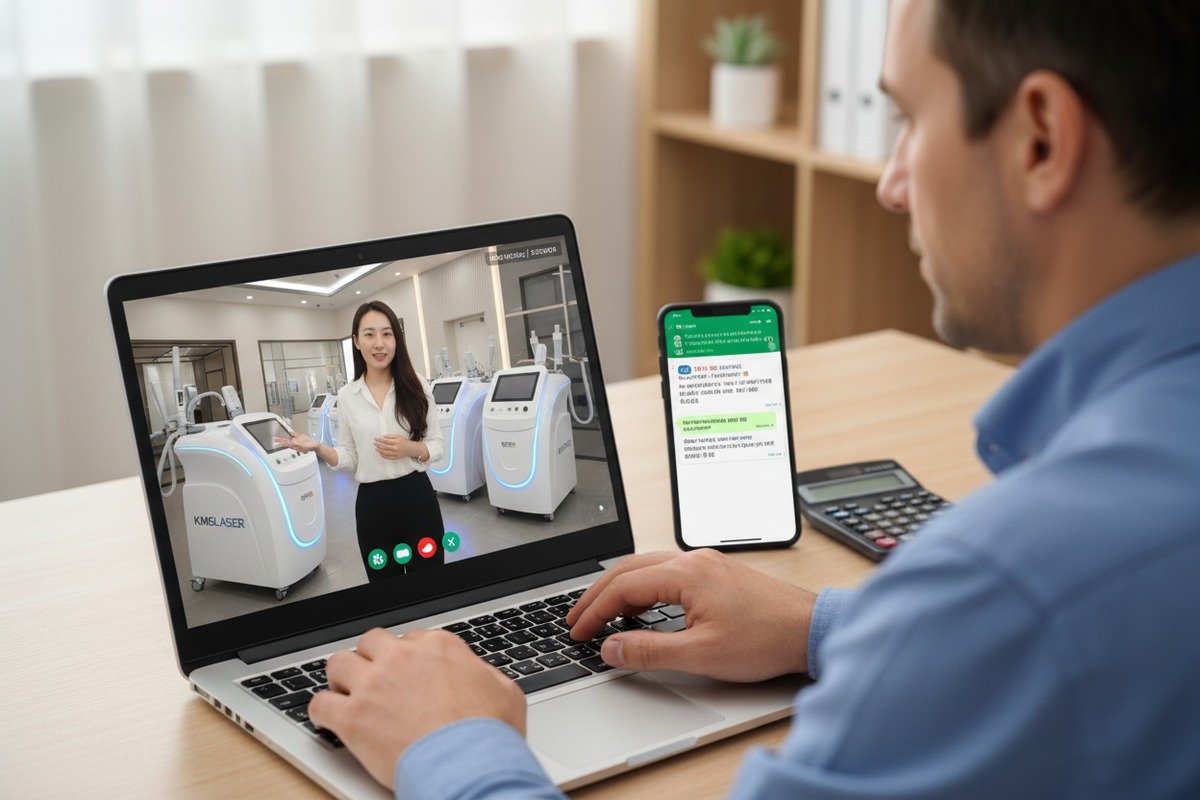
Types of Fixed-Rate Arrangements
There is no single "fixed-rate contract." Several variations exist, each with different risk-sharing structures.
USD-Denominated Invoicing: The simplest approach. Your supplier quotes and invoices in USD. You pay in USD. The supplier handles CNY conversion internally.
Price Lock Agreements: The supplier guarantees a fixed price for a set period—30, 60, or 90 days—regardless of currency movements. After expiration, prices reset.
Currency Corridor Clauses: Both parties agree to absorb fluctuations within a defined range (e.g., ±5%). Currency Corridor Clauses 8 If rates move beyond that corridor, prices adjust proportionally.
What Suppliers Need in Return
Manufacturers take on risk when offering fixed rates. They need compensation or protection.
Common requirements include:
- Larger order volumes
- Longer-term purchase commitments
- Higher base prices (2-5% markup)
- Faster payment terms
- Deposits at order placement
Our production planning benefits from predictable orders. In exchange, we can offer price stability.
Contractual Language to Include
If you negotiate fixed-rate terms, document them clearly. Key clauses include:
| Clause Type | Purpose | Example Language |
|---|---|---|
| Currency Denomination | Defines invoice currency | "All invoices shall be issued in USD" |
| Rate Lock Period | Specifies validity | "Quoted price valid for 60 days from quotation date" |
| Adjustment Trigger | Defines when prices can change | "If CNY/USD rate moves beyond ±7%, parties shall renegotiate" |
| Force Majeure | Addresses extreme events | "Extraordinary currency events exempt from fixed pricing" |
When Fixed-Rate Contracts Make Sense
Fixed-rate arrangements work best for:
- Annual purchase agreements
- Orders exceeding $200,000
- Long procurement cycles (6+ months from quote to delivery)
- Buyers with strict budget approval processes
For one-time purchases under $50,000, the negotiation effort may exceed the benefit. Standard hedging tools offer easier protection.
Building Long-Term Supplier Relationships
Currency negotiation is part of a broader relationship. Suppliers who trust your payment reliability and order consistency offer better terms.
We have buyers who order quarterly. They receive pricing stability because we can forecast production and currency needs. New buyers asking for fixed rates on a first order face more resistance.
Start with smaller commitments. Build trust. Expand terms over time.
Conclusion
Exchange rate fluctuations 9 are a hidden tax on every international purchase. For shockwave therapy machines costing $50,000 to $300,000, even small currency swings create significant budget impacts. Understanding your exposure, using hedging tools, timing payments strategically, and negotiating protective contracts all reduce risk. Take control of currency—before it controls your costs.
Footnotes
1. Provides a general overview of extracorporeal shockwave therapy. ↩︎
2. Provides official information on US trade tariffs affecting Chinese goods. ↩︎
3. Replaced with a working Wikipedia link defining forward contracts. ↩︎
4. Replaced with a working Wikipedia link defining the spot market. ↩︎
5. Replaced with an authoritative U.S. Bureau of Labor Statistics page on trade invoicing currency, which includes USD invoicing. ↩︎
6. Replaced with a working Wikipedia link providing a general overview of wire transfers. ↩︎
7. Replaced with a working Wikipedia link that lists and describes various participants in the foreign exchange market, including those that could be considered specialized FX providers. ↩︎
8. Explains contractual provisions designed to manage currency fluctuation risks. ↩︎
9. Replaced with a working Wikipedia link that specifically addresses exchange rate fluctuations. ↩︎

 English
  Español de México
  Deutsch
  Français
  العربية
  Русский