Every week, our export team handles questions from US buyers confused about hidden costs. You budget for machines, then customs fees surprise you. The final price climbs higher than expected. Understanding import duties upfront saves thousands.
Import duties for shockwave therapy machines under US HS code 9018.31.0090 have a base rate of 0%, but Section 301 tariffs add 7.5-25% for Chinese-origin products. Total landed costs include customs brokerage ($100-300), merchandise processing fees (0.3464%), VAT/GST in destination countries, and freight charges, typically adding 15-35% to your invoice price.
Let me walk you through each cost layer so you can plan your import budget accurately and avoid nasty surprises at the port.
How do I find the correct HS code to calculate my import duties?
When our team prepares export documents, HS code selection is the first step we verify. A wrong code means wrong duties. It can also trigger customs holds and penalties.
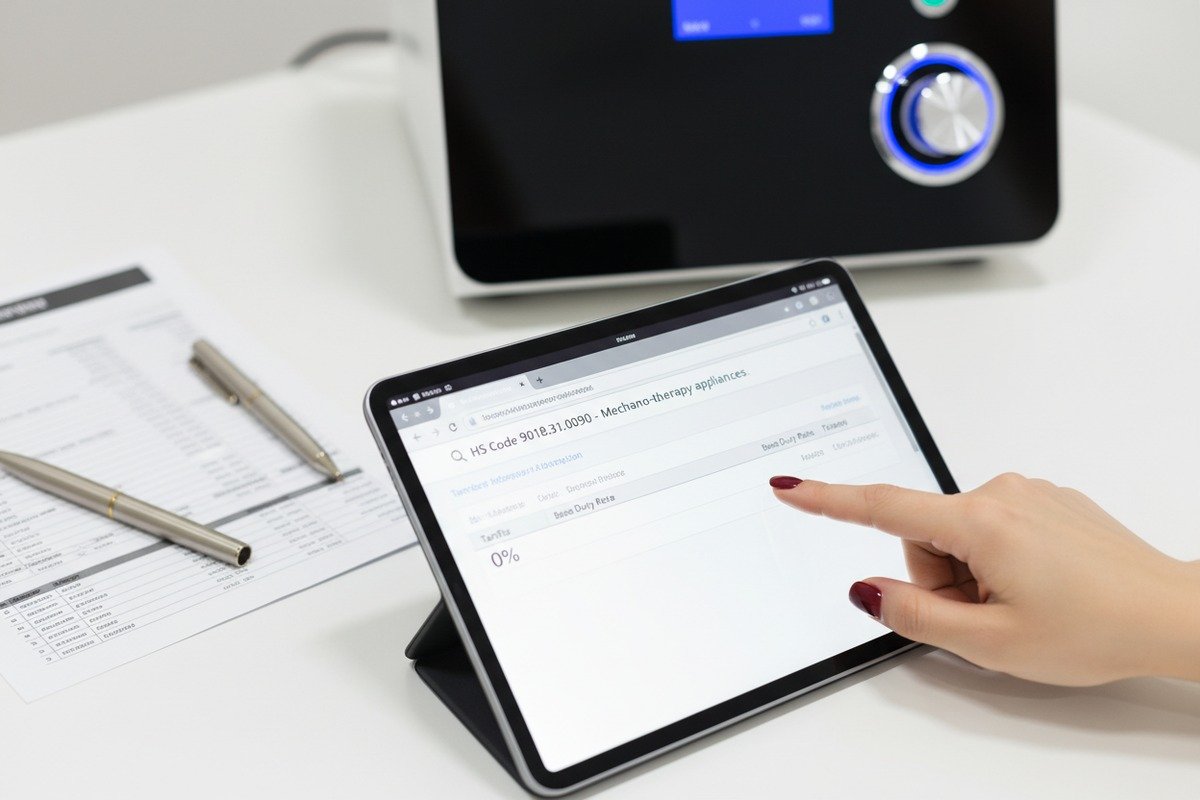
For shockwave therapy machines, the correct US HS code is 9018.31.0090, covering mechano-therapy appliances. This classification determines your base duty rate (0% for most origins) and whether Section 301 tariffs apply. Always verify with a customs broker before shipping, as misclassification can result in fines up to 20% of cargo value.
What Is an HS Code and Why Does It Matter?
The Harmonized System code 1 is a 6-10 digit number that classifies every traded product. Every country uses the first 6 digits identically. The remaining digits vary by nation.
For medical devices like shockwave therapy machines 2, classification falls under Chapter 90 (Optical, medical instruments). Specifically, heading 9018 covers instruments for medical use.
Here is a breakdown of the relevant codes:
| HS Code Level | Code | Description |
|---|---|---|
| Chapter | 90 | Optical, photographic, medical instruments |
| Heading | 9018 | Instruments for medical, surgical use |
| Subheading | 9018.31 | Syringes, needles, catheters, cannulae |
| US Tariff Line | 9018.31.0090 | Mechano-therapy appliances (including shockwave) |
How to Verify Your Classification
I recommend three verification methods. First, check the US International Trade Commission's Harmonized Tariff Schedule 3 online. Search for "mechano-therapy" or "shockwave" to find matching descriptions.
Second, request a binding ruling from US Customs and Border Protection 4. This takes 30-60 days but gives you legal certainty.
Third, consult your freight forwarder or customs broker. When we ship units to US customers, our logistics partners always double-check classifications before departure.
Classification Pitfalls to Avoid
Shockwave machines have multiple components. The main unit classifies differently from replacement applicators or software modules. Some buyers try to import parts separately under lower-duty codes. This is risky.
If CBP determines you intentionally misclassified goods, penalties are severe. Stick with the primary classification for complete units.
Also note: focused shockwave and radial shockwave machines both fall under 9018.31.0090. The technology difference does not change the HS code.
What total landed costs should I expect when importing from China?
Our finance team calculates landed costs for every quotation we send. Many buyers focus only on unit price. But the real cost includes shipping, duties, fees, and compliance testing.
For a typical $30,000 order (10 units at $3,000 each) from China to the US, expect landed costs of $36,000-$42,000. This includes 7.5-25% Section 301 tariffs, merchandise processing fees ($31.67-$614.35), customs brokerage ($100-300), freight ($800-2,500), and potential harbor maintenance fees (0.125% for sea shipments).
Breaking Down Each Cost Component
Let me show you exactly where your money goes. I will use a real example based on recent shipments.
| Cost Component | Amount | Percentage of Invoice |
|---|---|---|
| Product Invoice (10 units) | $30,000 | Base |
| Sea Freight (LCL) | $1,200 | 4% |
| Section 301 Tariff (7.5%) | $2,250 | 7.5% |
| Merchandise Processing Fee 6 | $103.92 | 0.35% |
| Harbor Maintenance Fee | $37.50 | 0.125% |
| Customs Brokerage | $200 | 0.67% |
| Insurance | $150 | 0.5% |
| Total Landed Cost | $33,941.42 | 113.1% |
This example assumes the lower 7.5% Section 301 rate. If your products fall under List 4A at 25%, add another $5,250 to this total.
Understanding Section 301 Tariffs
Section 301 tariffs 7 are the biggest variable cost. These tariffs target Chinese-origin goods specifically. Medical devices were added to List 3 and List 4A during 2018-2019.
Currently, most shockwave therapy machines fall under List 4A at 7.5%. However, some configurations or accessories may face 25% rates. The classification depends on your specific product's HTSUS code.
Here is how Section 301 impacts different scenarios:
| Tariff List | Rate | Product Examples |
|---|---|---|
| List 3 | 25% | Certain medical device components |
| List 4A | 7.5% | Most complete therapy machines |
| Excluded | 0% | Some products with USTR exemptions |
Check the USTR website for current exclusion lists. Some medical devices received temporary exemptions during COVID-19, though most have expired.
Hidden Fees You Might Miss
Beyond the obvious costs, watch for these often-overlooked charges:
Fuel surcharges: Shipping lines add variable fuel adjustments. These fluctuate monthly and can add 15-25% to base freight rates.
Destination handling charges: Ports charge for container handling, documentation, and inspections. Budget $150-400 per shipment.
Demurrage and detention: If you do not pick up cargo quickly, storage fees accumulate fast. Ports charge $100-300 per day after free time expires.
FDA prior notice: Medical devices require FDA notification before arrival. While the filing is free, brokers charge $50-100 to handle it.
Comparing Air vs Sea Freight
When our customers need urgent delivery, air freight is the only option. But it costs significantly more.
For 10 shockwave units weighing approximately 150kg total:
- Sea freight (LCL): $800-1,500, transit 25-35 days
- Air freight: $2,500-4,000, transit 5-8 days
Air freight makes sense for small orders or urgent restocking. For regular inventory shipments, sea freight keeps costs manageable.
Can my supplier manage the customs clearance and door-to-door logistics for me?
When we started offering DDP (Delivered Duty Paid) service five years ago, customer satisfaction improved dramatically. No more surprise fees. No customs confusion. Your machines arrive ready to unpack.
Yes, reputable suppliers can handle complete door-to-door logistics including customs clearance, duty payment, and final delivery. This service, called DDP or DDU (Delivered Duty Unpaid), costs 5-15% more than EXW pricing but eliminates buyer-side logistics complexity. Ensure your supplier has experienced freight forwarder partnerships and understands destination country regulations.
Understanding Incoterms for Medical Device Imports
Incoterms 8 define who pays for what during international shipping. The most common terms for shockwave machine imports are:
| Incoterm | Seller Responsibility | Buyer Responsibility | Best For |
|---|---|---|---|
| EXW | Product ready at factory | All shipping, customs, duties | Experienced importers |
| FOB | Delivery to departure port | Sea freight, customs, duties | Regular buyers with brokers |
| CIF | Freight and insurance to port | Customs clearance, duties | Mid-experience buyers |
| DDP | Everything to your door | Nothing | New importers, convenience |
At our facility, we recommend FOB Guangzhou for experienced buyers and DDP for those who prefer simplicity.
What DDP Service Includes
When you choose DDP shipping, here is what we handle:
Export customs declaration: We prepare all Chinese export documents, pay any export taxes, and clear goods through Chinese customs.
International freight: We book cargo space, manage the shipping schedule, and handle all carrier communications.
Import customs clearance: Our US freight forwarder partner files entry documents, pays duties and fees on your behalf, and coordinates with CBP.
Final delivery: We arrange trucking from the port to your warehouse or clinic address.
Duty and tax payment: We prepay all Section 301 tariffs, merchandise processing fees, and other charges. You see one final price.
Potential Risks of Supplier-Managed Logistics
While convenient, DDP shipping has downsides. You lose visibility into actual costs. Some suppliers pad logistics fees for extra profit.
To protect yourself:
- Request itemized cost breakdowns before agreeing to DDP
- Compare DDP quotes against FOB plus your own freight estimates
- Verify your supplier uses reputable freight forwarders
Also, some customs issues require importer-of-record involvement. If CBP has questions, you may still need to provide documents or attend inspections.
Payment Terms and Logistics Integration
How you pay affects logistics timing. Our standard terms are 30% deposit with order, 70% before shipment.
| Payment Method | Processing Time | Typical Fees | Best For |
|---|---|---|---|
| T/T (Wire) | 1-3 days | $40 flat | Orders under $50k |
| L/C | 10-21 days | $500-800 | Orders over $50k, first-time buyers |
| PayPal | Instant | 3-4% | Samples, small orders |
T/T payments clear quickly, so we can ship faster. L/C provides buyer protection but adds two weeks to timelines. For most mid-sized orders, T/T offers the best balance of cost and speed.
How will Section 301 tariffs impact the final price of my private-label order?
Every private-label customer asks us this question. You want competitive pricing. But tariffs eat into margins. Let me explain exactly how these tariffs affect your business case.
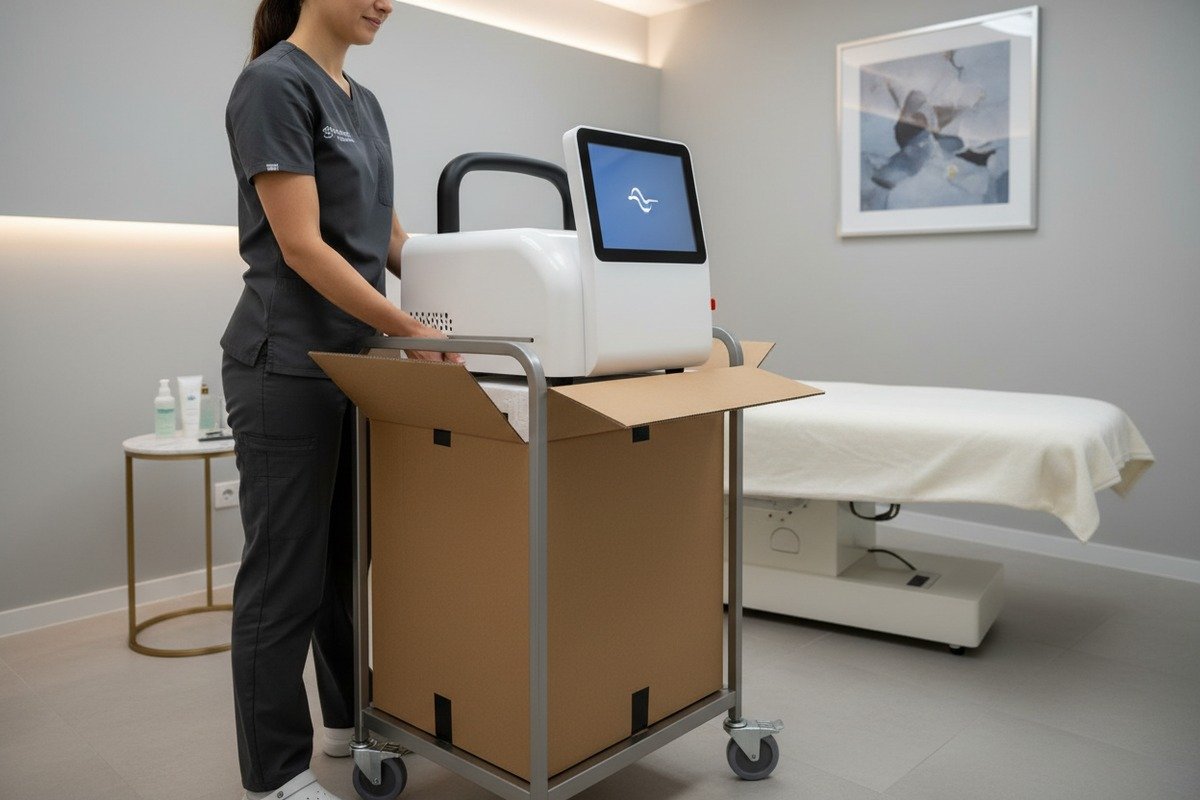
Section 301 tariffs add 7.5-25% directly to your landed cost for Chinese-origin shockwave therapy machines. On a $50,000 private-label order, this means $3,750-$12,500 in additional duties. These costs cannot be avoided for Chinese products but can be mitigated through product design optimization, tariff engineering, or exploring alternative sourcing regions.
Calculating Tariff Impact on Your Margins
Let me show you a real margin analysis for a private-label shockwave machine:
| Cost Element | Without 301 Tariff | With 7.5% Tariff | With 25% Tariff |
|---|---|---|---|
| Unit cost from supplier | $3,000 | $3,000 | $3,000 |
| Shipping per unit | $120 | $120 | $120 |
| Section 301 tariff | $0 | $225 | $750 |
| Other fees per unit | $50 | $50 | $50 |
| Total landed cost | $3,170 | $3,395 | $3,920 |
| Target selling price | $5,500 | $5,500 | $5,500 |
| Gross margin | $2,330 (42%) | $2,105 (38%) | $1,580 (29%) |
As you can see, the 25% tariff scenario cuts your margin by 13 percentage points. This matters significantly for business planning.
Strategies to Mitigate Tariff Impact
Our engineering and sourcing teams have developed several approaches to help customers manage tariff costs:
Strategy 1: Optimize product configuration
Some accessories or components may classify under tariff-exempt HS codes. By shipping certain items separately with proper documentation, you may reduce dutiable value.
Strategy 2: First sale valuation
If you work with a trading company, the "first sale" price (factory to trader) may be lower than your invoice price (trader to you). Customs can accept first sale as the dutiable value in certain cases.
Strategy 3: Foreign trade zones
Importing into US Foreign Trade Zones 9 allows duty deferral. You pay tariffs only when goods enter US commerce. This helps cash flow for inventory held in warehouses.
Strategy 4: Tariff exclusion monitoring
USTR periodically grants product-specific exclusions. While most have expired, new exclusion processes may open. We monitor these for customers.
Alternative Sourcing Considerations
Some customers ask about sourcing from non-China origins to avoid Section 301 tariffs. This is theoretically possible but practically difficult for shockwave therapy machines.
Vietnam, India, and South Korea have emerging medical device manufacturing. However, the shockwave therapy supply chain remains concentrated in China. Key components like electromagnetic coils, precision applicators, and control boards mostly come from Chinese suppliers.
If you source a "Vietnamese" machine, verify the actual country of origin for all major components. Customs may challenge origin claims if substantial transformation did not occur outside China.
Long-Term Total Cost of Ownership
Beyond purchase price and duties, consider five-year total cost of ownership (TCO). Our customers who focus only on initial cost often pay more over time.
| TCO Component | Percentage of 5-Year Cost | Notes |
|---|---|---|
| Acquisition (unit + duties) | 35-55% | One-time but largest |
| Maintenance | 10-20% | Annual calibration, software |
| Repairs | 5-15% | Applicator replacement, parts |
| Training | 3-5% | Staff turnover, updates |
| Compliance | 5-10% | IEC testing, registrations |
Machines with modular designs cost more upfront but save 30-50% on repairs. When our R&D team designs products, we prioritize serviceability to lower customer TCO.
This is where exclusive distributor agreements become relevant. Exclusive rights often come with annual sales commitments, special payment terms, marketing investment requirements, and trade show participation obligations. All these terms are negotiable. We work with distributors to find mutually beneficial arrangements that account for tariff impacts on their margins.
Conclusion
Import duties and fees for shockwave therapy machines require careful planning. From HS code verification to Section 301 tariff calculations, each step affects your bottom line. Work with experienced suppliers who understand these complexities and can support your logistics needs end-to-end.
Footnotes
1. Explains the international system for classifying traded products. ↩︎
2. Provides a comprehensive overview of extracorporeal shockwave therapy. ↩︎
3. Official source for the US Harmonized Tariff Schedule. ↩︎
4. Official government agency responsible for customs and border security. ↩︎
5. Official US Harmonized Tariff Schedule entry for the specific HS code. ↩︎
6. Official government source detailing customs user fees, including MPF. ↩︎
7. Official information on US trade actions under Section 301. ↩︎
8. Official source for international commercial terms. ↩︎
9. Official government information on US Foreign Trade Zones. ↩︎

 English
  Español de México
  Deutsch
  Français
  العربية
  Русский