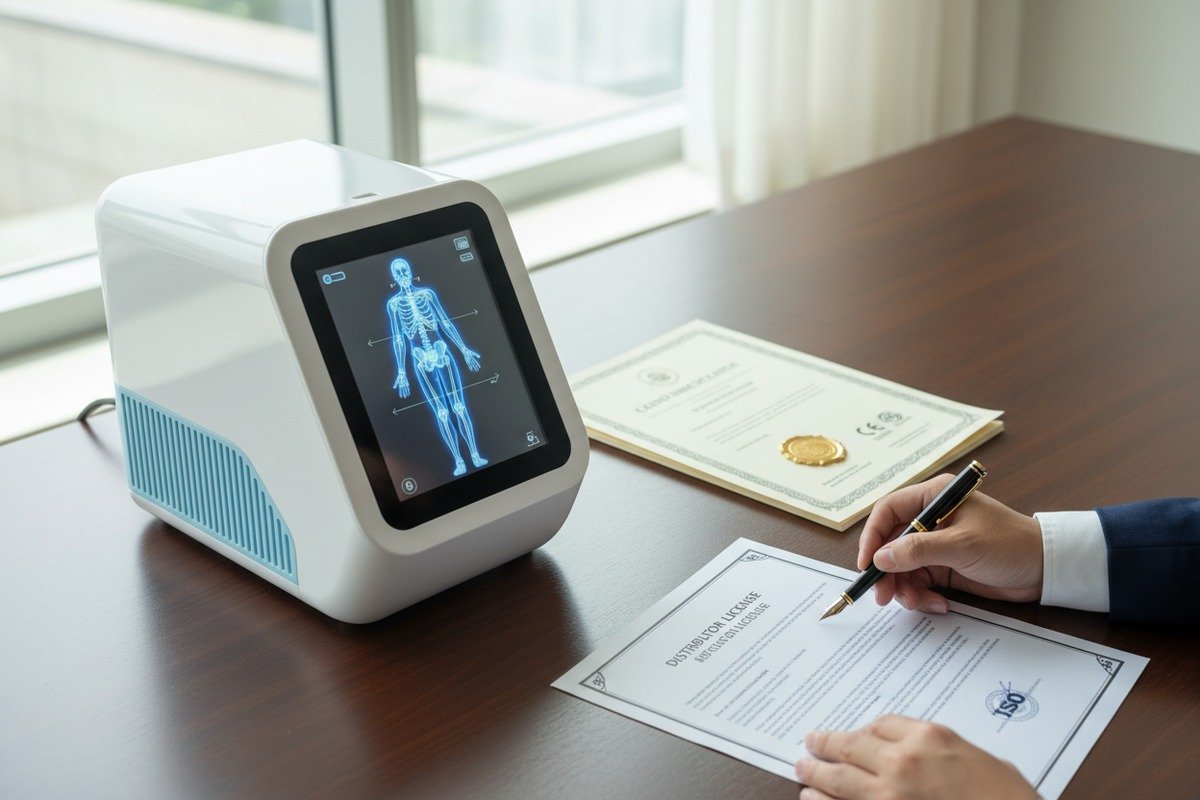
When our team ships shockwave therapy devices overseas, distributors often ask one critical question before placing orders FDA 510(k) clearance letters 1. They need proof that their purchase is legitimate. Without proper paperwork, customs officials may hold shipments ISO 13485 quality certifications 2. Worse, clients face legal risks selling unauthorized equipment.
Yes, reputable shockwave therapy machine suppliers do provide brand authorization documents. These include distributor licenses, trademark usage permissions, CE certificates, FDA 510(k) clearance letters, and ISO certifications. However, document availability varies by supplier, and buyers must request them explicitly during negotiations.
This article explains exactly what documents you should expect from your supplier. We cover official authorization letters, private-label paperwork, customs requirements, and verification steps. Let us walk through each topic in detail.
Our export team handles document requests weekly from buyers in the US and Europe. Many first-time importers assume certificates arrive automatically with shipments. That assumption leads to problems. Customs holds equipment. Competitors question legitimacy. Clients lose trust.
To obtain official brand authorization documents, submit a formal written request to your supplier specifying which documents you need. Reputable manufacturers provide FDA clearance letters, CE certificates, ISO 13485 quality certifications, and distributor authorization letters upon request during contract negotiations.

Understanding What "Brand Authorization" Actually Means
Brand authorization documents serve different purposes than regulatory certificates. Regulatory documents prove a device meets safety standards. Brand authorization proves you have legal permission to sell that brand in your market.
Our engineering team helped design our current shockwave device with the sleek white cuboid body and integrated LCD screen. When distributors want to sell this exact unit under our brand name, they need written permission. That permission comes in the form of an authorization letter.
The Document Request Process
Getting documents requires clear communication. Here is a simple process that works:
- Send a written request via email
- List specific documents needed
- Specify your target market
- Provide your company registration details
- Sign any required NDAs
Most suppliers respond within 5-7 business days. Complex requests involving custom agreements take longer.
Key Documents You Should Request
| Document Type | Purpose | Typical Availability |
|---|---|---|
| Distributor Authorization Letter | Proves legal right to sell brand | Available upon request |
| CE Certificate | EU market compliance | Standard with device |
| FDA 510(k) Clearance | US market compliance | Request specific letter |
| ISO 13485 Certificate | Quality management proof | Standard document |
| Declaration of Conformity 3 | Technical compliance | Included in technical file |
| Trademark Usage Agreement 4 | Legal brand use permission | Requires negotiation |
Why Some Suppliers Hesitate
Not every supplier readily shares documents. Smaller factories may lack proper certifications. Others protect proprietary information. Some simply have disorganized documentation systems.
When our quality control team audits partner factories, we find that roughly 30% cannot produce complete documentation quickly. This delay signals potential compliance gaps.
Red flags include:
- Vague responses to document requests
- Excessive delays beyond two weeks
- Requests for additional fees for basic certificates
- Inability to provide model-specific paperwork
Always verify documents independently. Check FDA databases for 510(k) clearance numbers. Verify CE certificate authenticity through notified body records.
In our experience working with US distributors, proving authorized status matters more today than five years ago. Insurance companies now verify supplier relationships. Hospitals demand documentation. End users research brand legitimacy online.
Qualified suppliers will provide formal distributor authorization paperwork including signed distribution agreements, territory-specific authorization letters, and trademark usage permissions. These documents legally establish your relationship with the manufacturer and protect both parties from liability issues.
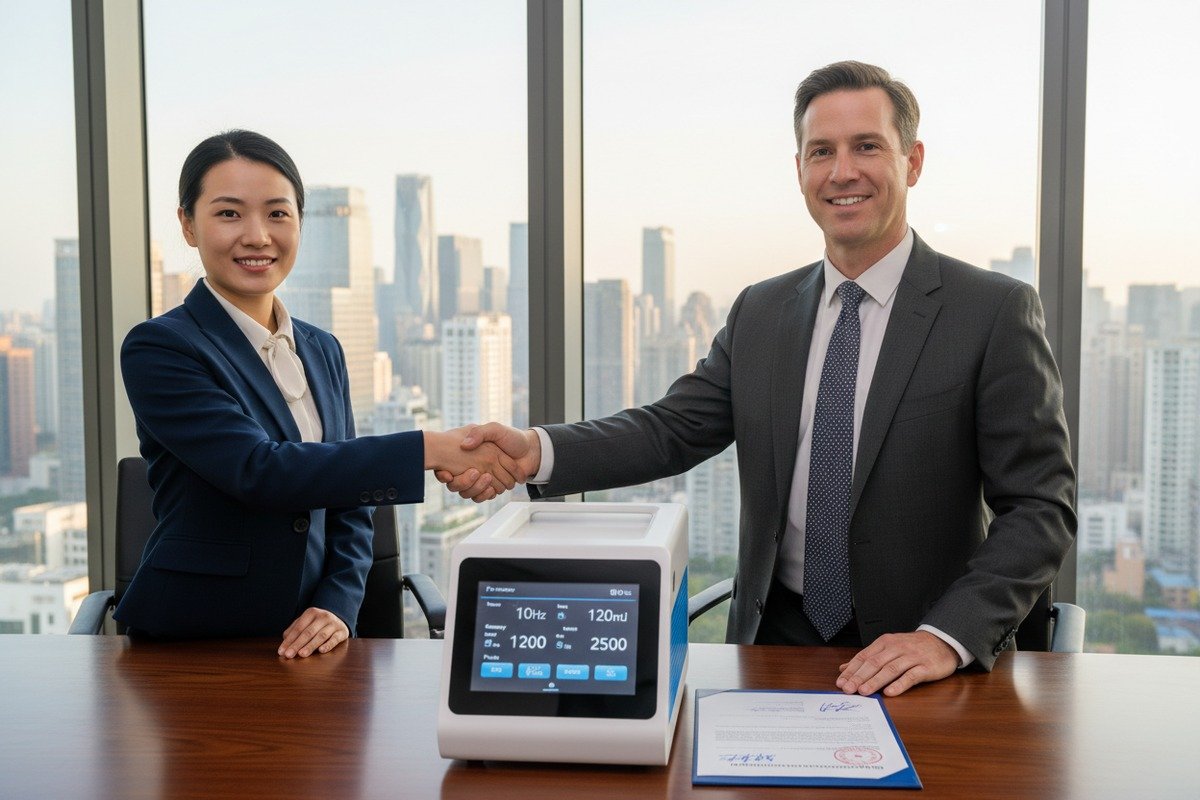
What Distributor Authorization Documents Include
A complete authorization package contains several components. Each serves a specific legal or business purpose.
The primary document is the Distribution Agreement. This contract outlines:
- Territory rights and exclusivity terms
- Pricing structures and payment terms
- Quality and marketing obligations
- Term length and renewal conditions
- Termination clauses
Beyond the main agreement, distributors often need supplementary letters for specific situations.
Territory-Specific Requirements
Different markets require different proof levels. The table below shows common requirements by region:
| Market | Required Documents | Special Considerations |
|---|---|---|
| United States | FDA establishment registration 6, distributor letter | Must reference 510(k) number |
| European Union | CE certificate, authorized representative letter | EUDAMED registration number |
| Canada | MDL license reference, authorization letter | Health Canada compliance |
| United Kingdom | UKCA marking, UK responsible person | Post-Brexit requirements |
| Australia | TGA sponsor authorization | Australian address required |
Protecting Your Business Interests
When our legal team reviews distribution agreements, we include specific protections for both parties. Distributors should verify these elements exist:
Exclusivity clauses define whether you have sole rights in your territory. Without exclusivity, the manufacturer can authorize competitors.
Quality guarantees specify what happens when devices fail. Our warranty terms cover defects in materials and workmanship for defined periods.
Marketing restrictions explain how you may use brand assets. Unauthorized logo modifications or false claims create liability.
Data handling requirements address HIPAA compliance for devices that log treatment sessions. Our touchscreen-equipped units store patient data, requiring proper handling protocols.
Verification Methods for Buyers
Smart distributors verify authorization documents before signing contracts. Use these steps:
- Request references from existing distributors
- Check manufacturer registration in FDA databases
- Verify CE certificate numbers with notified bodies
- Request video calls with factory representatives
- Order samples before committing to large orders
Our sales team welcomes verification calls. Legitimate manufacturers appreciate thorough due diligence because it builds long-term partnerships.
Our OEM and ODM services handle private-label requests monthly. Clients want their brand name on our devices. They need documentation proving the equipment is legitimately theirs. This arrangement requires specific paperwork beyond standard distribution agreements.
Yes, you can request formal authorization letters for private-labeled shockwave machines. This requires an Own Brand Labeling agreement that grants trademark usage rights, specifies manufacturing responsibilities, and clarifies regulatory obligations between the original manufacturer and the private-label partner.
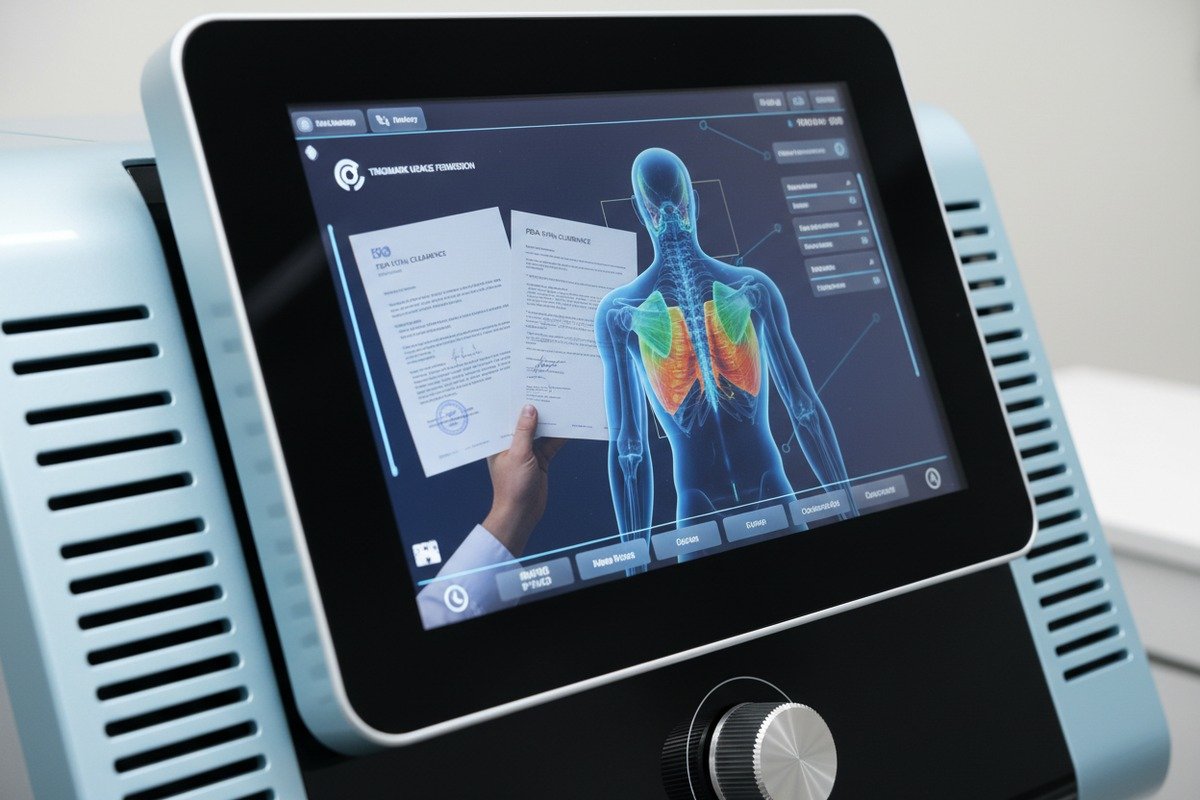
How Private Labeling Differs From Standard Distribution
Private labeling creates a fundamentally different legal relationship than distribution. When you distribute our KMSLASER brand, you sell our product under our name. When you private-label, you sell our product under your name.
This distinction affects documentation requirements significantly.
| Aspect | Standard Distribution | Private Label (OBL) |
|---|---|---|
| Brand ownership | Manufacturer | Distributor |
| Regulatory responsibility | Shared | Primarily distributor |
| Documentation complexity | Lower | Higher |
| Authorization letter type | Distributor license | OBL agreement |
| Trademark requirements | Usage permission | Full licensing or transfer |
| Liability allocation | Defined per contract | Often more distributor-heavy |
Essential Private Label Documents
When our production team prepares private-label orders, we generate a comprehensive document package. This includes:
OBL Agreement: The master contract defining the relationship. It specifies:
- Manufacturing quality standards
- Labeling requirements
- Regulatory responsibility allocation
- Intellectual property rights
- Confidentiality obligations
Letter of Authorization for Private Labeling: A shorter document confirming the OBL relationship exists. Useful for customs and regulatory filings.
Technical File Access: Private-label partners often need access to technical documentation for their own regulatory submissions. Our engineering team provides this under NDA.
Quality Agreement: Separate from the OBL agreement, this defines quality control processes, inspection protocols, and defect handling procedures.
Regulatory Implications You Must Understand
Private labeling shifts significant regulatory burden to you. In the United States, you become the "finished device manufacturer" in FDA's eyes. This means:
- You must register with FDA as a device manufacturer
- You list the device under your establishment
- You bear responsibility for adverse event reporting 7
- You handle recalls if needed
Our compliance team helps partners understand these obligations. We provide guidance but cannot assume your regulatory responsibilities.
Negotiating Fair Terms
Private-label agreements require careful negotiation. Protect your interests by addressing:
Minimum order quantities: Ensure volumes align with your sales projections. Our typical MOQs for private-label shockwave devices start at 50 units.
Exclusivity scope: Define whether you have exclusive rights to the specific configuration. Our sleek tabletop unit with the blue ribbed side panels might be customized uniquely for you.
Update rights: Technology evolves. Ensure you receive access to improved versions during the agreement term.
Exit provisions: Plan for relationship end. Define what happens to remaining inventory, documentation, and regulatory filings.
What documents do I need from my manufacturer to ensure my branded equipment clears customs?
When our logistics team coordinates shipments to US ports, documentation errors cause the most delays. Missing paperwork holds containers for weeks. Wrong classifications trigger inspections. Incomplete certificates generate fees. These problems cost our partners money and damage their customer relationships.
To ensure branded shockwave therapy equipment clears customs smoothly, you need commercial invoices, packing lists, bill of lading, FDA prior notice, CE or FDA certificates, distributor authorization letters, country of origin certificates, and HS code classification documents from your manufacturer.

Core Shipping Documents
Every international shipment requires standard trade documents. These establish basic facts about the goods:
Commercial Invoice: Lists products, quantities, values, and parties. Must match other documents exactly. Discrepancies trigger inspections.
Packing List: Details how products are packaged. Shows weights, dimensions, and carton contents. Customs uses this for physical verification.
Bill of Lading (or Air Waybill): The shipping contract. Shows shipper, consignee, and routing. Required to claim goods.
Certificate of Origin: Proves where goods were manufactured. Affects tariff rates and trade agreement eligibility.
Medical Device-Specific Requirements
Shockwave therapy machines face additional scrutiny as medical devices. Beyond standard trade documents, you need:
| Document | US Requirement | EU Requirement |
|---|---|---|
| FDA Prior Notice | Required before arrival | Not applicable |
| FDA Establishment Registration | Device listing required | Not applicable |
| CE Certificate | Not required for US | Mandatory |
| Declaration of Conformity | Helpful for verification | Mandatory |
| 510(k) Clearance Letter | Highly recommended | Not required |
| Free Sale Certificate | Sometimes requested | Sometimes requested |
| ISO 13485 Certificate | Supports compliance | Supports compliance |
The FDA Prior Notice Requirement
US customs requires electronic prior notice for medical devices before arrival. Our shipping coordinators file this through the FDA's ITACS system.
The notice includes:
- Manufacturer identification
- Product description and classification
- FDA registration and listing numbers
- Estimated arrival information
Without proper prior notice, customs holds shipments at port. Delays average 3-5 days for resolution.
HS Code Classification Matters
Harmonized System codes 8 determine tariff rates and regulatory treatment. Shockwave therapy machines typically fall under:
- 9018.90: Medical instruments and appliances
- Specific subheadings vary by exact device function
Incorrect classification creates problems:
- Wrong tariff rates (overpayment or underpayment)
- Incorrect regulatory channeling
- Potential penalties for misclassification
Our export team includes correct HS codes on all invoices. We recommend buyers verify codes with their customs broker before shipment.
Building a Customs-Ready Document Package
Prepare documents proactively. Do not wait until goods arrive. Create a checklist:
- Commercial invoice with accurate product descriptions
- Packing list matching invoice exactly
- Bill of lading or air waybill
- Certificate of origin
- FDA prior notice confirmation
- Copy of 510(k) clearance or CE certificate
- Distributor or OBL authorization letter
- ISO 13485 certificate copy
Store digital copies in organized folders. Share with your customs broker before shipment. This preparation prevents delays that frustrate your customers.
Our door-to-door logistics service includes document preparation. We coordinate with freight forwarders who specialize in medical devices. This expertise reduces clearance problems significantly.
Conclusion
Brand authorization documents protect your business when importing shockwave therapy equipment. Request them explicitly from your supplier. Verify their authenticity through official databases. Build relationships with manufacturers who provide complete documentation willingly. Your due diligence today prevents costly problems tomorrow.
Footnotes
1. Replaced with the official FDA page dedicated to 510(k) clearances, providing direct and authoritative information on the process. ↩︎
2. Defines ISO 13485 as the international standard for quality management systems in medical devices. ↩︎
3. Details the manufacturer’s legal declaration of compliance with EU medical device regulations. ↩︎
4. Explains the legal contract granting permission to use a trademark under specific conditions. ↩︎
5. Replaced with an authoritative source from the European Medicines Agency (EMA) providing an overview of medical devices and CE marking within the EU regulatory framework. ↩︎
6. Outlines the FDA’s mandatory annual registration for medical device establishments in the U.S. ↩︎
7. Describes the FDA’s mandatory requirements for reporting device-related adverse events and problems. ↩︎
8. Explains the international system for classifying traded products to determine tariffs and regulations. ↩︎

 English
  Español de México
  Deutsch
  Français
  العربية
  Русский