Every week, our engineering team receives the same question from salon owners and distributors: “Can your machines remember my clients?” The frustration is real. Without proper records, therapists repeat assessments, clients explain their history again, and treatment consistency suffers.
Yes, most professional shockwave therapy machines feature integrated user profile records. Modern clinical devices store between 20 and 1,000 patient profiles, logging treatment parameters, session history, and custom protocols. However, capabilities vary significantly by device type, brand, and price tier—home units rarely include these features.
Understanding these systems helps you choose the right equipment for your business patient management system 1. Let’s explore how integrated profiles work and what they mean for your clinic’s daily operations.
How can I track my clients' treatment history directly on the shockwave machine's interface?
When we design our shockwave machines at the production facility, client tracking ranks among the top three requested features. Distributors tell us their salon clients struggle with paper records. They want everything on one screen. The challenge? Not all machines deliver equal tracking capabilities.
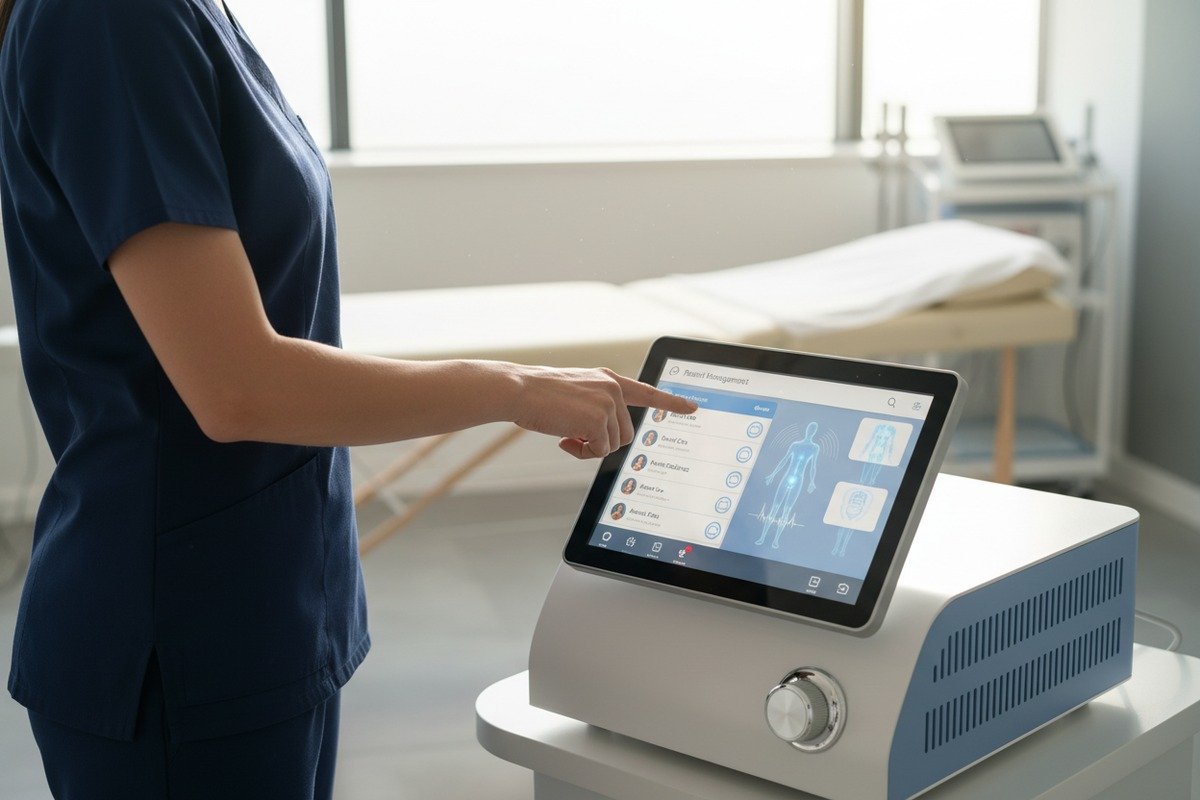
You can track clients' treatment history through the machine's built-in patient management system. Most professional models feature touchscreen interfaces that store patient identifiers, session logs with energy levels, shock counts, treatment areas, and operator notes. Simply search by name or ID to view complete treatment timelines instantly.
What Data Gets Recorded?
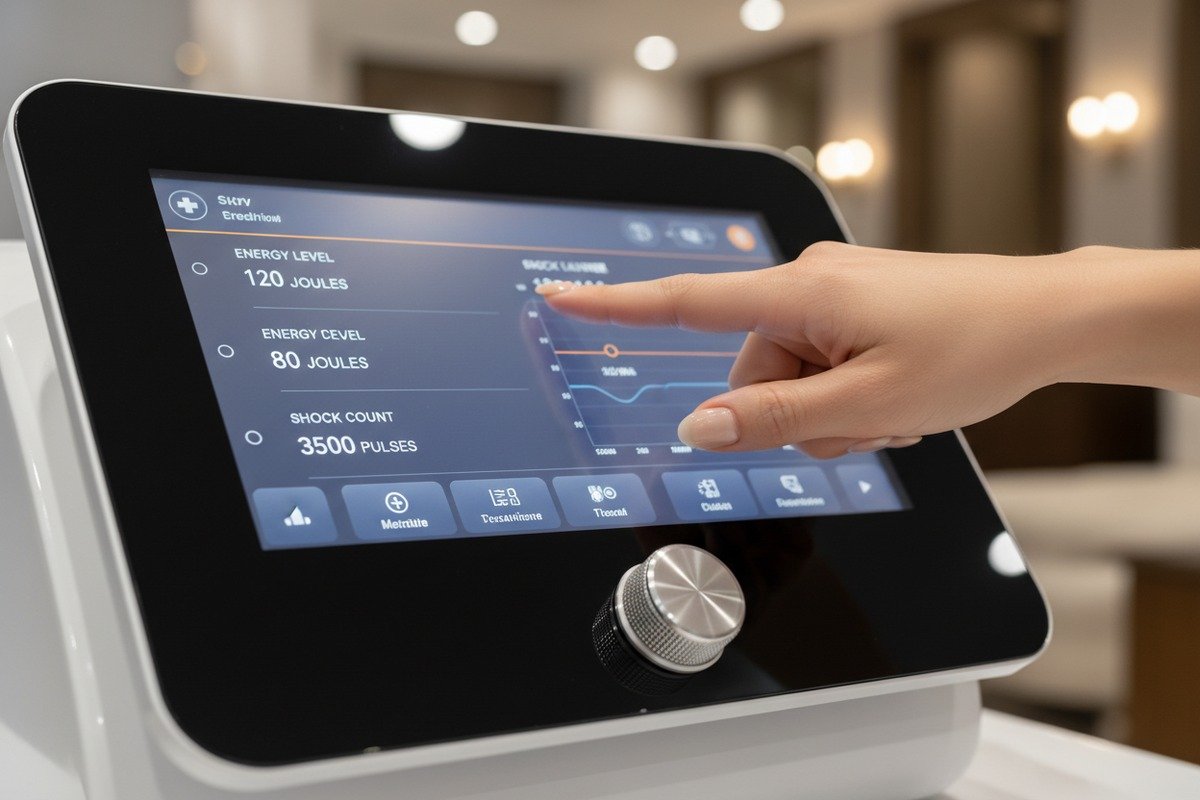
Professional shockwave machines log multiple parameters during each session. Our quality control team tests every unit to ensure accurate data capture. The typical recording includes:
- Energy flux density applied
- Frequency settings in Hz
- Total shock count delivered
- Pressure levels in bars
- Treatment area targeted
- Session duration
- Operator notes and observations
Understanding Profile Capacity
Different machines offer different storage limits. This matters for busy clinics seeing dozens of clients weekly.
| Device Type | Profile Capacity | Typical Price Range | Best For |
|---|---|---|---|
| Basic Radial | 20-50 profiles | $2,000-$5,000 | Small clinics |
| Mid-Range Radial | 50-200 profiles | $5,000-$12,000 | Medium practices |
| Professional Focused | 200-500 profiles | $12,000-$25,000 | Large clinics |
| High-End Focused | 500-1,000+ profiles | $25,000+ | Multi-location chains |
Search and Recall Functions
Finding a returning client should take seconds, not minutes. Modern interfaces offer multiple search methods. Alphabetical lists work for smaller databases. ID lookup suits clinics using membership numbers. Touchscreen selection speeds up the process for therapists wearing gloves.
Our LGT-2520GP model, for example, combines all three methods. Therapists tap the search icon, type the first few letters, and the system displays matching profiles. The entire history appears on screen within two taps.
Data Retention After Power Loss
Power outages happen. What happens to your data? Professional machines use non-volatile memory 2. This means profiles survive power interruptions. Budget models may not guarantee this protection. When evaluating equipment, always ask: "What happens to stored data if power fails?"
We build redundancy into our systems precisely because clients in humid climates report more electrical issues. The memory retains all information regardless of power status.
Can I customize the software to include specific data fields for my brand's user profiles?
During product development meetings, our software engineers constantly debate which fields matter most. Every distributor has different needs. Some want to track skin type. Others need pain scale ratings. The question becomes: how flexible should the system be?
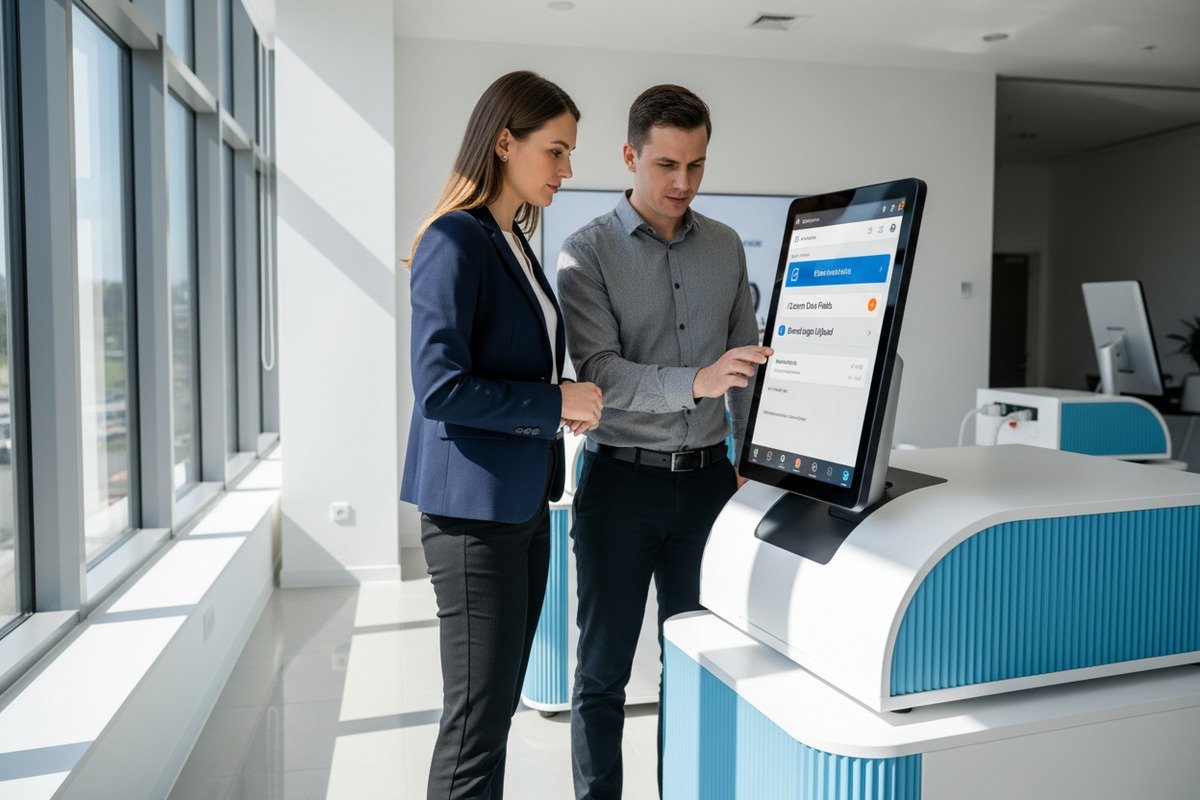
Yes, many professional shockwave machines allow software customization for user profiles. Mid-to-high-end models offer configurable data fields, custom protocol libraries, and adjustable assessment tools. Some manufacturers provide OEM software modifications, letting brands add proprietary fields like loyalty tiers or specific treatment categories.
Standard vs. Custom Fields
Most machines come with standard fields: name, ID, age, treatment date, parameters used. Custom fields extend functionality. These might include:
- Pain scale ratings (NRS/VAS)
- Range of motion measurements
- Condition-specific notes
- Pre/post-treatment photos
- Membership status
- Referral source
When we work with brand owners on ODM projects, software customization takes center stage. One European distributor requested a field for "treatment contraindications." Another wanted automated reminders for follow-up sessions. Both features required firmware modifications during production.
Protocol Library Customization
Beyond data fields, protocol libraries offer another customization layer. Standard libraries include presets for common conditions:
| Condition | Typical Energy | Frequency | Shock Count |
|---|---|---|---|
| Plantar Fasciitis | 2.0-3.0 bar | 10-15 Hz | 2,000-3,000 |
| Tennis Elbow | 1.5-2.5 bar | 8-12 Hz | 1,500-2,500 |
| Trigger Points | 2.0-3.5 bar | 12-18 Hz | 500-1,000 |
| Cellulite Treatment | 2.5-4.0 bar | 15-20 Hz | 3,000-5,000 |
Custom protocols let you save clinic-specific settings. Your lead therapist develops an effective approach. They save it under a custom name. All staff members access identical parameters. Consistency improves. Results become reproducible.
OEM Software Modifications
For brand owners wanting deeper customization, OEM software modification represents the ultimate solution. This process involves our engineering team rewriting portions of the interface code. Changes might include:
- Custom splash screens with your logo
- Proprietary assessment questionnaires
- Branded color schemes
- Language localization
- Integration hooks for external systems
The minimum order quantity for OEM software typically starts at 50-100 units. This makes sense for established distributors scaling their operations. Smaller buyers benefit from standard customization options within existing software frameworks.
Assessment Tool Integration
The shift toward comprehensive software ecosystems means built-in assessment tools. Modern 2020s models function as "clinical assistants." They prompt therapists through standardized assessments. NRS pain scales appear automatically. Range of motion tracking integrates into session records.
Our touchscreen interfaces display before-and-after scoring. Therapists tap rating scales directly. The system calculates improvement percentages. Reports generate automatically for client review.
How does the integrated profile system ensure my customers' data remains secure and private?
Security concerns dominate conversations with US and European distributors. They face strict regulations. HIPAA in America. GDPR in Europe 4. Our compliance team works constantly to ensure our machines meet international standards. Data breaches destroy reputations overnight.
Integrated profile systems protect data through multiple layers: local storage prevents cloud vulnerabilities, password-protected access restricts unauthorized viewing, and non-exportable formats limit data extraction. Premium models add encryption and audit logs. However, security features vary significantly—always verify specific protections before purchase.
Local Storage Advantages
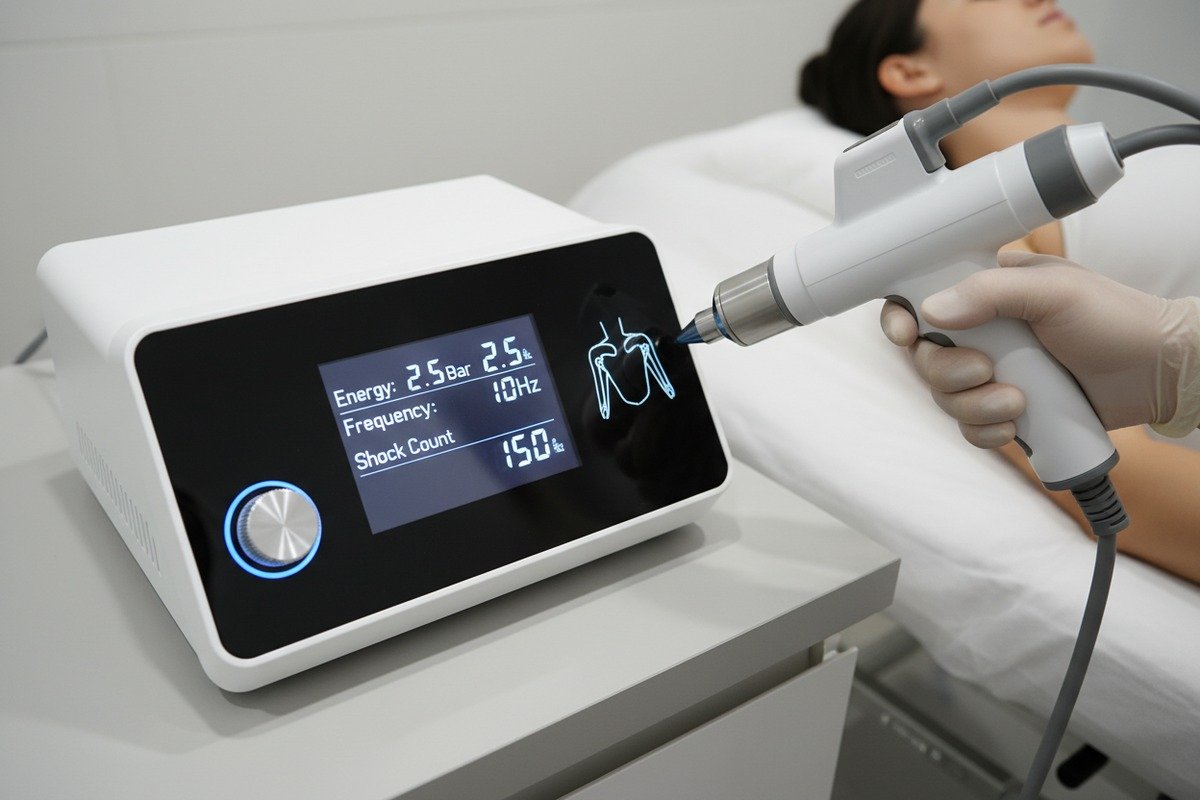
Most shockwave machines store data locally on the device. No cloud connection means no remote hacking risk. Patient information stays physically within the clinic. This approach offers several security benefits:
- No internet connectivity required
- No third-party server vulnerabilities
- Physical access needed for data breach
- Simplified regulatory compliance
When clients ask about cloud storage, we explain the trade-offs. Cloud enables multi-location access but introduces network security concerns. Local storage sacrifices convenience for protection. Most clinics prioritize security.
Access Control Features
Professional machines implement access restrictions. Common features include:
| Security Feature | Basic Models | Mid-Range Models | Premium Models |
|---|---|---|---|
| Password Protection | Sometimes | Yes | Yes |
| User Account Levels | No | Sometimes | Yes |
| Activity Logging | No | Sometimes | Yes |
| Data Encryption | No | Rarely | Yes |
| Auto-Logout Timer | Sometimes | Yes | Yes |
Administrator accounts control who sees what. Therapists access only assigned clients. Managers view aggregated reports. This hierarchy prevents casual data browsing.
Data Export Limitations
Export capabilities create security considerations. USB or SD card export enables data backup but also data theft. Our engineering team builds export restrictions into standard models. Only administrator-level users access export functions. Audit logs record every export attempt.
Focused shockwave units increasingly support EMR integration. This means secure data transfer to Electronic Medical Records systems 5. The connection uses encrypted protocols. Individual USB export becomes unnecessary.
Regulatory Compliance Considerations
FDA-cleared devices meet baseline safety standards. But FDA clearance doesn't guarantee data security compliance. HIPAA compliance 6 requires additional measures:
- Access controls documented
- Audit trails maintained
- Encryption implemented where feasible
- Staff training completed
- Business associate agreements signed
Our technical documentation includes security specifications. Distributors provide this information to their clients' compliance officers. Transparent specification sheets prevent regulatory surprises.
Physical Security Measures
Data security starts with physical device security. Machines in open areas invite unauthorized access. Recommendations for clinic setup include:
- Position screens away from waiting areas
- Enable auto-logout after inactivity
- Store devices in locked rooms overnight
- Maintain access logs for the treatment room
We advise distributors to include security guidance in client training materials. The best software protections fail if anyone can walk up and browse files.
Will having built-in user records help my salon clients improve their treatment consistency?
Consistency determines outcomes. Our clinical advisors emphasize this repeatedly. A treatment that works once should work every time. Without records, therapists guess. They forget previous settings. Results vary unpredictably. Clients notice.
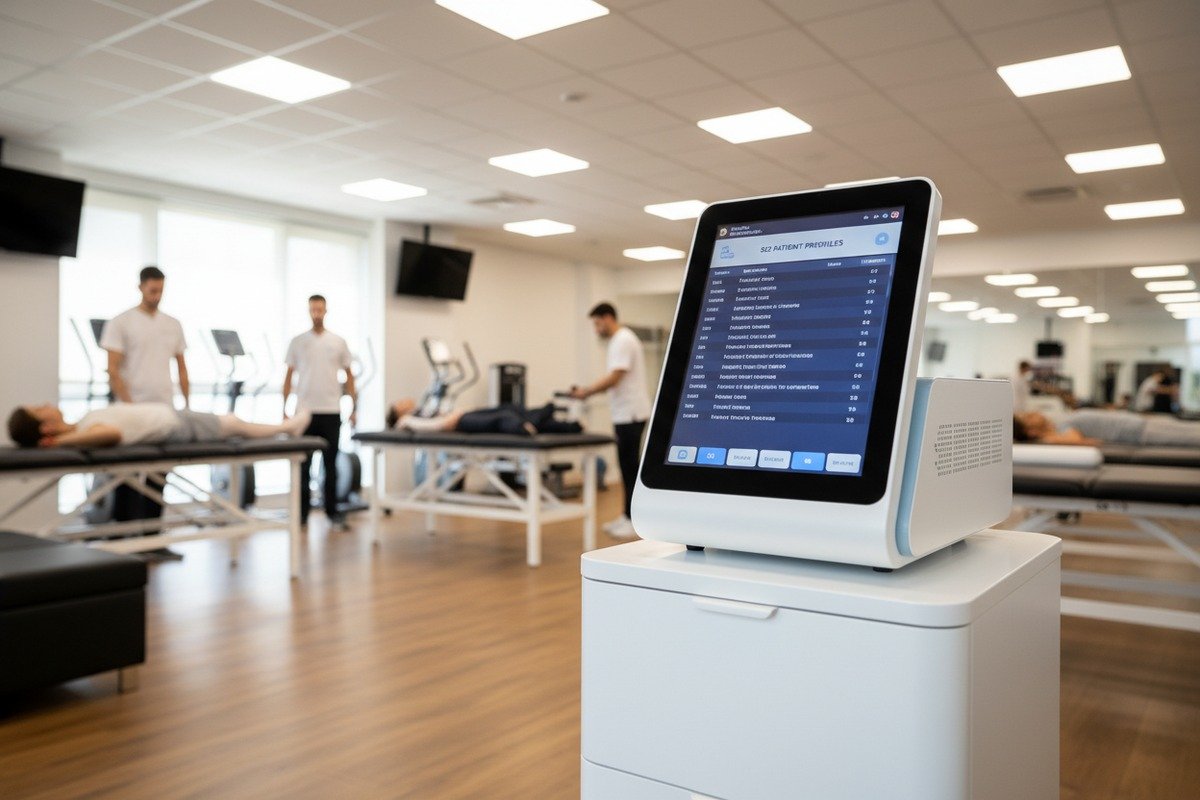
Yes, built-in user records significantly improve treatment consistency. Therapists access previous session parameters instantly, eliminating guesswork. Standardized protocols ensure every staff member applies identical settings. Progress tracking identifies effective approaches. Studies and clinical guidelines from ISMST recommend documented treatment protocols for reproducible outcomes.
Eliminating Parameter Guesswork
When a client returns for session four, what settings did session three use? Without records, therapists estimate. Maybe 2.5 bar pressure? Perhaps 12 Hz frequency? Memory fails. Recorded parameters eliminate this problem entirely.
The therapist opens the client profile. Last session details appear: 2.8 bar, 14 Hz, 2,500 shocks, medial gastrocnemius. They replicate exactly or adjust based on progress notes. No guessing. No inconsistency.
Multi-Therapist Environments
Busy salons employ multiple therapists. Clients don't always see the same person. Built-in records ensure continuity regardless of staff rotation.
Consider this scenario: Therapist A develops an effective protocol for Client X. Therapist A takes vacation. Client X arrives for appointment. Therapist B opens the profile, sees exact parameters and progress notes. Treatment continues seamlessly.
Progress Tracking Benefits
Integrated assessment tools transform subjective impressions into objective data. Pain ratings before and after each session create trend lines. ROM measurements document improvement percentages.
| Session | Pre-Treatment Pain (NRS) | Post-Treatment Pain | Improvement |
|---|---|---|---|
| 1 | 7 | 5 | 29% |
| 2 | 6 | 4 | 33% |
| 3 | 5 | 3 | 40% |
| 4 | 4 | 2 | 50% |
This data proves treatment efficacy. Clients see documented progress. Skepticism decreases. Compliance increases. Outcomes improve.
Protocol Standardization
The International Society for Medical Shockwave Treatment (ISMST) 7 recommends standardized treatment documentation. Their guidelines stress reproducibility. When clinics follow documented protocols, results become predictable.
Our machines include preset protocol libraries aligned with ISMST recommendations. Therapists select the condition. The machine displays evidence-based parameters. Customization remains possible, but defaults reflect clinical standards.
Workflow Efficiency Gains
Modern 10-inch touchscreens reduce setup time dramatically. Devices like the DUOLITH SD1 T-TOP Ultra feature handpiece controls that minimize screen interaction. Our production line focuses on interface efficiency because distributors report that time savings justify equipment investment.
A typical efficiency comparison:
- Without records: 5-7 minutes reviewing paper files, setting parameters manually
- With integrated records: 30-60 seconds selecting profile, confirming parameters
Multiply by twenty daily clients. Time savings compound. Revenue capacity increases.
Reducing Human Error
Fatigue causes mistakes. A therapist in their eighth hour misremembers settings. They apply 4.0 bar instead of 2.0 bar. Client discomfort follows. Integrated records remove this risk. Parameters appear on screen. The therapist confirms rather than recalls.
Our quality control testing includes error-simulation scenarios. We verify that interface design minimizes input mistakes. Button sizes, color contrasts, and confirmation prompts all undergo usability review.
Conclusion
Integrated user profile records 8 have become essential features in professional shockwave therapy machines. From tracking treatment history to ensuring data security, these systems improve consistency, efficiency, and outcomes. When selecting equipment, verify specific capabilities rather than accepting marketing claims at face value.
Footnotes
1. Defines patient management systems and their role in healthcare administration and data management. ↩︎
2. Replaced with a Wikipedia article providing a comprehensive and authoritative overview of non-volatile memory. ↩︎
3. Provides an overview of professional shockwave therapy machines and their applications. ↩︎
4. Replaced with the official EUR-Lex (European Union) summary of the General Data Protection Regulation (GDPR), an authoritative source. ↩︎
5. Wikipedia article providing a comprehensive overview of Electronic Health Records (EHRs). ↩︎
6. Official guidance from the U.S. Department of Health & Human Services on HIPAA compliance. ↩︎
7. Official website of the international organization promoting shockwave treatment research and guidelines. ↩︎
8. Replaced with a leading Electronic Health Record (EHR) system provider, Epic, which offers comprehensive patient data management and integrated medical records. ↩︎

 English
  Español de México
  Deutsch
  Français
  العربية
  Русский