
When our production team started preparing for the 2026 EU packaging regulations 1, panic spread across the factory floor. Everyone assumed we needed to redesign everything from scratch. The confusion was real, and the stakes felt enormous for our shockwave therapy equipment 2 exports.
EU packaging recycling compliance is not fully mandatory for shockwave therapy machines. EU Regulation 2025/40 exempts primary contact-sensitive medical device packaging from recyclability and recycled content requirements. However, secondary and tertiary packaging like shipping cartons must comply with all standards starting August 2026.
This partial exemption creates both relief and complexity. Understanding which packaging layers need compliance will save your business from costly mistakes. Let me walk you through everything we have learned from our own compliance journey.
How do I determine if EU packaging recycling laws apply to my shockwave therapy machine imports?
Our engineering team spent months decoding the new EU packaging rules. The answer was not straightforward. Different packaging layers face different requirements, and shockwave therapy machines sit in a unique regulatory space.
To determine applicability, assess each packaging layer separately. Primary packaging touching medical devices or maintaining sterility qualifies for exemptions under EU Regulation 2025/40 Article 6 and 7. Secondary packaging like product boxes and tertiary packaging like shipping pallets must meet full recyclability and labeling requirements by August 2026.

Understanding Packaging Layer Classification
The EU regulation divides packaging into three distinct categories. Each faces different compliance demands. Getting this classification right is your first critical step.
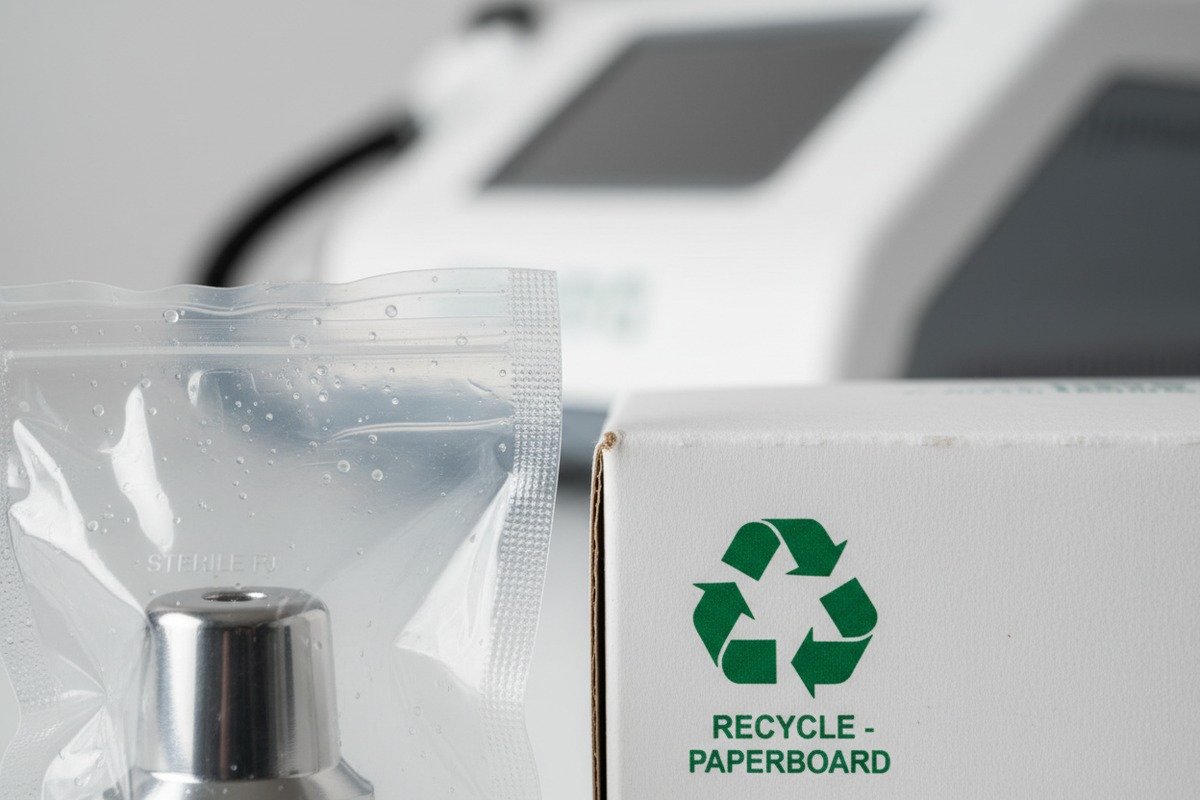
Primary packaging 3 directly contacts the product or maintains its sterility and safety. For shockwave therapy machines, this includes blister packs, sterile pouches, and protective wrapping around applicator heads. This layer enjoys the broadest exemptions under the medical device provisions.
Secondary packaging 4 groups individual products together. Product boxes, instruction manual sleeves, and accessory compartments fall here. This layer must comply with recyclability standards.
Tertiary packaging 5 handles bulk transport. Pallets, stretch wrap, and shipping cartons belong to this category. Full compliance is required without exception.
The Medical Device Exemption Framework
Shockwave therapy machines classify as electro-medical devices under MDR Regulation EU 2017/745 6. Most units fall into Class IIa or IIb depending on their intended use. This classification matters for packaging decisions.
| Packaging Layer | Exemption Status | Compliance Required By |
|---|---|---|
| Primary (contact-sensitive) | Exempt from recyclability and recycled content | Review in 2035 |
| Primary (non-contact) | Must comply | August 2026 |
| Secondary (product boxes) | Must comply | August 2026 |
| Tertiary (shipping) | Must comply | August 2026 |
The exemption specifically targets packaging that would compromise device safety or sterility if made from recycled materials. Our sterile applicator pouches clearly qualify. But the cardboard box holding the main unit does not.
Practical Assessment Steps
Start by documenting every packaging component in your product. List materials, weights, and functions. Then categorize each as primary, secondary, or tertiary.
For each primary packaging item, ask whether it directly contacts the device or preserves sterility. If yes, document why the exemption applies. If uncertain, consult your Notified Body or MDR documentation.
Secondary and tertiary packaging needs immediate attention. Calculate recyclability percentages using the forthcoming Design-for-Recycling criteria. Target 70% minimum recyclability by weight for 2030 compliance.
What are my legal obligations for packaging compliance when I private label shockwave devices for the European market?
Private labeling adds another compliance layer that catches many importers off guard. When you put your brand on a shockwave therapy machine, you become the legal "producer" under EU law. Our OEM partners often underestimate this responsibility.
As a private label brand owner, you bear full legal responsibility for packaging compliance under EU Regulation 2025/40. You must register with national Extended Producer Responsibility schemes, issue Declarations of Conformity, maintain technical documentation for 5-10 years, and ensure all non-exempt packaging meets recyclability and labeling standards.

Extended Producer Responsibility Obligations
EPR schemes make you financially responsible for your packaging's entire lifecycle. This includes collection, sorting, and recycling costs. Each EU member state runs its own scheme with different registration processes and fee structures.
Registration deadlines vary by country. Germany requires registration with the Central Agency for Packaging Register before any market placement. France mandates Citeo membership. You must register in every country where you sell, not just your primary market.
Fees calculate based on packaging weight and material type. Plastic packaging costs more than cardboard. Non-recyclable materials face penalty fees. Our experience shows annual EPR costs ranging from €500 to €15,000 depending on volume and material choices.
Documentation Requirements
Technical documentation must prove compliance for every packaging component. This documentation faces inspection by market surveillance authorities at any time.
| Document Type | Retention Period | Required Contents |
|---|---|---|
| Declaration of Conformity | 10 years (reusable) / 5 years (single-use) | Manufacturer details, standards applied, responsible person signature |
| Recyclability Assessment | 5 years minimum | Material composition, recyclability grade, testing methodology |
| EPR Registration Proof | Duration of market presence | Registration numbers for each member state |
| Labeling Specifications | 5 years minimum | Symbol placement, QR code links, material identification |
Keep originals and digital copies. Authorities may request documents within 10 days. Failure to produce documentation triggers immediate compliance investigations.
Labeling and Marking Requirements
Harmonized labeling becomes mandatory in 2026. Every packaging piece needs standardized recycling symbols and material identification codes. QR codes must link to detailed composition and recyclability information.
The labeling must appear on each packaging layer. Your product box needs symbols. Your shipping carton needs symbols. Even pallet wrap may need identification depending on material and visibility.
Digital product passports will eventually supplement physical labels. Start building your digital infrastructure now. Create landing pages for QR codes that display material composition, recyclability instructions, and compliance certificates.
Liability Chain Considerations
When you private label, liability does not transfer to your Chinese manufacturer. You remain legally responsible regardless of who designed or produced the packaging. Our contracts now include packaging compliance warranties, but these only provide recourse after penalties hit.
Work compliance requirements into supplier agreements before production starts. Specify material requirements, recyclability targets, and documentation deliverables. Build inspection checkpoints into your quality control process.
Can my Chinese supplier handle the required recycling symbols and sustainable packaging for my shockwave therapy machines?
This question comes up in nearly every client conversation at our factory. The honest answer requires understanding both capabilities and limitations. Our production facilities have adapted significantly, but gaps remain.
Capable Chinese suppliers can meet most EU packaging requirements with proper guidance and specifications. They can source recyclable materials, print compliant symbols, and provide documentation. However, you must provide detailed specifications, verify material certifications, and conduct independent quality checks. Ultimate compliance responsibility remains with you as the importer.
What Chinese Suppliers Can Deliver
Modern Chinese packaging suppliers understand international sustainability standards. Many already produce for European brands with strict requirements. The capability exists, but you must activate it through clear specifications.
Recyclable materials are readily available. Paper-based secondary packaging, recycled cardboard, and mono-material plastics can replace mixed materials. Our suppliers stock FSC-certified paper and recycled PET options. Costs run 10-20% higher than conventional materials.
Printing capabilities cover all required symbols. The Mobius loop 9, Triman symbol, material identification codes, and QR codes present no technical challenges. Most factories own digital printing equipment capable of variable data for batch-specific QR codes.
Specification Requirements You Must Provide
Chinese suppliers work to specifications. Without detailed requirements, they default to lowest-cost options. Your packaging brief must include every compliance element.
| Specification Element | Required Detail | Common Mistakes |
|---|---|---|
| Material composition | Exact percentages, certifications required | Vague "recyclable" requests |
| Recyclability grade | Target Grade C (70%) or above | No grade specified |
| Symbol placement | Exact location, size, color on each layer | Assuming supplier knows requirements |
| QR code destination | Live URL for digital information | Static placeholder links |
| Documentation | Certificate formats, data fields needed | Requesting docs after production |
Request material certificates before production approval. FSC certification, recycled content verification, and recyclability test reports should arrive with samples. Build document delivery into payment milestones.
Quality Control Checkpoints
Trust but verify. Even excellent suppliers make mistakes without proper oversight. Implement packaging-specific QC into your existing inspection process.
Pre-production sample approval should verify material composition, symbol accuracy, and structural integrity. Request lab tests confirming recyclability claims. Our QC team uses third-party testing labs for material verification.
During production, conduct mid-run inspections specifically examining packaging. Check symbol clarity, material consistency, and assembly accuracy. Packaging defects often appear mid-production as material batches change.
Pre-shipment inspection must include packaging review. Open finished units and verify every packaging layer. Photograph symbols and QR codes. Test QR code functionality by scanning samples.
Communication Protocols
Language barriers and cultural differences create compliance gaps. Establish clear communication channels dedicated to packaging matters.
Create visual specifications showing exact requirements. Photos and diagrams communicate better than text descriptions. Annotate sample images showing symbol placement, size requirements, and material specifications.
Schedule regular compliance review calls. Monthly discussions keep packaging requirements current as regulations evolve. Share regulatory updates and discuss implementation timelines.
Document everything in writing. Email confirmations of verbal agreements. Written records protect both parties and provide audit trails for compliance documentation.
What are the financial and legal risks if my shockwave machine packaging fails to meet EU recycling standards?
Our legal team has analyzed enforcement scenarios extensively. The consequences range from expensive inconveniences to business-ending penalties. Understanding these risks helps prioritize compliance investments.
Non-compliant packaging risks include customs detention, mandatory recalls, fines up to €100,000 or more per violation, market access bans, and reputational damage. EPR scheme violations carry separate penalties. Market surveillance authorities can demand product withdrawal at your expense. Criminal liability may apply for intentional violations in some member states.

Immediate Market Access Consequences
Customs authorities increasingly screen for packaging compliance. Non-compliant shipments face detention at ports. Detained goods incur storage fees, typically €50-200 per day per container. Clearance delays cascade through your supply chain.
Corrective action demands may require repackaging before release. Repackaging at European warehouses costs significantly more than correcting at origin. One client paid €15,000 to repackage 500 units detained in Rotterdam.
Repeat violations trigger enhanced scrutiny. Your shipments move to high-risk lists requiring inspection of every container. This adds weeks to delivery times and thousands in additional costs.
Financial Penalties Structure
EU member states set their own penalty frameworks within regulation guidelines. Amounts vary significantly across jurisdictions. Germany and France impose the highest fines.
| Violation Type | Typical Penalty Range | Aggravating Factors |
|---|---|---|
| Missing EPR registration | €10,000 – €200,000 | Duration, sales volume |
| Incorrect labeling | €1,000 – €50,000 | Scale, repeat offense |
| Non-recyclable packaging | €5,000 – €100,000 | Material type, exemption fraud |
| Documentation failures | €2,500 – €25,000 | Response time, completeness |
| Intentional violations | Criminal prosecution | Evidence of deliberate non-compliance |
Penalties calculate per violation, not per shipment. Each product type with non-compliant packaging represents a separate violation. Ten product SKUs with labeling errors could mean ten separate fines.
Recall and Withdrawal Costs
Market surveillance authorities can mandate product withdrawal at any time. You bear all costs associated with recalls. These costs frequently exceed the product's market value.
Direct recall costs include logistics, warehousing, consumer notification, and administrative processing. Indirect costs multiply the impact: lost sales, customer compensation, and contract penalties with distributors.
Insurance rarely covers packaging compliance failures. Standard product liability policies exclude regulatory non-compliance. Specific compliance insurance exists but carries high premiums and extensive exclusions.
Reputational and Commercial Impact
B2B relationships suffer when compliance problems surface. Distributors face their own regulatory exposure from your non-compliance. Several of our competitors lost major European accounts after compliance failures became public.
Healthcare procurement increasingly includes sustainability criteria. Hospitals and clinic chains evaluate suppliers on environmental performance. Non-compliance eliminates you from consideration regardless of product quality.
Recovery takes years. Even after resolving compliance issues, the market remembers failures. Rebuilding trust requires sustained compliance performance and proactive communication.
Risk Mitigation Strategies
Start compliance assessments now, not when regulations take effect. The August 2026 deadline approaches quickly. Lead times for packaging redesign, supplier changes, and documentation development require months.
Build compliance costs into product pricing. Sustainable packaging and EPR fees represent real expenses. Absorbing them protects margins and signals market commitment.
Consider compliance insurance where available. While limited, some policies cover specific regulatory risks. Consult specialized brokers familiar with EU packaging regulations.
Document your good faith compliance efforts. Authorities consider compliance history when assessing penalties. Demonstrating proactive efforts may reduce penalties for inadvertent violations.
Conclusion
EU packaging recycling compliance for shockwave therapy machines requires careful layer-by-layer assessment. Primary contact-sensitive packaging enjoys exemptions, but secondary and tertiary packaging must meet all standards by August 2026. Start your compliance journey today to avoid costly penalties and market access disruptions.
Footnotes
1. Provides an overview of the European Union’s packaging waste policy and regulations. ↩︎
2. Explains the classification of medical devices under the EU MDR, relevant for shockwave therapy. ↩︎
3. Defines primary packaging, particularly in the context of pharmaceutical and medical products. ↩︎
4. Explains the definition and purpose of secondary packaging in supply chain operations. ↩︎
5. Defines tertiary packaging and its crucial role in logistics and bulk transport. ↩︎
6. Direct link to the official text of the Medical Device Regulation. ↩︎
7. Replaced with the official EUR-Lex link for Regulation (EU) 2025/40 on packaging and packaging waste. ↩︎
8. Provides an overview of Extended Producer Responsibility (EPR) schemes in the EU. ↩︎
9. Explains the origin and meaning of the universal recycling symbol. ↩︎

 English
  Español de México
  Deutsch
  Français
  العربية
  Русский