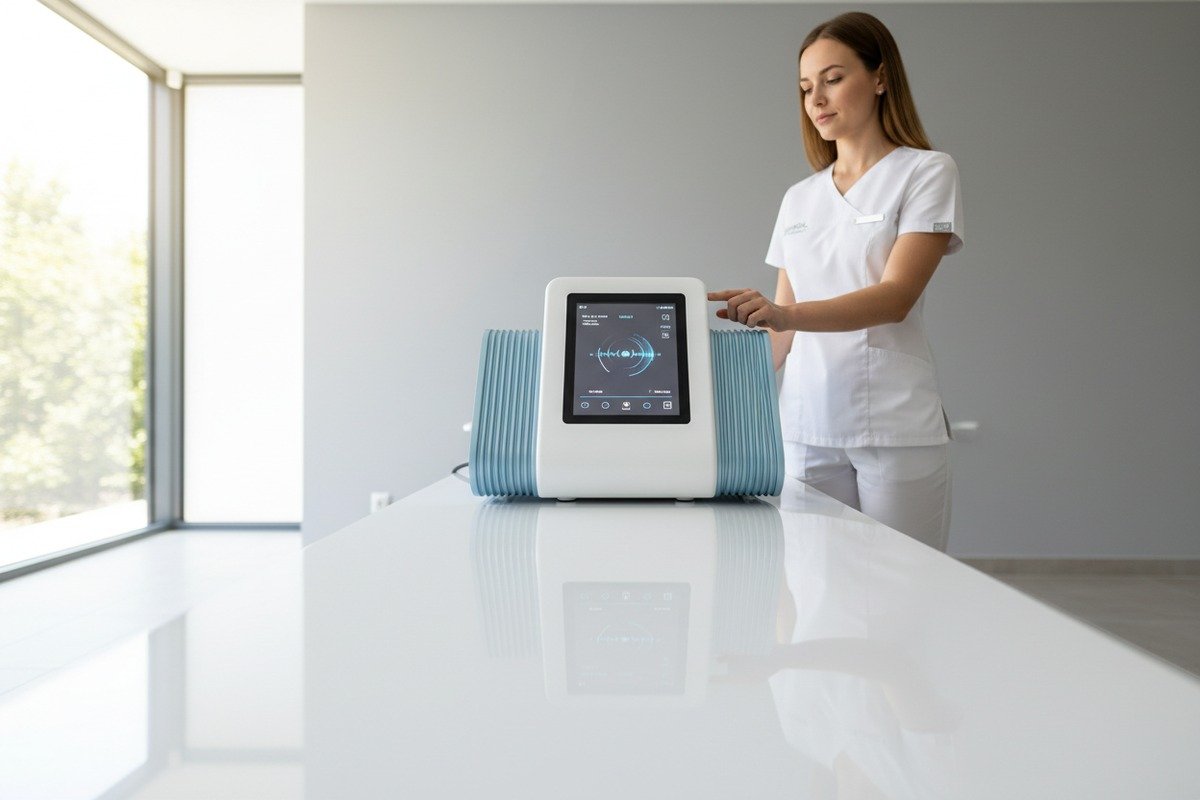
During our production line inspections, we often receive questions from brand owners about liquid and dust resistance solid particle protection 1. Many buyers assume their shockwave therapy machines can handle spills or dusty environments. The truth may surprise you.
Most shockwave therapy machines carry modest IP ratings between IP20 and IP22, providing only basic protection against finger-sized solid objects and vertical water drips. They are not waterproof or dustproof for demanding environments. Higher ratings like IP65+ are rare in this category because these devices are designed for controlled indoor clinical settings.
Understanding IP ratings 2 is critical before you source machines for your brand. Let’s break down what these codes mean and how they affect your purchasing decisions.
How do I interpret the IP rating when sourcing shockwave therapy machines for my brand?
When we prepare quotations for overseas distributors, IP rating questions come up frequently liquid resistance 3. Many buyers confuse IP codes with general durability claims. This misunderstanding can lead to costly product returns and damaged customer relationships OEM shockwave machines 4.
IP ratings follow the IEC 60529 standard and use two digits. The first digit (0-6) shows solid particle protection. The second digit (0-8) indicates liquid resistance. For shockwave machines, IP20-IP22 is common, meaning minimal dust and water protection suitable only for dry indoor use.
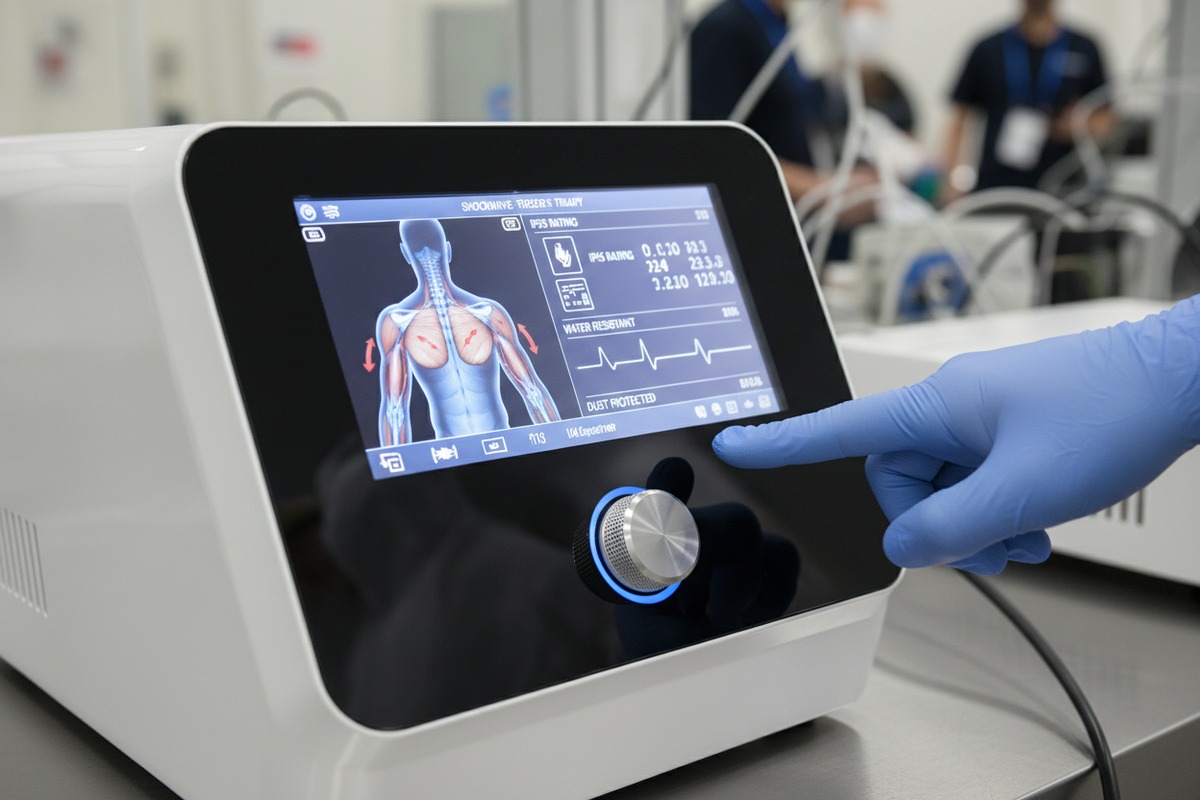
Breaking Down the IP Code System
The IP code system is straightforward once you understand its structure. Each digit serves a specific purpose. An "X" in either position means that element was not tested.
| IP First Digit | Solid Protection Level | Example |
|---|---|---|
| 0 | No protection | Open circuits |
| 1 | Objects >50mm | Hand protection |
| 2 | Objects >12.5mm | Finger protection |
| 3 | Objects >2.5mm | Tool protection |
| 4 | Objects >1mm | Wire protection |
| 5 | Dust protected | Limited ingress |
| 6 | Dust tight | Complete sealing |
| IP Second Digit | Liquid Protection Level | Example |
|---|---|---|
| 0 | No protection | Dry use only |
| 1 | Vertical drips | Light condensation |
| 2 | Drips at 15° angle | Tilted operation |
| 3 | Spraying water | Rain exposure |
| 4 | Splashing water | All-direction splash |
| 5 | Water jets | Hose cleaning |
| 6 | Powerful jets | High-pressure wash |
| 7 | Immersion to 1m | Brief submersion |
| 8 | Continuous immersion | Underwater use |
What IP20-IP22 Actually Means for Your Business
Most shockwave therapy consoles on our production line carry IP20 or IP22 ratings. IP20 means the device only blocks objects larger than 12.5mm. It offers zero water protection. IP22 adds minimal protection against vertical drips when tilted up to 15 degrees.
For your salon customers, this means the main console cannot handle direct gel spills. It cannot survive humid environments without climate control. Dust from floor cleaning can penetrate the unit over time.
Why Manufacturers Choose Modest Ratings
Our engineering team designs for the intended environment. Shockwave machines operate in controlled clinical spaces. Air conditioning manages humidity. Staff follow cleaning protocols. Adding IP65+ protection would increase production costs by 15-25%. It would add weight and bulk. Most buyers do not need or want to pay for this.
The FDA clearance process 5 focuses on therapeutic efficacy and electrical safety. Environmental ratings remain secondary. This explains why premium machines like those with FDA clearances still carry basic IP ratings.
Will a higher IP rating prevent gel and dust damage in my customers' salons?
In our export experience to the US and European markets, we see a pattern. Brand owners request higher IP ratings after receiving customer complaints. They assume better environmental protection solves all durability issues. Reality is more complex.
A higher IP rating on the console helps but does not guarantee protection against gel and dust damage. Handpieces and applicators often lack separate IP ratings despite direct exposure to coupling gels. Salon environments also vary widely, and user behavior significantly impacts device longevity regardless of ratings.
The Handpiece Problem
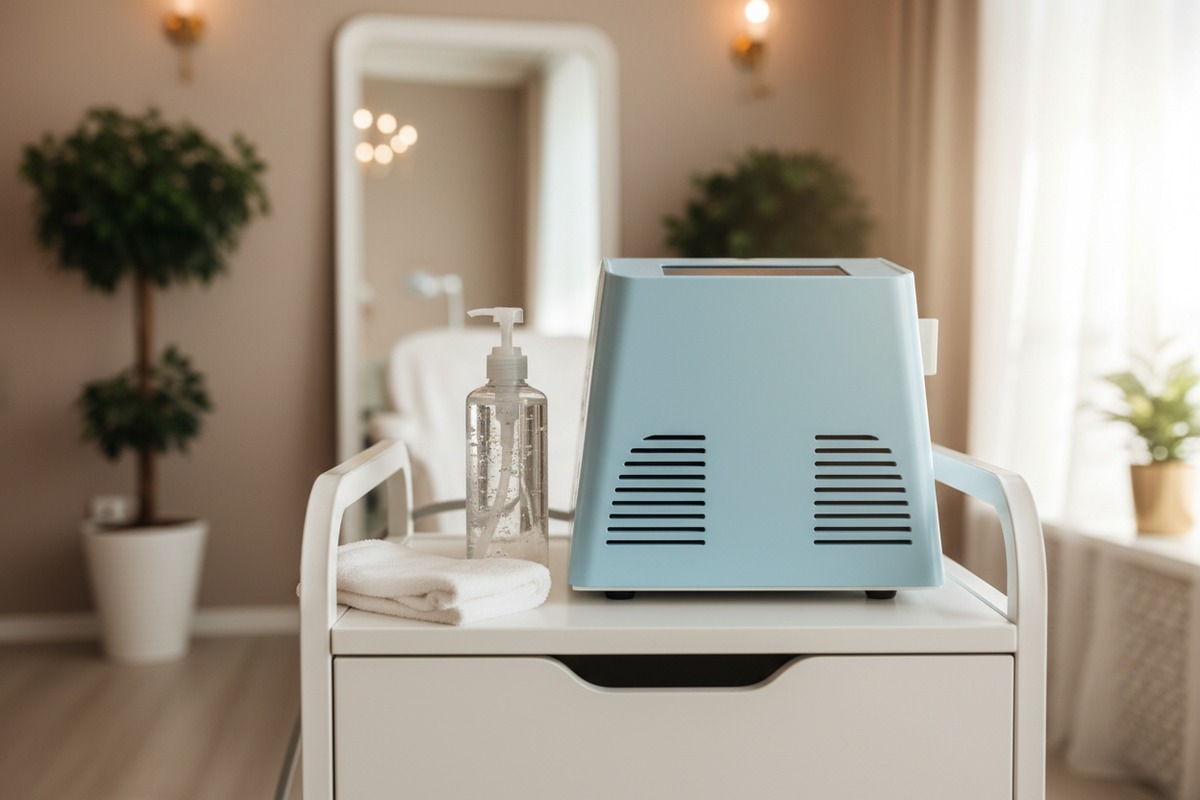
Here is a critical gap most buyers miss. IP ratings on shockwave machines typically cover only the main console. The handpiece or applicator touches the patient's skin directly. It contacts coupling gel 7 during every treatment session. Yet manufacturers rarely publish IP ratings for these components.
Our standard handpieces use silicone probes 8 ranging from 4mm to 66mm depth. These probes are replaceable and designed for gel contact. However, the handpiece body where electronics live often has no formal ingress rating. Gel can migrate along cables. It can enter through button seams. Over time, this causes electrical failures.
Salon Environment Variables
Your customers' salons differ greatly. Some operate in modern climate-controlled buildings. Others work in older spaces with poor ventilation. Humidity levels swing based on season and location. A machine rated IP22 in Arizona performs differently than the same unit in Florida.
| Environment Factor | Low Risk | Medium Risk | High Risk |
|---|---|---|---|
| Room humidity | Below 40% | 40-60% | Above 60% |
| Cleaning frequency | Weekly wipe | Daily spray | Multiple daily |
| Gel usage volume | Light application | Standard use | Heavy application |
| Floor type | Hard sealed | Carpet | Mixed surfaces |
| Ventilation | HVAC filtered | Basic AC | Open windows |
User Behavior Matters More Than Ratings
We have tracked returns and warranty claims across hundreds of units. User behavior causes more damage than environmental exposure. Technicians who wipe down handpieces immediately after use report fewer failures. Those who leave gel residue overnight see corrosion within months.
Training your downstream customers matters. Provide clear cleaning protocols with every machine. Specify approved cleaning agents. Warn against alcohol-based solutions on silicone components. These steps protect devices better than any IP rating upgrade.
When Higher Ratings Make Sense
Some situations justify requesting higher IP protection. Machines used in humid spa environments benefit from IP44 minimum. Units marketed for home use need robust sealing since users lack professional training. Portable machines that travel between locations face more dust exposure.
Our production capability includes IP54 console upgrades for select clients. This adds sealed button membranes and improved cable glands. The cost increase runs approximately 18-22% depending on volume. Lead time extends by two weeks for the additional assembly steps.
Can I request custom waterproof and dustproof standards for my OEM shockwave machine?
Our OEM clients frequently ask about customization beyond standard configurations. They want their branded machines to stand apart from competitors. Custom environmental protection is technically possible but comes with trade-offs that deserve careful consideration.
Yes, you can request custom IP ratings for OEM shockwave machines. Our engineering team can upgrade console sealing to IP44 or IP54 through design modifications. However, custom waterproofing requires minimum order quantities, adds 15-25% to unit costs, extends production timelines, and may require separate certification testing.

Technical Modifications Available
When we receive custom IP requests, our engineers evaluate three main areas. First, the console enclosure needs upgraded gaskets and sealed panel joints. Second, all buttons and controls require membrane covers or sealed switches. Third, cable entry points need proper glands with compression fittings.
For the touchscreen, we can source IP-rated display modules. Our standard 15-inch toughened glass screen has no formal rating. Upgrading to an IP54 touchscreen assembly adds component cost and slight thickness to the unit profile.
Cost and MOQ Considerations
Custom environmental protection is not available for small orders. The engineering work, tooling changes, and component sourcing require volume to justify investment.
| Upgrade Level | Estimated Cost Increase | Minimum Order | Lead Time Extension |
|---|---|---|---|
| IP32 (basic improvement) | 8-12% | 50 units | 1 week |
| IP44 (splash resistant) | 15-20% | 100 units | 2 weeks |
| IP54 (dust and splash) | 20-25% | 200 units | 3 weeks |
| IP65 (jet resistant) | 30-40% | 500 units | 4-6 weeks |
Certification and Testing Requirements
Here is a detail many buyers overlook. If you market specific IP claims, you need documentation. Our factory can perform internal testing according to IEC 60529 methods. However, some markets and larger retailers require third-party certification from accredited labs 9.
Third-party IP testing costs between $2,000 and $5,000 per model depending on the rating level. Testing takes 2-4 weeks. You must budget this into your product development timeline. Some clients skip formal certification for modest upgrades and simply avoid making IP claims in marketing materials.
Alternative Protection Strategies
Instead of full IP upgrades, consider these cost-effective alternatives. Silicone dust covers for the console cost minimal additional expense and offer practical protection between uses. Cable strain reliefs reduce the most common failure point. Improved user documentation prevents damage from improper cleaning.
For handpiece protection, we offer optional carrying cases with desiccant packets. These protect units during transport and storage. Some clients include disposable probe covers that also reduce gel migration into handpiece electronics.
Making the Right Choice for Your Brand
The decision depends on your market positioning and customer base. Premium brands serving high-end medical spas may justify IP54 upgrades. Budget-focused distributors serving price-sensitive salons should invest in better training materials instead.
Our team can model total cost scenarios for your specific volume and market. We help you balance protection levels against price competitiveness and margin requirements.
How does my supplier verify the IP rating during the pre-shipment inspection process?
When we prepare orders for US and European clients, quality control questions always include environmental protection verification. Buyers want assurance that stated IP ratings match actual unit performance. Our inspection protocols address this concern systematically.
Suppliers verify IP ratings through visual inspection of seals and gaskets, functional testing of enclosure integrity, documentation review of component certifications, and sample testing against IEC 60529 standards. Comprehensive pre-shipment inspection should include specific checkpoints for ingress protection elements that protect your investment.

Our Standard Inspection Protocol
Every shipment leaving our facility passes through a multi-stage quality control process. For IP-related verification, inspectors check specific elements at each stage.
During in-process inspection, we verify gasket installation on console assemblies. We check cable gland torque specifications. We confirm proper seating of sealed switch components. Any deviations trigger immediate correction before further assembly.
Visual and Physical Verification Points
Our inspectors use a standardized checklist for environmental protection elements.
| Inspection Point | Pass Criteria | Common Defects |
|---|---|---|
| Console gasket | Continuous, compressed evenly | Gaps, tears, misalignment |
| Cable glands | Proper torque, no gaps | Loose fitting, missing parts |
| Button seals | Membrane intact, bonded | Peeling edges, bubbles |
| Panel joints | Flush, sealed | Visible gaps, adhesive failure |
| Screen bezel | No separation | Lifted corners, dust ingress |
| Handpiece body | Smooth, crack-free | Hairline cracks, seam gaps |
Documentation and Traceability
Beyond physical inspection, we maintain documentation trails for IP-relevant components. Gasket materials include supplier certificates with material specifications. Sealed switches come with component-level test reports. This documentation supports your quality claims to downstream customers.
We provide inspection reports with photos documenting seal condition on sampled units. For critical orders, we can arrange video documentation of the inspection process. This transparency builds trust and provides evidence if disputes arise later.
Sample Testing Options
For clients who require formal verification, we offer sample testing arrangements. We can send units to accredited testing laboratories in China for IEC 60529 evaluation. Alternatively, we can perform simulated testing in-house with documentation of methods and results.
In-house testing includes controlled drip tests for IP22 verification. We apply water at specified angles and volumes. We inspect for ingress after the test duration. This catches assembly defects that visual inspection might miss.
What to Include in Your Inspection Requirements
When you draft purchase agreements, specify IP verification requirements clearly. Include these elements:
State the expected IP rating for each component separately. Specify whether you require third-party testing certificates. Define the sample size for destructive testing if applicable. Clarify documentation requirements for your regulatory filings.
Our quality team can suggest appropriate inspection protocols based on your order volume and market requirements. We tailor inspection intensity to match your risk tolerance and budget constraints.
Red Flags During Supplier Evaluation
If you work with suppliers other than established manufacturers, watch for warning signs. Suppliers who cannot explain their IP testing methods likely do not perform any testing. Those who claim high IP ratings without documentation may exaggerate specifications. Request sample units and inspect seal quality yourself before committing to large orders.
Legitimate manufacturers maintain testing equipment and trained personnel. They provide clear answers about component sourcing and assembly methods. They offer factory visits where you can observe quality control procedures firsthand.
Conclusion
IP ratings matter when sourcing shockwave therapy machines, but they tell only part of the story. Most machines carry IP20-IP22 ratings suitable for controlled clinic environments. Higher ratings require custom engineering and cost investment. Smart buyers focus on inspection protocols and user training alongside specifications.
Footnotes
1. Details the meaning of the first digit in IP codes, indicating solid ingress protection levels. ↩︎
2. Provides a comprehensive overview of the IP Code system for ingress protection. ↩︎
3. Explains the second digit of IP codes, indicating liquid ingress protection levels. ↩︎
4. FDA guidance on contract manufacturing, relevant to OEM medical device production. ↩︎
5. Official FDA information on the 510(k) premarket notification process for medical devices. ↩︎
6. Official source for the International Electrotechnical Commission (IEC) IP Code standard. ↩︎
7. Explains the function and importance of ultrasound gel in medical imaging and therapy. ↩︎
8. Discusses properties and applications of medical-grade silicone in devices like probes. ↩︎
9. Replaced HTTP 403 link with an authoritative page from ANAB (a national accreditation body) detailing ISO/IEC 17025 accreditation for testing and calibration laboratories. ↩︎

 English
  Español de México
  Deutsch
  Français
  العربية
  Русский