
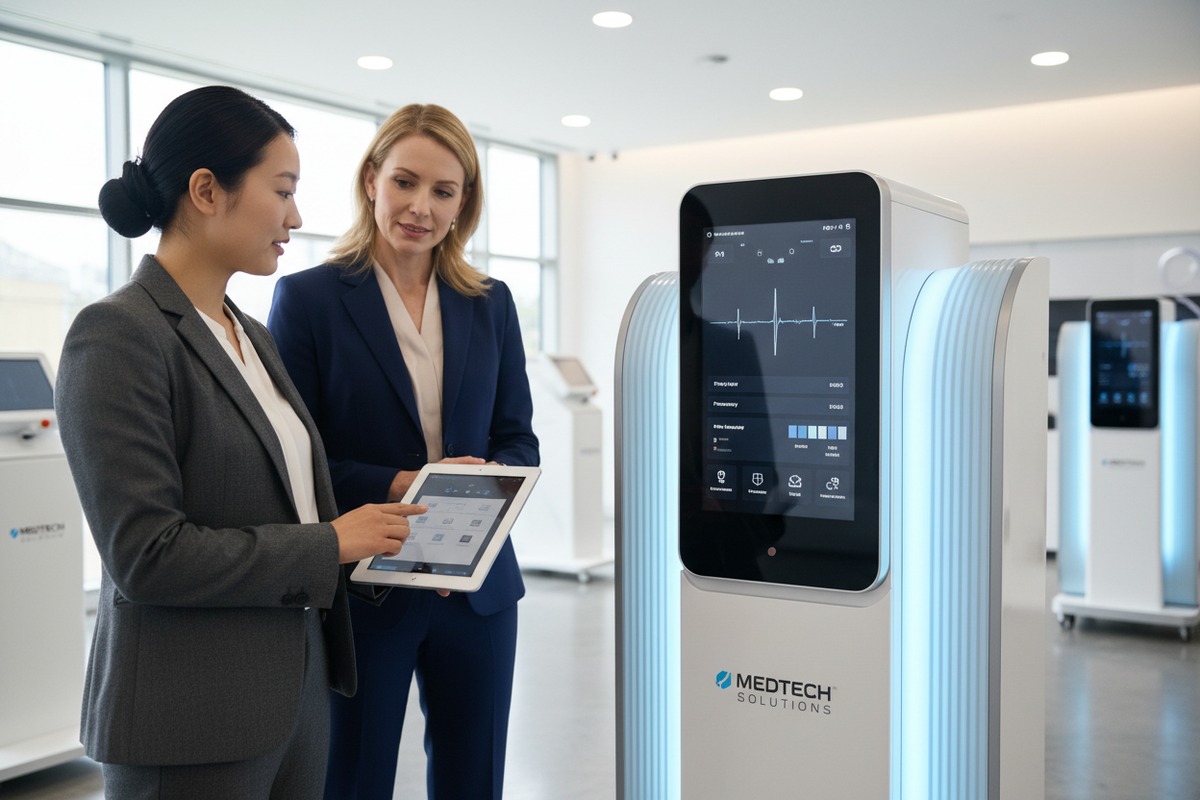
Every week, our engineering team receives requests from distributors who bought rigid, non-adjustable shockwave machines elsewhere OEM/ODM services 1. They feel stuck. Their clinics need specific protocols, but their equipment cannot deliver.
Yes, you can customize functions when sourcing imported shockwave therapy machines. Most quality manufacturers offer parameter adjustments for energy output, frequency, and pulse settings. Advanced customization includes branded software interfaces, modular hardware add-ons, custom applicator heads, and OEM branding services tailored to your market requirements.
The key lies in choosing the right supplier. Below, we break down exactly how to customize technical specifications, integrate your branding, evaluate engineering teams, and ensure quality control before shipment.
How can I customize the technical specifications of my imported shockwave therapy machines?
When our R&D team develops new shockwave models, we always start with flexibility in mind ISO 13485 certification 2. We have seen too many clinics struggle with machines that lock them into fixed protocols, limiting their treatment options.
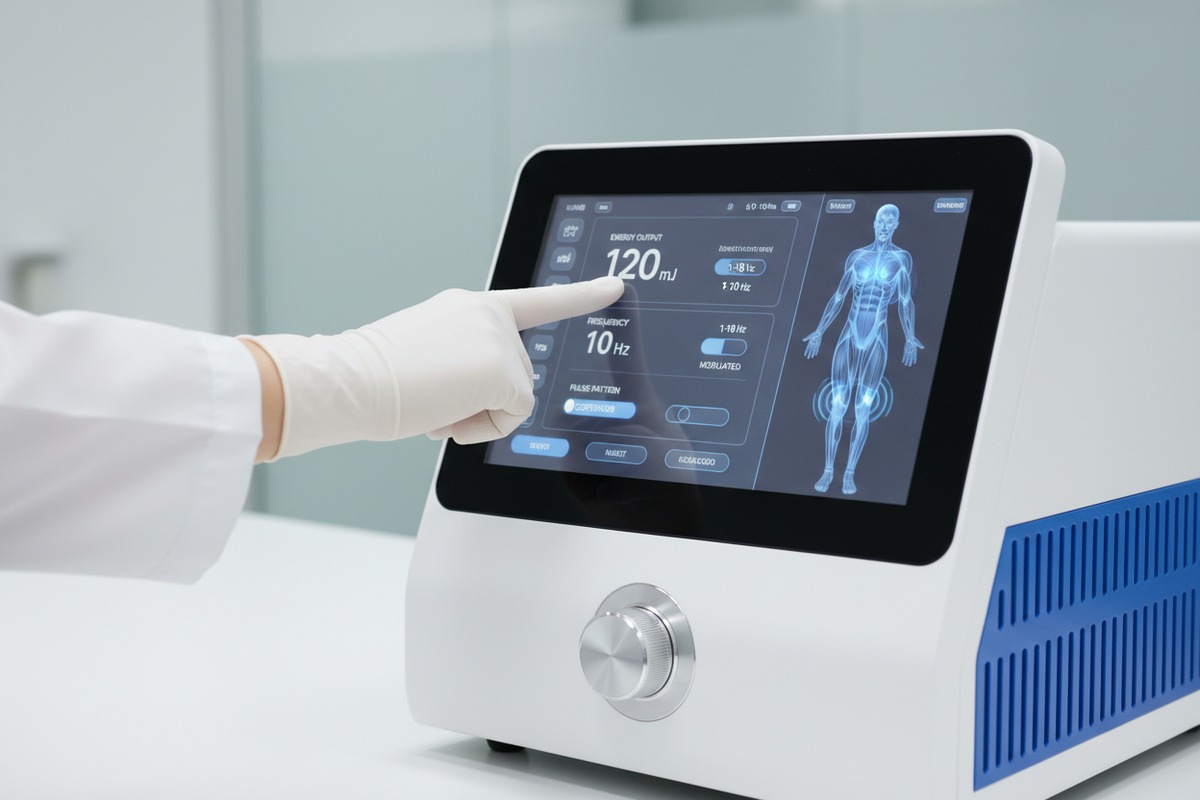
You can customize technical specifications by adjusting energy output ranges, frequency settings, pulse counts, burst patterns, and applicator configurations. Many manufacturers also allow modifications to pressure levels, treatment depth parameters, and pre-set protocol libraries based on your clinical requirements.
Core Parameter Adjustments
The foundation of customization starts with treatment parameters. These settings determine how effective the machine performs across different conditions.
Energy output 3 controls penetration depth and tissue stimulation intensity. Most professional machines offer ranges from low comfort settings to high remodeling levels. You should specify your required range based on target conditions—ED treatment needs different outputs than musculoskeletal therapy.
Frequency 4 affects treatment pace and wave penetration. Clinical applications typically use:
- 1-8 Hz for focused, deep tissue work
- 8-12 Hz for general therapeutic applications
- 12-18 Hz for broad, superficial treatments
Customizable Specification Ranges
| Parameter | Standard Range | Customization Options |
|---|---|---|
| Energy Output | Low to High | Specific mJ/mm² values, step increments |
| Frequency | 1-18 Hz | Custom Hz ranges, locked presets |
| Pulse Count | 500-5000 per session | Unlimited or capped options |
| Pressure Level | 1-5 bar | Extended ranges up to 6+ bar |
| Applicator Sizes | 10-35mm | Custom tip geometries |
Applicator and Accessory Configuration
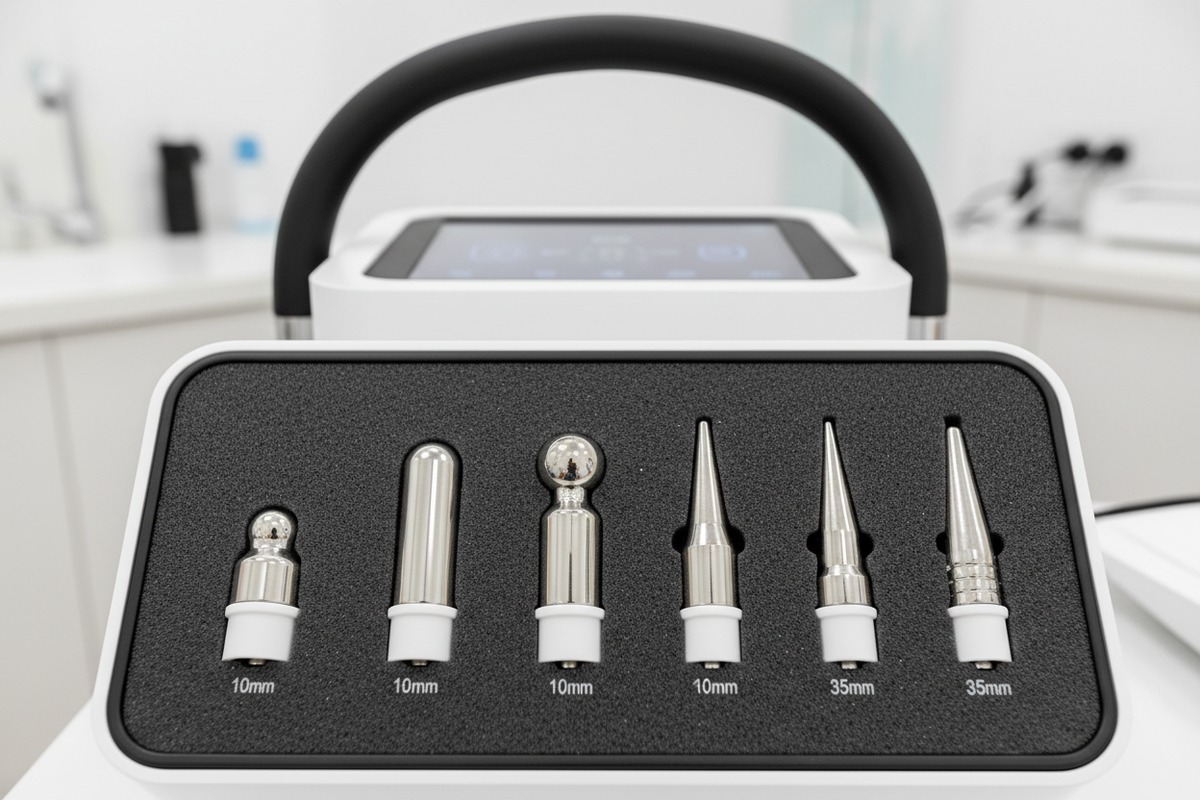
The handpiece is where treatment actually happens. Our production line can equip machines with multiple applicator heads 5 for different clinical needs.
Standard configurations include three to five applicators covering superficial to deep treatments. You can request specific tip sizes—smaller for precision work, larger for myofascial release. Gel pad attachments modify focal depth without changing machine settings.
Pre-Set Protocol Libraries
Smart customization includes software-level protocol presets. Instead of forcing clinicians to manually adjust every parameter, you can request condition-specific presets.
For example, tendon repair protocols might use mid-high energy at 5-8 Hz. Pain management could default to lower energy with higher frequency. ED treatments require specific power outputs optimized for vascular stimulation.
These presets reduce training time and ensure treatment consistency across staff members.
Can I integrate my own brand design and software interface into the shockwave devices I source?
Our OEM team spends significant time helping distributors transform generic machines into branded products. The difference between a white-label device and a properly branded unit affects customer perception dramatically.
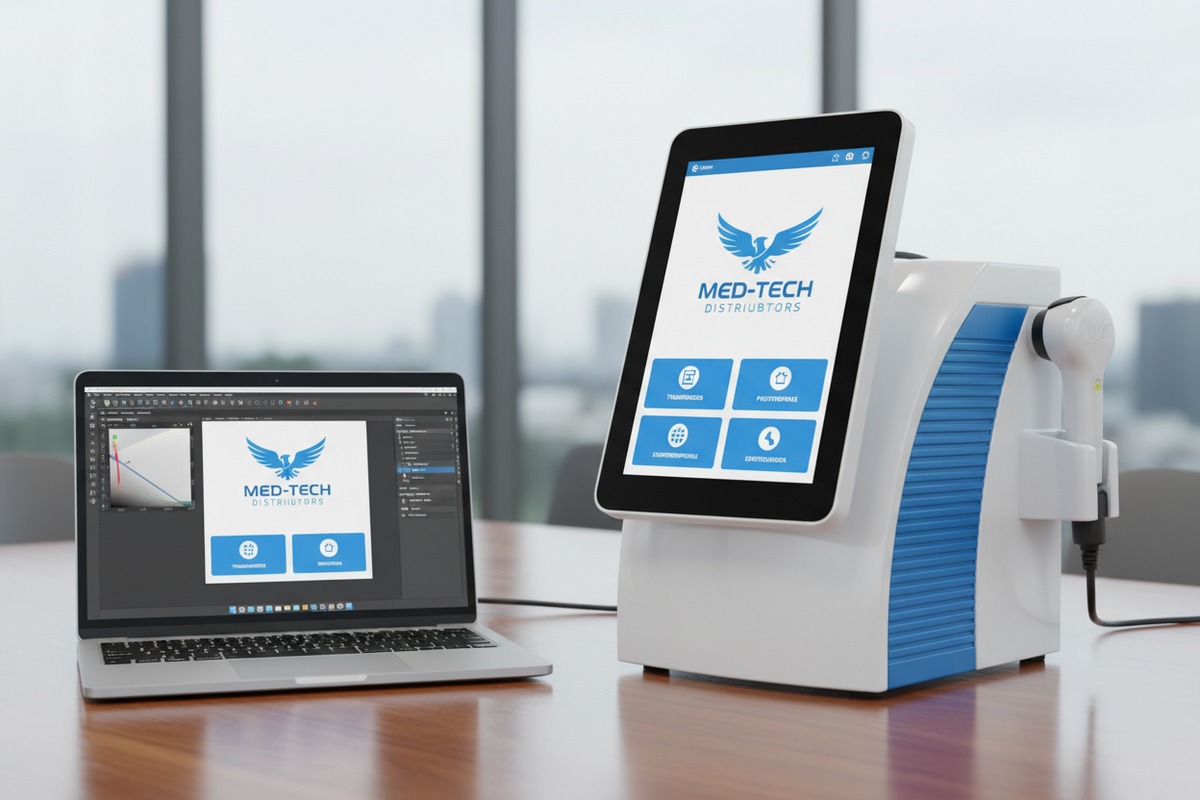
Yes, you can integrate your brand design and software interface into sourced shockwave devices. This includes custom logo placement, color schemes, casing modifications, branded boot screens, personalized user interfaces, and language localization. Most established manufacturers offer comprehensive OEM/ODM services for brand integration.
Hardware Branding Options
Physical branding creates immediate visual identity. When customers see your logo on a sleek, professional device, they associate quality with your brand.
Common hardware customization includes:
- Logo engraving or printing on device body
- Custom color schemes for casing panels
- Branded applicator handles
- Personalized packaging with your company information
- Custom cable colors and labeling
Our design team can match your brand colors precisely. We have produced machines in everything from medical white to bold accent colors based on distributor specifications.
Software Interface Customization
The touchscreen interface is where users interact most. A branded software experience reinforces your market position.
| Interface Element | Customization Level | Implementation Time |
|---|---|---|
| Boot Screen Logo | Full replacement | 1-2 weeks |
| Color Theme | Complete redesign | 2-3 weeks |
| Menu Structure | Layout modification | 3-4 weeks |
| Protocol Names | Custom labeling | 1 week |
| Language Options | Multi-language support | 2-4 weeks |
Language Localization Considerations
When choosing suppliers, check whether product manuals support your country's language. This detail matters for regulatory compliance and end-user experience.
Our team provides documentation in English, Spanish, German, French, and other major languages. We can also translate interface text and training materials for your target market.
Rugged Tablet Integration
For clinics requiring portable control units, some manufacturers offer custom tablet configurations. These tablets must withstand the electromagnetic environment around shockwave devices.
Proper testing ensures the tablet functions reliably despite exposure to high-energy waves. Look for suppliers who can provide EMC-tested accessories specifically designed for shockwave equipment operation.
Design Timeline Planning
Brand integration requires coordination between your marketing team and the manufacturer's design department. Allow adequate lead time:
- Basic logo placement: 2-3 weeks
- Full interface redesign: 6-8 weeks
- Custom casing development: 8-12 weeks
Starting these conversations early prevents delays in your launch schedule.
What should I look for in my supplier's engineering team when developing custom shockwave functions?
During factory visits, we often show clients our engineering department first. The quality of technical staff directly determines whether custom development succeeds or fails.
When evaluating a supplier's engineering team, look for demonstrated experience in medical device development, clear communication processes, prototype capabilities, regulatory knowledge, and post-development support systems. Strong teams provide technical documentation, iteration timelines, and testing protocols throughout the customization process.
Technical Competency Indicators
Not all engineering teams handle customization equally. Here are key markers of genuine capability:
Documentation Quality: Request technical specifications from previous projects. Professional teams produce clear schematics, parameter tables, and testing reports.
Prototype Speed: Ask about typical prototype turnaround times. Competent teams deliver working samples within reasonable timeframes.
Problem-Solving Examples: Inquire about challenging customization projects they completed. Real experience shows in specific details.
Communication Process Evaluation
Custom development requires ongoing collaboration. Evaluate how the engineering team handles communication:
| Communication Factor | What to Check | Red Flags |
|---|---|---|
| Response Time | 24-48 hour replies | Week-long delays |
| Technical Clarity | Plain language explanations | Jargon-heavy evasion |
| Documentation | Regular progress reports | No written records |
| Flexibility | Willingness to iterate | Rigid, unchangeable specs |
| Accessibility | Direct engineer contact | Sales-only communication |
Regulatory Knowledge Assessment
Medical device customization intersects with regulatory requirements. Your supplier's engineers must understand how modifications affect certification.
Key questions to ask:
- How do parameter changes impact CE marking 6?
- What testing is required for modified devices?
- Can you provide documentation supporting FDA clearance 7?
- How do you ensure ISO 13485 compliance during customization?
Teams lacking regulatory awareness may deliver devices that cannot legally enter your market.
Modular Design Capabilities
Forward-thinking engineering teams build modularity into their designs. This allows future upgrades without complete replacement.
Look for modular features like:
- Swappable applicator systems
- Upgradeable software platforms
- Stackable treatment modules (ESWT, EPAT, ultrasound)
- Expandable connectivity options
Our engineering philosophy prioritizes modular architecture. When clients want to add capabilities later, we can integrate new functions without redesigning the entire unit.
Long-Term Support Structure
Custom development does not end at delivery. Evaluate post-development support:
- Parts availability for custom components
- Software update pathways
- Technical support response times
- Warranty coverage for modified features
Strong suppliers maintain spare parts inventory and provide ongoing technical assistance for customized machines.
How do I ensure my customized shockwave machines pass strict quality control before they are shipped?
Quality failures cost more than money. When our quality team catches a defect, we prevent downstream customer complaints, warranty claims, and reputation damage for our partners.
Ensure customized shockwave machines pass quality control by establishing clear acceptance criteria, requiring in-production inspections, conducting pre-shipment testing, verifying parameter accuracy, and obtaining comprehensive test documentation. Partner with suppliers who maintain ISO 13485 certification and offer third-party inspection options.

Establishing Acceptance Criteria
Before production begins, define exactly what "acceptable" means. Vague expectations lead to disputes. Specific criteria protect both parties.
Your acceptance criteria should cover:
- Parameter accuracy tolerances
- Cosmetic standards (scratches, color matching)
- Functional test requirements
- Packaging integrity specifications
- Documentation completeness
Put these criteria in writing. Reference them during every inspection stage.
In-Production Quality Checkpoints
Catching problems during production costs less than fixing them after assembly. Implement multiple checkpoint inspections:
| Production Stage | Inspection Focus | Common Issues Detected |
|---|---|---|
| Component Receiving | Part quality verification | Substandard materials |
| Sub-Assembly | Connection integrity | Wiring errors |
| Main Assembly | Mechanical fit | Alignment problems |
| Calibration | Parameter accuracy | Output drift |
| Final Testing | Complete functionality | Software bugs |
Our factory conducts inspections at each stage. We photograph and document results for client review.
Pre-Shipment Inspection Protocol
The final inspection before shipping is your last quality gate. This inspection should verify:
Functional Testing: Run the machine through complete treatment cycles. Check all applicators, energy levels, and frequency settings.
Parameter Verification: Measure actual output against specifications. Use calibrated instruments to confirm accuracy.
Cosmetic Inspection: Examine every visible surface. Check branding accuracy, color consistency, and finish quality.
Packaging Review: Verify protective materials, accessory completeness, and documentation inclusion.
Third-Party Inspection Options
For added assurance, engage independent inspection companies. They provide unbiased verification that supplier quality systems work properly.
Third-party inspectors can:
- Witness factory testing
- Conduct independent measurements
- Verify documentation accuracy
- Provide photographic evidence
This investment particularly makes sense for large orders or new supplier relationships.
Documentation Requirements
Quality control means nothing without records. Request comprehensive documentation:
- Calibration certificates for measuring equipment
- Individual unit test reports
- Inspection checklists with signatures
- Photographic evidence of tests performed
- Compliance certificates (CE, ISO)
Store this documentation for warranty claims and regulatory inquiries. Professional suppliers provide complete packages automatically.
Handling Non-Conformance
Establish clear procedures for defects discovered during inspection. Define:
- Who has authority to reject units
- Rework versus replacement criteria
- Timeline for corrections
- Re-inspection requirements
Our quality agreement with clients specifies these procedures upfront. When issues arise, everyone knows the resolution path.
Conclusion
Customizing imported shockwave therapy machines 8 is absolutely achievable when you partner with capable suppliers. Focus on technical specifications, brand integration, engineering expertise, and rigorous quality control to build devices that serve your market perfectly.
Footnotes
1. Clearly defines and compares Original Equipment Manufacturer (OEM) and Original Design Manufacturer (ODM). ↩︎
2. Explains ISO 13485 as the harmonized standard for quality management in medical devices. ↩︎
3. Details the physics of energy flux density and its role in shockwave therapy. ↩︎
4. Explains how frequency is measured and its effects on shockwave treatment. ↩︎
5. Provides a guide to different types of shockwave applicators and their uses. ↩︎
6. Replaced HTTP 404 link with an authoritative page from the European Medicines Agency on medical devices and CE marking. ↩︎
7. Explains the 510(k) clearance process for medical devices by the FDA. ↩︎
8. Explains what shockwave therapy machines are and their application. ↩︎

 English
  Español de México
  Deutsch
  Français
  العربية
  Русский