
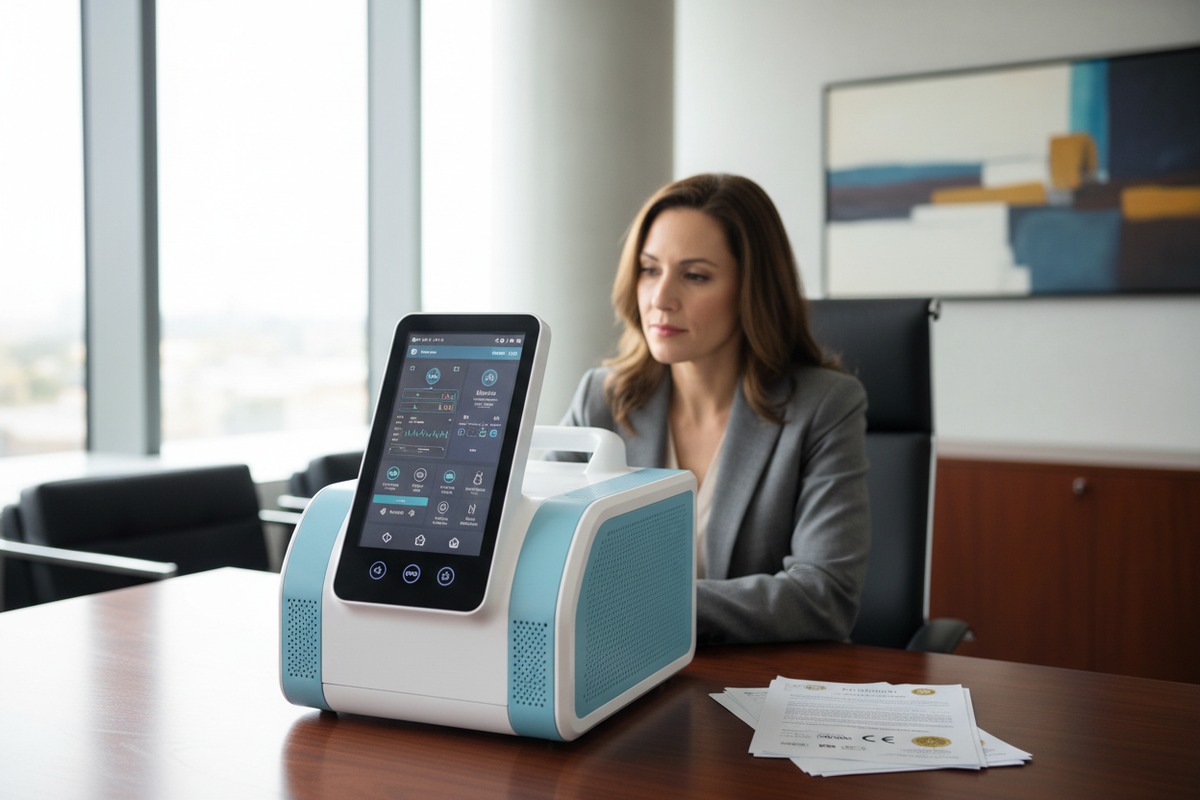
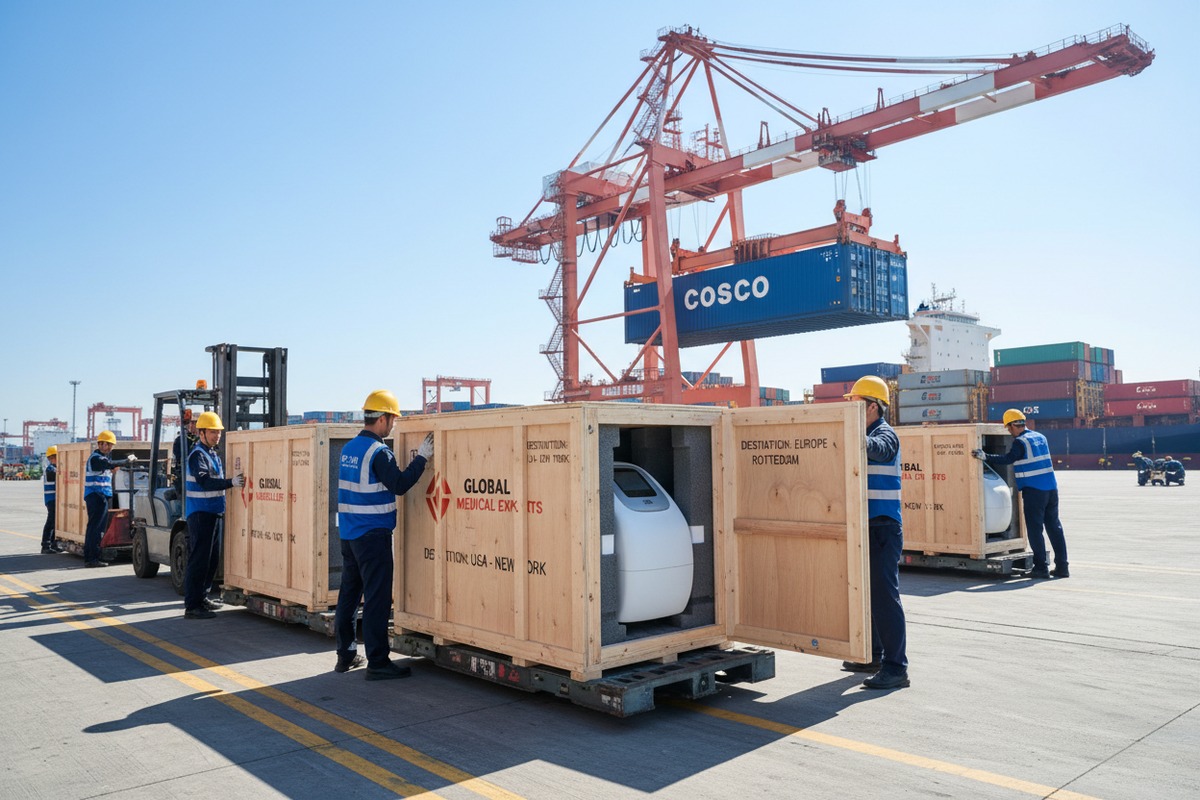
Every week, our production floor sees dozens of shockwave therapy units heading overseas DDP (Delivered Duty Paid) 1. Yet we also hear frustrating stories from buyers who previously sourced from unknown suppliers—machines that failed within months, certifications that turned out fake, and deliveries delayed by weeks. These problems cost more than money. They damage your brand reputation.
When sourcing an imported shockwave therapy machine, prioritize supplier verification, regulatory certifications like FDA and CE marking, OEM customization capabilities, transparent quality control processes, reliable logistics support, and post-purchase technical services including software updates and spare parts availability.
The global shockwave therapy market 2 is projected to grow from USD 1.87 billion in 2026 to USD 2.89 billion by 2031, with a 9.13% CAGR. This growth means more competition and more suppliers entering the market. Let me walk you through exactly what to evaluate before placing your first order.
How do I verify that an imported shockwave therapy machine meets my quality and durability requirements?
Our engineering team has tested hundreds of components over the years. We have seen beautifully designed machines hide cheap internal parts. The exterior tells only half the story. True quality lives in the details you cannot see on product photos.
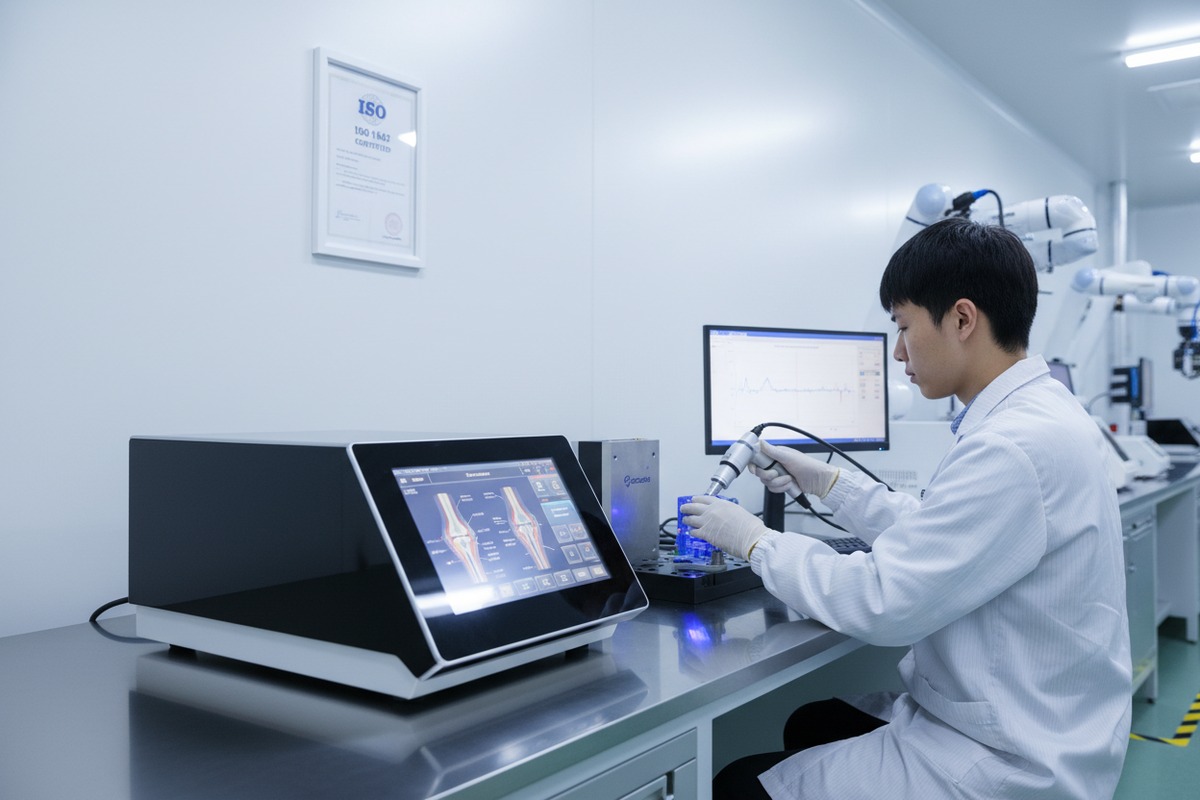
To verify quality and durability, request sample units for hands-on testing, check for ISO 13485 certification, examine energy flux density stability across multiple sessions, review component sourcing documentation, and confirm the supplier operates their own factory rather than being a trading intermediary.
Understanding Supplier Types
The first step is knowing who you are actually buying from. Approximately 80% of shockwave therapy exports come from Guangdong province, particularly the Guangzhou and Shenzhen clusters near Nansha ports. However, not all suppliers are equal.
| Supplier Type | Pricing | Response Time | Spare Parts | Customization |
|---|---|---|---|---|
| Direct Manufacturer | Factory price | Under 4 hours | Immediate availability | Full flexibility |
| Trading Company | 20-40% markup | Often delayed | Must order from source | Limited options |
| Marketplace Reseller | Variable | Inconsistent | Often unavailable | Minimal |
Direct manufacturers offer significant advantages. When we ship a unit, we know exactly which components went inside. Trading companies often cannot answer technical questions because they never touched the production line.
Sample Testing Protocol
Never skip sample testing. Yes, samples cost money. Components like air compressors and electromagnetic generators make "free samples" unrealistic. But this investment protects you from larger losses.
During sample evaluation, check these specifications:
- Energy flux density range and stability
- Adjustable frequency and pulse count settings
- Probe types and their durability after repeated use
- Noise levels during operation
- Heat management after continuous sessions
Run the machine for at least 50 sessions. Monitor whether energy output remains consistent. Cheap machines show degradation quickly. Quality units maintain performance.
Certification Verification
Certificates can be faked. We have seen counterfeit CE marks and fabricated FDA clearances. Always verify directly with certification bodies. For FDA 510(k) clearance 3, search the FDA database using the device name or manufacturer. For CE marking 4, request the notified body number and verify it exists.
ISO 13485 certification 5 demonstrates that the manufacturer follows quality management systems specifically designed for medical devices. Ask for audit reports, not just certificates.
What should I look for in a manufacturer's OEM services to ensure my brand stands out?
When our design team works with international partners, we see the difference between generic rebranding and true OEM collaboration. Your customers notice this difference too. A machine that looks identical to ten other brands on the market does nothing for your reputation.
Look for manufacturers offering comprehensive OEM services including custom housing design, branded user interface development, adjustable treatment protocols, personalized packaging, multilingual software options, and flexible probe configurations that differentiate your product from competitors.

Hardware Customization Options
True OEM means more than printing your logo on a standard unit. Discuss these hardware possibilities with potential suppliers:
| Customization Area | Basic OEM | Advanced OEM |
|---|---|---|
| Housing Color | Limited palette | Custom Pantone matching |
| Control Panel | Standard layout | Custom button arrangement |
| Probe Selection | Fixed set | Mix of 5-7 focused/radial heads |
| Screen Interface | Logo placement only | Fully branded UI design |
| Packaging | Generic box with label | Custom designed packaging |
Our factory offers mixing different transmitter heads—combining focused and radial wave applicators in one system. This flexibility reduces your customers' need to purchase multiple devices, lowering their total cost of ownership.
Software and Interface Branding
Modern shockwave machines feature large touchscreens displaying anatomical diagrams and treatment protocols. This interface is what your customers interact with daily. Generic screens with another company's branding undermine your market position.
Ask potential suppliers these questions:
- Can you customize the boot screen with my logo?
- Can treatment protocols be pre-programmed with my brand's recommended settings?
- What languages does the interface support?
- Can you add patient data management features?
- Is the software upgradeable after purchase?
Software updates matter enormously. Medical technology evolves. Treatment protocols improve. A machine that cannot receive updates becomes outdated quickly. Our systems support remote firmware updates, ensuring your devices stay current without physical service visits.
Minimum Order Quantities and Flexibility
Many Chinese manufacturers now offer flexible MOQs, sometimes as low as 1-5 units for initial orders. This flexibility helps smaller brands test markets before committing to large quantities. However, customization often requires higher volumes to justify tooling costs.
Negotiate MOQ requirements for different customization levels. Basic logo placement might be possible at low volumes. Custom housing molds typically require larger commitments.
How can I guarantee on-time delivery and safe door-to-door shipping for my bulk orders?
Our logistics coordinators manage shipments to over 30 countries annually. We have learned that shipping medical equipment involves more complexity than standard cargo. Customs inspections, voltage regulations, and handling requirements create multiple potential delay points.
Guarantee on-time delivery by negotiating clear Incoterms (preferably DDP or DAP), building buffer time into schedules for customs clearance, confirming voltage compatibility before shipping, using reinforced packaging for sensitive components, and working with suppliers experienced in medical device export documentation.

Understanding Shipping Timelines
Realistic timeline planning prevents disappointment. Here is what to expect for typical air freight from China to the United States:
| Phase | Duration | Variables |
|---|---|---|
| Production completion to dispatch | 1-2 days | Factory location |
| Air freight | 2-3 days | Route and carrier |
| Customs clearance | 2-4 days | Documentation accuracy |
| Customs inspection (if triggered) | 3-5 additional days | Random or flagged |
| Final delivery | 1-3 days | Destination accessibility |
| Total standard | 10-15 days | Without complications |
Adding voltage conversion for US specifications requires approximately 2 additional days. Always communicate your exact voltage requirements upfront. Receiving a 220V machine when you need 110V creates significant delays.
Incoterms and Responsibility
Incoterms 6 define who bears responsibility and cost at each shipping stage. For medical equipment, we recommend:
- DDP (Delivered Duty Paid): Supplier handles everything including import duties. You receive the machine at your door with no additional customs work.
- DAP (Delivered at Place): Supplier delivers to your location, but you handle import duties and taxes.
- FOB (Free on Board): Supplier responsibility ends when cargo loads onto the ship. You manage everything after.
DDP costs more upfront but eliminates surprises. Hidden costs with other terms include 5-25% import duties, customs broker fees of $150-500, and bank fees of $30-50 for international payments.
Packaging for Safety
Shockwave machines contain sensitive electromagnetic components and precision probes. Standard packaging often fails to protect against shipping damage. Request information about:
- Double-walled corrugated boxes
- Custom foam inserts molded to machine shape
- Moisture barrier bags for ocean freight
- Shock indicators on exterior packaging
- Handling instruction labels in destination language
Our standard export packaging includes reinforced corners, probe-specific foam compartments, and humidity control packets. Damaged goods cost everyone time and money.
Documentation Requirements
Medical device imports require specific documentation. Missing paperwork causes delays. Ensure your supplier provides:
- Commercial invoice with accurate HS codes 7
- Packing list with detailed contents
- Certificate of origin
- Technical specifications
- Compliance certificates (CE, FDA clearance documentation)
- User manual in appropriate language
Incorrect HS code classification triggers inspections. Experienced exporters know the correct codes for shockwave therapy equipment and prepare documentation accordingly.
What quality control steps will my supplier take to prevent product malfunctions and customer complaints?
During every production run at our facility, we catch defects that would otherwise reach customers. Some suppliers skip these steps to save costs. The result is machines that fail after weeks of use, creating warranty headaches and reputation damage for your brand.
Reliable suppliers implement incoming material inspection, in-process quality checks at each assembly stage, functional testing of all treatment modes, burn-in testing for extended operation stability, pre-shipment final inspection, and comprehensive documentation with photographs before dispatch.
Multi-Stage Inspection Process
Quality control works best as a continuous process, not a final checkpoint. Here is what a thorough QC system includes:
| Stage | Inspection Focus | Failure Rate Impact |
|---|---|---|
| Incoming Materials | Component specifications, supplier certifications | Catches 40% of potential defects |
| Sub-Assembly | Proper integration, soldering quality, wiring | Catches 25% of potential defects |
| Final Assembly | Mechanical fit, cosmetic appearance | Catches 15% of potential defects |
| Functional Testing | All modes operational, energy output accuracy | Catches 15% of potential defects |
| Burn-In Testing 8 | Extended operation stability, heat management | Catches 5% of potential defects |
Each stage catches different problem types. Skipping any stage allows defects to pass through.
Functional Testing Requirements
For shockwave therapy machines specifically, functional testing must verify:
- Energy flux density matches specifications across all intensity levels
- All probe types generate correct wave patterns
- Frequency adjustment works smoothly throughout range
- Pulse count accuracy
- Emergency stop functions properly
- Screen displays correctly without dead pixels
- All software functions operate as designed
We run each machine through 30+ cycles across different settings before approval. This burn-in period reveals components that might fail early in customer use.
Pre-Shipment Inspection
Before any unit leaves our warehouse, we conduct final pre-shipment inspection. This includes:
- Physical examination for scratches, dents, or cosmetic issues
- Complete accessory verification against packing list
- Documentation check for user manual, certificates, warranty card
- Packaging integrity assessment
- Photographic documentation of machine condition and serial number
These photographs protect both parties. If damage occurs during shipping, clear documentation shows the machine's condition at departure.
Third-Party Inspection Options
For additional assurance, consider hiring third-party inspection services. Companies like SGS, Bureau Veritas, or Intertek offer factory inspections. They verify production conditions, test random samples, and provide independent reports.
Third-party inspection adds cost—typically $200-500 per inspection—but provides independent verification. For large orders or new supplier relationships, this investment offers valuable protection.
Handling Customer Complaints
Even with excellent QC, occasional issues arise. Ask potential suppliers about their complaint handling process:
- Response time commitment for technical issues
- Spare parts availability and shipping speed
- Remote troubleshooting capabilities
- Replacement or repair policies under warranty
- Documentation requirements for warranty claims
Our warranty covers one year minimum, with technical support available via video call for troubleshooting. Spare parts ship within 48 hours for common components.
Conclusion
Sourcing an imported shockwave therapy machine requires careful attention to supplier verification, OEM capabilities, logistics planning, and quality control processes. Choose partners who offer transparency, documentation, and genuine manufacturing expertise. Your brand reputation depends on these decisions.
Footnotes
1. Replaced with an authoritative government source from the U.S. International Trade Administration explaining Incoterms, including DDP. ↩︎
2. Provides market size, growth projections, and trends for shockwave therapy. ↩︎
3. Replaced with the official FDA page on 510(k) Clearances, which is a direct and authoritative source. ↩︎
4. Replaced with the official European Union page on CE marking, providing an authoritative overview. ↩︎
5. Explains ISO 13485 as the harmonized standard for quality management in medical devices. ↩︎
6. Official government resource defining Incoterms rules for international trade transactions. ↩︎
7. Explains Harmonized System codes for classifying medical devices in international trade. ↩︎
8. Explains burn-in testing for detecting early failures in electronic components. ↩︎

 English
  Español de México
  Deutsch
  Français
  العربية
  Русский