

Running our production lines for shockwave therapy devices 1, we hear the same worry from clinic buyers every week. You invest in quality equipment, train your staff, and then insurance denies reimbursement. The frustration is real. Without proper documentation and certifications, your expensive machine becomes a financial burden instead of a revenue source.
To ensure a shockwave therapy machine meets clinic insurance requirements, verify FDA clearance for intended conditions, obtain manufacturer certifications (CE, ISO 13485), maintain calibration records, secure detailed technical documentation, and align device specifications with payer-specific coverage policies before purchase.
This guide walks you through every step. We cover certifications, supplier quality control, private labeling concerns, and documentation needs. Let’s make sure your investment pays off.
What certifications must my shockwave therapy machine have to qualify for clinic insurance?
When we ship devices to clinics in the United States, certification questions come first. Buyers want to know exactly which stamps of approval matter for insurance acceptance. The wrong certification mix can sink your reimbursement claims before you treat a single patient.
Your shockwave therapy machine must have FDA 510(k) clearance for specific indications, CE marking for European standards, and ISO 13485 certification from the manufacturer. These certifications prove safety, efficacy, and quality management compliance that insurance providers require for coverage consideration.
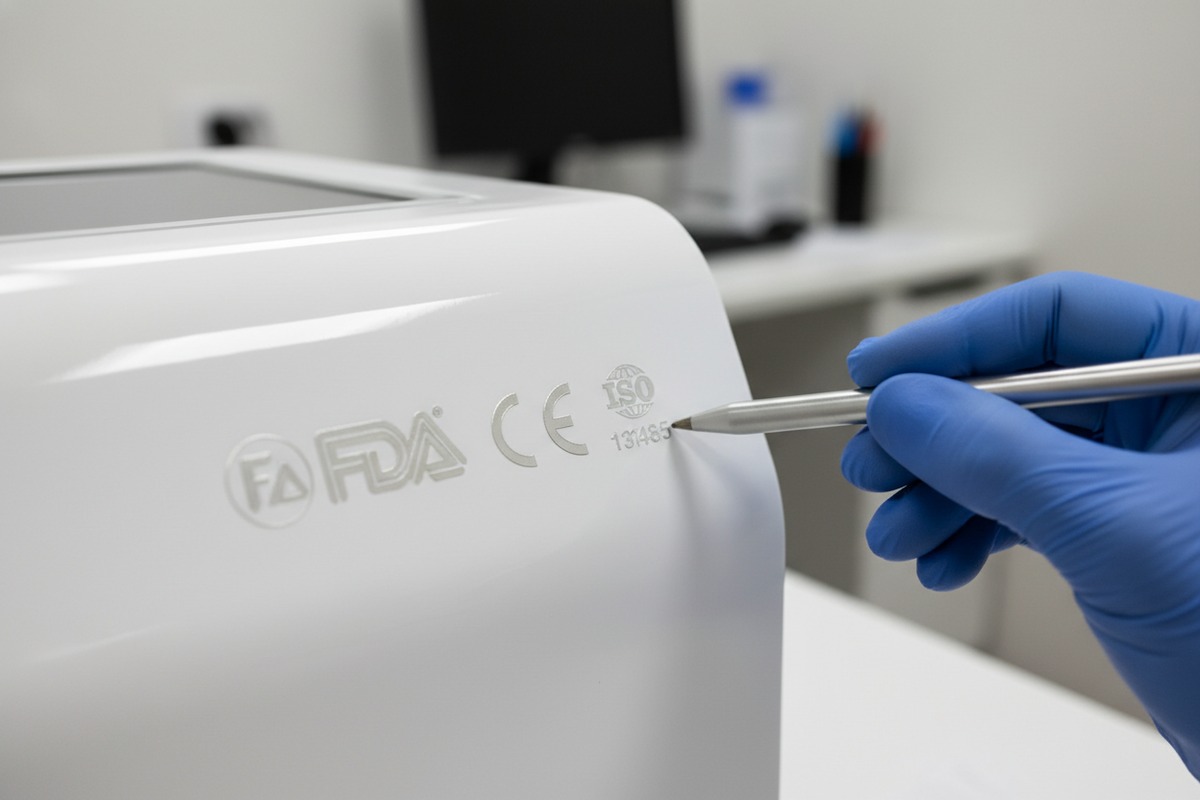
FDA Clearance: The Non-Negotiable Requirement
FDA clearance is the foundation. Without it, most commercial insurers automatically classify your treatments as experimental. This triggers immediate denial.
The FDA clears shockwave devices through the 510(k) pathway. This means the device is substantially equivalent to a legally marketed device. However, clearance is indication-specific. A device cleared for plantar fasciitis 2 may not be cleared for Achilles tendonitis.
Here is what you need to verify:
| Certification | What It Proves | Insurance Impact |
|---|---|---|
| FDA 510(k) Clearance 3 | Device safety and efficacy for specific conditions | Required by most commercial payers; determines covered indications |
| CE Marking 4 | Compliance with European health and safety standards | Shows international quality recognition |
| ISO 13485 | Manufacturer quality management system | Demonstrates consistent production standards |
| UL/ETL Listing | Electrical safety compliance | Required for clinic facility insurance |
Indication-Specific Clearances Matter
Our engineering team emphasizes this point to every buyer. The FDA clears devices for specific uses. Common cleared indications include:
- Plantar fasciitis
- Lateral epicondylitis (tennis elbow)
- Chronic calcific shoulder tendinopathy
- Wound healing applications
If you treat a condition outside the FDA-cleared indications, insurers will deny the claim. Aetna, for example, only covers chronic calcific shoulder tendinopathy if the condition persists for six months or longer and conservative treatments failed.
Manufacturer Certifications to Request
Beyond FDA clearance, request these documents from your supplier:
- Certificate of Conformity – Proves device meets declared standards
- Quality Management Certificate (ISO 13485) – Shows manufacturing controls
- Calibration Certificates – Proves device accuracy at time of shipment
- Electrical Safety Test Reports – UL or equivalent testing documentation
When we prepare shipments, our quality control team compiles these documents automatically. Your insurance provider may request any of them during coverage review.
How can I ensure my supplier's quality control processes meet my liability insurance standards?
Our factory in Guangzhou runs quality checks at seven different stages. We learned this discipline from demanding buyers who faced liability claims from faulty equipment. Your clinic's liability insurance 5 depends on proving your equipment comes from a controlled, documented manufacturing process.
Ensure supplier quality control meets liability standards by auditing their ISO 13485 certification, requesting batch testing records, verifying traceability systems, obtaining inspection reports at production milestones, and confirming they maintain documented corrective action procedures for defects.

Why Supplier QC Affects Your Liability Coverage
Liability insurers assess risk based on equipment reliability. If your shockwave machine malfunctions and injures a patient, the insurer investigates. They want to know:
- Did you buy from a reputable supplier?
- Does the supplier have documented quality systems?
- Can you prove the device was properly manufactured?
Without this documentation, your liability claim may be denied. Worse, you could face personal liability exposure.
Key Quality Control Documents to Request
| Document Type | Purpose | When to Request |
|---|---|---|
| ISO 13485 Certificate | Proves quality management system | Before placing order |
| Incoming Material Inspection Reports | Shows component quality verification | With each shipment |
| In-Process Inspection Records | Documents production stage checks | Upon request |
| Final Inspection Report | Confirms finished device meets specifications | With each shipment |
| Calibration Certificates | Proves measurement equipment accuracy | With each shipment |
| Corrective Action Reports | Shows how defects are addressed | Annually or upon audit |
Conducting a Supplier Quality Audit
If you purchase large quantities or establish ongoing relationships, conduct a supplier audit. Here is a practical checklist based on what our buyers typically review:
Production Environment
- Clean, organized manufacturing area
- Proper storage for sensitive components
- Temperature and humidity controls where needed
Documentation Systems
- Traceability from raw materials to finished goods
- Serial number tracking
- Batch records maintained for minimum five years
Testing Protocols
- Functional testing of every unit
- Sample destructive testing for durability
- Electrical safety testing
Staff Training
- Documented training records for production workers
- Regular refresher courses
- Quality awareness programs
Third-Party Inspection Services
Many buyers use third-party inspection services before shipment. Companies like SGS, Bureau Veritas, or TÜV can inspect your order at the factory. They provide independent verification that supplements supplier documentation.
Our team coordinates with these inspectors regularly. We find that buyers who use third-party inspection have fewer disputes and stronger documentation for their liability files.
Will private labeling a shockwave machine impact my clinic's insurance coverage or regulatory compliance?
Our OEM and ODM services serve many US and European brands. Private labeling is common in this industry. But buyers worry about hidden compliance risks. Does putting your brand on our machine create new regulatory obligations?
Private labeling a shockwave machine transfers certain regulatory responsibilities to the label holder. You become the legal manufacturer of record in some jurisdictions, requiring FDA establishment registration, device listing, adverse event reporting compliance, and potentially separate insurance coverage as a device distributor.
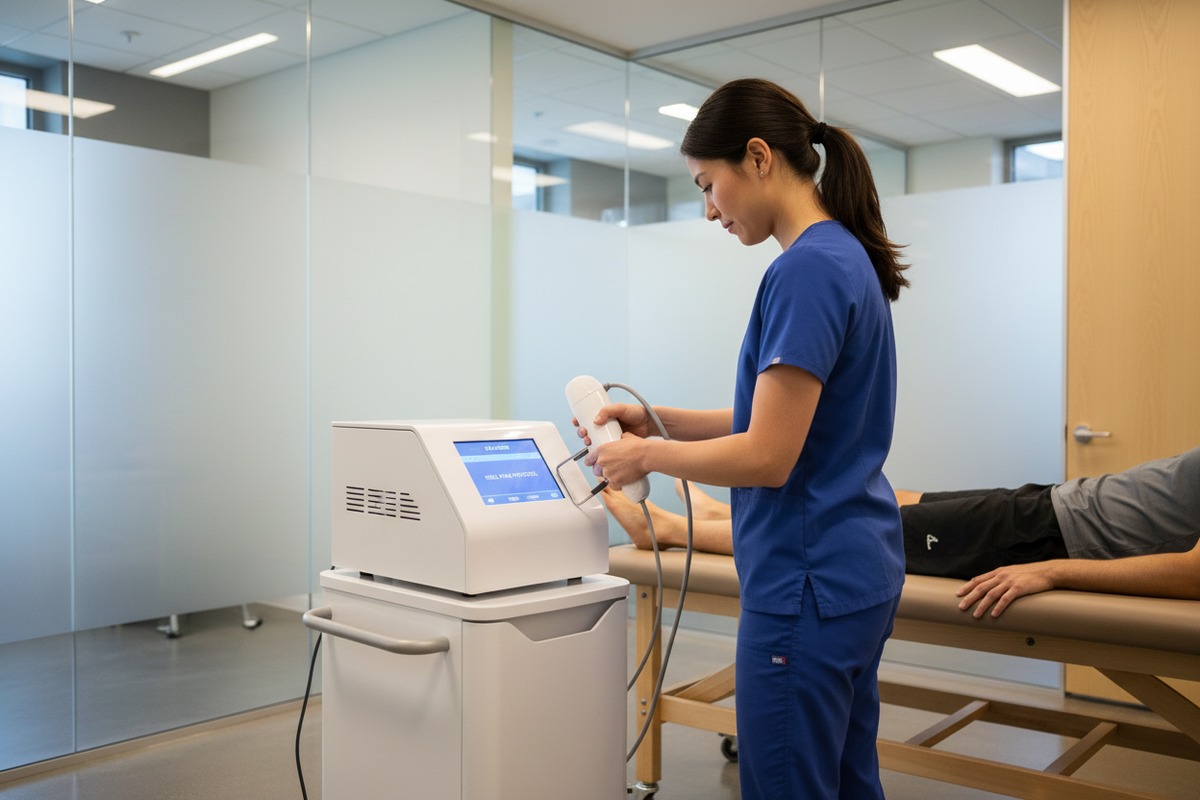
Understanding Your Role as a Private Label Holder
When you private label a medical device in the United States, the FDA considers you a "specification developer" or "contract manufacturer relationship" depending on your arrangement. Your regulatory obligations change.
Here is how responsibilities typically divide:
| Responsibility | Original Manufacturer | Private Label Holder |
|---|---|---|
| Device Design | Yes | Sometimes (if custom) |
| Manufacturing | Yes | No |
| FDA 510(k) Clearance | Yes (can be referenced) | May need own clearance |
| FDA Establishment Registration | Yes | Yes |
| Device Listing | Yes | Yes |
| Adverse Event Reporting | Shared | Yes |
| Quality System (21 CFR 820) | Yes | Partial compliance required |
Insurance Implications of Private Labeling
Your clinic liability insurance may need adjustment when you private label. Here is what to discuss with your insurance provider:
Product Liability Coverage
Standard clinic liability policies cover you as a service provider. When you become a device distributor or manufacturer of record, you need product liability coverage 7. This is a separate policy or endorsement.
Coverage Gaps to Address
- Claims arising from device defects
- Recalls and recall costs
- Regulatory defense costs
- Business interruption from device-related issues
Documentation to Maintain
Keep these records to support insurance claims:
- Contract manufacturing agreement
- Quality agreement with original manufacturer
- Complaint handling procedures
- Adverse event reporting records
Regulatory Steps for Private Label Compliance
If you decide to private label, follow these steps:
- FDA Establishment Registration – Register your business as a device establishment
- Device Listing – List the private-labeled device under your establishment
- Labeling Compliance – Ensure labels meet FDA requirements including your company information
- Quality Agreement – Document responsibilities with original manufacturer
- MDR Compliance – Set up medical device reporting procedures 8
Our team helps buyers navigate this process. We provide documentation templates and guidance based on FDA requirements. However, we always recommend consulting with a regulatory specialist for your specific situation.
What technical documentation should I request from my manufacturer to satisfy my insurance provider?
Our documentation packages have grown thicker over the years. Insurance providers ask for more proof. Clinics that arrive prepared get faster approvals and fewer claim denials. The right documentation file makes the difference between smooth reimbursement and frustrating appeals.
Request complete technical documentation including FDA clearance letters, device specifications, user manuals, clinical evidence summaries, calibration protocols, maintenance schedules, training materials, and warranty terms. Insurance providers use these documents to verify medical necessity and device appropriateness for covered indications.

Essential Documentation Checklist
When we ship devices, our documentation package includes everything below. We recommend keeping these files organized and accessible for insurance requests.
| Document Category | Specific Documents | Purpose |
|---|---|---|
| Regulatory | FDA 510(k) clearance letter, Summary, Indications for Use | Proves device legality and approved uses |
| Technical | Device specifications, Operating manual, Service manual | Details performance parameters |
| Quality | ISO 13485 certificate, Calibration certificate, Test reports | Demonstrates manufacturing quality |
| Clinical | Clinical study summaries, Published literature | Supports medical necessity arguments |
| Training | Operator training materials, Competency verification forms | Proves proper use capability |
| Maintenance | Maintenance schedule, Calibration requirements, Service logs | Shows ongoing device reliability |
Documents for Initial Insurance Verification
Before your first treatment, gather these documents for your insurance file:
FDA Clearance Package
- 510(k) clearance letter with clearance number
- Summary of Safety and Effectiveness (if available)
- Indications for Use statement
- Predicate device information
Device Technical Specifications
- Energy output ranges
- Frequency specifications
- Treatment applicator specifications
- Electrical requirements
- Physical dimensions and weight
Documents for Ongoing Compliance
Insurance providers may audit your records. Maintain these ongoing:
Calibration Records
Keep records of annual calibration or as specified by manufacturer. Our devices require calibration verification every 12 months. Document:
- Date of calibration
- Calibration method used
- Results and any adjustments
- Technician certification
Maintenance Logs
Record all maintenance activities:
- Preventive maintenance dates
- Repairs performed
- Parts replaced
- Service provider information
Training Documentation
Prove your staff is qualified:
- Initial training certificates
- Refresher training records
- Competency assessments
- Manufacturer training completion
Building Your Insurance Appeal File
When claims are denied, you need documentation ready for appeals. Our experienced buyers keep these items prepared:
- Device clearance proof – Shows FDA approval for the treated condition
- Patient medical necessity documentation – Failed conservative treatments, imaging, pain assessments
- Treatment protocol – Matches manufacturer recommendations
- Outcome tracking – Before and after functional assessments
- CPT code justification – Links procedure to appropriate billing code
Common CPT codes for shockwave therapy include:
- 0101T – Musculoskeletal, high energy
- 0102T – Additional treatment sites
- 0512T – Wound healing applications
- 0513T – Wound healing, additional sites
Each code has specific documentation requirements. Match your clinical notes to these requirements before submitting claims.
Conclusion
Insurance compliance for shockwave therapy machines requires attention to certifications, supplier quality, private labeling implications, and thorough documentation. Start with FDA clearance verification and build your documentation file before purchase.
Footnotes
1. Replaced with a Wikipedia article providing a comprehensive, authoritative overview of extracorporeal shockwave therapy, which directly relates to shockwave therapy devices. ↩︎
2. Provides information on the symptoms, causes, and diagnosis of plantar fasciitis. ↩︎
3. Explains the FDA 510(k) premarket notification process for medical devices. ↩︎
4. Replaced with an official European Union website explaining CE marking and its requirements for products, including medical devices, ensuring an authoritative source. ↩︎
5. Explains medical device manufacturer liability insurance and its importance for risk management. ↩︎
6. Replaced with a working page from BSI (a reputable certification body and the original source’s organization) that explains ISO 13485 certification for medical devices. ↩︎
7. Details what product liability insurance covers for medical device companies. ↩︎
8. Explains the FDA’s Medical Device Reporting (MDR) requirements for adverse events. ↩︎

 English
  Español de México
  Deutsch
  Français
  العربية
  Русский