When our engineering team first developed our shockwave therapy 1 line, clinic owners kept asking us the same question. They wanted to know exactly when their investment would pay off. The frustration was real. Many had purchased machines that sat idle, bleeding money instead of generating profit. Others hesitated so long that competitors captured their market share first.
To calculate shockwave therapy machine ROI for your startup MedSpa, divide your annual net profit by the total device cost, then multiply by 100. Factor in session pricing ($100-$400), patient volume (10-30 monthly), variable costs ($5/session), and fixed expenses. Most quality machines achieve 76-127% ROI within the first year when utilization reaches 1.5-6 sessions daily.
The numbers tell a compelling story, but only when you understand every variable. Let me walk you through each calculation step, drawing from what we’ve learned shipping hundreds of units to MedSpas across the US and Europe.
How much initial capital should I allocate for a professional shockwave therapy machine?
Our production facility assembles machines across every price tier. The budgeting question comes up in nearly every conversation we have with American buyers. Too many startup owners either overspend on features they won't use or underspend on machines that break within months.
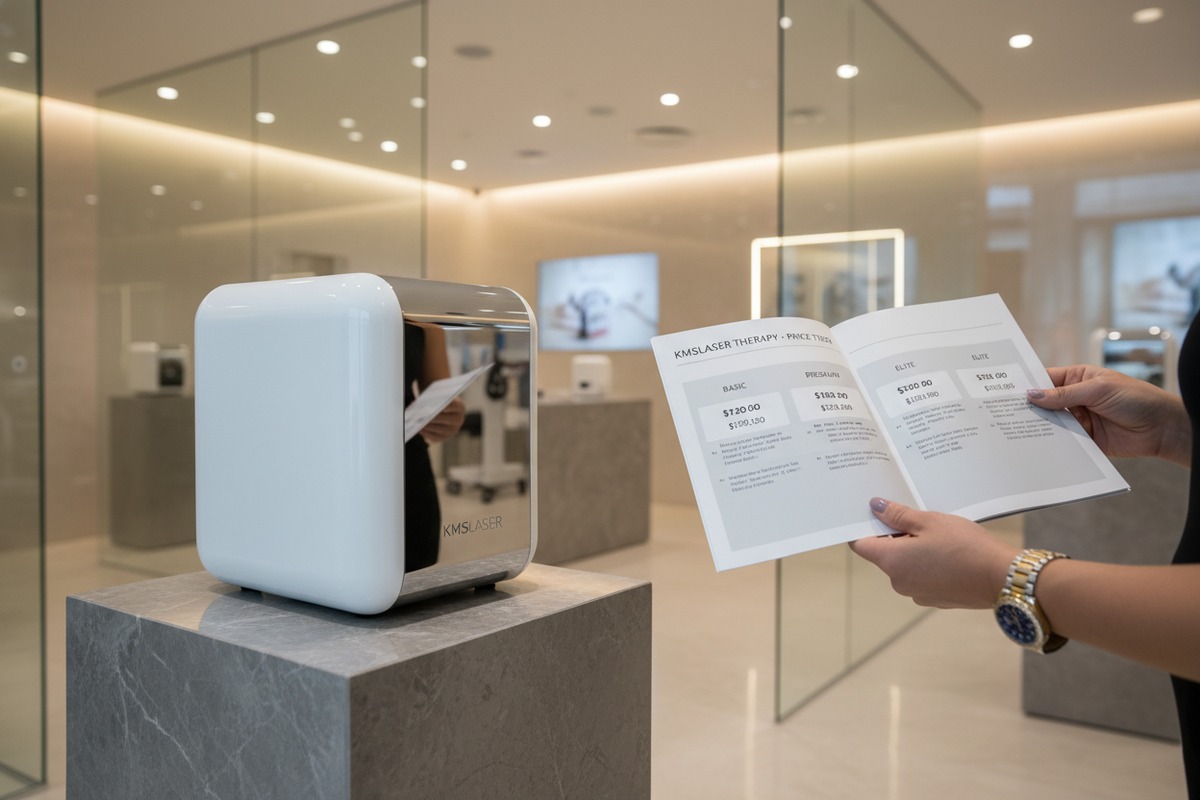
For a startup MedSpa, allocate between $4,999 and $25,000 for a professional shockwave therapy machine. Entry-level portable units start at $3,000-$5,000, mid-range systems cost $9,999-$15,000, and clinical-grade devices reach $25,000-$50,000. Leasing options at $150/month reduce initial capital requirements while you test market demand.
Understanding the Price Tiers
The market offers three distinct categories. Each serves different business models and patient volumes.
| Price Tier | Cost Range | Best For | Typical Warranty |
|---|---|---|---|
| Entry-Level | $3,000-$5,000 | Testing market demand, mobile services | 6-12 months |
| Mid-Range | $9,999-$15,000 | Growing MedSpas, 10-20 patients/month | 1-2 years |
| Clinical-Grade | $25,000-$50,000 | High-volume clinics, 30+ patients/month | 2-3 years |
What Drives Price Differences
The price gap isn't arbitrary. From our manufacturing perspective, costs increase based on several factors. Shock generation technology matters most. Radial shockwaves 2 cost less to produce than focused or planar waves. The applicator quality directly affects treatment outcomes and durability.
Energy output ranges vary significantly. Budget machines often cap at 5 bar pressure. Professional units reach 10-21 bar, enabling treatment of deeper tissue conditions. This capability opens more service offerings and higher session prices.
Leasing Versus Buying
Leasing makes sense for many startups. Monthly payments of $150-$300 preserve cash flow. You can test patient demand before committing capital. However, leasing typically costs 20-40% more over three years than purchasing outright.
When we ship to distributors in the US, many request both options for their client base. The buying decision depends on your financial situation, tax strategy, and confidence in patient volume projections.
Hidden Costs to Include in Your Budget
The sticker price isn't your total investment. Factor in shipping ($200-$500 from overseas manufacturers), initial training ($0-$500), marketing launch costs ($500-$2,000), and treatment room modifications if needed. Our customers who budget an additional 15-20% above machine cost avoid cash flow surprises.
How many client sessions do I need to perform to recover my equipment investment?
When we calibrate our machines before shipping, we think about the clinics that will use them. The break-even calculation 4 determines whether that machine becomes a profit center or an expensive paperweight. This math keeps clinic owners awake at night.
For a $10,000 shockwave machine priced at $150 per session, you need approximately 67 sessions to break even on equipment cost alone. At 10 sessions weekly, payback occurs in about 7 weeks. A $25,000 machine at the same utilization requires 167 sessions or roughly 17 weeks. Variable costs ($5-$10/session) and marketing expenses extend these timelines by 20-30%.
The Basic Break-Even Formula
The calculation starts simple. Divide your total machine cost by your net profit per session. Net profit means session price minus variable costs like consumables, clinician time allocation, and payment processing fees.
Break-Even Sessions = Machine Cost ÷ (Session Price – Variable Costs)
For a $10,000 machine with $150 sessions and $10 variable costs:
$10,000 ÷ ($150 – $10) = 71 sessions
Realistic Volume Scenarios
Patient volume determines everything. Here's what we see from clinic feedback across different business models:
| Scenario | Sessions/Week | Session Price | Monthly Revenue | Payback Period ($10K machine) |
|---|---|---|---|---|
| Conservative | 5 | $150 | $3,000 | 14 weeks |
| Moderate | 10 | $150 | $6,000 | 7 weeks |
| Aggressive | 20 | $200 | $16,000 | 3 weeks |
| Premium Positioning | 10 | $300 | $12,000 | 4 weeks |
Package Pricing Accelerates Payback
Smart MedSpa owners don't sell single sessions. They sell treatment packages. Most shockwave protocols require 3-6 sessions for optimal results. Selling a 6-session package at $750 (versus $150 x 6 = $900) increases conversion rates and locks in revenue upfront.
When patients commit to packages, they complete treatments. This improves outcomes, generates referrals, and creates predictable cash flow. From what our US distributors report, package sales shorten payback periods by 30-40% compared to single-session models.
Accounting for Real-World Constraints
The math changes when you add reality. Marketing costs to attract those patients might run $50-$100 per new client. Staff time for consultations and treatments has value. Payment processing takes 2-3%. Slower months happen.
Conservative planning assumes 60-70% of optimistic projections. If your best-case scenario shows 8-week payback, budget for 12 weeks mentally. This buffer protects against cash flow stress during the launch phase.
What are the ongoing maintenance and consumable costs that will affect my monthly profit?
Our quality control team obsesses over component durability because we understand what happens downstream. A machine that needs constant repairs destroys ROI. Hidden consumable costs 5 drain profit margins. These ongoing expenses determine long-term success or failure.
Monthly maintenance and consumable costs for shockwave therapy typically range from $50-$200, representing 2-5% of gross revenue. Consumables cost approximately $5 per session for gel and disposable tips. Annual maintenance runs $200-$500 for quality machines. Budget 3-5% of revenue for replacement parts and $100-$300 monthly for staff training and protocol updates.

Direct Consumable Costs
Shockwave therapy has minimal consumables compared to laser or injection treatments. This advantage drives high profit margins. Here's what each session actually costs in supplies:
| Consumable Item | Cost Per Session | Monthly Cost (40 sessions) | Annual Cost |
|---|---|---|---|
| Ultrasound Gel | $0.50-$1.00 | $20-$40 | $240-$480 |
| Disposable Tips (if applicable) | $2-$5 | $80-$200 | $960-$2,400 |
| Cleaning Supplies | $0.25 | $10 | $120 |
| Total Consumables | $2.75-$6.25 | $110-$250 | $1,320-$3,000 |
Maintenance and Repair Reserves
Quality machines require minimal maintenance during warranty periods 6. After warranty expiration, smart operators budget reserves. From our warranty claim data, most issues involve applicator wear, software updates, or power supply components.
Set aside 3-5% of monthly revenue for a maintenance fund. For a clinic generating $5,000 monthly from shockwave services, that means $150-$250 reserved. This fund covers annual inspections, unexpected repairs, and eventual component replacement.
The Hidden Cost of Downtime
When machines break, they stop earning. A week of downtime at 10 sessions weekly costs $1,500 in lost revenue. That's why we ship backup applicators to high-volume clients. Downtime risk increases with cheaper machines that lack spare parts availability.
Calculate your daily revenue from shockwave services. Multiply by expected downtime days annually. Add this figure to your cost projections. Machines with 24-48 hour parts availability from US-based distributors minimize this risk significantly.
Staff Training as Ongoing Investment
Protocols evolve. New applications emerge. Your staff needs continuing education to maximize machine utilization and patient outcomes. Budget $100-$300 monthly for training resources, webinars, and certification updates.
Well-trained staff also reduce consumable waste, improve treatment efficiency, and generate better patient reviews. This investment pays returns through operational excellence.
How can I ensure the machine's build quality and lifespan maximize my long-term ROI?
In our assembly facility, we see the components that separate machines lasting 10 years from those failing in 18 months. Build quality isn't visible in marketing photos. It shows up in your profit margins years after purchase. This knowledge protects your investment.
To maximize long-term ROI, select machines with unlimited operation capabilities, metal chassis construction, German or Japanese components in critical systems, and warranties exceeding 2 years. Verify the manufacturer offers US-based parts availability and technical support. Expect quality machines to last 7-10 years with proper maintenance, generating $50,000-$200,000 in cumulative profit.

Critical Components That Determine Lifespan
Not all shockwave machines age equally. The shock generation mechanism matters most. Electromagnetic systems 7 typically outlast pneumatic ones. The compressor quality in pneumatic units determines reliability under heavy use.
Quality Indicators to Verify Before Purchase
| Quality Indicator | Red Flag | Green Flag |
|---|---|---|
| Operation Limits | "Maximum 50 shots/day" | "Unlimited daily operations" |
| Warranty Length | 6 months or less | 2+ years comprehensive |
| Parts Availability | Ships from overseas only | US-based inventory |
| Construction Material | All-plastic housing | Metal chassis, industrial components |
| Manufacturer Support | Email only, slow response | Phone support, 24-48hr response |
Understanding Operation Limits
Cheaper machines often have daily operation caps. Marketing materials might hide this. A limit of 100 shots daily sounds reasonable until you realize a single treatment uses 2,000-4,000 shots. That machine can only perform 2-4 treatments daily before needing rest.
When we design for the US market, we engineer for unlimited operations. High-volume MedSpas need machines that can handle 6-8 treatments daily without thermal shutdowns or component stress. Ask manufacturers directly about operation limits before purchasing.
Warranty Terms That Actually Protect You
Read warranty details carefully. Some warranties exclude the applicator, which is the most wear-prone component. Others require you to ship the entire machine overseas for repairs. Practical warranties include:
- Comprehensive coverage including applicators
- Advance replacement for critical components
- US-based repair or replacement options
- Clear terms without excessive exclusions
Our distribution partners maintain US inventory specifically to provide rapid warranty service. This logistical investment protects clinic operations.
Calculating Lifetime Value
A quality $15,000 machine operating for 8 years at moderate utilization generates substantial returns:
- Annual revenue: $36,000 (6 sessions/week × 50 weeks × $120)
- Annual costs: $4,000 (consumables, maintenance, allocation)
- Annual profit: $32,000
- 8-year profit: $256,000
- ROI: 1,707%
Compare this to a $5,000 machine lasting 2 years:
- 2-year profit: $64,000
- ROI: 1,280%
But you need to buy another $5,000 machine. And another. Replacement cycles, downtime, and retraining costs accumulate. Quality machines cost more upfront but win overwhelmingly on lifetime ROI.
Conclusion
Calculating shockwave therapy ROI requires honest assessment of acquisition costs, session volume projections, ongoing expenses, and equipment quality. The numbers favor MedSpas that invest in reliable machines, price strategically, and maintain consistent patient volume. Your equipment choice today determines profitability for years ahead.
Footnotes
1. Provides a comprehensive overview of extracorporeal shockwave therapy (ESWT), its uses, and mechanisms. ↩︎
2. Replaced with an authoritative source from Mayo Clinic (.edu domain) explaining radial pressure wave treatment, which is synonymous with radial shockwaves. ↩︎
3. Authoritative source defining medical spas, their regulation, and services offered. ↩︎
4. Provides a clear definition and formula for break-even analysis from a government source. ↩︎
5. Provides a clear, concise definition of consumable items in a business context. ↩︎
6. Provides a legal definition of product warranties and discusses the importance of warranty periods in contracts. ↩︎
7. Explains how electromagnetic shockwave therapy works, its generation, and clinical applications. ↩︎
8. Explains the concept of Return on Investment (ROI) and its importance in financial evaluation. ↩︎

 English
  Español de México
  Deutsch
  Français
  العربية
  Русский