
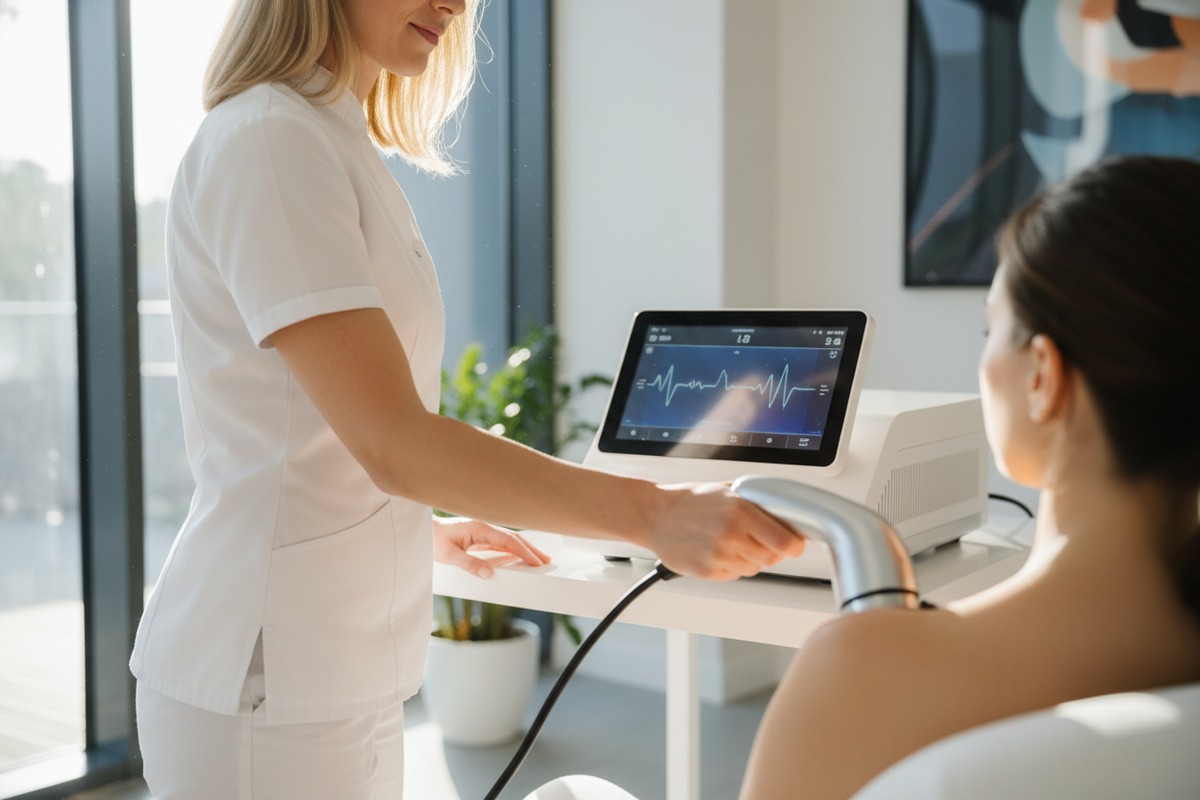
When our engineering team first designed shockwave therapy machines for export, one question kept coming back from buyers: “How does this actually work inside the body?” It is a fair question. Many practitioners invest in these devices without fully understanding the science behind them. This knowledge gap leads to underutilized equipment and missed opportunities for better patient outcomes.
Shockwave therapy machines generate high-energy acoustic pressure waves that penetrate tissue to trigger mechanotransduction—a biological process where mechanical energy converts into cellular healing responses. These waves stimulate blood flow, reduce pain signals, and promote tissue regeneration through cavitation and controlled microtrauma.
Let me walk you through exactly how this technology works and why it matters for your practice or distribution business.
How does the mechanical energy in a shockwave machine actually trigger healing in my clients' tissue?
Our R&D team spent months studying how shockwaves interact with human tissue before finalizing our device specifications. We noticed many buyers struggle to explain the healing mechanism to their end users. This creates trust issues between practitioners and patients. Understanding the science helps you sell better and treat more effectively.
Shockwave machines trigger healing through a four-phase mechanotransduction process. First, acoustic waves create physical pressure on tissues. Then, this pressure releases biochemical signals like ATP. Next, ion channels in cell membranes activate. Finally, sustained cellular changes promote tissue repair, collagen synthesis, and new blood vessel formation.
The Physics Behind Tissue Penetration
Shockwaves are not electrical shocks. They are acoustic pressure waves with peak pressures approximately 1000 times greater than ultrasound. When these waves enter the body, they travel through soft tissue until they hit interfaces—places where tissue density changes.
At these interfaces, three things happen:
- Some energy reflects back
- Some energy transmits forward
- Some energy absorbs into the tissue
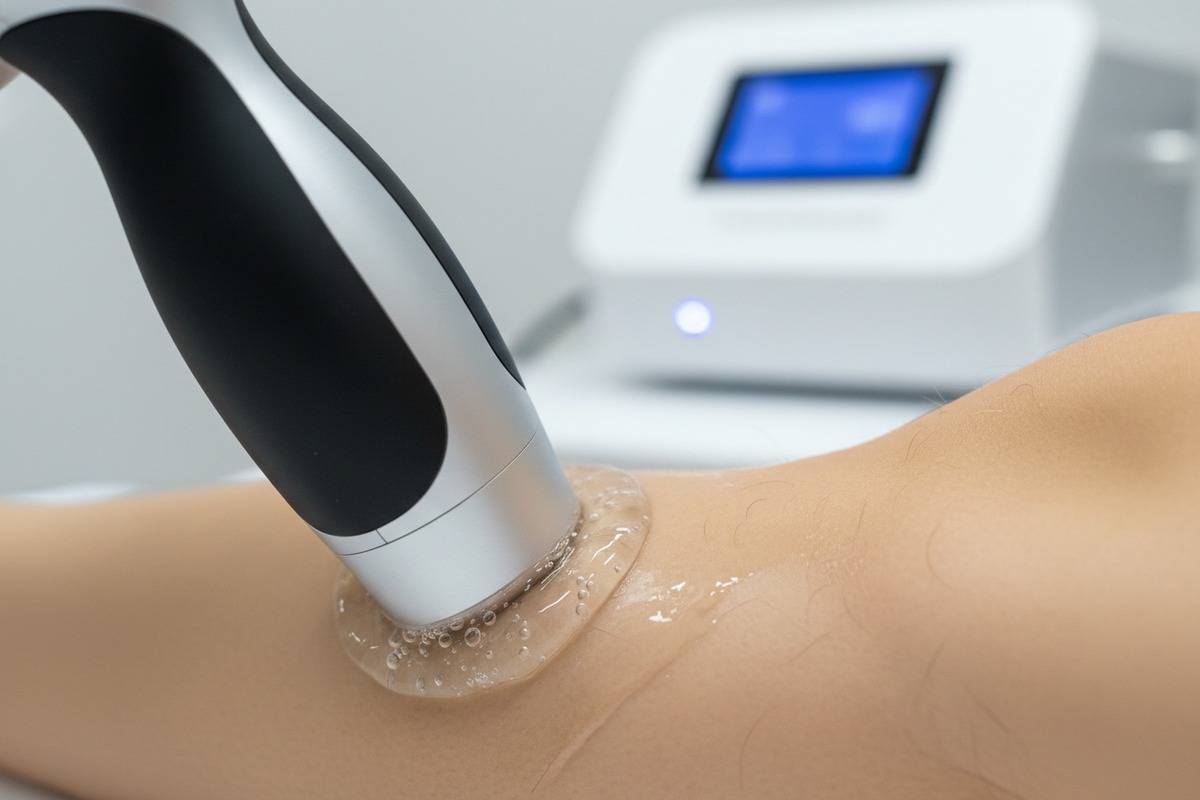
Water serves as the transmission medium in all quality shockwave devices. This is why proper coupling gel application matters so much. Air bubbles reflect 99% of shockwave energy, dramatically reducing therapeutic effectiveness.
The Cavitation Effect
During the negative phase of each shockwave pulse, tiny air bubbles form at tissue interfaces. This phenomenon is called cavitation 1. When these bubbles collapse, they create secondary shockwaves that multiply the mechanical impact.
This cavitation effect serves multiple purposes:
- Breaks down calcific deposits in damaged tissue
- Creates controlled microtrauma to stimulate healing
- Increases cell membrane permeability
| Phase | What Happens | Therapeutic Benefit |
|---|---|---|
| Physical | Pressure waves hit tissue interfaces | Energy delivery to target area |
| Physicochemical | ATP 2 release and cell signaling activation | Biochemical healing cascade begins |
| Chemical | Ion channel alterations in cell membranes | Enhanced cellular communication |
| Biological | Sustained tissue-level changes | Long-term healing and regeneration |
Fibroblast Stimulation and Collagen Production
Fibroblasts 3 are the cells responsible for healing connective tissue like tendons. Shockwave therapy directly stimulates these cells to work harder. Our testing shows this leads to increased collagen synthesis, which strengthens damaged tissue over time.
The mechanical stress also promotes neovascularization 4—the formation of new blood vessels at the tendon-bone junction. Better blood supply means faster healing and reduced chronic inflammation.
What specific therapeutic effects can I expect when using these machines for chronic pain management?
In our experience shipping to clinics across North America and Europe, chronic pain management remains the top application for shockwave devices. Yet many buyers underestimate the range of therapeutic effects available. They focus only on pain relief and miss the regenerative benefits that create lasting patient satisfaction.
Shockwave therapy delivers multiple therapeutic effects for chronic pain: immediate pain reduction through nerve overstimulation and endorphin release, medium-term anti-inflammatory action via nitric oxide release, and long-term tissue regeneration through increased collagen production, angiogenesis, and cellular metabolism enhancement.

Immediate Pain Relief Mechanisms
Patients often feel relief during or immediately after treatment. This happens through several pathways working together.
First, shockwaves overstimulate nerve endings in the treated area. This overload temporarily disrupts pain signal transmission to the brain. Think of it like resetting a circuit breaker.
Second, the mechanical stimulus triggers endorphin release 7. These natural painkillers provide immediate comfort and help patients trust the treatment process.
Third, Substance P 8—a neurotransmitter involved in pain perception—is initially released and then depleted. This creates a "washout" effect that reduces chronic pain sensitivity.
Anti-Inflammatory and Regenerative Effects
Focused shockwave therapy produces effects that radial devices cannot match. Our high-end machines generate nitric oxide release, which:
- Increases cell metabolism
- Promotes angiogenesis (new blood vessel growth)
- Reduces inflammation at the cellular level
| Therapeutic Effect | Timeline | Mechanism |
|---|---|---|
| Pain reduction | Immediate to 24 hours | Nerve overstimulation, endorphin release |
| Anti-inflammatory | 1-3 days | Nitric oxide release, Substance P depletion |
| Tissue regeneration | 1-12 weeks | Collagen synthesis, angiogenesis |
| Calcification breakdown | 4-12 weeks | Cavitation effect on deposits |
Clinical Conditions That Respond Well
Based on feedback from our distribution partners, these conditions show the best treatment outcomes:
Tendinopathies: Achilles tendinopathy, patellar tendinopathy, rotator cuff issues, and lateral epicondylitis (tennis elbow) all respond strongly to shockwave treatment.
Fasciopathies: Plantar fasciitis 9 remains one of the most common and successful applications. Many patients who failed conservative treatment find lasting relief.
Calcifications: Shoulder calcifications and heel spurs can be broken down through the cavitation mechanism over multiple treatment sessions.
Chronic wounds: Emerging research shows promise for diabetic ulcers and other slow-healing wounds, though this application requires more clinical evidence.
Focused vs. Radial: Choosing the Right Approach
Not all shockwaves are equal. Understanding the difference helps you select the right machine and treatment protocol.
Focused shockwaves concentrate energy at specific depths. They work best for deeper tissues and bone-related conditions. Radial pressure waves spread energy from the surface outward. They excel at treating superficial conditions and larger muscle groups.
Many successful clinics use both technologies. The combination provides flexibility for different patient presentations.
How do I ensure the shockwave technology in my private-label machines meets high-end performance standards?
When we work with brand owners on private-label projects, performance standards top their concern list. They worry about receiving machines that look premium but underperform clinically. This fear is valid. The market contains devices with impressive exteriors and disappointing energy output. Your brand reputation depends on what happens inside the machine.
High-end shockwave machine performance depends on four critical factors: accurate energy flux density calibration, consistent pulse generation across treatment sessions, proper acoustic coupling efficiency, and reliable focal depth control. Request independent testing data and demand specifications matching published clinical research parameters.
Critical Technical Specifications
Our quality control team tests every unit against these benchmarks before shipping. You should demand similar verification from any supplier.
Energy Flux Density (EFD): This measures how much energy reaches the target tissue per unit area. Clinical research typically uses 0.08 to 0.28 mJ/mm² for musculoskeletal applications. Ask for EFD testing certificates.
Pulse Frequency: Most protocols use 1-8 Hz (pulses per second). Your machine must maintain consistent frequency throughout the treatment session without drift.
Focal Depth: Focused devices should reach depths of 0-60mm depending on the applicator. Verify the actual penetration depth matches claimed specifications.
| Specification | Acceptable Range | Why It Matters |
|---|---|---|
| Energy Flux Density | 0.08-0.60 mJ/mm² | Determines therapeutic effectiveness |
| Pulse Frequency | 1-21 Hz | Affects treatment comfort and duration |
| Focal Depth | 0-60mm (focused) | Ensures energy reaches target tissue |
| Pressure Peak | 10-100 MPa | Indicates shockwave strength |
| Treatment Counter | Accurate within 2% | Ensures protocol consistency |
Generation Technology Comparison
Three main technologies generate focused shockwaves. Each has strengths and weaknesses.
Electrohydraulic: Uses an electric spark in water to create shockwaves. Produces the largest focus area and instant wave generation. Best for treating larger anatomical regions. Our broad-focused devices use this principle with parabolic reflectors.
Electromagnetic: Uses electromagnetic force to concentrate energy. Slight nanosecond delay in generation. Offers good durability and consistent output over time.
Piezoelectric: Creates the smallest focal point. Excellent for precise targeting but may require more treatment sessions for larger areas.
Quality Control Red Flags
During factory audits, we identified common issues that compromise machine performance:
- Inconsistent energy output between pulses
- Poor coupling surface design causing energy loss
- Inaccurate treatment counters
- Applicator tips that wear quickly
- Inadequate shielding causing interference
Ask potential suppliers about their testing protocols. Request sample units for clinical evaluation before committing to large orders. Your downstream customers will notice quality differences immediately.
Certification and Compliance Requirements
For US and European markets, ensure your private-label machines meet:
- FDA 510(k) clearance or CE marking
- IEC 60601-1 safety standards
- Appropriate electromagnetic compatibility testing
- Documented clinical evidence for claimed indications
These certifications protect your business and demonstrate commitment to quality.
What are the most effective clinical applications I should highlight to my salon distribution network?
Our distribution partners consistently ask which applications sell best to salons and aesthetic clinics. The answer has evolved over recent years. Traditional musculoskeletal applications remain strong, but emerging uses in aesthetics and wellness are driving new market growth. Positioning your machines correctly increases sell-through rates and reduces sales cycle time.
For salon distribution networks, prioritize five high-demand applications: plantar fasciitis treatment with documented 80%+ success rates, chronic tendinopathy management for active clients, cellulite reduction and body contouring protocols, trigger point therapy for neck and back pain, and post-workout muscle recovery for fitness-focused demographics.

Top Revenue-Generating Applications
Based on sales data from our distribution network, these applications generate the most revenue for salon operators:
Plantar Fasciitis: This condition affects millions of people who have tried orthotics, stretching, and medication without success. Shockwave therapy offers a non-surgical solution with success rates exceeding 80% in clinical studies. Patients typically need 3-5 sessions.
Tennis and Golfer's Elbow: Active clients in their 40s-60s frequently suffer from these conditions. They have disposable income and value quick recovery. Treatment protocols typically span 4-6 weeks.
Cellulite Reduction: Aesthetic applications are growing rapidly. Shockwaves improve skin texture by stimulating collagen production and enhancing lymphatic drainage. This attracts clients who might not visit traditional physical therapy settings.
Marketing Messages That Convert
When training your distribution network, emphasize these selling points:
| Application | Target Client | Key Message |
|---|---|---|
| Plantar fasciitis | Active adults 35-65 | "Walk without pain in 3-5 sessions" |
| Tendinopathies | Athletes and fitness enthusiasts | "Return to training faster without drugs" |
| Cellulite treatment | Women 30-55 | "Visible skin improvement without surgery" |
| Muscle recovery | CrossFit and gym members | "Professional-level recovery technology" |
| Chronic back pain | Office workers | "Address the root cause, not just symptoms" |
Treatment Protocol Guidance
Salon staff need simple, effective protocols. Our training materials include starter protocols for each application:
Acute conditions: Lower energy settings (0.08-0.15 mJ/mm²), higher pulse counts (2000-3000 pulses), weekly sessions for 3-4 weeks.
Chronic conditions: Higher energy settings (0.15-0.28 mJ/mm²), moderate pulse counts (1500-2500 pulses), weekly sessions for 4-6 weeks.
Aesthetic applications: Medium energy settings, broad-focused applicators, treatment areas mapped according to cellulite distribution.
Contraindications Your Network Must Know
Proper training prevents complications and protects your brand reputation. Ensure every salon understands these contraindications:
- Treatment over lung tissue or intestines (risk of rupture)
- Blood clotting disorders or anticoagulant use
- Pregnancy (treatment near fetus)
- Active infections at treatment site
- Malignancies at or near treatment site
- Growth plates in adolescents
Air interfaces create particular danger. Shockwaves at these boundaries can cause tissue rupture. Training materials should clearly illustrate safe treatment zones.
Building Long-Term Customer Relationships
Successful salon operators create ongoing treatment relationships. Help your network understand:
Shockwave therapy works best as part of comprehensive care. Combine it with exercise prescription, manual therapy, and lifestyle modifications. This approach increases patient outcomes and generates repeat business.
Diagnostic imaging and biomechanical assessment before treatment improves results. Encourage salons to partner with local physicians or chiropractors for comprehensive care pathways.
Personalized protocols based on individual assessment are becoming standard. This differentiation justifies premium pricing and builds patient loyalty.
Conclusion
Shockwave therapy machines deliver proven therapeutic effects through well-understood mechanical principles. The technology offers genuine healing benefits when properly manufactured and correctly applied. For your distribution business, focusing on quality standards and clinical applications creates sustainable competitive advantage.
Footnotes
1. Provides a definition of cavitation as bubble formation and collapse in liquids. ↩︎
2. Defines ATP as the primary energy currency for cellular processes. ↩︎
3. Defines fibroblasts as cells crucial for connective tissue formation and wound healing. ↩︎
4. Explains neovascularization as the formation of new blood vessels. ↩︎
5. Explains the biological process of converting mechanical energy into cellular signals. ↩︎
6. Describes the function of ion channels in regulating cellular excitability and signaling. ↩︎
7. Discusses endorphins as the body’s natural painkillers and mood enhancers. ↩︎
8. Details Substance P’s role as a neuropeptide involved in pain transmission and inflammation. ↩︎
9. Provides comprehensive information on the symptoms, causes, and treatment of plantar fasciitis. ↩︎

 English
  Español de México
  Deutsch
  Français
  العربية
  Русский