

Every week, our quality control team rejects silicone components that look perfect but fail basic biocompatibility tests ISO 10993 biocompatibility certificates 1. The problem? Many suppliers claim “medical-grade” status without proper certification. This gap between marketing claims and actual material quality puts your patients at risk and your brand reputation on the line.
To verify medical-grade silicone accessories, request ISO 10993 biocompatibility certificates, USP Class VI documentation, FDA 510(k) clearance records, and ISO 13485 quality management certification. Additionally, demand material data sheets showing platinum-cured silicone composition and confirm cleanroom manufacturing conditions.
This guide walks you through the exact verification steps our engineering team uses when sourcing silicone components USP Class VI documentation 2. You will learn what documents to request, how to test durability, and what quality standards separate genuine medical-grade materials from consumer-grade imitations.
What certifications should I request to confirm the silicone accessories are truly medical-grade?
When we first started sourcing silicone transmitter tips for our shockwave machines, the certification landscape felt overwhelming FDA 510(k) clearance records 3. Many suppliers presented impressive-looking documents that turned out to be irrelevant or outdated. The real challenge lies in knowing which certifications actually matter for medical device accessories ISO 13485 quality management certification 4.
Request ISO 10993 biocompatibility test reports, USP Class VI certification, FDA 510(k) clearance documentation, and ISO 13485 quality management certificates. These four certifications form the minimum verification standard for medical-grade silicone accessories used in patient-contact applications like shockwave therapy.

Understanding ISO 10993 Requirements
ISO 10993 is the international standard for biological evaluation of medical devices platinum-cured silicone composition 5. This standard covers a series of tests that evaluate how materials interact with living tissue. For silicone accessories that contact patient skin during shockwave therapy, the most critical tests include cytotoxicity, sensitization, and irritation assessments 6.
Our testing protocols require suppliers to provide complete ISO 10993 reports, not just summary certificates. The full report shows exactly which tests were performed and the specific results. A genuine report includes test methodology, sample preparation details, and quantitative results.
The USP Class VI Standard
USP Class VI represents the highest biocompatibility classification under United States Pharmacopeia standards. This certification involves implanting material samples into test subjects and monitoring for adverse reactions over specific time periods. Materials passing USP Class VI testing demonstrate safety for prolonged tissue contact.
FDA Documentation Requirements
For products entering the US market, FDA 510(k) clearance provides additional verification. This clearance indicates the FDA has reviewed the device and determined it is substantially equivalent to a legally marketed device. While 510(k) covers the entire shockwave machine, the clearance documentation should reference the accessory materials.
Essential Certification Checklist
| Certification | What It Verifies | Red Flags |
|---|---|---|
| ISO 10993 | Biocompatibility with living tissue | Only summary provided, no test details |
| USP Class VI | Highest implant-grade safety | Certificate older than 5 years |
| FDA 510(k) | US market safety review | No establishment registration number |
| ISO 13485 | Quality management system | Certificate from unknown registrar |
| Material Data Sheet | Chemical composition details | Missing platinum-cure specification |
Verifying Certificate Authenticity
Fake certificates circulate widely in the medical device supply chain. Our procurement team verifies every certificate by contacting the issuing body directly. Most certification bodies maintain online databases where you can confirm certificate validity using the registration number.
Check that the certificate specifically names the silicone material or product you are purchasing. Generic certificates covering a supplier's entire product line may not apply to your specific accessory. The certificate scope must match what you are buying.
How can I verify the durability of silicone heads to ensure they won't fail during intensive use?
During our product development phase, we tested silicone tips from twelve different suppliers. Seven failed before reaching 50,000 shock cycles. The survivors shared common characteristics that now form our durability verification protocol. Understanding these factors saves you from costly mid-treatment failures.
Verify durability by requesting fatigue test reports showing performance across 150,000 to 2 million shock cycles, examining tear strength ratings above 25 kN/m, confirming Shore A hardness between 30-70 depending on application, and testing sterilization resistance across 500+ autoclave cycles without degradation.

Mechanical Stress Testing Standards
Shockwave therapy subjects silicone tips to repetitive high-frequency stress. Each treatment session delivers hundreds to thousands of shocks. Over time, this stress causes micro-tears and material fatigue. Proper durability testing simulates accelerated use conditions.
Our engineers require suppliers to provide fatigue testing data 7 showing how the silicone performs after extended shock cycles. For standard clinical use, we specify minimum 150,000 shock cycles per applicator head. For high-volume clinics, we recommend accessories rated for 500,000 cycles or more.
Key Durability Specifications
| Property | Minimum Standard | Premium Standard | Test Method |
|---|---|---|---|
| Shock Cycle Rating | 150,000 cycles | 2,000,000 cycles | Accelerated fatigue test |
| Tear Strength | 25 kN/m | 40 kN/m | ASTM D624 |
| Shore A Hardness | 30-50 (soft tips) | 50-70 (standard tips) | ASTM D2240 |
| Tensile Strength | 7 MPa | 10 MPa | ASTM D412 |
| Elongation at Break | 400% | 600% | ASTM D412 |
Sterilization Resistance Testing
Medical-grade silicone must withstand repeated sterilization without degrading. Our standard requires compatibility with steam autoclaving at 134°C, gamma irradiation, and ethylene oxide (EtO) sterilization. The silicone should maintain its mechanical properties and appearance after 500 sterilization cycles.
Request sterilization compatibility reports that show before-and-after measurements. Look for changes in hardness, color, and dimensional stability. Quality silicone shows less than 5% variation in key properties after repeated sterilization.
Thermal Performance Considerations
Shockwave application generates localized heat. The silicone tip must dissipate this heat effectively while maintaining consistent energy transmission. Poor thermal management causes patient discomfort and accelerates material degradation.
During our validation testing, we monitor surface temperature during extended treatment simulations. Quality silicone tips maintain surface temperatures below 40°C even after 30 minutes of continuous operation. This thermal stability ensures patient comfort and extends accessory lifespan.
Real-World Failure Modes
Understanding how silicone tips fail helps you evaluate supplier quality claims. Common failure modes include:
Surface crazing appears as fine cracks after extensive sterilization. This indicates poor material formulation or inadequate curing. Crazing compromises energy transmission and creates potential contamination points.
Delamination occurs when the silicone separates from the metal or plastic connector base. This results from poor bonding during manufacturing or incompatible adhesive selection.
Permanent deformation happens when the silicone loses its original shape after repeated compression. This changes the treatment characteristics and reduces clinical effectiveness.
What quality control standards should my supplier follow when manufacturing these silicone components?
When we audit potential silicone suppliers, the factory tour reveals more than any certificate. Last year, we visited a facility with impressive paperwork but found workers handling raw silicone without gloves in an open workshop. Their certifications were real, but their daily practices contradicted everything those documents promised.
Your supplier should follow ISO 13485 quality management systems, manufacture in ISO Class 7 or better cleanroom environments, maintain full lot traceability from raw material to finished product, conduct 100% incoming material inspection, and perform documented in-process quality checks at each production stage.
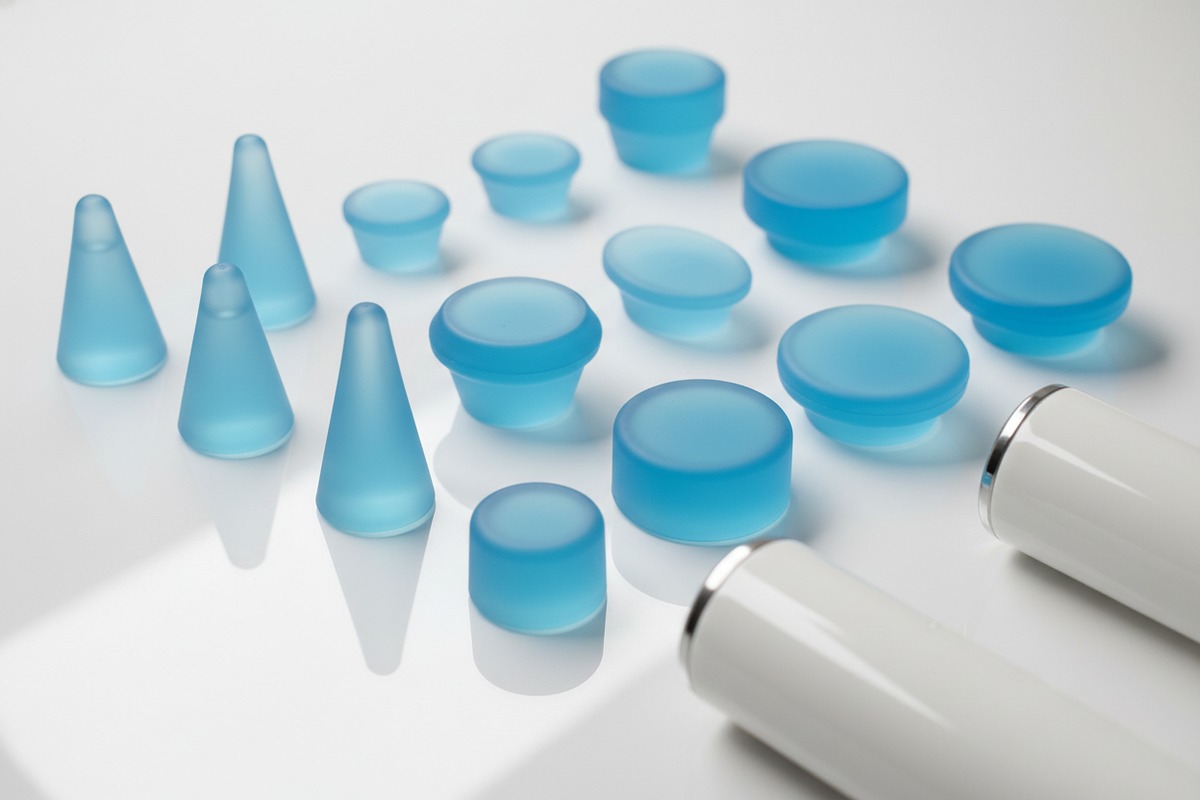
Cleanroom Manufacturing Requirements
Medical-grade silicone production requires controlled environments to prevent contamination. Particles, dust, and biological contaminants compromise material purity and patient safety. ISO Class 7 cleanrooms 8 limit particles to 352,000 per cubic meter at 0.5 microns or larger.
During facility audits, we verify cleanroom classifications through independent testing reports. We observe gowning procedures, air handling systems, and material transfer protocols. Proper cleanroom operation involves more than just filtered air—it requires comprehensive contamination control programs.
Traceability Systems
Complete traceability allows you to identify every material and process step for any finished product. If a quality issue emerges, traceability enables targeted investigation and recall if necessary. Without traceability, a single defective batch could contaminate your entire inventory.
Our supplier qualification requires documented traceability covering:
- Raw silicone supplier and batch number
- Mixing date and operator identification
- Curing parameters and equipment calibration records
- Inspection results at each production stage
- Packaging date and shipping destination
Quality Control Process Flow
| Production Stage | QC Checkpoint | Acceptance Criteria |
|---|---|---|
| Raw Material Receipt | Incoming inspection | COA verification, visual inspection, hardness test |
| Mixing | Batch documentation | Correct ratios, mixing time, temperature |
| Molding | In-process check | Dimensional accuracy ±0.1mm, no voids |
| Curing | Parameter verification | Temperature ±2°C, time ±30 seconds |
| Finishing | Visual inspection | No flash, surface defects, or discoloration |
| Final Assembly | Functional test | Proper fit, secure bonding, energy transmission |
| Packaging | Cleanliness check | Particle-free packaging, proper labeling |
Supplier Audit Essentials
Remote documentation review cannot replace on-site verification. When auditing silicone suppliers, we examine actual production conditions rather than relying solely on presented certificates and procedures.
Key audit focus areas include worker training records, equipment calibration schedules, non-conformance handling procedures, and customer complaint resolution processes. A quality-focused supplier welcomes detailed audits and provides transparent access to production areas.
Statistical Process Control
Advanced manufacturers implement statistical process control (SPC) to monitor production consistency. SPC tracks critical parameters over time and identifies trends before they cause defects. Request SPC charts for key quality characteristics like hardness, dimensions, and tensile strength.
Consistent SPC data demonstrates process stability. Wide variations or frequent out-of-control points indicate manufacturing problems that will eventually affect your products.
Document Control and Change Management
Proper quality systems require controlled documentation. Any changes to materials, processes, or specifications must follow documented change control procedures. This ensures you receive consistent products and are notified of any modifications.
Ask suppliers about their change notification policy. Quality suppliers commit to advance notification of any changes affecting your products and require your approval before implementation.
Can I customize the design and branding of medical-grade silicone accessories for my private label?
Building a private label shockwave therapy brand requires more than just sticking your logo on generic products. Our design team works with clients who want distinctive accessories that differentiate their brand while maintaining medical-grade quality. The customization possibilities are broader than most buyers realize, but certain constraints exist.
Yes, medical-grade silicone accessories can be fully customized for private label including unique shapes, custom colors, laser-engraved logos, branded packaging, and proprietary connector designs. However, any design changes require re-validation of biocompatibility and performance, adding 8-12 weeks to development timelines.

Design Customization Options
Custom silicone tip designs can differentiate your brand and potentially improve clinical outcomes. Shape modifications affect energy transmission patterns and treatment depth. Our engineering team uses finite element analysis 9 to optimize custom tip geometries before tooling investment.
Color customization helps with product identification and brand recognition. Medical-grade colorants must also meet biocompatibility requirements. Not all colors are available—certain pigments cannot achieve medical-grade certification. White, gray, blue, and translucent options typically present the fewest certification challenges.
Branding Integration Methods
| Branding Method | Durability | Cost Level | Minimum Order |
|---|---|---|---|
| Laser Engraving | Permanent | Medium | 500 units |
| Pad Printing | 500+ sterilization cycles | Low | 1,000 units |
| Molded-In Logo | Permanent | High (tooling) | 2,000 units |
| Custom Packaging | N/A | Low-Medium | 500 units |
| Custom Color | Permanent | Medium (formulation) | 1,000 units |
Tooling and Development Considerations
Custom silicone components require dedicated molds. Tooling investment typically ranges from $2,000 to $15,000 depending on complexity. Multi-cavity molds cost more initially but reduce per-unit costs at higher volumes.
Our development process includes prototype phases using soft tooling before committing to production molds. This allows design refinement without full tooling investment. Expect 2-3 prototype iterations for complex custom designs.
Re-Validation Requirements
Any design change from a previously certified product requires validation testing. This includes dimensional verification, material testing, and potentially biocompatibility re-testing. The extent of re-validation depends on the nature and scope of changes.
Minor changes like color or logo addition typically require abbreviated testing. Major changes like new geometries or material formulations may require complete biocompatibility testing similar to new product development.
Intellectual Property Protection
Custom designs represent your intellectual property investment. Before sharing detailed designs with suppliers, establish clear IP agreements. Our standard contracts include confidentiality clauses and acknowledge customer ownership of custom designs.
Consider whether your custom design can be patent-protected. Unique tip geometries with demonstrated clinical benefits may qualify for utility or design patents. This protection prevents competitors from copying your innovations.
Minimum Order Quantities and Lead Times
Custom products typically require higher minimum orders than standard items. The custom development investment must be amortized across sufficient volume. Typical minimum orders for fully custom silicone accessories range from 500 to 2,000 units depending on complexity.
Lead times for custom development extend beyond standard product orders. Plan for 12-16 weeks from design approval to first production shipment. This includes tooling fabrication, first article inspection, any required testing, and production.
Private Label Packaging Options
Complete private labeling includes custom packaging with your branding. Options range from simple labeled boxes to elaborate presentation cases. Medical device packaging must meet regulatory requirements including proper labeling, lot traceability, and sterile barrier maintenance if applicable.
Our packaging team designs retail-ready solutions that enhance your brand presentation while meeting all regulatory requirements. Custom inserts, instruction cards, and warranty documentation complete the private label package.
Conclusion
Verifying medical-grade silicone accessories requires systematic certification review, durability testing, supplier quality audits, and clear customization protocols. The investment in proper verification protects your patients and your brand reputation in the competitive shockwave therapy market.
Footnotes
1. Explains ISO 10993 for biological evaluation of medical devices. ↩︎
2. Defines USP Class VI testing requirements for medical device materials. ↩︎
3. Replaced with the official FDA page providing an overview of 510(k) clearances and access to the releasable 510(k) database. ↩︎
4. Provides an overview of ISO 13485 for medical device quality management systems. ↩︎
5. Explains the advantages and properties of platinum-cured silicone for medical applications. ↩︎
6. Details cytotoxicity, sensitization, and irritation testing for medical device biocompatibility. ↩︎
7. Discusses fatigue analysis tools and simulation for medical device durability. ↩︎
8. Explains ISO Class 7 cleanroom classification according to ISO 14644-1. ↩︎
9. Highlights best practices for using finite element analysis in medical device development. ↩︎

 English
  Español de México
  Deutsch
  Français
  العربية
  Русский