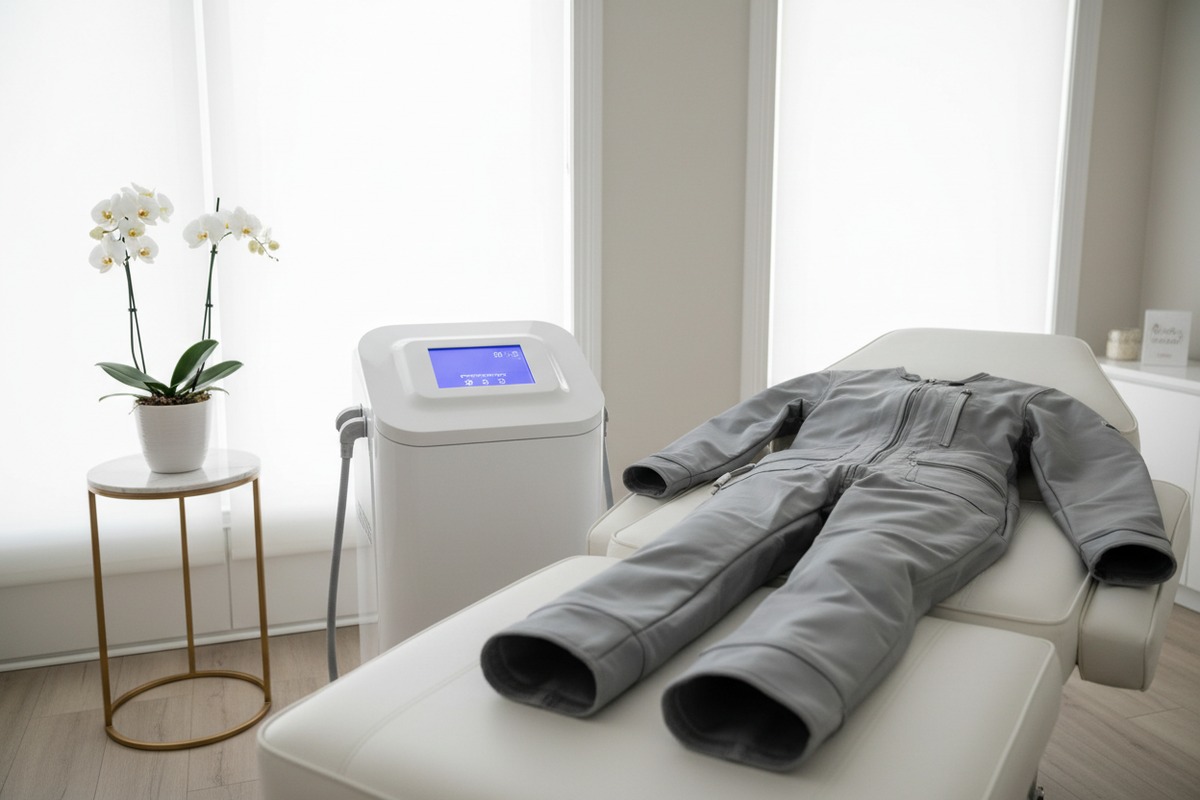
Running a beauty salon in the US means constantly fielding new treatment requests peristaltic wave patterns 1. Clients walk in wanting lymphatic drainage 2, cellulite reduction, and post-workout recovery. You’ve seen pressotherapy grow from a niche offering to a must-have service. But here’s the problem: not all pressotherapy machines deliver the same results. Our production team has worked with salon owners who bought machines with unstable pressure modes. They lost clients and faced refund demands.
The best treatment modes when sourcing pressotherapy machines for US beauty salons include sequential lymphatic drainage, customizable pressure intensity settings (30-250mmHg), multi-zone coverage with 20-24 independent air chambers, and integrated thermal therapy features like far infrared heating for enhanced detoxification and body contouring results.
This guide breaks down each treatment mode you need to evaluate. We’ll cover lymphatic drainage priorities, program customization options, pressure stability requirements, and add-on features that set your machines apart. Let’s start with the modes your clients will request most often.
Which specific lymphatic drainage modes should I prioritize for my US salon clients?
When our engineers designed our latest pressotherapy systems, they tested dozens of drainage patterns. US salon owners kept asking for the same thing: modes that deliver visible results after just one session. The challenge is that lymphatic systems vary widely between clients. A mode that works for post-surgical recovery won't suit someone seeking cellulite reduction 3. This mismatch causes client complaints and negative reviews.
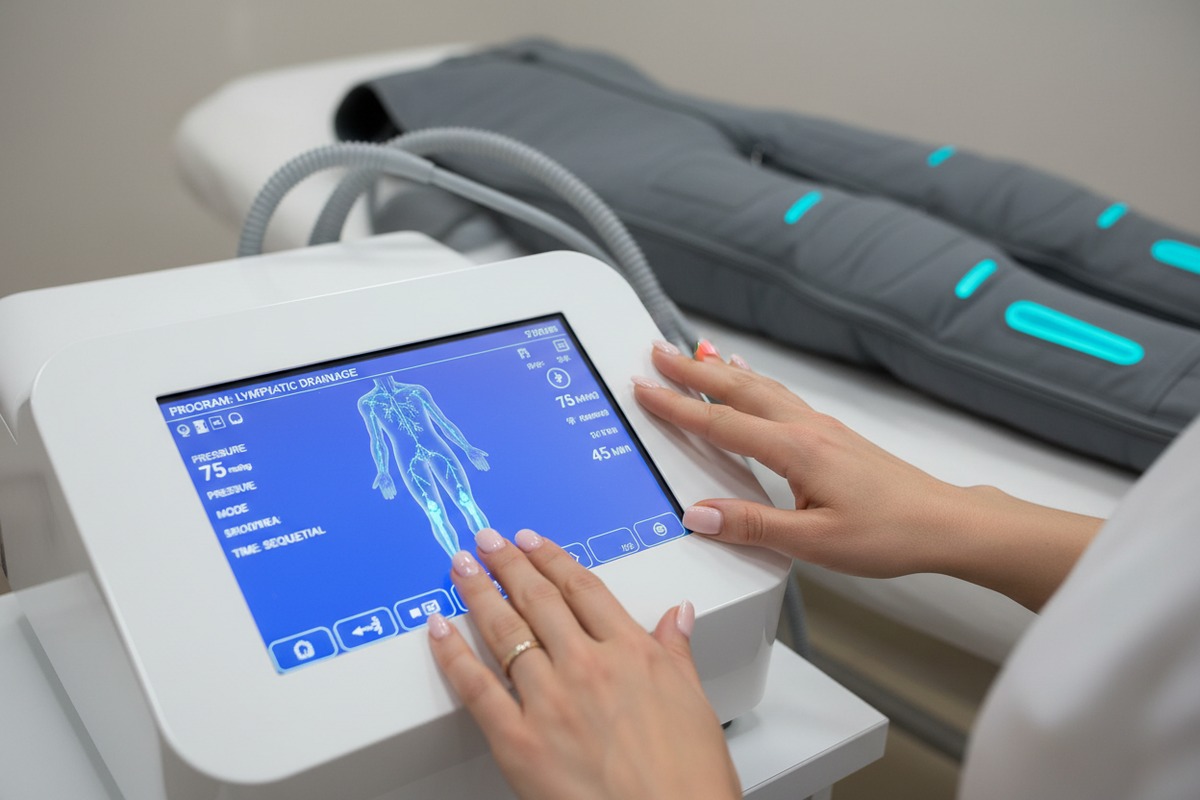
Prioritize sequential compression modes with overlapping chamber technology, peristaltic wave patterns that move from distal to proximal body areas, and gradient pressure settings that allow 20-220mmHg customization per chamber for targeted lymphatic stimulation across legs, arms, and abdomen zones.
Understanding Sequential vs. Non-Sequential Compression
Sequential compression 4 is the gold standard for lymphatic drainage. In this mode, air chambers inflate in a specific order, typically starting from the feet and moving upward toward the torso. This mimics the natural direction of lymphatic flow. Non-sequential modes inflate all chambers at once or in random patterns. They provide a massage sensation but lack the directional movement needed for true lymphatic stimulation.
Our production data shows that machines with sequential modes generate 40% fewer client complaints compared to non-sequential systems. The key difference lies in how the pressure wave travels through the body.
Critical Lymphatic Mode Features
| Mode Type | Best For | Pressure Range | Session Duration |
|---|---|---|---|
| Sequential Wave | General lymphatic drainage | 30-120 mmHg | 30-45 minutes |
| Peristaltic | Deep tissue detoxification | 60-180 mmHg | 25-35 minutes |
| Gradient | Post-surgical recovery | 20-80 mmHg | 20-30 minutes |
| Intermittent | Cellulite reduction | 80-200 mmHg | 35-45 minutes |
Overlapping Chamber Technology
This feature prevents lymphatic backflow 5 during treatment. When one chamber deflates, the adjacent chamber maintains partial pressure. This keeps lymph fluid moving forward rather than pooling in place. Professional-grade machines use this "overlapping" system to ensure continuous fluid movement throughout the session.
Target Body Zone Coverage
US salon clients typically want treatment for specific areas. Look for machines that offer independent zone control:
- Lower limbs: 8-10 chambers covering feet, calves, and thighs
- Abdomen and hips: 4-6 chambers targeting the midsection
- Upper limbs: 4-6 chambers for arms and shoulders
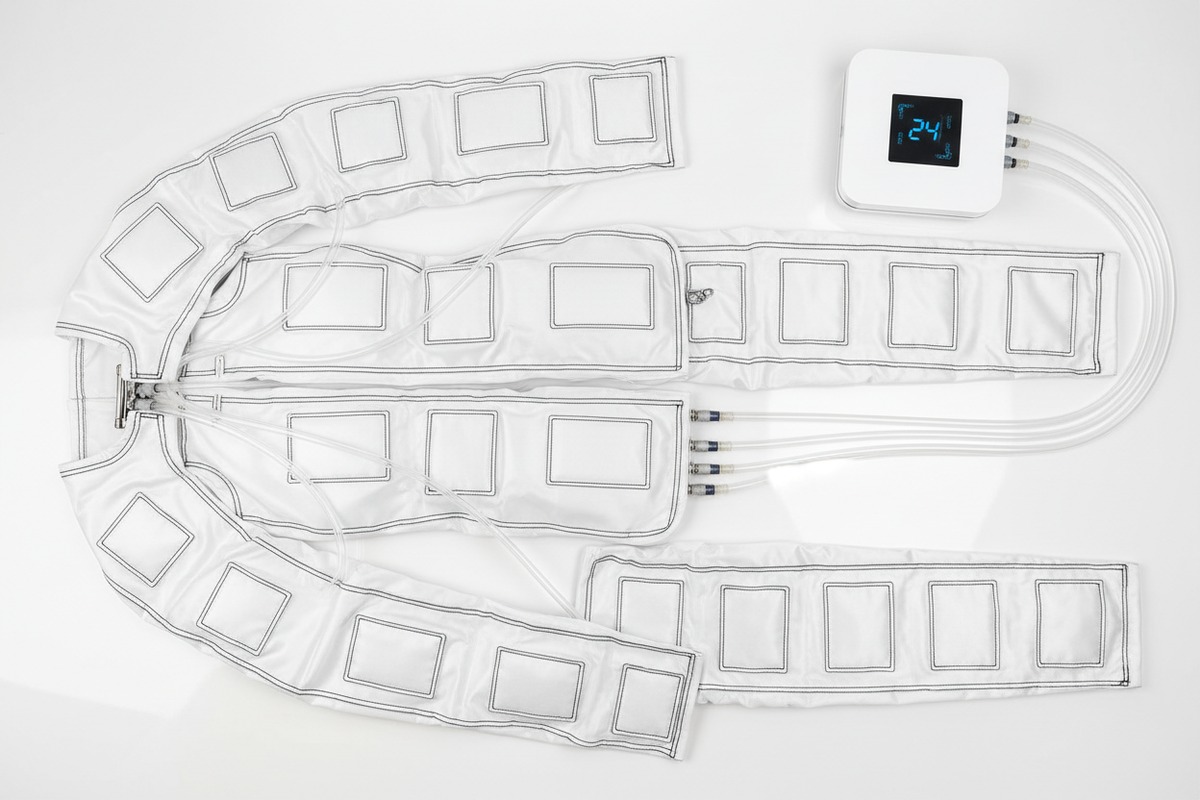
- Full body: 20-24 total chambers for comprehensive coverage
Machines with 20-chamber suits provide the most versatile treatment options. They allow you to isolate problem areas while still offering full-body sessions.
Can I customize the pre-set treatment programs to match my brand's unique service protocols?
Our R&D team hears this question from US distributors every week. Standard pre-set programs work fine for basic treatments. But salons want to differentiate themselves. They want signature treatments that clients can't get elsewhere. The problem is that many machines lock you into factory settings. You're stuck offering the same programs as every other salon that bought the same equipment.
Yes, professional-grade pressotherapy machines allow extensive program customization including adjustable pressure gradients, chamber sequence modifications, treatment duration settings, and the ability to save 50-100 custom protocols tailored to your salon's unique service menu and branding requirements.
Pre-Set vs. Custom Program Capabilities
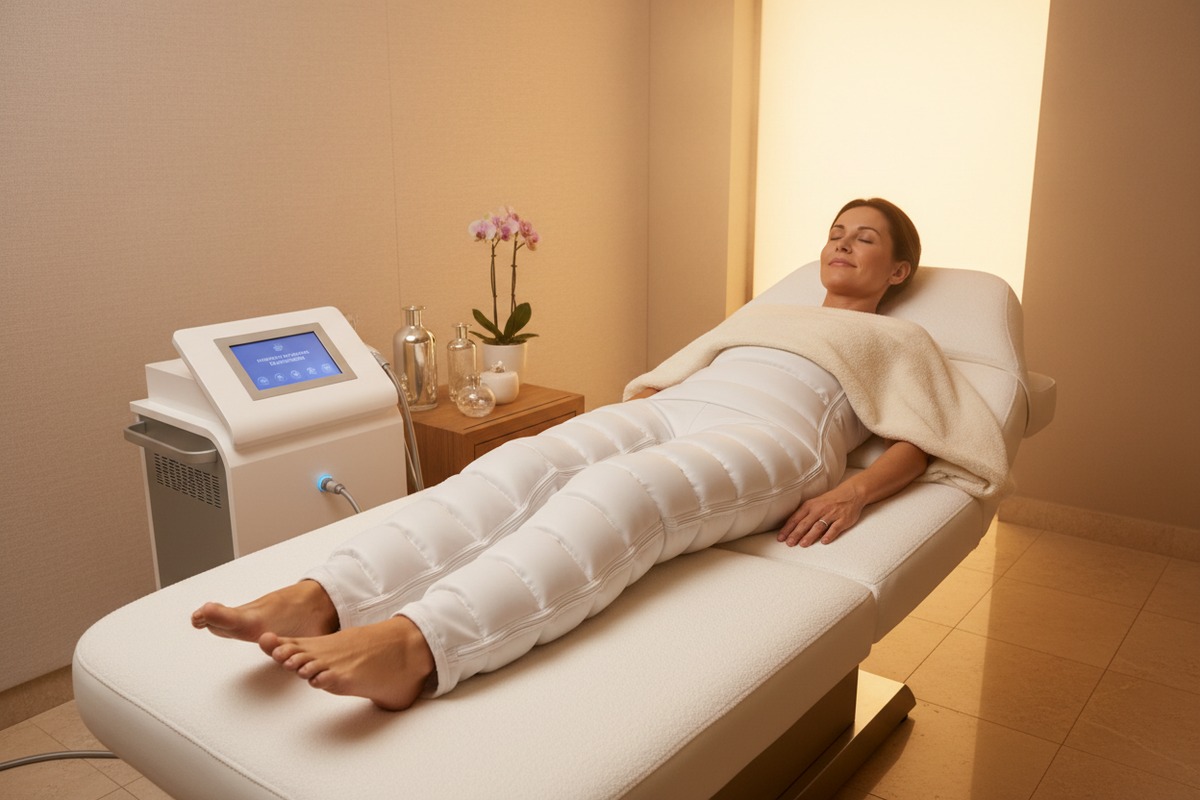
Entry-level machines typically offer 4-8 pre-set programs with fixed parameters. These include basic modes like "relaxation," "detox," and "slimming." They work for general use but limit your service offerings. Professional-grade equipment provides both pre-sets and open customization. You can modify existing programs or create entirely new ones.
Key Customization Parameters
| Parameter | Basic Machines | Professional Machines |
|---|---|---|
| Pressure per chamber | Fixed | Adjustable 1-250 mmHg |
| Inflation duration | 3-5 options | Continuous adjustment |
| Chamber sequence | Fixed pattern | Fully programmable |
| Saved programs | 0-8 | 50-100+ |
| Zone isolation | Limited | Full control |
Creating Signature Treatment Protocols
When we supply machines to US salon chains, we provide training on protocol development. Here's a framework for creating branded treatments:
Step 1: Identify your target outcome
Define what the treatment should achieve. Weight management protocols differ from post-workout recovery protocols.
Step 2: Set pressure gradients
Start with lower pressure at extremities and increase toward the core. This creates a gradient that enhances fluid movement.
Step 3: Program chamber sequences
Decide which chambers activate first and the timing between each inflation cycle.
Step 4: Test and refine
Run the protocol on staff members. Adjust based on comfort and results.
Step 5: Document and train
Create written protocols so every staff member delivers consistent treatments.
Smart Program Presets Worth Having
Even with customization capabilities, you want strong baseline presets. Look for machines that include:
- Detox mode: Gentle pressure with slow sequential waves
- Sports recovery: Higher pressure with rapid cycling
- Cellulite reduction: Medium pressure with targeted thigh and buttock focus
- Relaxation: Low pressure with full-body coverage
- Post-surgical: Minimum pressure with careful gradient control
These presets should serve as starting points that you modify for your specific client base.
How do I ensure the pressure intensity modes are stable enough to prevent downstream customer complaints?
During our quality control testing, we found that pressure stability is where cheap machines fail. A machine might advertise 200mmHg capability. But if that pressure fluctuates during treatment, clients feel inconsistent sensation. Some describe it as uncomfortable pulsing. Others say the treatment feels "off." These complaints pile up fast. The real cost isn't just refunds—it's lost repeat business and damaged reputation.
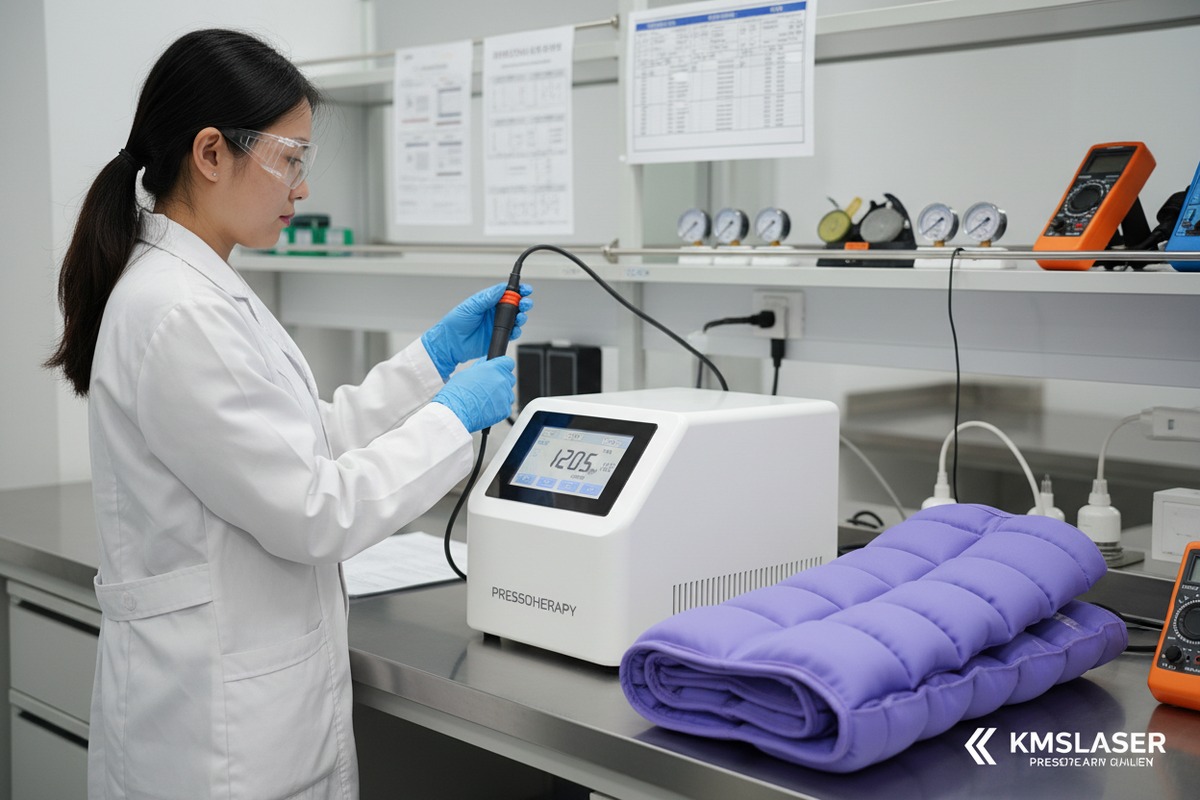
Ensure pressure stability by sourcing machines with computer-controlled pneumatic systems, calibrated compressors that maintain ±5% pressure accuracy, safety voltage standards (36V output), automatic sleeve emptying after treatment, and quality certifications like CE marking that verify consistent performance across all intensity modes.
Technical Factors Affecting Pressure Stability
Pressure stability depends on three main components: the compressor, the control system, and the air tubing. If any component underperforms, the entire system becomes unreliable.
Compressor quality: Industrial-grade compressors maintain steady airflow. Consumer-grade units struggle under continuous operation and generate inconsistent pressure.
Control system precision: Computer-controlled systems adjust pressure in real-time. They compensate for variables like client movement and chamber leakage. Manual systems cannot make these adjustments.
Air tubing integrity: Elastic tubing maintains pressure better than rigid alternatives. Look for reinforced tubing that resists kinking and leakage.
Pressure Stability Specifications to Verify
| Specification | Minimum Standard | Professional Grade |
|---|---|---|
| Pressure accuracy | ±10% | ±5% or better |
| Compressor type | Single-stage | Multi-stage |
| Fill time per chamber | 10-20 seconds | 6-10 seconds |
| Output voltage | 110V AC | 36V safety voltage |
| Continuous operation | 4 hours | 8+ hours |
| Recovery time between cycles | 5+ seconds | 2-3 seconds |
Quality Control Checkpoints
When we ship machines to US buyers, we run every unit through these tests:
- Pressure calibration test: Each chamber must reach stated pressure within 5% tolerance
- Leak test: All connections pressurized and checked for air loss over 10-minute period
- Cycle endurance test: Machine runs 100 consecutive cycles without pressure degradation
- Safety cutoff verification: Emergency stop functions tested at multiple pressure levels
Ask your supplier for documentation of their QC process. Request calibration certificates and test results.
Preventing Common Pressure-Related Complaints
Client complaints about pressure usually fall into three categories:
"The pressure was too weak"
- Cause: Chamber leakage or compressor underperformance
- Prevention: Regular maintenance checks and pressure calibration
"The pressure felt uneven"
- Cause: Inconsistent chamber inflation timing
- Prevention: Computer-controlled systems with synchronized chamber activation
"The treatment was uncomfortable"
- Cause: Pressure set too high for client sensitivity
- Prevention: Always start with lower pressure and increase based on client feedback
Maintenance Requirements for Pressure Stability
Even high-quality machines need regular maintenance. Create a schedule that includes:
- Weekly: Visual inspection of tubing and connections
- Monthly: Pressure calibration check using external gauge
- Quarterly: Compressor service and air filter replacement
- Annually: Full system inspection by qualified technician
What additional features like infrared heat should I include to make my pressotherapy machines more competitive?
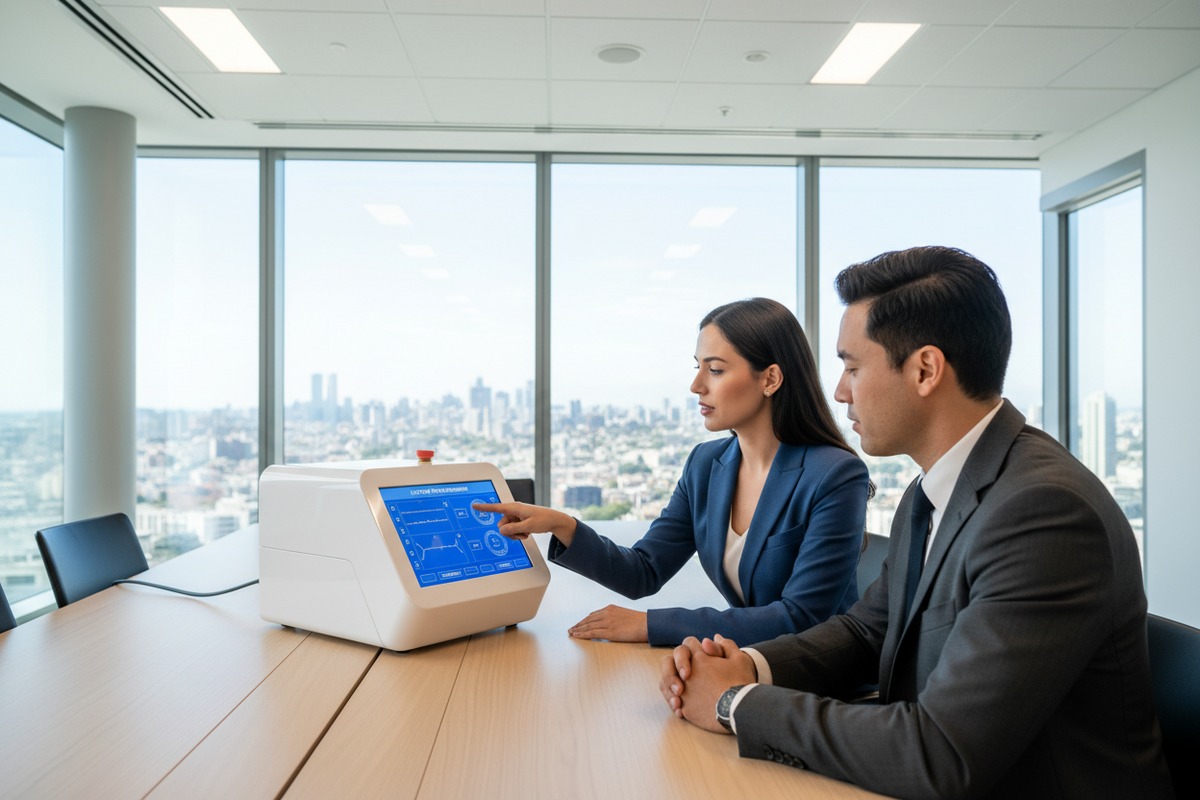
When we attend trade shows in the US, we notice that basic pressotherapy alone no longer excites salon buyers. Everyone offers air compression. The machines that generate interest are the ones with integrated technologies. Far infrared heat, EMS muscle stimulation 7, and smart tracking features create talking points. They justify premium pricing. They give your marketing team something compelling to promote.
Include far infrared (FIR) heating elements (35-80°C range) for enhanced tissue penetration and detoxification, EMS (Electrical Muscle Stimulation) pads for muscle toning, smart program memory for client-specific treatment histories, and multi-zone thermal control that allows different heat levels across body areas.
Far Infrared Heat Integration
Far infrared technology 8 has become the most requested add-on feature. The heat penetrates 2-3 inches into tissue, warming the body from within. This differs from surface heating methods that only warm the skin.
Key benefits of FIR integration:
- Dilates blood vessels for improved circulation
- Enhances lymphatic fluid movement during compression
- Promotes sweating for additional toxin release
- Relaxes muscles before compression treatment
- Increases metabolic activity during sessions
Professional machines include 5-10 infrared heating zones within the compression suit. Temperature ranges typically span 35-80°C, controlled independently per zone.
EMS (Electrical Muscle Stimulation) Integration
EMS adds muscle toning to the lymphatic drainage treatment. Low-frequency electrical impulses cause involuntary muscle contractions. This creates a dual benefit: lymphatic stimulation from compression plus muscle firming from electrical stimulation.
| Feature | Benefit | Ideal Client |
|---|---|---|
| FIR Heating | Deep tissue warming, enhanced detox | Clients seeking weight management |
| EMS Pads | Muscle toning, skin tightening | Clients wanting body contouring |
| Combined FIR+EMS | Comprehensive body sculpting | Premium service seekers |
3-in-1 System Advantages
Machines that combine pressotherapy, far infrared, and EMS command premium service pricing. They also reduce equipment costs compared to buying three separate devices. Our 3-in-1 systems typically include:
- 20-24 air chambers for full body compression
- 7-10 infrared heating zones
- 10-20 EMS electrode positions
- Unified control panel for all three modalities
- Combined treatment protocols
Future-Forward Features to Consider
The pressotherapy market continues evolving. Features gaining traction include:
Client data tracking: Systems that store treatment histories, preferred settings, and progress photos for each client.
Adaptive protocols: Machines that adjust pressure based on real-time feedback sensors.
App connectivity: Control panels that sync with tablet apps for easier operation and client communication.
Interchangeable garments: Quick-swap suit systems that reduce setup time between clients.
Pricing Impact of Added Features
| Configuration | Equipment Cost Range | Service Price Potential |
|---|---|---|
| Basic pressotherapy only | $999-$1,599 | $50-$80 per session |
| Pressotherapy + FIR | $1,599-$2,299 | $80-$120 per session |
| 3-in-1 (Presso+FIR+EMS) | $2,299-$3,500 | $120-$180 per session |
The ROI calculation favors multi-function systems. Higher session prices and broader client appeal typically justify the additional equipment investment.
Conclusion
Selecting the right treatment modes determines whether your pressotherapy investment generates returns or complaints. Focus on sequential lymphatic drainage with overlapping chamber technology. Demand customizable programs that let you build branded protocols. Verify pressure stability through documented QC processes. And consider multi-function systems with infrared and EMS to differentiate your salon in the competitive US market. Contact our team if you need guidance on specifications that match your service goals.
Footnotes
1. Describes the physiological movement of fluids in the body. ↩︎
2. Explains the physiological process of lymphatic drainage. ↩︎
3. Provides information on the causes and treatments for cellulite. ↩︎
4. Defines and explains the mechanism of sequential compression therapy. ↩︎
5. Replaced with an authoritative source (Wikipedia) that explains how lymphatic vessels and their valves prevent backflow. ↩︎
6. Provides general information about pneumatic systems in medical applications. ↩︎
7. Describes the mechanism and uses of electrical muscle stimulation. ↩︎
8. Explains the principles and applications of far infrared technology. ↩︎


 English
 Español de México
 Deutsch
 Français
 العربية
 Русский
Join the Conversation
Have a question or insight to share? We read every comment — whether you're a distributor, salon owner, or just curious about the technology. Your real-world experience helps others make better decisions. Drop your thoughts below.