
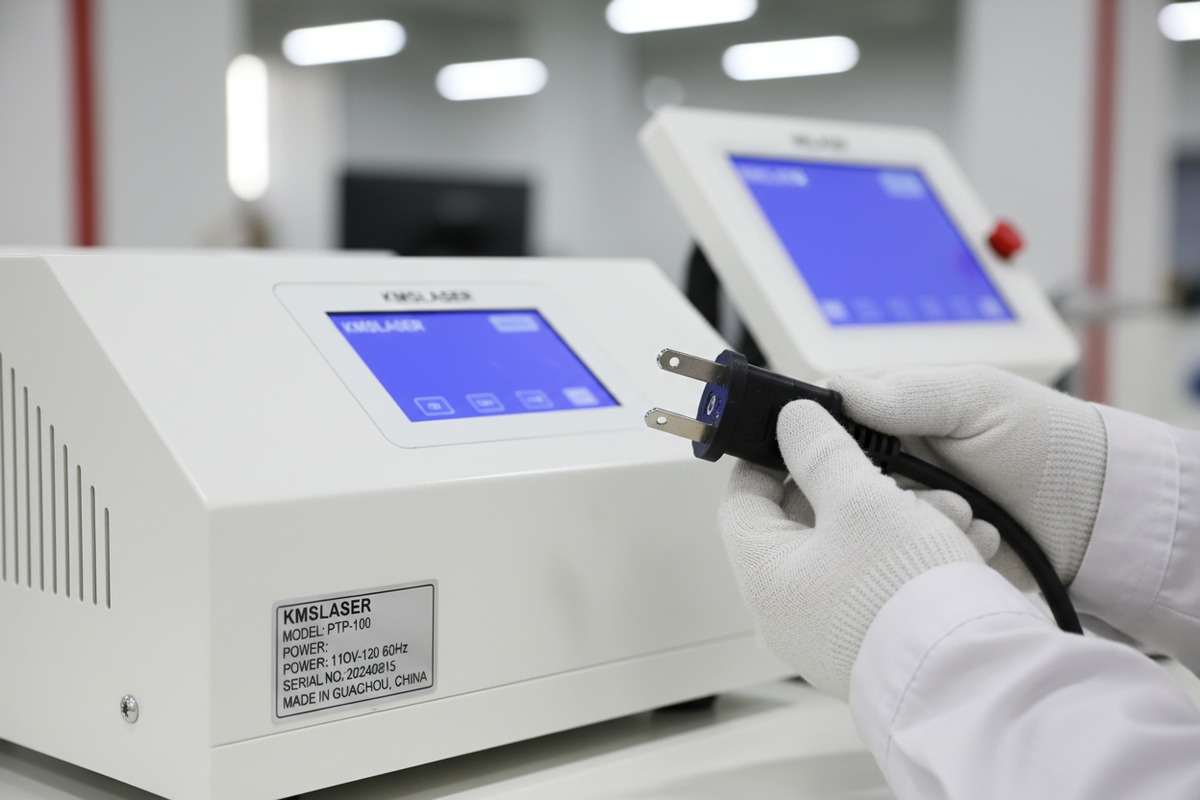
Every month, our production team handles export orders for pressotherapy machines 1 destined for US salons. The most common issue we see? Equipment arriving with wrong voltage or incompatible plugs NEMA Type A or Type B plugs 2. This creates costly delays, frustrated buyers, and even safety hazards. Understanding US electrical standards 3 before you order can save you thousands of dollars and protect your reputation with downstream clients.
To ensure your pressotherapy machine meets US standards, verify the device operates on 110-120V at 60Hz, comes equipped with NEMA Type A or Type B plugs, and carries UL or ETL certification marks. Request spec sheets from your supplier, confirm US-specific configuration at checkout, and test upon arrival.
In this guide, we will walk you through every step of the verification process UL or ETL certification marks 4. You will learn what specifications to check, which certifications matter, and how to work with your supplier to customize your equipment for safe US operation.
How do I verify my pressotherapy machine is correctly configured for US 110V power?
When we ship pressotherapy units to North America, our engineering team runs final checks on every device FCC certification 5. Voltage misconfiguration remains the top reason for equipment returns. Buyers often assume all machines work everywhere. They do not. A 220V machine plugged into a 110V outlet will underperform or fail to start. A 110V machine on 220V will overheat and burn out.
You verify correct US configuration by checking three key specifications: input voltage (110-120V), frequency (60Hz), and plug type (NEMA 5-15P for grounded connections). Review the product label, request spec sheets from your supplier, and confirm US settings before shipment to avoid costly replacements.

Understanding US Electrical Standards
The United States uses 110-120V AC power 6 at 60Hz frequency. This differs from most of Europe and Asia, which use 220-240V at 50Hz. This difference matters for any powered beauty equipment.
When a machine designed for 220V connects to a 110V outlet, it receives only half the expected power. The motor runs slowly. The air pump produces weak pressure. Treatment results suffer. Your clients notice. Your reputation takes a hit.
When a 110V machine connects to 220V power, the results are worse. Excess current flows through components. Internal circuits overheat. Fire risk increases. The machine may die immediately or fail within weeks.
Key Specifications to Check
| Specification | US Requirement | What to Look For |
|---|---|---|
| Input Voltage | 110-120V | Label shows "110V", "120V", or "100-120V" |
| Frequency | 60Hz | Label shows "60Hz" or "50/60Hz" |
| Plug Type | NEMA 5-15P | Two flat parallel blades with round grounding pin |
| Power Rating | Varies | Typically 50-110W for pressotherapy units |
The Dual-Voltage Advantage
Many modern pressotherapy machines now feature dual-voltage capability. These units accept input from 100-240V at 50/60Hz. They work in any country without modification.
Our production line offers dual-voltage options specifically for export buyers. This flexibility means one SKU serves multiple markets. You reduce inventory complexity while protecting against shipping errors.
However, even dual-voltage machines need the correct plug. A machine with universal voltage still cannot plug into a US outlet if it comes with a European Schuko connector.
Verification Checklist
Before placing your order, request these documents from your supplier:
- Product specification sheet with voltage and frequency ratings
- Photo of the actual product label
- Confirmation of plug type to be installed
- Certificate of conformity for electrical safety
Test each machine upon arrival. Plug it in and verify normal operation. Check that the air pump runs smoothly. Confirm pressure levels match specifications. Document any issues within your supplier's return window.
What specific electrical certifications should I require for my imported beauty equipment?
Our quality control department tracks certification requirements for every export market. For US-bound equipment, we consistently see buyers underestimate the importance of proper electrical certifications. CE marking alone does not satisfy US requirements. Insurance companies and local inspectors look for specific US safety marks.
For US-imported beauty equipment, require UL or ETL certification as primary electrical safety marks. Both are equally valid and indicate OSHA-approved testing. Additionally, request FCC certification for electromagnetic compliance and consider FDA registration if the device makes medical claims about lymphatic drainage.

UL vs ETL: Understanding the Difference
UL (Underwriters Laboratories) and ETL (Electrical Testing Laboratories) are both Nationally Recognized Testing Laboratories 7 (NRTLs) approved by OSHA. Products bearing either mark have been tested to the same US safety standards.
| Certification | Organization | Recognition | Testing Standards |
|---|---|---|---|
| UL Listed | Underwriters Laboratories | Highest brand recognition | UL develops and tests to own standards |
| ETL Listed | Intertek | Equally valid, widely accepted | Tests to UL, ANSI, and CSA standards |
| CE Mark | European | Not sufficient for US alone | European standards, not NEMA plug testing |
| FCC | Federal Communications Commission | Required for electronics | Electromagnetic interference compliance |
Why UL and ETL Matter
Both certifications confirm a product meets US electrical safety standards. They address fire hazards, shock risks, and mechanical safety. When you purchase certified equipment, you gain several advantages:
First, insurance protection. Many insurance companies require UL or ETL certification for commercial electrical equipment. Non-certified devices may void your coverage if they cause damage or injury.
Second, code compliance. Local building inspectors may refuse to approve a commercial space using non-certified electrical equipment. Salons and spas face particular scrutiny.
Third, liability protection. If a client experiences injury from your equipment, certification provides evidence you exercised due diligence in selecting safe products.
The CE Mark Misconception
Many overseas suppliers promote CE certification as sufficient for all markets. This is misleading. CE marking indicates compliance with European directives. It does not include rigorous testing for NEMA plug configurations or US voltage standards.
A pressotherapy machine with CE marking may still fail US electrical safety requirements. It may come with incompatible plugs. The internal wiring may not meet US standards for grounding.
Always request US-specific certifications alongside any international marks.
Certification Costs and Timelines
Getting UL or ETL certification requires investment. Testing fees typically run into thousands of dollars. The process takes weeks to months. However, this investment protects your downstream buyers and your brand reputation.
When working with manufacturers, ask about their certification status early. Established exporters often maintain ongoing certifications for their product lines. Newer suppliers may need to arrange testing specifically for your order.
Documentation Requests
Request these certification documents before purchase:
- UL or ETL listing number (verifiable in online databases)
- Test report summary
- Certificate of conformity
- Factory inspection reports (if available)
You can verify UL certifications through UL Product iQ database. ETL certifications can be verified through Intertek's certification directory. Take time to confirm your supplier's claims.
Can I customize the plug types and internal wiring to meet my brand's safety standards?
Our OEM department handles customization requests daily. Brand owners frequently ask us to modify electrical configurations to match their specific market needs. The good news? Most reputable manufacturers can accommodate plug and wiring customizations. The process requires clear communication and proper specifications.
Yes, reputable manufacturers can customize plug types, power cords, and internal wiring to meet your brand's safety standards. Specify NEMA 5-15P plugs for US markets during order placement. Request UL-recognized components, grounded wiring configurations, and appropriate cord lengths. Document all customizations in your purchase agreement.

Understanding NEMA Plug Types
NEMA connectors follow standardized designs maintained by the National Electrical Manufacturers Association. For standard pressotherapy machines operating at 110-120V and under 15 amps, two plug types apply:
| NEMA Type | Configuration | Description | Common Use |
|---|---|---|---|
| NEMA 1-15P | Two flat parallel blades | Ungrounded, polarized | Older/lower power devices |
| NEMA 5-15P | Two flat blades + round ground pin | Grounded, 15 amp rated | Standard professional equipment |
| NEMA 5-20P | One T-shaped blade + round ground pin | Grounded, 20 amp rated | Higher power equipment |
For professional pressotherapy equipment, always specify NEMA 5-15P grounded plugs 8. The ground pin provides essential shock protection for both operators and clients.
Customization Process
When requesting electrical customizations, follow this process:
Step 1: Provide Clear Specifications
Write your requirements in detail. Include voltage, frequency, plug type, cord length, and wire gauge. Specify any certification requirements. Ambiguity causes errors.
Step 2: Request Samples
Before full production, request a sample unit with your custom configuration. Test it thoroughly. Verify all specifications match your requirements. Identify any issues before you commit to large orders.
Step 3: Document Everything
Include electrical specifications in your purchase agreement. Reference specific standards (like NEMA WD 6 for plug dimensions). Specify that the manufacturer must use UL-recognized components.
Step 4: Arrange Third-Party Inspection
For large orders, consider hiring a third-party inspection service. They can verify electrical configurations before shipment. This catches errors early and saves costly returns.
Internal Wiring Considerations
Beyond the plug, consider the entire electrical pathway:
- Wire gauge: Appropriate for the machine's amperage draw
- Grounding continuity: Ground wire connects from plug to chassis
- Insulation: Meets UL standards for electrical equipment
- Cord flexibility: Suitable for professional use environments
- Strain relief: Prevents cord damage at connection points
Our engineering team can provide detailed wiring diagrams showing how we configure machines for US markets. This documentation helps you verify correct assembly.
Brand-Specific Requirements
Some brand owners maintain electrical standards that exceed minimum requirements. You might specify:
- Longer power cords (standard is often 1.5m, you might want 2m or 3m)
- Hospital-grade plugs for medical spa environments
- Specific wire colors for easy maintenance identification
- Enhanced grounding for sensitive treatment rooms
Communicate these requirements early. Custom specifications may affect pricing and lead times. Budget extra time for verification and testing.
How does my supplier test electrical stability to prevent malfunctions in my US salon accounts?
Our production facility maintains dedicated testing stations for export-bound equipment. Before any pressotherapy machine leaves our warehouse, it passes through multiple electrical verification stages. Understanding what tests your supplier performs helps you evaluate their quality control capabilities and protect your downstream customers.
Reputable suppliers test electrical stability through high-potential (hi-pot) testing for insulation integrity, ground continuity verification, power consumption measurement, and extended burn-in testing under load. Request test reports showing specific values recorded for each unit. Quality manufacturers maintain calibrated test equipment and detailed testing protocols.

Essential Electrical Tests
Professional manufacturers perform several standard tests on each unit:
| Test Type | Purpose | What It Measures | Acceptable Results |
|---|---|---|---|
| Hi-Pot Test | Insulation integrity | Voltage breakdown resistance | No current leakage above threshold |
| Ground Continuity | Safety grounding | Resistance from plug to chassis | Typically under 0.1 ohms |
| Leakage Current | Shock hazard potential | Current flow to ground | Under limits set by standards |
| Power Consumption | Energy draw verification | Watts at operating load | Matches rated specifications |
| Burn-In Test | Component reliability | Operation over extended period | No faults during test duration |
Hi-Pot Testing
High-potential testing 9 applies elevated voltage between the power circuit and exposed metal parts. This stress test reveals insulation weaknesses before they become safety hazards.
A typical hi-pot test for 120V equipment applies 1000-1500V for several seconds. If current flows above the threshold, the insulation has failed. The unit fails testing and returns for inspection.
Our testing protocol requires every unit to pass hi-pot testing before final assembly. We maintain records showing the specific test voltage and measured leakage for each serial number.
Ground Continuity
Ground continuity testing verifies the ground wire provides an unbroken path from the plug to the chassis. If a fault occurs inside the machine, current must flow safely to ground rather than through a user.
Testers inject low current through the ground circuit and measure resistance. Values above specification indicate loose connections, poor crimps, or damaged wire. The unit fails until the ground path is repaired and retested.
Burn-In Testing
Burn-in testing runs the equipment under normal operating conditions for an extended period. This identifies components that will fail early in their service life.
Our standard burn-in period runs 4-8 hours depending on the equipment type. The pressotherapy unit cycles through its programs repeatedly. Technicians monitor for abnormal heating, unusual sounds, or performance degradation.
Units that pass burn-in testing have already overcome the "infant mortality" period when manufacturing defects typically appear. Your downstream customers receive equipment that has proven itself reliable.
Requesting Test Documentation
When evaluating suppliers, ask these questions:
- What specific electrical tests do you perform on each unit?
- Do you maintain calibration records for your test equipment?
- Can you provide test reports with specific values for my order?
- What are your pass/fail criteria for each test?
- How do you handle units that fail testing?
Quality-focused manufacturers welcome these questions. Their answers reveal their commitment to product safety and reliability.
Third-Party Testing Options
For added assurance, consider arranging independent testing:
- Pre-shipment inspection services can include electrical verification
- Independent testing laboratories can perform certification-level testing
- Your own technicians can test samples before approving full orders
The cost of independent testing is minimal compared to the expense of field failures, returns, and damaged customer relationships.
Conclusion
Ensuring your pressotherapy machine meets US electrical standards requires attention to voltage, plug types, certifications, and supplier testing protocols. Verify 110-120V/60Hz compatibility, require NEMA 5-15P plugs, demand UL or ETL certification, and confirm your supplier performs proper electrical testing. These steps protect your business and your clients.
Footnotes
1. Provides a comprehensive overview of pressotherapy, its types, and indications. ↩︎
2. Replaced 404 NEMA link with a Wikipedia page providing an authoritative overview of NEMA connectors. ↩︎
3. Explains OSHA’s electrical safety standards and requirements for the US. ↩︎
4. Clarifies the distinction and equivalence between UL and ETL certification marks. ↩︎
5. Details the FCC’s equipment authorization process for electronic devices. ↩︎
6. Explains the standard voltage and frequency of the US electrical grid. ↩︎
7. Replaced 404 OSHA link with the current, authoritative OSHA page for NRTLs. ↩︎
8. Describes the NEMA 5-15P connector and its grounded configuration. ↩︎
9. Replaced 404 Wikipedia link with the correct, working Wikipedia page for dielectric withstand testing. ↩︎

 English
 Español de México
 Deutsch
 Français
 العربية
 Русский
