

Running a salon or medspa in the US means your equipment cannot wait remote diagnostics capability 1. When our production team ships a pressotherapy machine 2 to California or New York, the 12-15 hour time gap creates real anxiety. You click “send” on your support ticket at 2 PM Eastern, and it’s already midnight in Guangzhou air freight capabilities 3. The question burns: will anyone answer?
To evaluate pressotherapy machine supplier after-sales response for US time zones, verify 24-hour multi-channel support availability, demand written response time guarantees in your contract, confirm US-based spare parts inventory, and request references from existing North American clients operating in similar time zones.
This guide breaks down the exact steps you need to take CE marking 4. We will cover how to lock in US-hour responsiveness from Chinese suppliers, what technical support protocols protect your business, how to assess spare parts logistics, and what accountability evidence matters for long-term OEM partnerships.
How can I guarantee my Chinese supplier will respond to my pressotherapy machine issues during US business hours?
From our factory floor in Guangzhou, we have watched many US buyers struggle with time zone mismatches. They send urgent emails during their morning hours, only to discover our team clocked out hours ago. This frustration costs money and trust. The gap is real, but it is also solvable.
To guarantee Chinese supplier response during US business hours, negotiate dedicated support staff for your time zone, establish multi-channel communication protocols including WhatsApp and live chat, and require contractual response time commitments with escalation procedures documented in writing.

Understanding the Time Zone Challenge
China operates on a single time zone: China Standard Time (CST) 5, which is UTC+8. This means when it's 9 AM in New York (EST), it's already 10 PM in Guangzhou. When Los Angeles opens for business at 9 AM (PST), Chinese factories are sleeping at 1 AM the next day.
The US spans four major time zones. This creates a 3-hour operational window challenge within your own country. Add the 12-17 hour gap with China, and you face serious coordination hurdles.
Practical Solutions That Work
Smart suppliers build systems to bridge this gap. Here is what to demand:
| Support Feature | Minimum Standard | Ideal Standard |
|---|---|---|
| Response Time | Within 24 hours | Within 4-8 hours |
| Communication Channels | Email + Phone | Email + Phone + WhatsApp + Live Chat |
| US-Hour Coverage | Partial overlap | Dedicated US shift staff |
| Escalation Process | Manager contact | Direct factory engineer access |
| Weekend Support | Email only | Emergency hotline available |
What to Put in Your Contract
Your purchase agreement should include specific language about support hours. Request that the supplier maintain at least one English-speaking technician available during US Eastern business hours 6 (9 AM – 6 PM EST). This single requirement solves most urgent communication problems.
Some suppliers now employ US-based customer service representatives or use third-party support centers. This adds cost but dramatically improves response quality. Ask if this option exists.
Testing Supplier Responsiveness Before You Buy
Before signing any contract, test the supplier's actual response speed. Send inquiries at different times across US business hours. Track how long each response takes. If they struggle to respond promptly during the sales process, service will likely be worse after you pay.
What specific technical support protocols should I demand to minimize downtime for my salon clients?
Our engineering team has fielded thousands of support calls over the years. The pattern is clear: salons lose money every hour their pressotherapy machine sits idle. A single day of downtime during a busy week can cost hundreds in missed appointments. The right support protocols prevent this.
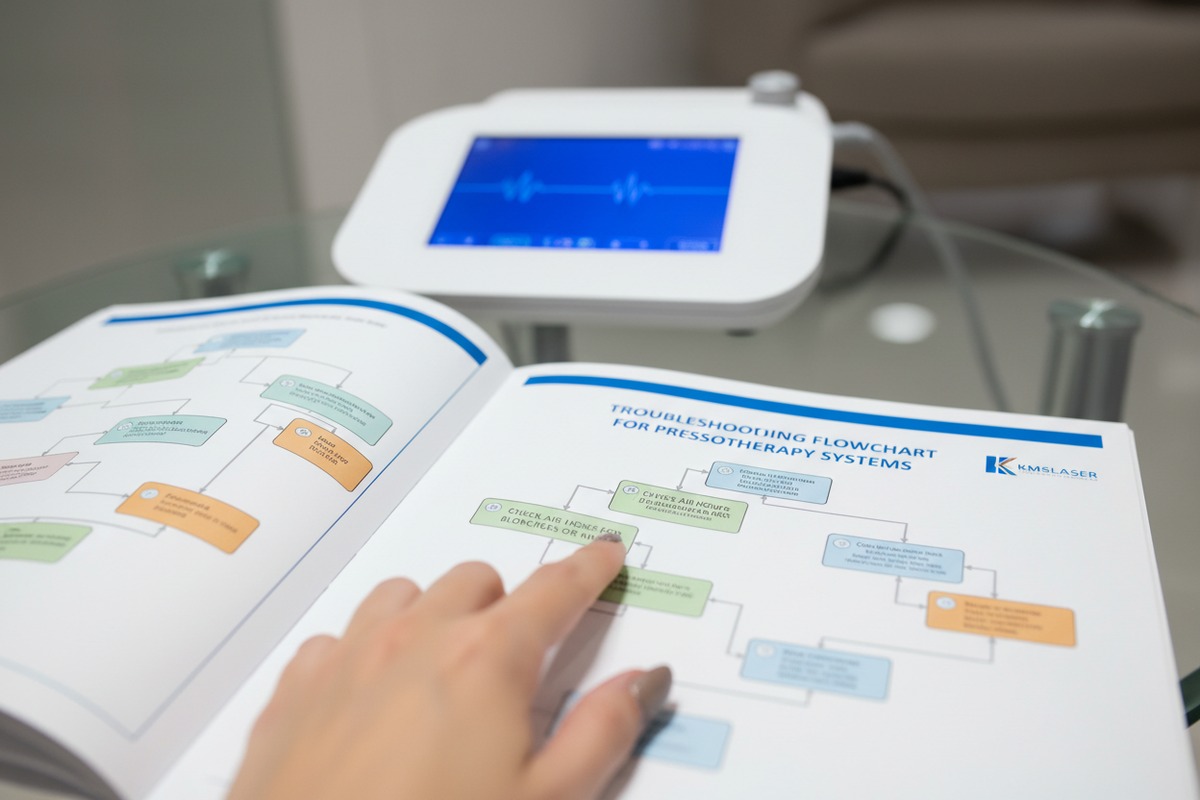
Demand technical support protocols that include remote diagnostics capability, video-guided troubleshooting via WhatsApp or Zoom, guaranteed first-response times within 4-8 hours, tiered escalation to factory engineers, and comprehensive training documentation with troubleshooting flowcharts.

The Essential Technical Support Checklist
Not all support is equal. A supplier who only offers email support cannot help you when a client is waiting and your machine throws an error code. Here is what you need:
| Protocol Element | Why It Matters | Questions to Ask |
|---|---|---|
| Remote Diagnostics | Solves many issues without shipping | "Can you access my machine remotely to diagnose problems?" |
| Video Support | Guides your staff through fixes in real-time | "Do you offer live video troubleshooting?" |
| Error Code Database | Quick self-service for common issues | "Do you provide a complete error code guide?" |
| Parts Identification | Ensures correct replacement orders | "Can you identify failed parts from photos I send?" |
| Firmware Updates | Keeps machine performing optimally | "How do you deliver software updates?" |
Training Programs Reduce Support Needs
The best way to minimize downtime is preventing problems in the first place. Quality suppliers provide comprehensive training.
Look for these training elements:
- Detailed user manuals with step-by-step procedures
- Video tutorials for common operations
- Basic maintenance protocols your staff can perform
- Troubleshooting guides organized by symptom
- Certificate of completion for trained operators
Multi-Channel Support Infrastructure
A robust support system uses multiple channels. This ensures you can reach help through whatever method works fastest in your situation.
Phone support works best for urgent issues. Email creates documentation trails for warranty claims. Live chat enables quick questions without phone hold times. WhatsApp allows photo and video sharing for diagnostic purposes.
Ask suppliers which channels they support and their typical response times for each.
Severity Levels and Response Times
Professional support operations use severity tiers. A machine that won't power on at all deserves faster response than a minor display glitch. Your contract should define these levels:
| Severity Level | Description | Target Response Time |
|---|---|---|
| Critical | Machine completely non-functional | 2-4 hours |
| High | Major function impaired | 8-12 hours |
| Medium | Minor function affected, workaround available | 24 hours |
| Low | Question or enhancement request | 48-72 hours |
Documentation You Should Receive
Before your first treatment, you should have complete technical documentation. This includes:
- Full operator manual
- Technical specifications with pressure tolerances
- Maintenance schedules
- Troubleshooting decision trees
- Warranty terms and procedures
- Contact information for all support levels
How do I evaluate if a supplier's spare parts logistics can meet my urgent replacement needs in North America?
At our facility, we have learned that the fastest machine in the world means nothing if replacement parts take three weeks to arrive from overseas. Our North American clients taught us this lesson early. Now we stock critical components closer to where they are needed. But not every supplier does this.
Evaluate spare parts logistics by confirming US-based inventory locations, verifying air freight capabilities for emergency shipments, requesting typical delivery timeframes for common parts, and demanding a spare parts catalog with pricing and availability guarantees in your purchase agreement.

Why Parts Logistics Matters More Than You Think
A pressotherapy machine contains many components that can fail: air pumps, control boards, tubing connectors, airbag bladders, and more. Even with high-quality construction, wear items need replacement over time. The question is how fast those parts reach you.
International shipping from China typically takes 7-14 days by sea freight, or 3-5 days by air. But customs clearance adds unpredictable delays. If your supplier has no US inventory, every part request starts this clock.
Key Questions About Parts Availability
Ask these specific questions before purchasing:
| Question | Good Answer | Warning Sign |
|---|---|---|
| Where do you stock parts for North America? | "We have inventory in California and New Jersey" | "We ship everything from China" |
| What is delivery time for common parts? | "2-3 business days within continental US" | "Depends on customs" |
| Do you offer advance replacement? | "Yes, we ship before receiving defective part" | "You must return failed part first" |
| What parts do you stock locally? | "All wear items and common failure components" | "Only accessories" |
| Can you expedite emergency orders? | "Yes, overnight shipping available for critical parts" | "Standard shipping only" |
The True Cost of Slow Parts Delivery
Consider this scenario: your airbag develops a leak on Monday morning. If parts ship from China, you might wait 10+ days. With 20 pressotherapy clients per week at $100 per session, that is $2,000 in lost revenue—far more than the cost of faster logistics.
Smart suppliers understand this math. They invest in regional inventory to protect your business and their reputation.
Evaluating Logistics Infrastructure
Look for these indicators of strong parts logistics:
- Partnership with major carriers (FedEx, UPS, DHL)
- Tracking systems for shipment visibility
- Multiple warehouse locations in different US regions
- Clear published lead times for standard parts
- Emergency escalation options for critical situations
Parts Pricing Transparency
Some suppliers offer low machine prices but charge excessive parts markups. Request a complete spare parts price list before purchasing. Compare prices against the original equipment cost. Reasonable parts pricing protects your long-term operating costs.
Warranty Coverage for Parts
Understand what your warranty covers. Most manufacturers provide 2-3 years on the main unit. But consumable items like airbag suits may have shorter coverage. Ask specifically about:
- Control unit warranty period
- Compressor warranty period
- Airbag and suit warranty period
- Whether parts shipped under warranty include freight costs
What evidence of after-sales accountability should I look for before committing to a long-term OEM partnership?
When we negotiate OEM partnerships with US brand owners, the conversation always turns to accountability. Words in a sales pitch are cheap. Evidence is what matters. Our factory keeps detailed records specifically so partners can verify our commitments. You should expect the same from any supplier.
Demand concrete accountability evidence including written service level agreements with penalty clauses, verifiable references from existing US clients, documented warranty claim resolution rates, third-party quality certifications like ISO 13485, and transparent communication channels to factory management.
Building Trust Through Documentation
A long-term OEM partnership puts your brand reputation in the supplier's hands. Every machine they ship carries your name. Every service failure reflects on you. This requires serious accountability measures.
Essential Contract Elements
Your OEM agreement should include these accountability mechanisms:
| Contract Element | What to Include | Why It Protects You |
|---|---|---|
| Service Level Agreement 7 | Response times, resolution targets, escalation paths | Creates enforceable performance standards |
| Warranty Terms | Coverage periods, claim procedures, exclusions | Defines supplier obligations clearly |
| Quality Standards | Defect rates, testing protocols, inspection rights | Ensures consistent product quality |
| Parts Availability | Stock commitments, lead times, pricing caps | Protects against supply disruptions |
| Termination Rights | Performance triggers, transition assistance | Provides exit strategy if needed |
Verifying Supplier Claims
Never accept claims without verification. Request these specific items:
Customer References
Ask for contact information of 3-5 existing US customers. Call them. Ask about actual response times, problem resolution, and overall satisfaction. Pay attention to how long they have worked with the supplier.
Quality Certifications
Legitimate manufacturers hold certifications including:
- ISO 13485 8 (Medical device quality management)
- CE marking (European conformity)
- FDA registration 9 (US market access)
Request copies and verify authenticity through issuing bodies.
Track Record Data
Established suppliers can provide:
- Average response time statistics
- Warranty claim resolution rates
- Customer retention rates
- On-time delivery percentages
Red Flags in Supplier Behavior
Watch for these warning signs during your evaluation:
- Reluctance to provide customer references
- Vague answers about warranty procedures
- No written documentation of service commitments
- Inconsistent contact information or representatives
- Difficulty reaching anyone during business hours
- Pressure to sign quickly without due diligence time
The Value of Direct Factory Relationships
Buying through distributors adds a layer between you and accountability. When problems arise, you contact the distributor, who contacts the factory. This delay costs time.
Direct factory relationships provide:
- Faster issue escalation
- Better pricing without distributor markup
- Direct access to engineering for technical problems
- Stronger influence over product customization
Ongoing Accountability Measures
Once your partnership begins, maintain accountability through:
- Regular performance reviews (quarterly recommended)
- Documented issue tracking
- Clear escalation procedures
- Annual contract reviews with improvement targets
Conclusion
Evaluating pressotherapy machine supplier after-sales response for US time zones requires systematic verification of response capabilities, technical support infrastructure, parts logistics, and accountability evidence. The investment in thorough due diligence protects your business from costly downtime and service failures.
Footnotes
1. Explains how remote diagnostics enable troubleshooting and reduce downtime for medical equipment. ↩︎
2. Replaced HTTP 404 with an authoritative health information page defining pressotherapy machines. ↩︎
3. Defines air freight logistics and its importance for rapid transportation of goods. ↩︎
4. Defines CE marking as a certification indicating conformity with EU medical device regulations. ↩︎
5. Explains China’s single time zone and its UTC offset. ↩︎
6. Replaced HTTP 403 with a Wikipedia page explaining the Eastern Time Zone, including EST and EDT. ↩︎
7. Defines a Service Level Agreement as a binding contract outlining service quality and responsibilities. ↩︎
8. Replaced HTTP 404 with a working and authoritative page from BSI Group explaining ISO 13485. ↩︎
9. Explains the requirement for medical device establishments to register annually with the FDA. ↩︎

 English
 Español de México
 Deutsch
 Français
 العربية
 Русский
