
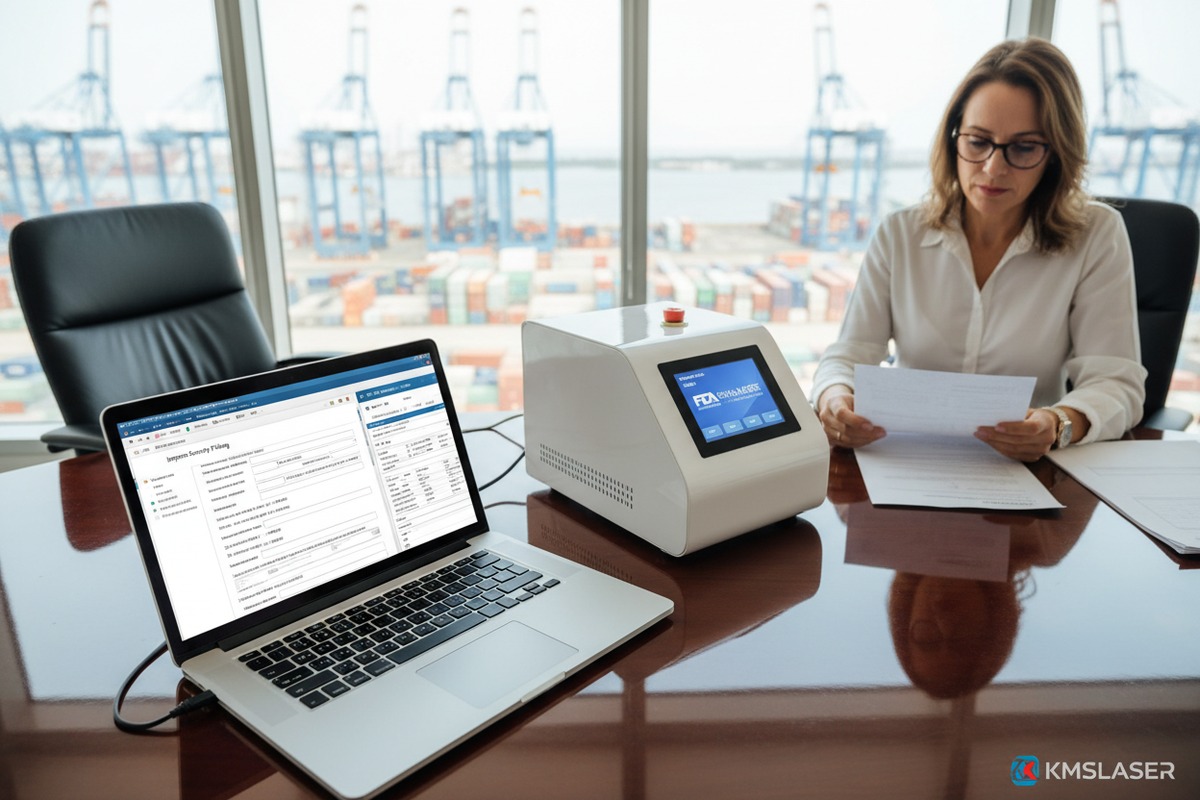
We have shipped hundreds of pressotherapy systems to US distributors 21 CFR Part 801 1. Each time, the question comes up: what do I need to clear customs? The process looks complex at first—FDA requirements, tariff calculations, ISF filings, and labeling rules create a maze of compliance steps. Miss one, and your shipment sits at the port.
To import pressotherapy machines from China into the US, you must file an Importer Security Filing (ISF) at least 24 hours before vessel loading, ensure FDA establishment registration and device listing, classify your product under the correct HS code, pay applicable customs duties plus Section 301 tariffs, and meet all FDA labeling requirements for medical devices.
This guide walks you through each step. We break down FDA documentation, duty calculations, supplier logistics, and packaging rules. Let’s get your machines through customs smoothly.
What specific FDA and medical device registration documents do I need to clear my pressotherapy machines?
Our compliance team handles FDA registration for every pressotherapy unit we build. The documentation requirements can surprise first-time importers. Without the right papers, FDA can detain your shipment without physical examination.
You need your foreign manufacturer's FDA establishment registration number, device listing number, and either a 510(k) clearance number or proof of Class I/II exemption. Additionally, you must provide a commercial invoice, packing list, bill of lading, and declaration of conformity to present complete documentation at customs.

Understanding FDA Device Classification
Class I includes devices with the lowest risk and Class III includes those with the greatest risk. Medical devices are assigned to one of three regulatory classes based on the level of control necessary to assure the safety and effectiveness of the device. FDA Device Classification 2
Pressotherapy machines typically fall under FDA regulation 890.5660 or similar physical medicine therapeutic device categories. Most are classified as Class II devices requiring 510(k) premarket notification 3.
The class to which your device is assigned determines, among other things, the type of premarketing submission/application required for FDA clearance to market. If your device is classified as Class I or II, and if it is not exempt, a 510k will be required for marketing.
Required Registration Steps
For medical device manufacturers seeking to access the United States market, the classification system established by the U.S. Food and Drug Administration (FDA) is a critical determinant of regulatory strategy. Device classification is not simply an initial label—it dictates the device's regulatory pathway, data requirements, extent of FDA oversight, and obligations for premarket and postmarket compliance.
| Document Type | Purpose | Who Provides It |
|---|---|---|
| FDA Establishment Registration 4 | Proves manufacturer is registered with FDA | Foreign manufacturer |
| Device Listing Number | Identifies specific device in FDA database | Foreign manufacturer |
| 510(k) Clearance | Demonstrates substantial equivalence | Manufacturer or US agent |
| Commercial Invoice | States transaction value and details | Supplier |
| Packing List | Itemizes shipment contents | Supplier |
| Bill of Lading | Shipping document for carrier | Freight forwarder |
| Declaration of Conformity 5 | Confirms standards compliance | Manufacturer |
FDA Import Review Process
At the time of importation, the FDA will verify compliance with the following requirements as applicable. Certain medical devices may need to comply with Premarket Submission requirements (Premarket Notification or Premarket Approval). The FDA conducts field examinations and analyzes samples of medical devices to ensure they comply with applicable standards and/or label requirements.
The FDA checks the import alert database to ensure the manufacturer or product is not subject to detention without physical exam (DWPE) and listed on an import alert. For example, import alert 89-04 lists foreign manufacturers not in compliance with Medical Device Good Manufacturing Processes.
When we ship pressotherapy machines, we include all registration numbers directly on the commercial invoice. This speeds up FDA review. Entry reviewers can verify compliance quickly when documentation is clear and complete.
When importing medical devices into the U.S., you must gain FDA approval before being cleared by CBP. This dual-agency coordination means your shipment moves through both FDA review and CBP processing simultaneously.
How do I calculate the total import duties and Section 301 tariffs for my shipment from China?
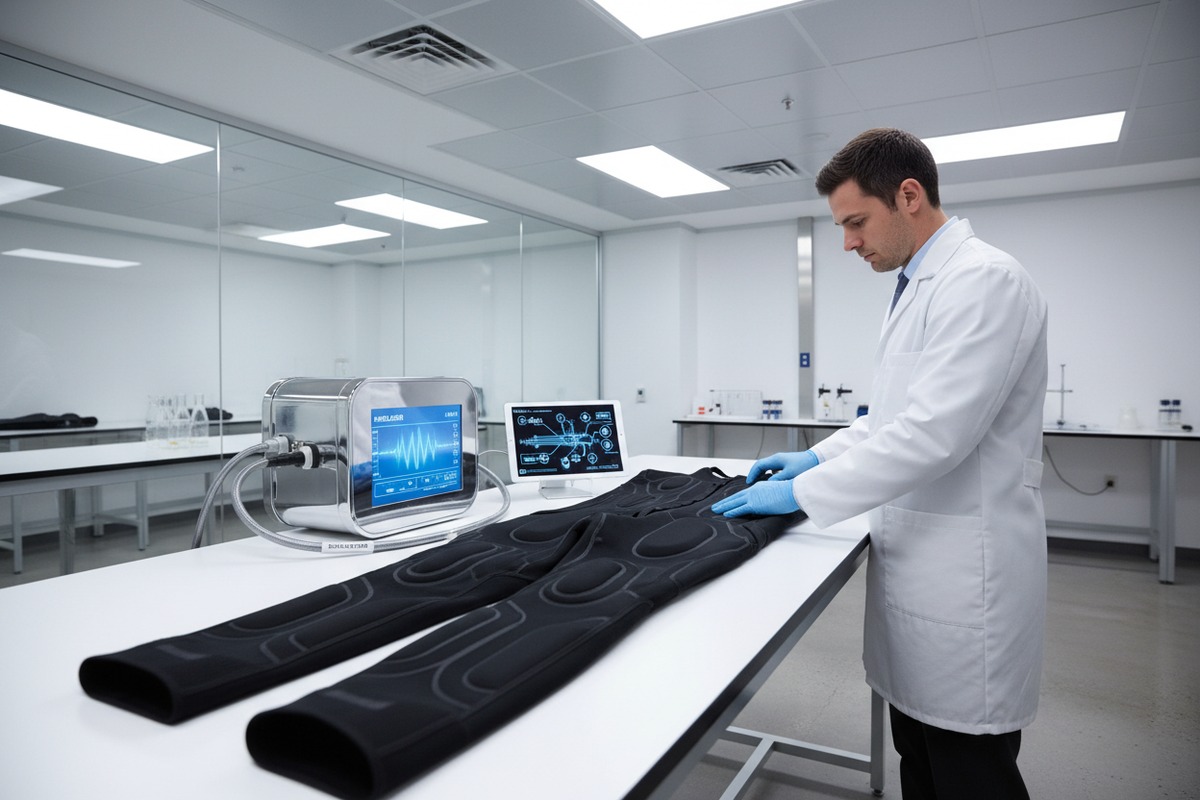
When we quote landed costs for our US customers, tariff calculations often determine final pricing decisions. The duty structure for Chinese medical devices has multiple layers. Getting the math wrong leads to unexpected costs at the port.
Calculate total import costs by adding the base customs duty rate (typically 0-2.5% for medical devices under Chapter 90) plus applicable Section 301 tariffs (7.5% to 25% depending on the product list) plus merchandise processing fees and harbor maintenance fees. Your total landed cost equals product value plus freight plus all duties and fees.
Understanding the Tariff Structure
As of May 2025, U.S. medical OEMs are actively navigating an environment of increasing costs and regulatory complexity, largely stemming from the ongoing and evolving Section 301 tariffs 6 on imports from China—including duties on essential materials like aluminum.
China: Medical devices and components imported from China face a 54% tariff, which includes a 10% base, plus additional penalties under punitive trade measures.
The tariff landscape continues to shift. Firms are mobilizing in Washington, D.C., to oppose proposed Section 301 tariffs which would reimpose duties on medical devices, including Class I and II products, surgical instruments, diagnostic equipment, and orthopedic tools.
Breaking Down the Cost Components
| Cost Component | Rate/Amount | Calculation Base |
|---|---|---|
| Base Customs Duty | 0% – 2.5% | CIF value (Cost + Insurance + Freight) |
| Section 301 Tariff | 7.5% – 25% | FOB value |
| Merchandise Processing Fee 7 | 0.3464% (min $29.66, max $575.35) | CIF value |
| Harbor Maintenance Fee | 0.125% | CIF value |
| Customs Bond | 10% of duties + taxes | Annual calculation |
HS Code Classification
Pressotherapy machines typically classify under HS Chapter 90 (Medical instruments) or Chapter 84 (Machinery). The Harmonized Commodity Description and Coding System, also known as the Harmonized System (HS) 8 of tariff nomenclature is an internationally standardized system of names and numbers to classify traded products. The HS System is maintained by the World Customs Organization and used by customs authorities around the world to identify products when assessing duties and taxes and for gathering statistics.
Common HS codes for pressotherapy equipment include:
- 9018.90: Instruments and appliances used in medical sciences
- 9019.10: Mechano-therapy appliances; massage apparatus
Sample Duty Calculation
Let's calculate duties for a $5,000 pressotherapy machine shipment:
| Line Item | Calculation | Amount |
|---|---|---|
| Product Value (FOB) | Base price | $5,000.00 |
| Freight + Insurance | Estimated | $800.00 |
| CIF Value | FOB + Freight | $5,800.00 |
| Base Duty (2%) | $5,800 × 0.02 | $116.00 |
| Section 301 (7.5%) | $5,000 × 0.075 | $375.00 |
| MPF (0.3464%) | $5,800 × 0.003464 | $20.09 |
| HMF (0.125%) | $5,800 × 0.00125 | $7.25 |
| Total Duties/Fees | Sum | $518.34 |
| Landed Cost | CIF + Duties | $6,318.34 |
These escalating costs aren't just numbers on a balance sheet—they directly affect the price of essential technologies like surgical robots, diagnostic tools, and imaging systems. For instance, tariffs are adding an estimated $2,000–$8,000 per device in manufacturing costs.
Can my supplier manage the ISF filing and door-to-door logistics to my US warehouse?
We handle complete logistics packages for many of our US partners. The question of who files ISF and manages freight touches on responsibility, liability, and cost efficiency. Your supplier can manage these tasks—but you need clear agreements.
Yes, your Chinese supplier can manage ISF filing and door-to-door logistics through their freight forwarding partners. However, the US importer of record remains legally responsible for ISF accuracy. Most suppliers use licensed customs brokers in the US to file ISF on your behalf, and you should verify their capability and track record before agreeing.

Understanding ISF Requirements
For imports that arrive via sea, the primary process for doing this is known as Import Security Filing, or ISF. Importer Security Filing (ISF) 9 This alerts Customs and Border Protection (CBP) about what items are entering the country and is a critical requirement if firms want to avoid customs delays or financial penalties. Import Security Filing (ISF) is a requirement for all items that arrive in the US via ocean cargo.
In total, there are ten elements that must be provided by the importers and two by the carrier. There are eight items that must be provided by the importer no later than 24 hours prior to shipment loading.
The 10+2 Filing Elements
| ISF Importer Elements (10) | ISF Carrier Elements (2) |
|---|---|
| 1. Manufacturer name/address | 1. Vessel stow plan |
| 2. Seller name/address | 2. Container status messages |
| 3. Buyer name/address | |
| 4. Ship-to name/address | |
| 5. Container stuffing location | |
| 6. Consolidator name/address | |
| 7. Importer of record number | |
| 8. Consignee number | |
| 9. Country of origin | |
| 10. HS tariff number |
It is the ultimate responsibility of the importer to ensure the information contained within the ISF is complete, accurate and submitted on time, regardless of whether or not they are using a customs broker to complete the filing process itself. Many ISF details must be submitted no later than 24 hours before goods are loaded onto the carrier vessel at the port of departure, with remaining information to be submitted at least 24 hours prior to arrival in the US.
Penalties for Non-Compliance
There are financial penalties for failing to provide the required information. Inaccurate, incomplete, or untimely filings may be subject to fines of up to $5,000 per violation being levied by CBP. The authority may also refuse to grant a permit to unload or to take the merchandise, or seize the cargo if unloading goes ahead without this permission, which can lead to significant extra costs for businesses.
Supplier Logistics Capabilities
When we provide door-to-door service, our logistics team coordinates:
| Service Element | What We Handle | Your Responsibility |
|---|---|---|
| Export customs clearance | Documentation and filing | Provide receiving details |
| Ocean freight booking | Carrier selection and booking | Confirm schedule preferences |
| ISF filing | Filing through US broker partner | Review and approve data |
| US customs clearance | Broker coordination | Provide importer of record info |
| Last-mile delivery | Trucking arrangement | Warehouse readiness |
Customs brokers or forwarders typically charge an ISF filing fee in the $30–$50 range, and many bundle this with a single-use ISF bond so the total package is often around $80–$120, depending on the provider.
In regard to how to file ISF, all filings need to be electronically submitted through either the Automated Broker Interface (ABI) or CBP's Automated Commercial Environment (ACE). Shippers will need to use a customs broker to file, or can self-file using an authorized ISF software provider.
What labeling and packaging requirements must my private-label machines meet to pass US Customs inspection?
Our production line applies labels according to each customer's branding requirements. But FDA labeling rules are strict. A beautiful label that misses required elements can trigger detention at the port. We review every label design against FDA regulations before production.
Private-label pressotherapy machines must display the manufacturer or distributor name and address, product identification, intended use statement, appropriate warnings, and a Unique Device Identifier (UDI) on both the device and its packaging. Labels must be in English, prominently displayed, and include all required FDA information elements as specified in 21 CFR Part 801.

Core Labeling Requirements
When we say "labeling," there's a common misconception that we're just talking about the label on your device. In fact, the term labeling covers ALL types of labels associated with your device, including the box your device comes in and the instructions for use (IFU).
When you've classified your medical device, you may now cater to these six packaging requirements: The Code of Federal Regulations Title 21 defines labelling as "all written, printed, or graphic matter accompanying an article at any time while such article is in interstate commerce or held for sale after shipment or delivery in interstate commerce." This provision states that FDA-compliant labels must include specific information.
Required Label Elements
| Element | Requirement | Location |
|---|---|---|
| Manufacturer/Distributor Name | Full legal business name | Device label and outer packaging |
| Address | Complete address with zip code | Device label and outer packaging |
| Product Name | Clear identification | All labels |
| Intended Use | Brief use statement | IFU and may appear on label |
| Warnings/Precautions | Safety information | Device label and IFU |
| UDI | Machine-readable code | Device and each package level |
| Lot/Batch Number | Traceability code | Device label |
| Manufacturing Date | Date format per FDA guidance | Device label |
Unique Device Identifier (UDI) Requirements
The label of every medical device shall bear a unique device identifier (UDI) 10 that meets the requirements of this subpart and part 830 of this chapter. Every device package shall bear a UDI that meets the requirements of this subpart and part 830 of this chapter.
Unique Device Identification (UDI) requirements mandate that most medical devices include machine-readable identification codes on their packaging. These codes enable rapid identification during adverse event reporting and facilitate more effective recalls when necessary.
Packaging Considerations
The FDA's Center for Devices and Radiological Health (CDRH) institutes comprehensive regulations for medical device packaging that all device manufacturers, repackagers, and importers must adhere to. These medical device packaging requirements by the FDA govern all aspects of device packaging, including labelling, sterilization, and package materials.
For private-label pressotherapy machines, packaging must:
| Requirement | Description |
|---|---|
| Exterior labeling | All required elements visible on outer carton |
| Interior protection | Device secured against shipping damage |
| Documentation | IFU, warranty card, compliance certificates included |
| Language | English required; other languages permitted if English is present |
| Private label statement | "Distributed by" or "Manufactured for" if applicable |
Name and business location of the medical device's manufacturer, packer, or distributor. It must include the zip code, city, state, and street address. And if the business listed on the label is not the original manufacturer, the company must make it clear by including affirmative statements such as "Distributed by" or "Manufactured for."
Quality System Documentation
Adequate labeling for a medical device requires proper design and procurement of the labels and labeling. Design includes labeling content that meets the requirement of the QS regulation as well as the needs of the customer.
When we produce private-label machines, our quality team maintains:
- Label approval records
- Packaging validation documentation
- Traceability records linking UDI to production batches
- Inspection records confirming label application
FDA's import requirements help ensure that foods, drugs, cosmetics, medical devices, and other FDA regulated products are safe for use and that the products' labeling is truthful and not misleading and correctly bears all required information.
Conclusion
Importing pressotherapy machines from China requires attention to FDA registration, tariff calculations, ISF filings, and labeling compliance. Each step matters. Work with experienced partners who understand both medical device regulations and customs procedures. Your machines will clear smoothly when documentation is complete and accurate.
Footnotes
1. Direct link to the Code of Federal Regulations, Title 21, Part 801, on medical device labeling. ↩︎
2. Official FDA resource explaining how medical devices are classified into risk-based categories. ↩︎
3. Official FDA page detailing the 510(k) premarket notification process for medical device clearance. ↩︎
4. Official FDA guidance on annual establishment registration for medical device manufacturers and distributors. ↩︎
5. Wikipedia provides a general overview of a Declaration of Conformity in regulatory contexts. ↩︎
6. Official USTR page providing information on Section 301 tariffs on imports from China. ↩︎
7. Official CBP document detailing the Merchandise Processing Fee for imported goods. ↩︎
8. Official World Customs Organization explanation of the Harmonized System for product classification. ↩︎
9. Official CBP resource explaining the Importer Security Filing requirements for ocean cargo. ↩︎
10. Official FDA page explaining the Unique Device Identification (UDI) system for medical devices. ↩︎

 English
 Español de México
 Deutsch
 Français
 العربية
 Русский
