
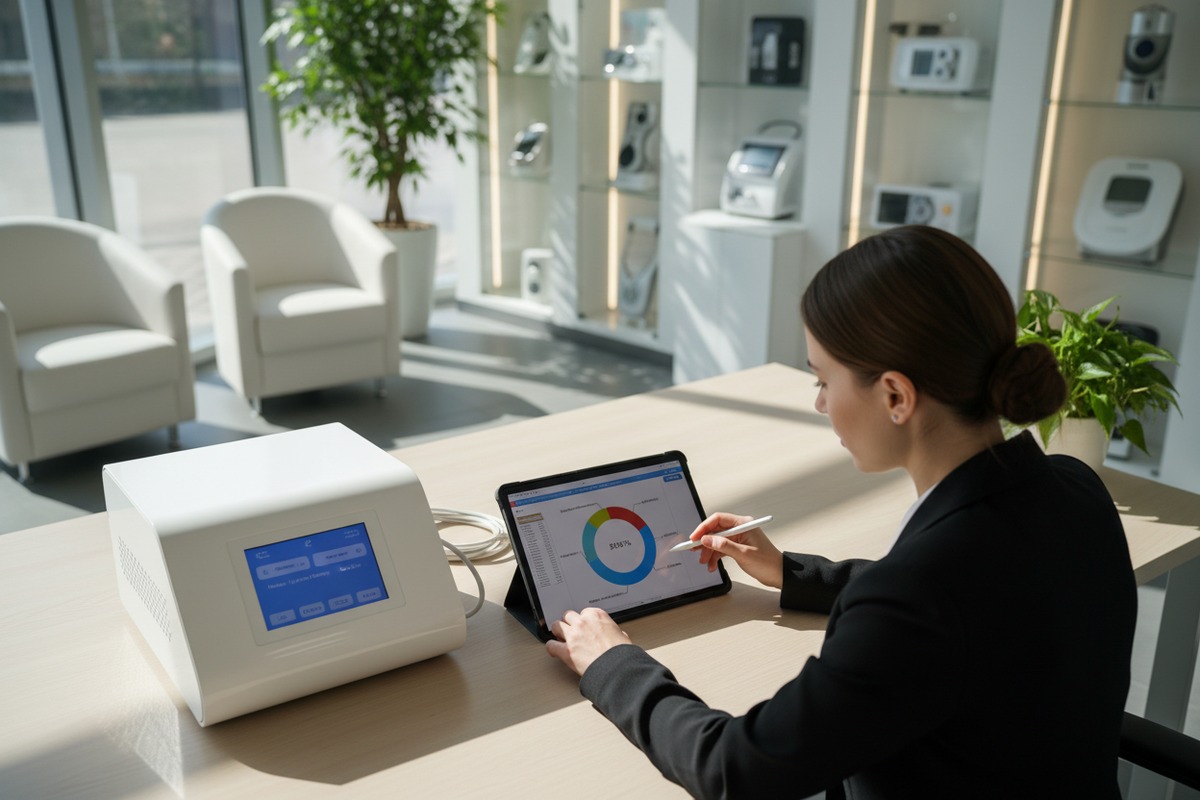
Running a distribution business for pressotherapy machines 1, I see many partners struggle with budget planning. They either overspend on premium units or underinvest and miss key market segments medical device distribution 2. Getting your budget right is the difference between healthy margins and squeezed profits.
To maximize distributor profit margins on pressotherapy machines, allocate 40-50% of your budget to unit acquisition costs, 15-20% to logistics and import duties, 10-15% to OEM customization, and reserve 15-20% for maintenance and support infrastructure. This balanced approach maintains gross margins of 20-40% typical in medical device distribution while building long-term brand value.
In the sections below, I break down each budget component. You will learn how to price units for competitive markup, manage landed costs, decide on customization investments, and plan for after-sales support 3. Let us dive in.
How much should I allocate for the initial unit cost to maintain a competitive markup in my market?
Setting the right unit cost is where most distributors either win or lose. From our experience shipping pressotherapy machines to North America and Europe, I have seen partners struggle when they do not plan their acquisition costs properly.
Allocate 40-50% of your total budget to initial unit costs. This allows you to achieve the 20-40% gross margin typical in medical device distribution. For mid-range pressotherapy systems priced at $1,500-$3,000 wholesale, aim for a retail markup of 2x to 2.5x to cover operational costs and maintain competitive positioning.
Understanding Distributor Margins in Medical Equipment
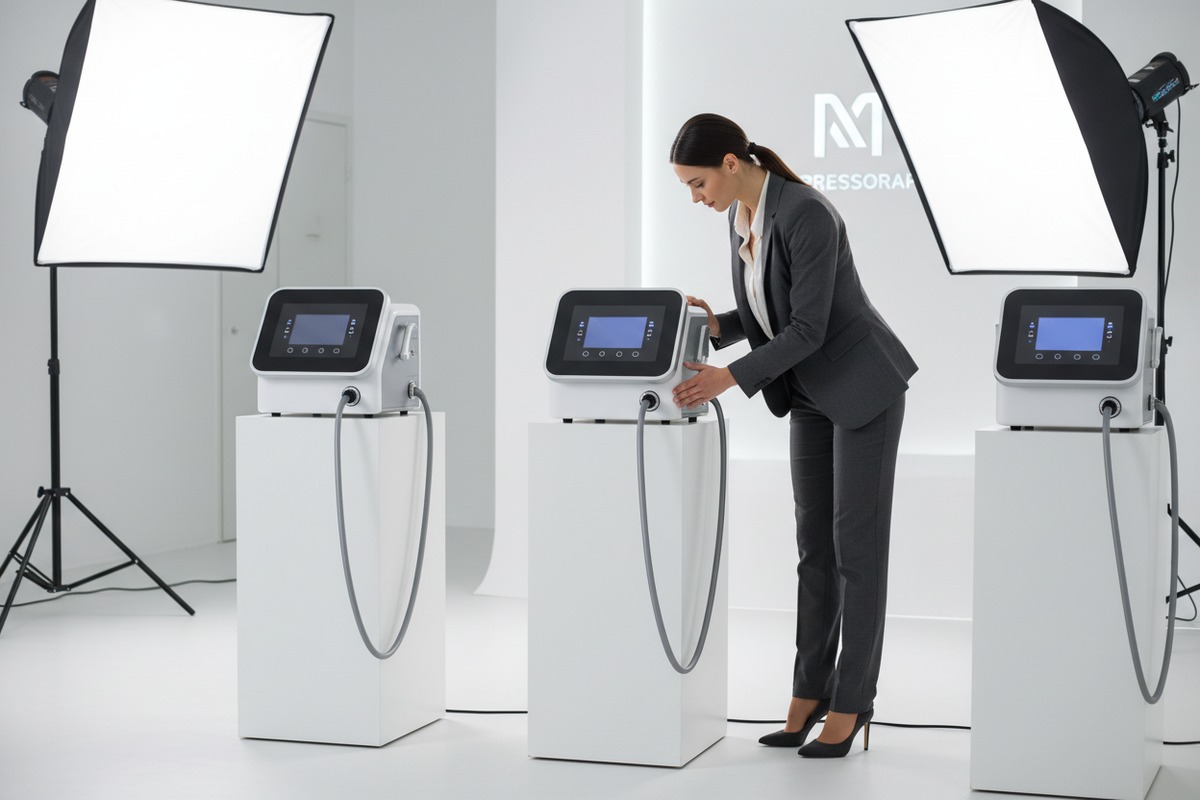
The medical device sector operates differently from consumer goods. For wholesalers and distributors, including those in the physio equipment sector, gross margins are generally lower, often in the range of 20-40%. This is lower than manufacturer margins but comes with lower operational overhead.
Distributor profitability stems from efficient logistics, inventory management 4, economies of scale, and providing value-added services like technical support, training, and swift delivery. Your unit cost allocation must leave room for these operational investments.
Price Tiers and Target Markets
| Price Tier | Wholesale Cost | Suggested Retail | Target Customer | Gross Margin Range |
|---|---|---|---|---|
| Entry-Level | $500-$1,000 | $1,200-$2,500 | Home users, small spas | 25-30% |
| Mid-Range | $1,500-$3,000 | $3,500-$6,000 | Specialty clinics, wellness centers | 30-35% |
| Professional | $3,500-$5,000 | $7,000-$12,000 | Hospitals, rehab centers | 35-40% |
A 30-minute session is typically priced between $50 to $150, depending on the geographical location and duration of treatment. Your customers calculate ROI based on these session prices. A mid-range system paying for itself in 50-100 sessions is attractive to buyers.
Volume Purchasing Strategies
Bulk orders directly reduce your per-unit costs. We offer discounts and free gifts according to the order amount. The more you order, the better the price. Negotiate volume commitments with your supplier to secure 10-20% reductions on larger orders.
The key is balancing inventory investment against cash flow. Over-stocking ties up capital. Under-stocking means lost sales. Start with a three-month inventory projection based on your sales history and market demand.
Competitive Markup Considerations
Markups typically range from 15-20% when manufacturers sell to distributors, while distributors add another 20-40%, depending on the industry and market conditions. Your markup must cover operating expenses and leave profit.
Consider your market position. Premium positioning allows higher markups but requires stronger branding. Value positioning demands lower prices but higher volume. Most successful distributors find a middle ground with 25-35% gross margins.
How do I factor door-to-door logistics and import duties into my total pressotherapy machine budget?
Shipping costs and import duties can erase your profit margin if you do not plan carefully. Our logistics team handles door-to-door shipments daily, and I have seen distributors underestimate these costs by 30-50%.
Budget 15-20% of your total costs for logistics and import duties. For pressotherapy machines from China to the USA, expect 0-5% base duties plus 7.5-25% Section 301 tariffs, shipping costs of $3-8 per kilogram for air freight, and customs brokerage fees of $150-500 per shipment. Always calculate landed cost before setting retail prices.

Breaking Down Import Duties
Import duties vary depending on the HS code, country of destination, and declared value. For example: USA: 0–5% for most non-invasive beauty equipment; plus Section 301 tariffs 5 may apply (7.5%–25%).
The HS code classification 6 matters. Pressotherapy machines typically fall under medical or beauty device categories. The 7.5% tariff applies to certain products, while aside from these, the 25% tariff applies to the rest of the listed goods. Consult a customs broker to confirm your classification.
Shipping Method Comparison
| Shipping Method | Transit Time | Cost per Unit | Best For |
|---|---|---|---|
| Sea Freight (FCL) | 25-35 days | $80-200 | Large volume orders (15+ CBM) |
| Sea Freight (LCL) | 30-40 days | $150-300 | Medium orders (5-15 CBM) |
| Air Freight | 5-10 days | $300-600 | Urgent or high-value items |
| DDP Door-to-Door | 7-15 days | $400-800 | Hassle-free single unit orders |
When shipping beauty equipment from China, you can choose between air freight, sea freight, and door-to-door DDP shipping. Each shipping method has its own cost structure, delivery speed, and suitability depending on your cargo volume and urgency.
Hidden Costs to Include
Many distributors forget about secondary costs:
- Customs brokerage: $150-500 per shipment
- Port handling fees: $50-150 per container
- Inland freight: $200-500 from port to warehouse
- Insurance: 0.5-1% of declared value
- Storage fees: $25-75 per pallet per month if delayed
You may need to pay customs fees depending on your country's import taxes. Build a 10% contingency into your logistics budget for unexpected costs.
Calculating Your True Landed Cost
Here is a formula we use internally:
Landed Cost = FOB Price + International Freight + Insurance + Import Duties + Section 301 Tariffs + Customs Fees + Inland Transport
For a $2,000 pressotherapy machine shipped to the USA:
- FOB Price: $2,000
- Air Freight (40kg): $320
- Insurance: $25
- Base Duty (3%): $60
- Section 301 (25%): $500
- Customs Fees: $200
- Inland Freight: $150
Total Landed Cost: $3,255
This means your acquisition cost is actually 62.75% higher than the FOB price. Plan your retail pricing accordingly.
Should I invest more in OEM customization and private labeling to increase my brand's resale value?
Building your own brand is the surest way to protect margins long-term. At our factory, we work with partners who started with generic products and gradually moved to full OEM customization 7. The difference in their market positioning is dramatic.
Invest 10-15% of your budget in OEM customization and private labeling. This investment yields 15-25% higher resale values compared to generic products. Start with logo printing and custom packaging, then expand to interface customization and unique feature development as your brand grows.

The Value Ladder of Customization
While private label offers quick market entry and lower initial costs, OEM manufacturing provides unparalleled opportunities for customization, brand differentiation, and long-term value creation.
Different levels of customization offer different returns:
| Customization Level | Investment | Value Add | Timeline |
|---|---|---|---|
| Logo printing only | $200-500 per order | 5-10% higher resale | 1-2 days |
| Custom packaging | $500-1,500 setup | 10-15% higher resale | 1-2 weeks |
| Interface/software branding | $1,000-3,000 setup | 15-20% higher resale | 2-4 weeks |
| Full OEM design | $5,000-15,000 development | 20-30% higher resale | 2-3 months |
Why Private Labeling Protects Margins
OEM cosmetic packaging offers startups the opportunity to create a unique brand identity from the outset. This can be particularly valuable in crowded markets where standing out is crucial.
The same principle applies to equipment. When your pressotherapy machine carries your brand, customers cannot easily price-compare with competitors. They buy from you, not from the cheapest alternative.
What We Offer Our Partners
We can customize machines and add private logos. Our typical customization services include:
- Brand logo on machine body: Hot stamping or UV printing
- Custom control panel interface: Your brand colors and layout
- Branded user manual and training materials
- Custom packaging with your company information
- Software customization for treatment protocols
Through our utilization of advanced technology and rigorous quality control measures, we are capable of manufacturing high-quality products that contribute to the growth, increased value, and overall success and profitability of your brand.
Calculating ROI on Customization
Consider a $2,500 wholesale pressotherapy machine:
Without customization:
- Retail price: $5,000
- Your margin: $2,500 (50% markup)
- Customer sees: Generic product, shops around
With full branding ($1,500 investment):
- New unit cost: $4,000 (including customization spread over 10 units)
- Retail price: $6,500 (justified by brand premium)
- Your margin: $2,500 per unit
- Customer sees: Your exclusive branded product
The math works when you commit to volume. Due to the overwhelming response and requests from resorts and spas, we decided to market our machine to spas, resorts, and wellness centers as a private label machine. Many spa establishments reach out expressing their need for private labels for their business.
Building Long-Term Brand Value
Value-added services–such as technical support, inventory management, or custom solutions–can significantly enhance margin potential across all sectors. Your branded machine becomes the anchor for additional services that generate recurring revenue.
Think beyond the initial sale:
- Training programs under your brand
- Certified accessories and consumables
- Extended warranty packages
- Software updates and new protocols
How can I balance my upfront purchase price with the long-term costs of maintenance and customer support?
The cheapest machine is rarely the most profitable. Our service team handles warranty claims and technical support, and I see distributors who saved $500 per unit end up losing thousands in customer complaints and replacements.
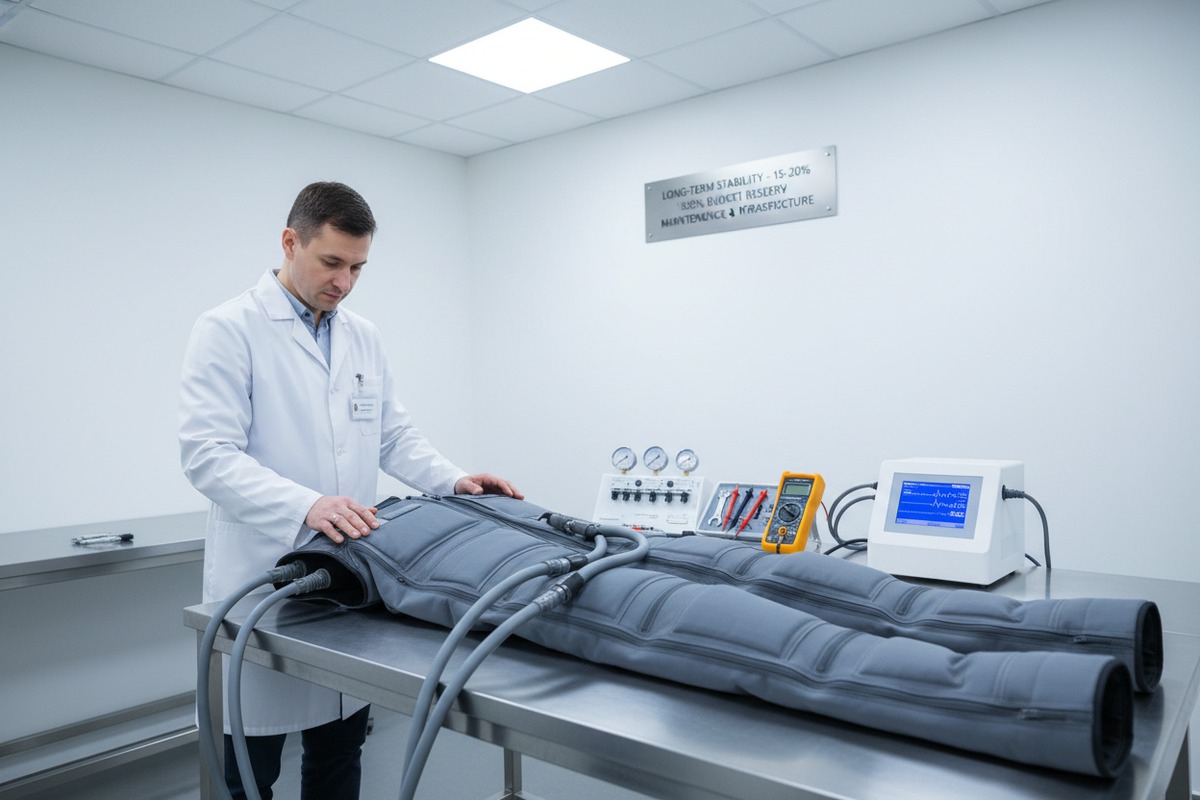
Reserve 15-20% of your total budget for maintenance infrastructure and customer support. This includes spare parts inventory (5-8% of unit cost), technical staff training, warranty reserves (2-3% per unit), and support systems. Proper after-sales investment reduces returns, builds loyalty, and generates repeat business worth 3-5x the initial sale.
The True Cost of Poor Support
Setting the right price for your products or services can be a delicate balancing act for medical device businesses. It's a decision that can make or break your profitability, market share and long-term success.
A single product failure without proper support infrastructure can cost you:
- Replacement unit: $2,000-5,000
- Shipping both ways: $400-800
- Customer goodwill: Priceless
- Negative reviews: Long-lasting damage
Building Your Support Infrastructure
| Support Component | Annual Budget | Purpose |
|---|---|---|
| Spare parts inventory | 5-8% of sales | Quick repairs without overseas shipping |
| Technical training | $2,000-5,000 | In-house troubleshooting capability |
| Warranty reserve | 2-3% per unit | Cover replacement costs |
| Support software/CRM | $1,200-3,600 | Track issues, manage relationships |
| Technical documentation | One-time $500-1,500 | Consistent service protocols |
Choosing Suppliers with Strong Support
We pride ourselves in top-tier quality equipment with 36-month warranty and lifetime client support. When evaluating suppliers, look for:
- Extended warranty options (2-3 years minimum)
- Spare parts availability and pricing
- Technical documentation quality
- Remote troubleshooting support
- Training programs for your staff
The cost of pressotherapy machines and consumables will depend on the type of machine and the brand. Factor in consumable costs when calculating total cost of ownership 9.
Maintenance as a Revenue Stream
Smart distributors turn support into profit:
Extended warranty packages: Sell 2-year extensions at $300-500. Your actual claim rate on quality machines is typically 3-5%.
Service contracts: Annual maintenance visits at $150-300 per machine. Builds customer relationships and catches issues early.
Replacement parts markup: Stock common parts and sell at 40-60% margin. Faster delivery than direct from manufacturer.
In the face of rising inflation and shrinking profit margins, you must prioritize identifying and eliminating internal waste to help maintain financial stability. Efficient support operations reduce waste and protect margins.
Total Cost of Ownership Framework
Help your customers understand value beyond purchase price:
| Cost Factor | Budget Machine | Quality Machine | 3-Year Impact |
|---|---|---|---|
| Purchase price | $1,500 | $2,800 | +$1,300 |
| Expected repairs | $800/year | $150/year | -$1,950 |
| Downtime costs | $1,200/year | $200/year | -$3,000 |
| Consumables | $400/year | $300/year | -$300 |
| Total 3-Year Cost | $5,900 | $4,450 | -$1,450 savings |
The quality machine saves money over three years. This argument helps you sell higher-priced units and protect your margins.
After-Sales Support Best Practices
From our experience supporting distributors:
- Stock common wear items: Airbags, tubing, and connectors fail first
- Create video troubleshooting guides: Reduces support calls by 40%
- Train customers during installation: Prevents 60% of early issues
- Establish clear warranty terms: Avoids disputes and claims
- Build relationships, not transactions: Repeat customers are 5x cheaper to serve
The distributor margin compensates for the distributor's efforts, risks, and costs associated with marketing, warehousing, logistics, and customer support. Quality support justifies your margin and builds sustainable business.
Conclusion
Budget planning for pressotherapy machine distribution requires balancing acquisition costs, logistics, customization, and support. Allocate your budget strategically across these four pillars, and you will build a profitable business with strong margins and loyal customers.
Footnotes
1. Wikipedia provides a general overview of pressotherapy and the machines used. ↩︎
2. AdvaMed is a leading trade association for the medical technology industry, relevant to distribution. ↩︎
3. Wikipedia’s entry on customer service includes the importance of after-sales support. ↩︎
4. Replaced HTTP 403 Investopedia link with an authoritative source from the Association for Supply Chain Management (ASCM). ↩︎
5. The Office of the United States Trade Representative (USTR) is the official source for Section 301 tariffs. ↩︎
6. The World Customs Organization (WCO) is the authoritative source for Harmonized System (HS) codes. ↩︎
7. Wikipedia defines Original Equipment Manufacturer (OEM) and its role in production. ↩︎
8. Replaced HTTP 403 Investopedia link with a working Wikipedia page for private label definition. ↩︎
9. Wikipedia offers a comprehensive definition and explanation of Total Cost of Ownership (TCO). ↩︎

 English
 Español de México
 Deutsch
 Français
 العربية
 Русский
