
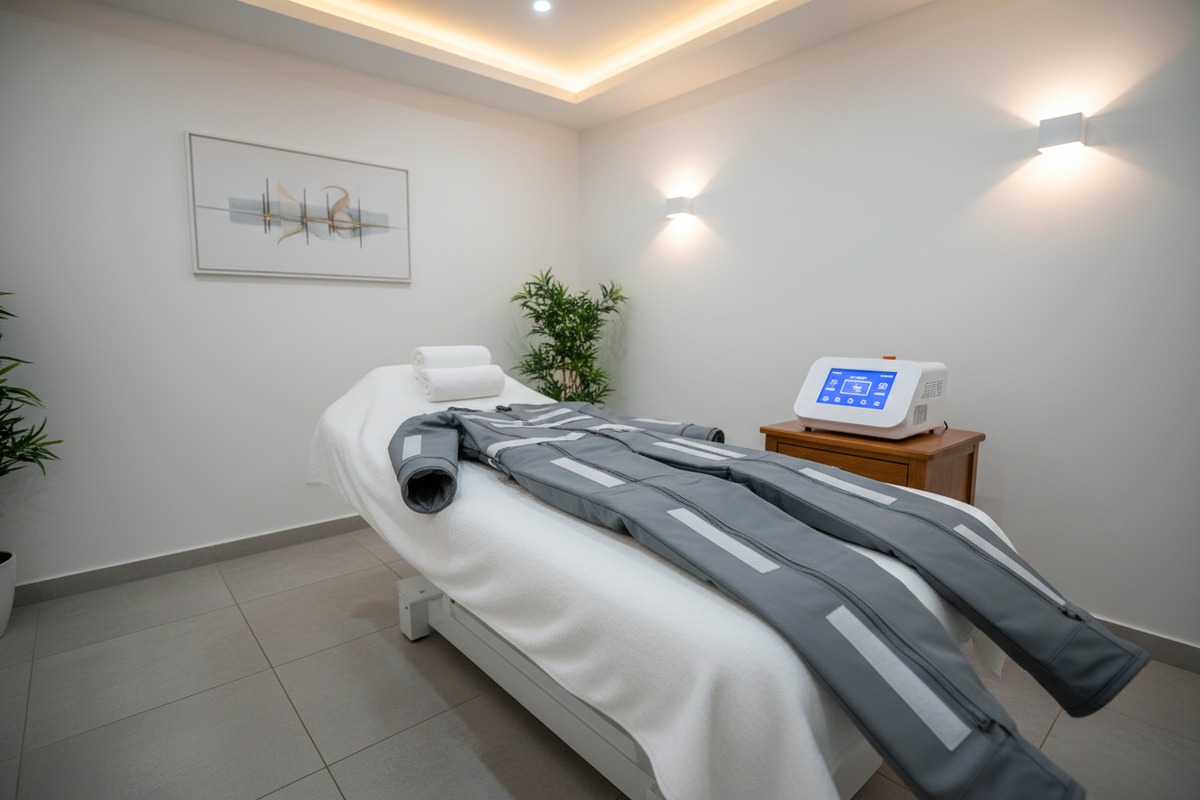
Every week, our production floor ships pressotherapy systems 1 to US distributors. Many buyers call back with the same frustration: the suits don’t fit their diverse clientele. A woman with lymphedema 2 struggles with sleeves too narrow. An athletic man finds the leg cuffs way too short. One poorly-fitted suit can turn a relaxing treatment into an uncomfortable ordeal—and cost you repeat customers.
When sourcing pressotherapy machines for the US market, key sizing considerations include adjustable sleeve circumferences for limbs ranging from S to 3XL, modular suit components for independent body zone treatment, multi-chamber systems with 20-48 airbags for precise pressure distribution, and Velcro or zipper-based extensions to accommodate waist measurements exceeding 40 inches typical of the US population.
The US presents unique challenges. With an obesity rate 3 exceeding 40% of the adult population, standard Asian or European sizing simply won’t cut it. Read on to learn exactly how to source machines that fit every body type walking into your clients’ spas and clinics.
How do I ensure the pressotherapy sleeves fit the diverse range of US body sizes?
Our export team sees this challenge daily. A US distributor orders ten units, only to realize their standard sleeves barely wrap around 30% of their target customers. The money spent on returns and exchanges adds up fast. The real problem? They never verified sizing specs against their actual customer demographics.
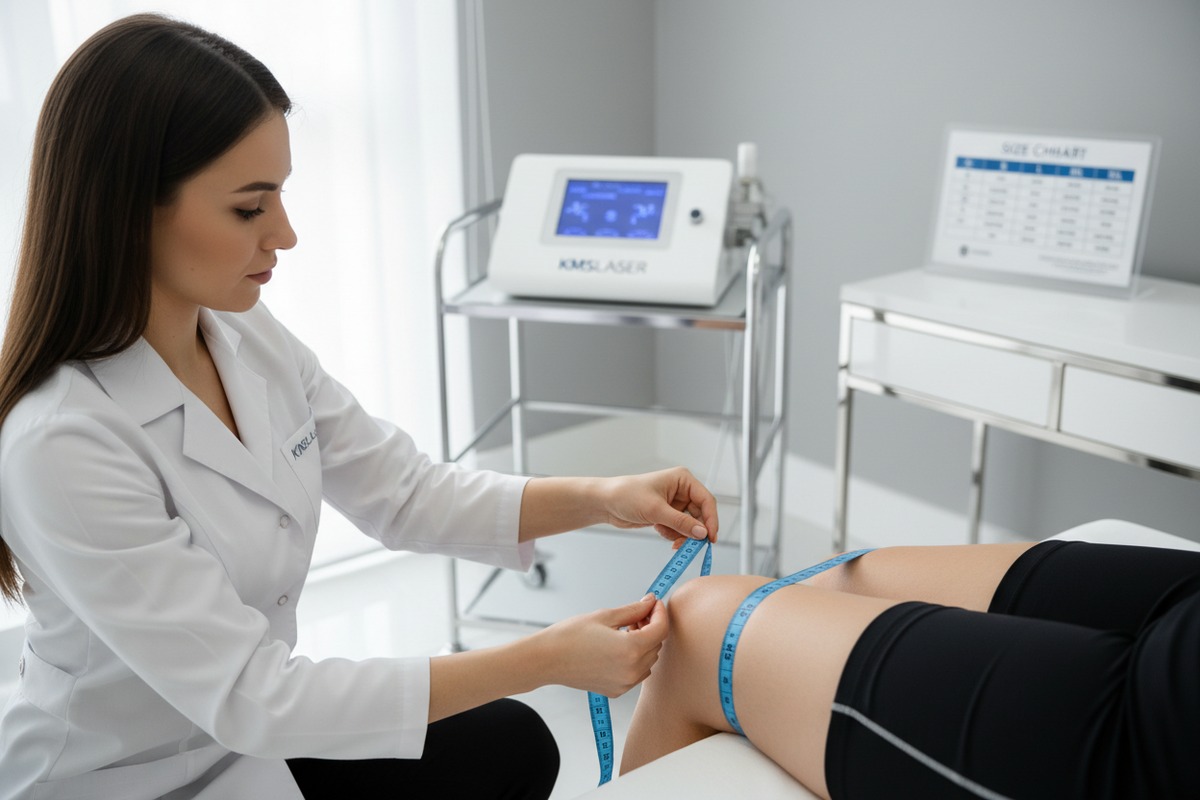
To ensure proper fit for US body types, measure at three key points per limb—ankle, calf, and thigh for legs; wrist, elbow, and upper arm for arms—then match circumferences to manufacturer size charts ranging from S to XL, ensuring sleeves accommodate girths up to 132 cm and include Velcro adjustments for a 1.5 cm skin-sleeve gap essential for effective pressure delivery.
Understanding US Anthropometric Diversity
The US population presents wide anthropometric variation that manufacturers must address. The average adult male 20 and older was a smidge under 5-foot-9 and weighed 199 pounds, with a body mass index 4 of 29.4. The average adult female was 5-foot-3 1/2 and weighed 171.8 pounds, with a BMI of 30, which is considered obese. These averages mask even wider variation among subgroups.
The prevalence of obesity among adults was 40.3% during August 2021–August 2023. The prevalence was 39.2% in men and 41.3% in women. This means nearly half your customers may need larger-than-standard sizing options.
The Three-Point Measurement Protocol
For accurate sleeve fitting, follow this protocol we recommend to all our OEM partners 5:
For Leg Sleeves:
- For best results, have a friend help you take these measurements in the standing position. Measure the ankle circumference, the calf circumference just below your knee, and the leg length from below your knee to where your foot meets the floor.
- Measure thigh circumference at the widest point
For Arm Sleeves:
- Measure circumferences: C (wrist), D (forearm), E (elbow), F (mid-upper arm), G (upper arm near armpit).
- Measure your arm from the point where your wrist meets your hand until your armpit. If your arm length exceeds 17" you should choose a long sleeve. If your arm is less than 17" long, choose a regular length sleeve.
Size Range Requirements for US Market
| Body Zone | Size S | Size M | Size L | Size XL | Extended Options |
|---|---|---|---|---|---|
| Thigh Circumference | 45-55 cm | 55-70 cm | 70-90 cm | 90-132 cm | +10 cm extension strips |
| Calf Circumference | 30-35 cm | 35-42 cm | 42-50 cm | 50-65 cm | Velcro expansion panels |
| Upper Arm | 25-30 cm | 30-38 cm | 38-45 cm | 45-55 cm | Adjustable straps |
| Waist | 70-85 cm | 85-100 cm | 100-120 cm | 120-140 cm | 3-zipper design |
Why Fit Gaps Destroy Treatment Efficacy
When there's a gap between skin and sleeve, the pressure cannot transfer effectively. Research indicates that a 1.5 cm fit gap can reduce effective pressure delivery by up to 28%. This means your customers pay for a 60 mmHg treatment but only receive 43 mmHg at the tissue level. They see poor results and blame your machines—when the real culprit is improper sizing.
Sizing isn't universal. US sizing typically runs larger than UK/EU equivalents, and men's versus women's cuts address different body proportions entirely.
Can I request custom-sized cuffs or extensions for my private-label brand?
When we work with US brand owners on OEM projects, custom sizing requests top their priority list. They know their customers. They understand that a generic import won't cut it. But many fear that customization means astronomical costs and year-long lead times. That's rarely the case with the right manufacturing partner.
Yes, reputable manufacturers offer custom-sized cuffs and extensions for private-label brands. Common customizations include extended length sleeves for taller users, wider circumference options with additional Velcro panels, modular zipper systems allowing 10+ cm expansion, and specialized cuffs for specific body zones like abdominal binders or shorts-style thigh wraps.

What Customization Options Exist
The devices come with a comprehensive range of overlapping multi-chamber garments that offer comfortable and effective compression. Garment types include arm sleeves, leg sleeves, jacket sleeves, waist sleeves, full-body sleeves, foot sleeves, and calf sleeves.
At our facility, we offer these primary customization categories:
Sizing Extensions:
- Width extension strips (5 cm, 10 cm, or 15 cm options)
- Length additions for leg sleeves (accommodating heights up to 6'6")
- Extra-wide abdominal binders for waists exceeding 50 inches
Design Modifications:
- Automatically adjusting 'Seamless' technology. One size fits everyone, expanders available.
- 3-zipper vs 2-zipper configurations
- Reinforced seam construction for high-pressure applications
- Non-slip lining materials
MOQ and Lead Time Considerations
| Customization Level | Typical MOQ | Lead Time | Cost Premium |
|---|---|---|---|
| Logo/branding only | 10-20 units | 2-3 weeks | 5-10% |
| Size range expansion | 30-50 units | 4-6 weeks | 15-25% |
| Custom chamber layout | 50-100 units | 8-12 weeks | 30-50% |
| Entirely new design | 100+ units | 12-16 weeks | 50-100% |
Private Label Quality Control
When we manufacture custom cuffs, our QC process includes:
- Material tensile strength testing
- Seam burst pressure verification
- Air retention testing over 100 inflation cycles
- Velcro adhesion durability checks
- Chamber-by-chamber pressure calibration
Accessories including cuffs, sleeves, and control units complement device functionality and improve the efficiency of therapy. The replacement demand for these consumables contributes significantly to recurring revenue streams. Continuous improvements in fabric durability and ergonomic design are supporting their growth in the global market.
Working with Your Manufacturer
Request these specifications when discussing custom cuffs:
- Detailed tech pack with all measurements
- Fabric composition and weight specifications
- Chamber count and placement diagrams
- Pressure tolerance documentation
- Sample approval before bulk production
How do I verify that larger sleeves can withstand high pressure without material failure?
During a recent factory visit, a US buyer asked to see our stress testing equipment. He'd had a competitor's sleeves burst during a treatment—at only 80 mmHg. The embarrassment to his client was bad enough. The potential liability was worse. Verifying pressure tolerance isn't optional. It's essential due diligence.
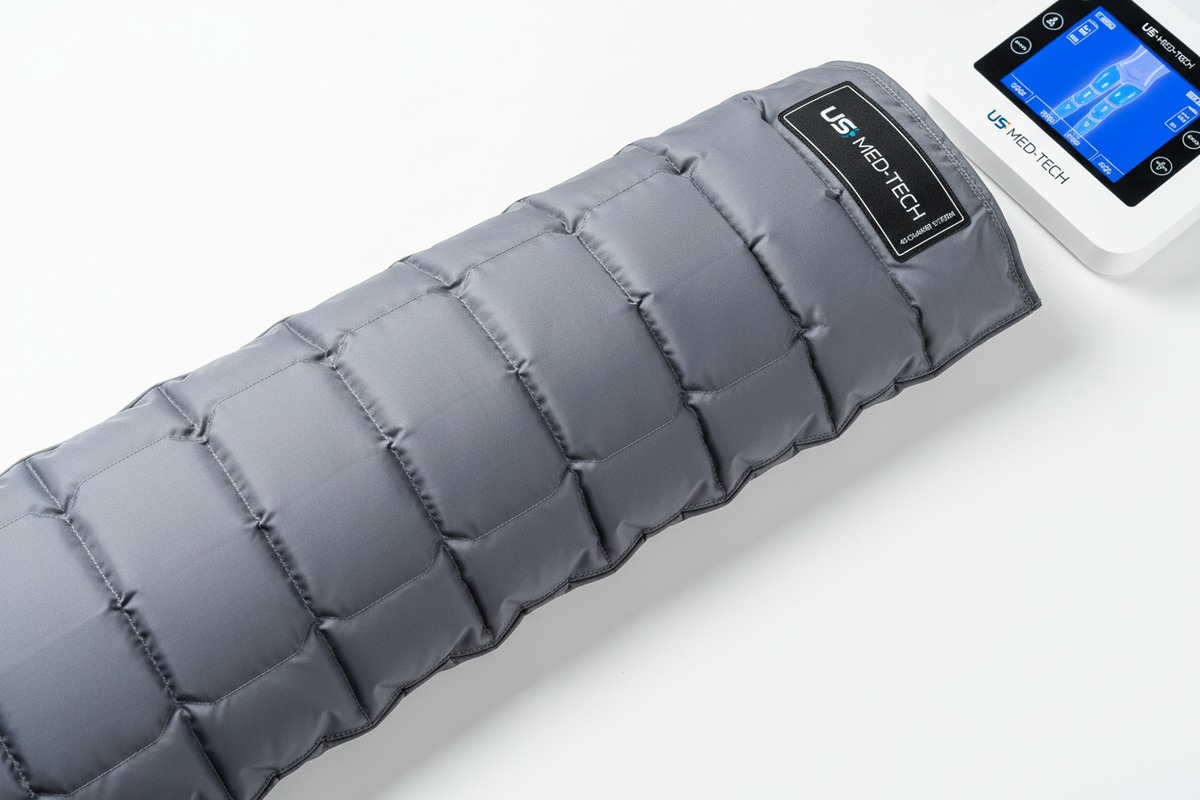
Verify high-pressure durability by requesting burst pressure test certificates showing tolerances at least 50% above maximum operating pressure, examining seam construction quality (ultrasonic welding beats standard stitching), checking material specifications for TPU or reinforced nylon rated for repeated inflation cycles, and confirming chamber overlap design that prevents backflow during compression.
Understanding Pressure Ranges and Material Requirements
Air Pressure: 20~360 MMHG represents the range found in professional-grade equipment. For machines operating at higher pressures (above 200 mmHg), material requirements increase significantly.
| Pressure Level | Application | Material Requirement | Minimum Burst Pressure |
|---|---|---|---|
| 20-60 mmHg | Gentle lymphatic | Standard TPU | 150 mmHg |
| 60-120 mmHg | Standard treatment | Reinforced TPU | 250 mmHg |
| 120-200 mmHg | Deep tissue/athletic | Double-layer TPU | 400 mmHg |
| 200-320 mmHg | Medical-grade | Medical TPU + nylon | 600 mmHg |
Key Durability Tests to Request
Cyclic Fatigue Testing:
Our lab subjects sleeves to 10,000 inflation-deflation cycles at maximum rated pressure. Sleeves should show no degradation in air retention or seam integrity after this test.
Burst Pressure Testing:
Each sleeve design must demonstrate burst pressure at minimum 1.5x the rated maximum pressure. For a sleeve rated at 200 mmHg, burst must not occur below 300 mmHg.
Seam Integrity Verification:
The massage machine employs advanced ultrasonic welding technology 7, meticulously securing each airbag's tight suture. This seamless integration of art and science ensures reliable and consistent performance.
Material Specifications to Verify
Request documentation on:
- Base fabric: Should be medical-grade polyester or nylon with minimum 200 GSM weight
- Air bladder: TPU (thermoplastic polyurethane) thickness of 0.2-0.3 mm minimum
- Welding type: Ultrasonic or RF welding preferred over adhesive bonding
- Tube connections: Reinforced couplings with secure snap-lock mechanisms
Larger Sleeves Face Greater Stress
Physics matters here. Larger circumference sleeves experience proportionally higher wall tension at the same internal pressure. A sleeve designed for a 50 cm thigh operates at lower wall stress than one stretched to accommodate an 80 cm thigh—even at identical pressure settings.
This means XL and extended sizes require:
- Thicker TPU bladder material
- More frequent internal reinforcement strips
- Stronger seam construction
- Larger diameter air supply tubes
All cuffs have an "overlapping" system which prevents lymphatic retraction during the procedure. Dimensions of the cuffs for the lower limbs (in the case of larger circumferences, it is possible to buy an expander).
What adjustable features should I look for to accommodate my customers' different limb circumferences?
Our R&D team spent months studying why some pressotherapy suits succeed in the US market while others fail. The difference almost always comes down to adjustability. A fixed-size suit is a gamble. An adjustable system is an investment that serves your entire customer base—from the petite 5'2" woman to the 6'4" athlete.
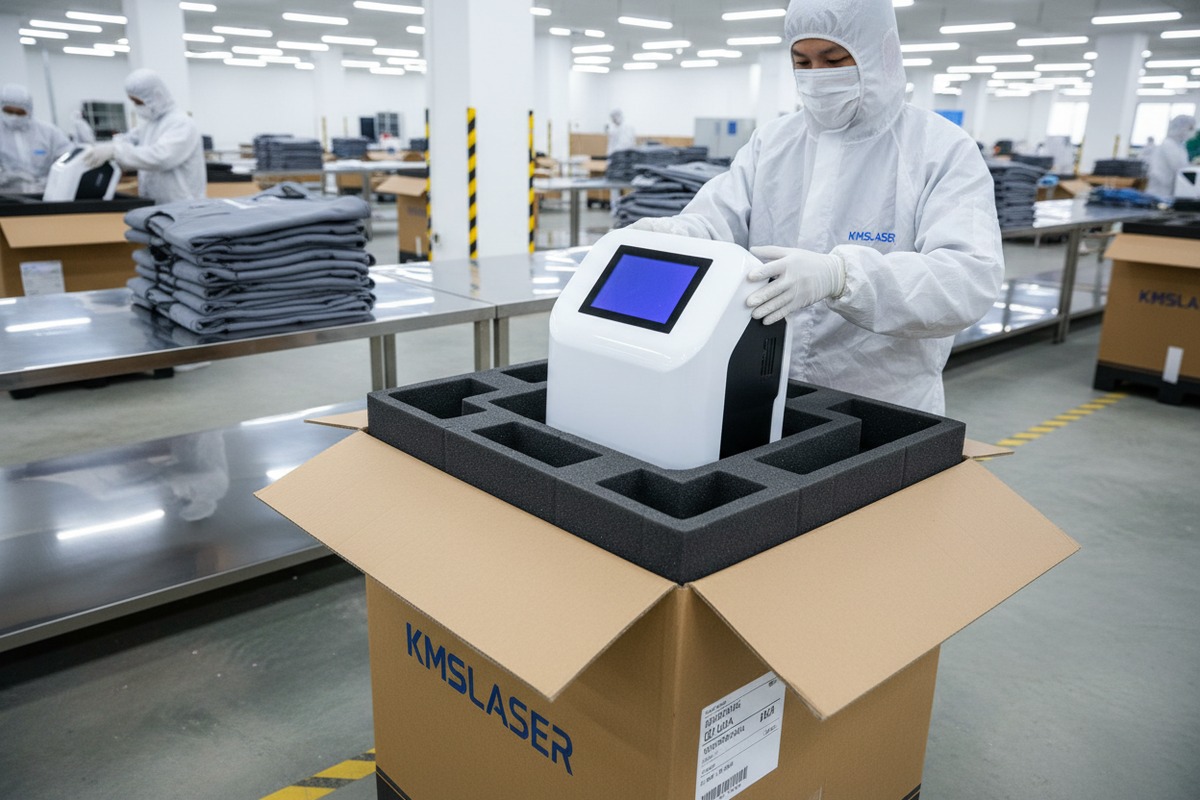
Essential adjustable features include multi-zone Velcro closures spanning the full length of each sleeve, independent pressure control per chamber (standard 20-320 mmHg range with ±3 mmHg tolerance), modular suit components allowing separate treatment of legs, arms, and waist, and zipper-based expansion systems with 10 cm extension strips for immediate fit customization.
Mechanical Adjustability Features
Quick Setup: The one-size-fits-all suit is adjustable for a secure fit and designed for effortless operation. But true adjustability goes far beyond a single Velcro strap.
Velcro Configuration Options:
| Configuration | Adjustment Range | Best For |
|---|---|---|
| Single-row Velcro | 5-10 cm | Minor adjustments only |
| Dual-row overlapping | 10-20 cm | Moderate variation |
| Triple-zipper + Velcro | 20-30 cm | Wide variation |
| Modular panel system | 30+ cm | Maximum flexibility |
Zipper Systems:
Our premium models feature a 3-zipper design:
- Inner zipper for the base fit
- Middle zipper for moderate expansion
- Outer zipper with extension panel for maximum accommodation
Electronic Adjustability Features
Thanks to the intelligent gradient function, interval, hold, setting individual pressure for each chamber in the cuff and the possibility of programming your own treatment algorithms, Expert8 allows you to adjust the parameters to the needs of each patient.
Chamber-by-Chamber Pressure Control:
- Longest Medical's IPC devices are equipped with premium compression sensors. These sensors can monitor the applied pressure and provide feedback to ensure the device functions correctly and applies the desired pressure.
- Individual chamber adjustment allows compensation for asymmetrical limbs
- Pressure range typically spans 20-320 mmHg for professional units
Programmable Treatment Modes:
The device has 13 modes of operation, used to reduce lymphatic, venous, fat, post-traumatic edema, as well as supporting regeneration, cellulite reduction and prevention.
Chamber Count and Distribution
The number of chambers directly impacts how precisely you can apply gradient pressure:
| Chamber Count | Classification | Pressure Precision | Best Application |
|---|---|---|---|
| 4-6 chambers | Basic home | Low | Light maintenance |
| 8-12 chambers | Home/entry professional | Medium | General wellness |
| 16-20 chambers | Professional | High | Clinical treatment |
| 24-48 chambers | Premium professional | Very high | Lymphedema/medical |
This ultimate presotherapy device has an advanced compression suit with 24 air channels.
Supporting 4-chamber/6-chamber leg/arm cuffs and 24-chamber full-body cuffs, it offers versatile, precise treatment for diverse needs.
Modular vs. One-Piece Suit Design
One-Piece Suits:
- Easier full-body protocols
- Lower cost
- Limited size flexibility
- Difficult for larger body types
Modular Systems:
- Independent arm, leg, waist treatment
- Better accommodation of varied proportions
- Higher initial cost
- Greater versatility for diverse clientele
Pressotherapy machines use pneumatic compression 8 to create pressure waves that affect targeted body parts. The intensity, modes and timing of the pressure waves can be customized based on the user's weight and the area being treated.
Feature Checklist for US Market Sourcing
When evaluating machines for the US market, verify these adjustable features:
- Velcro closures on all sleeve sections
- Minimum 10 cm circumference adjustment range
- Pressure adjustable from 20 mmHg (for sensitive users) to 200+ mmHg
- Individual chamber pressure control
- Timer adjustability (10-60 minutes minimum)
- Modular components available for separate body zone treatment
- Extension strips or panels included or available as accessories
- Non-slip interior lining to maintain position during inflation
Conclusion
Sourcing pressotherapy machines for the diverse US market demands attention to sizing specifications that many importers overlook. From measuring protocols that ensure proper fit to custom cuff options for your private label, from material durability verification to adjustable feature checklists—each detail matters. Get sizing right, and your customers enjoy effective treatments that keep them coming back. Get it wrong, and you're dealing with returns, complaints, and lost revenue. The choice is clear. Invest the time upfront to verify sizing compatibility, and your pressotherapy business will thrive.
Footnotes
1. Explains what pressotherapy is and how it works. ↩︎
2. Authoritative definition and overview of lymphedema. ↩︎
3. Replaced HTTP 404 with a recent CDC data brief on adult obesity prevalence. ↩︎
4. Replaced HTTP 404 with the main CDC landing page for Body Mass Index information. ↩︎
5. Replaced HTTP 404 with a Wikipedia article providing a comprehensive definition of OEM. ↩︎
6. Discusses the increasing racial and ethnic diversity of the US population. ↩︎
7. Replaced HTTP 404 with a Wikipedia article explaining ultrasonic welding technology. ↩︎
8. Describes pneumatic compression therapy and its benefits. ↩︎
9. Explains how lymphatic drainage techniques stimulate lymphatic flow. ↩︎

 English
 Español de México
 Deutsch
 Français
 العربية
 Русский
