
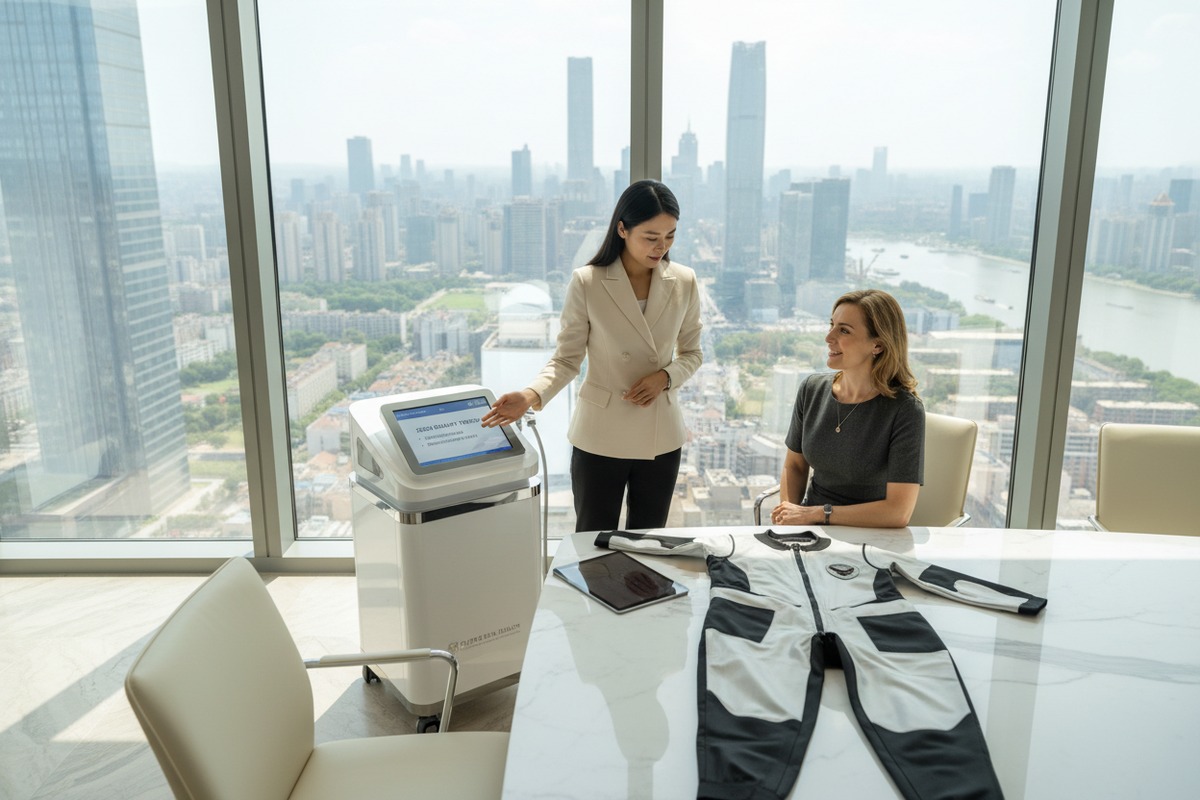
Every week, our production floor ships pressotherapy machines 1 to North American distributors. And every week, we hear the same story: buyers who partnered with trend-blind suppliers now sit on outdated inventory. Their salon clients want non-invasive body contouring 2 and regenerative stacking—not basic slimming massage. The mismatch hurts sales and erodes trust.
To evaluate a supplier’s knowledge of US beauty trends when sourcing pressotherapy machines, ask about their understanding of 2026 demands like non-invasive contouring, lymphatic drainage for post-treatment recovery, FDA compliance, and treatment stacking protocols. Review their product specs, US client references, and innovation roadmap to confirm genuine market alignment.
The following sections break down exactly what to look for UL electrical safety testing 3. We will cover how to test a manufacturer’s grasp of salon features, verify their regulatory knowledge, assess trend adaptation, and judge their branding and packaging standards. Let’s get into it.
How can I tell if a manufacturer understands the specific pressotherapy features my US salon clients are asking for?
Clients walk into our showroom with long lists. They want adjustable pressure zones, lymphatic modes, and compatibility with body contouring protocols. Yet many suppliers still pitch basic leg-slimming suits. The gap between what salons demand and what some factories offer costs distributors thousands.
You can tell if a manufacturer understands US salon needs by asking them to name top requested features: variable pressure settings (typically 30–80 mmHg), modular chamber designs, user-friendly digital controls, and integration options for stacking with treatments like radiofrequency or LED therapy. Knowledgeable suppliers will also cite salon workflow needs such as quick session turnover and easy garment sanitation.
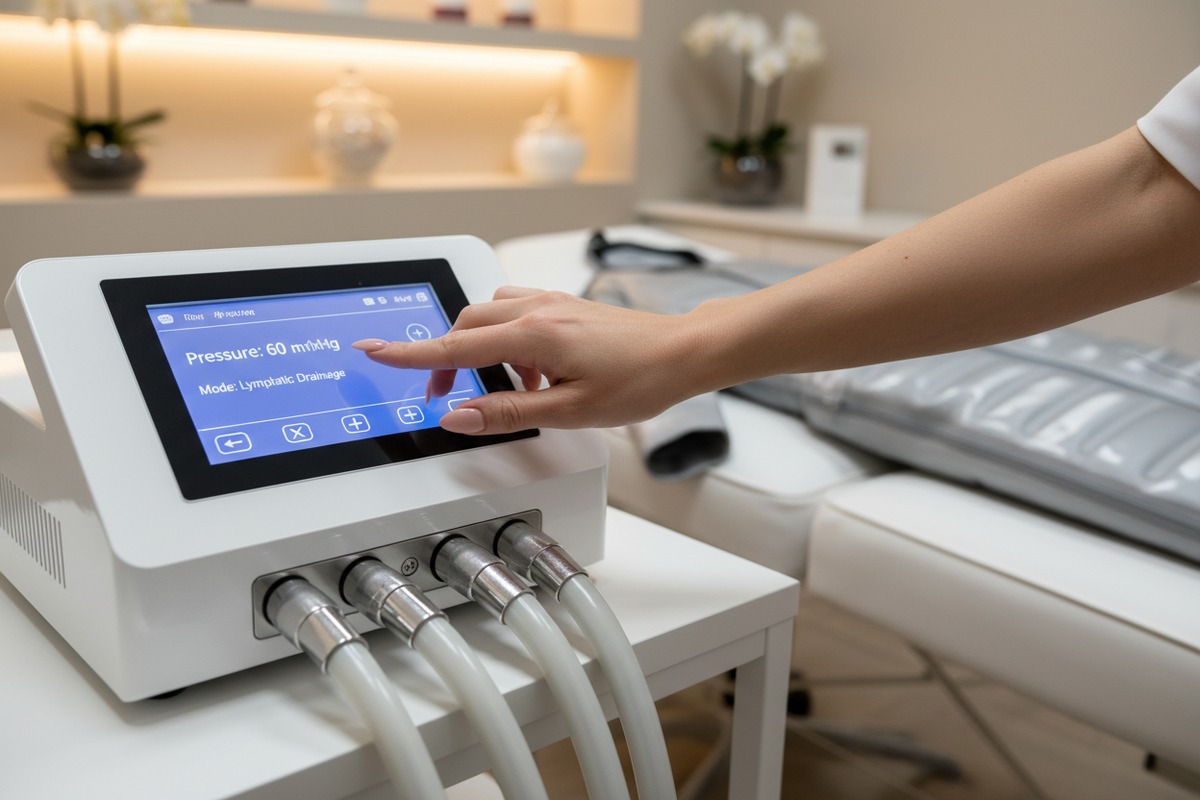
Key Features US Salons Request in 2026
US salons are not looking for simple leg massagers. They want machines that fit into a broader service menu. Here is what our engineering team hears most often from American buyers:
| Feature | Why US Salons Want It |
|---|---|
| Variable pressure zones (30–80 mmHg) | Allows customization for cellulite, post-lipo recovery, or relaxation |
| Modular garment design | Fits different body types; easy to replace worn sections |
| LCD touchscreen controls | Fast learning curve for new staff; reduces training costs |
| Multiple pre-set programs | Speeds up session setup; clients expect personalized protocols |
| Quick-connect air hoses | Cuts turnover time between clients |
| Washable/sanitizable garments | Critical for US hygiene expectations |
Questions to Ask the Supplier
When speaking with a potential manufacturer, test their depth. Do they know the difference between a basic sequential compression device and one built for aesthetic clinics? Here are questions that separate informed factories from generic exporters:
- What pressure range does your machine support, and why?
- Can your garment design adapt for arm sleeves, abdominal wraps, and full-body suits?
- Do you offer pre-set programs for lymphatic drainage 4, body contouring, and post-surgical recovery?
- How do your machines integrate with LED or radiofrequency units for treatment stacking 5?
- What materials do you use for garments, and how do they hold up to repeated sanitization?
If the supplier cannot answer these clearly, they may lack the technical background your US clients expect. A manufacturer with genuine trend awareness will discuss these features in context. They might mention how lymphatic drainage is now part of post-GLP-1 makeover protocols or how salons pair pressotherapy with collagen-stimulating treatments.
Red Flags During Feature Discussions
Watch for warning signs. Generic answers like "our machine does everything" often mean the factory has not studied specific use cases. Other red flags include:
- No mention of pressure range specifications
- Inability to explain garment construction or cleaning protocols
- Lack of documentation on safety testing for airbag seams
- No references from US-based salons or distributors
A supplier who truly understands the 2026 US market will reference non-invasive body contouring trends, regenerative aesthetics 6, and the rise of wellness-focused spa services.
What questions should I ask to verify their knowledge of US safety and certification standards for lymphatic drainage equipment?
Regulatory compliance is not optional. US buyers face liability if their equipment lacks proper documentation. Yet some overseas suppliers treat certifications as a checkbox exercise. Our quality team has seen factories produce CE markings on demand without underlying test reports. That approach puts your brand at risk.
To verify a supplier's knowledge of US safety standards, ask for documentation of FDA 510(k) clearance (if applicable for medical claims), proof of ISO 13485 certification, UL electrical safety testing for US voltage, and detailed pressure calibration records. A knowledgeable supplier will also explain the difference between cosmetic-use devices and those cleared for medical indications.
Understanding the US Regulatory Landscape for Pressotherapy
In the US, pressotherapy devices can fall under different regulatory categories depending on their intended use. Here is how it breaks down:
| Intended Use | Regulatory Pathway | Key Requirements |
|---|---|---|
| Cosmetic body contouring, relaxation | Generally not regulated as medical devices | Product liability insurance; no unproven medical claims |
| Lymphedema treatment, DVT prevention | FDA 510(k) clearance 7 required | Clinical data, quality management system, labeling restrictions |
| Sports recovery (non-medical claims) | Minimal regulation | Accurate marketing; no disease treatment claims |
The FDA's Quality Management System Regulation (QMSR) will align US requirements more closely with ISO 13485:2016. This change, expected to take full effect by early 2026, means suppliers with existing ISO 13485 certification 8 will have a smoother path to US compliance.
Critical Questions for Regulatory Verification
When evaluating a supplier, dig into specifics:
- Is your pressotherapy machine cleared by the FDA under a 510(k) submission? If so, for what indications?
- Do you hold ISO 13485 certification, and can you provide audit reports?
- Are your electrical components tested to UL standards for 110–120V US power?
- Can you provide pressure calibration certificates showing accuracy within stated ranges?
- How do you handle product labeling to ensure compliance with US marketing restrictions?
A supplier who stumbles on these questions may not have invested in proper compliance infrastructure. The cost of importing non-compliant equipment—including recalls, lawsuits, or FDA warning letters—far exceeds the price premium for a certified supplier.
Documentation You Should Request
Before placing an order, request these documents:
- ISO 13485 certificate (current and from an accredited registrar)
- FDA 510(k) summary (if medical claims are made)
- UL or equivalent electrical safety test reports
- Pressure gauge calibration certificates
- Material safety data sheets for garment fabrics
Reputable manufacturers maintain organized compliance files. If a supplier cannot produce these within a few days, their quality management system may be inadequate.
How do I assess if a supplier can help me adapt my pressotherapy machines to current US body contouring trends?
The US aesthetic market moves fast. Trends that dominate this year may fade by next. A supplier stuck in 2020 thinking will leave you with machines that feel outdated the moment they land. Our R&D team tracks these shifts closely because our American partners depend on us to keep pace.
Assess a supplier's trend adaptation ability by reviewing their R&D investment in features like AI-optimized pressure protocols, compatibility with regenerative treatment stacks (PRP, PRF, LED), and modular designs for emerging applications. Ask for evidence of recent product updates, US client feedback integration, and their roadmap for features like app-based controls or portable home-use models.

2026 US Body Contouring Trends Impacting Pressotherapy
Understanding where the market is heading helps you evaluate whether a supplier is forward-thinking. Here are the key trends shaping demand:
| Trend | Relevance to Pressotherapy |
|---|---|
| Non-invasive body sculpting | Pressotherapy supports lymphatic drainage after ultrasound or RF treatments |
| GLP-1 makeovers | Post-weight-loss patients need skin tightening support; pressotherapy aids recovery |
| Regenerative aesthetics (PRP, PRF, exosomes) | Pressotherapy enhances circulation, potentially boosting treatment outcomes |
| Treatment stacking | Salons combine pressotherapy with microneedling, LED, or radiofrequency for layered results |
| At-home wellness devices | Growing demand for portable pressotherapy units for consumer use |
| Natural results focus | Low-downtime treatments that enhance without dramatic transformation |
Evaluating the Supplier's Innovation Pipeline
A supplier who understands these trends will have invested in relevant product development. During your evaluation, explore:
- Have you released any new pressotherapy models in the past 12 months? What features did you add?
- Do your machines support integration with LED or red light therapy attachments?
- Are you developing app-based control systems for personalized treatment protocols?
- Can your garments be adapted for targeted zones like arms, abdomen, or face?
- Do you offer compact or portable units for the growing at-home market segment?
Supplier Collaboration Capabilities
Beyond current products, assess their willingness to collaborate on custom development. Our experience shows that US brand owners often need modifications:
- Custom garment sizes for diverse American body types
- Specific program presets for post-surgical recovery protocols
- Branding integration into the user interface
- Regional voltage and plug configurations
A supplier who dismisses customization requests or quotes excessive lead times may lack the engineering flexibility your business needs. The best partners treat customization as a standard service, not an exception.
Benchmarking Against Trend-Aligned Competitors
Compare the supplier's offerings against industry leaders. High-end brands in the pressotherapy space offer features like:
- 24-chamber sequential compression for precise lymphatic flow
- Medical-grade calibration with documented pressure accuracy
- Whisper-quiet compressors for spa environments
- Quick-release connectors for efficient session turnover
If your potential supplier's machines fall short on these basics, they may not be keeping pace with market expectations.
Can the supplier demonstrate how their design and packaging meet the high-end expectations of my North American brand?
First impressions matter. When your client unboxes a pressotherapy machine, they form an instant opinion of your brand. Cheap packaging, flimsy garments, or confusing manuals undermine months of marketing work. Our packaging design team understands that presentation is part of the product.
A supplier can demonstrate high-end design and packaging standards by providing sample unboxing experiences, showing premium materials like reinforced carry cases and medical-grade garment fabrics, offering professional user manuals with clear English instructions, and presenting private-label branding options for control units, packaging, and documentation. Request photos or videos of actual shipped products to verify consistency.

What "High-End" Means for North American Buyers
US and Canadian brand owners have specific expectations shaped by their local market:
| Design Element | High-End Standard | Budget Shortcut |
|---|---|---|
| Control unit exterior | Matte finish, backlit display, quiet operation | Glossy plastic, dim screen, loud compressor |
| Garment quality | Medical-grade nylon, reinforced seams, washable | Thin fabric, weak stitching, odor retention |
| Packaging | Molded foam inserts, branded outer box, protective wrap | Loose cardboard, generic labels, inadequate cushioning |
| User manual | Full-color, clear English, troubleshooting guides | Black-and-white, poor translation, missing sections |
| Branding options | Custom logo on unit, packaging, and software UI | No customization or extra fees for basics |
Evaluating Design Quality
During supplier evaluation, request physical samples whenever possible. If samples are not feasible, ask for:
- High-resolution photos of the control unit from multiple angles
- Close-up images of garment stitching and air chamber construction
- Video of the machine in operation (listen for compressor noise)
- Photos of actual packaged units ready for shipment
Assessing Branding and Customization Options
For distributors building a private-label brand, customization is essential. Explore these options with your supplier:
- Can you place my logo on the control unit faceplate or screen startup?
- Do you offer custom packaging design with my brand colors and graphics?
- Can user manuals be customized with my company contact information?
- Are garments available in custom colors or with embroidered logos?
- What are the minimum order quantities for branded products?
Packaging for Transit and Shelf Appeal
A machine that arrives damaged is worse than no machine at all. High-end suppliers invest in packaging that protects during international shipping and looks professional on arrival:
- Double-wall corrugated outer cartons
- Custom foam inserts that cradle the control unit
- Separate protective bags for garments
- Sealed accessory kits with labeled compartments
- Branded tape and labels
Request the supplier's packaging specifications and, if possible, photos of units as they appear after transit. Consistent quality control at the packaging stage signals a mature manufacturing operation.
The Unboxing Experience
In the age of social media, unboxing videos influence purchase decisions. Consider whether your supplier's presentation supports positive content creation. A sleek, organized unboxing reinforces brand value. A tangled mess of cords and crumpled manuals does the opposite.
Conclusion
Evaluating a pressotherapy supplier's US market knowledge requires more than reviewing a product catalog. Test their understanding of salon-demanded features, verify their regulatory compliance, assess their ability to adapt to 2026 trends, and inspect their design and packaging standards. The right partner will answer your questions with specifics, not generalities. They will show evidence of US client success and demonstrate a genuine commitment to the evolving American aesthetic market.
Footnotes
1. Replaced HTTP 404 link with a comprehensive explanation of pressotherapy machines from a reputable health information website. ↩︎
2. Official FDA information on non-invasive body contouring technologies, risks, and considerations. ↩︎
3. Official source detailing UL electrical safety standards and their role in product safety. ↩︎
4. Provides a clear definition of lymphatic drainage massage and its medical benefits. ↩︎
5. Describes treatment stacking as layering aesthetic procedures for synergistic and enhanced results. ↩︎
6. Explains regenerative aesthetics as harnessing the body’s natural healing for rejuvenation. ↩︎
7. Explains the FDA 510(k) clearance process for medical devices and its importance. ↩︎
8. Defines ISO 13485 as the quality management system standard for the medical device industry. ↩︎
9. Defines private-label branding as a retailer selling products manufactured by a third party under their own brand. ↩︎

 English
 Español de México
 Deutsch
 Français
 العربية
 Русский
