
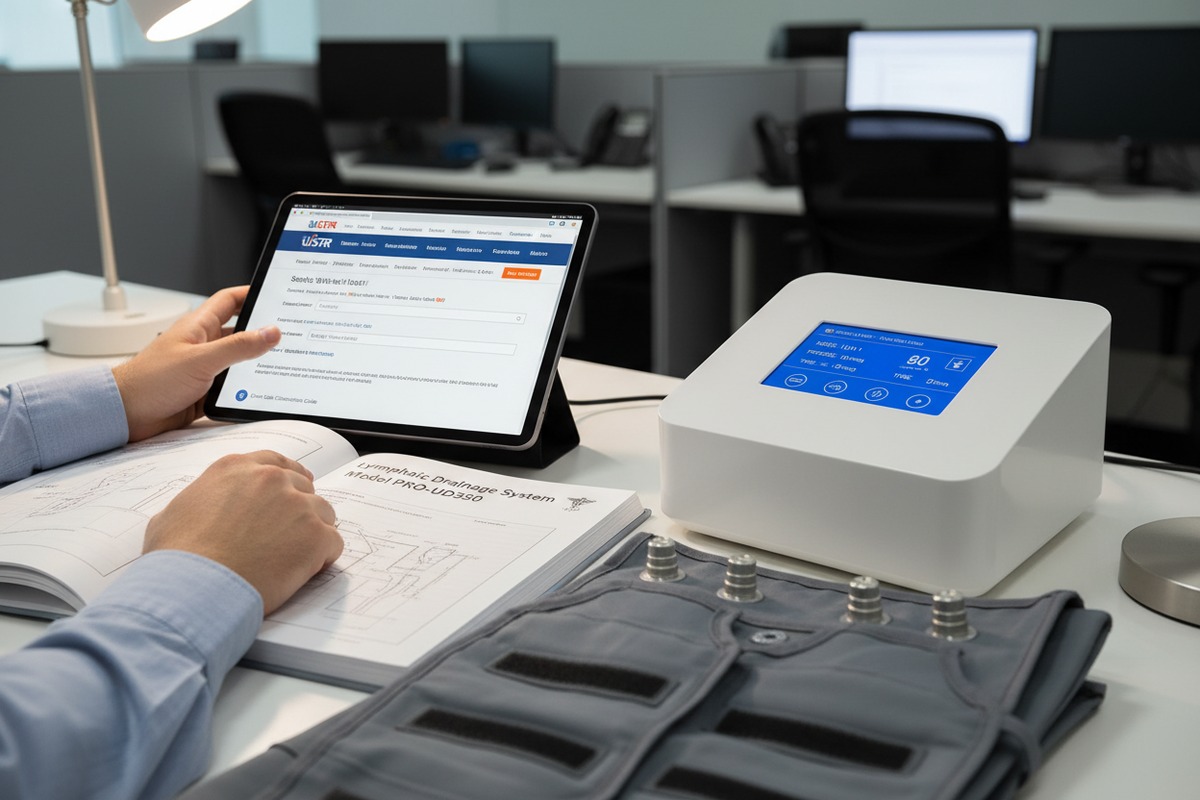
When our production team first began exporting pressotherapy machines to the US market, we quickly discovered that understanding tariff costs was just as critical as perfecting our product quality U.S. Customs and Border Protection (CBP) 1. Many buyers contact us with one key question: How much extra duty will I pay on these lymphatic drainage devices? The answer is not simple—and getting it wrong can crush your margins.
Pressotherapy machines imported from China are subject to Section 301 tariffs, typically ranging from 7.5% to 25% depending on the specific HTS classification. These tariffs are added on top of standard import duties. The exact rate depends on whether your equipment falls under massage apparatus (HTS 9019.10) or other medical device categories (HTS 9018.90). Importers must verify their product’s 10-digit HTS code using the USTR search tool or consult a licensed customs broker.
In the sections below, we will walk you through how to identify your exact HTS code, calculate your total landed cost 2, explore legal ways to reduce tariff burden, and discuss whether DDP shipping is a smart option for your business.
How do I determine the exact HTS code and tariff rate for my pressotherapy equipment?
Sourcing beauty and wellness equipment from overseas can feel overwhelming, especially when it comes to navigating customs classifications licensed customs broker 3. Our export team has worked through hundreds of HTS lookups for clients who felt lost in the system.
To determine your pressotherapy machine’s HTS code, first identify whether it functions primarily as massage apparatus or as a medical therapy device. Then, use the USTR Section 301 search tool or the U.S. International Trade Commission’s HTS database to look up your 8-digit or 10-digit code and find the applicable tariff rate. A licensed customs broker can confirm your classification and ensure compliance.
Why HTS Classification Matters
The Harmonized Tariff Schedule (HTS) 4 is the system used by U.S. Customs and Border Protection (CBP) to classify all imported goods. Every import is classified under a specific code in the Harmonized Tariff Schedule of the United States, and each product subject to Section 301 is identified by an 8-digit or 10-digit HTS subheading.
Pressotherapy machines can fall into different categories depending on their design and intended use:
| Product Type | Likely HTS Code | Standard Duty | Section 301 Duty |
|---|---|---|---|
| Massage apparatus (electric) | 9019.10.20xx | Free – 3.7% | 7.5% – 25% |
| Medical/surgical instruments | 9018.90.xx | Free – 5.4% | 7.5% – 25% |
| Other electrotherapy devices | 9018.90.75 | Free | 7.5% – 25% |
How to Look Up Your HTS Code
The first step is to gather detailed product specifications. You need to know whether your pressotherapy machine is battery-powered, mains-powered, handheld, or a tabletop system. This information directly affects classification.
Every product subject to the Section 301 actions is identified by an 8-digit or 10-digit HTS Subheading. This search engine allows you to search by an 8-digit HTS Subheading to obtain information about whether your product is subject to the actions and the rate of additional duty.
Here is a simple process to follow:
- Get your HTS code from your supplier. Our team always provides HTS recommendations on commercial invoices.
- Verify using the USTR portal. Enter the first 8 digits of your code. On the USTR website's Section 301 portal, there is a search field where you can enter the first 8 digits of your HTS code. This official lookup tool will tell you whether your product's code is subject to any Section 301 action and the corresponding additional duty rate.
- Cross-check on the U.S. International Trade Commission's HTS database. When you search your HTS code on that site, look at the "Special" duty rate column or any notes—Section 301 duties might be indicated in a footnote or as a temporary rate. Sometimes the HTS will reference a Chapter 99 subheading for additional duties.
- Consult a licensed customs broker. They can issue a binding ruling if needed.
Common Mistakes to Avoid
Many importers make the mistake of relying solely on their supplier's classification. Because duty rates can be high, some less scrupulous exporters will misclassify their goods, such as by claiming different product attributes or classifications than in fact exist. Allegations of Chinese exporters using such strategies to avoid antidumping or countervailing duty orders aimed at China are common. Any importer noticing red flags that indicate potential circumvention should check into it before CBP does.
How will these Section 301 duties impact my overall landed cost and profit margins?
When buyers first see our FOB price for a pressotherapy system, they often underestimate the total expense to get it on their warehouse shelves. We have seen clients lose money simply because they forgot to factor in tariffs and other import costs.
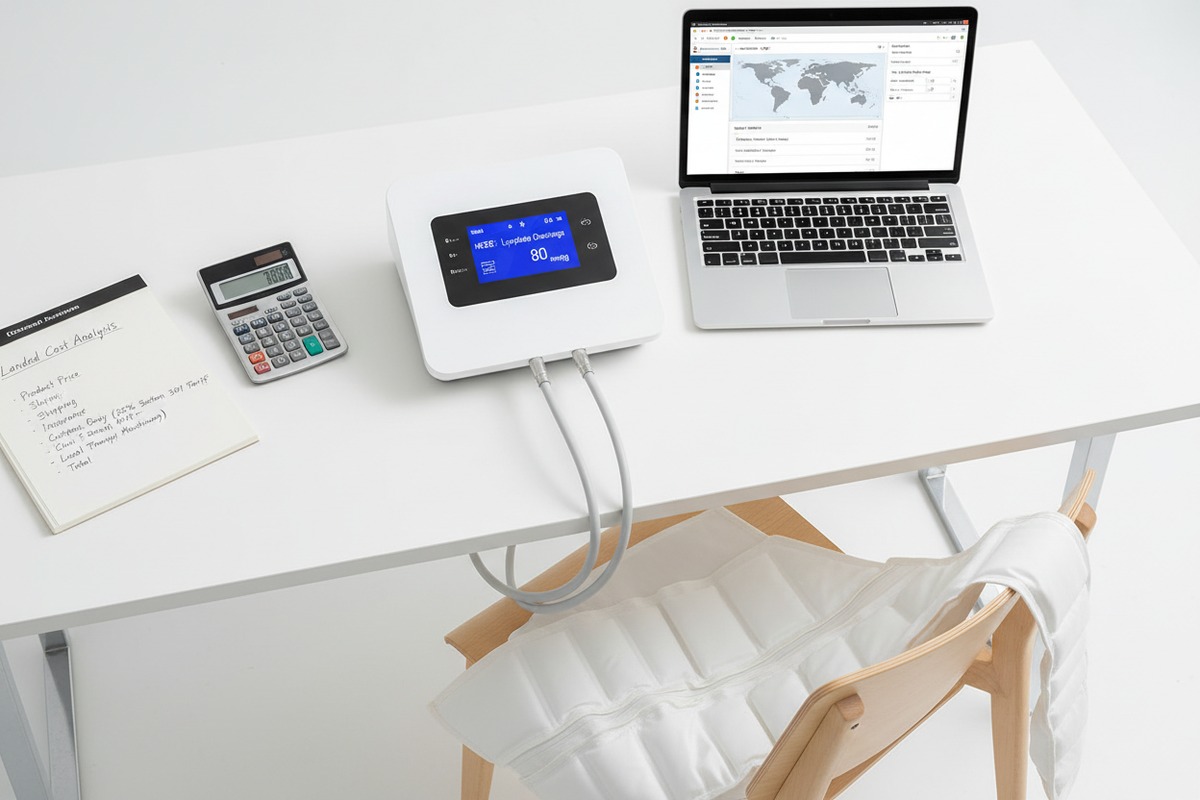
Section 301 duties of 25% on pressotherapy machines can increase your landed cost by 15-30% or more, depending on freight, insurance, and other fees. This additional expense directly reduces profit margins unless you adjust your retail pricing or negotiate better supplier terms. Calculating accurate landed costs before ordering is essential for profitability.

Understanding Landed Cost
The cost components of landed cost include: 1) Base product cost (manufacturer's price), 2) International shipping (ocean, air, or ground freight), 3) Customs duties and tariffs, 4) Import taxes and VAT, 5) Insurance premiums, 6) Port fees and handling charges, 7) Currency exchange costs, 8) Broker fees, 9) Domestic transportation to warehouse, and 10) Quality inspection costs.
Many brands focus only on the purchase price. Without accurate landed costs, businesses risk setting prices too low and eroding profits or too high and losing competitive advantage. For example, if your $10 product actually costs $14 after including all landed cost components, a seemingly profitable $15 sale price yields just $1 profit.
Sample Landed Cost Calculation
Let us look at a real-world example for a pressotherapy machine:
| Cost Component | Amount | Notes |
|---|---|---|
| FOB China Price | $2,000 | Per unit |
| Ocean Freight | $300 | Shared container |
| Marine Insurance | $40 | 0.5% of CIF value |
| Customs Value (CIF) | $2,340 | FOB + Freight + Insurance |
| Standard Duty (3.7%) | $86.58 | Based on HTS 9019.10 |
| Section 301 Tariff (25%) | $585 | Applied to CIF value |
| Customs Broker Fee | $150 | Per shipment |
| Port Handling | $75 | Varies by port |
| Domestic Shipping | $100 | To warehouse |
| Total Landed Cost | $3,336.58 | Per unit |
In this example, a $2,000 machine costs over $3,300 to land in your warehouse—a 67% increase over the FOB price. If the Section 301 tariff alone ($585) were removed, you would save nearly 18% on your landed cost.
Impact on Profit Margins
But when tariffs rise—like the recent jump from 7.5% to 86.5% for China-based goods this year—brands are forced to reassess pricing, margin structure, or fulfillment strategy. At 86.5% tariffs, the product becomes unprofitable unless the brand raises prices or cuts costs elsewhere. As global trade negotiations cause tariffs to rise, profit is squeezed—sometimes into the red.
For pressotherapy machines at a 25% Section 301 rate, here is how margins might shift:
| Scenario | Retail Price | Landed Cost | Gross Margin |
|---|---|---|---|
| Without Section 301 | $4,500 | $2,751.58 | 38.9% |
| With 25% Section 301 | $4,500 | $3,336.58 | 25.9% |
| With 25% Section 301 (price adjusted) | $5,200 | $3,336.58 | 35.8% |
When tariff rates increase brands need to figure out whether they will absorb the additional costs or pass them on to customers. It all starts with a full understanding of landed cost.
Strategies to Protect Margins
- Recalculate landed costs regularly as tariff rates change
- Negotiate better FOB pricing with your supplier
- Consider air freight for smaller orders to reduce per-unit costs
- Bundle multiple products per shipment to lower handling fees
Are there any legal ways I can reduce or mitigate the cost of these China-specific tariffs?
Our clients often ask if there is any way to avoid the 25% tariff hit. The short answer is that there are legitimate options, but no silver bullets. We have helped several partners navigate this process with mixed results.
Legal methods to reduce Section 301 tariff costs include applying for product exclusions through the USTR portal, using Foreign Trade Zones (FTZ) for duty deferral, claiming duty drawback on re-exported goods, and sourcing from alternative countries. Some products may qualify for exclusion extensions through November 2026, but the application window for machinery exclusions closed in March 2025.
Tariff Exclusion Process
The U.S. Trade Representative has established exclusion processes that allow certain products to be temporarily exempted from Section 301 duties. product exclusions 6
In response, USTR established a process through which importers could apply for a temporary exclusion from the tariffs for a particular product. USTR evaluated applications for exclusions based on the availability of the product from non-PRC sources 7, including domestic manufacturers, and the extent to which Section 301 tariffs would harm the importer, among other factors.
However, timing matters. The Office of the United States Trade Representative opened its exclusion request process on October 15, 2024, allowing for importers to request temporary exclusion from Section 301 tariffs on certain Chinese machinery and equipment. The portal to request temporary exclusion is set to close on March 31, 2025.
In August 2025, USTR extended exclusions for 178 products until November 29, 2025.
Alternative Mitigation Strategies
| Strategy | How It Works | Potential Savings | Limitations |
|---|---|---|---|
| Foreign Trade Zone | Defer duties until goods enter U.S. commerce | Cash flow benefit | Does not eliminate tariffs |
| Duty Drawback | Refund of duties on re-exported goods | Up to 99% of paid duties | Only for goods that are exported |
| Alternative Sourcing | Source from Vietnam, India, or Mexico | 25%+ tariff savings | Higher base costs, longer lead times |
| First Sale Valuation | Use factory cost instead of middleman price | 10-20% duty savings | Requires documentation |
Exclusion Extension Timeline
The USTR has announced that the 164 tariffs originally set to expire on May 31, 2025, will be renewed, along with the 14 exclusions that were granted to certain solar panel manufacturing equipment. However, these exclusions are only being granted for three months, and thus will be set to expire August 31, 2025. At that time, another extension may be granted or the exclusions could be removed entirely.
What You Can Do Now
- Check the current exclusion list. Review USTR announcements to see if your specific product description qualifies.
- Document everything. If you plan to apply for future exclusions, gather detailed product specifications, sourcing justifications, and economic impact data.
- Explore alternative suppliers. We work with partners who have established production in Southeast Asia to help clients diversify.
- Consult a trade attorney. Exclusion applications require precise legal language and supporting evidence.
Can my Chinese manufacturer provide DDP shipping to handle the tariff payments for me?
When we discuss shipping terms with new clients, DDP (Delivered Duty Paid) 8 often comes up as an attractive option. It seems convenient—your supplier handles everything. But there are serious risks you need to understand.
Yes, Chinese manufacturers can offer DDP shipping where they handle customs clearance and tariff payments. However, U.S. importers remain legally liable for accurate customs declarations and full duty payment, even when using DDP. If your supplier undervalues goods or misclassifies products to reduce tariffs, you can face penalties, seizures, or criminal liability under U.S. customs law.

How DDP Shipping Works
DDP means the supplier must pay for all import and export costs, and the buyer is not responsible for any fees related to the shipping of the cargo. The buyer is essentially not responsible for any part of the logistics process, except for receiving…
DDP (Delivered Duty Paid) is an international trade term defined by the International Chamber of Commerce (ICC) 9 in its Incoterms. It signifies that the seller is responsible for delivering the goods to the destination country, including all costs and risks associated with transporting the goods, as well as handling customs clearance and paying import duties and taxes. Seller's Responsibilities: The seller bears all risks and costs associated with delivering the goods to the buyer's specified location in the destination country.
The Hidden Risks of DDP
While DDP sounds convenient, it carries significant legal exposure for U.S. buyers.
Whether you are the named importer of record 10 or not, you can be held liable for the accuracy of customs declarations and the full payment of duties. Make no mistake: people are going to prison over this.
CBP defines an importer of record not simply as the consignee or recipient of goods, but as any owner, purchaser, or party with a financial interest in the transaction. This expansive definition allows CBP to pursue U.S. buyers, distributors, or brand owners—not just foreign suppliers or designated importers of record—when customs violations occur, especially in transactions involving Delivered Duty Paid (DDP) terms.
Real-World Examples of DDP Problems
| Situation | What Happened | Consequence |
|---|---|---|
| Supplier disappeared | A U.S. fabric importer purchased several high-volume textile shipments from a new Chinese supplier using DDP terms. But when the goods arrived in the U.S., customs flagged the shipment for unpaid tariffs under a newly elevated China duty rate. The Chinese seller stopped responding to all communications. Meanwhile, storage fees at the bonded warehouse mounted rapidly. | Buyer paid duties and absorbed losses |
| Undervaluation fraud | A U.S. manufacturer purchased specialized machinery from a China supplier under DDP. Upon arrival, customs discovered the seller had underdeclared the value to reduce tariffs. The machinery was seized, triggering a customs investigation. Though the buyer was unaware of the fraud, they now face legal fees, lost time, and delayed expansion due to the missing equipment. | Investigation and seizure |
| Misclassification | A U.S. e-commerce retailer bought seasonal clothing under DDP. The Chinese vendor misclassified the goods and failed to account for updated tariff rates. Customs flagged the shipment just before the peak sales period. The buyer lost crucial revenue, hired a trade lawyer to resolve the issue, and paid the overdue duties just to get the shipment released. | Lost sales and legal costs |
When DDP Can Work
DDP is not always bad. It can work well when:
- You have a long-term relationship with a trusted supplier
- The supplier has a proven track record of compliant DDP shipments
- You receive full documentation proving correct duties were paid
- You verify the declared values and HTS codes independently
Some Chinese suppliers use legitimate DDP shipments. Perhaps they have a contract with the courier/freight company to achieve this goal. Probably, but in that case, they won't have any problems showing you proof/documents that the correct taxes have been paid on the goods you imported.
Our Recommendation
At our facility, we offer both FOB and DDP options. But we always advise clients to:
- Request detailed cost breakdowns before agreeing to DDP
- Verify HTS codes independently
- Obtain copies of all customs documentation
- Consider using FOB with your own trusted customs broker
DDP shipping isn't just a convenience—it's your shield against uncertainty in a high-tariff world. From hidden customs fees to misclassified HTS codes, the risks are real. But with the right supplier, tools, and checklists, you can enjoy clear pricing, on-time delivery, and no margin shocks.
Conclusion
Section 301 tariffs add real costs to sourcing pressotherapy machines from China. The exact rate depends on your HTS classification, typically ranging from 7.5% to 25%. Calculate your full landed cost, explore legal mitigation options, and be cautious with DDP arrangements.
Footnotes
1. Official website of the U.S. government agency responsible for customs. ↩︎
2. Explains the definition and components of total landed cost for businesses. ↩︎
3. CBP’s official information on customs brokers and their role. ↩︎
4. Official source for the Harmonized Tariff Schedule of the United States. ↩︎
5. Official CBP FAQ on Section 301 tariffs and their implications. ↩︎
6. Information on USTR’s extensions of Section 301 product exclusions. ↩︎
7. Discusses USTR’s consideration of non-PRC sources in tariff exclusion decisions. ↩︎
8. Official explanation of DDP Incoterms rules and seller responsibilities. ↩︎
9. Official website of the International Chamber of Commerce, creator of Incoterms. ↩︎
10. CBP’s official definition and responsibilities of an importer of record. ↩︎

 English
 Español de México
 Deutsch
 Français
 العربية
 Русский
