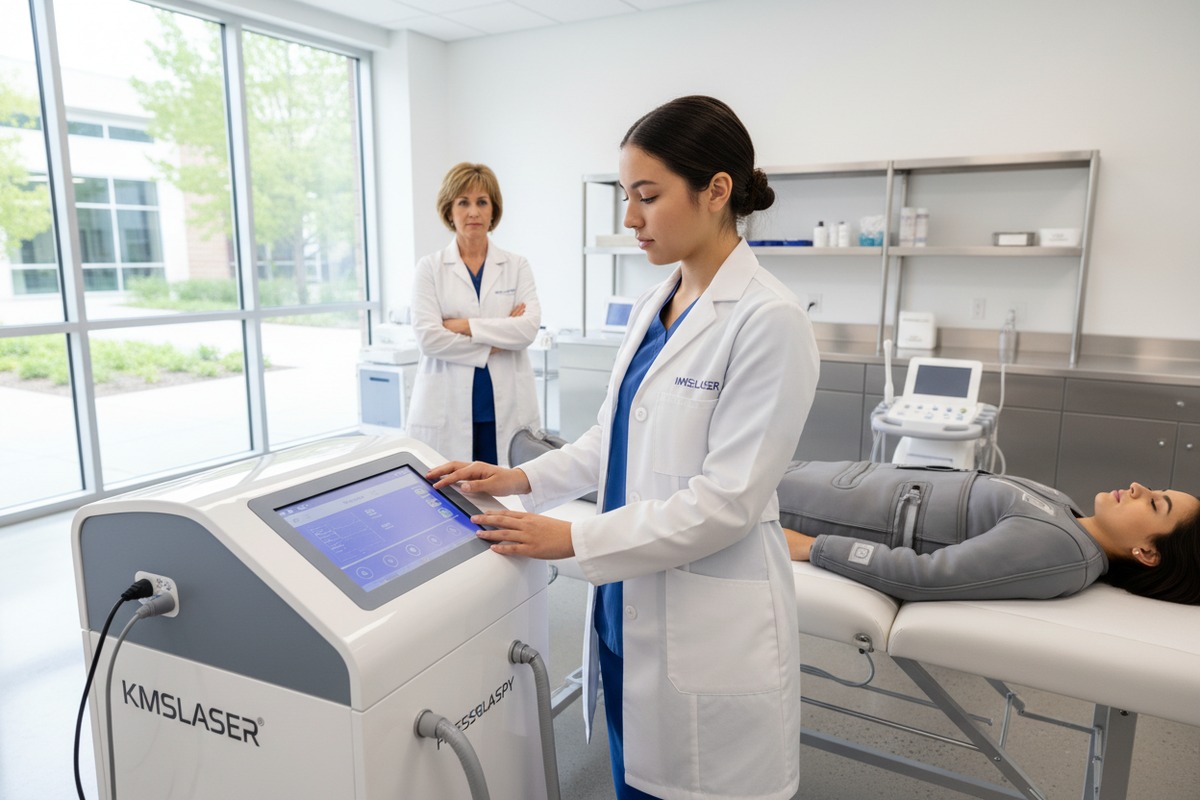
Every year, our production team hears stories from vocational school administrators about student mishaps with pressotherapy equipment 1. The concerns are valid—inexperienced hands operating complex compression systems can lead to bruising, discomfort, or even circulation issues when safety features are lacking.
Safety features in vocational school pressotherapy machines include automatic pressure sensors that prevent over-inflation, highly visible emergency stop mechanisms, password-protected software interfaces that lock out advanced settings, and durable hose connections with reinforced cuff designs that withstand inexperienced handling and reduce student errors.
In this guide, we will explore each critical safety feature that protects students during hands-on training maximum pressure caps 2. Understanding these features will help you make informed purchasing decisions for your vocational program.
How can I ensure the pressure sensors automatically prevent over-inflation during student practice?
When our engineers first developed pressure monitoring systems, one fact became clear quickly: students often struggle with manual pressure adjustments. They either set values too low for effective treatment or, more dangerously, push pressures beyond safe limits.
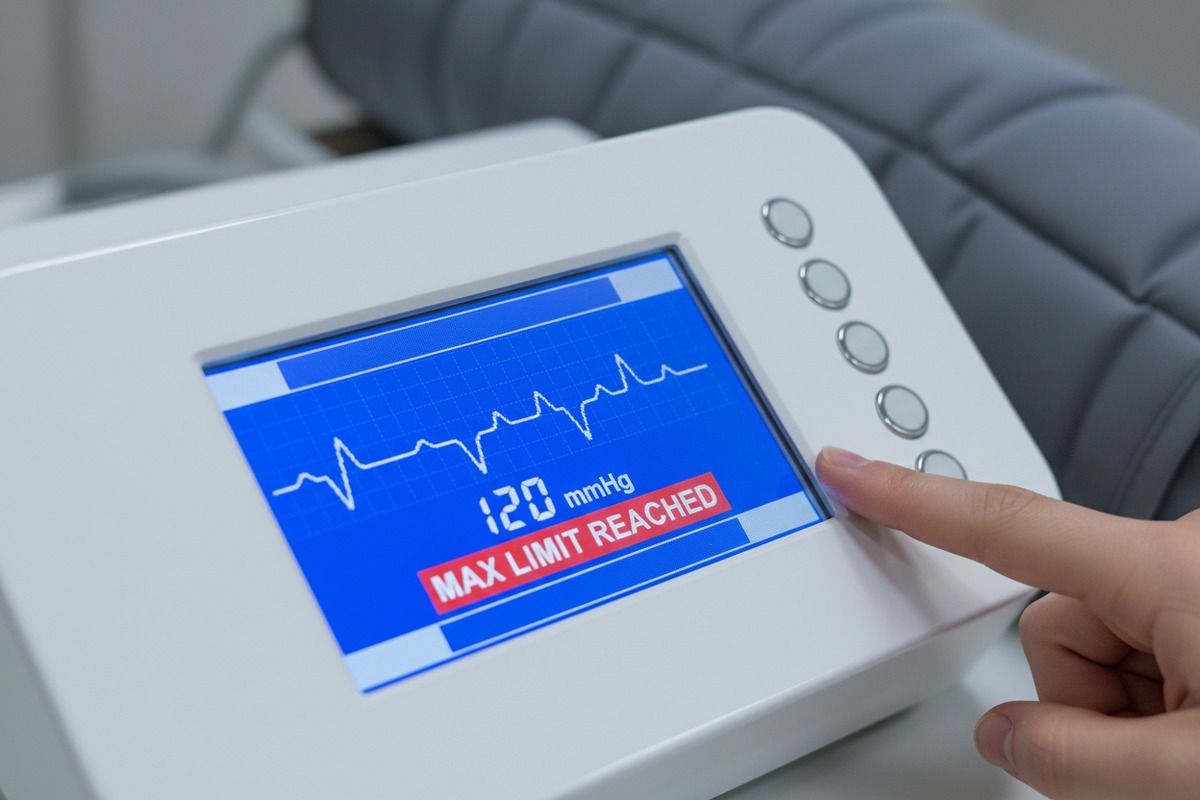
Automatic pressure sensors prevent over-inflation through continuous monitoring, real-time adjustments, and built-in maximum pressure caps. These sensors detect excessive pressure within milliseconds, triggering automatic deflation protocols that keep students safe while maintaining therapeutic effectiveness during practice sessions.
Understanding Pressure Sensor Technology
Modern pressotherapy machines utilize sophisticated sensor arrays that measure pressure across multiple air chambers simultaneously. The machine's advanced sensors continuously monitor pressure levels, automatically adjusting to maintain therapeutic effectiveness while ensuring user comfort and safety. This technology removes the guesswork that often trips up students.
The typical professional pressotherapy system operates within specific pressure ranges. Adjustable pressure allows you to tailor the treatment to different sensitivities and goals. While home devices typically operate between 20-80 mmHg, professional ones can exceed 120-150 mmHg for more intensive treatments.
Key Pressure Control Features for Schools
| Feature | Function | Student Safety Benefit |
|---|---|---|
| Maximum Pressure Cap | Limits highest achievable pressure | Prevents accidental over-pressurization |
| Graduated Pressure Increase | Slow ramp-up of pressure levels | Allows adjustment before discomfort |
| Real-Time Monitoring | Continuous sensor feedback | Immediate detection of anomalies |
| Automatic Deflation | Releases air when limits exceeded | Instant protection response |
| Pressure Display | Visual feedback on current levels | Students learn proper settings |
The Graduated Pressure Approach
Students benefit most from machines that employ graduated pressure systems. The patented control of double pressure gradient ensures a permanent well oriented drainage, avoiding any return flow. This approach prevents the sudden, jarring compressions that inexperienced operators might accidentally trigger.
Our production line tests every unit for sensor accuracy before shipping. We verify that sensors respond within 50 milliseconds of detecting pressure anomalies. This quick response time matters significantly in training environments where students may not immediately recognize a problem.
Sensor Calibration and Maintenance
Pressure sensors require periodic calibration to maintain accuracy. Schools should establish regular maintenance schedules. The garments are designed with reinforced seams and durable air chambers that maintain their integrity over numerous treatment cycles. Regular self-diagnostic routines ensure the system maintains optimal performance.
The best machines include self-diagnostic features that alert instructors when sensors drift out of specification. This proactive approach prevents gradual degradation from creating safety risks during student practice.
What emergency stop mechanisms are essential to protect my students from accidental misuse?
During facility visits across the US and Europe, we have observed that emergency stop accessibility often separates adequate training equipment from truly safe training equipment. Emergency stop mechanisms 4 Students in stressful situations need immediate shutdown options.
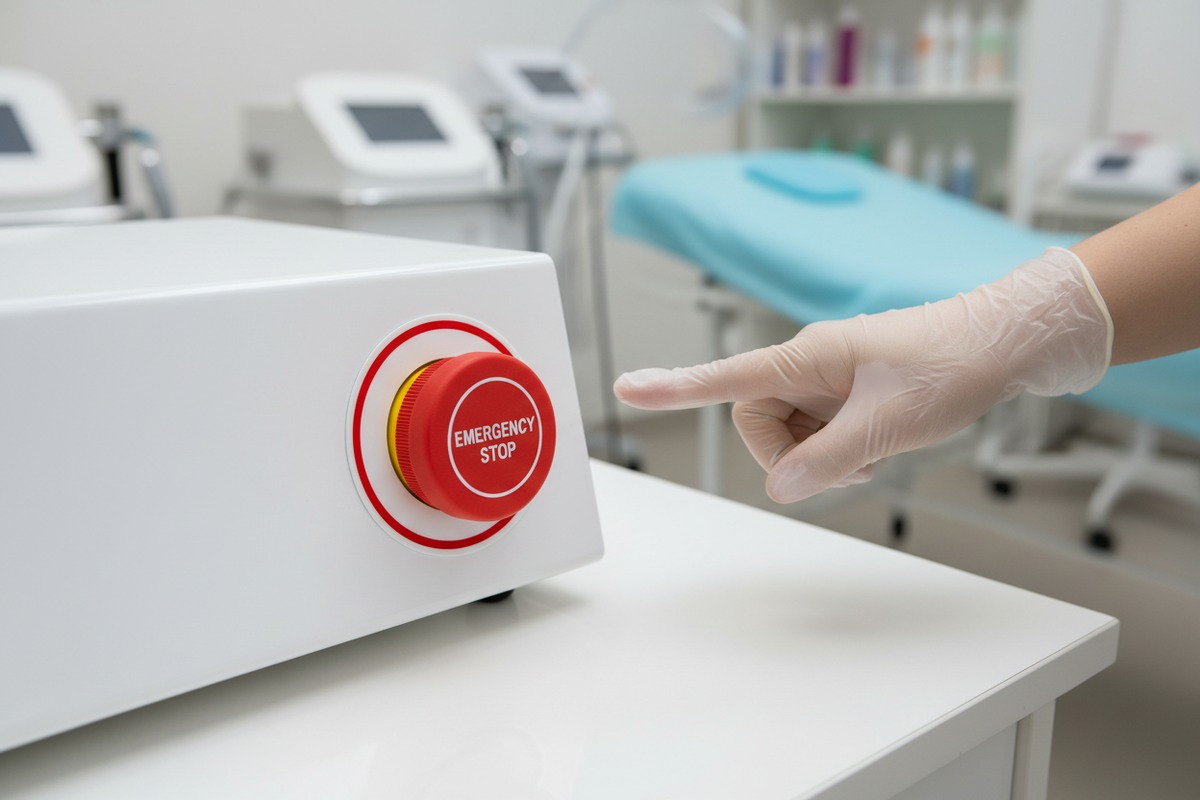
Essential emergency stop mechanisms include highly visible red mushroom-head buttons with yellow backgrounds, patient-accessible safety switches, automatic shut-off timers, and fail-safe circuits that halt all operations instantly when activated, protecting students and clients from prolonged exposure to dangerous conditions.
Emergency Stop Button Standards
The button must be red with a yellow background surround for clear visibility. red mushroom-head buttons 5 A mushroom-head design is required so operators can activate it quickly and easily, even in panic situations. These design standards exist because research shows that high-contrast colors and distinctive shapes enable faster recognition during emergencies.
Professional pressotherapy equipment includes multiple emergency stop options. Professional pressotherapy equipment with 6 independent air chambers, sequential inflation, 3 compression modes and emergency stop button. This redundancy ensures that stops remain accessible from various positions.
Types of Emergency Mechanisms
| Mechanism Type | Location | Activation Method | Response Time |
|---|---|---|---|
| Main E-Stop Button | Control unit | Push to stop | Instant |
| Patient Safety Switch | Near treatment area | Pull or press | Instant |
| Automatic Timer Shutoff | Software-controlled | Preset duration | Scheduled |
| Overload Protection | Internal circuitry | Automatic | Milliseconds |
| Quick-Release Cuffs | On garments | Manual release | 2-3 seconds |
Placement Considerations for Schools
The location should take into account the operator's line of sight and range of movement. Operators should not have to navigate obstacles to access e-stops. In training environments, this means positioning stops where both instructors and students can reach them without crossing the treatment space.
Our machines feature dual emergency stops—one on the main control unit and one on an extended cable that can be positioned near the client. This dual-access design reflects feedback from vocational instructors who emphasized that clients sometimes need to self-terminate sessions before students react.
Reset Requirements and Safety Locks
Once pressed, the button must require a manual reset before restarting the machine—preventing accidental reactivation. This design prevents students from accidentally resuming treatment before verifying that conditions are safe. The manual reset requirement also creates a natural pause for instructors to review what triggered the emergency.
Safety features include emergency stop functions, pressure limiters, and automatic shut-off systems to prevent overuse. These layered protections work together to create comprehensive safety coverage.
Routine Testing Protocols
Schools should implement regular testing of emergency stop systems. Functional testing should periodically activate the e-stop function, according to the manufacturer's instructions, and verify that the machinery stops. Test any maintained mechanisms and confirm the e-stop control resets.
We recommend weekly tests during active teaching periods. Document these tests in a maintenance log to demonstrate due diligence and identify any degradation before it compromises safety.
Can I customize the software interface to lock out advanced settings and reduce student errors?
Our engineering team spends considerable time working with vocational program directors to understand their software needs. The consistent request: make it possible to restrict what students can access until they demonstrate competency.
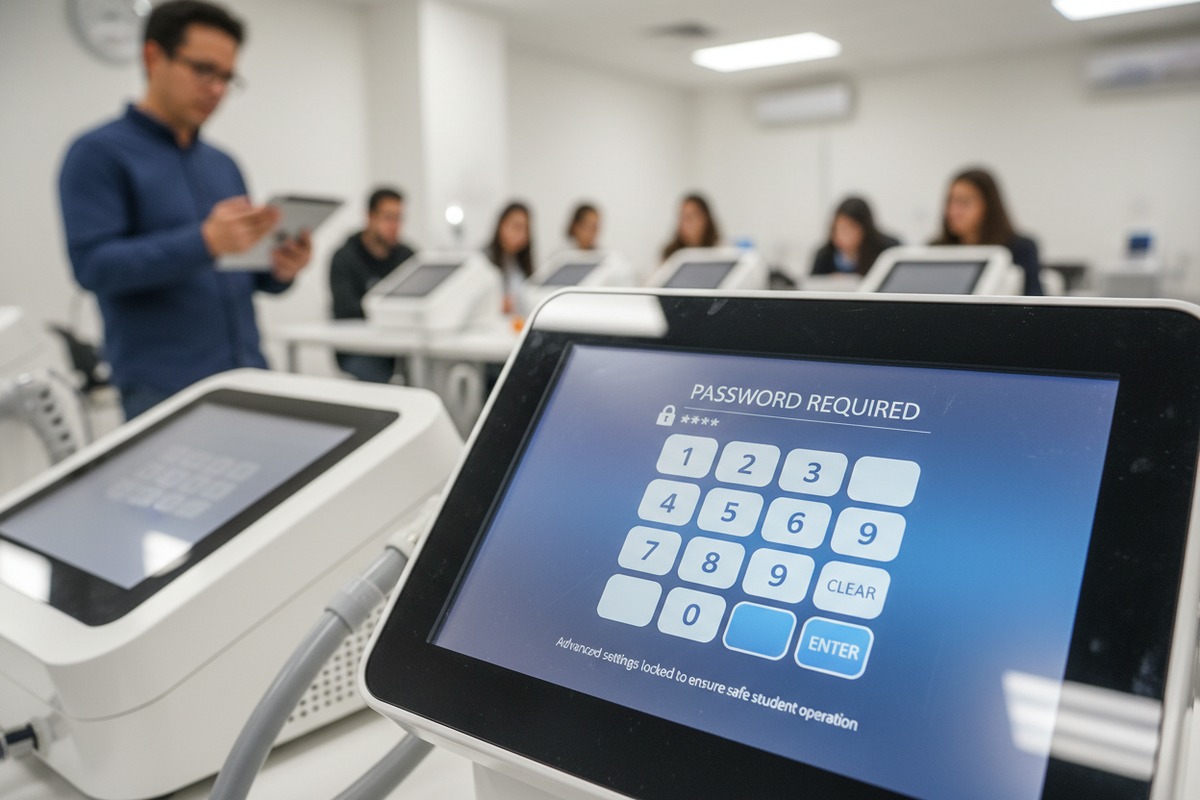
Yes, modern pressotherapy software interfaces support instructor-controlled lockouts through password protection, tiered user access levels, and preset-only modes that restrict students to pre-programmed safe parameters while allowing instructors full control over advanced settings and customization options.
Tiered Access Control Systems
Professional-grade pressotherapy machines offer multiple user access levels. tiered user access levels 6 Instructors can create separate profiles for beginners, intermediate students, and advanced practitioners. Each tier unlocks progressively more control over treatment parameters.
| Access Level | Available Functions | Restricted Functions |
|---|---|---|
| Student Basic | Start/stop, preset selection | Pressure adjustment, duration changes |
| Student Intermediate | Preset selection, minor adjustments | Maximum pressure override, custom programs |
| Student Advanced | Most parameters, guided customization | System settings, calibration |
| Instructor | Full access, profile management | None |
Pre-Programmed Treatment Presets
Users can select from multiple pre-configured programs designed for specific therapeutic objectives, from post-exercise recovery to lymphedema management. Each program features carefully calibrated pressure cycles, timing sequences, and zone targeting options.
These presets eliminate the need for students to manually configure complex parameters during early training. Pre-Programmed Treatment Presets 7 The machine handles pressure timing, duration, and sequencing automatically while students focus on client interaction and treatment observation.
Password and Key Lock Systems
Wide range of programs: The manual settings program allows you to work out any necessary zone separately. Easy control of the device using the LCD screen will be mastered even by a beginner. However, schools often need to restrict even these "easy" controls initially.
Password protection prevents unauthorized access to administrative functions. Some machines also offer physical key locks that provide an additional barrier. Our units support both digital passwords and physical lockouts, giving schools flexibility in managing access.
Interface Design for Error Prevention
Clear, intuitive interfaces reduce errors regardless of access level. Easy management: intuitive panel, preconfigured cycles, and adjustable pressure. Look for machines with large, clearly labeled buttons, logical menu structures, and prominent display of current settings.
Color-coded displays help students quickly identify normal versus abnormal conditions. Green indicators for safe operation, yellow for caution, and red for immediate attention create universal visual language that requires minimal training to interpret.
Logging and Audit Features
Advanced software tracks all user actions, creating audit trails that instructors can review. This logging serves multiple purposes: identifying common student errors, verifying that protocols were followed, and documenting training progress.
When our machines detect unusual patterns—like repeated attempts to access locked features or settings outside normal ranges—they can alert instructors. This proactive monitoring helps catch potential issues before they become problems.
How do the hose connections and cuff designs prevent physical damage caused by inexperienced student handling?
On our assembly floor, we see exactly how hoses and cuffs endure testing—thousands of connect-disconnect cycles, stress tests, and durability evaluations. This rigorous process reflects the reality that student handling differs significantly from experienced professional use.
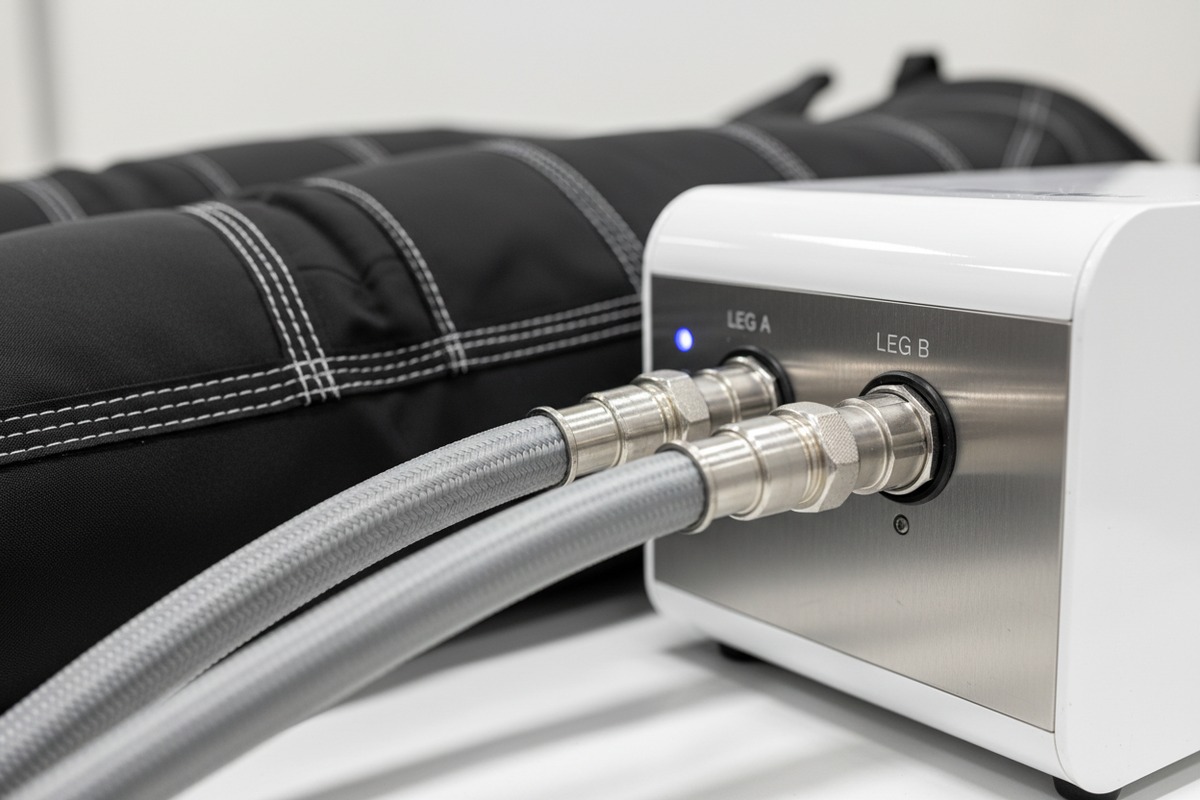
Reinforced hose connections with secure locking mechanisms, durable quick-connect fittings, and cuffs constructed from medical-grade materials with overlapping chamber designs prevent physical damage from inexperienced handling while maintaining airtight seals essential for effective and safe pressotherapy treatments.
Hose Connection Engineering
Quality pressotherapy systems use quick-connect fittings that require minimal force to engage properly. Students struggling with stiff or poorly designed connectors often resort to excessive force, which damages components over time. Our fittings click securely into place with light pressure and release cleanly with a single squeeze.
| Connection Feature | Purpose | Durability Benefit |
|---|---|---|
| Quick-Connect Fittings | Easy attachment | Reduces forced connections |
| Reinforced Hose Walls | Prevents kinking | Extends hose lifespan |
| Color-Coded Ports | Proper attachment | Eliminates incorrect connections |
| Swivel Joints | Flexible positioning | Reduces stress on connections |
| Strain Relief | Protects junction points | Prevents cable failure |
Cuff Construction Quality
The construction uses medical-grade materials 8 that withstand repeated use while maintaining hygienic standards. Medical-grade materials matter because they resist degradation from cleaning agents, repeated stretching, and the general wear that training environments produce.
The air chambers within cuffs require particular attention. The garments are designed with reinforced seams and durable air chambers that maintain their integrity over numerous treatment cycles. Weak chamber construction leads to air leaks that compromise treatment effectiveness and create safety concerns.
Overlapping Chamber Design
All cuffs have an "overlapping" system which prevents lymphatic retraction during the procedure. Beyond the therapeutic benefits, overlapping chambers also distribute mechanical stress more evenly across the cuff structure. This design reduces the impact of improper positioning or handling that students might cause.
Sizing and Fit Considerations
The velcro-secured suit perfectly fits all body types due to the large coverage area of the velcro. A selection of three sizes (S, M and L) is available. Adjustable sizing reduces the temptation for students to force ill-fitting cuffs onto clients, which damages both the cuffs and creates client discomfort.
Schools should stock multiple cuff sizes and train students to select appropriate sizes before attempting attachment. This simple practice dramatically reduces wear from improper fitting.
Maintenance and Inspection Protocols
| Inspection Item | Frequency | Action if Failed |
|---|---|---|
| Hose integrity | Daily | Replace if cracked |
| Connector seals | Weekly | Clean or replace |
| Cuff seams | Weekly | Repair or replace |
| Air chamber leaks | Before each use | Remove from service |
| Velcro attachment | Weekly | Replace if worn |
Regular inspection catches developing problems before they cause safety issues or equipment failure during training sessions. Establishing clear protocols helps students develop professional maintenance habits.
Cleaning and Sanitation
Comfortable use: garments (boots, pants, sleeves) with quick and hygienic fit. Materials that resist moisture absorption and clean easily maintain hygiene standards while extending equipment life. Our cuffs wipe clean with standard disinfectants and air dry quickly between uses.
Students should learn proper cleaning techniques as part of their training. Improper cleaning—using harsh chemicals or excessive moisture—degrades materials faster than normal use.
Conclusion
Purchasing pressotherapy machines for vocational schools requires careful attention to safety features that protect students during hands-on learning. Automatic pressure sensors, accessible emergency stops, customizable software lockouts, and durable construction form the foundation of safe training equipment. All IPC devices meet industry safety and performance standards, holding certifications from the FDA, NRTL, CE, and Health Canada. Our manufacturing facility has achieved ISO13485 and MDSAP certifications 9. Verify these certifications and safety features before purchasing to ensure your students train on equipment designed for educational success.
Footnotes
1. Healthline provides a comprehensive explanation of pressotherapy, including the use of an air pressure machine and suit, which directly relates to ‘pressotherapy equipment’. ↩︎
2. Explains how to prevent pressure injuries from medical devices like IPC, relevant to pressure limits. ↩︎
3. Discusses how differential pressure sensors contribute to patient safety in medical devices. ↩︎
4. Details the function, types, and regulations for emergency stop switches in machinery. ↩︎
5. Explains the color and shape requirements for emergency stop buttons based on standards. ↩︎
6. Discusses passwords and tiered access as a way to protect medical devices. ↩︎
7. Discusses secure software development practices and robust authentication, supporting controlled software use. ↩︎
8. Defines medical-grade materials, emphasizing biocompatibility, sterilizability, and chemical resistance. ↩︎
9. Explains both ISO 13485 and MDSAP, highlighting their importance for medical device manufacturers. ↩︎


 English
 Español de México
 Deutsch
 Français
 العربية
 Русский
Join the Conversation
Have a question or insight to share? We read every comment — whether you're a distributor, salon owner, or just curious about the technology. Your real-world experience helps others make better decisions. Drop your thoughts below.