

Finding the right pressotherapy machine supplier for your US-based beauty business can feel overwhelming. Our production team has worked with distributors who struggled to verify supplier claims before partnering with us. They worried about empty promises, fake certifications, and unverifiable OEM experience. This gap between supplier claims and reality creates real risk for your brand reputation and customer safety.
To verify if a pressotherapy machine supplier has worked with US brands, request named client references, check FDA 510(k) clearance status, ask for OEM contracts or testimonials, review their certifications like ISO 13485 and CE marking, and contact listed US partners directly to confirm the business relationship.
In this guide, we will walk through specific verification methods you can use right away. Each section addresses a common concern US beauty brand owners face when evaluating overseas suppliers. Let’s dive into the practical steps.
How can I verify your previous OEM experience with other US beauty brands?
Many suppliers claim partnerships with US brands but lack evidence to back it up. Our export team often receives inquiries from brand owners who feel burned by vague testimonials and generic marketing language. The frustration of discovering a "partner" was actually just a one-time buyer is real and costly.
To verify OEM experience, request a list of named US clients with contact information, ask for redacted OEM contracts showing project scope, review case studies with photos of branded products, and contact references directly via LinkedIn or email to confirm the supplier's claims.

What Documents Should You Request?
When evaluating a supplier's OEM track record, specific documentation tells the real story. Generic claims like "hundreds of satisfied customers" mean nothing without proof.
Request these documents:
- Redacted OEM contracts showing project dates, product specifications, and partnership duration
- Photos of finished products with client branding visible (with client permission)
- Case study documents detailing challenges solved and customizations delivered
- Client testimonials with company names, not anonymous quotes
How to Cross-Check Supplier Claims
Do not rely solely on what the supplier provides. Independent verification protects your business.
| Verification Method | What to Look For | Red Flags |
|---|---|---|
| Google the claimed partner | Their website mentions the supplier or product line | No online presence or mismatched product photos |
| LinkedIn search | Employees who confirm supplier relationship | No connections to the supplier company |
| Reverse image search | Product photos unique to this supplier | Same images appear on multiple supplier sites |
| Trade show records | Joint booth presence or speaking engagements | No verifiable event participation |
Why Direct Contact Matters
Calling or emailing a supplier's claimed US partners is the gold standard. Our experience shows that legitimate suppliers welcome this step. They have nothing to hide.
When you contact a reference, ask:
- How long have you worked with this supplier?
- Were there any quality issues during production?
- How responsive is their team to urgent requests?
- Would you reorder from them?
Suppliers who hesitate to provide contact information are often hiding something.
What proof can I request to ensure your machines meet US safety and import regulations?
Navigating US import regulations for pressotherapy machines creates anxiety for many brand owners. One compliance mistake can mean detained shipments, FDA holds, or worse—liability issues with end customers. Our compliance team regularly helps clients understand exactly what certifications matter for the US market.
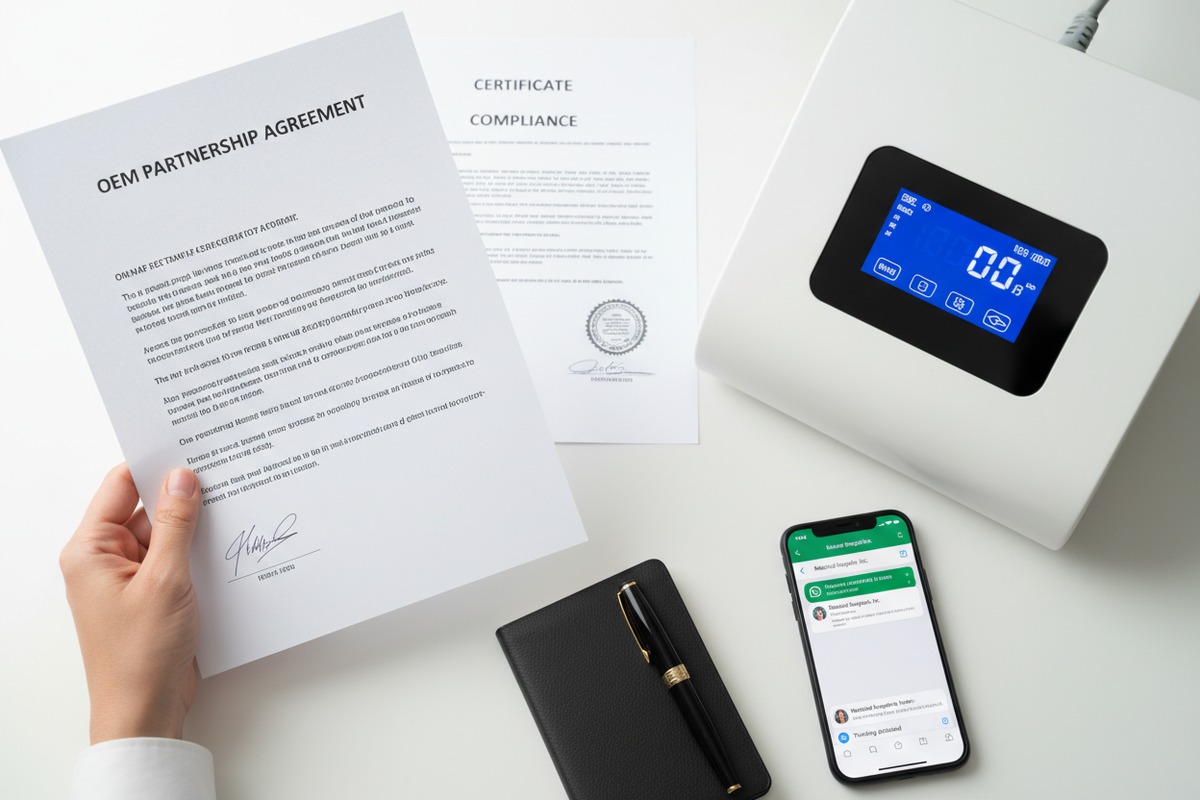
Request FDA 510(k) clearance documentation for the specific device model, CE marking certificates with notified body details, ISO 13485 manufacturing certification, test reports from accredited labs, and electrical safety certifications like UL or ETL listing for 110V compatibility.
Understanding FDA Requirements for Pressotherapy Devices
Pressotherapy machines fall under the category of intermittent pneumatic compression (IPC) devices 1. The regulatory pathway depends on the intended use claims.
| Intended Use | FDA Classification | Regulatory Pathway |
|---|---|---|
| Lymphatic drainage (aesthetic) | Class II | 510(k) may be required depending on claims |
| DVT prevention (medical) | Class II | 510(k) clearance required |
| General wellness 2 | Not regulated as device | No FDA clearance 3 needed |
The key is understanding what claims your marketing will make. Making medical claims without FDA clearance creates serious legal exposure.
Essential Certifications Checklist
When we prepare machines for US export, we ensure the following certifications are in place:
FDA-Related Documentation:
- 510(k) clearance letter (if applicable)
- Device listing number
- Establishment registration number
International Standards:
- CE marking 4 with notified body certificate
- ISO 13485 quality management system certification
- IEC 60601-1 electrical safety 5 compliance
Electrical Safety:
- UL or ETL listing for North American electrical standards
- 110V/60Hz compatibility verification
How to Verify Certificate Authenticity
Fake certificates circulate widely in the beauty equipment industry. Here is how to check authenticity:
- FDA Database Search: Use the FDA 510(k) database to verify clearance numbers match the specific device model
- Notified Body Verification: Contact the CE marking notified body directly to confirm certificate validity
- ISO Certification Check: Verify ISO certificates through the issuing certification body's online database
- Lab Report Validation: Accredited labs have searchable databases confirming test reports
Import Documentation Requirements
Beyond device certifications, US Customs requires specific documentation. Missing paperwork causes delays and additional costs.
Required documents include:
- Commercial invoice matching declared customs value
- Packing list with accurate weights and dimensions
- Bill of lading or airway bill
- Certificate of origin
- FDA prior notice (for certain device categories)
- HS code classification documentation
Can you show me examples of how you've handled door-to-door logistics for your North American clients?
Shipping heavy equipment from China to the US introduces multiple failure points. Our logistics team has seen shipments delayed at customs, damaged during transit, and delivered to wrong addresses. These failures cost money and damage client relationships. Smart buyers ask for logistics proof before ordering.
Request shipping case studies showing transit times, ask for freight forwarder references, review tracking documentation from previous US shipments, verify DDP (Delivered Duty Paid) capability, and confirm the supplier handles customs clearance and last-mile delivery to your specified address.

What Door-to-Door Service Actually Includes
True door-to-door service from China to the US covers every step from factory to your warehouse. Incomplete service creates unexpected costs and headaches.
| Service Component | What It Covers | Questions to Ask |
|---|---|---|
| Factory pickup | Collection from production facility | Do you arrange pickup or must I? |
| Export customs | China export declaration and documentation | Who handles export paperwork? |
| International freight | Ocean or air transport to US port | Which shipping method do you use? |
| US customs clearance | Import duties, FDA requirements | Do you have a US customs broker? |
| Last-mile delivery | Transport from port to my warehouse | Is delivery to my door included? |
DDP vs. FOB: Know the Difference
Incoterms define who pays for what and who carries the risk at each stage. DDP offers the most protection for buyers.
DDP (Delivered Duty Paid):
- Supplier handles everything
- You receive the machine at your door
- All duties and taxes included in quoted price
- Lowest risk for buyer
FOB (Free on Board):
- Supplier delivers to departure port only
- You arrange and pay for ocean freight
- You handle US customs and delivery
- Higher risk and more work for buyer
Our experience shipping to US clients shows that DDP service with taxes included simplifies the entire process for first-time importers. DDP (Delivered Duty Paid) 6
Transit Times and Shipping Methods
Different shipping methods serve different needs. Cost and speed trade off against each other.
Air Freight:
- Transit time: 7-12 business days
- Best for: Urgent orders, single machines, time-sensitive launches
- Cost: Higher per unit but faster inventory turnover
Ocean Freight (FCL/LCL):
- Transit time: 25-40 days depending on port
- Best for: Large orders, planned inventory replenishment
- Cost: Lower per unit for bulk orders
Express Courier (DHL, FedEx):
- Transit time: 5-7 business days
- Best for: Sample units, urgent replacements
- Cost: Highest, but includes simplified customs
Proof of Logistics Capability
Ask suppliers to provide evidence of successful US deliveries:
- Tracking screenshots showing delivered status to US addresses
- Photos of packaged machines ready for international shipping
- Customs clearance documents from previous US shipments
- References from US clients who can confirm delivery experience
- Freight forwarder contact information for direct verification
How do I know your quality control process is strict enough for my US-based salon customers?
Quality failures create expensive problems for US distributors. Returned machines, warranty claims, and angry salon owners damage your reputation and bottom line. When we build machines for export, every unit passes through multiple inspection stages. But how can buyers verify this before placing an order?
Verify quality control by requesting the supplier's ISO 13485 or ISO 9001 certification, asking for detailed inspection protocols with photos, scheduling a video factory audit, reviewing pre-shipment inspection reports from previous orders, and requesting sample units for independent testing.

What Rigorous Quality Control Looks Like
Quality control for beauty equipment extends beyond a final check. It starts with component sourcing and continues through production, assembly, and packaging.
Incoming Quality Control (IQC):
- Raw material testing and verification
- Component functionality checks before assembly
- Supplier certification verification
In-Process Quality Control (IPQC):
- Assembly checkpoint inspections
- Functional testing at each production stage
- Documentation of any deviations
Final Quality Control (FQC):
- Complete functionality testing
- Pressure calibration verification
- Safety system checks
- Cosmetic inspection
Pre-Shipment Inspection (PSI):
- Random sampling from finished batch
- Full functional testing on sample units
- Packaging integrity verification
Key Quality Metrics to Request
| Quality Metric | Acceptable Standard | Red Flag |
|---|---|---|
| Defect rate | Below 2% | Above 5% |
| Aging test duration | 48+ hours | No aging test |
| Pressure accuracy | ±5% of displayed value | No calibration records |
| Warranty claim rate | Below 3% annually | No warranty data available |
| Return rate | Below 2% | No return tracking |
Third-Party Inspection Options
You do not have to trust supplier self-reporting. Third-party inspection companies provide independent verification.
Pre-Shipment Inspection Services:
Hire an inspection company to visit the factory before your order ships. They check random samples against your specifications.
Factory Audit Services:
A comprehensive audit evaluates the supplier's quality management system 7, production capability, and compliance with international standards.
Laboratory Testing:
Independent labs can test electrical safety, pressure output accuracy, and material composition.
How Our QC Process Works
At our facility, every pressotherapy machine goes through this sequence:
- Component verification – All parts checked against specifications before assembly
- Assembly inspection – Technicians verify proper installation of each subsystem
- Functional testing – Complete operational check of all programs and pressure levels
- 48-hour aging test – Continuous operation to identify early failures
- Final inspection – Cosmetic check, label verification, accessory completeness
- Packaging inspection – Box integrity, cushioning adequacy, documentation inclusion
Each step generates documentation. Clients can request test reports and inspection photos for their specific order.
Warranty and After-Sales Support
Quality control extends beyond shipping. Strong suppliers back their products with meaningful warranties and responsive support.
Ask about:
- Warranty duration and coverage terms
- Technical support availability and response time
- Spare parts availability and shipping cost
- Training materials and troubleshooting guides
- Repair or replacement procedures
Conclusion
Verifying a pressotherapy machine supplier requires asking the right questions and demanding real evidence. Request named references, check certifications through official databases, evaluate logistics capabilities with case studies, and audit quality control process 8es before committing. These steps protect your brand and your salon customers from costly disappointments.
Footnotes
1. Medical policy information on intermittent pneumatic compression devices. ↩︎
2. FDA guidance document on general wellness products. ↩︎
3. Replaced HTTP 404 link with the current FDA page for 510(k) clearances. ↩︎
4. Official EU information on CE marking requirements. ↩︎
5. TUV Rheinland information on medical electrical equipment safety standards. ↩︎
6. Official US government information on Incoterms 2020, including DDP. ↩︎
7. Wikipedia overview of quality management systems. ↩︎
8. Wikipedia overview of quality control principles. ↩︎

 English
 Español de México
 Deutsch
 Français
 العربية
 Русский
