

When our production team ships hundreds of pressotherapy systems 1 each quarter, we see firsthand what happens when buyers skip the supplier vetting process. A single motor failure or airbag leak can cripple your spa’s reputation and leave your customers questioning your brand.
To evaluate supplier responsiveness for pressotherapy machines, test their reply speed with a sample inquiry before ordering. Request their quality control reports, warranty terms, and complaint handling process. Verify they offer door-to-door parts replacement and provide root cause analysis for defects within documented timelines.
This guide will walk you through a practical framework to identify responsive suppliers quality control reports 2. You will learn how to test response times, verify technical capabilities, confirm logistics support, and protect your brand reputation. Let us dive into each step.
How can I test a supplier's response time to quality issues before I place my first pressotherapy machine order?
We often advise first-time buyers to run a simple test: send a technical question and track how fast the supplier replies CAPA (Corrective and Preventive Action) processes 3. This one step reveals more about their service quality than any brochure or sales pitch ever could.
Before placing your first pressotherapy machine order, send a test inquiry via email or WhatsApp with a specific technical question. Measure the time to first response. Responsive suppliers typically acknowledge within 24 hours and provide detailed answers within 48 hours. This simple test predicts their behavior when real issues arise.
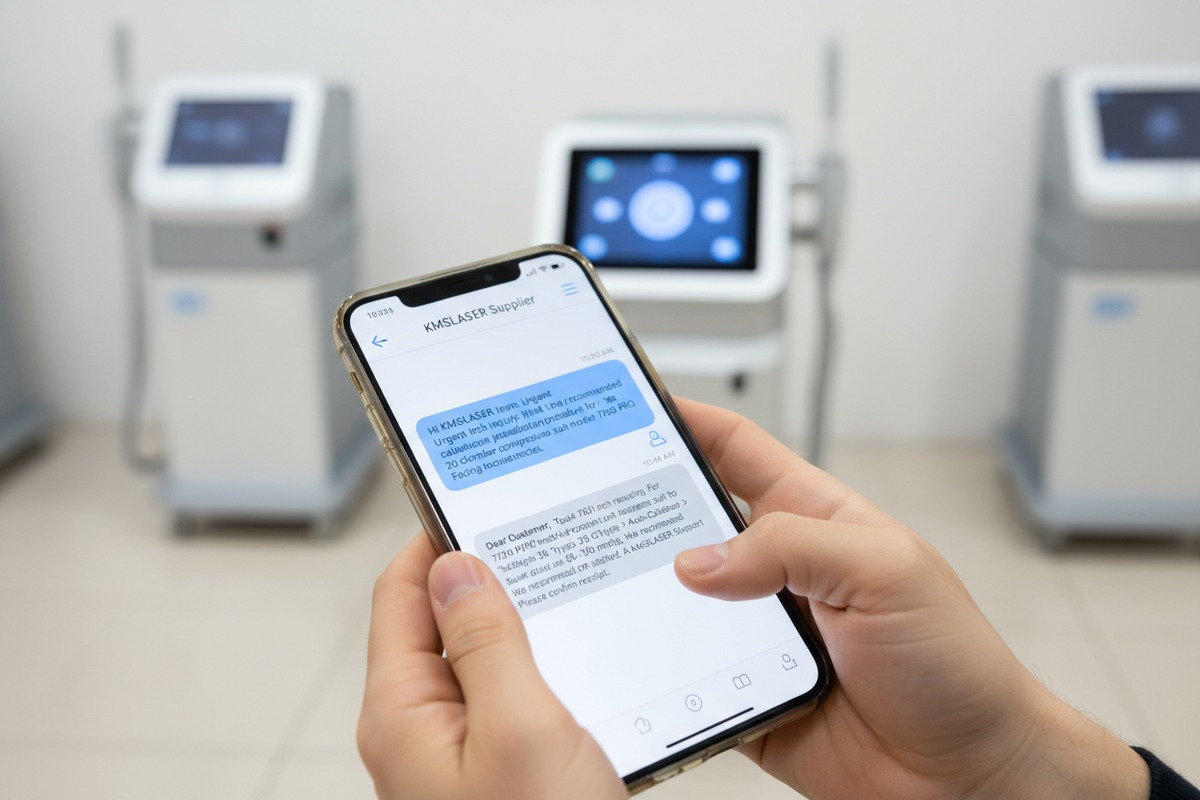
The Pre-Order Response Test Method
The simplest way to gauge a supplier's responsiveness is to simulate a real complaint scenario Incoming Inspection Reports 4. Draft an email asking about a specific technical concern. For example, ask about the pressure calibration process for their 20-chamber compression suits or inquire about motor noise levels during extended treatments.
Track these metrics:
- First Acknowledgment Time: How quickly they confirm receipt of your message
- Detailed Response Time: How long until they provide a substantive answer
- Communication Quality: Did they understand your question and address it directly?
What Benchmarks Should You Expect?
"In case of a failure and an investigation, you've got to have someone on the supplier's side who will respond quickly, accurately and thoroughly." This principle applies equally during the evaluation phase.
| Response Metric | Good Supplier | Average Supplier | Red Flag |
|---|---|---|---|
| First Acknowledgment | Within 4 hours | Within 24 hours | Over 48 hours |
| Detailed Technical Answer | Within 24 hours | Within 72 hours | Over 1 week |
| Follow-up Questions | Same day | Within 48 hours | No follow-up |
| Communication Channels | Email + WhatsApp + Phone | Email only | No direct contact |
Multiple Channel Testing
Test all available communication channels. A supplier who responds quickly via email but ignores WhatsApp messages may have internal coordination issues. When our service team handles international clients, we ensure consistent response times across all platforms.
It is important to select high-quality suppliers who manufacture durable machines using quality materials and sturdy structures. Good customer support is crucial when starting with a new pressotherapy machine; a warranty can also provide peace of mind regarding product reliability.
Red Flags During Initial Contact
Watch for these warning signs:
- Generic auto-reply emails with no personal follow-up
- Vague answers that avoid your specific technical question
- Sales-focused responses that ignore your quality concerns
- Inability to provide technical documentation upon request
- Passing you between multiple contacts without resolution
What technical evidence should I look for to ensure the factory can actually fix my pressotherapy equipment defects?
In our quality control lab, we inspect every pressotherapy unit before shipment. But even with strict protocols, occasional defects occur. The real question is whether your supplier has the engineering capability to diagnose problems and implement lasting fixes.
Look for ISO 13485 certification, documented CAPA (Corrective and Preventive Action) processes, and root cause analysis reports from past defects. Request sample quality control records and ask about their engineering team's qualifications. Suppliers with genuine technical capability can explain their testing protocols in detail.

Understanding ISO 13485 and Its Role in Supplier Evaluation
Safety and quality are non-negotiable in the medical devices industry 5. Regulatory requirements are increasingly stringent throughout every step of a product's life cycle, including service and delivery. Increasingly, organizations in the industry are expected to demonstrate their quality management processes and ensure best practice in everything they do. This internationally agreed standard sets out the requirements for a quality management system specific to the medical devices industry.
ISO 13485 certification 6 is not just a badge. It helps teams document deviations, respond to nonconformances, and resolve complaints with a consistent approach. This makes it easier to investigate problems and apply corrective actions that address the root cause.
Technical Documentation You Should Request
| Document Type | What It Shows | Why It Matters |
|---|---|---|
| ISO 13485 Certificate | Quality management system compliance | Proves systematic approach to defect prevention |
| CAPA Records | How they handle past defects | Shows root cause analysis 7 capability |
| Incoming Inspection Reports | Component quality verification | Demonstrates supply chain control |
| Final Test Protocols | Pre-shipment quality checks | Proves each unit is tested before shipping |
| Engineering Change Orders 8 | Product improvement tracking | Shows continuous improvement culture |
The CAPA Process Explained
Modules such as CAPA, change control, supplier qualification, and audit tracking help manage ongoing risks and quality concerns. These tools allow teams to follow through on decisions and show regulators how processes are being applied and monitored.
Ask your potential supplier to walk you through a specific example. How did they handle a motor failure complaint? What testing did they conduct? What design changes resulted? Responsive suppliers will share this information openly.
Verifying Engineering Capability
Beyond certificates, assess whether the factory has real engineering depth:
- In-house R&D Team: Can they modify designs or only assemble components?
- Testing Equipment: Do they have pressure sensors, endurance testers, and calibration tools?
- Component Traceability: Can they track defects back to specific suppliers or production batches?
- Technical Training: Are their technicians certified on the equipment they produce?
By tracking supplier performance metrics such as on-time delivery, product quality, and responsiveness to issues, organisations can make informed decisions about which suppliers to continue working with and which to replace.
Certification Verification Checklist
| Certification | Market Requirement | How to Verify |
|---|---|---|
| CE Marking 9 | European Union | Request certificate and test reports |
| FDA Registration | United States | Check FDA database online |
| ISO 13485 | Global best practice | Request certificate with audit dates |
| ISO 9001 | General quality | May be acceptable for non-critical components |
"If presented with suppliers for the same material, component or service where one is ISO 13485 certified and one is not, always go with the certified supplier. Suppliers confirm ISO 13485 compliance with a certificate prior to audit."
How do I verify that my manufacturer will cover the door-to-door logistics for replacement parts if my machines fail?
Our export team handles replacement part shipments to North America and Europe every week. We know how important it is for buyers to receive clear commitments on who pays for shipping and how quickly parts arrive at their door.
Request the supplier's warranty terms in writing before ordering. Confirm whether they cover door-to-door shipping for replacement parts or only provide parts at their factory gate. Clarify who pays customs duties and taxes. The best suppliers offer prepaid international shipping for warranty claims with tracking information provided within 48 hours.

Understanding Warranty Coverage Levels
Not all warranties are equal. Some suppliers cover only the part cost. Others include domestic shipping but exclude international freight. The strongest warranties cover door-to-door delivery including customs clearance.
| Warranty Level | What Is Covered | What You Pay |
|---|---|---|
| Basic (Parts Only) | Replacement component cost | All shipping, customs, taxes |
| Standard (Parts + Local Ship) | Parts and domestic shipping to port | International freight, customs |
| Comprehensive (Door-to-Door) | Parts, all shipping, customs clearance | Nothing during warranty period |
| Premium (Full Replacement) | New unit shipped if repair fails | Nothing; old unit may be returned |
To ensure exceptional quality, all Canta Esthetic machines go through a stringent quality control process and come with a 36-month warranty. If you have any technical issues, you can always contact our expert team.
Key Questions to Ask About Logistics
Before signing any purchase agreement, get written answers to these questions:
- Who pays for international shipping on warranty claims?
- Do you provide door-to-door delivery or port-to-port only?
- How quickly do you ship replacement parts after approving a claim?
- What tracking information will I receive?
- Who handles customs clearance on my end?
- Are customs duties and taxes included or separate?
Warranty Terms Comparison
During the warranty period, all the broken accessories can be sent for free. Over warranty, we can provide the replacement parts or repair for free, but the buyer needs to pay the parts and shipping cost.
This is a common structure. Free parts during warranty, but shipping costs may vary. Always clarify before purchasing.
For machines over 4kgs, we offer a one-year warranty for the main machine and a three-month warranty for spare parts. For machines under 4kgs, we offer a three-month warranty.
Service Level Agreement Essentials
The SLA will typically detail the response times for service requests, scheduled maintenance intervals, performance metrics, and the scope of coverage, including parts and labor. It may also specify penalties or compensation for service failures.
For pressotherapy machines, your SLA should specify:
| SLA Element | Recommended Standard | Why It Matters |
|---|---|---|
| Claim Response Time | Within 24 hours | Confirms they received your complaint |
| Diagnostic Support | Within 48 hours | Video call or detailed troubleshooting |
| Parts Shipping Time | Within 5 business days | Minimizes your equipment downtime |
| Delivery Timeline | 7-14 days door-to-door | Gets your spa back in operation |
| Tracking Updates | Every 2-3 days | Keeps you informed on shipment status |
Documenting the Agreement
Get all logistics commitments in writing before placing your order. An email confirmation is better than a verbal promise. A formal contract clause is best. Include specific scenarios in your agreement.
What steps can I take to confirm a supplier will prioritize my brand's reputation when a pressotherapy quality complaint arises?
When we brand a pressotherapy machine with your logo, your reputation rides on our quality control. We take that responsibility seriously because we understand that one bad unit can damage years of trust you have built with your salon customers.
To confirm a supplier prioritizes your brand reputation, ask for references from existing OEM clients. Review how they handled past quality issues for other brands. Request their escalation process for urgent complaints. Suppliers committed to your reputation will offer proactive communication, rapid resolution timelines, and confidential handling of complaints.

The Brand Protection Framework
Your brand is more than a logo on a machine. It represents your promise to customers. When a pressotherapy unit fails at a salon, the salon owner blames your brand—not your supplier. Here is how to ensure your supplier understands this dynamic.
Reference Check Process
Ask your potential supplier for contact information of 2-3 existing OEM clients. When you speak with these references, ask:
- How did the supplier handle quality complaints?
- Were issues resolved quickly and quietly?
- Did they proactively communicate about potential problems?
- Would you work with them again on a branded product?
Escalation Matrix Requirements
A Vendor Service Level Agreement 10 (SLA) is a formal contract that defines the performance expectations, responsibilities, and service standards between a hospital and its third-party vendors. These agreements outline key metrics such as delivery timelines, product availability, documentation requirements, and response times for resolving issues.
Adapt this approach for your pressotherapy sourcing. Your escalation matrix should include:
| Issue Severity | Response Time | Escalation Level | Resolution Target |
|---|---|---|---|
| Critical (Safety hazard) | 4 hours | Factory manager + Engineering lead | 24-48 hours |
| High (Machine non-functional) | 8 hours | Quality manager | 3-5 business days |
| Medium (Performance issue) | 24 hours | Technical support team | 7-10 business days |
| Low (Cosmetic defect) | 48 hours | Customer service | 14-21 business days |
Proactive Communication Expectations
I had an issue with my machine initially, it would burn me every time I tried to use the probes and even shocked me a bit. I reached out to customer service and they helped right away and sent me a replacement part within a few days. Their customer service team has been excellent throughout this process.
This is the standard you should expect. Quick acknowledgment, rapid part replacement, and proactive follow-up until resolution.
Confidentiality in Complaint Handling
When your branded units have issues, you do not want your supplier discussing your problems with competitors. Request a confidentiality clause in your agreement covering:
- All quality complaint details
- Defect rates and failure analysis
- Product modifications made for your account
- Your customer feedback and market intelligence
Integration of Feedback into Product Improvement
No business can enjoy continued success without providing high-quality field service, while a remarkably good field service raises customer satisfaction and brand reputation. Offering a great field service not only removes the risk of tarnishing the brand image that goes along with a poor service, but it also increases customer loyalty and revenue as a consequence.
Ask how the supplier uses complaint data:
- Do they track defect patterns across all OEM clients?
- How do they share improvement updates with you?
- Will they notify you before implementing design changes?
- Do they offer early access to upgraded components?
Building a Long-Term Partnership
The best brand protection comes from partnership, not just transactions. Suppliers who view your success as their success will naturally prioritize your reputation. Look for these partnership indicators:
- Willingness to customize products for your market
- Investment in understanding your customer base
- Transparency about production challenges
- Proactive suggestions for product improvement
Conclusion
Evaluating supplier responsiveness requires systematic testing before you commit to a pressotherapy machine order. Test response times, verify technical capabilities, document logistics commitments, and confirm brand protection measures. These steps protect your business and your customers.
Footnotes
1. Replaced HTTP 404 with a comprehensive explanation of pressotherapy from an authoritative health website. ↩︎
2. Replaced HTTP 403 with a detailed explanation of quality control reports from a comprehensive source. ↩︎
3. Details CAPA processes, requirements, and examples in the medical device industry. ↩︎
4. Explains incoming inspections and their importance in manufacturing quality control. ↩︎
5. Overview and facts about the medical devices industry from an industry association. ↩︎
6. Authoritative source explaining ISO 13485 for medical device quality management systems. ↩︎
7. Provides a comprehensive definition and methodology for root cause analysis. ↩︎
8. Replaced HTTP 405 with an explanation of Engineering Change Orders, specifically highlighting their role in the medical device lifecycle, from a relevant industry expert. ↩︎
9. Official government information on CE Marking requirements for medical devices in the EU. ↩︎
10. Provides a comprehensive definition and explanation of Service Level Agreements. ↩︎

 English
 Español de México
 Deutsch
 Français
 العربية
 Русский
