When our production team first expanded into pressotherapy equipment 1, one issue kept surfacing in customer feedback—hoses popping off mid-treatment. This created safety risks. Clients complained. And return rates climbed. That frustration drove us to rethink connector design from the ground up.
To check pressotherapy machine air hose connectors for anti-detachment design, inspect the locking mechanism type (quick-release, ball-latch, or bayonet), perform a tug test under pressure, look for audible click confirmation, verify strain relief at connection points, and ensure full compatibility between the machine port and hose connector.
In this guide, we will walk through the key inspection methods and explain exactly what features prevent hose disconnection locking mechanism type 2. Let’s dive into the details that matter most for your pre-shipment quality control 3.
How do I evaluate the connector's locking mechanism during my pre-shipment quality control?
When we ship pressotherapy machines to clients in the US and Europe, our QC team runs every unit through a strict connector inspection. Nothing leaves our Guangzhou facility without passing. We know one loose hose can damage your brand reputation. And we have seen firsthand how poor connectors cause costly returns.
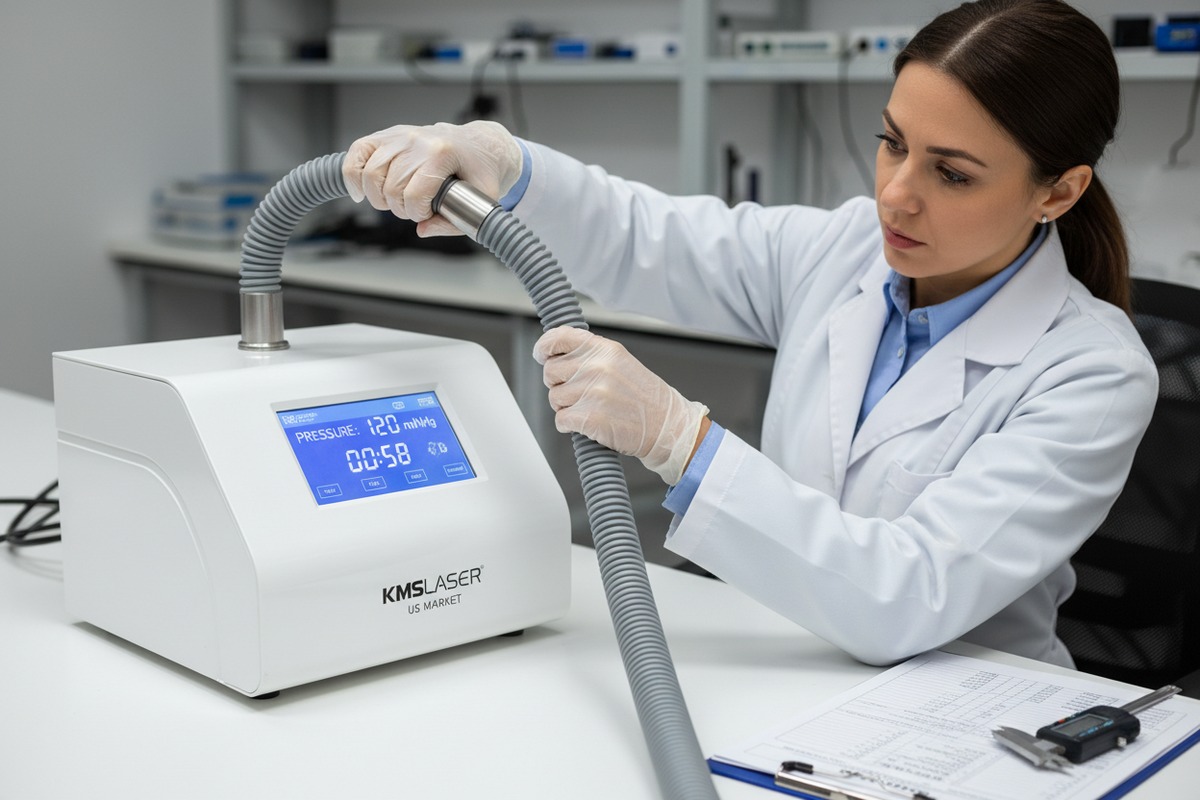
During pre-shipment quality control, evaluate the locking mechanism by visually checking for clips or latches, performing a pull test at rated pressure, listening for an audible click during connection, and verifying alignment marks. Document all findings and reject units with any signs of looseness or incomplete engagement.
Understanding Locking Mechanism Types
Different connectors use different locking methods. Each has strengths and weaknesses. Here is what you need to know.
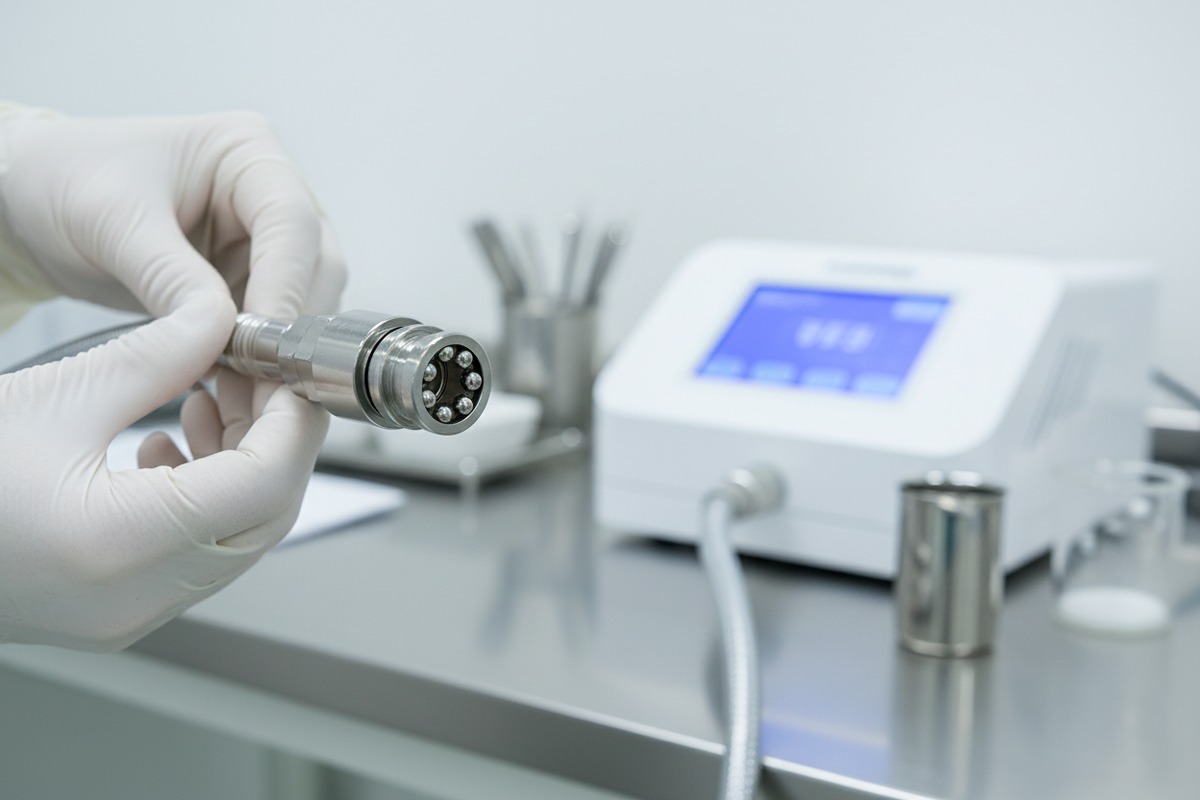
Inside the coupler, there are locking mechanisms, often ball bearings or similar devices, that snap into place around the male plug, securing the connection firmly. This ball-latch design 4 is common in pressotherapy equipment because it provides a secure hold with easy operation.
Push to connect fittings function by pushing one end into the other. To disconnect, a collar needs to be retracted. This style is fast but requires secondary verification.
A bayonet coupling system 5 uses a plug or pin on one side and a receptacle or hole on the other, which requires rotating to engage. Bayonet connectors are easy to operate by pushing the aligned parts together and rotating until an audible clicking sound is heard. Not only is it quick to secure, but it's also quick to decouple, as a 1/3 turn can swiftly lock or unlock the connector.
| Locking Mechanism | Operation | Security Level | Best For |
|---|---|---|---|
| Ball-Latch | Push and snap | High | Professional machines |
| Push-to-Connect | Push in, retract collar | Medium | Home-use units |
| Bayonet | Push and rotate 1/4 turn | Very High | Medical-grade devices |
| Threaded | Screw on | Very High | Heavy-duty applications |
Step-by-Step Inspection Process
Our QC team follows this exact process. You can use it too.
Step 1: Visual Inspection
Look for visible locking clips or latches on the connector body. This initial phase involves scrutinizing the hoses for any observable defects like cracks, abrasions, or signs of leaking. The inspection encompasses the hose's entire length, focusing on both the hose itself and its fittings and connections.
Step 2: Connection Test
Connect the hose to the machine. Listen for an audible click. Feel for tactile feedback that confirms engagement. If the connector slides in silently with no resistance, flag it for rejection.
Step 3: Tug Test
Apply moderate pulling force to the connected hose. It should not move or release. If our fittings operate in an application with motor vibration, the motor vibration could cause the tubing to gradually slip out of place. To prevent this from happening, you can equip the fitting with a locking clip. The locking clip holds the collet up so that the teeth remain pressed into the tubing at all times, allowing the tubing no room to slip out.
Step 4: Pressure Test
Run the machine at maximum pressure. Observe all connections for 2-3 minutes. Any air leaks or loosening means immediate failure.
Step 5: Documentation
Record the date, unit serial number, test results, and inspector name. Maintenance professionals keep detailed records of each inspection. This includes the date of inspection, findings, any actions taken, and the technician's name. These records help track the history of each hose and make informed maintenance decisions.
What anti-detachment features will prevent my pressotherapy hoses from popping off under high pressure?
Our engineering team spent months testing different connector designs before settling on our current configuration. We learned that high-pressure cycles—especially during lymphatic drainage sessions 6—put extreme stress on connections. A single design flaw can cause mid-treatment disconnections.
Anti-detachment features that prevent hose disconnection include ball-latch locking mechanisms, reinforced strain relief collars, O-ring seals, pressure-activated locks, and secondary safety clips. These features work together to maintain secure connections even during high-pressure inflation cycles up to 360mmHg.

Key Anti-Detachment Features Explained
Let me break down the critical features you should look for.
Ball-Latch Mechanisms
The mechanism of a ball-lock coupling involves a series of small, hardened balls housed within the female coupler. When the male nipple is inserted, these balls are forced outwards into a recessed groove on the nipple, creating a strong mechanical interlock. A sleeve or collar on the female coupler is then typically pushed forward to secure the balls in place, preventing accidental disconnection. To disconnect, the sleeve is retracted, allowing the balls to release the nipple.
Strain Relief
This is the reinforced section where the hose meets the connector. It absorbs stress from pulling, bending, and twisting. Without proper strain relief, repeated flexing weakens the connection point until failure.
O-Ring Seals
The O-ring inside a quick-connect fitting forms a watertight seal that prevents leaks. As long as your quick-connects are not subject to environments with excessive vibration or movement, they should always stay in place.
Pressure-Activated Locks
Some advanced connectors tighten their grip as pressure increases. The air pressure itself helps seal the connection more firmly. This is ideal for pressotherapy machines that cycle through multiple pressure levels.
| Feature | Function | Importance |
|---|---|---|
| Ball-Latch | Creates mechanical interlock | Critical |
| Strain Relief | Absorbs stress at connection | Critical |
| O-Ring Seal | Prevents air leaks | High |
| Pressure-Activated Lock | Tightens under pressure | High |
| Secondary Clip | Backup retention | Medium |
| Alignment Marks | Ensures proper seating | Medium |
How Pressure Affects Connector Security
Pressotherapy machines operate at various pressure levels. Pressure range typically spans 40 to 190mmHg in increments. Our professional units can reach up to 360mmHg. Each pressure cycle creates force that pushes against the connection.
Consider what happens during treatment. Air inflates and deflates the sleeves sequentially to generate circulating pressure on the human body. This repeated inflation creates pulsing forces on every connector. A weak locking mechanism will eventually fail.
Material Considerations
The connector material affects durability and security. The choice of material is foundational to performance and longevity. Materials commonly used include stainless steel, brass, and plastic. Stainless steel is prized for its strength and corrosion resistance. Brass is often chosen for its corrosion resistance and compatibility. Plastic couplings are lightweight and economical, suitable for less demanding applications.
For professional pressotherapy machines, we recommend metal or reinforced plastic connectors. Pure plastic connectors may work for home units but often lack the durability needed for salon-level use.
Can I customize the air hose connectors to ensure a more secure fit for my private-label brand?
When clients approach us for OEM projects 7, connector customization is often their top priority. They have experienced problems with generic connectors and want proprietary solutions. Our engineering team has developed several customization options specifically for this need.
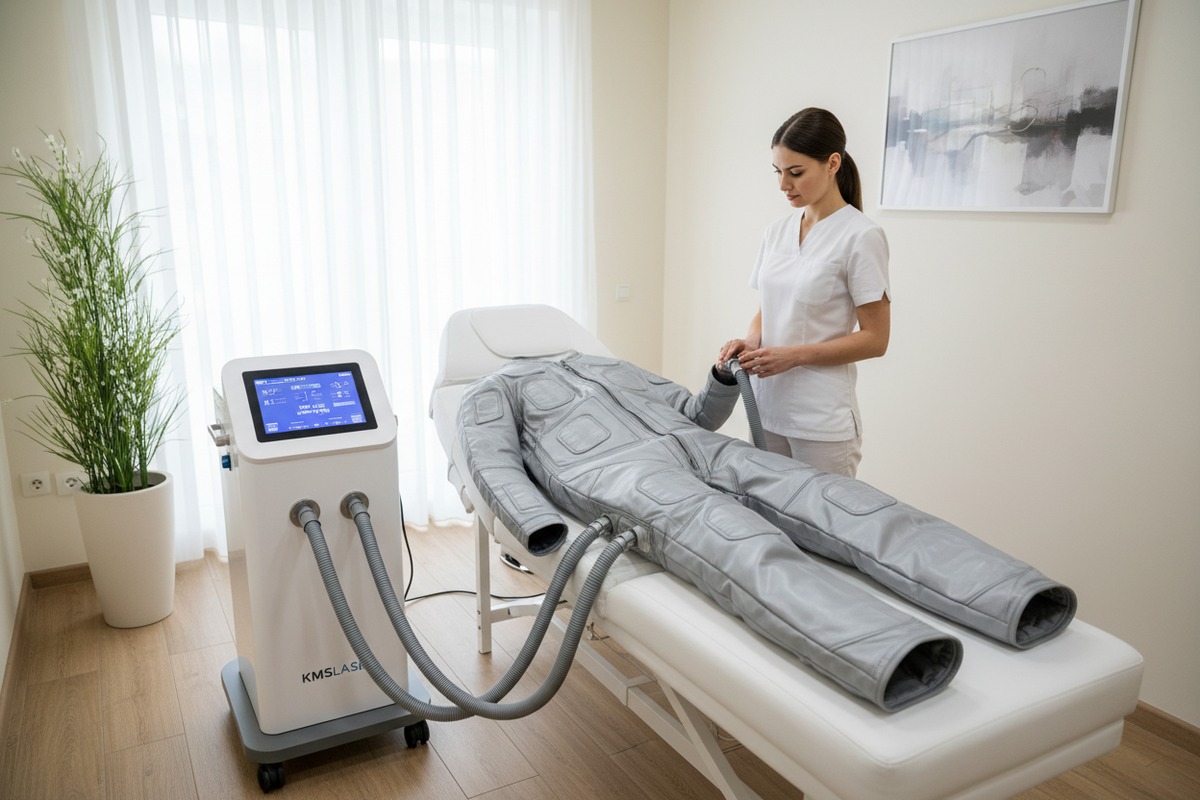
Yes, you can customize air hose connectors through OEM manufacturing. Options include proprietary locking mechanism designs, branded connector colors, reinforced materials, custom hose lengths, specialized strain relief configurations, and integrated safety clips. These customizations ensure secure fits while differentiating your private-label brand.
Customization Options Available
Our factory offers several connector customization paths. Let me explain each option.
Proprietary Connector Design
You can develop a unique connector profile that only works with your machines. This has pros and cons. Safety Couplings include locking mechanisms to prevent accidental disconnection. Proprietary designs can incorporate enhanced safety features. However, your customers must purchase replacement parts from you.
Material Upgrades
We can upgrade from standard plastic to reinforced polymer, brass, or stainless steel. Higher-grade materials resist wear better and maintain secure connections longer.
Color Coding
Color-coded connectors help users identify correct connections quickly. One of the new trends in the industry is adopting a color-coded system to identify the type of fitting. This reduces connection errors in multi-hose systems.
| Customization | Benefit | Lead Time | MOQ Impact |
|---|---|---|---|
| Proprietary Profile | Brand exclusivity | 4-6 weeks | Higher |
| Material Upgrade | Improved durability | 2-3 weeks | Minimal |
| Color Coding | Easier identification | 1-2 weeks | Minimal |
| Custom Length | Perfect fit for your design | 2-3 weeks | Moderate |
| Enhanced Strain Relief | Longer lifespan | 3-4 weeks | Moderate |
| Integrated Safety Clip | Extra security | 3-4 weeks | Moderate |
Proprietary vs. Universal Connectors
This is a common debate among our clients. Here is the honest assessment.
Proprietary Connectors
Pros: Better security, brand differentiation, controlled aftermarket. Cons: Higher development cost, customers cannot use third-party hoses.
Universal Connectors
Pros: Lower cost, familiar to users, replacement parts widely available. Cons: Less differentiation, customers may use inferior replacement hoses.
The easy-clean wearable accessory is made of PU material with a durable double-layer design and a user-friendly connector. This approach balances usability with durability—something to consider for your brand.
Working With Our Engineering Team
When you start a customization project with us, here is the process:
- Consultation: We discuss your specific security requirements
- Design Phase: Our engineers create connector specifications
- Prototype: We build sample connectors for testing
- Testing: You verify performance meets your standards
- Production: We manufacture to your approved design
The typical timeline is 6-8 weeks from consultation to first production run. For simple modifications like color changes, we can often deliver within 2 weeks.
How does the connector design impact the long-term reliability and lifespan of my beauty machines?
In our experience exporting to the US market, connector failures account for roughly 30% of all service complaints. This is preventable. Good connector design extends machine lifespan. Poor design creates headaches for everyone—you, your customers, and us.
Connector design directly impacts machine reliability through wear resistance, seal integrity, and mechanical durability. High-quality connectors with proper locking mechanisms, reinforced strain relief, and durable materials can last 5+ years with daily use. Poor connectors may fail within months, causing air leaks, treatment interruptions, and customer complaints.
How Connectors Fail Over Time
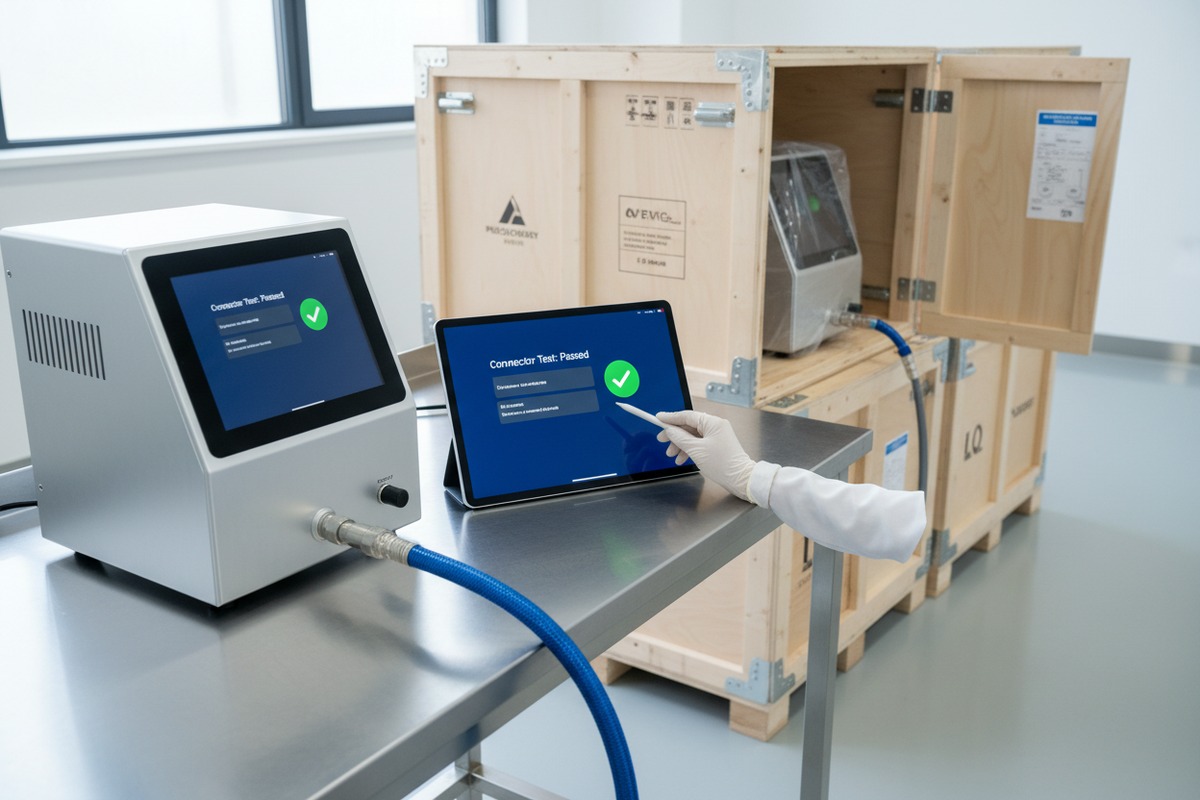
Understanding failure modes helps you prevent them. Here are the most common issues we see.
Mechanical Wear
Frequently taking the tubing apart and putting it back together can cause gradual damage to your tubing. The metal teeth on the inside of the locking collet bite hard into your tubing. Every time that you remove the tubing from the fitting, you could be scraping away small bits of the tubing. Over time, this frequent removal could cause your tubing to be scratched so deeply that it bypasses the O-ring, allowing water to pass.
O-Ring Degradation
After many years of service the O-ring could dry out and cause a slow-drip leak. This is why material quality matters. Premium elastomers resist degradation longer.
Strain-Induced Cracking
Repeated bending near the connector fatigues the material. Avoid sharp bends immediately behind the coupling. Make use of saddles or anti-kink coils if this bend cannot be avoided.
Maintenance Requirements for Long Life
Conduct routine inspections of the machine and its accessories to identify any signs of damage or wear, including hoses, connectors, and cuffs. This should happen at least monthly for professional machines.
Store the machine and its components in a clean and dry environment when not in use. Avoid exposing the equipment to extreme temperatures or humidity.
| Maintenance Task | Frequency | Purpose |
|---|---|---|
| Visual Inspection | Weekly | Detect early wear signs |
| Connection Test | Before each use | Verify proper engagement |
| Deep Cleaning | Monthly | Remove debris from connectors |
| O-Ring Check | Quarterly | Assess seal condition |
| Full Replacement | Per manufacturer | Prevent unexpected failures |
Quality Indicators That Predict Longevity
When evaluating machines, look for these quality signals:
Reinforced Construction
Durable and Reliable features include a sturdy metal device case, elastic air tubing, and high-strength compression suit with velcro fastening.
Warranty Coverage
Longer warranties indicate manufacturer confidence. Some brands offer 2-year coverage on pressotherapy hoses specifically.
Easy Disassembly
After each treatment, when the client needs to get out of the pressotherapy suit, it is necessary to remove all cables, straps and to be unbuttoned by the therapist in order to avoid physical damage to the cables and the suit itself. This often happens and that's why we draw attention to therapists to be careful, because any physical damage is not covered by the guarantee.
Cost of Poor Connector Design
Let me share real numbers from our service records.
A mid-quality connector typically lasts 2-3 years with moderate use. A premium connector lasts 5+ years. The price difference is usually $2-5 per connector. But a single service call costs $50-150. Replacement parts require shipping time. Customer frustration has no price tag.
When you calculate total cost of ownership 8, premium connectors always win. Our recommendation: invest in quality upfront.
Conclusion
Checking pressotherapy air hose connectors for anti-detachment design requires systematic inspection of locking mechanisms, materials, and engagement features. Focus on ball-latch security, strain relief integrity, and proper O-ring seals 9. With proper QC and maintenance, your machines will deliver reliable treatments for years.
Footnotes
1. Explains what pressotherapy is and its benefits. ↩︎
2. Replaced with an article detailing various connector locking mechanisms. ↩︎
3. Replaced with an article from a reputable quality control company explaining pre-shipment inspection procedures. ↩︎
4. Replaced with a guide explaining different quick release coupling types, including ball-latch. ↩︎
5. Explains the principle and operation of a bayonet coupling system. ↩︎
6. Replaced with an article from a health authority detailing the benefits and methods of lymphatic drainage massage. ↩︎
7. Defines OEM projects and their significance in manufacturing. ↩︎
8. Replaced with an authoritative definition of Total Cost of Ownership (TCO) from IBM. ↩︎
9. Describes how O-ring seals function to prevent leaks. ↩︎


 English
 Español de México
 Deutsch
 Français
 العربية
 Русский
Join the Conversation
Have a question or insight to share? We read every comment — whether you're a distributor, salon owner, or just curious about the technology. Your real-world experience helps others make better decisions. Drop your thoughts below.