

Over years of producing pressotherapy equipment at our factory, we have seen buyers struggle with one recurring nightmare—machines that fail mid-treatment FDA 510(k) 1. When a unit loses pressure consistency or chamber sequencing goes haywire, clinics face client dropouts, refund requests, and damaged reputations. The problem is real. And the solution starts before you sign any purchase order.
To inquire about pressotherapy machine failure records, request FDA 510(k) or CE Class IIa certification documents, ask for historical warranty claims data and return rates, demand MTBF (Mean Time Between Failures) documentation, and cross-check third-party audit results from the supplier before finalizing your order.
Let me walk you through the exact steps, questions, and documents you need to verify machine reliability. This guide covers everything from regulatory certifications to maintenance logs—so you can buy with confidence.
Can I request the historical failure rate data for this specific pressotherapy model?
When clients first approach our production team for bulk orders, they often wonder if asking for failure data is even possible. The truth is, most serious manufacturers keep these records. The challenge lies in knowing what to ask and how to interpret what you receive.
Yes, you can request historical failure rate data. Ask the supplier for documented MTBF (Mean Time Between Failures) figures, warranty claim statistics, and return rates for the specific model. Professional-grade machines should demonstrate MTBF exceeding 15,000 hours, while reliable suppliers will share this information transparently.

Why Failure Rate Data Matters
Understanding failure rates helps you predict long-term costs. A machine priced at $2,000 seems cheap until it breaks down every three months. Meanwhile, a $5,000 unit with documented reliability saves money over five years.
Research shows significant differences between device categories. Home-use devices typically have pressure accuracy of ±5-8 mmHg, while professional units maintain ±2-3 mmHg precision. This technical gap directly correlates with reliability.
What Numbers to Look For
| Metric | Home-Use Standard | Professional Standard |
|---|---|---|
| Pressure Accuracy | ±5-8 mmHg | ±2-3 mmHg |
| Daily Duty Cycle | 2-3 sessions (30 min each) | 8-12 sessions/day |
| Expected Lifespan | 2-3 years | 5-7 years |
| MTBF Target | 8,000+ hours | 15,000+ hours |
When our quality control team tests units, we log every anomaly. Serious suppliers do the same. If a manufacturer hesitates to share failure statistics, that hesitation tells you something important.
Red Flags to Watch
Be cautious when suppliers claim zero failures. Every mechanical device fails eventually. Honest manufacturers acknowledge this and provide context. For example, our factory tracks failure categories: compressor issues, valve malfunctions, software glitches, and garment leaks. Each category has different implications for your operations.
A 2% annual failure rate is acceptable for professional equipment. A 15% rate signals design or manufacturing problems. Without data, you cannot distinguish between these scenarios.
How do I verify the factory's internal quality control and aging test records before I buy?
During our production runs, every pressotherapy unit undergoes aging tests before leaving the factory floor. Not all manufacturers invest in this process. Knowing how to verify these records separates informed buyers from those who gamble with their purchase.
Request the factory’s QMS (Quality Management System) documentation, ask for ISO 13485 certification proof, demand aging test reports showing units passed extended operation cycles, and inquire about EMC (Electromagnetic Compatibility) testing results. Legitimate factories maintain these records and can provide copies upon request.
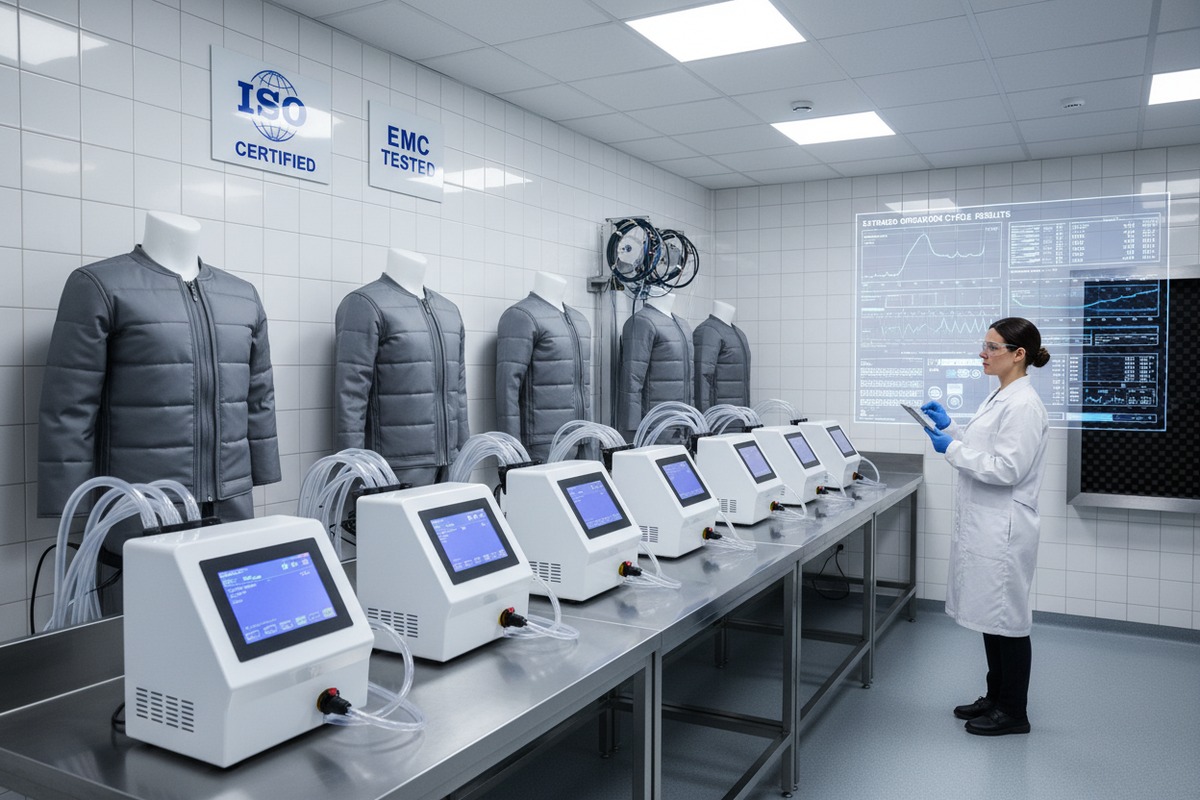
Understanding Quality Management Systems
Quality control extends beyond final inspection. It begins with raw material selection and continues through assembly, testing, and packaging. When evaluating suppliers, ask about their complete QMS framework.
ISO 13485 certification 3 indicates the manufacturer follows international medical device quality standards. For pressotherapy machines, this certification covers design controls, production processes, and post-market surveillance. The FDA requires manufacturers to comply with Quality System Regulations (21 CFR 820) 4, which overlap significantly with ISO 13485 requirements.
Key Documents to Request
| Document Type | What It Shows | Why It Matters |
|---|---|---|
| ISO 13485 Certificate | QMS compliance | Validates systematic quality approach |
| Aging Test Report | Extended operation results | Proves durability before shipping |
| EMC Test Certificate | Electromagnetic compliance | Ensures safe operation near other devices |
| Pressure Calibration Log | Accuracy verification | Confirms consistent pressure delivery |
| Production Batch Records | Manufacturing consistency | Shows process control per batch |
How Aging Tests Work
Aging tests simulate months or years of use within days or weeks. Our production team runs units continuously at maximum settings—checking pressure stability, valve response times, and compressor durability. Units that fail these tests never ship.
Ask potential suppliers: "How many hours does each unit run before shipment?" Serious manufacturers will answer specifically. Vague responses suggest shortcuts.
Third-Party Verification Options
Beyond factory documentation, consider independent verification sources. European Lymphology Society audits have evaluated pressotherapy equipment quality, examining factors like pressure maintenance during treatment cycles. Third-party laboratory certifications provide additional assurance beyond manufacturer claims.
Notified Bodies in Europe 5 conduct QMS audits before granting CE certification. These audits verify that manufacturers actually follow the processes they document. Request proof of recent Notified Body audits when sourcing from European or international suppliers.
What documentation should I ask for to see how previous technical malfunctions were resolved?
Every time our service engineers resolve a malfunction report, they document the problem, root cause, and corrective action. This systematic approach protects future buyers. When evaluating suppliers, their malfunction resolution records reveal operational maturity.
Request CAPA (Corrective and Preventive Action) reports for the model you are considering, ask for warranty service logs showing resolution timelines, demand documentation of any product recalls or safety alerts, and inquire about software update histories addressing past issues. These records demonstrate how manufacturers respond when problems occur.

The Value of CAPA Documentation
CAPA reports show more than individual fixes. They reveal patterns. If pressure inconsistency appears repeatedly across multiple units, a robust CAPA process leads to design modifications. Manufacturers without systematic CAPA processes keep making the same mistakes.
FDA regulations require medical device manufacturers to maintain CAPA systems. When a supplier cannot produce CAPA documentation, question whether their products truly meet regulatory standards.
Key Documentation Categories
| Document | Information Provided | Buyer Benefit |
|---|---|---|
| CAPA Reports | Root cause analysis, corrective actions | Shows systematic problem-solving |
| Warranty Service Logs | Issue types, resolution times | Reveals common problems and service quality |
| Recall History | Safety issues, affected units | Identifies potential risks |
| Software Update Log | Bug fixes, feature improvements | Demonstrates ongoing product support |
| Field Service Reports | On-site repair details | Shows real-world performance issues |
How to Interpret Service Logs
Service logs tell stories. A log showing 50 compressor replacements across 1,000 units indicates a 5% compressor failure rate—acceptable for professional equipment. But 200 compressor failures across the same population suggests systemic design problems.
Look for patterns in timing. Failures clustering at 6 months suggest manufacturing defects. Failures spreading evenly over years indicate normal wear. This context helps you plan maintenance budgets and set client expectations.
Checking Recall Databases
Before purchasing any pressotherapy model, check manufacturer websites and regulatory databases for recall history. The FDA maintains a searchable database of medical device recalls 6. While pressotherapy devices rarely face major recalls, knowing how to search protects you.
Ask suppliers directly: "Has this model been subject to any recalls, safety alerts, or field corrections?" Document their answer. Honest manufacturers acknowledge past issues and explain how they resolved them.
Software and Firmware Considerations
Modern pressotherapy machines include software controlling pressure sequences, timing, and safety limits. Outdated software can cause performance issues or compatibility problems. Ask about the machine's software update history and whether future updates are guaranteed.
Our engineering team releases firmware updates when we identify optimization opportunities. Buyers appreciate knowing their investment will improve over time rather than becoming obsolete.
How can I ensure the supplier's maintenance logs reflect the true long-term reliability of my order?
When we ship units to distributors across North America and Europe, we include maintenance guidelines based on actual field performance. These recommendations come from years of tracking how machines perform under various usage conditions. Verifying that suppliers base their guidance on real data protects your investment.
Ensure maintenance log accuracy by requesting sample maintenance records from existing customers, asking for aggregate reliability statistics across the installed base, verifying the supplier offers structured technical support with documented response protocols, and confirming replacement parts availability with published timelines. Cross-reference supplier claims with independent user reviews.

Distinguishing Genuine Maintenance Data
Suppliers sometimes provide idealized maintenance schedules rather than ones based on real performance. Ask specific questions: "How many units of this model are currently in service? What is the average time between service calls? What percentage require component replacement within the warranty period?"
Honest answers include numbers. Vague answers suggest insufficient tracking or something to hide.
Establishing Maintenance Expectations
| Component | Typical Service Interval | Replacement Indicators |
|---|---|---|
| Compressor | 3,000-5,000 hours | Noise increase, pressure drops |
| Valves | 2,000-3,000 hours | Sequencing delays, air leaks |
| Garments | 500-1,000 sessions | Visible wear, pressure loss |
| Control Board | 10,000+ hours | Software glitches, display issues |
| Air Hoses | 1,000-2,000 sessions | Cracks, connection looseness |
Verifying After-Sales Support Infrastructure
Maintenance log accuracy depends partly on support infrastructure. Suppliers who track service calls, maintain parts inventories, and employ trained technicians generate reliable data. Ask about support team size, response time guarantees, and technical training programs.
Our service team responds to inquiries within 24 hours and maintains replacement parts inventory for all current models. When suppliers cannot describe their support infrastructure specifically, maintenance data reliability becomes questionable.
Checking Parts Availability
Long-term reliability partly depends on parts availability. Before committing to a purchase, verify: "What is the End-of-Life (EOL) support plan 8 for this model? How long will replacement parts remain available? What happens if a critical component becomes unavailable?"
Manufacturers committed to customer success publish EOL policies and honor them. Those who discontinue support abruptly leave buyers stranded with unrepairable equipment.
Cross-Referencing with Customer Feedback
Maintenance logs from suppliers should align with independent customer experiences. Research user forums, professional associations, and review platforms for feedback on the specific model you are considering. Discrepancies between supplier claims and user reports warrant investigation.
Consider requesting references from existing customers in similar business contexts. A supplier confident in their product quality will connect you with satisfied users.
Building Your Own Tracking System
Once you purchase equipment, establish your own maintenance tracking. Document every service call, component replacement, and performance observation. This data helps you verify supplier claims, plan future purchases, and negotiate based on actual experience.
Conclusion
Protecting your investment in pressotherapy equipment requires asking the right questions before signing purchase orders. Request failure rate data, verify quality control processes, examine malfunction resolution records, and confirm maintenance log accuracy. These steps separate reliable suppliers from those who might leave you with equipment problems and client complaints.
Footnotes
1. Explains FDA premarket notification for medical devices. ↩︎
2. Defines a key reliability metric for equipment performance. ↩︎
3. Details the international standard for medical device quality management systems. ↩︎
4. Describes FDA regulations for medical device quality systems. ↩︎
5. Explains the role of organizations in European medical device certification. ↩︎
6. Replaced HTTP 404 with a working, authoritative page directly from FDA.gov. ↩︎
7. Describes a system for identifying and resolving product issues. ↩︎
8. Explains the concept of End-of-Life for medical devices. ↩︎

 English
 Español de México
 Deutsch
 Français
 العربية
 Русский
