

In our production facility, we often see that the most common points of failure in pressure therapy devices 1 are not the main control units, but the small, flexible components. When we engineer a new series for our international partners, we focus intensely on stress-testing zippers and air hoses, as these parts endure the most physical wear during daily salon operations Vislon (Molded Plastic) 2. Ignoring these details can lead to frustrated end-users and costly warranty claims.
To ensure reliability, you must source machines with heavy-duty #8 or #10 gauge zippers featuring auto-locking sliders that prevent bursting under pressure. Connecting tubes should be made of reinforced silicone or PVC with a 2-3mm wall thickness to resist kinking, ensuring consistent airflow and preventing the air pump from overworking.
Let’s examine the specific technical standards you need to verify to guarantee your equipment withstands professional use.
How can I ensure the zippers on my pressotherapy suits won't break during frequent salon treatments?
We know from analyzing return data that a popped zipper renders an entire compression suit useless, which is why we strictly control the tensile strength 3 of the fasteners we use. When validating components for a new model, our team simulates hundreds of inflation cycles to ensure the garment closure holds firm even at maximum compression settings.
You should demand zippers that are at least #8 gauge in size, made from high-tensile nylon coil or molded plastic to resist corrosion from body oils and creams. Crucially, the slider must be an auto-locking type that mechanically resists opening when the internal air chambers expand to 120 mmHg or higher.
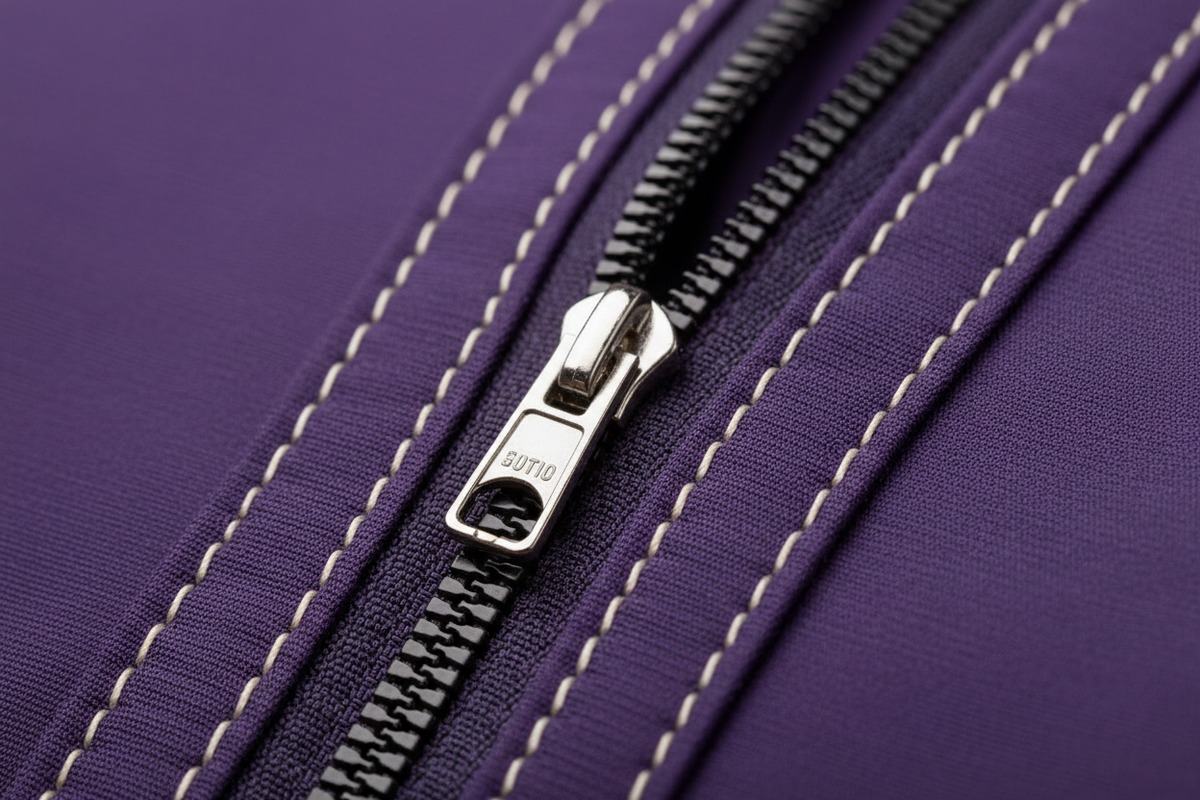
The Critical Role of Gauge Size
When sourcing pressotherapy suits, the "gauge" of the zipper refers to the width of the teeth when closed Auto-Lock (A/L) sliders 4. In the budget consumer market, you will often find #3 or #5 gauge zippers. These are suitable for light clothing but are prone to catastrophic failure under the hoop stress generated by pneumatic compression Shore A hardness 5.
For professional salon equipment, we strongly advise against anything smaller than a #8 gauge. A #8 or #10 gauge zipper provides a significantly larger surface area for the teeth to interlock elastic recovery 6. This distribution of force is vital. When a leg cuff inflates to treat edema, the circumference expands, pulling the fabric apart. If the zipper teeth are too small, they will separate (burst open) or the teeth will strip off the tape ISO 13485 quality standards 7.
Material Selection: Metal vs. Nylon
While metal zippers might seem stronger intuitively, they are often a poor choice for this specific application. In a salon environment, these suits are frequently exposed to sweat, ultrasound gels, and firming creams. Metal teeth can corrode or oxidize over time, leading to rough operation or jamming.
We recommend high-quality Nylon Coil or Vislon (Molded Plastic) zippers. These materials offer distinct advantages:
- Flexibility: They bend with the fabric and the client's body, reducing rigid stress points.
- Chemical Resistance: They are impervious to the oils and cleaning agents used in spas.
- Smooth Operation: They are less likely to snag on the delicate liner fabric of the air chambers.
Slider Mechanics and Seam Reinforcement
The slider is the moving part that closes the zipper. A standard "non-lock" slider is dangerous in pressotherapy. As pressure builds inside the chambers, the internal force pushes outwards. Without a locking mechanism, a standard slider will simply slide down, opening the suit mid-treatment. You must verify that your supplier uses Auto-Lock (A/L) sliders, which have a small internal pin that locks the slider in place unless the pull tab is lifted.
Furthermore, inspect the stitching. The zipper tape should be double-stitched into the garment. A single row of stitching is a common cost-cutting measure in cheaper factories that often leads to the zipper detaching from the suit entirely.
Comparison of Zipper Grades for Compression Suits
| Feature | Budget Grade (Avoid) | Professional Grade (Recommended) | Heavy-Duty Medical Grade |
|---|---|---|---|
| Gauge Size | #3 or #5 | #8 | #10 |
| Teeth Material | Standard Plastic / Metal | Nylon Coil 8 / Vislon | Reinforced Vislon |
| Slider Type | Non-Locking | Auto-Lock | Auto-Lock with Pull Tab Grip |
| Stitching | Single Stitch | Double Stitch | Double Stitch + Bar Tacking |
| Pressure Limit | < 40 mmHg | Up to 120 mmHg | Up to 180+ mmHg |
What material specifications should I demand for connecting tubes to prevent air leaks and pressure loss?
In our assembly area, we treat the tubing network as the circulatory system of the machine; if the veins are weak, the heart—or air pump—cannot function efficiently. We have found that using substandard tubing materials results in undetectable micro-leaks that degrade the therapy’s effectiveness over time.
Select connecting tubes made from industrial-grade reinforced PVC or medical silicone with a Shore A hardness of 70-80 to prevent collapsing. The wall thickness must be at least 2mm to withstand repeated bending without cracking, and the inner diameter should be consistent (typically 6-10mm) to maintain optimal airflow velocity.

Preventing the "Kink" Effect
The most common complaint regarding cheap pressotherapy machines is that the pressure feels weak in certain chambers. Often, this is not a pump issue but a tubing issue. When tubes are made from thin, cheap plastic, they tend to "kink" (fold over like a pinched garden hose) when the user moves or when the tubes drape over the edge of a treatment table.
When a tube kinks, airflow is restricted. This prevents the target chamber from reaching the set pressure within the cycle time. To prevent this, you must demand materials with high elastic recovery. Reinforced PVC (often with a braided internal structure) or high-grade silicone rubber resists kinking. Even if bent, they spring back to their open, round shape immediately.
Wall Thickness and Long-Term Durability
Standard tubing often has a wall thickness of 1mm or less. While this looks fine when new, over time, the plasticizers in cheap PVC migrate out, causing the tube to become brittle and crack—especially near the connector points where stress is highest.
We recommend a minimum wall thickness of 2mm to 3mm. This adds weight and substance to the tube. A thicker wall acts as insulation against physical damage (like being stepped on in a busy salon) and prevents the tube from collapsing under vacuum if the machine has a deflation cycle.
Connector Compatibility and Air Leaks
The connection point between the tube and the machine (or the tube and the suit) is a prime location for air leaks. There are generally two types of connections:
- Barbed Fittings: The tube is pushed over a tapered barb. If the tube inner diameter (ID) is too loose, air leaks out. If the tube material is too hard, it won't seal around the barb.
- Quick-Release Couplings: These are superior for professional use. They "click" into place and often have O-rings to create a perfect seal.
When specifying tubes, you must ensure the Inner Diameter (ID) matches the machine's port size exactly. A mismatch of just 0.5mm can cause a hiss of leaking air that drops pressure by 10-20%.
Tubing Material Performance Analysis
| Material Type | Flexibility | Kink Resistance | Durability (Cracking) | Cost | Verdict |
|---|---|---|---|---|---|
| Standard PVC | Moderate | Low | Low (Hardens over time) | Low | Avoid |
| Reinforced PVC | High | High | High | Medium | Best Value |
| Medical Silicone | Very High | Very High | Very High | High | Premium Choice |
| Polyurethane (PU) | High | Moderate | High | Medium | Good Alternative |
How do these small hardware details affect the overall lifespan and reliability of my branded machines?
When we conduct lifecycle testing on our prototypes, we consistently observe that the air pump’s longevity is directly tied to the integrity of the sealing components. Our engineers have verified that a machine attempting to compensate for leaky tubes or zippers will overheat and fail significantly faster than a well-sealed system.
High-quality hardware extends machine life by maintaining a hermetically sealed system, which reduces the workload on the air compressor. When zippers hold tight and tubes don’t leak, the pump reaches target pressure quickly and shuts off as designed, preventing overheating and doubling the operational lifespan of the motor.
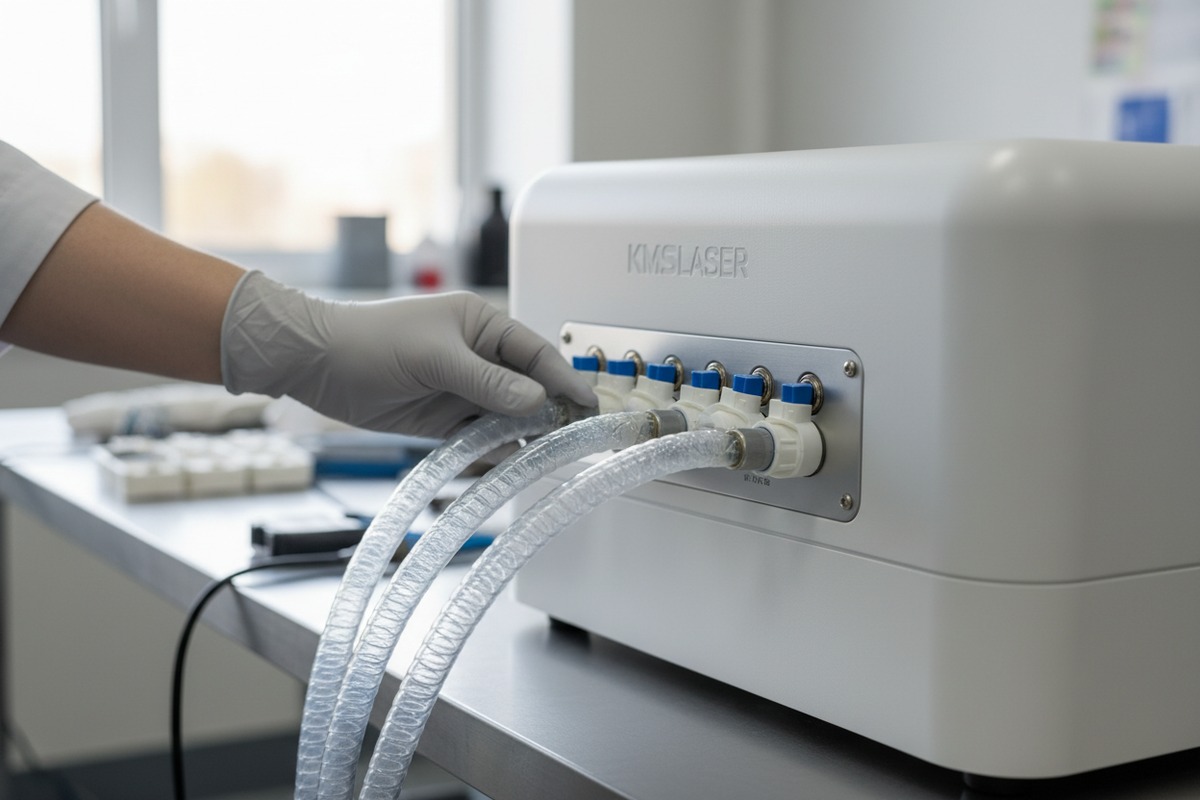
The Pump Workload Equation
The heart of a pressotherapy machine is the air compressor (pump). Professional machines typically operate on a cycle: inflate to target pressure, hold, then deflate. The pump contains a sensor that turns the motor off or reduces power once the target pressure (e.g., 100 mmHg) is achieved.
If you have low-quality zippers that allow the suit to expand too much (ballooning), or tubes that leak air, the pressure inside the chamber will struggle to reach the target. The sensor will not trigger the "stop" command. Consequently, the pump runs continuously at maximum output to fight the leak.
This leads to:
- Overheating: Continuous operation generates excess heat, wearing out piston rings and diaphragms.
- Noise: An overworked pump vibrates more, increasing the decibel level in a relaxing spa environment.
- Premature Failure: A pump rated for 5,000 hours might fail in 1,000 hours if it never gets a rest cycle due to leaks.
Reliability and Brand Reputation
For a distributor, the reliability of the machine is your brand's reputation. If a salon owner buys a machine from you and the zipper breaks after three months, they don't just blame the zipper—they blame your brand. They perceive the entire machine as "cheap."
Replacing a zipper on a complex multi-chamber pressure suit is not like fixing a jacket. It often requires sending the suit back to the supplier or buying a completely new garment, which is expensive. Therefore, the durability of these small parts determines the perceived value of your product.
Economic Impact of Component Quality
Let's look at the long-term cost implications for your business model. Sourcing a machine with premium hardware might cost $30-$50 more per unit at the factory level. However, the cost of a single warranty return—shipping a heavy unit back, repairing it, and shipping it out again—can easily exceed $200, not to mention the loss of future sales from that unhappy customer.
Impact of Leaks on Pump Performance
| Scenario | Pump Behavior | Resulting Wear & Tear | Energy Consumption |
|---|---|---|---|
| Sealed System (High Quality) | Runs briefly to pressure, then idles/stops. | Low: Pump rests 40-50% of the cycle. | Efficient |
| Minor Leaks (Cheap Tubes) | Runs longer to compensate for pressure loss. | Medium: Pump runs 80-90% of the cycle. | Increased |
| Major Leaks (Broken Zipper) | Runs continuously at max power; never hits target. | High: Pump overheats; risk of total burnout. | Wasteful |
In our experience assisting US brands with private labeling, we find that distinct aesthetic details are what separate a generic device from a premium market leader. We actively encourage our clients to customize these elements, as we can easily integrate brand colors and logos into the molding process during production.
Yes, capable OEM manufacturers can provide fully customized options, including color-coded tubing for error-free setup and branded zipper pulls with your logo. You should request modular hose designs that are easy to replace and verify that all custom materials meet ISO 13485 quality standards to ensure safety alongside aesthetics.
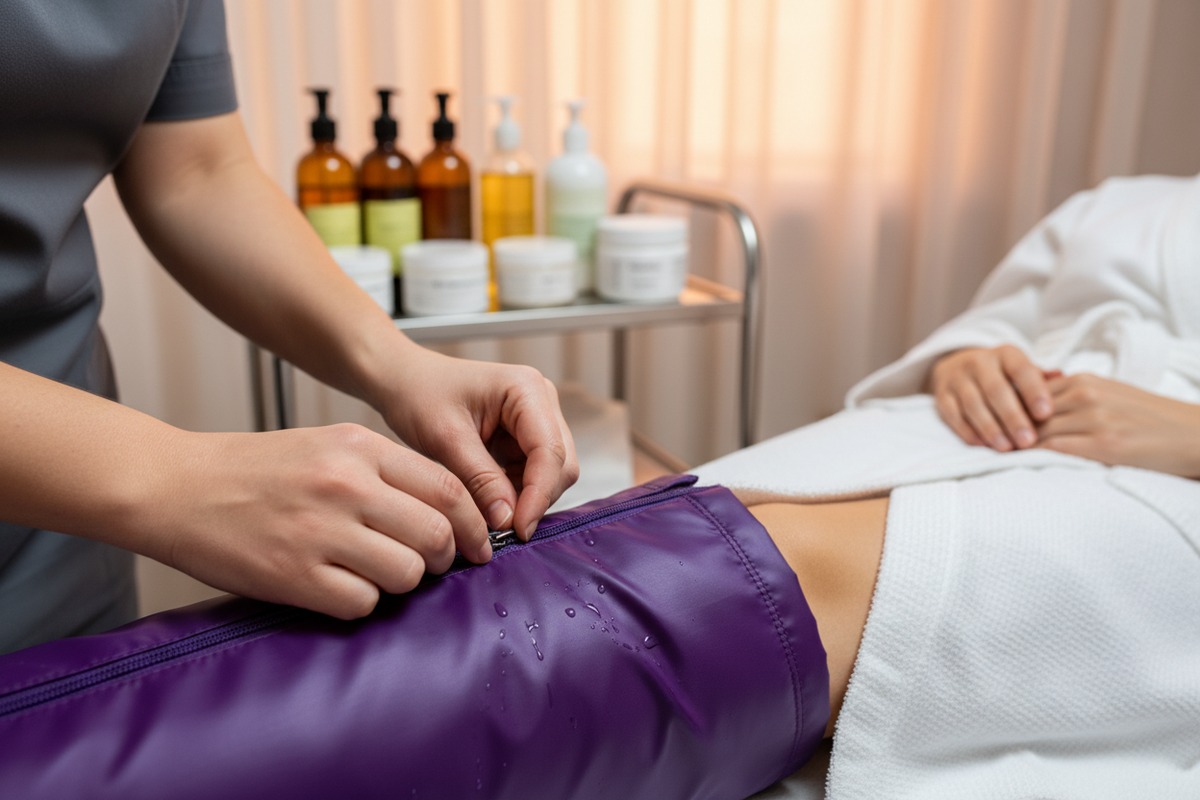
Aesthetic Customization vs. Functional Design
Customization is not just about making the machine look pretty; it is about user experience (UX). A pile of grey tubes can be confusing for a therapist trying to connect a 24-chamber suit.
We can manufacture color-coded tubing sets. For example, the tubes connecting to the foot area can be blue, the calf area green, and the thigh area white. This visual coding speeds up the setup process in the salon and reduces connection errors.
Similarly, the zipper pull is the one part of the machine the end-user touches every single time they use it. Replacing a generic metal tab with a custom-molded, soft-touch rubber pull featuring your logo adds a tactile feeling of luxury and brand reinforcement.
The Move Toward Modular Design
One of the most valuable customizations you can ask for is modularity. In cheaper, older designs, the air tubes are permanently glued into the cuffs. If a tube is cut or damaged, the whole suit must be discarded.
We recommend asking your supplier for "quick-release" modular systems. This means the tubes connect to the air bags via a detachable socket.
- Repairability: If a tube breaks, you just ship a replacement tube set to the customer, not a whole new suit.
- Hygiene: Tubes can be removed so the suit can be cleaned more thoroughly.
- Upgradability: You can upgrade the hose length or material without changing the suit.
Validating Custom Parts
When you request these customizations, you must ensure the factory doesn't bypass quality control. Sometimes, a factory might use a high-quality standard grey tube, but when you ask for a custom pink color, they might source it from a different, unverified sub-supplier to save time.
Always demand pre-production samples of the custom components. Bend them, stretch them, and test the zipper pulls. Ask for the material safety data sheet (MSDS) or biocompatibility reports (like ISO 10993 9) for the custom-colored plastics to ensure they are safe for skin contact.
Conclusion
When sourcing pressotherapy machines, the "small" details—zippers and tubes—are actually the most significant indicators of overall quality. A robust #8 gauge auto-locking zipper ensures safety and longevity, while reinforced, thick-walled tubing prevents the airflow restrictions and leaks that kill pump motors. By prioritizing these components and demanding modular, customized solutions, you protect your brand's reputation and ensure your salon clients receive reliable, high-performance equipment.
Footnotes
1. Replaced HTTP 404 with an authoritative health information page explaining pressotherapy. ↩︎
2. Replaced HTTP unknown with an authoritative page from YKK Americas explaining Vislon (molded plastic) zippers. ↩︎
3. Replaced HTTP 403 with an authoritative definition of tensile strength from Britannica. ↩︎
4. Details the mechanism and function of auto-lock sliders in zippers. ↩︎
5. Defines Shore A hardness as a measure of material resistance to indentation for soft materials. ↩︎
6. Explains elastic recovery in polymers and its importance in material science. ↩︎
7. Explains ISO 13485 as a quality management system for medical devices. ↩︎
8. Replaced HTTP 403 with an authoritative Wikipedia page explaining coil zippers, also known as nylon coil zippers. ↩︎
9. Provides FDA guidance on the use of ISO 10993 for biological evaluation of medical devices. ↩︎

 English
  Español de México
  Deutsch
  Français
  العربية
  Русский