

When our production team first started testing intermittent pneumatic compression devices 1, we quickly realized that not all inflation-deflation cycles deliver the same results. Buyers often struggle to distinguish between machines that merely inflate and deflate versus those that actually mimic effective lymphatic drainage 2. This confusion leads to wasted investment and disappointed end-users. The good news? There are clear, measurable criteria you can use to evaluate whether your pressotherapy equipment meets scientific standards.
To verify if pressotherapy machine inflation and deflation cycles are scientifically sound, evaluate pressure sensor accuracy, sequential compression patterns moving distal to proximal, chamber timing of at least 50 seconds per inflation, therapeutic pressure ranges of 30-120 mmHg, and proper gradient settings. These parameters ensure effective tissue fluid movement and lymphatic stimulation.
In this guide, we will walk you through each key aspect of pressotherapy cycle verification. You will learn practical methods to assess sensor calibration, cycle timing, component durability, and software customization options. Let us dive into each area that matters for scientifically sound treatment cycles.
How can I verify that the pressure sensors in my pressotherapy machines are providing accurate and consistent readings?
From our experience calibrating devices before they leave our Guangzhou facility, we have seen how even small sensor drift can compromise treatment outcomes. Many distributors face complaints from salon owners when pressure readings are inconsistent. The challenge is that most buyers do not know how to test sensor accuracy themselves.
Verify pressure sensor accuracy by performing multi-point calibration tests at 0%, 50%, and 100% of the pressure range. Check for linearity, hysteresis, and repeatability using a reference standard. Sensors should maintain accuracy within ±2-5% across multiple cycles and temperature conditions to ensure consistent treatment delivery.

Understanding Pressure Sensor Fundamentals
Pressure sensors in pressotherapy machines convert air pressure into electrical signals. These signals tell the control unit how much pressure each chamber is applying. When sensors drift or fail, the machine may display one pressure but actually deliver another. This creates inconsistent treatment results.
Good quality tactile pressure sensors typically feature linearity of 99.5% or higher 3. The accuracy of any instrument is defined as the difference between the true value and the measured value indicated by the device. Every pressure measurement carries some uncertainty due to instrument limitations and environmental factors.
Key Calibration Steps
| Calibration Step | What to Check | Acceptable Range |
|---|---|---|
| Zero Point | Output at atmospheric pressure | ±0.1% of full scale |
| Mid-Range | Reading at 50% pressure | ±2% deviation |
| Full Scale | Reading at maximum pressure | ±2% deviation |
| Hysteresis | Difference between ascending and descending readings | <0.5% |
| Repeatability | Consistency across multiple tests | <1% variation |
The calibration process starts with connecting the device to a reference standard. A 5-point calibration 4 checks at 0%, 50%, and 100% of the range, then back down through 50% and 0%. This provides a basic check of zero, span, and hysteresis.
Environmental Factors Affecting Accuracy
Temperature plays a major role in sensor accuracy. Allow 2-24 hours for thermal stabilization before calibration. Calibrate in a temperature-controlled environment whenever possible. Installation stress from over-torqued connections can induce mechanical stress on sensors. Contamination from foreign material on diaphragms also affects readings.
Standard sensors typically show 0.1-0.5% hysteresis. For critical applications, look for sensors with less than 0.02% hysteresis. Over time, even high-quality pressure instruments become less accurate due to wear, environmental conditions, and mechanical stress.
Documentation Requirements
Every calibration must produce a certificate containing identification details, specifications, calibration dates, equipment used, test points with applied pressures and measured outputs, and pass/fail determination. This documentation proves your machines meet accuracy standards and supports quality management compliance.
What criteria should I use to evaluate if the inflation sequence effectively mimics professional manual lymphatic drainage?
Our engineering team has spent considerable time studying how manual lymphatic drainage therapists work. When we design pressotherapy programs, we aim to replicate that natural, wave-like motion mechanically. The problem is that many machines on the market simply inflate chambers without proper sequencing or timing, which limits their therapeutic value.
Effective inflation sequences should move from distal to proximal regions in a wave-like pattern, use compression times over 50 seconds per chamber to generate adequate tissue fluid pressure above 30 mmHg, apply therapeutic pressures between 30-80 mmHg for standard treatments, and maintain graduated pressure gradients to prevent fluid backflow.
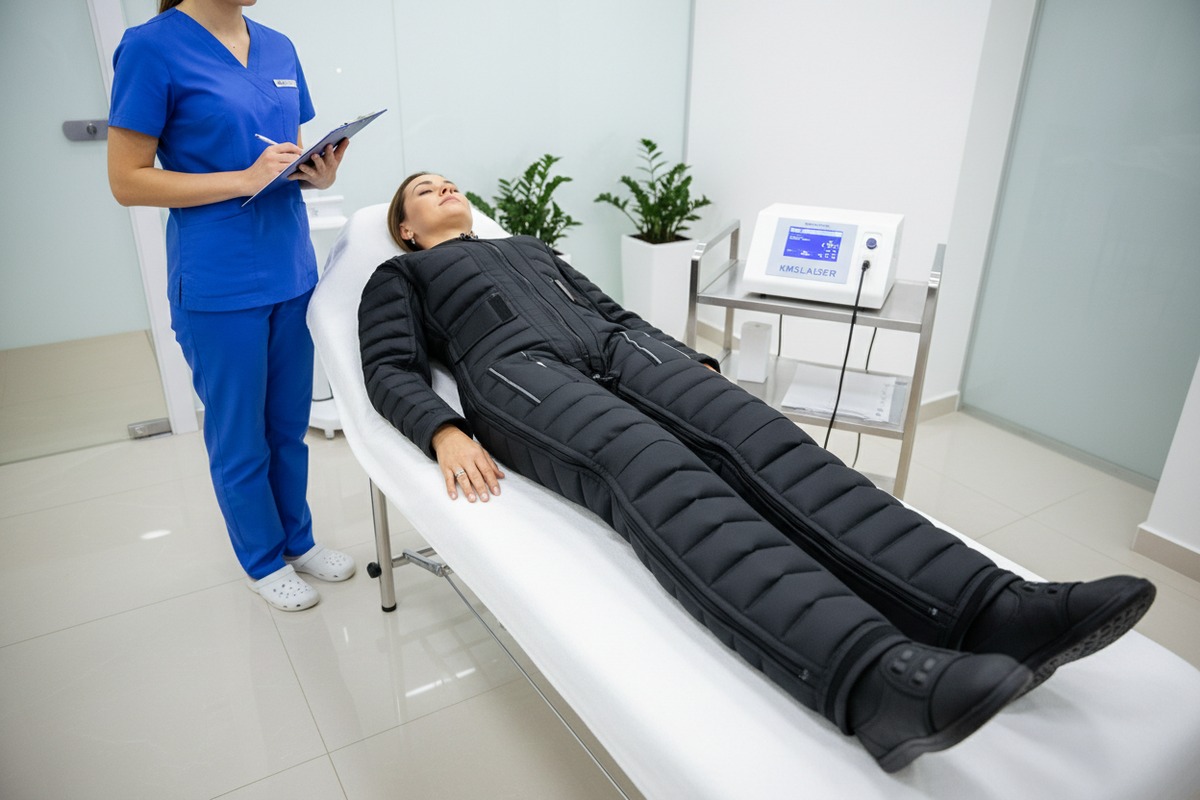
The Science Behind Sequential Compression
The lymphatic system lacks an internal pump 6 like the heart. It relies on muscle movement and external pressure to function. Pressotherapy applies external pressure that stimulates lymphatic vessels and accelerates drainage. Research points to the necessity of applying high pressures and compression times over 50 seconds to generate effective tissue fluid pressures 7 and provide enough time for creating tissue fluid flow.
Short inflation times generate tissue fluid pressures similar to one-chamber devices. This precludes effectiveness compared to multi-chamber devices. Studies found that inflation times of 5 and 20 seconds were not long enough to generate tissue fluid head pressures above 30 mmHg, even when compression pressures reached 120 mmHg.
Optimal Timing Parameters
| Parameter | Recommended Range | Clinical Evidence |
|---|---|---|
| Inflation Time Per Chamber | 50+ seconds | Required to reach 30+ mmHg tissue pressure |
| Total Cycle Time | 160-400 seconds | Allows adequate fluid movement |
| Deflation Time | 50 seconds | Enables complete pressure drop and tissue refilling |
| Session Duration | 30-60 minutes | Standard protocol for most applications |
| Pressure Range | 30-80 mmHg | Evidence-based for sequential IPC programs |
Twenty to 30 minutes and a maximum pressure of 80 mmHg seem to be the standard protocol for most studies. However, research found longer compression times to be more effective in mobilizing tissue fluid. Inflation and deflation times of 50 seconds each allow for adequate pressure to be achieved.
Pressure Gradient Considerations
Multi-chamber devices should create a graduated pressure gradient, moving pressure from distal to proximal areas. This ensures fluid moves toward the central lymphatic system rather than pooling or flowing backward. The recommended compression and decompression times are 30 to 50 seconds, which is easier to control mechanically than manually.
Literature contains differentiated, sometimes contradictory information on optimal pressure. Data varies from 50 mmHg to 120 mmHg. To date, however, there is no best practice guideline established. For home or standard wellness applications, 40-80 mmHg is generally comfortable. For sports recovery, 60-100 mmHg may be appropriate depending on tolerance.
Comparing Machine Programs to MLD Techniques
Manual lymphatic drainage involves gentle, superficial, and rhythmic movements in an upward direction. Pressotherapy is designed to simulate this movement. The big difference is that MLD requires trained therapists, while pressotherapy delivers consistent, reproducible pressure application through programmed cycles.
Two-thirds of patients in comparative studies found manual drainage more pleasant. However, mechanical delivery offers advantages in time and pressure control consistency. It is difficult to maintain the same compression and control with manual therapy over multiple sessions.
How do I ensure the air pump and valve systems are durable enough to maintain precise cycle timing over thousands of sessions?
When clients visit our production facility, one of their top concerns is equipment longevity. They need machines that will perform reliably across thousands of treatment sessions without losing timing precision. Our quality control protocols focus heavily on pump and valve durability because these components determine long-term performance.
Ensure air pump and valve durability by verifying pump lifespan ratings of at least 10,000 operating hours, selecting quality diaphragm materials rated for millions of flex cycles, checking valve specifications for tens of millions of cycle ratings, and confirming the manufacturer provides maintenance schedules and replacement part availability.

Air Pump Specifications and Lifespan
The air pump is the heart of any pressotherapy system. Quality pressotherapy pumps used in advanced series devices can have lifespans up to 10,000 hours. For a salon running six hours daily, this translates to over four years of continuous operation. The lifespan of a diaphragm in a pump typically ranges from thousands to tens of thousands of hours, or many millions of flex cycles.
Good quality pumps are designed for long life with thousands of hours or millions of cycles. However, diaphragms and valves are dynamic components subject to wear. These parts will eventually need replacement in serviceable pumps, or the entire pump requires replacing in sealed units.
Factors Affecting Component Longevity
| Component | Typical Lifespan | Failure Signs | Maintenance Tips |
|---|---|---|---|
| Diaphragm | 5,000-20,000+ hours | Reduced pressure output | Check for tears, stiffening |
| Solenoid Valves | 10-50 million cycles | Inconsistent timing | Regular cleaning, voltage check |
| Seals | 3-5 years | Air leaks, pressure loss | Visual inspection |
| Motor | 10,000+ hours | Unusual noise, overheating | Proper voltage, dust-free environment |
Running a valve very frequently means high cycle rates, which accelerates wear. Continuous operation causes coil heating. High frequency or continuous operation significantly shortens valve life. Temperature, moisture, and contaminants also impact longevity.
Environmental and Operational Considerations
A pump in a clean, temperature-controlled environment will likely outlast one in a hot, dusty environment. High temperatures degrade rubber seals and insulation. Low temperatures make seals brittle. Humidity causes corrosion. Dust and oil mist cause valve blockage and increased wear.
For most miniature pumps, maintenance means ensuring clean air supply by checking or replacing inlet filters. Operate within specified electrical and environmental limits. The closer the operating conditions approach upper limits of pressure and temperature ratings, the fewer cycles the components will yield.
Quality Indicators to Request from Manufacturers
Request Mean Time Between Failures data 8 from your supplier, understanding it is a statistical measure. Ask for warranty terms covering pump and valve components. Confirm replacement parts availability and pricing. Quality manufacturers provide detailed specifications including cycle ratings under standardized testing conditions.
Medical-grade materials 9 that withstand repeated use while maintaining hygienic standards indicate professional construction. Safety features should include emergency stop functions, pressure limiters, and automatic shut-off systems to prevent overuse and protect components.
Can I work with my manufacturer to customize the software parameters for more advanced or specialized treatment cycles?
Throughout our years serving the US and European markets, we have worked with numerous brand owners who need specific treatment protocols. Whether for athletic recovery, post-surgical care, or aesthetic applications, software customization allows your branded machines to stand out from generic competitors. The key is understanding what parameters can be modified and how to communicate your requirements effectively.
Yes, reputable pressotherapy manufacturers offer software customization including adjustable pressure ranges, programmable inflation-deflation sequences, customizable gradient settings, treatment time options, and personalized preset programs. OEM partnerships typically include options for branded startup screens, custom program development, and protocol-specific parameter configurations.

Customizable Software Parameters
Modern pressotherapy devices feature sophisticated software with comprehensive programming capabilities. Advanced systems offer unparalleled treatment flexibility. Users can select from multiple pre-configured programs designed for specific therapeutic objectives, from post-exercise recovery to lymphedema management. Each program features carefully calibrated pressure cycles, timing sequences, and zone targeting options.
| Parameter Category | Customization Options | Typical Range |
|---|---|---|
| Pressure Settings | Per-chamber adjustment | 20-250 mmHg |
| Timing | Inflation, deflation, hold times | 1-60 seconds per phase |
| Gradient | Pressure drop between chambers | 0-20 mmHg steps |
| Programs | Preset and custom protocols | 4-100 savable programs |
| Interface | Language, branding, screen design | Multiple options |
| Zone Control | Individual chamber enable/disable | Full flexibility |
Some devices allow saving up to 100 custom programs, each consisting of 25 pumping cycles of different chambers. This level of customization enables practitioners to create personalized treatment protocols tailored to individual needs.
Working with Your Manufacturer
Start by clearly defining your target applications. Athletic recovery requires different parameters than lymphedema management. Provide your manufacturer with clinical references or treatment protocols you want to replicate. Our team works with brand owners to translate therapeutic goals into specific software parameters.
Request demonstration units with proposed customizations before full production orders. Test the programs with actual users when possible. Gather feedback and refine parameters before finalizing. Good manufacturers offer iterative development to ensure the final product meets your market needs.
OEM and Branding Options
Professional OEM partnerships extend beyond software to include visual branding. Your logo can be integrated into the device startup screen and etched onto the machine body. Custom documentation, including user manuals with your brand identity and treatment protocols, adds professional value.
Consider requesting specialized programs developed in cooperation with medical or lymphology experts. Some manufacturers prepare extensive descriptions of treatment programs explaining why specific pumping methods are recommended for given conditions, along with recommended parameters for therapy duration, hold times, intervals, and gradients.
Documentation and Training Materials
Comprehensive operation instructions should accompany customized machines. This includes useful tips and suggestions specific to your programmed protocols. Training materials ensure your distributors and end-users can maximize the machine capabilities.
Request that your manufacturer provide treatment protocol documentation explaining the scientific rationale behind each program. This supports marketing efforts and builds confidence among professional users who want to understand why specific parameters were chosen.
Conclusion
Verifying that your pressotherapy machine delivers scientifically sound inflation and deflation cycles requires attention to sensor accuracy, proper sequential timing above 50 seconds, durable components rated for thousands of hours, and appropriate software customization. By applying these evaluation criteria, you can ensure your equipment delivers consistent, therapeutically effective treatments that satisfy both practitioners and their clients.
Footnotes
1. Explains the therapeutic technique, its components, and medical applications. ↩︎
2. Defines lymphatic drainage massage, its purpose, and how it works to reduce swelling. ↩︎
3. Explains linearity as a key component of pressure sensor accuracy and its importance in performance. ↩︎
4. Details the standard multi-point calibration procedure, including 5 test points across the range. ↩︎
5. Comprehensive guide on pressure sensor calibration, ensuring accuracy and compliance in measurement systems. ↩︎
6. Explains that the lymphatic system relies on external forces for fluid movement, unlike the heart. ↩︎
7. Discusses the role of the lymphatic system in managing interstitial fluid and its pressure. ↩︎
8. Defines Mean Time Between Failures (MTBF) as a metric for system reliability and expected operational time. ↩︎
9. Explains biocompatible materials and their importance in medical devices for patient safety and efficacy. ↩︎

 English
 Español de México
 Deutsch
 Français
 العربية
 Русский
