
When we test new pneumatic systems 1 on our production line, we often see that a machine is only as effective as the operator controlling it. If your staff cannot interpret the documentation, your investment risks becoming a liability.
To evaluate staff effectively, use the supplier’s manual as a grading rubric during their probationary period. You must verify if they can locate safety protocols, execute the distal-to-proximal inflation sequence correctly, and interpret error codes without assistance, ensuring they have mastered the specific mechanics of the device before treating clients.
Let’s examine exactly which sections of the documentation reveal the most about your team’s readiness.
How can I use the supplier’s technical manual to judge their engineering team’s actual product knowledge?
In our experience developing control boards for export, a manual that lacks precise data usually indicates the supplier does not understand their own product granular technical specifications 2. Vague instructions often signal that the seller is merely a trader, not a technical expert.
You should look for granular technical specifications, such as precise pressure ranges (20-200 mmHg) and specific inflation cycle timings. A manual that clearly explains the pneumatic logic behind each mode demonstrates that the supplier’s engineering team understands the therapy, allowing you to test if your staff can explain these technical nuances to clients.
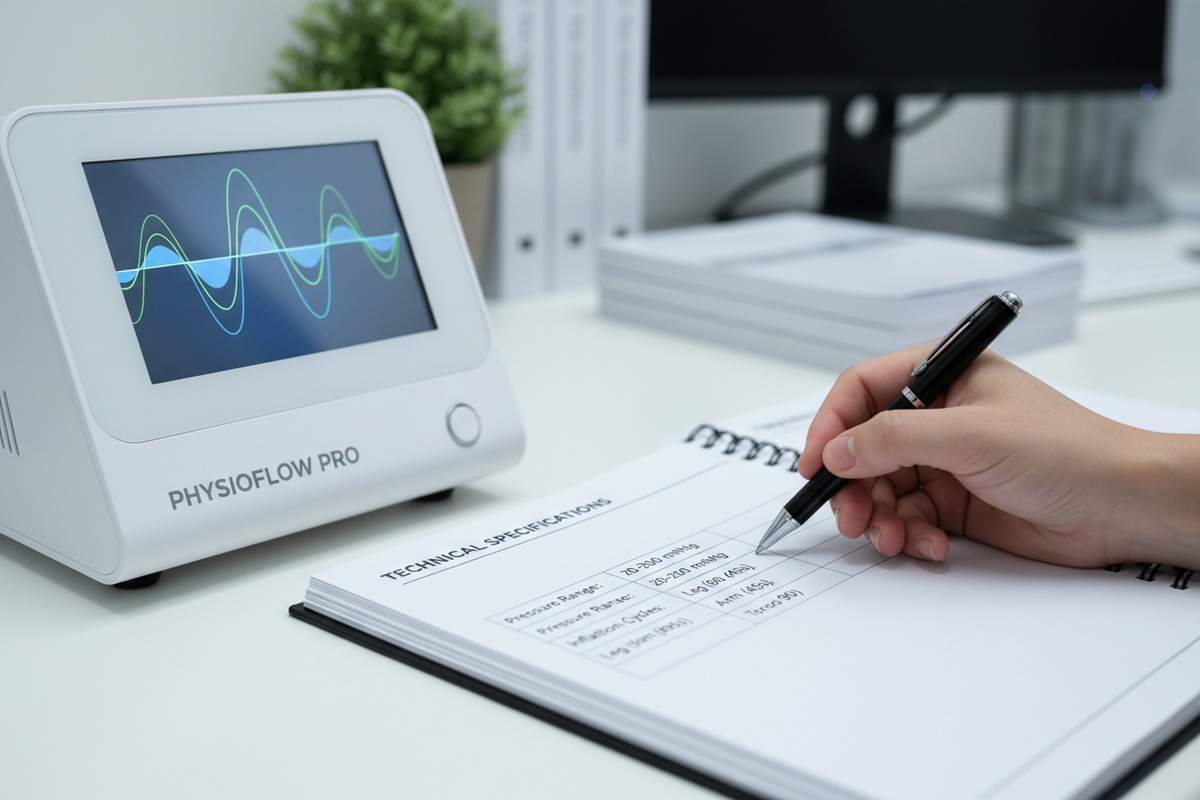
When you open a technical manual, the "Specifications" and "Principle of Operation" sections are your first indicators of quality precise pressure ranges 3. We often see manuals from cheaper trading companies that simply list "Power: 50W" and "Pressure: Adjustable." This is insufficient for a professional setting. A true engineer-grade manual provides the data you need to test your staff's technical understanding pneumatic logic 4.
To evaluate your staff, ask them to read the technical section and explain the difference between the machine’s modes based only on the text provided. If the manual explains that "Mode A" is for lymphatic drainage 5 using a peristaltic wave motion, while "Mode B" is for deep tissue massage using simultaneous inflation, your staff must be able to articulate this. If the manual is vague, your staff will resort to guessing, which is a red flag for both the supplier's quality and your team's training foundation.
Key Indicators of Engineer-Grade Documentation
You can use the following table to assess if the manual provided by the supplier is detailed enough to serve as a study guide for your technicians and therapists.
| Feature | Generic/Low-Quality Manual | Engineer-Grade Manual | What It Tells You |
|---|---|---|---|
| Pressure Range | "Low/Medium/High" | "20 mmHg – 200 mmHg (±10%)" | Allows staff to set precise treatments. |
| Cycle Timing | Not mentioned | "Inflation: 12s, Deflation: 8s" | proves the supplier controls the software logic. |
| Airbag Count | "Multiple airbags" | "16 independent chambers (8 per leg)" | Helps staff identify connection points. |
| Safety Limits | "Use with caution" | "Auto-stop at >240 mmHg or 90 mins" | Critical for staff safety training. |
Furthermore, check if the manual includes a block diagram or a clear explanation of the air pump system. Our engineers include these so that your technical lead can understand the machine's capabilities. If your technical staff reads the manual and still cannot tell you the maximum continuous runtime of the motor, the documentation has failed its purpose. This gap makes it impossible for you to verify if they are pushing the machine beyond its design limits.
What specific operational steps in the manual should I use to benchmark my staff’s competency?
When we train our own distributors, we find that the biggest errors occur during the physical setup of the air suit. A written exam is not enough; you must observe their hands-on interaction with the device instructions.
You should utilize the manual’s step-by-step setup guide as a practical checklist to score your staff’s performance. Specifically, observe if they follow the correct sequence for connecting air hoses to the corresponding chambers and if they consult the contraindications list before selecting a treatment intensity for a model client.

The operational section of the manual is your primary tool for practical assessment. A pressotherapy machine relies on the correct order of inflation—usually distal (feet) to proximal (thighs). If the air hoses are connected incorrectly, the treatment can force lymph fluid in the wrong direction, which is dangerous.
Use the manual to create a "practical driving test" for your employees. Do not help them; simply hand them the manual and the machine. Watch how they handle the air tubes. The manual should clearly label the tubes (often color-coded or numbered). If your staff member forces a connector into the wrong port or twists the air hose, they have failed the competency benchmark.
The "Intake-to-Start" Protocol
Your evaluation should cover the entire process from the moment a client enters the room. The manual likely lists contraindications such as Deep Vein Thrombosis (DVT) 6, recent surgery, or pregnancy.
Here is a recommended scoring rubric you can derive directly from the manual’s operation chapter:
- Contraindication Check: Did the staff member cross-reference the client’s health history form with the manual's safety warnings before touching the machine?
- Suit Fitting: Did they apply the suit snugly but not too tightly? (The manual usually specifies leaving enough room for two fingers).
- Hose Connection: Did they match the "Foot," "Calf," and "Thigh" labels on the hoses to the correct outlets on the main unit?
- Parameter Setting: Did they start at a low pressure (e.g., level 3 of 7) as recommended in the startup guide, or did they jump to maximum power immediately?
Evaluating Mode Selection Competency
Most professional machines have 3 to 6 modes. The manual defines what each mode does.
- Slimming Mode: Usually holds pressure longer.
- Lymphatic Drainage: Uses a wave pattern.
- Relaxation: Uses random or lighter cycles.
Ask your staff: "Which mode would you choose for a client complaining of heavy legs after a flight?" They should be able to point to the specific paragraph in the manual that recommends the Drainage/Wave mode. If they cannot find this information quickly, they are not proficient with the tool.
How do I evaluate if the troubleshooting guides are comprehensive enough for my after-sales support team?
Our support team tracks every technical issue reported, and we find that 80% of “malfunctions” are actually user errors or simple wear and tear. A robust manual empowers your team to fix these without waiting for our reply.
To evaluate the guide, check if it lists specific error codes (like E1, E2) alongside clear, actionable solutions such as “check air hose for kinks” or “replace fuse.” If the troubleshooting section only advises users to “contact the supplier” for every issue, it is inadequate for supporting your after-sales team’s independence.

Your after-sales support team needs to be fast and accurate. When a machine goes down, you lose revenue. The "Troubleshooting" section of the manual is their bible. When evaluating a new supplier, look at the last few pages of the manual.
A "passable" manual might say: "Problem: Machine not working. Solution: Check power."
A "professional" manual will say: "Error E2: Low Pressure Alarm. Possible Causes: 1. Cuff not zipped fully. 2. Air hose bent. 3. Internal pump diaphragm leak."
Testing Your Support Staff
Give your technical staff a scenario based on the manual. For example, unplug one air hose slightly so the machine leaks air. Then, ask them to diagnose the problem using only the manual.
- Scenario A: The screen shows an error or the pressure gauge doesn't rise.
- Task: Find the solution in the document.
- Outcome: If they can find the section on "Air Leakage Detection" and fix the hose within 5 minutes, both the staff and the manual pass the test.
Troubleshooting Quality Checklist
Use this table to audit the manual before you buy the machine. This ensures your team has the resources they need.
| Component | Essential Detail | Why Your Team Needs It |
|---|---|---|
| Error Codes | Specific codes (E1, E2, E3) defined. | Speeds up diagnosis; avoids guessing. |
| Fuse Replacement | Diagram showing fuse location & type (e.g., F5AL250V). | Allows immediate repair of power surges. |
| Air Leak Tests | Instructions to test individual cuffs. | Isolates if the suit or the machine is broken. |
| Cleaning | Filter cleaning instructions. | Preventative maintenance prevents pump failure. |
If the manual lacks a diagram for changing the fuse, your staff will have to email the supplier and wait 24 hours just to turn the machine back on. This is unacceptable for a busy US salon.
Can I rely on the supplier’s training documentation to ensure my team maintains our brand’s quality standards?
We understand that for your brand, consistency is the product. Whether we are shipping to New York or Los Angeles, our clients expect the machine to perform identically, and your clients expect the same service every time.
You can rely on the manual only if it establishes strict protocols for hygiene and session duration that align with your brand’s luxury positioning. You must verify that the documentation includes specific instructions for cleaning the compression suit between clients and standardizing treatment times, ensuring a uniform experience across all your locations.
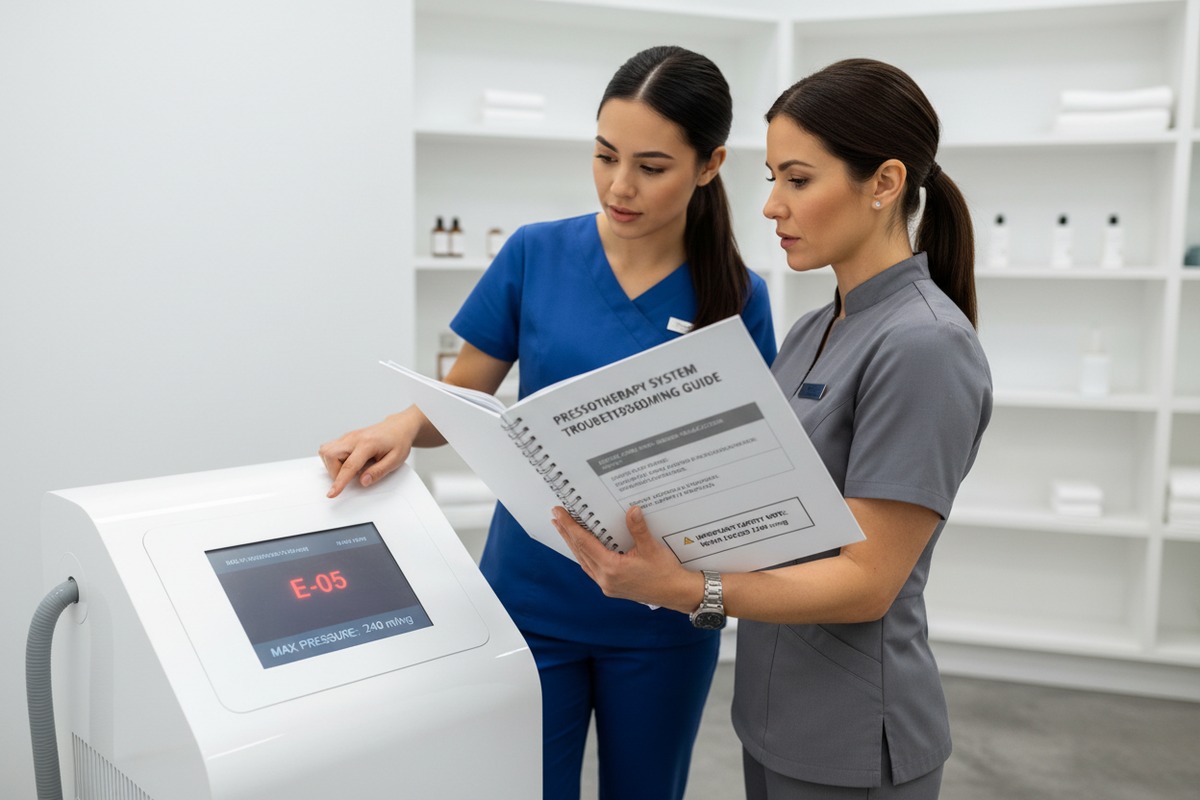
Your brand's reputation is built on trust. If one staff member runs a 20-minute session and another runs a 40-minute session for the same price, you have a quality control problem. The supplier's manual should serve as the "Standard Operating Procedure" (SOP) foundation, but you must vet it for consistency.
Hygiene as a Brand Standard
In the post-pandemic era, hygiene is non-negotiable. Check the manual for a "Cleaning and Maintenance" section. Does it specify which disinfectants are safe for the suit material (usually nylon or PU)?
- Good Manual: "Wipe with a soft cloth and neutral detergent or 70% alcohol. Do not soak."
- Bad Manual: "Clean the machine."
If the manual is specific, you can evaluate your staff on their adherence to these rules. Create a "Turnover Protocol" where staff must demonstrate exactly how they clean the air chambers after a treatment. If they use harsh chemicals that crack the plastic because they didn't read the manual, they are damaging your assets and your brand image.
Standardizing the "Client Experience"
Use the manual to set the baseline for the treatment experience. If the manual states the standard treatment time is 30 minutes for effective lymphatic drainage, make this your rule.
- Step 1: Staff sets the timer to 30 minutes (as per manual).
- Step 2: Staff sets pressure to a comfortable starting level (e.g., 120 mmHg).
- Step 3: Staff explains the "wave" sensation described in the "Principle" section to the client.
By forcing staff to quote or paraphrase the manual's description of the treatment benefits, you ensure that every client hears the same accurate, professional explanation. This eliminates "sales fluff" and positions your brand as scientifically grounded.
Conclusion
The supplier's training manual is more than just a setup guide; it is a critical tool for vetting both the manufacturer's engineering quality and your own staff's competency. By using the manual to rigorously test your team on technical specs, operational sequences, troubleshooting logic, and hygiene protocols 8, you ensure that your pressotherapy investment delivers safe, consistent, and profitable results for your business.
Footnotes
1. Replaced HTTP 403 with authoritative Wikipedia page on pneumatics. ↩︎
2. Defines technical specifications and their role in product development. ↩︎
3. Replaced HTTP 404 with the main FDA medical devices page, as a direct link for ‘precise pressure ranges’ in medical device standards was not found, and the original link was a general FDA regulatory page. ↩︎
4. Replaced HTTP 404 with the relevant section on ‘Pneumatic logic’ within the authoritative Wikipedia page on pneumatics. ↩︎
5. Replaced HTTP 405 with authoritative Mayo Clinic page on lymphedema, which includes manual lymph drainage. ↩︎
6. Provides comprehensive information on Deep Vein Thrombosis, a critical contraindication. ↩︎
7. Explains the function and importance of error codes in technical systems for diagnosis. ↩︎
8. Provides comprehensive guidelines for disinfection and sterilization in healthcare settings. ↩︎


 English
 Español de México
 Deutsch
 Français
 العربية
 Русский
Join the Conversation
Have a question or insight to share? We read every comment — whether you're a distributor, salon owner, or just curious about the technology. Your real-world experience helps others make better decisions. Drop your thoughts below.