
When our engineering team finalizes the pneumatic compression specs for a new pressotherapy model, we focus entirely on performance and safety. However, we know that for our partners in the United States, the anxiety often starts after the technical specs are approved—during the contract signing. We have seen too many promising partnerships stall because the legal fine print felt like a trap. Negotiating these terms shouldn’t be a battle; it should be a safety net that protects your investment in our technology.
To effectively review arbitration clauses for pressotherapy sourcing, you must verify the seat of arbitration is in a neutral jurisdiction like Hong Kong or New York, ensure the language of proceedings is exclusively English, and explicitly reference established institutional rules like the AAA or ICC to guarantee enforceability under the New York Convention.
Let’s break down the specific legal mechanics that secure your supply chain 1 and prevent costly disputes.
How do I protect my US company from unfair arbitration terms when sourcing pressotherapy machines?
In our years of exporting to North America, we often see standard contracts from other suppliers that default every dispute to a local commission in a remote Chinese province. We understand why this raises immediate red flags for you. It creates an imbalance where you feel the vendor holds all the cards before the first container even leaves the port.
You protect your company by negotiating a “mutual” arbitration clause that designates a neutral seat, such as Hong Kong or Singapore, rather than the supplier’s local jurisdiction. You must also reject vague “friendly consultation” periods that lack deadlines and ensure the contract language mandates English for all documents and hearings.

To protect your interests when buying pressotherapy equipment, you need to dissect the arbitration clause with a critical eye. A standard template often hides significant disadvantages for the buyer. The most common trap we see is the "Home Court Advantage." If the contract states that arbitration will occur in the supplier's city, conducted in Chinese, you have already lost before you begin. The cost of translating documents and flying legal teams to a foreign city can exceed the value of the goods.
The Danger of "Friendly Consultation"
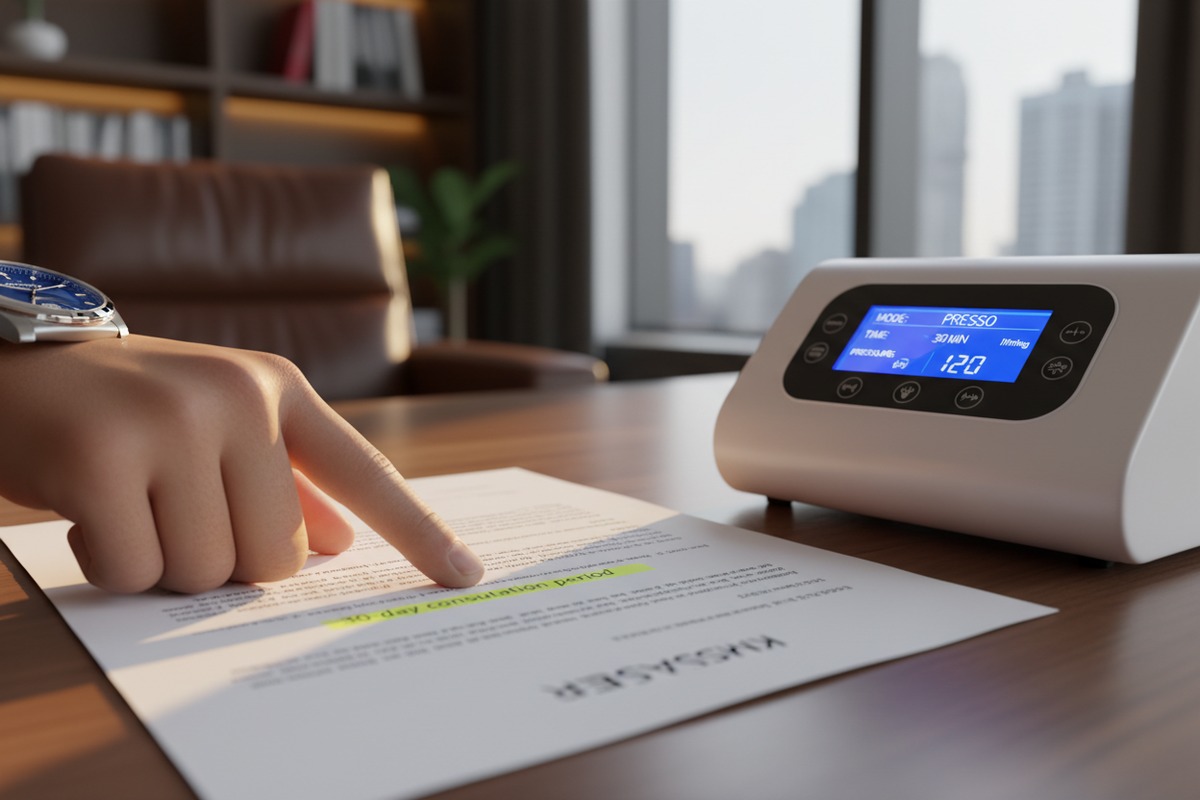
Many contracts begin with a clause requiring "friendly consultation" before arbitration can start. On the surface, this sounds reasonable. We always prefer to solve issues over a phone call rather than a lawsuit. However, from a legal standpoint, if this clause does not have a strict time limit (e.g., "30 days"), a dishonest supplier can drag out the "consultation" indefinitely. This prevents you from filing for arbitration while your money remains locked up. Your clause must state that if the dispute is not resolved within a set number of days, either party has the absolute right to initiate arbitration immediately.
Selecting the Right Institution
The arbitration body matters as much as the location. "Ad hoc" arbitration (arbitration without a governing institution) is risky because there are no administrative backstops if the process stalls. For US buyers, we recommend insisting on recognized international bodies.
Table 1: Risk Assessment of Arbitration Terms
| Contract Term | High Risk for US Buyer (Red Flag) | Low Risk / Best Practice |
|---|---|---|
| Seat of Arbitration | Supplier's local city (e.g., Tier 3 city in China) | Hong Kong, Singapore, or New York |
| Language | "The language of the responding party" or Chinese | Exclusively English |
| Arbitrator Selection | Appointed solely by the Arbitration Commission | One chosen by each party, third chosen by the two |
| Pre-dispute Negotiation | "Friendly negotiation" (No time limit) | "Good faith negotiation for 30 days" |
By ensuring these specific elements are balanced, you shift the power dynamic from a supplier-dictated process to a fair, neutral playing field. This does not insult your supplier; a professional factory understands that a fair contract builds long-term trust.
Should I choose a neutral international venue or a US location for my beauty machine contract disputes?
When we coordinate logistics for a door-to-door delivery to a salon in California, we know you prefer handling everything locally. Naturally, you might want legal disputes handled in your local US court or a nearby arbitration center. However, forcing a US venue can sometimes backfire when it comes time to actually get your money back from an overseas partner.
A neutral international venue like Hong Kong is often superior to a US location because Hong Kong awards are swiftly enforced in mainland China under specific mutual arrangements. While a US venue feels comfortable, enforcing a US judgment or arbitration award in China can be legally complex and slower due to lack of reciprocal treaties.

The choice between a US venue (like New York) and a neutral Asian venue (like Hong Kong or Singapore) is a strategic decision, not just a matter of convenience. Many US buyers assume that "home ground" is always best. However, winning a lawsuit is different from collecting the money. If you win an arbitration award in New York, you still need to take that piece of paper to China to seize assets if the supplier refuses to pay.
The Enforcement Gap
China is a signatory to the New York Convention 2, which means it recognizes foreign arbitral awards. This makes arbitration far superior to US Court litigation 3, as US Court judgments are generally not enforceable in China due to the absence of a bilateral treaty. However, even with arbitration, local courts in mainland China can sometimes delay the enforcement of US awards.
The Hong Kong Advantage
Hong Kong offers a unique "One Country, Two Systems" benefit. It operates under a Common Law system 4 very similar to the US and UK, which is familiar to American lawyers. More importantly, Hong Kong and Mainland China have a specific "Supplemental Arrangement" for the mutual enforcement of arbitral awards. This often makes an award rendered in Hong Kong easier and faster to enforce against a mainland Chinese factory than an award rendered in New York.
Table 2: Venue Comparison for US Buyers
| Feature | New York (US Seat) | Hong Kong (Neutral Seat) | Mainland China (Supplier Seat) |
|---|---|---|---|
| Familiarity | High (US Law) | High (Common Law) | Low (Civil Law) |
| Travel Costs | Low for Buyer | Moderate (Neutral) | High for Buyer |
| Enforceability in China | Good (NY Convention), but procedural hurdles exist | Excellent (Specific Mutual Arrangement) | Automatic |
| Perception of Neutrality | Perceived as biased by Supplier | Perceived as fair by both | Perceived as biased by Buyer |
Strategic Compromise
If your supplier refuses a US seat, moving to Hong Kong is usually a safe and smart compromise. It removes the "home court" advantage of the mainland Chinese legal system while retaining a legal framework that respects Western commercial norms. It shows you are reasonable but firm on security.
How will the arbitration clause affect my ability to claim damages for defective equipment or late deliveries?
Our quality control team inspects every circuit board and air pump before packaging, but we acknowledge that risks exist in any manufacturing process. If a batch of pressotherapy suits arrives with leaking valves, you need to know if arbitration will actually help you recover your losses or if it will just be a dead end.
Arbitration clauses can severely limit your ability to claim damages by restricting “discovery,” making it harder to prove systemic negligence without access to the supplier’s internal emails. Furthermore, many clauses explicitly cap “consequential damages,” meaning you cannot claim for lost profits or business downtime caused by the defective machines.
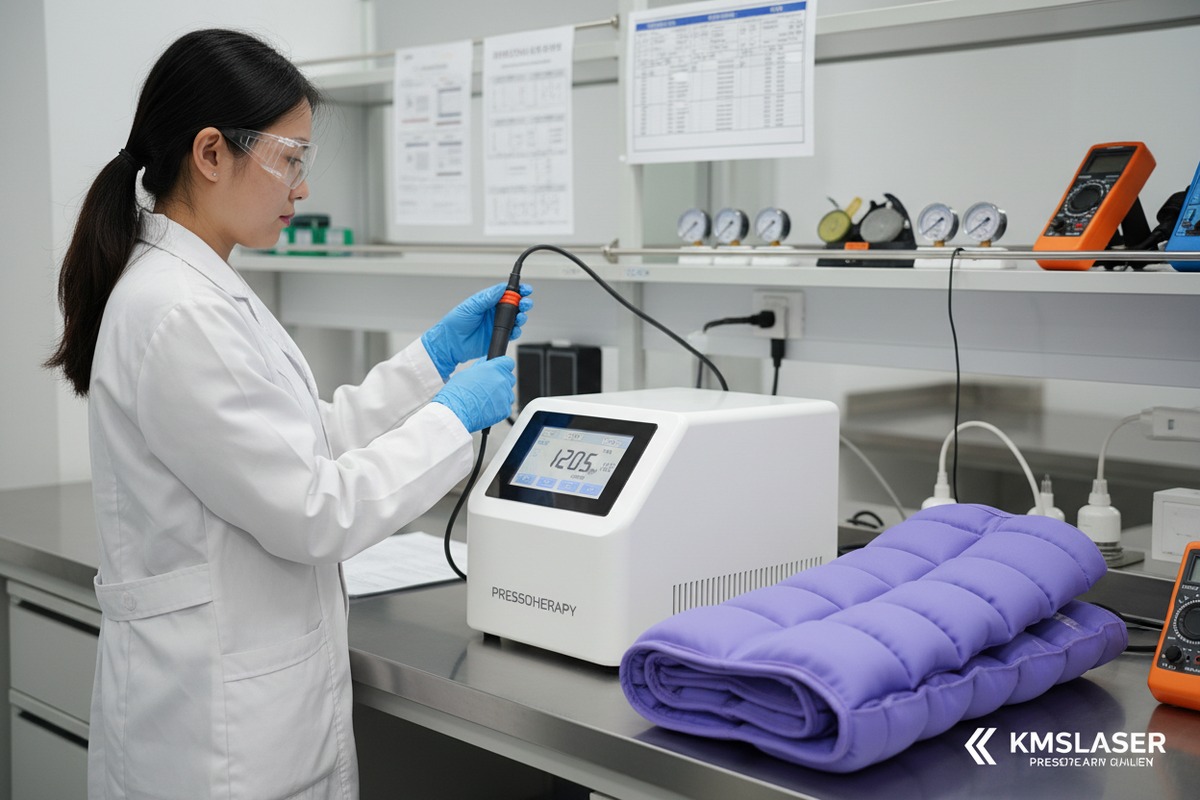
When a dispute arises regarding defective pressotherapy machines—for example, if the compression levels are inconsistent or the control units overheat—the legal battle often turns on evidence. In a US courtroom, the "discovery" process allows you to demand internal emails, production logs, and quality control records from the supplier. This evidence is often the "smoking gun" that proves the supplier knew about the defect.
The "Discovery" Limitation
In international arbitration, discovery is usually much more limited. The rules (like the IBA Rules on the Taking of Evidence) focus on efficiency. You generally cannot go on a "fishing expedition" for documents. If you suspect the supplier used cheaper, non-compliant pumps but cannot prove it without their internal purchase orders, arbitration might leave you without the evidence you need to win. You must ensure your clause allows for some document production.
Damages Caps and Exclusions
We often see contracts where the arbitration clause is tied to a "Limitation of Liability 5" section. This is critical. If your pressotherapy machines arrive three months late, you lose sales. You might lose key salon clients. These are "consequential damages 6." If your contract excludes these (which is standard in many supplier drafts), the arbitrator—bound by the contract—cannot award you compensation for lost business, only for the direct cost of the machine.
Efficacy and Medical Device Disputes
For pressotherapy, disputes sometimes involve the FDA status or claimed medical efficacy. If a US buyer claims the machine doesn't perform the lymphatic drainage as advertised, this requires expert testimony. Arbitration allows for expert witnesses, but the tribunal determines the rules. You need to ensure the clause allows you to present technical reports from independent engineers to substantiate your claim that the equipment is defective, not just "different."
H3: Protecting Your Right to Claim
To mitigate these risks, your contract should explicitly state that the arbitrator has the power to award all remedies available under the governing law, including specific performance (forcing the supplier to ship) or full compensatory damages.
What specific legal language do I need in my OEM contract to ensure the arbitration process is enforceable?
When we draft OEM agreements 7 for private-label clients, we focus on clarity to avoid confusion during production. The same precision is required for your legal clauses. Vague phrases like “parties will solve problems together” are legally worthless and will leave your US business exposed when you need protection the most.
You need mandatory language stating that disputes “shall” (not “may”) be settled by arbitration, clearly identifying the institution (e.g., “administered by the HKIAC”), the specific rules set, the number of arbitrators (one or three), and the definitive “seat.” You must also include a “governing law” clause that aligns with your chosen venue.

The enforceability of an arbitration award hangs on the specific words used in the clause. A "pathological clause 8"—one that is contradictory or vague—can be thrown out by a court, forcing you into years of litigation in a foreign jurisdiction.
"Shall" vs. "May"
This is the most common error. If your contract says "Parties may refer the dispute to arbitration," a court might interpret this as optional. If the supplier sues you in a Chinese court, you cannot force them into arbitration because you agreed it was optional. The clause must say "shall be finally settled under the Rules of…" to be binding and exclusive.
Defining the Scope
Your clause should cover "all disputes arising out of or in connection with the present contract." This broad language covers everything: late delivery, defective pressotherapy suits, intellectual property theft 9, and even fraud claims. If you write it too narrowly (e.g., "disputes regarding payment"), a dispute about the quality of the machine might not be covered, leading to a mess where some issues are arbitrated and others are litigated.
Emergency Relief
In the beauty equipment industry, IP theft is a risk. If you find your private-label design being sold to a competitor, you need an immediate injunction (a stop order). Standard arbitration takes months to form a tribunal. You should reference institutional rules that include "Emergency Arbitrator" provisions. This allows you to get an emergency order in days, which can then be enforced to stop the factory from selling your molds.
Table 3: Essential Clause Checklist for Pressotherapy Sourcing
| Clause Element | Why it is Necessary | Recommended Language Snippet |
|---|---|---|
| Mandatory Intent | Prevents parallel litigation. | "All disputes shall be finally settled…" |
| Institution & Rules | Provides administrative support. | "…under the Rules of Arbitration of the International Chamber of Commerce (ICC)…" |
| Number of Arbitrators | Balances cost vs. fairness. | "One arbitrator" (for orders <$1M) or "Three arbitrators" (for >$1M). |
| Language | Avoids translation costs. | "The language of the arbitration shall be English." |
| Judgment Entry | Ensures you can enforce the award. | "Judgment on the award may be entered in any court having jurisdiction thereof." |
Conclusion
Reviewing arbitration clauses is not about planning for failure; it is about establishing a professional foundation for success. As a manufacturer, we respect buyers who present clear, fair, and enforceable terms because it signals a serious business partnership. By insisting on a neutral seat like Hong Kong, ensuring the language is English, and using precise mandatory wording, you protect your US interests against defects and delays. This legal clarity allows both of us to focus on what matters most: delivering high-quality pressotherapy systems to your customers.
Footnotes
1. ASCM provides a comprehensive definition of supply chain management, its activities, and importance. ↩︎
2. HTTP 404 – Replaced with the full text of the Convention on the Recognition and Enforcement of Foreign Arbitral Awards on Wikisource, an authoritative source for primary texts. ↩︎
3. Provides an overview of the civil litigation process in federal courts. ↩︎
4. Explains the definition, origins, and key principles of common law. ↩︎
5. Details the provisions and importance of limitation of liability clauses in contracts. ↩︎
6. Defines consequential damages in contract law, including examples and foreseeability. ↩︎
7. Explains OEM agreements, their components, and best practices for drafting. ↩︎
8. Defines pathological arbitration clauses and their negative impact on dispute resolution. ↩︎
9. Provides a clear definition and examples of intellectual property theft. ↩︎


 English
 Español de México
 Deutsch
 Français
 العربية
 Русский
Join the Conversation
Have a question or insight to share? We read every comment — whether you're a distributor, salon owner, or just curious about the technology. Your real-world experience helps others make better decisions. Drop your thoughts below.