
Running production lines in Guangzhou, we see firsthand how port delays hurt our overseas partners demurrage fees 1. Shipments that once cleared smoothly now face weeks of waiting. The frustration is real. Medical devices like pressotherapy machines 2 sit in container yards while your customers call asking where their orders are.
To manage US port congestion when sourcing pressotherapy machines from China, diversify your entry ports, build 3-5 week inventory buffers, use reinforced packaging, and partner with a supplier offering full door-to-door logistics. These steps reduce delays, prevent stockouts, and protect your machines from extended transit times.
Port congestion affects every importer, but the good news is you can plan around it FOB pricing 3. Below, we break down practical strategies across shipping routes, inventory management, packaging, and logistics support. Each section offers real solutions you can apply today.
How can I optimize my shipping routes to bypass the most congested US ports?
When we ship pressotherapy machines from our Guangzhou facility, we always check port conditions first. A wrong port choice can add two weeks to your delivery. The problem is not just transit time. It is the uncertainty that kills your planning.
To optimize your shipping routes, consider using secondary ports like Miami, Mobile, or Seattle instead of congested hubs. Split shipments between East and West Coasts, book freight early, and work with forwarders who have real-time port data. This approach reduces wait times and avoids demurrage fees.
Understanding Current Port Congestion Levels
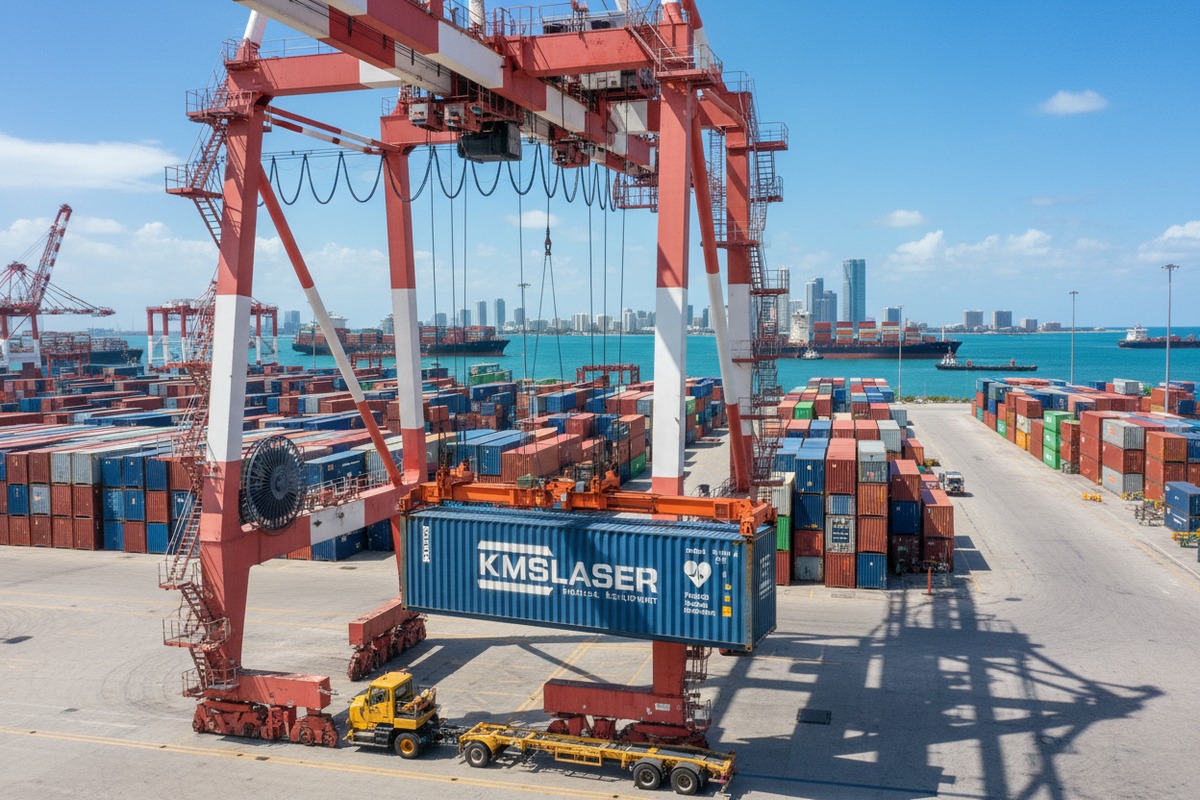
US port congestion 4 in early 2026 shows moderate to high levels across major gateways. Import container processing times at major US ports like Los Angeles, New York, and Savannah are averaging 3.33 days, up 8.7% from the low point in June 2025. Houston currently faces 2.9-day average wait times due to crane outages. New York sees 1.9-3 day delays from weather and holiday disruptions.
At the same time, Chinese origin ports add more delays. Ningbo shows yard utilization above 90% at key terminals, causing 2.5-day average waits. Shanghai terminals average 2.13 days. These numbers compound when you add ocean transit time.
Alternative Ports Worth Considering
Ports like Miami, Mobile, and Seattle are seeing lower volumes and may serve as flexible relief valves in times of congestion. While major ports handle the bulk of Asian imports, these secondary gateways offer faster customs clearance and less yard congestion.
| Port | Average Wait Time | Best For | Risk Level |
|---|---|---|---|
| Los Angeles/Long Beach | 3-5+ days | High volume, West Coast distribution | High |
| Houston | 2.9 days | Gulf region, South distribution | Medium-High |
| New York | 1.9-3 days | East Coast, Northeast markets | Medium |
| Savannah | 1.8 days | Southeast distribution | Medium |
| Miami | Lower than average | Florida, Latin American routes | Low |
| Seattle | Lower than average | Pacific Northwest | Low |
Strategic Route Planning
Companies that shifted operations from major ports like Los Angeles to smaller regional hubs experienced reduced transit times during high-traffic periods. Here are three route strategies we recommend:
Strategy 1: Split Shipments
Send half your order to the West Coast and half to the East Coast. If one port backs up, you still have inventory arriving.
Strategy 2: Secondary Port First
Route through Seattle or Miami before peak seasons. Transfer inland via rail or truck.
Strategy 3: Direct Rail Connection
Port rerouting from Oakland and Long Beach toward inland hubs like Dallas via intermodal rail 5 can bypass coastal congestion entirely.
Booking Timing Matters
Space on transpacific vessels is limited. The window to secure good rates closes fast during peak periods. Book freight capacity early when more options are available. Consider the total cost of delays, not just the freight invoice amount. A $500 savings on shipping can turn into $5,000 in demurrage if your container sits for two weeks.
What inventory buffer should I request from my manufacturer to prevent stockouts during port delays?
From our production floor, we have seen orders sit at ports for three weeks while our customers scrambled to serve their own clients. The solution is not hoping for faster shipping. It is building the right safety stock before problems occur.
Request a 3-5 week inventory buffer from your manufacturer during normal periods, and 6-8 weeks during peak seasons like Chinese New Year. This buffer should account for production lead time, ocean transit, port delays, and inland delivery. Calculate based on your monthly sales volume plus 30% safety margin.

Why Standard Lead Times Fall Short
US importers should assume multiple-week delays on shipments during January through March 2026 unless precautions are taken. Standard lead time calculations often ignore several factors:
- Port dwell time (2-5+ days at congested ports)
- Customs clearance delays (3-7 days at destination)
- Inland trucking disruptions (weather, driver shortages)
- Container availability issues
When these factors stack up, a 40-day expected delivery becomes 55-60 days. Products with less than 8 weeks of inventory coverage become your priority items that need immediate buffer adjustments.
Calculating Your Buffer Size
Use this formula to determine how much safety stock you need:
| Factor | Normal Period | Peak Season (Jan-Mar) |
|---|---|---|
| Production lead time | 2-3 weeks | 3-4 weeks |
| Ocean transit (West Coast) | 2-3 weeks | 3-4 weeks |
| Port delay buffer | 1 week | 2-3 weeks |
| Inland delivery | 1 week | 1-2 weeks |
| Total Lead Time | 6-8 weeks | 9-13 weeks |
| Safety Stock | +30% monthly sales | +50% monthly sales |
Chinese New Year Considerations
The official public holiday runs from February 15 to February 23, 2026, but the actual disruption spans four to six weeks when you account for pre-holiday slowdowns and post-holiday recovery. Factory workers across Guangdong begin heading home well before the official holiday. Some leave two weeks early. Some do not come back for a month. Many factories do not reach full production capacity until well into March.
Practical Buffer Strategies
Pre-Season Stocking
Place larger orders in October-November to arrive before December congestion and Chinese New Year 6 closures.
Consignment Agreements
Ask your manufacturer to hold finished goods at their facility. Pay upon shipment rather than production completion.
Warehouse Forward Positioning
Stock popular pressotherapy models at US-based warehouses. This eliminates lead time for repeat orders.
Multiple Supplier Relationships
Consider backup suppliers in Vietnam or other countries. This reduces dependence on any single origin point.
How do I ensure my pressotherapy machines are packaged to survive weeks of port congestion?
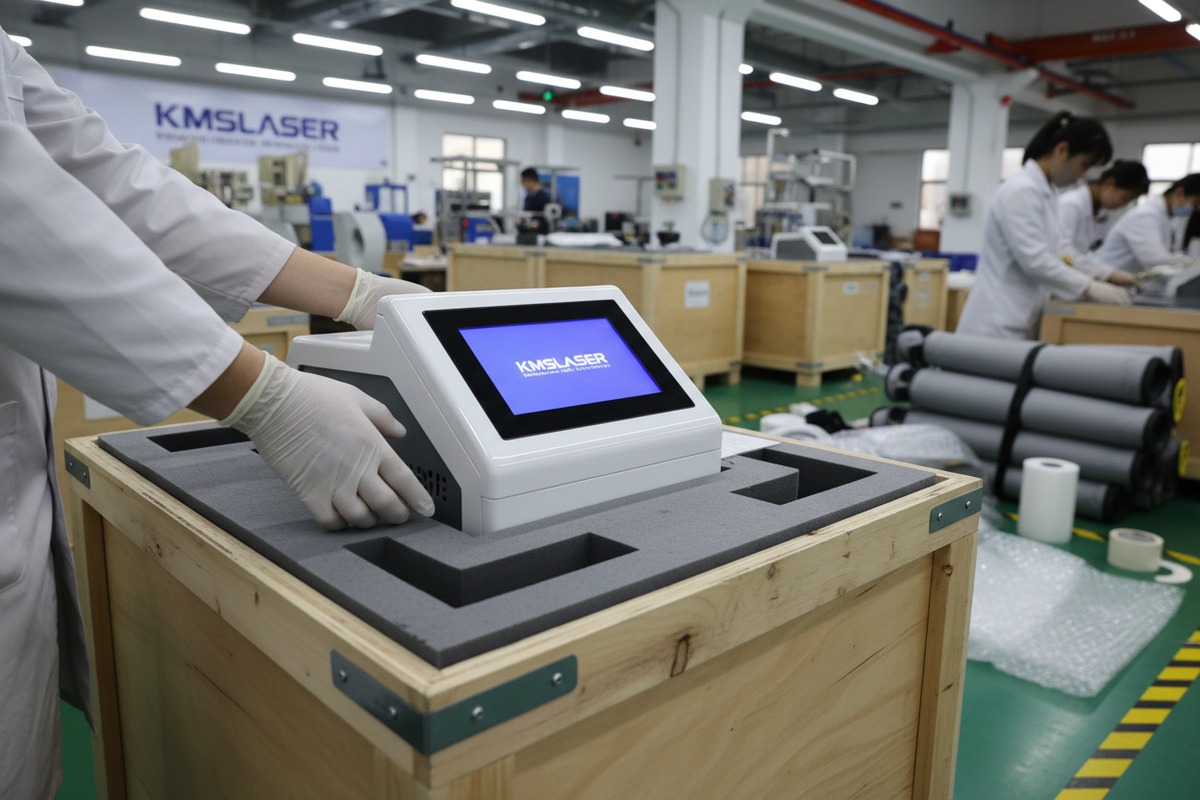
Our engineers learned this lesson the hard way. A shipment of pressotherapy units sat in a Houston container yard for 18 days during summer. The humidity inside the containers caused moisture damage to control panels. Now, every unit leaving our factory gets packaging designed for the worst-case scenario.
Ensure your pressotherapy machines survive extended port delays by requesting climate-resistant packaging, reinforced outer cartons, desiccant packs inside sealed inner bags, and shock indicators. Specify humidity-resistant materials and ask for tilt indicators to detect mishandling during the extended time in container yards.
The Hidden Danger of Extended Dwell Time
Containers sitting in port yards face conditions different from standard shipping. Temperature swings between day and night cause condensation inside containers. This "container rain" can drip onto products. In summer months at ports like Houston and Los Angeles, interior container temperatures can exceed 50°C (122°F). Pressotherapy machines contain electronic control units and LCD displays that suffer under these conditions.
Packaging Specifications to Request
| Component | Standard Packaging | Extended Delay Packaging |
|---|---|---|
| Inner protection | Basic foam | Closed-cell foam + sealed poly bag |
| Moisture control | None | Desiccant packs 7 (5+ per unit) |
| Outer carton | Single-wall | Double-wall corrugated |
| Humidity indicator | None | Color-change indicator card |
| Shock detection | None | Drop/tilt indicator |
| Palletization | Basic stacking | Stretch wrap + corner protectors |
Material Specifications Worth Discussing
When you place your order, ask your manufacturer about these specific packaging upgrades:
Closed-Cell Foam
Unlike open-cell foam, closed-cell does not absorb moisture. It maintains cushioning even in humid conditions.
VCI (Vapor Corrosion Inhibitor) Bags
These bags release molecules that form a protective layer on metal components. Ideal for pressotherapy machines with metal fittings.
Humidity Indicator Cards
These change color when exposed to excessive moisture. They provide evidence if damage claims arise.
Temperature Loggers
Small electronic devices that record temperature throughout transit. Useful for warranty documentation.
Handling Instructions That Matter
Clear marking prevents damage during the extended handling that comes with port delays. Your cartons should display:
- "FRAGILE – MEDICAL EQUIPMENT"
- "THIS SIDE UP" arrows
- Maximum stacking weight
- Temperature range limits
- Keep dry symbols
These markings should appear on all six sides of the outer carton in English and Mandarin.
Quality Verification Before Shipping
Request that your manufacturer send photos of packaged units before container loading. Ask for:
- Desiccant pack placement photos
- Humidity indicator initial readings
- Carton seal integrity checks
- Pallet strapping confirmation
This documentation protects both parties if damage occurs during extended port delays.
Can my supplier manage the entire door-to-door logistics process to minimize my administrative burden?
When we first started exporting, we thought our job ended when the container left the port. Then our customers started calling about customs holds, missing documents, and delivery failures. Now, our service team handles logistics from our factory floor to your warehouse door. It changes everything for busy purchasing managers.
Yes, a capable supplier can manage complete door-to-door logistics including export customs, ocean booking, import clearance, and final delivery. This DDP (Delivered Duty Paid) service reduces your administrative work, consolidates communication, and puts responsibility for delays with one party. Expect to pay 10-15% more than FOB pricing for this convenience.

What Door-to-Door Service Includes
A full-service logistics package from your pressotherapy supplier should cover:
| Service Phase | Activities Included |
|---|---|
| Pre-shipment | Production coordination, quality inspection, export documentation |
| Export | Customs declaration, container booking, port handling |
| Ocean transit | Carrier management, shipment tracking, delay notifications |
| Import | Customs clearance, duty payment, FDA documentation (if needed) |
| Delivery | Drayage from port, inland trucking, warehouse delivery |
The Value of Single-Point Responsibility
When problems occur with split responsibility, everyone points fingers. The factory blames the forwarder. The forwarder blames customs. Customs blames missing paperwork. With door-to-door service, your supplier owns the entire process. They solve problems instead of passing them along.
A professional freight forwarder specializing in China shipping can make the difference between success and disaster during challenging periods. But when your supplier manages that forwarder relationship, you benefit from their established partnerships and priority service.
Questions to Ask Your Supplier
Before committing to door-to-door service, verify these capabilities:
- Do you have your own freight forwarding team or a dedicated partner?
- Can you provide real-time tracking for my shipments?
- What is your process when port delays occur?
- Who handles customs paperwork on the US side?
- Do you have US-based staff for time-zone coordination?
- What are your demurrage policies if delays happen?
- Can you provide proof of delivery documentation?
Cost Comparison: DDP vs. FOB
| Cost Element | FOB (You Manage) | DDP (Supplier Manages) |
|---|---|---|
| Product cost | $10,000 | $10,000 |
| Freight forwarding fees | $200-400 | Included |
| Ocean freight | $2,000-4,000 | Included |
| Import customs broker | $200-400 | Included |
| Duties/taxes | Variable | Included |
| Inland trucking | $500-1,500 | Included |
| Your time spent | 5-10 hours | 30 minutes |
| Typical Total | $13,000-16,000 | $14,500-17,500 |
The premium for DDP service is often 10-15%, but you eliminate hours of coordination work and reduce the risk of costly mistakes.
How We Handle It at Our Facility
Our service team provides full supply chain support including order status updates, in-production quality control, pre-shipment inspection, and door-to-door logistics management. When a port delay happens, we notify you immediately and present options. We can reroute to a different port, arrange expedited inland trucking, or adjust subsequent shipments to compensate.
This proactive communication is what separates true door-to-door service from basic shipping arrangements.
Conclusion
Port congestion challenges will continue, but they do not have to disrupt your pressotherapy business. Diversify your ports, build proper inventory buffer 9s, upgrade your packaging, and choose a supplier who handles logistics end-to-end. These steps protect your business and keep your customers satisfied even when shipping conditions get tough.
Footnotes
1. Defines demurrage as a charge incurred when cargo owners exceed free time at port. ↩︎
2. Provides a comprehensive explanation of pressotherapy, including how the machines work, benefits, and uses. ↩︎
3. Defines FOB as an Incoterm where the seller’s responsibility ends when goods are on board. ↩︎
4. Explains what port congestion is, its causes, and impact on supply chains. ↩︎
5. Describes intermodal rail as combining rail, truck, and ship for efficient freight movement. ↩︎
6. Explains the holiday’s significant impact on global shipping and supply chains. ↩︎
7. Describes moisture-absorbing packets used to reduce humidity and prevent damage during shipping. ↩︎
8. Explains DDP as an Incoterm where the seller bears maximum responsibility for delivery. ↩︎
9. Defines buffer stock as extra inventory to mitigate supply chain risks. ↩︎


 English
 Español de México
 Deutsch
 Français
 العربية
 Русский
Join the Conversation
Have a question or insight to share? We read every comment — whether you're a distributor, salon owner, or just curious about the technology. Your real-world experience helps others make better decisions. Drop your thoughts below.