
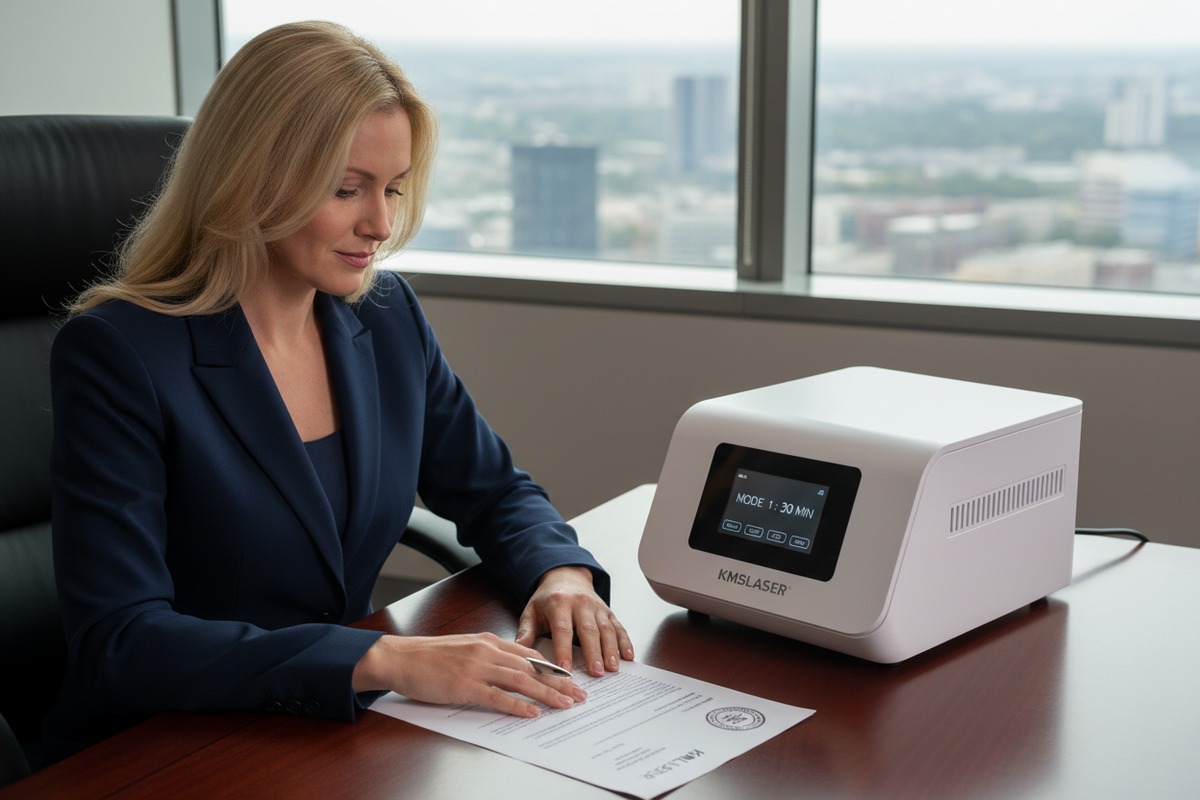
We often encounter situations where our US partners hesitate to transfer large deposits before production begins, worrying about the safety of their capital issuing bank 1. This anxiety is understandable, and we strive to offer solutions that bridge the trust gap between our factory floor in Guangzhou and your salon distribution network.
A Letter of Credit mitigates payment risks by shifting liability from the buyer to the issuing bank. It ensures we only receive funds after submitting compliant documents, such as proof of shipment and quality inspection reports, guaranteeing you receive the exact pressotherapy machines specified in the contract.
Let’s examine how this financial instrument acts as a safety net for your investment and supply chain integrity.
How does a Letter of Credit protect my capital during a large pressotherapy machine order?
When we receive substantial orders for custom lymphatic drainage systems 2, we understand the significant financial exposure involved for our partners.
Using a Letter of Credit protects your capital by eliminating large upfront cash deposits. Instead of transferring funds directly to us before production, your bank holds the credit line. Payment is released only after we present shipping documents proving the goods are en route, safeguarding your working capital.
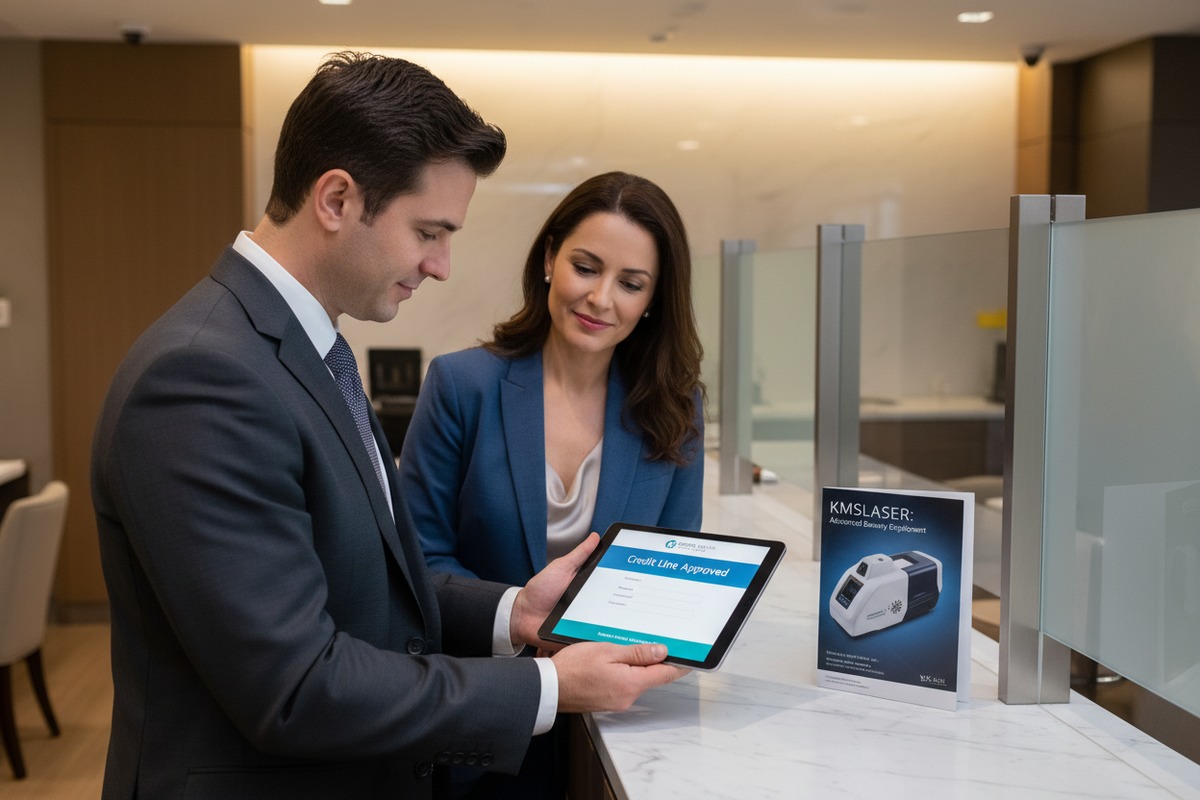
When you source high-value beauty equipment, the traditional method of Telegraphic Transfer (T/T) 3 often feels like a gamble. You are essentially asked to pay a 30% to 50% deposit to a factory thousands of miles away before a single screw is tightened. In our dealings with major distributors, we have seen that this ties up valuable cash flow that could be used for marketing or local operations.
The Financial Safety Net
A Letter of Credit 4 (LC) fundamentally changes this dynamic. Instead of cash leaving your account immediately, your bank issues a guarantee to our bank in China. This document states that payment will be made, but only if we perform our duties exactly as described. For you, this means your cash remains in your control—or at least within your banking facility—until the goods are actually on the water.
This mechanism is vital for maintaining liquidity. If you are ordering 50 units of our professional pressotherapy systems, the capital required is significant. By using an LC, you avoid the "sunk cost" risk where money is gone, but goods have not arrived. If for any reason we cannot fulfill the order or meet the shipment deadline, the LC expires, and you simply keep your money. You do not have to fight to get a refund from an overseas entity.
Reducing Vendor Risk
From our perspective as the supplier, the LC gives us the confidence to purchase raw materials and allocate production lines without waiting for a wire transfer to clear. However, for you, the buyer, it acts as a shield against vendor insolvency 5. If a supplier were to go bankrupt after receiving a T/T deposit, that money is likely lost. With an LC, no funds are transferred until performance is proven via documentation.
We have compiled a comparison below to highlight the differences in risk exposure between a standard T/T deposit and a Letter of Credit.
Table 1: Risk Exposure Comparison (T/T vs. Letter of Credit)
| Feature | Telegraphic Transfer (T/T) | Letter of Credit (LC) |
|---|---|---|
| Upfront Cash | High (30-50% deposit required) | Low or None (Bank credit line used) |
| Risk of Non-Delivery | High (Buyer carries the risk) | Low (Bank pays only upon shipment) |
| Impact on Cash Flow | Negative (Cash is locked early) | Neutral (Cash stays until payout) |
| Supplier Bankruptcy | Deposit is likely lost | No financial loss to buyer |
| Transaction Cost | Low ($30-$50 wire fee) | High (0.75% – 1.5% of value) |
By utilizing this tool, you effectively use the bank's creditworthiness to secure the transaction, ensuring that your capital is never at risk due to our potential operational failures.
Can I link my quality inspection requirements to the Letter of Credit terms for my Chinese supplier?
Our production team strictly adheres to specifications, but we know new clients need formal assurance beyond just our word regarding quality control.
Yes, you can directly link quality inspections to the Letter of Credit. By stipulating that a clean report from a third-party agency like SGS or Intertek is a mandatory document for payment, you ensure we must meet your strict quality standards before we can access any funds.
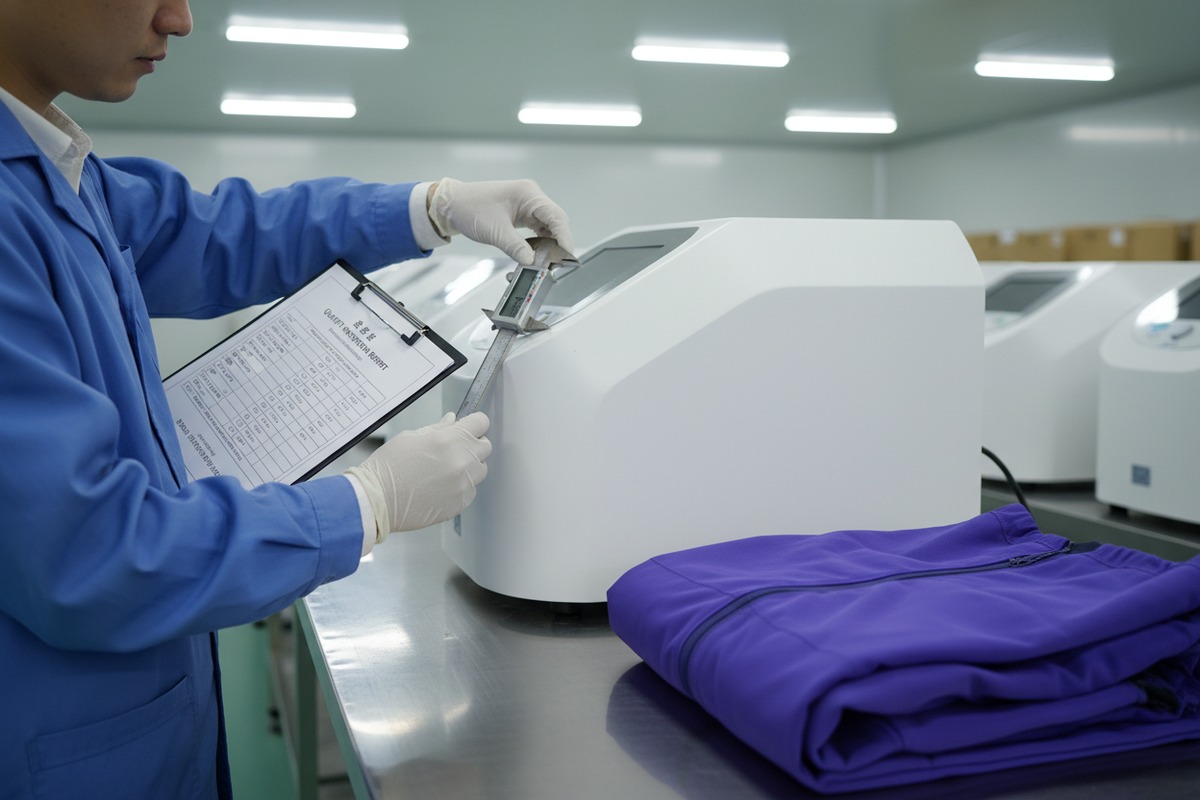
Integrating quality control into your payment terms is perhaps the most powerful feature of a Letter of Credit for beauty equipment importers. Since pressotherapy machines are sophisticated devices requiring precise air pressure calibration and durable cuff materials, a visual defect or functional failure can be disastrous for your brand reputation.
Defining "Strict Compliance"
In the world of trade finance, banks operate under the doctrine of "strict compliance 6." They do not care about the machines; they care about the paperwork. If the Letter of Credit requires a "Quality Inspection Certificate issued by SGS 7 stating goods are in good working order," we must provide exactly that. If the inspector finds a problem—say, the sleek white matte casing has scratches or the purple cuffs are the wrong shade—they will not issue the clean certificate.
Without that certificate, the bank will refuse to pay us. This puts the power entirely in your hands. We are motivated to ensure every single unit passes your standards because our payment depends on it. We often advise our clients to be very specific in the LC regarding who can issue this certificate. If you leave it vague (e.g., "Beneficiary's Certificate"), we could simply write a note saying the goods are fine. You must specify a neutral third party.
The Role of Third-Party Inspectors
For our US clients, we typically coordinate with agencies like SGS, TÜV, or Intertek. You should include a clause in the LC that permits payment only upon presentation of an inspection report signed by one of these authorized agents.
This setup forces a pre-shipment checkpoint. We cannot ship the goods and hope you don't notice the defects later. The inspection happens before the goods are loaded and before the documents are sent to the bank. If the inspection fails, the LC cannot be drawn upon.
Table 2: Essential Documents for Pressotherapy Machine LCs
| Document Name | Purpose in LC |
|---|---|
| Commercial Invoice | details the model numbers, voltage (110V/220V), and value. |
| Bill of Lading (B/L) | Proves the goods have been handed over to the carrier for shipment. |
| Packing List | Confirms the quantity and packaging integrity (e.g., wooden crates). |
| Inspection Certificate | Crucial: Issued by 3rd party, certifies quality matches the contract. |
| Insurance Policy | Proves the shipment is insured against loss or damage during transit. |
| Certificate of Origin | verifies the goods are made in China for tariff purposes. |
By structuring your LC this way, you effectively extend your own quality control team into our factory in Guangzhou, ensuring that you only pay for products that are ready for your salon customers.
Will using a Letter of Credit help me manage delivery timelines and avoid stockouts for my brand?
We prioritize meeting shipping deadlines, yet we recognize that delayed inventory can severely damage a distributor's reputation in the US market.
A Letter of Credit strictly enforces delivery timelines by setting a "Latest Shipment Date." If we fail to load your pressotherapy machines onto the vessel by this deadline, the documents become non-compliant, and payment is jeopardized. This financial pressure incentivizes us to prioritize your production schedule to avoid stockouts.
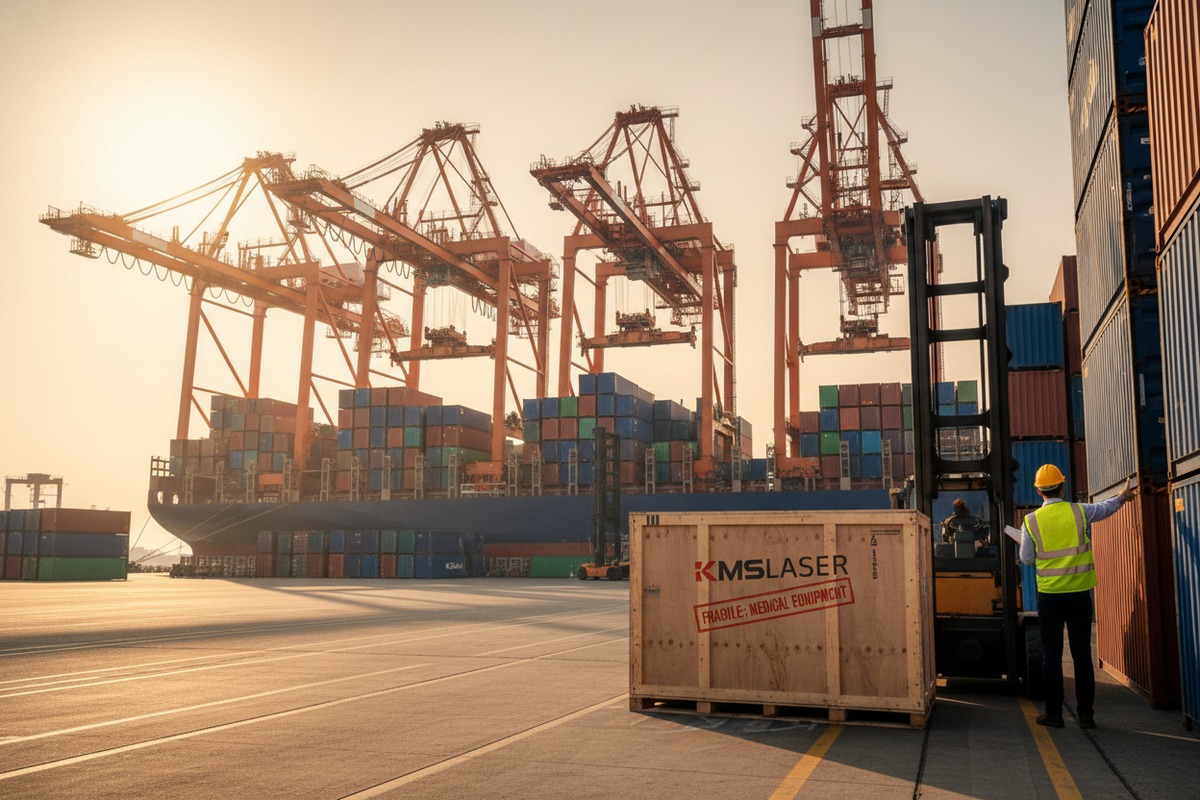
One of the most frustrating aspects of importing from overseas is the "moving target" delivery date. You plan a product launch for your new pressotherapy line, but the supplier delays shipment by two weeks, then another two. An LC acts as a rigid enforcer of time management.
The Power of the Shipment Deadline
Every Letter of Credit contains a specific field regarding the "Latest Date of Shipment." This is not a suggestion; it is a hard cliff. If the LC states that shipment must occur by October 15th, and the Bill of Lading is dated October 16th, the bank is no longer obligated to pay us. We would have to ask you for a waiver to get paid, which puts us in a very weak negotiating position.
Knowing this, our production planning team flags LC orders as high priority. We cannot afford to miss that date because it risks our entire revenue for that order. If we have competing orders from different clients—one on an open account 8 with flexible terms and yours on a strict LC—we will naturally prioritize yours to ensure we hit the "Latest Shipment Date 9." This significantly reduces the risk of your brand facing stockouts due to factory delays.
Avoiding "Stale" Bills of Lading
Another timeline aspect an LC manages is the presentation of documents. The LC will specify a "Presentation Period" (usually 15-21 days after shipment). We must get the documents to the bank quickly. This ensures that you receive the paperwork (and thus the title to the goods) promptly, allowing you to clear customs as soon as the vessel arrives.
Without this pressure, suppliers might be slow to mail documents, causing the goods to sit at the US port accumulating demurrage fees. The LC discipline forces efficiency on our administrative side as well as our manufacturing side.
Table 3: Impact of Payment Terms on Delivery Prioritization
| Payment Method | Consequence of Late Shipment | Supplier Priority Level |
|---|---|---|
| Open Account | Minor (Invoice due date might slide) | Low |
| T/T Deposit | Moderate (Relationship damage, but cash is already partly received) | Medium |
| Letter of Credit | Severe (Payment guarantee becomes void) | High |
By using an LC, you are essentially purchasing an insurance policy against laziness and procrastination, ensuring your supply chain moves with the precision required for the beauty industry.
Is a Letter of Credit more effective than an open account for my high-end beauty equipment imports?
While we offer flexible terms to long-term partners, building that initial trust takes time and financial security for both parties involved in the transaction.
A Letter of Credit is generally more effective than an open account for new supplier relationships or high-value initial orders. While open accounts favor the buyer, they offer no security to the supplier. An LC balances the risk, protecting your payments while giving us the assurance needed to manufacture high-end equipment.
The debate between Open Account (OA) and Letter of Credit (LC) is common. As a purchasing manager, you naturally prefer OA because you pay 30, 60, or 90 days after receiving the goods. It is the best possible cash flow scenario for you. However, for a manufacturer of complex machinery like us, OA presents a massive risk, especially with a new partner.
Balancing Risk and Cost
If you ask for OA terms on your first order of 100 pressotherapy units, we might hesitate. We have to front the cost of plastic injection molding, electronics, pumps, and labor. If you don't pay later, we lose everything. This hesitation can lead to us declining the order or charging a higher "risk premium" on the unit price.
An LC bridges this gap. It costs you money (bank fees) and takes effort to set up, but it gives us 100% assurance that we will get paid if we perform. This willingness to use an LC signals to us that you are a serious, solvent buyer. In return, we are often willing to negotiate better unit prices because our payment risk is zero. The "cost" of the LC is often offset by the better pricing you can secure compared to the inflated price of a risky OA deal.
Building a Credit History
For high-end beauty equipment, where a single order can exceed $50,000 or $100,000, the LC is the professional standard for starting a relationship. It proves your financial strength. Once we have successfully completed a few transactions via LC, we establish a history of trust.
Eventually, many of our clients transition from LC to T/T, and finally to Open Account once the relationship is solid. But starting with an LC prevents the friction of "who trusts whom first." It replaces trust with banking obligation.
Comparison of Features: Open Account vs. Letter of Credit
- Buyer Leverage:
- Open Account: Maximum leverage (you hold the cash).
- LC: Balanced leverage (bank holds the obligation).
- Supplier Willingness:
- Open Account: Low (high risk for us).
- LC: High (guaranteed payment).
- Dispute Resolution:
- Open Account: messy, requires legal action.
- LC: Structured, based on document compliance.
In conclusion, while an open account is the ultimate goal for cost savings, the LC is the most effective tool for initiating secure, high-value trade in the medical beauty sector without exposing either party to ruinous risk.
Conclusion
Using a Letter of Credit when sourcing pressotherapy machines acts as a robust shield for your business. It secures your capital against non-delivery, enforces strict quality control through document mandates, and compels us to adhere to delivery schedules. While it involves more paperwork than a simple wire transfer, the protection it offers makes it an indispensable tool for high-value imports.
Footnotes
1. Details the responsibilities and role of the issuing bank in trade finance transactions. ↩︎
2. Provides comprehensive information on the lymphatic system and its function. ↩︎
3. Explains the meaning, process, and advantages of telegraphic transfers. ↩︎
4. Explains what a Letter of Credit is and its role in international trade. ↩︎
5. Discusses how assessing supplier financial health helps mitigate risks like insolvency. ↩︎
6. Wikipedia provides a clear definition and context for the doctrine of strict compliance in LCs. ↩︎
7. Official website of SGS, a leading inspection, verification, testing, and certification company. ↩︎
8. Describes open account as a common method of payment in international trade. ↩︎
9. Explains key terms of a Letter of Credit, including the latest shipment date. ↩︎

 English
  Español de México
  Deutsch
  Français
  العربية
  Русский