
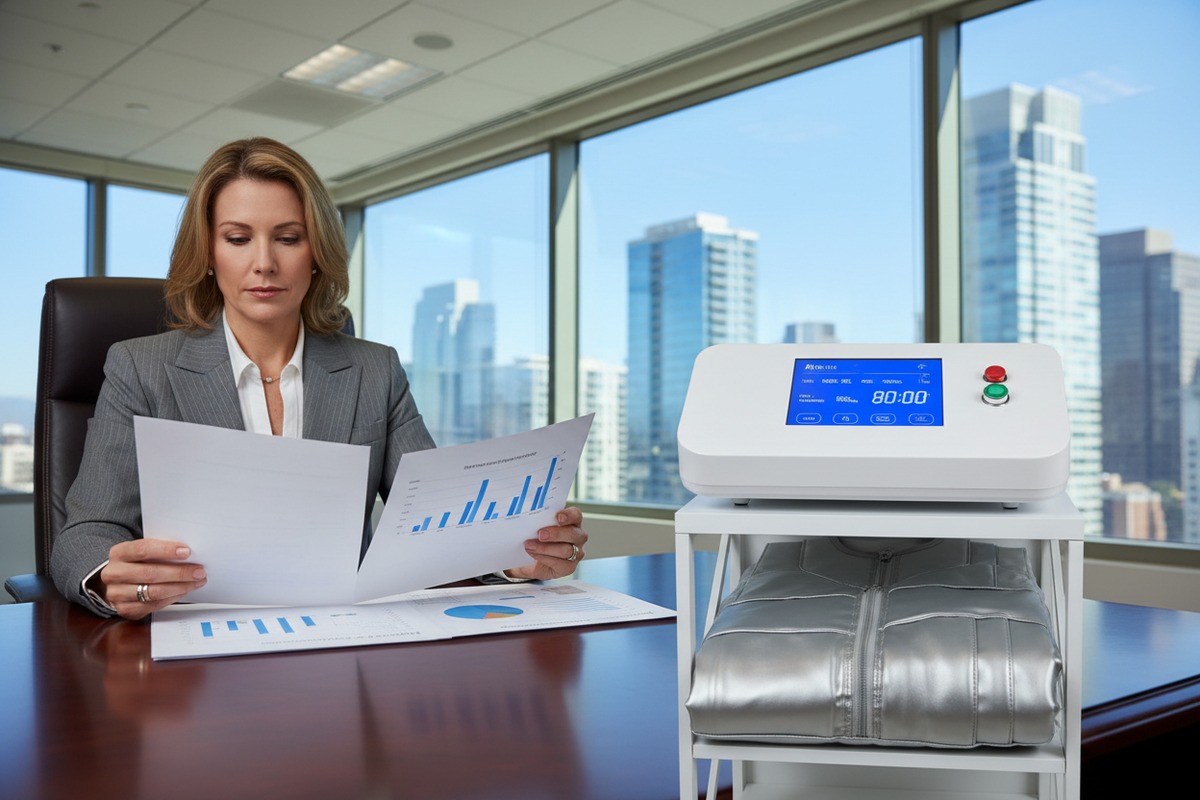
Running our production line in Guangzhou, we often receive questions from B2B buyers about energy bills 1 and hidden operating costs. Many salon owners only discover their pressotherapy machines drain power even when idle—a costly surprise that erodes profit margins fast.
To inquire about pressotherapy machine energy efficiency and standby power, request measured power consumption data for active, idle, and standby modes. Ask for IEC 62301 standby test reports, annual kWh projections at typical usage rates, and specific energy-saving certifications. Compare rated wattage against real-world treatment cycle measurements.
This guide walks you through practical steps to evaluate supplier energy claims hidden operating costs 2. You will learn what questions to ask, which reports to request, and how to spot red flags before placing an order.
How can I verify the actual energy consumption of a pressotherapy machine during a full treatment cycle?
Our engineering team has found that rated wattage 3 on product sheets often differs from real-world usage. A machine rated at 300W may draw far less during most of a treatment cycle—or far more during peak inflation moments.
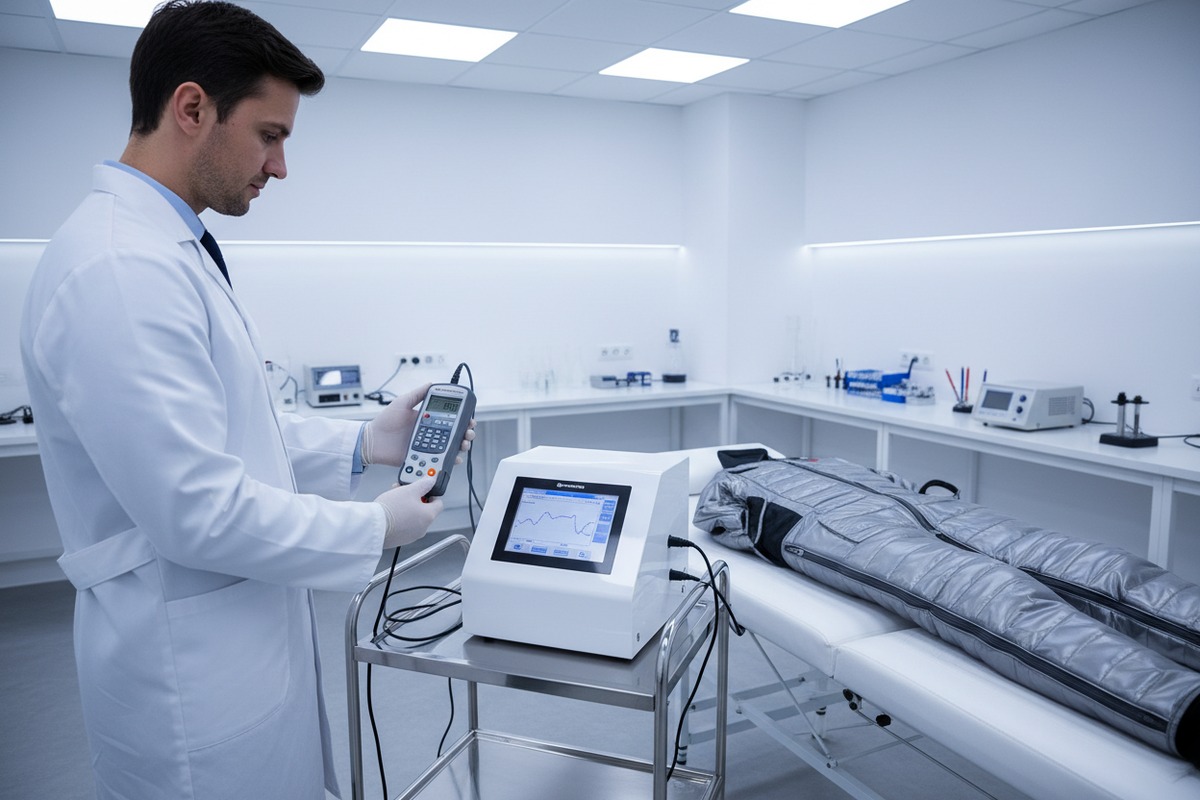
To verify actual energy consumption, request a power consumption chart showing wattage at each treatment phase—inflation, hold, deflation, and rest. Ask for measurements taken with a calibrated power analyzer and compare peak versus average draw across a full 30-minute cycle.
Why Rated Power Is Not Enough
Most suppliers list maximum power consumption on their spec sheets. For example, some machines show 110W maximum power consumption with air pressure ranging from 20-360 mmHg and pump intensity up to 48 kPa. However, this number represents peak draw, not average consumption during treatments.
A pressotherapy machine cycles through several phases. The air pump draws the most power during inflation. During hold and deflation phases, power consumption drops significantly. Infrared heating elements 4 add another variable layer.
Key Metrics to Request
| Metric | What to Ask For | Why It Matters |
|---|---|---|
| Peak Power Draw | Maximum wattage during pump inflation | Determines circuit requirements |
| Average Power Draw | Mean wattage over full 30-60 min cycle | Calculates actual operating cost |
| Infrared Heater Draw | Separate wattage for heating elements | Often adds 50-100W when active |
| Power Factor | PF rating at typical load | Low PF means inefficient power use |
| Treatment Cycle Graph | Chart showing power over time | Reveals true usage pattern |
Testing Methods You Should Know
Professional power testing follows standardized methods. If power consumption is stable, defined as less than 5% variation from the mean over a 5-minute interval, readings can be taken directly. If power fluctuates, energy should be measured over time and averaged.
Request that your supplier provide test data taken at controlled conditions. The standard testing environment specifies ambient temperature 5 of 23°C with still air. Power supply harmonic content should not exceed 2% up to the 13th harmonic.
Calculating Annual Operating Cost
Here is a simple formula. Multiply average wattage by daily operating hours, then multiply by 365 and your local electricity rate. For a salon running 8 hours daily:
| Power Level | Daily Use | Annual kWh | Cost at $0.15/kWh |
|---|---|---|---|
| 50W average | 8 hours | 146 kWh | $21.90 |
| 100W average | 8 hours | 292 kWh | $43.80 |
| 200W average | 8 hours | 584 kWh | $87.60 |
These numbers do not include standby power 6, which we cover next.
What specific questions should I ask about standby power to ensure my salon clients minimize their operational costs?
In our experience exporting to the US and Europe, standby power often goes unmentioned in supplier quotations. Yet machines left plugged in overnight can add hundreds of dollars to annual electricity bills without performing any treatments.
Ask suppliers for standby power measured in watts using IEC 62301 test methods. Request specific numbers for off mode, idle mode, and network/connected mode. Target standby power below 1W for optimal efficiency and demand written confirmation of no-load power consumption.

Understanding Standby Power Standards
The international standard for measuring standby power is IEC 62301 7. This specification defines standby mode as the lowest power consumption while plugged into mains power supply. The standard applies to products with rated input voltage between 100V AC to 250V AC for single-phase products.
High standby power consumption can significantly increase overall energy costs and contribute to environmental impact. Testing involves measuring power in several low-power modes including off mode, standby mode, and network mode.
Questions to Include in Your RFQ
Use these specific questions when contacting suppliers:
- What is your machine's standby power consumption measured per IEC 62301?
- Do you have third-party test reports verifying standby power claims?
- Does the machine have automatic power-down features?
- What is the no-load power consumption when the machine is plugged in but not treating?
- How does the standby power compare to industry averages?
Red Flags to Watch For
| Supplier Response | What It Likely Means | Your Action |
|---|---|---|
| "Power consumption is low" | No actual measurement data | Request specific wattage numbers |
| Only provides rated power | May be hiding standby data | Ask for standby test report |
| "Energy efficient design" | Marketing claim without proof | Request certification documents |
| Avoids standby questions | Likely has high standby draw | Consider other suppliers |
Standby Power Impact Calculator
Consider a salon with three pressotherapy machines. Each machine stays plugged in 24 hours but operates only 6 hours daily. That leaves 18 hours of standby time:
| Standby Power | Daily Standby Hours | Annual Standby kWh | 3-Year Cost (3 machines) |
|---|---|---|---|
| 0.5W | 18 hours | 3.3 kWh | $4.45 |
| 5W | 18 hours | 32.9 kWh | $44.46 |
| 15W | 18 hours | 98.6 kWh | $133.11 |
The difference between excellent and poor standby power can cost over $125 per machine across three years. Multiply this by multiple units, and savings become significant.
Features That Reduce Standby Power
Look for these energy-saving features when sourcing:
- Automatic shutdown timers after treatment completion
- Physical power switches that cut all power
- Low-power sleep modes with quick wake-up
- Digital frequency control systems for precise energy output
- Battery-powered portable options that eliminate grid standby entirely
Can I request custom energy-saving components for my private-label pressotherapy machines during the OEM process?
When we work with brand owners on custom projects, energy efficiency often ranks among the top three requirements. Our R&D team has developed several approaches to reduce power consumption while maintaining treatment effectiveness.
Yes, you can request custom energy-saving components during OEM production. Work with manufacturers to specify efficient air pumps, smart power management circuits, low-standby transformers, and auto-shutdown controllers. Discuss component upgrades early in the development process to ensure compatibility.

Component Upgrades That Reduce Energy Use
Modern OEM manufacturers offer various customization options. Component upgrades include laser sources, cooling systems, power modules, and core chips tailored to meet desired performance levels. For pressotherapy specifically, key energy-related components include:
Air Pumps: The compressor is the largest power consumer. Higher-quality pumps from reputable suppliers deliver the same pressure output with less energy input. Look for pumps with efficient motor designs and optimized airflow paths.
Power Supplies: Request power supplies with high conversion efficiency ratings. Low-quality supplies waste energy as heat. Premium supplies maintain efficiency above 85% even at partial loads.
Control Circuits: Digital control systems allow precise energy output management. Smart controllers only power components when needed, reducing waste during pauses.
What to Specify in Your OEM Agreement
| Component Category | Efficiency Specification | Expected Impact |
|---|---|---|
| Air Pump | Flow rate ≥25L/min at ≤80W | 20-30% power reduction |
| Power Supply | Efficiency ≥85% at 50% load | 10-15% loss reduction |
| Standby Circuit | <0.5W in off mode | Near-zero idle cost |
| Auto-Shutdown | 15-minute inactivity timer | Eliminates forgotten-on waste |
| LED Display | Low-power LCD vs backlit | 5-10W savings |
Material and Design Considerations
OEM manufacturers can provide eco-friendly material options that comply with international environmental standards. This includes RoHS-compliant components 8 for low-power circuits and recyclable housing materials.
Work with your supplier's design team to incorporate ergonomic principles and industry compliance standards when developing customized machine enclosures. You can select from various materials including sheet metal, vacuum-formed plastic, aluminum alloy, or eco-friendly plastics.
Communication Process for Custom Requests
When initiating a custom energy-saving project, follow these steps:
- Initial Specification: Outline your energy efficiency targets in writing
- Technical Review: Have the manufacturer's engineers assess feasibility
- Component Selection: Choose specific parts that meet your standards
- Prototype Testing: Verify power consumption before mass production
- Quality Control: Include power testing in your inspection checklist
Cost-Benefit Analysis of Upgrades
Premium energy-efficient components may add 5-15% to unit cost. Calculate the payback period based on your customers' expected usage patterns. For high-volume salon equipment running 8+ hours daily, efficiency upgrades often pay for themselves within 12-18 months through reduced electricity bills.
How do I evaluate a supplier's electrical testing reports to ensure the equipment meets my brand's efficiency standards?
Our quality control team reviews hundreds of test reports each year. We have learned to spot both legitimate documentation and questionable claims. Understanding what makes a valid efficiency report protects your brand from supplier misrepresentation.
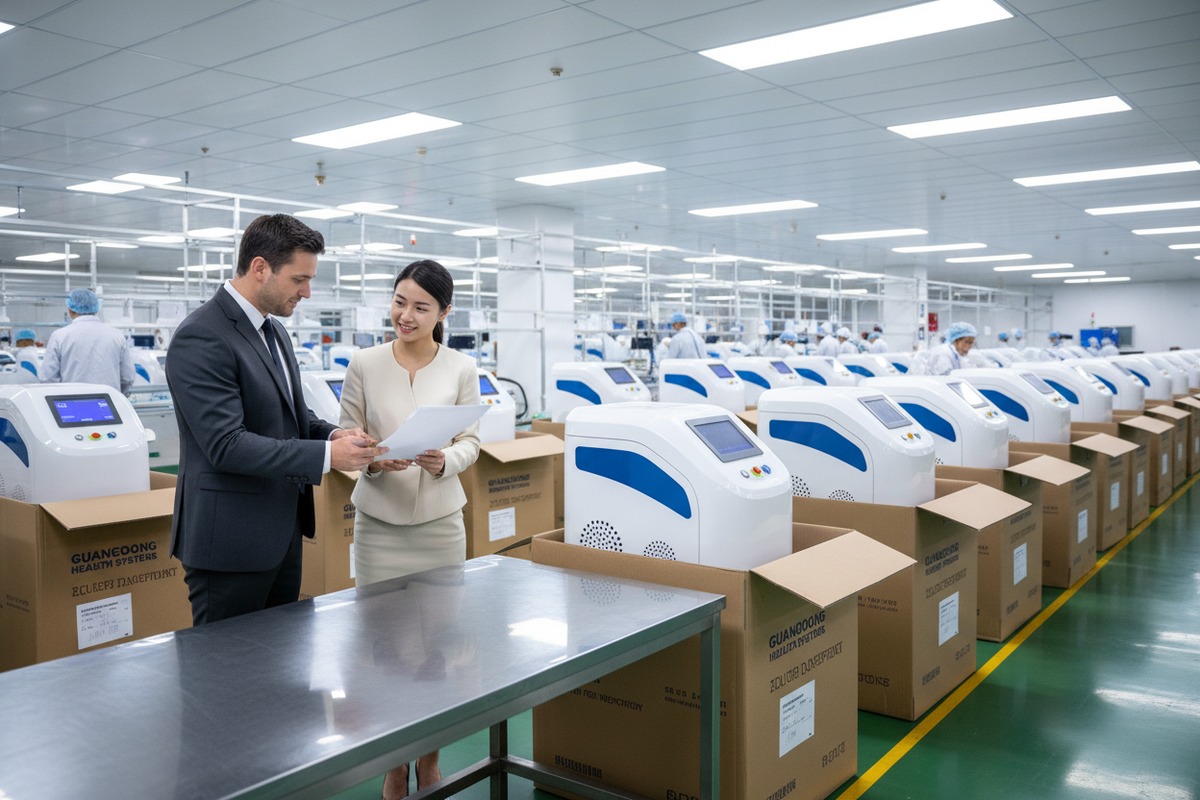
Evaluate supplier testing reports by checking for accredited laboratory stamps, IEC or EN standard references, specific test conditions, dated measurements, and consistent data across multiple samples. Request raw test data rather than summary sheets and verify that testing methods match international standards.
Elements of a Valid Test Report
A legitimate electrical testing report should contain specific elements. For measurements higher than 0.5 watts, the uncertainty must be less than 2% at a 95% confidence level. The power measurement instrument must resolve 0.01 watts or less for measurements below 10 watts.
What to Look For in Documentation
| Report Element | What It Should Show | Warning Sign |
|---|---|---|
| Lab Accreditation | ISO 17025 or equivalent | Unaccredited lab or no lab named |
| Test Standard | IEC 62301, EN 60335, etc. | No standard referenced |
| Test Conditions | Temperature, voltage, humidity | Missing environmental data |
| Sample Information | Serial numbers, date of manufacture | Generic or missing sample ID |
| Measurement Equipment | Calibrated power analyzer model | No equipment specification |
| Date and Signature | Testing date, technician signature | Undated or unsigned |
Understanding Energy Label Classifications
In the EU market, products must meet specific energy labelling requirements. Energy labels rank appliances from class A (most efficient) to class G (least efficient). The rescaled labels eliminate the older A+, A++, and A+++ classifications that caused confusion.
For products sold in Europe, suppliers must register in the EPREL database 9. EPREL registration is a legal requirement for energy-labelled products sold in the EU. Ask suppliers if your pressotherapy machines require EPREL registration based on their product category.
Key Standards to Reference
| Standard | Application | What It Covers |
|---|---|---|
| IEC 62301 | Standby power | Measurement of electrical power consumption in standby modes |
| EN 60335 | Safety | Household and similar electrical appliances safety |
| CE Marking | EU market | Conformity with European standards |
| RoHS | Components | Restriction of hazardous substances |
| Energy Labelling Regulation 2017/1369 | EU products | Framework for energy labelling requirements |
Questions to Ask About Test Reports
- Which accredited laboratory performed the testing?
- Can you provide the full test report, not just a summary?
- Were multiple samples tested, or just one?
- When was the testing performed, and on which production batch?
- Do you have ongoing quality checks for power consumption?
- How do test results compare across different production runs?
Verifying Supplier Claims
Cross-check supplier claims against industry benchmarks. For pressotherapy machines, typical power consumption ranges from 40W to 300W depending on features. Machines with infrared heating and EMS functions naturally draw more power.
Some manufacturers claim power consumption 15% below industry average, but such claims require verification through independent testing. Request comparative data showing their machine tested against competitors under identical conditions.
Building Your Supplier Scorecard
Create a standardized evaluation form for comparing suppliers:
| Criterion | Weight | Scoring Method |
|---|---|---|
| Test Report Completeness | 25% | Full report with all elements = 10 points |
| Laboratory Accreditation | 20% | ISO 17025 accredited = 10 points |
| Standby Power Performance | 20% | <1W = 10 points, 1-5W = 5 points |
| Active Power vs Rated | 15% | Within 10% of claims = 10 points |
| Documentation Transparency | 20% | Raw data provided = 10 points |
Conclusion
Inquiring about pressotherapy machine energy efficiency requires specific questions, verified test reports, and careful supplier evaluation. Request IEC 62301 standby data, measured treatment cycle consumption, and accredited laboratory documentation. These steps protect your brand and help your salon clients minimize operating costs.
Footnotes
1. Replaced HTTP 404 with a relevant and authoritative explanation of utility bills from an energy provider. ↩︎
2. Replaced HTTP 403 with a Wikipedia disambiguation page that covers various aspects of hidden costs, including those related to operations. ↩︎
3. Defines rated wattage in the context of electrical power consumption. ↩︎
4. Explains the function and technology of infrared heating elements. ↩︎
5. Replaced HTTP 404 with a Wikipedia article defining ambient temperature. ↩︎
6. Replaced HTTP 404 with a comprehensive Wikipedia article on standby power. ↩︎
7. Provides information on the international standard for standby power measurement. ↩︎
8. Defines RoHS compliance for electronic and electrical equipment. ↩︎
9. Explains the European Product Registry for Energy Labelling. ↩︎

 English
 Español de México
 Deutsch
 Français
 العربية
 Русский
