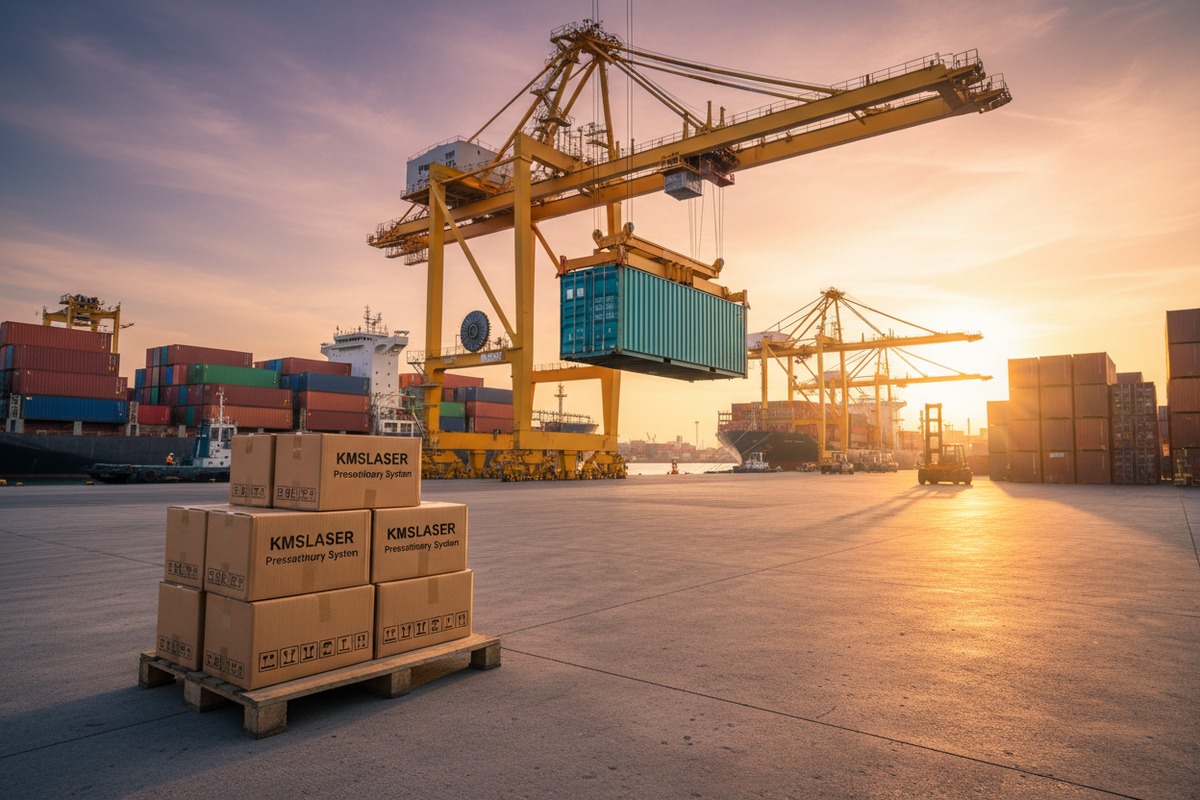
When our production team ships pressotherapy machines 1 to salon owners in the US and Europe, we often hear the same frustration: “My freight costs are eating into my margins.” LCL 2 seems cheap upfront, but hidden fees pile up. FCL 3 looks expensive, but bulk orders tell a different story. The wrong choice can delay your inventory by weeks or add thousands to your landed costs 4.
LCL is more cost-effective for pressotherapy machine orders under 10-15 CBM, typically 5-10 units. FCL becomes cheaper when shipments exceed 15 CBM (around 20+ units), offering lower per-unit costs, faster transit, and reduced handling risks for high-end beauty equipment from China.
Let’s break down the exact calculations, damage risks, transit times, and private-label cost advantages so you can choose the best shipping method for your salon equipment business.
How do I calculate the break-even point to decide between LCL and FCL for my pressotherapy machine orders?
Our export team runs these calculations every week for clients ordering lymphatic drainage systems. The break-even point varies by route, season, and your supplier's port. Most beauty equipment importers waste money by guessing instead of running the numbers.
Calculate your break-even point by dividing the FCL container cost by the LCL per-CBM rate plus handling fees. For pressotherapy machines from China to the US, break-even typically falls between 13-15 CBM—roughly 15-20 units when palletized with protective packaging.

Understanding CBM for Pressotherapy Equipment
Pressotherapy machines vary in size. Consumer models (compression boots, arm sleeves) typically measure 0.8-1.0 CBM 5 when crated. Professional multi-chamber systems with full-body suits can reach 1.5-2.0 CBM per palletized unit. Our standard salon-grade systems average around 0.9 CBM with protective packaging.
When you add sturdy palletizing—essential for delicate pumps and tubing—expect your volume to increase by 20-30%. A 10-unit order might occupy 10-13 CBM after proper crating.
LCL Cost Structure
LCL charges are calculated per CBM or per metric ton, whichever is greater. Current rates from major China ports to the US range from $100-150 per CBM. But the base rate tells only part of the story.
| Cost Component | LCL Typical Range | Notes |
|---|---|---|
| Base ocean freight | $100-150/CBM | Shanghai/Ningbo to LA/NY |
| Origin CFS handling | $80-150 | Per shipment |
| Destination CFS handling | $100-200 | Per shipment |
| Documentation fees | $50-100 | Per shipment |
| Consolidation surcharge | 10-20% of freight | Variable by consolidator |
A 5 CBM shipment might show a $600 base rate but actually cost $1,200-1,500 after all fees. This is why LCL quotes require careful scrutiny.
FCL Cost Structure
FCL pricing is straightforward. You pay a flat rate for the container regardless of how much space you use. Current 20-foot container rates from China to the US range from $2,500-4,000 depending on port pairs and season.
| Container Type | Typical Rate Range | Usable Volume |
|---|---|---|
| 20-foot standard | $2,500-3,500 | 33 CBM |
| 40-foot standard | $3,000-4,500 | 67 CBM |
| 40-foot high cube | $3,200-4,800 | 76 CBM |
Running Your Break-Even Calculation
Here's a practical example using current market rates:
Scenario: Shipping from Shanghai to Los Angeles
- LCL rate: $120/CBM plus $400 in handling fees
- FCL 20-foot rate: $3,200 all-in
Break-even calculation: $3,200 ÷ ($120 + handling per CBM adjustment) = approximately 25 CBM
For pressotherapy machines, this means:
- 5-10 units (5-12 CBM): LCL saves money
- 15-20 units (15-22 CBM): Near break-even, FCL wins on speed
- 25+ units (25+ CBM): FCL clearly cheaper per unit
When our clients order 20 units or more for their distribution warehouses, we always recommend FCL. The per-unit shipping cost drops significantly once you cross the threshold.
Will choosing LCL increase the risk of my high-end beauty machines arriving with cosmetic or functional defects?
We inspect every pressotherapy system before it leaves our facility. But what happens during ocean transit 6 is beyond any manufacturer's direct control. LCL shipments pass through more hands, and each transfer point introduces risk for delicate beauty equipment.
Yes, LCL shipping significantly increases damage risk for pressotherapy machines. Multiple handling points during consolidation and deconsolidation expose sensitive electronic controls, pneumatic components, and display screens to potential damage. FCL keeps your container sealed from factory to destination, minimizing handling touchpoints.

Why LCL Creates More Handling Risk
LCL cargo moves through a complex journey. Your pressotherapy machines get loaded at our warehouse, trucked to a Container Freight Station 7 (CFS), unloaded, measured, weighed, and loaded again with other shippers' cargo. At the destination, the process reverses.
Each transfer creates opportunities for:
- Forklift impacts on pallets
- Improper stacking with heavier cargo on top
- Exposure to moisture during CFS storage
- Rough handling during consolidation sorting
Specific Risks for Pressotherapy Equipment
Pressotherapy systems contain several vulnerable components:
| Component | Vulnerability | Damage Consequences |
|---|---|---|
| LCD control panel | Shock, pressure | Cracked screens, non-functional displays |
| Air compressor pump | Vibration, impact | Internal damage, reduced pressure output |
| Pneumatic tubing | Compression, sharp edges | Punctures, air leaks |
| Electronic PCB | Moisture, static | Complete system failure |
| Suit fabric/chambers | Abrasion, tearing | Cosmetic damage, air leaks |
FCL Protection Advantages
With FCL, your container is sealed at our facility and remains closed until it reaches your warehouse. This provides several protections:
- Single loading event with your packaging specifications
- No mixing with incompatible cargo
- Controlled environment throughout transit
- Your own bracing and securing methods
- Reduced moisture exposure from CFS storage
Our engineering team designs custom interior bracing for FCL shipments. We use foam inserts, corner protectors, and anti-vibration mounts specifically sized for each pressotherapy model.
Packaging Requirements for Each Method
If you must ship LCL due to order volume, we recommend enhanced packaging:
LCL Minimum Requirements:
- Double-walled corrugated boxes
- Foam corner protectors on all units
- Stretch wrap around entire pallet
- "Fragile" and "This Side Up" labels
- Shock indicators for claims documentation
FCL Standard Requirements:
- Standard export packaging
- Pallet strapping
- Container-appropriate load distribution
The enhanced LCL packaging adds 15-25% to your packaging costs and increases CBM by 10-15%, further pushing you toward the FCL break-even point.
Insurance Considerations
Insurance rates reflect the actual risk profile of each shipping method. LCL policies typically cost more per dollar of cargo value due to higher claim rates. When insuring high-value pressotherapy systems worth $2,000-5,000 each, this difference adds up quickly.
How can FCL shipping help me avoid the transit delays that disrupt my supply chain and salon sales?
Our clients who run tight inventory systems for their salon equipment distribution know that delays cost more than just time. A late shipment means lost sales, disappointed customers, and scrambled backup plans. We've seen LCL delays stretch orders by 2-4 weeks beyond the original estimate.
FCL shipping typically delivers 4-10 days faster than LCL for the same route. FCL bypasses consolidation and deconsolidation steps, moves directly to vessels, and clears customs faster with single-consignee documentation. For time-sensitive pressotherapy machine orders, FCL offers predictable scheduling and reduced delay risk.

Where LCL Delays Occur
LCL shipments face multiple potential delay points that FCL avoids entirely:
Origin Consolidation (2-5 days added)
Your cargo waits at the origin CFS until enough shipments accumulate to fill a container. During slow periods, this wait extends. Peak season volumes don't help—CFS facilities get backed up with too much cargo to process efficiently.
Vessel Loading Priority
Shipping lines prioritize FCL containers over consolidated LCL loads. When vessel space tightens during peak season, LCL shipments get bumped first.
Destination Deconsolidation (3-7 days added)
Upon arrival, LCL containers go to a destination CFS for unloading and sorting. Each shipment must be identified, separated, and made available for pickup. Busy ports experience significant CFS backlogs.
Customs Complexity
Mixed LCL containers with multiple consignees require more customs scrutiny. If one shipper's cargo has documentation problems, the entire container can be held.
FCL Transit Time Advantages
FCL eliminates every delay point listed above:
| Process Step | LCL Timeline | FCL Timeline |
|---|---|---|
| Origin handling | 3-5 days | Same day |
| Vessel loading | Scheduled after consolidation | Direct booking |
| Ocean transit | Same | Same |
| Customs clearance 8 | 2-4 days (shared container) | 1-2 days (single consignee) |
| Destination handling | 3-7 days CFS | Direct delivery |
| Total Added Time | 8-16 days | 1-2 days |
Real-World Transit Comparisons
For the Shanghai to Los Angeles route, here are typical total transit times:
| Shipping Method | Transit Time | Reliability |
|---|---|---|
| FCL direct service | 18-22 days | High |
| FCL transshipment | 25-30 days | Medium |
| LCL standard | 28-38 days | Lower |
| LCL during peak season | 35-45+ days | Variable |
Planning for Seasonal Demand
Beauty equipment sales follow predictable patterns. New Year resolution season, spring wellness trends, and pre-holiday stocking all create demand spikes. Planning FCL shipments allows you to:
- Lock in vessel bookings 2-3 weeks ahead
- Avoid LCL consolidation backlogs during peak shipping season
- Receive inventory with predictable dates for marketing campaigns
- Reduce safety stock requirements with reliable delivery windows
Supply Chain Buffer Benefits
With FCL's predictable 20-25 day transit from China to the US West Coast, you can maintain leaner inventory. Every week of transit time variability requires additional safety stock—capital tied up in warehouse shelves instead of working for your business.
Our repeat clients who switched from LCL to regular FCL orders report reducing their safety stock by 2-3 weeks of inventory value.
What are the specific cost advantages of using FCL when I private-label large batches of equipment from China?
When we work with brand owners developing their own pressotherapy lines, we see the full picture of private-label economics. Shipping costs directly impact your margins, and FCL unlocks savings that go far beyond the per-CBM calculation.
FCL shipping for private-label pressotherapy machine orders offers 25-40% lower per-unit shipping costs at scale, streamlined customs clearance for single-brand consignments, reduced damage claims, and better inventory timing for product launches. These advantages compound across your supply chain to significantly improve landed cost margins.

Per-Unit Cost Savings at Scale
Private-label orders typically involve larger quantities than sample or trial shipments. At 30-50 units per order, FCL economics strongly favor your margins.
Cost comparison for 40-unit pressotherapy order (approximately 36 CBM):
| Cost Category | LCL | FCL 40-foot | Savings |
|---|---|---|---|
| Base freight | $4,320 ($120/CBM) | $3,800 flat | $520 |
| Origin handling | $600 | $200 | $400 |
| Destination handling | $800 | $250 | $550 |
| Documentation | $200 | $100 | $100 |
| Total shipping | $5,920 | $4,350 | $1,570 |
| Per-unit cost | $148 | $109 | 26% lower |
These savings apply to every shipment. A brand making quarterly FCL orders saves over $6,000 annually on shipping alone.
Customs and Documentation Efficiency
Private-label shipments benefit from simplified customs processing with FCL:
Single-consignee advantages:
- One bill of lading for entire container
- Unified HS code classification
- Streamlined FDA/customs review for medical-adjacent equipment
- Faster release from customs holds
With LCL, your private-label machines share container space with random cargo—possibly competing products, items under import scrutiny, or goods from less reputable suppliers. If customs selects that container for inspection, your shipment waits.
Brand Protection Considerations
Private-label products represent your brand identity. FCL provides control over:
Quality preservation:
- Sealed container prevents tampering
- No contact with potentially contaminating cargo
- Your packaging standards maintained throughout transit
- Reduced cosmetic damage to branded packaging
Confidentiality:
- Product designs stay within your supply chain 9
- No exposure to competing importers at CFS facilities
- Shipping documentation remains private
Inventory and Cash Flow Benefits
Private-label business models depend on predictable costs and timing. FCL supports better financial planning:
Cash flow advantages:
- Lower per-unit landed cost improves margins
- Predictable shipping costs aid budgeting
- Faster transit reduces working capital tied up in transit
- Reliable delivery supports just-in-time inventory models
Launch timing:
- Product launches require precise inventory arrival
- FCL's shorter, more predictable transit supports marketing calendars
- No delays from LCL consolidation backlogs during busy seasons
Volume Commitment Benefits
When you commit to regular FCL volumes, additional advantages emerge:
- Contract rates with freight forwarders
- Priority booking during peak seasons
- Dedicated customer service contacts
- Volume discounts on port handling
Our brand owner clients who scale to monthly FCL shipments often negotiate 10-15% below spot market rates through annual contracts.
Total Landed Cost Comparison
For private-label calculations, consider all cost components:
| Cost Component | Per-Unit Impact | FCL Advantage |
|---|---|---|
| Freight | $30-40 lower | Direct |
| Damage/claims | $5-15 lower | Reduced handling |
| Insurance | $3-5 lower | Lower risk profile |
| Customs delays | $10-20 lower | Faster clearance |
| Inventory carrying | $15-25 lower | Faster transit |
| Total per-unit | $63-105 lower | Significant |
For a $2,500 retail-value pressotherapy system, these savings represent 2.5-4% of product value—directly boosting your gross margin.
Conclusion
Choosing between LCL and FCL for your pressotherapy machine orders comes down to volume, timing, and risk tolerance. For small test orders under 10 units, LCL saves money despite its drawbacks. Once you scale to 15-20 units or more, FCL delivers lower per-unit costs, faster transit, and better protection for your investment. Request quotes for both options on your next order to find your specific break-even point.
Footnotes
1. Provides a general definition and overview of pressotherapy machines. ↩︎
2. Defines Less than Container Load (LCL) shipping for international logistics. ↩︎
3. Defines Full Container Load (FCL) shipping for international logistics. ↩︎
4. Explains the concept of total landed costs in international trade and supply chain. ↩︎
5. Defines Cubic Meter (CBM) as a standard unit of volume in shipping. ↩︎
6. Explains the process of transporting goods by sea, encompassing ocean transit. ↩︎
7. Defines a Container Freight Station (CFS) and its role in logistics. ↩︎
8. Explains the essential process of customs clearance for international shipments. ↩︎
9. Replaced 403 Investopedia link with an authoritative Wikipedia page for supply chain definition. ↩︎


 English
 Español de México
 Deutsch
 Français
 العربية
 Русский
Join the Conversation
Have a question or insight to share? We read every comment — whether you're a distributor, salon owner, or just curious about the technology. Your real-world experience helps others make better decisions. Drop your thoughts below.