

Running a beauty school brings unique challenges. Students need hands-on practice with real equipment. But sourcing pressotherapy machines with proper training materials? That often feels like searching for a needle in a haystack. Our production team has spent years developing educational packages alongside our devices.
To find pressotherapy machine suppliers with train-the-trainer materials, look for manufacturers that bundle professional certification programs, detailed user manuals, treatment protocols, and instructor guides with equipment purchases. Prioritize suppliers offering free training, CPD-accredited content, and customizable educational resources that align with your beauty school curriculum.
In the following sections, we will break down exactly what to look for when sourcing pressotherapy equipment for educational purposes. You will learn how to evaluate training programs, assess private-label options, verify quality certifications, and secure reliable logistics support.
How do I identify a pressotherapy machine manufacturer that provides professional train-the-trainer materials for my beauty school?
Finding the right supplier can feel overwhelming. With dozens of manufacturers claiming to offer "comprehensive training," how do you separate marketing fluff from genuine educational value? When we work with beauty schools, we understand their unique needs differ from salon owners.
Look for manufacturers offering CPD-accredited training courses that cover anatomy, physiology, machine operation, treatment protocols, and contraindications. The best suppliers provide personalized instruction from certified beauticians, optional certification upon completion, and ready-to-use resources like consent forms and treatment guides.
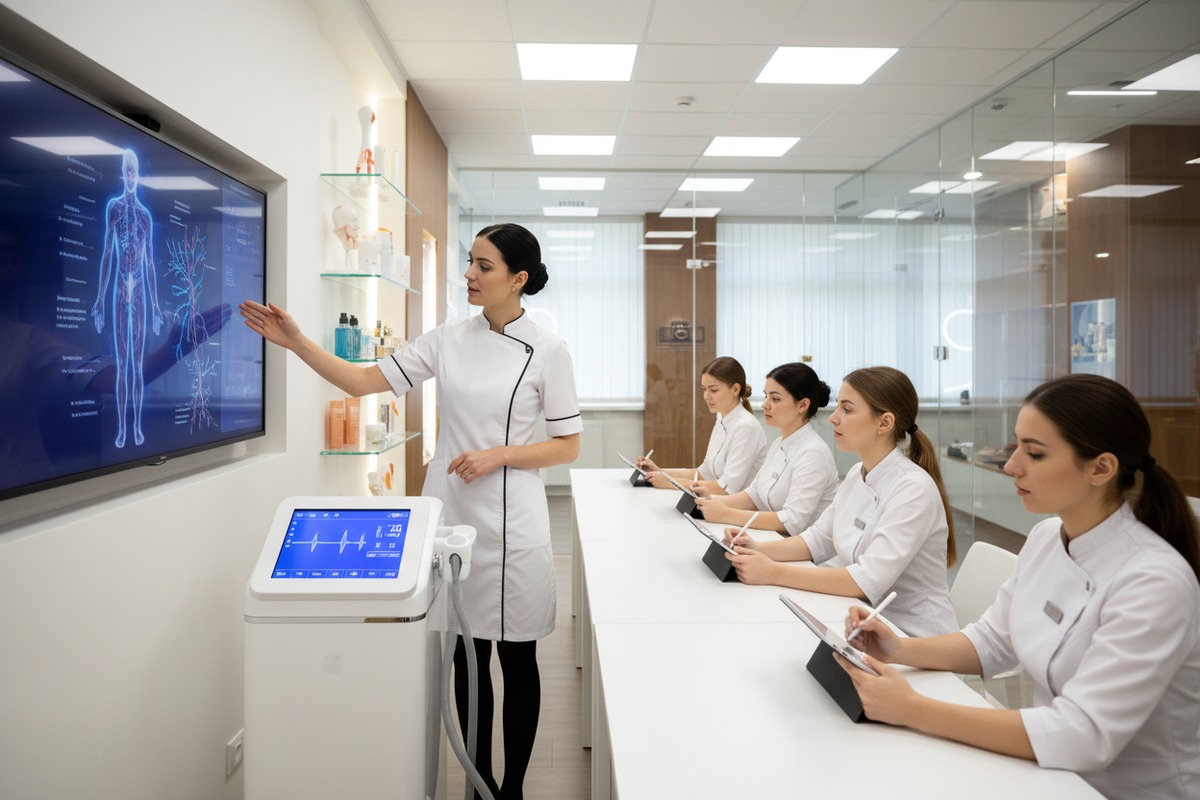
What Should a Professional Training Program Include?
A solid train-the-trainer program covers multiple areas. Introduction to Pressotherapy and its benefits, anatomy and physiology of the lymphatic and circulatory systems 1, understanding Pressotherapy machines 2 and equipment, step-by-step treatment protocols for detoxification, cellulite reduction, and post-surgery recovery, client consultation, contraindications, and safety guidelines form the foundation.
Your instructors need more than basic knowledge. They must understand how to teach these concepts effectively. The best programs include pedagogical components.
Key Training Program Components to Look For
| Component | What to Expect | Why It Matters |
|---|---|---|
| Theory Module | Lymphatic system, anatomy, treatment science | Builds instructor credibility |
| Practical Training | Hands-on device operation, live demonstrations | Ensures safe treatment delivery |
| Certification | CPD-accredited or industry-recognized credentials | Enables insurance and credentialing |
| Teaching Resources | Video demos, slides, student handouts | Reduces curriculum development time |
| Ongoing Support | Access to updates, Q&A forums, refresher courses | Keeps curriculum current |
Evaluating Supplier Training Quality
For every Canta Esthetic device, our customers can receive free training. Our certified beauticians provide personalized training for each Canta Esthetic device. Upon your request, free certification can also be provided after training.
When evaluating suppliers, ask specific questions. Request sample training materials before purchasing. Check if courses are CPD-eligible. This course is fully accredited by The Centre Of CPD Excellence and beauty industry approved, fully insurable and recognised worldwide.
Accreditation Matters
The Pressotherapy for Lymphatic Drainage and Cellulite Level 4 accredited course carries 6 credits and will qualify you for insurance cover. This type of accreditation signals quality and helps your graduates meet professional standards.
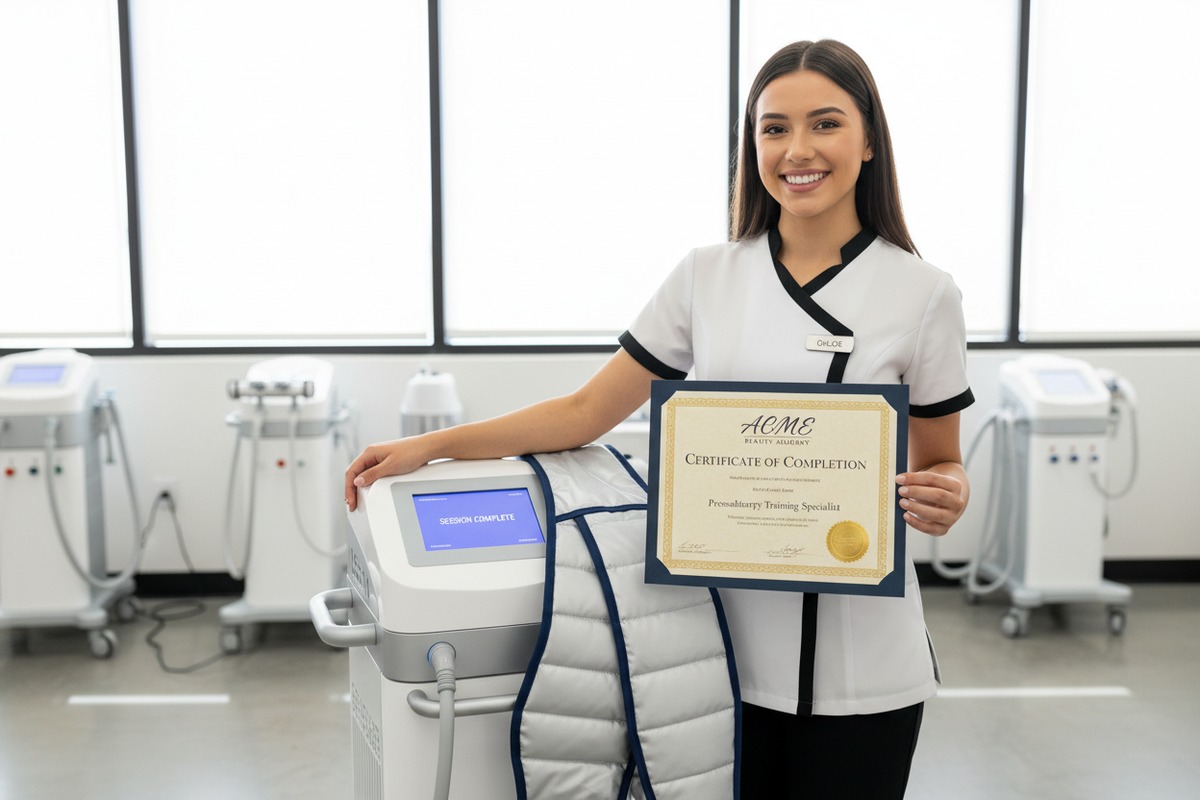
Look for suppliers who include complete documentation packages. Along with the training you receive a full manual package: Detailed User's Manual, a Certificate of Completion when training is complete, Treatment Protocols and Recommendations.
Can I private-label the pressotherapy equipment and educational guides to align with my brand's curriculum?
Beauty schools often want equipment and materials that reflect their brand identity. Generic manufacturer branding can feel disconnected from your curriculum. Our OEM team regularly customizes both equipment and training materials for educational institutions.
Yes, many pressotherapy manufacturers offer private-label services including logo integration on device startup screens, body etching, custom packaging, and branded educational materials. OEM arrangements allow beauty schools to create cohesive learning environments with equipment and guides that match their brand identity and curriculum standards.

Understanding OEM vs. Private Label Options
The terms often confuse buyers. In the cosmetics world, the OEM option gives you the opportunity to develop your own formulations and package them as you like. In an OEM arrangement, a supplier may offer you products to customize, guide you, and work with you in the product design stage.
For pressotherapy equipment, this translates to several possibilities.
Private-Label Customization Options
| Customization Type | Description | Typical MOQ |
|---|---|---|
| Logo on Startup Screen | Your brand appears when device powers on | 5-10 units |
| Machine Body Etching | Permanent logo on equipment housing | 10-20 units |
| Custom UI/Interface | Branded menu screens and graphics | 50+ units |
| Branded User Manuals | Your logo and contact info on all docs | Varies |
| Custom Training Videos | Instructor guides featuring your curriculum | Custom quote |
| Branded Certificates | Completion certificates with school branding | No minimum |
Benefits for Beauty Schools
Our Private Label, or OEM, offers our customers the opportunity to create their unique beauty and personal care products and build equity in their business by completely controlling their formula development and package design.
This principle applies equally to beauty equipment. Custom-branded devices create a professional learning environment. Students associate quality equipment with your institution.
Curriculum Integration
Beyond branding, consider how training materials integrate with your existing curriculum. Ask potential suppliers these questions:
- Can training modules be delivered as standalone units or embedded in our existing courses?
- Are materials available in digital formats for online learning components?
- Can we customize treatment protocols to match our teaching methodology?
- Will you provide source files for customization?
The best manufacturers understand educational needs differ from commercial settings. They offer flexibility in how materials are structured and delivered.
Cost Considerations
Private-label services 5 typically add 10-20% to base equipment costs. However, the value for beauty schools often exceeds this investment. Branded equipment signals professionalism to students and parents. It also prevents students from easily price-comparing your equipment purchases.
What quality certifications should I require from a supplier to ensure my pressotherapy machines are durable enough for high-volume classroom use?
Educational environments put equipment through rigorous testing. Multiple students practicing daily creates wear patterns that exceed typical salon use. We design our machines with high-volume applications in mind.
Require suppliers to provide CE marking for EU markets, FDA registration for US compliance, and ISO 13485 certification for quality management systems. For classroom durability, also request ISO 9001 certification, material safety documentation (RoHS compliance), and evidence of aging tests that simulate extended use conditions.

Essential Certifications Explained
ISO Certification: Internationally, manufacturers may also seek ISO certification, specifically ISO 13485, which outlines the requirements for a quality management system specific to the medical device industry. This certification ensures that the manufacturing process adheres to the highest standards.
Understanding each certification helps you evaluate suppliers effectively.
Certification Requirements by Market
| Certification | Market | What It Verifies |
|---|---|---|
| CE Marking | European Union | Health, safety, and environmental protection compliance |
| FDA Registration | United States | Device safety and effectiveness evaluation |
| ISO 13485 | International | Quality management for medical devices |
| ISO 9001 | International | General quality management systems |
| RoHS | International | Absence of hazardous substances |
| FCC | United States | Electromagnetic compatibility |
Why Certifications Matter for Beauty Schools
The consequences of using non-certified devices can be severe. Without proper certification, there's no guarantee that the machine has been tested for safety and efficacy. This can lead to ineffective treatments or, worse, potential harm to the user.
For educational institutions, the stakes increase. You are responsible for student safety during training. Uncertified equipment exposes your school to liability.
Durability for Classroom Environments
Standard certifications verify safety. Classroom durability requires additional scrutiny. Ask suppliers about:
Aging Tests: Aging tests 6 simulate long-term use in various environments (such as high temperatures or continuous operation) to ensure the product's reliability in different usage scenarios.
Material Quality: The quality of beauty device primarily depends on the selection of raw materials. RoHS compliance 7 In the European and American markets, customers have high standards for product materials, especially for parts in direct skin contact, such as electrodes, massage heads, and face masks. These materials must be non-toxic, non-irritating, and meet safety standards.
Evaluating Build Quality
Beyond certifications, assess physical durability. Request these specifications:
| Component | Educational Standard | Why It Matters |
|---|---|---|
| Air Compressor | Rated for 8+ hours daily operation | Prevents overheating during class sessions |
| Suit Material | Medical-grade, reinforced seams | Withstands frequent student fitting/removal |
| Control Unit | Industrial-grade electronics | Handles repeated on/off cycles |
| Tubing | Reinforced connectors | Prevents leaks from constant reconnection |
| LCD Screen | Tempered glass or polycarbonate | Resists accidental impacts |
Warranty Terms for Educational Use
To ensure exceptional quality, all Canta Esthetic machines go through a stringent quality control process and come with a 36-month warranty.
Look for warranties of 24-36 months minimum. Standard 12-month warranties may be insufficient for educational settings. Ask if warranties cover "commercial" or "institutional" use—some exclude high-volume environments.
How can I ensure my supplier offers the logistics and technical support needed to keep my beauty school's inventory running smoothly?
Equipment downtime disrupts curriculum delivery. When a pressotherapy machine fails mid-semester, you need rapid response—not a weeks-long repair process. Our service team provides dedicated support channels for educational clients.
Partner with suppliers who offer door-to-door logistics, 24/7 technical support, rapid spare parts availability, and clear escalation procedures. Request service level agreements (SLAs) that guarantee response times, and verify the supplier has repair capabilities in your region or provides advance replacement units.
Evaluating Logistics Capabilities
Delivery of regular orders can be completed within 7 working days, and special needs can be expedited on demand. Together with the top 5 logistics providers in the industry, we adopt customized transportation solutions, 24-hour online tracking of the status of the goods, and first payment for damage and loss to ensure reliable logistics.
For beauty schools, logistics considerations include:
Critical Logistics Factors
| Factor | What to Verify | Red Flags |
|---|---|---|
| Shipping Method | Door-to-door with tracking | "FOB" only with no destination support |
| Transit Time | 7-14 days for standard orders | 30+ days with no expedite options |
| Customs Support | Supplier handles documentation | "Buyer responsible for clearance" |
| Insurance | Full coverage during transit | Partial coverage or none included |
| Packaging | Educational-grade protection | Minimal consumer packaging |
Technical Support Requirements
Therefore, beauty equipment manufacturers must provide a comprehensive after-sales service system, including: Warranty Period: Most manufacturers offer a 12-month warranty, ensuring that any quality issues during this period can be repaired or replaced free of charge. Technical Support: Timely response to customer inquiries, providing usage guidance and common problem resolutions. Repair Services: Global repair support, especially in the European and American markets, to ensure quick repair of faulty devices.
Educational institutions need more than basic support. Demand these service components:
Minimum Support Standards for Beauty Schools
| Support Type | Minimum Standard | Ideal Standard |
|---|---|---|
| Response Time | 24 hours | Same business day |
| Support Channels | Email + phone | Email + phone + video + chat |
| Availability | Business hours | 24/7 with emergency line |
| Language | English | English + local language |
| Documentation | Digital manuals | Video library + troubleshooting guides |
| Remote Diagnostics | Basic guidance | Screen sharing capabilities |
Spare Parts and Maintenance
We offer comprehensive support, from initial consultation and OEM/ODM development, to 24/7 after-sales service and warranty protection (standard 2-year warranty).
Beauty schools should maintain spare parts inventory. Ask suppliers about:
- Which components fail most frequently?
- What is the lead time for spare parts?
- Can you pre-purchase a maintenance kit?
- Do you offer preventive maintenance contracts?
Building a Long-Term Partnership
We combine factory-direct wholesale pricing with clinical-grade technology to ensure a rapid and sustainable ROI for your practice. From the initial inquiry to lifetime technical support, we are your strategic partner in driving profitability and professional excellence in the global beauty market.
Look beyond the initial purchase. Your supplier relationship will span years of equipment operation. Evaluate their communication style during the sales process—it reflects their post-sale support.
Service Level Agreement Checklist
Before finalizing any order, request written commitments on:
- Maximum response time for technical inquiries
- Turnaround time for warranty repairs
- Availability of loaner units during repairs
- Process for handling equipment recalls
- Annual maintenance recommendations
- Training updates when new protocols emerge
The best suppliers proactively maintain relationships. They send firmware updates, new training materials, and check in periodically. This ongoing engagement ensures your curriculum stays current with industry developments.
Conclusion
Sourcing pressotherapy machines for beauty schools requires balancing educational needs with practical considerations. Prioritize suppliers who understand institutional requirements and offer comprehensive support packages. The right partnership transforms equipment purchases into long-term educational assets.
Footnotes
1. Provides a comprehensive overview of the lymphatic system’s function. ↩︎
2. Explains the principles and applications of pressotherapy devices. ↩︎
3. Defines CPD accreditation and its importance for professional development. ↩︎
4. Replaced with a relevant and accessible page from a reputable beauty insurance provider that covers professional liability. ↩︎
5. Provides a clear definition and examples of private label products and services. ↩︎
6. Explains how accelerated aging tests simulate long-term product use for durability. ↩︎
7. Provides official information on the RoHS Directive and its objectives. ↩︎
8. Replaced with an authoritative source (BSI Group) providing information on ISO 13485 certification for medical devices. ↩︎
9. Defines service level agreements and their role in outlining service standards. ↩︎

 English
 Español de México
 Deutsch
 Français
 العربية
 Русский
