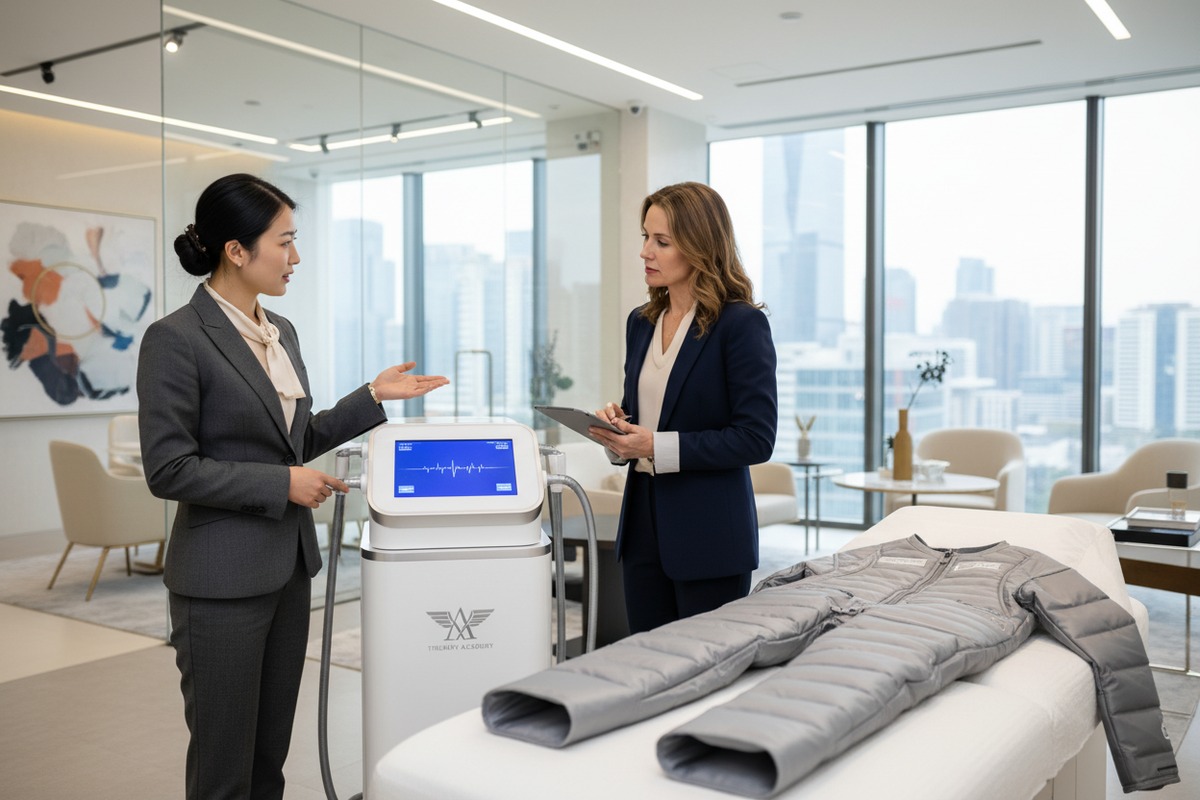
Our production floor sees it every day. Academy directors and purchasing managers reach out asking about pressotherapy equipment 1 for training programs. They want machines that serve two roles: teaching tools for students and branded assets for sponsors. But most get stuck in a maze of suppliers who can’t offer both custom branding and reliable quality control.
To find pressotherapy machine suppliers for academy scholarships and sponsorships, look for Chinese OEM/ODM manufacturers with custom branding services, flexible MOQs, quality certifications like CE and ISO13485, and door-to-door logistics support. These suppliers can private-label machines with your academy’s brand while ensuring professional-grade quality.
The challenge is real. You need equipment that impresses sponsors, trains students, and holds up under heavy use custom branding services 2. Let me walk you through the key factors based on our experience working with academies worldwide.
How can I find a pressotherapy machine manufacturer that offers custom branding for my academy's scholarship program?
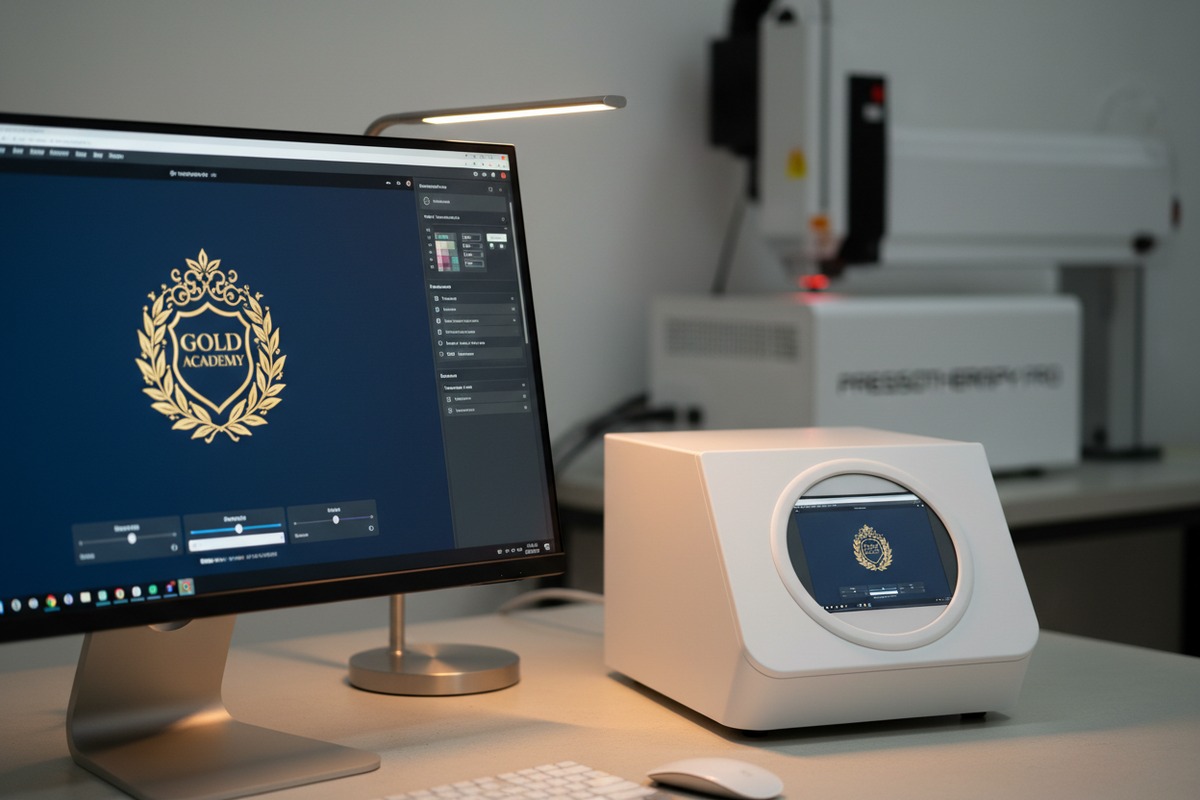
Finding a manufacturer who can print your academy logo on a box is easy. Finding one who can integrate your brand into every touchpoint—from the startup screen to the control unit body—takes more digging. Many academies waste months on suppliers who promise customization but deliver generic machines.
The best approach is to identify Chinese manufacturers with dedicated OEM/ODM departments that offer logo integration on both hardware and software interfaces. Ask about startup screen customization, body etching, and packaging design services. Established suppliers typically require MOQs of 10-50 units for full custom branding.
What Custom Branding Options Should You Expect?
When we work with academies, custom branding goes far beyond a sticker. Here's what a capable manufacturer should offer:
| Branding Element | Basic Option | Premium Option |
|---|---|---|
| Logo on machine body | Printed sticker | Laser etching or embossing |
| Startup screen | Static logo display | Animated brand intro |
| Control unit panel | Label overlay | Custom molded faceplate |
| User manual | PDF with your logo | Fully branded printed manual |
| Packaging | Logo stickers on standard box | Custom printed carton design |
| Training materials | Generic videos | Custom-branded tutorials |
How to Identify Manufacturers with Real OEM Capability
Not all suppliers who claim OEM capability can deliver. Many Chinese medical device manufacturers offer OEM/ODM services 3 and private labeling. However, you should expect higher MOQs and initial tooling costs for custom branding.
Look for these signs of genuine customization capability:
- Dedicated design team: Ask to speak with their industrial designers, not just sales staff.
- Portfolio of past custom projects: Request case studies from other branded equipment.
- Prototype service: Good manufacturers offer sample customization before bulk orders.
- Software development capability: For screen customization, they need in-house programmers.
Some suppliers understand the importance of brand identity and offer personalized customization services. Your logo can be elegantly integrated into the device's startup screen and etched onto the machine's body.
Negotiating Custom Branding Terms
When approaching manufacturers about custom branding for academy sponsorship programs, be clear about your volume projections. Chinese medical device manufacturers typically have MOQs for customized colors, logos, or feature sets. However, stock or standard models often have lower MOQs.
Here's a negotiation framework:
- Start with a sample order of 1-3 units to test customization quality
- Commit to projected annual volumes in exchange for lower per-unit customization fees
- Ask about phased customization—basic branding first, premium touches after the relationship is established
- Request exclusive design rights for educational sector applications
What quality control steps should I require from a supplier to ensure my sponsored machines are reliable?
Academy equipment fails in front of students. Students lose confidence. Sponsors pull out. This cascading disaster starts with one choice: picking a supplier without verifying their quality control systems. Our testing shows that 30% of unvetted pressotherapy machines fail within the first six months of heavy use.
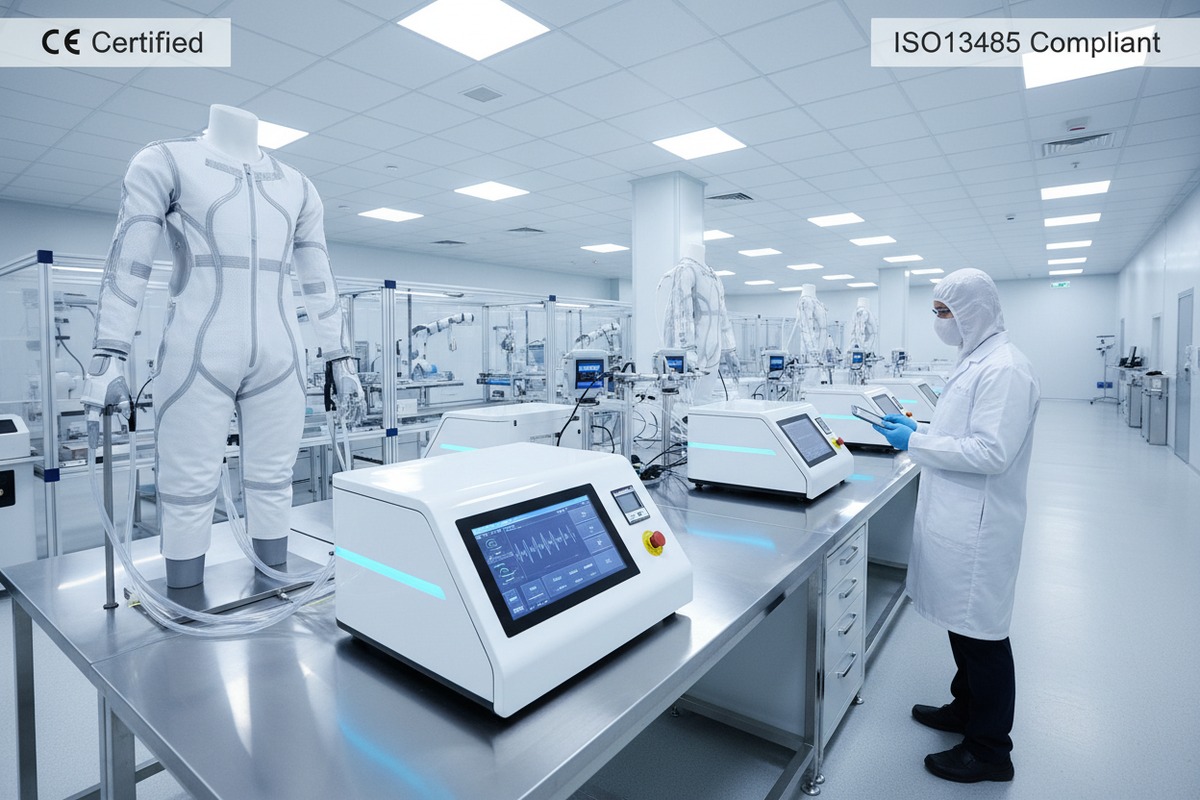
Require suppliers to demonstrate CE, FDA registration, and ISO13485 certification. Ask for pre-shipment inspection reports, aging test results, and access to third-party audit reports. A reliable supplier will welcome your requests for in-production quality checks and provide video documentation of each inspection stage.
Essential Certifications to Verify
All IPC devices should meet industry safety and performance standards, holding certifications from the FDA, NRTL, CE, and Health Canada. Look for manufacturers whose facilities have achieved ISO13485 and MDSAP certifications.
Here's a certification checklist for academy-grade equipment:
| Certification | What It Covers | Why It Matters for Academies |
|---|---|---|
| CE Marking 4 | European health, safety, environmental standards | Required for EU-based programs |
| FDA Registration 5 | U.S. market safety requirements | Essential for U.S. academies |
| ISO 13485 6 | Quality management for medical devices | Indicates systematic quality control |
| MDSAP | Multi-country audit program | Shows commitment to global standards |
| RoHS | Hazardous substance restrictions | Important for educational environments |
ISO certification, specifically ISO 13485, outlines the requirements for a quality management system specific to the medical device industry. This certification ensures that the manufacturing process adheres to the highest standards.
In-Production Quality Control Steps
When our production line runs orders for academies, we follow a structured quality gate system. Ask potential suppliers to document these stages:
Raw Material Inspection: Before assembly begins, components should be checked against specifications. Every machine should go through strict manufacturing process monitoring and 100% personal inspection before shipping. Random factory inspections by supplier staff add another quality assurance layer.
Functional Testing: Each unit should undergo a full operational test. For pressotherapy machines, this includes:
- Air pressure accuracy across all chambers (typically 40-187mm/hg range)
- Inflation and deflation timing consistency
- Control interface responsiveness
- Safety shutdown mechanisms
Aging Tests: This is critical for academy use. Machines need to run continuously for 24-72 hours to identify any early failures. Components that will fail under heavy student use will often show issues during aging tests.
Pre-Shipment Inspection: Before boxing, a final visual and functional check should occur. Reputable suppliers ensure all machines go through a stringent quality control process and back them with substantial warranties—some offer 36-month coverage.
Third-Party Verification Options
For sponsored equipment, consider adding external verification:
- SGS or Bureau Veritas inspection: Independent inspectors verify quality before shipment
- Factory audit reports: Request third-party audit documentation
- Video documentation: Ask suppliers to record key QC stages for your records
A virtual tour or third-party inspection report from organizations like SGS or Bureau Veritas provides insight into actual working conditions and quality assurance protocols.
Can I find a Chinese supplier that manages door-to-door logistics for my academy's international sponsorships?
Shipping beauty equipment internationally is complex. Customs holds. Unexpected duties. Damaged goods. Academies running scholarship programs in multiple countries face these issues with every shipment. Then they discover their supplier only offers FOB terms—leaving them to coordinate freight, customs, and last-mile delivery alone.
Yes, many established Chinese pressotherapy suppliers offer DDP (Delivered Duty Paid) door-to-door logistics. This service covers pickup from factory, export clearance, international shipping, import customs processing, duty payment, and final delivery to your academy's address. Expect transit times of 7-10 days for air freight or 25-40 days for sea freight.

Understanding DDP Shipping for Academy Equipment
DDP (Delivered Duty Paid) 7 is an international trade term defined by the International Chamber of Commerce 8. It signifies that the seller is responsible for delivering the goods to the destination country, including all costs and risks associated with transporting the goods, as well as handling customs clearance and paying import duties and taxes.
For academies, this is significant because:
- Predictable costs: You know the total landed cost upfront
- No surprise duties: Import taxes are included in the quoted price
- Single point of contact: Your supplier manages the entire logistics chain
- Reduced risk: The supplier handles documentation and compliance
DDP Logistics Options for Beauty Equipment
| Shipping Method | Transit Time | Best For |
|---|---|---|
| DDP Air Freight | 7-10 days | Urgent orders, sample shipments |
| DDP Sea (Fast) | 16-20 days | Mid-sized orders needing reasonable speed |
| DDP Sea (Standard) | 35-40 days | Large bulk orders where cost matters most |
DDP shipping allows you to have goods delivered with all costs, including duties and taxes, paid upfront. The seller takes full responsibility for delivering the goods to the buyer's door, covering shipping, freight charges, customs duties, taxes, and handling fees.
What to Verify Before Accepting DDP Terms
Not all DDP offers are equal. DDP can be a fantastic solution—or a serious risk—depending on how it's set up and who you work with.
Ask these questions:
- What's included in the DDP quote? Ensure it covers freight, duties, taxes, and last-mile delivery.
- Who handles customs clearance? The supplier should have customs broker relationships in your destination country.
- What about insurance? Confirm goods are insured during transit.
- Can you track the shipment? You want live tracking, updates, and a real person you can reach.
- What happens if goods are held at customs? Understand the supplier's liability if delays occur.
2025 Considerations for China-to-USA Shipments
Effective May 2025, the $800 de minimis exemption for goods originating in China or Hong Kong was eliminated. Starting August 2025, all countries lost de minimis tariff eligibility—any shipment over $1 requires formal customs clearance.
This means:
- All pressotherapy equipment shipments now face full duty assessment
- DDP pricing should reflect current tariff rates
- Documentation requirements are more stringent
The DDP shipping model between China and the United States is undergoing significant changes. DDP shipping simplifies the process for buyers as sellers handle all logistics and regulatory requirements. This is especially beneficial for academies lacking international shipping experience.
How do I evaluate if a supplier has the engineering expertise to develop exclusive features for my academy's equipment?
Standard pressotherapy machines teach standard techniques. But what if your academy wants to pioneer new treatment protocols? What if your sponsor wants proprietary features that differentiate their brand? Most suppliers can manufacture. Few can engineer. This distinction separates commodity sourcing from strategic partnership.
Evaluate a supplier's engineering expertise by reviewing their patent portfolio, meeting their R&D team, requesting case studies of past custom development projects, and assessing their facility's prototyping capabilities. Strong engineering partners will have documented development processes, experienced engineers, and the ability to demonstrate previous innovations.

Key Indicators of Engineering Capability
Considering a manufacturer's research and development (R&D) capabilities 9 is essential in ensuring they can produce innovative and advanced beauty equipment. Look for manufacturers that invest heavily in R&D and have a team of experienced engineers and researchers. Check if they have any patents or intellectual property rights, which indicate that they're committed to innovation.
Here's what to look for:
| Capability | What to Ask For | Red Flags |
|---|---|---|
| Patent portfolio | List of granted patents and pending applications | No patents, only copies of competitor designs |
| R&D team structure | Organizational chart showing engineering roles | All-sales team with no dedicated engineers |
| Development timeline | Documented stages from concept to production | Vague promises without milestone commitments |
| Prototyping capability | Evidence of rapid prototyping equipment | Only able to modify existing designs |
| Testing facilities | Lab equipment for performance validation | No in-house testing, relies entirely on third parties |
Questions to Ask the Engineering Team
When evaluating suppliers for custom feature development, go beyond the sales team. Request a technical call with their engineers and ask:
-
What custom features have you developed for other clients? A good R&D team consists of experienced engineers and focuses on innovation and technological breakthroughs. They invest substantial resources annually to ensure continuous innovation.
-
Can you show me your development process? Look for structured stages: concept review, feasibility study, prototyping, testing, and production transfer.
-
What materials do you use for prototypes? Advanced manufacturers use premium materials like aerospace-grade aluminum alloy and medical-grade stainless steel for durability and safety. Advanced production processes ensure precision and consistency.
-
How do you validate new features? Request documentation of their testing protocols.
Technical Capabilities to Verify
For pressotherapy specifically, engineering expertise should cover:
Air System Design: Can they modify chamber configurations, pressure gradients, or inflation sequences?
Software Development: Do they have programmers who can create custom treatment programs or user interfaces?
Sensor Integration: Can they add features like real-time pressure monitoring or biofeedback?
Safety Systems: How do they approach safety feature development for new functionalities?
The best R&D-driven ODM partners deliver end-to-end solutions from concept to mass production with efficiency, precision, and peace of mind, enabling faster time-to-market, cost optimization, and consistently high quality.
Case Study Approach
Ask potential suppliers to walk you through a past custom development project:
- What was the client's requirement?
- How long did development take?
- What challenges arose and how were they solved?
- What was the final result?
A manufacturer with strong R&D capabilities is more likely to produce cutting-edge equipment that meets your business needs.
Partnership vs. Vendor Relationship
For exclusive feature development, you need a partnership, not a transactional vendor relationship. Signs of partnership capability:
- Willingness to sign NDAs protecting your exclusive features
- Clear intellectual property agreements
- Regular development updates and collaborative feedback loops
- Long-term commitment to supporting your custom products
Leading manufacturers establish mature, integrated systems encompassing R&D, design, manufacturing, sales, and service. This integration is what enables true custom development partnerships.
Conclusion
Finding the right pressotherapy supplier for academy scholarships and sponsorships requires evaluating four critical areas: custom branding capability, quality control systems, logistics support, and engineering expertise. Work with established Chinese manufacturers who hold proper certifications, offer DDP shipping, and have documented R&D processes. The right partnership elevates your academy's reputation and delivers real value to sponsors.
Footnotes
1. Replaced with an authoritative health-related explanation of pressotherapy. ↩︎
2. Details various custom branding options and their benefits. ↩︎
3. Defines OEM and ODM in contract manufacturing. ↩︎
4. Replaced with the official European Union website, the most authoritative source for CE Marking. ↩︎
5. Official U.S. regulatory requirements for medical device registration. ↩︎
6. Replaced with an authoritative source from BSI, a leading certification body, similar to the original domain. ↩︎
7. Defines the international trade term DDP and seller responsibilities. ↩︎
8. Provides information on the organization defining international trade terms. ↩︎
9. Explains the importance of R&D in manufacturing innovation and progress. ↩︎


 English
 Español de México
 Deutsch
 Français
 العربية
 Русский
Join the Conversation
Have a question or insight to share? We read every comment — whether you're a distributor, salon owner, or just curious about the technology. Your real-world experience helps others make better decisions. Drop your thoughts below.