
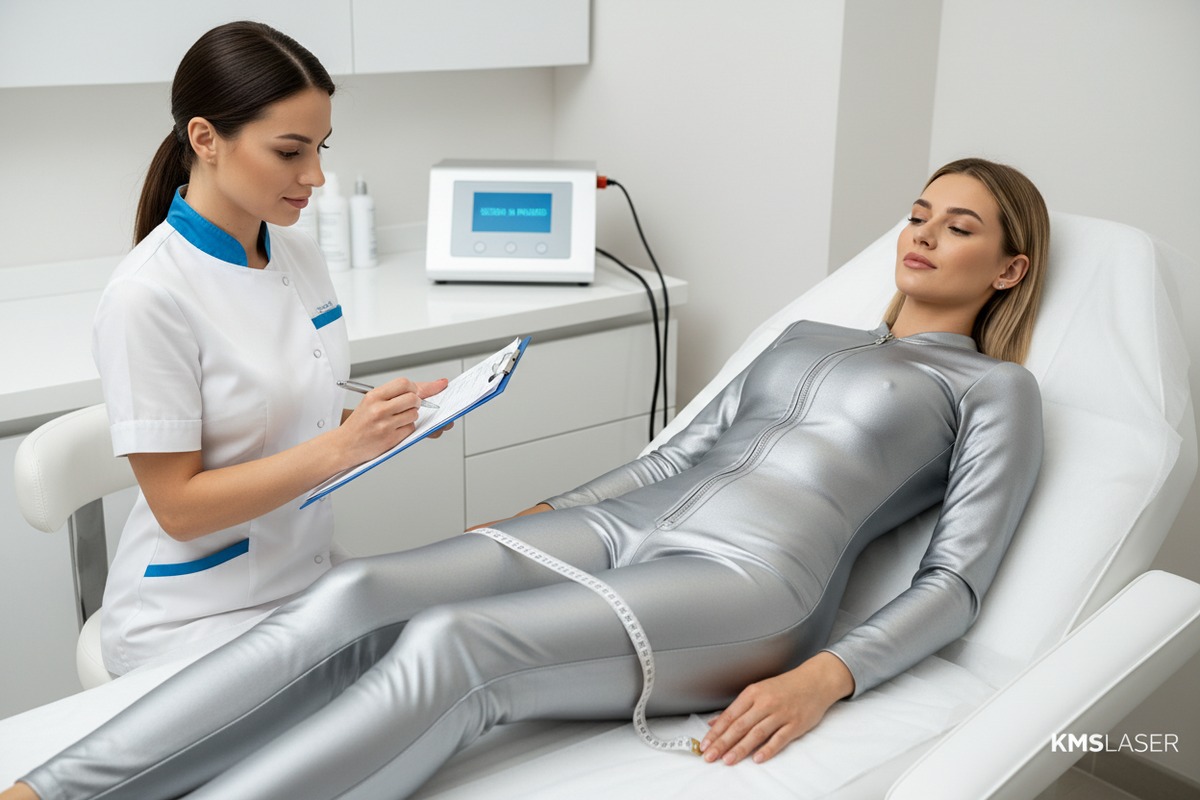
When our engineering team first began shipping pressotherapy systems to European salons, we noticed a recurring problem. Suits designed for Asian markets often left taller European clients uncomfortable. Zippers strained. Velcro failed. Air chambers missed target areas. These fit issues hurt treatment results and created costly returns for our partners.
To evaluate pressotherapy suit adjustability for European body types, focus on five key areas: suit dimension ranges with extended length options, independent air chamber counts (16-32+), fastening durability (velcro and zippers), modular section design, and CE marking compliance. Request anthropometric specifications aligned with EN 13402 European sizing standards.
In this guide, I will walk you through the critical evaluation points our team uses when developing pressotherapy suits for the European market. You will learn what measurements to request, how to test durability, and where common sourcing mistakes happen.
How can I ensure the pressotherapy suit dimensions are truly optimized for my taller European clients?
When we export to European markets, height and limb proportions are always top concerns. A suit designed for average Asian body dimensions often falls short—literally. Leg sections end above the knee. Arm sleeves restrict shoulder movement. Your clients feel squeezed rather than relaxed.
To ensure proper fit for taller European clients, request suits with extended leg lengths (minimum 100-110 cm inseam), arm sleeves reaching 65-70 cm, and torso sections accommodating heights up to 190-195 cm. Confirm the supplier uses European anthropometric data aligned with EN 13402 sizing standards.
Why European Body Proportions Differ
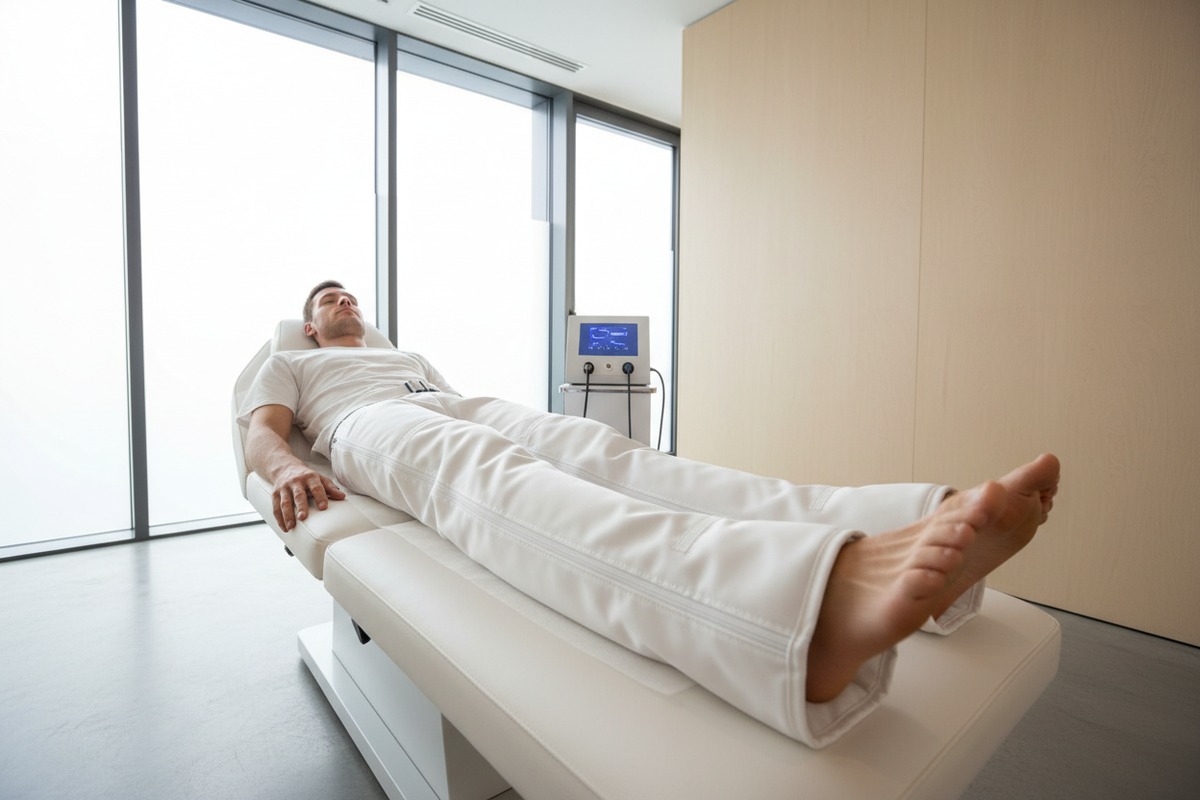
European populations generally have longer limbs relative to torso length compared to Asian populations. European body types 1 The average European male height ranges from 175-180 cm in many countries, with some Nordic populations averaging even taller. This affects how pressotherapy suits must be constructed.
The EN 13402 European sizing standard provides a framework for understanding these differences. EN 13402 European sizing standards 2 According to this standard, clothing sizing is based on body dimensions measured in centimeters. The standard establishes height categories and correlates arm length with height. For pressotherapy suits, this means leg sections, arm sleeves, and torso wraps all need adjustment.
Key Dimensions to Request From Your Supplier
| Body Section | Standard Asian Suit | European-Optimized Suit | Difference |
|---|---|---|---|
| Leg Length (inseam) | 85-95 cm | 100-115 cm | +15-20 cm |
| Arm Sleeve Length | 55-60 cm | 65-75 cm | +10-15 cm |
| Torso Section Height | 50-55 cm | 60-70 cm | +10-15 cm |
| Maximum User Height | 175 cm | 195 cm | +20 cm |
| Hip Circumference Range | 85-110 cm | 90-130 cm | +5-20 cm |
How to Verify Anthropometric Data Usage
Ask your supplier directly: "What anthropometric database did you use to design your sizing?" anthropometric specifications 3 Reputable manufacturers will reference specific data sources. At our facility, we cross-reference European population studies to ensure our patterns work for the target market.
Look for suppliers who offer multiple size options rather than "one size fits all" claims. While some suits can stretch to fit various body shapes, there are physical limits. A suit designed for someone 165 cm tall cannot properly cover someone 190 cm tall without losing compression effectiveness.
Can I request custom-sized suit extensions or adjustable chambers to fit a wider range of my customers' body shapes?
In our production planning meetings, customization requests from European buyers come up frequently. Brand owners want suits that serve their entire client base—from petite to plus-size, from short to tall. This is not just a nice feature. It is a business necessity.
Yes, you can request custom-sized extensions and adjustable chamber configurations. Look for manufacturers offering modular suit designs with separate boots, arm sleeves, and abdominal wraps. Request suits with 16-32+ independent air chambers for precise pressure distribution across varying body shapes and proportions.

Understanding Modular Suit Designs
Modern pressotherapy systems feature modular components. modular section design 4 Instead of a single full-body suit, you get separate pieces: leg sections (boots), arm cuffs, abdominal wraps, and sometimes chest sections. This modular approach offers several advantages for fitting diverse body types.
Each module can be sized independently. A client with long legs but a shorter torso can use extended leg sections with standard abdominal wrap. This flexibility reduces the number of complete suits you need to stock while improving fit accuracy.
Air Chamber Configuration Matters
The number and arrangement of air chambers directly affects treatment quality across different body shapes. More chambers mean more precise compression targeting. Here is why this matters:
| Chamber Count | Typical Configuration | Best For |
|---|---|---|
| 8-12 chambers | Basic coverage | Budget systems, home use |
| 16-20 chambers | Moderate precision | Mid-range salon systems |
| 24-32 chambers | High precision | Professional medical/spa use |
| 32+ chambers | Maximum precision | Specialty clinics, varied clientele |
Systems with higher chamber counts allow practitioners to activate or deactivate specific zones. A taller client might need chambers 1-8 active on the legs, while a shorter client uses chambers 3-10 for the same coverage area.
Customization Options to Discuss With Your Supplier
When negotiating with manufacturers, ask about these customization possibilities:
- Extended length modules – Additional leg or arm sections that attach to standard suits
- Adjustable velcro panels – Extra-wide velcro strips that allow more size variance
- Multiple size production – S/M/L/XL sizing instead of universal fit
- Custom chamber layouts – Repositioned air chambers for specific treatment needs
- Interchangeable connectors – Components that work across different suit sizes
At our factory, we maintain flexibility in production runs. OEM customers can specify dimension changes with minimum order quantities. This allows brands to develop suits specifically optimized for their European market segment.
Cost Considerations for Custom Orders
Customization adds cost. However, the investment often pays back through reduced returns, better client satisfaction, and stronger brand positioning. Request quotes for both standard and customized options to evaluate the price difference.
How do I verify that the zippers and velcro on these adjustable suits won't fail after repeated use in a busy salon?
Our quality control team catches zipper and velcro failures during testing before products leave the factory. But we have seen what happens when suppliers cut corners. A single zipper failure during treatment embarrasses your staff and frustrates clients. Multiple failures destroy your reputation.
To verify fastening durability, request cycle testing documentation showing minimum 5,000 open/close cycles for zippers and 10,000 cycles for velcro without significant degradation. Ask for material specifications, including YKK or equivalent grade zippers and industrial-grade hook-and-loop fasteners rated for frequent use.
Why Fastening Quality Often Gets Overlooked
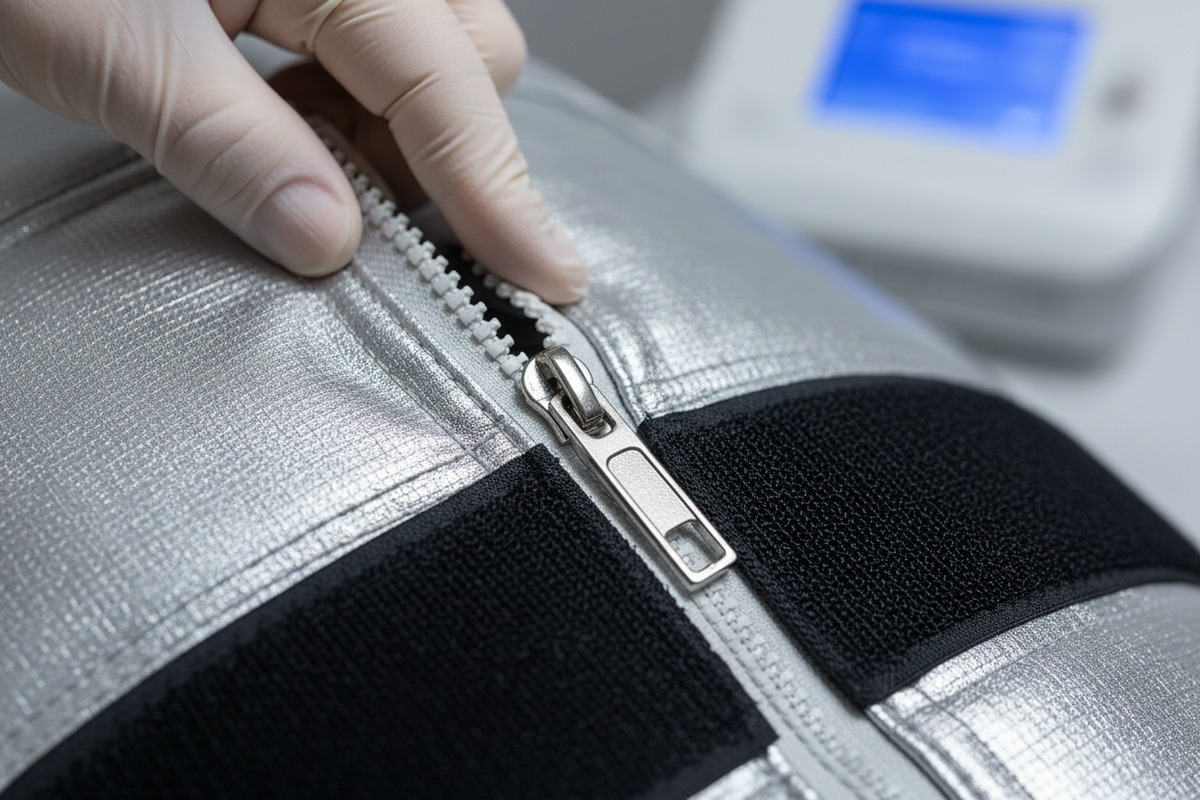
Zippers and velcro seem like minor details. They are not. In a busy salon running 15-20 pressotherapy sessions daily, suits get put on and removed thousands of times per year. Low-quality fasteners fail within months. High-quality components last years.
The inflation and deflation cycles also stress fastenings. As air chambers expand, they push against velcro closures and zipper seams. Cheap materials stretch, tear, or separate under this repeated stress.
Testing Standards to Request
| Component | Minimum Test Cycles | Pass Criteria |
|---|---|---|
| Main zipper | 5,000 cycles | No teeth separation, smooth operation |
| Secondary zippers | 3,000 cycles | Functional closure maintained |
| Primary velcro strips | 10,000 cycles | >70% grip strength retention |
| Secondary velcro | 5,000 cycles | Secure closure under inflation |
| Seam stitching | 2,000 inflation cycles | No thread breakage or separation |
Ask your supplier for third-party testing reports or conduct your own verification. We provide testing documentation upon request because we understand European buyers need assurance before committing to orders.
Material Specifications That Indicate Quality
Zippers: Look for YKK brand 6 or equivalent quality. Self-repairing coil zippers withstand more abuse than toothed metal zippers in flexible suit applications. Ensure zipper pulls are reinforced—this is often the first failure point.
Velcro/Hook-and-Loop: Industrial-grade closures differ from consumer-grade. industrial-grade hook-and-loop fasteners 7 Industrial velcro uses denser hook patterns and stronger nylon construction. The backing adhesive (if applicable) should be heat-resistant to handle sanitization processes.
Reinforced stitching in high-stress areas provides extra durability. Double or triple stitching at zipper attachment points and velcro panel edges prevents the most common failure modes.
Pre-Purchase Verification Steps
Before placing large orders, take these verification steps:
- Request sample suits and conduct your own wear testing over 2-4 weeks
- Run multiple inflation/deflation cycles daily to simulate salon use
- Have different body types test the suit to stress fasteners at various tensions
- Check velcro grip strength before and after testing with a pull gauge
- Document any failures and discuss with supplier before production
What specific measurements should I ask my Chinese supplier for to guarantee the suit's adjustability meets my brand's quality standards?
When buyers contact us requesting pressotherapy equipment quotes, we notice many do not ask the right questions. They focus on price and overlook specifications that determine whether the suit actually works for their clients. Here is exactly what to request.
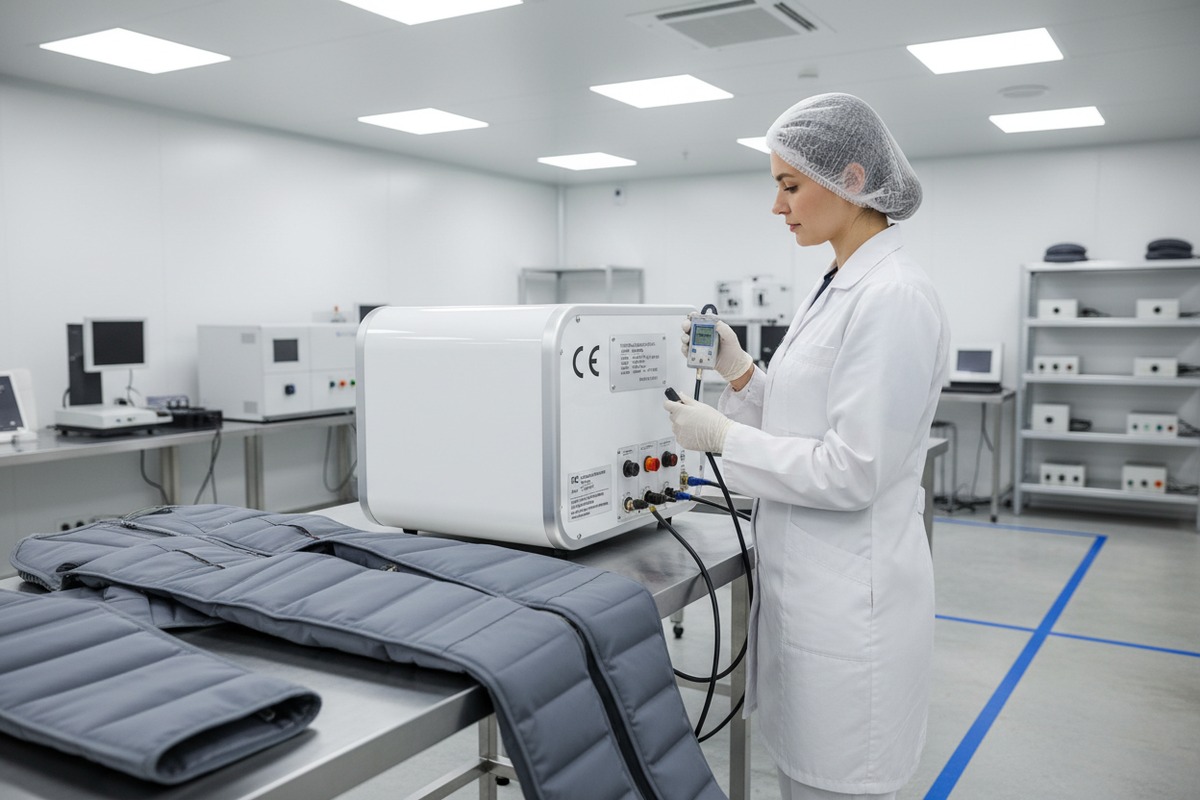
Request these measurements from your supplier: maximum/minimum user height range, leg length (inseam), arm sleeve length, waist/hip circumference range, air chamber dimensions and counts, material stretch percentage, velcro adjustment range in centimeters, and pressure range in mmHg (typically 20-360 mmHg for professional systems).
Complete Specification Checklist
Use this table when communicating with suppliers. Request written confirmation of each specification before ordering:
| Category | Specification | Minimum Acceptable Range |
|---|---|---|
| Dimensions | ||
| User height range | cm | 150-195 cm |
| Leg section length | cm | 100-115 cm inseam |
| Arm sleeve length | cm | 60-75 cm |
| Waist circumference | cm | 60-130 cm |
| Hip circumference | cm | 80-140 cm |
| Technical | ||
| Air chamber count | number | 16-32 chambers |
| Pressure range | mmHg | 20-360 mmHg |
| Inflation modes | number | 4+ modes minimum |
| Treatment timer | minutes | 1-60 minute range |
| Materials | ||
| Suit material | specification | PU or medical-grade fabric |
| Material stretch | percentage | 15-25% stretch |
| Velcro adjustment | cm | 10-20 cm range |
| Zipper grade | brand/type | YKK or equivalent |
| Compliance | ||
| CE marking 8 | certificate | Valid CE certificate |
| ISO certification | number | ISO 13485 preferred |
| Warranty period | months | 12-24 months |
CE Marking Requirements for European Markets
CE marking is mandatory for selling pressotherapy devices in the European Union. The CE mark indicates the device meets EU safety, health, and environmental requirements. For pressotherapy systems, this typically involves conformity assessment covering electrical safety, material biocompatibility, and performance standards.
According to EU regulations, manufacturers must maintain technical documentation 9 and undergo conformity assessment procedures. For non-EU manufacturers like those in China, appointing an EU Authorized Representative becomes necessary for CE compliance.
Ask your supplier to provide:
- Valid CE certificate with Notified Body number
- Declaration of Conformity document
- Technical documentation summary
- EU Authorized Representative contact information
Quality Control Documentation to Request
Beyond specifications, request evidence of quality control processes:
- Incoming material inspection reports – Shows raw materials meet standards
- In-process quality checkpoints – Demonstrates manufacturing consistency
- Final inspection protocols – Confirms finished product testing
- Calibration certificates – Validates measurement equipment accuracy
- Sample retention policy – Allows traceability for any issues
How to Verify Supplier Claims
Do not simply accept specification sheets at face value. Take these verification steps:
- Request factory audit capability or third-party inspection reports
- Ask for references from existing European customers
- Order production samples before committing to large quantities
- Have samples tested by independent labs if budget allows
- Conduct video calls to see production facilities directly
Our company welcomes factory visits and provides pre-shipment inspection options. Transparent suppliers will offer similar access. Hesitation or excuses should raise concerns.
Communication Best Practices
Clear communication prevents costly misunderstandings. When discussing specifications:
- Use metric units (centimeters, millimeters) exclusively
- Provide visual references or diagrams when possible
- Confirm specifications in writing before production starts
- Request production samples that match final specification documents
- Establish clear change request procedures for any modifications
Conclusion
Evaluating pressotherapy suit adjustability requires attention to dimensions, materials, fastening durability, and compliance documentation. Request specific measurements aligned with European body proportions. Verify supplier claims through testing and documentation review. Your due diligence protects your brand reputation and ensures your European clients receive effective, comfortable treatments.
## Footnotes

<span id="footnote-1">
1. The Wikipedia page for EN 13402 directly addresses European sizing standards based on anthropometric studies of the European population, which is highly relevant to the article's context of pressotherapy suit adjustability for European body types. <a href="#ref-1" class="footnote-backref">↩︎</a>
</span>

<span id="footnote-2">
2. Official information on the European Committee for Standardization technical committee responsible for EN 13402. <a href="#ref-2" class="footnote-backref">↩︎</a>
</span>

<span id="footnote-3">
3. The OSHwiki article from the European Agency for Safety and Health at Work provides a comprehensive overview of anthropometry and its importance in ergonomic design, aligning with the need for anthropometric specifications in product development. <a href="#ref-3" class="footnote-backref">↩︎</a>
</span>

<span id="footnote-4">
4. Explains the concept of modular design and its benefits in product development. <a href="#ref-4" class="footnote-backref">↩︎</a>
</span>

<span id="footnote-5">
5. Describes how pressotherapy works, including the role of air chambers in lymphatic drainage. <a href="#ref-5" class="footnote-backref">↩︎</a>
</span>

<span id="footnote-6">
6. Official website of YKK, a leading manufacturer of zippers and fastening products. <a href="#ref-6" class="footnote-backref">↩︎</a>
</span>

<span id="footnote-7">
7. Provides information on industrial-grade hook-and-loop fasteners and their applications. <a href="#ref-7" class="footnote-backref">↩︎</a>
</span>

<span id="footnote-8">
8. Official European Union information on the CE marking process and requirements. <a href="#ref-8" class="footnote-backref">↩︎</a>
</span>

<span id="footnote-9">
9. Official EU guidance on technical documentation requirements for medical devices. <a href="#ref-9" class="footnote-backref">↩︎</a>
</span>

 English
 Español de México
 Deutsch
 Français
 العربية
 Русский
