
When our production team finishes assembling a pressotherapy system, the final step before packaging is often the most overlooked: the manual 510(k) clearance information 2. Many importers focus heavily on device quality but forget that a non-compliant manual can stop their shipment at US customs. This creates real financial pain and delays that ripple through the entire supply chain.
To ensure your pressotherapy machine manual meets US legal requirements, verify it complies with FDA 21 CFR Part 801 labeling regulations, includes accurate 510(k) clearance information, provides clear warnings and contraindications, features professional English translation, and contains proper manufacturer identification along with adverse event reporting instructions.
The stakes are high. A poorly written manual can lead to FDA detention, customer injuries, and costly lawsuits product liability lawsuits 3. Let me walk you through exactly what you need to know to protect your business.
What specific FDA and safety labeling requirements must my pressotherapy machine manual include for the US market?
From our years of working with US importers, we have learned that FDA compliance is not optional. Many buyers assume a CE-marked product from Europe or a standard manual from China will be accepted in America. This assumption is wrong and can cost thousands in detained shipments.
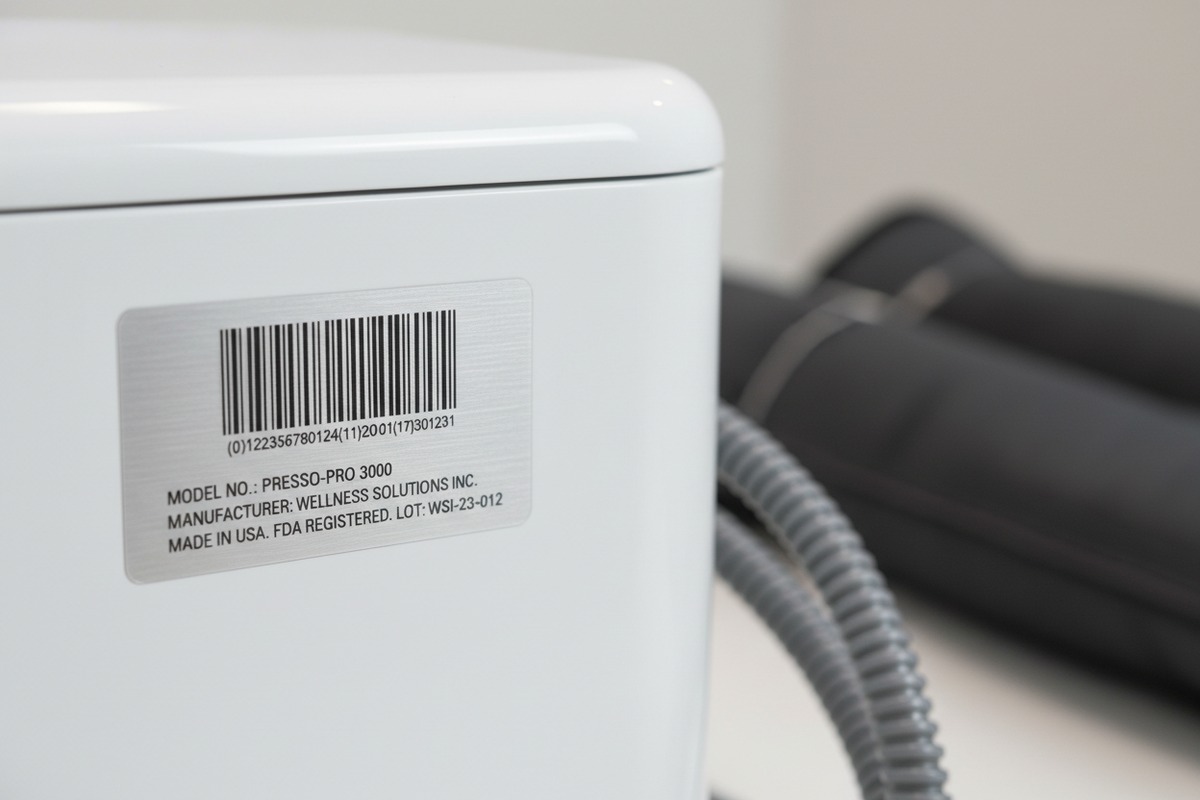
Pressotherapy machines are Class II medical devices requiring 510(k) clearance under FDA regulations. Your manual must include the device name, intended use, directions for safe operation, warnings, contraindications, manufacturer information, and a Unique Device Identifier (UDI). These requirements are mandated under 21 CFR Part 801.

Understanding FDA Classification for Pressotherapy Devices
Manufacturers of Class II medical devices 4 must receive 510(k) clearance from FDA before their product can be legally sold in the United States. Pressotherapy machines typically fall under product codes like ILO (Powered Inflatable Tube Massager) or similar classifications.
A 510(k) requires demonstration of substantial equivalence 5 to another legally U.S. marketed device. This means your supplier must have already obtained clearance, or you need to work with a manufacturer who has proper documentation.
Core Manual Content Requirements Under 21 CFR 801
FDA requires medical device labeling to include manufacturer information, intended use, adequate directions, warnings, UDI (where applicable), and device-specific requirements. Here is what your pressotherapy manual must contain:
| Required Element | Description | CFR Reference |
|---|---|---|
| Device Name | Official name matching 510(k) submission | 21 CFR 801.1 |
| Manufacturer Info | Name, address, city, state, zip code | 21 CFR 801.1 |
| Intended Use | Clear statement of therapeutic purpose | 21 CFR 801.4 |
| Directions for Use | Step-by-step operation instructions | 21 CFR 801.5 |
| Warnings | Safety alerts for potential hazards | 21 CFR 801.109 |
| Contraindications | Conditions where use is not advised | 21 CFR 801.109 |
| UDI Information | Unique identifier for traceability | 21 CFR 801.20 |
Each device must contain adequate direction in terms which laypersons can understand, enabling them to use the device properly and safely. This is especially critical for pressotherapy machines used in spas and clinics where non-medical staff may operate the equipment.
Warnings and Contraindications Specific to Pressotherapy
For pneumatic compression devices 6, your manual must address specific clinical hazards. These include:
- Risk of tissue damage from excessive pressure settings
- Contraindications for patients with deep vein thrombosis
- Warnings for use on open wounds or infected areas
- Precautions for pregnancy and patients with pacemakers
- Alerts regarding circulatory conditions
Incorrect labeling is one of the top five reasons globally for device recalls. Our quality control team has seen manuals rejected by US customs simply because they lacked proper contraindication statements.
The UDI Requirement
The label of every medical device shall bear a unique device identifier (UDI) 7 that meets the requirements of this subpart and part 830 of this chapter 8. Every device package shall bear a UDI that meets the requirements of this subpart and part 830 of this chapter.
If a labeler relabels or modifies a label of a device that is required to bear a UDI, under 21 CFR 830.60 it has to keep a record showing the relationship of the original device identifier to the new device identifier. This is crucial when you add private-label branding to the manual.
How do I ensure my private-label branding on the manual doesn't compromise its legal compliance?
We see this challenge daily at our factory. Importers want to build their brand identity, but they worry about crossing legal lines. The good news is that private labeling is permitted under FDA regulations. The challenge is doing it correctly.
Private-label branding on pressotherapy manuals is legally permitted under FDA rules if you use proper qualification statements like "Manufactured for" or "Distributed by" followed by your company information. You must maintain traceability to the original 510(k) holder, keep UDI records showing the relationship between original and new identifiers, and ensure all safety content remains intact.

The Legal Framework for Private Labeling
If the firm listed on the label is not the manufacturer, the firm information must be qualified by an appropriate statement such as "Manufactured for…" or "Distributed by…" This is not optional. Using the wrong phrasing can result in misbranding violations.
Our design team always recommends the following structure for private-label manuals:
| Brand Element | Permitted Change | Requirement |
|---|---|---|
| Company Logo | Yes | Cannot obscure safety information |
| Product Name | Limited | Must match 510(k) if medical claims made |
| Contact Info | Yes | Must use "Distributed by" qualifier |
| Color Scheme | Yes | Warnings must remain prominent |
| Safety Content | No | Must retain all original warnings |
Maintaining Traceability
Devices sold in bulk or repackaged for further distribution may be exempt from standard labeling, as they will be relabeled by distributors or end users. However, identification and traceability must still be maintained.
When you rebrand our pressotherapy machines, you need to:
- Request the original 510(k) number from your supplier
- Document the relationship between original and new labeling
- Keep records accessible for FDA inspection
- Include the 510(k) number somewhere in your documentation
Avoiding Common Private-Label Mistakes
FDA routinely cites companies for labeling violations in promotional materials, websites, and training documents that contradict approved labeling. This means your marketing claims must match what is written in your manual.
Common errors we help clients avoid include:
- Adding therapeutic claims not covered by the 510(k)
- Removing warnings to make the manual look cleaner
- Changing pressure specifications without verification
- Using vague language instead of precise measurements
Noncompliance with labeling regulations can result in enforcement actions, delayed market access, or patient harm. In our experience, importers who skip proper manual review often face detention at US ports.
What is the best way to audit my supplier's manual for technical accuracy and professional English translation?
Our engineering team reviews countless manuals that arrive from various sources. The quality difference is striking. A poorly translated manual does not just look unprofessional. It creates legal liability when operators misunderstand critical safety instructions.
Audit your supplier's manual by checking technical specifications against actual device performance, verifying 510(k) consistency, reviewing translation quality for medical terminology accuracy, confirming all required FDA elements are present, and testing instructions with actual users. Request the supplier's quality management documentation under ISO 13485 and test sample devices against stated manual specifications.

Creating a Systematic Audit Checklist
Clear, accurate, and comprehensive device labeling is essential to the safety and effectiveness of medical devices, as outlined in FDA regulations under 21 CFR Part 801. In the eyes of the FDA, labeling is far more than a sticker on a product—it encompasses a wide range of materials and communications that inform users about proper operation, storage, risks, and intended use.
Here is the audit framework we recommend to our US partners:
| Audit Area | What to Check | Red Flags |
|---|---|---|
| Technical Specs | Pressure ranges, timing, power requirements | Values that don't match device testing |
| 510(k) Consistency | Intended use matches clearance | Claims beyond predicate device |
| Translation Quality | Medical terms, grammar, clarity | Awkward phrasing, wrong terminology |
| Safety Content | Warnings, contraindications, precautions | Missing or vague hazard statements |
| User Testing | Can operators follow instructions? | Confusion during setup or operation |
Verification Steps for Sourcing Partners
The manufacturer should be prepared for an FDA quality system (21 CFR 820) inspection at any time after 510(k) clearance. This means your supplier should already have documentation ready. Request the following:
- Copy of 510(k) clearance letter
- Risk management file showing FMEA analysis
- Test reports for IEC 60601-1 electrical safety
- ISO 13485 certificate 9 for quality management
- Sample device for hands-on verification
Translation Quality Assessment
All labeling shall be in English, except for products distributed solely within Puerto Rico or U.S. territories where the predominant language is other than English.
Poor translation is more than embarrassing. It can be dangerous. Look for these specific issues:
- Incorrect medical terminology
- Ambiguous safety instructions
- Grammatical errors that change meaning
- Inconsistent technical vocabulary
- Missing units of measurement
Our technical writers always recommend having a native English speaker with medical device knowledge review the final document. Key concerns are that the user (or layman) of the medical device must be able to understand labeling so that they can operate the device safely and for the purposes intended.
Testing Manual Against Actual Device
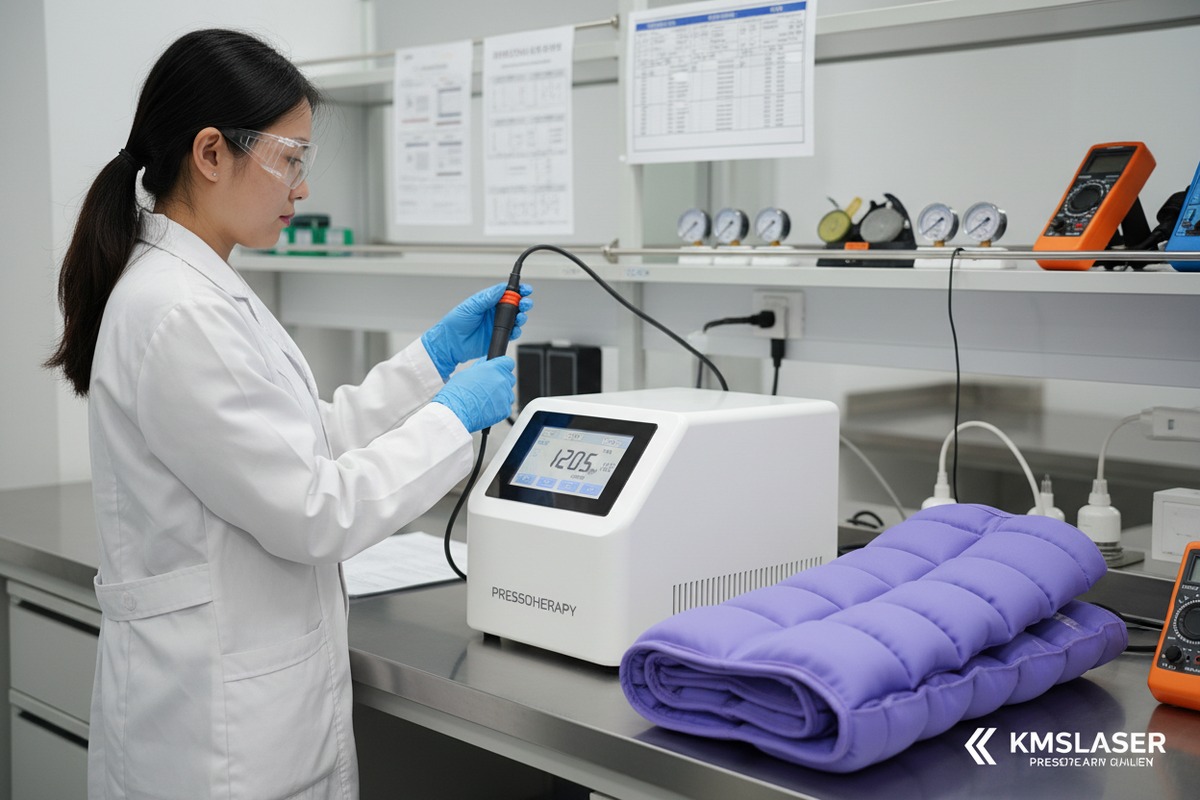
The most important step is physical verification. Measure the actual pressure output of your sample device. Compare it to what the manual states. Check timing accuracy. Verify all features work as described.
The 510(k) submission should be accompanied by complete, detailed, and well-organized documentation that supports the safety and effectiveness of the device. This includes, but is not limited to, data on device design, materials, and manufacturing processes. If your manual contradicts actual device performance, you have a compliance problem.
How can a legally compliant manual protect my business from liability and customer complaints in the United States?
In our conversations with US importers, liability protection always comes up. The American legal environment is different. One injury lawsuit can destroy a small business. A compliant manual is your first line of defense.
A legally compliant manual protects your business by demonstrating due diligence in product safety, providing documented evidence of proper warnings and instructions, supporting your defense in product liability lawsuits, enabling proper adverse event reporting to FDA, and reducing the risk of detention at customs. Compliant labeling shows regulators and courts that you prioritized user safety.
The Legal Shield of Proper Documentation
These defects are typically caused by manufacturing errors, poor design, faulty manufacturing supplies or ingredients, and failure to warn or label devices. Notice that "failure to warn" is listed as a primary cause of defect claims. Your manual directly addresses this risk.
When our clients face customer complaints, the first document reviewed is always the manual. A complete manual shows:
| Protection Element | Legal Benefit | Documentation Required |
|---|---|---|
| Clear Warnings | Demonstrates duty to warn | Written hazard statements |
| Contraindications | Shows risk assessment | Listed prohibited conditions |
| Proper Instructions | Proves user guidance | Step-by-step procedures |
| Maintenance Guidelines | Supports product longevity | Cleaning and service protocols |
| Adverse Event Reporting | Enables FDA compliance | Contact information and procedures |
Medical Device Reporting Obligations
This part establishes the requirements for medical device reporting for device user facilities Medical Device Reporting Obligations 10, manufacturers, importers, and distributors. If you are a device user facility, you must report deaths and serious injuries that a device has or may have caused or contributed to. If you are a manufacturer or importer, you must report deaths and serious injuries that your device has or may have caused or contributed to, you must report certain device malfunctions.
Your manual must include clear instructions for users to report problems. Initial importers must maintain complaint files accessible in the United States and have specific MDR reporting responsibilities. Initial importers must coordinate with foreign manufacturers for comprehensive investigation and reporting of adverse events.
Reducing Customs Detention Risk
Failure to comply with the requirements can result in delays in market entry, detention of shipments by Customs and Border Protection (CBP), enforcement actions, or even legal consequences.
We have seen shipments held for weeks because of manual deficiencies. If the FDA finds that a medical device does not meet these requirements, the products may be detained and ultimately refused entry into the United States.
The financial impact includes:
- Storage fees at port
- Lost sales during detention
- Re-labeling costs if permitted
- Potential destruction of non-compliant goods
- Reputation damage with downstream customers
Building Customer Trust
For manufacturers, this means reporting to the FDA when they learn of any of their equipment having caused or contributed to a death or serious injury. They must also report when they become aware that their device has malfunctioned in such a way that would cause injury or death were it to malfunction again. Importers must also report to the FDA when they learn of any of their devices having caused or contributed to a serious injury or death.
A professional, compliant manual signals quality to your customers. Beauty salon owners and clinic managers notice the difference between a poorly translated document and a professionally prepared one. This affects their purchasing decisions and long-term loyalty.
The FDA will under certain conditions allow the imported to re-label or recondition the contentious device to bring it into compliance with regulations. The importer can request for authorization to carry out such a procedure and if the agency permits it, go ahead with the same. However, Importers must keep in mind however that reconditioning is allowed only once – so it is important to get it right the first time.
Conclusion
Creating a compliant pressotherapy machine manual is not just paperwork. It is business protection. Work with suppliers who understand FDA requirements, verify 510(k) clearance, audit technical accuracy, and maintain proper private-label documentation. Your investment in compliance today prevents costly problems tomorrow.
## Footnotes

<span id="footnote-1">
1. Direct link to the official FDA regulations for medical device labeling. <a href="#ref-1" class="footnote-backref">↩︎</a>
</span>

<span id="footnote-2">
2. Official FDA page detailing the 510(k) premarket notification process for devices. <a href="#ref-2" class="footnote-backref">↩︎</a>
</span>

<span id="footnote-3">
3. Legal resource explaining product liability claims related to defective medical devices. <a href="#ref-3" class="footnote-backref">↩︎</a>
</span>

<span id="footnote-4">
4. FDA's classification system for medical devices, defining Class II devices. <a href="#ref-4" class="footnote-backref">↩︎</a>
</span>

<span id="footnote-5">
5. FDA's explanation of substantial equivalence, a key concept for 510(k) clearance. <a href="#ref-5" class="footnote-backref">↩︎</a>
</span>

<span id="footnote-6">
6. Describes pneumatic compression devices and their medical applications and FDA regulation. <a href="#ref-6" class="footnote-backref">↩︎</a>
</span>

<span id="footnote-7">
7. Official FDA resource explaining the Unique Device Identification (UDI) system. <a href="#ref-7" class="footnote-backref">↩︎</a>
</span>

<span id="footnote-8">
8. Direct link to the eCFR for 21 CFR Part 830, covering Unique Device Identification. <a href="#ref-8" class="footnote-backref">↩︎</a>
</span>

<span id="footnote-9">
9. Information on ISO 13485 certification for medical device quality management systems. <a href="#ref-9" class="footnote-backref">↩︎</a>
</span>

<span id="footnote-10">
10. Official FDA page detailing Medical Device Reporting (MDR) requirements for manufacturers and importers. <a href="#ref-10" class="footnote-backref">↩︎</a>
</span>


 English
 Español de México
 Deutsch
 Français
 العربية
 Русский
Join the Conversation
Have a question or insight to share? We read every comment — whether you're a distributor, salon owner, or just curious about the technology. Your real-world experience helps others make better decisions. Drop your thoughts below.