

When our production line started receiving complaints about pressotherapy units underperforming, we realized that many importers face a hidden trap: machines rated at 400W that pull only 250W in real operation calibrated power analyzer 1. This gap between specs and reality costs you refunds, lost clients, and regulatory headaches.
To ensure actual power matches rated power, require third-party power meter reports during pre-shipment inspections, request compressor efficiency certificates, verify CE/FDA certifications, and conduct live video factory tests measuring real-time power draw under full load. These steps protect your investment and brand reputation.
This guide breaks down every step you need to verify power specs before placing bulk orders medical-grade air compressors 2. Let’s dive into the practical methods that separate reliable suppliers from those inflating their numbers.
How can I verify that the actual power output matches the technical specifications during my pre-shipment inspection?
Our engineers have witnessed too many cases where buyers receive machines that look perfect but fail basic power tests FDA approval 3. The spec sheet says 180W, but the multimeter reads 120W. This mismatch leads to weak pressure delivery and unhappy salon clients IEC 60601-1 4.
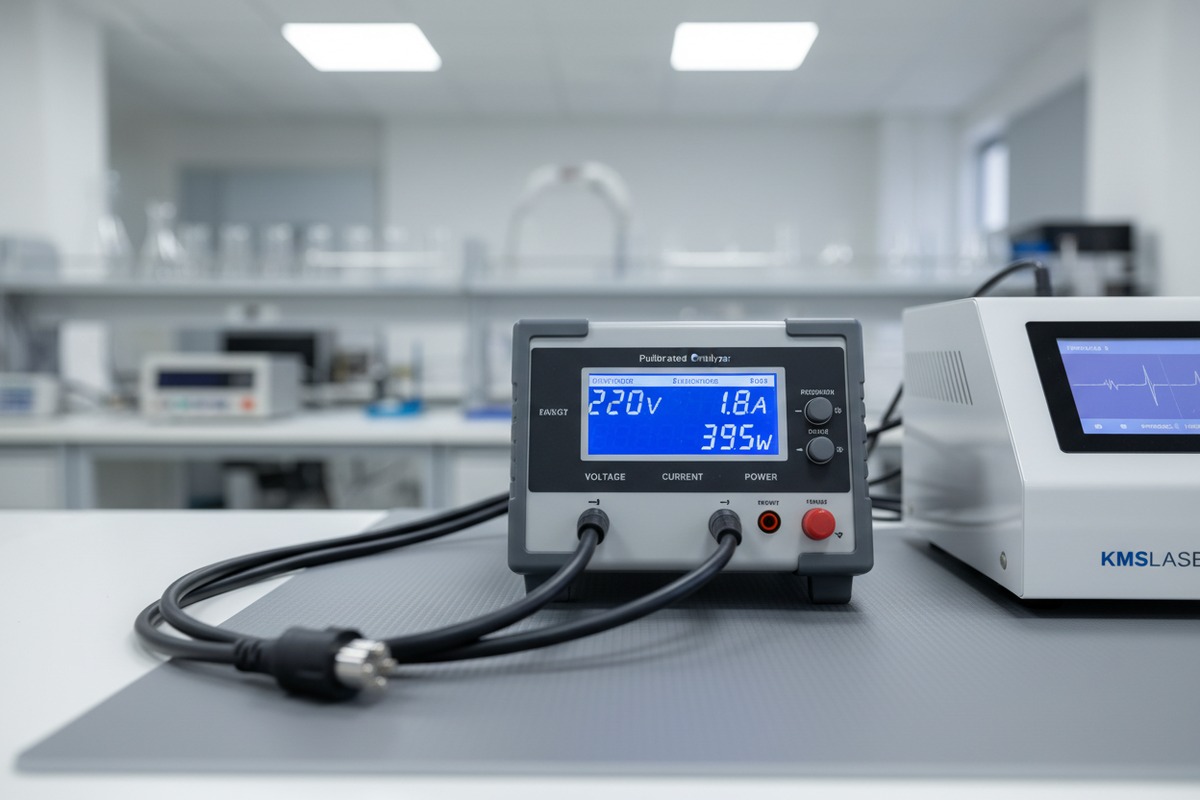
During pre-shipment inspection, verify actual power by using a calibrated power analyzer to measure real-time wattage under full load. Request the supplier run all air chambers simultaneously while you record voltage, current, and power factor readings. Compare results against the rated specifications with a ±10% tolerance.
Understanding Pre-Shipment Power Verification
Pre-shipment inspection 5 (PSI) is your last defense before goods leave the factory. For electrical equipment like pressotherapy machines, this involves more than visual checks EMC testing 6. A pre-shipment inspection is a comprehensive quality control process carried out before products are shipped. For power and electrical equipment, this involves visual inspection of workmanship, finish, and packaging, dimensional checks to verify conformance with drawings, and electrical and mechanical testing including insulation resistance, winding resistance, ratio test, and pressure/leakage test.
Key Measurements to Request
When your inspector arrives at the factory, they should perform these specific tests:
| Test Parameter | What to Measure | Acceptable Range |
|---|---|---|
| Input Voltage | AC voltage at plug | ±10% of rated voltage |
| Current Draw | Amperage under load | Within nameplate specs |
| Power Factor | Real vs apparent power | Above 0.85 for efficiency |
| Power Consumption | Watts during operation | ±10% of rated wattage |
| Ground Continuity | Chassis grounding | Less than 0.1 ohms |
Gauge electrical safety via insulation, ground continuity, voltage fluctuation, and leakage current tests. These measurements reveal whether the machine will perform as promised in your client's salon.
Testing Under Real Operating Conditions
Do not accept power readings taken with the machine idle. Typical pressotherapy machines feature specifications like AC110V±10%/60Hz or AC220V±10%/50Hz with maximum power consumption ranging from 110W to higher ratings, air pressure ranges of 20-360 mmHg, and multiple operating modes.
The key is testing under full load. Ask your supplier to:
- Connect all air chamber garments (legs, arms, abdomen)
- Set pressure to maximum rated level
- Run the machine through a complete cycle
- Record power consumption throughout
Documentation You Should Demand
Documentation review should include test reports, certifications, nameplate accuracy, and manuals. Your supplier should provide:
- Factory test reports with serial numbers
- Power analyzer printouts with timestamps
- Photos of the test setup
- Video of the live measurement
What internal component standards should I require to ensure my machines deliver the pressure levels promised in my marketing?
In our factory, we've seen how a cheap compressor can destroy an otherwise solid machine. The compressor is the heart of any pressotherapy unit. When it fails to deliver adequate air flow, your clients get weak massages and your reputation suffers.
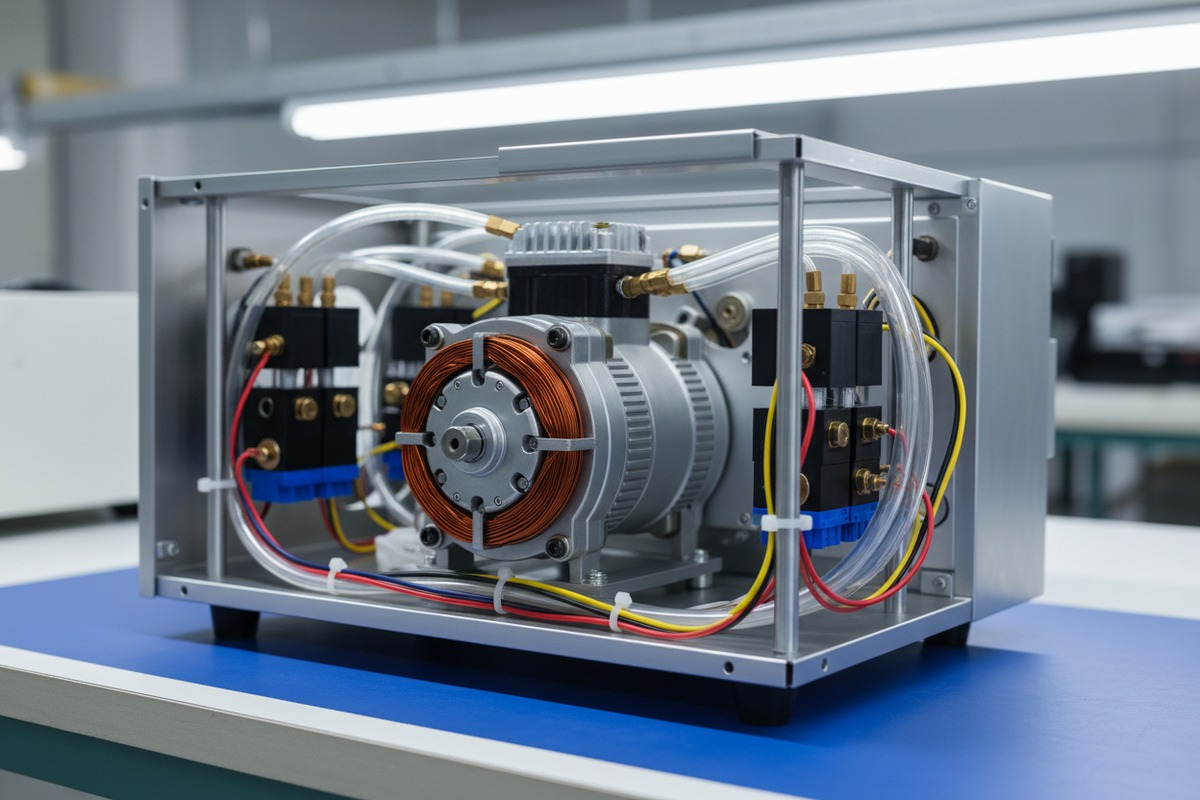
Require medical-grade air compressors rated for continuous duty with documented air output (L/min) matching pressure requirements. Demand component specification sheets showing compressor brand, motor efficiency class, and solenoid valve ratings. Quality internal components ensure consistent 150-240mmHg pressure delivery across all chambers.
The Compressor-Power-Pressure Relationship
The relationship between power consumption and pressure output is not linear. A higher wattage does not automatically mean better pressure. What matters is efficiency.
| Power Rating | Expected Air Output | Typical Max Pressure | Suitable Use |
|---|---|---|---|
| 80-110W | 25 L/min | 150 mmHg | Home/light spa use |
| 150-200W | 35-50 L/min | 200 mmHg | Professional salon |
| 300-400W | 60+ L/min | 240 mmHg | Medical/multi-client |
Professional pressotherapy devices feature real-time accurate measurement of current pressure in the air cells. This feedback mechanism ensures consistent pressure delivery regardless of client body size.
Critical Internal Components to Specify
When placing your OEM order, specify these components:
Air Compressor Requirements:
- Oil-free design for maintenance reduction
- Continuous duty rating (not intermittent)
- Documented MTBF (mean time between failures)
- Noise level below 55 dB
Electronic Control System:
IPC devices should be equipped with premium compression sensors. These sensors can monitor the applied pressure and provide feedback to ensure the device functions correctly and applies the desired pressure, thus guaranteeing effective and safe treatment.
Solenoid Valves:
- Response time under 50ms
- Rated for minimum 500,000 cycles
- Medical-grade materials
Material Quality for Air Chambers
The pressure on one side of the air chamber is 200000 Pa. This significant pressure requires durable materials. Request:
| Component | Minimum Specification | Why It Matters |
|---|---|---|
| Air bladders | TPU or medical silicone | Prevents leaks under pressure |
| Hose connectors | Reinforced nylon | Resists cracking |
| Chamber fabric | 420D Oxford or higher | Withstands repeated inflation |
| Zippers | YKK or equivalent | Maintains seal integrity |
Verifying Component Authenticity
Suppliers sometimes substitute cheaper parts after samples are approved. Protect yourself by:
- Specifying brand names in your purchase contract
- Requiring photos of components with batch codes
- Conducting random inspections during production
- Testing a unit from the middle of the batch, not just first articles
How do I identify if a manufacturer is inflating power ratings on their spec sheets before I commit to a bulk OEM order?
Our sales team has encountered competitors who list "maximum absorption" figures that no real unit ever reaches. These inflated specs win orders but create problems when buyers test the machines. Spotting these red flags early saves you from costly mistakes.
Identify inflated power ratings by comparing spec sheets against independent test data. Request power measurement videos, cross-reference claimed air output with wattage ratios, verify certifications match the specific model, and ask for warranty terms covering performance shortfalls. Legitimate manufacturers welcome verification scrutiny.

Red Flags in Specification Sheets
Manufacturers can use various methods to market equipment whose published maximum power output includes some amount of testing variance in order to show higher numbers. Watch for these warning signs:
Vague Language:
- "Up to 400W" instead of "400W ±5%"
- "Maximum power" without defining test conditions
- Missing voltage specifications
Inconsistent Ratios:
Compare the power-to-output ratio. If a manufacturer claims 400W produces only 25 L/min air output while competitors achieve 60 L/min at the same wattage, something is wrong.
Verification Questions to Ask Suppliers
| Question | Good Answer | Red Flag Answer |
|---|---|---|
| What test conditions produced these specs? | "Full load, 230V, 25°C ambient" | "Standard testing" |
| Can you provide third-party test reports? | "Yes, here are TUV/SGS reports" | "Our internal QC verified" |
| What is the tolerance on power rating? | "±10% per CE requirements" | "It varies" |
| Will you guarantee specs in contract? | "Yes, with penalty clause" | "Specs are typical values" |
Cross-Referencing with Certifications
Pressotherapy machines from reputable manufacturers are typically equipped with necessary safety certifications such as CE marking 7, FDA approval, and ISO certification. These certifications ensure that the devices have been tested and are safe for therapeutic use.
However, certifications can be model-specific. Ask:
- Does the CE certificate list this exact model number?
- Was testing done on the production version or a prototype?
- Can you verify the certificate number with the issuing body?
Medical devices should be designed and manufactured in compliance with ISO 13485 8, CE Medical IIa certified and FDA approved.
Independent Testing Before Bulk Orders
Before committing to large quantities:
- Order samples from different batches – not just showroom units
- Send to independent lab – TUV, SGS, or Intertek can verify power specs
- Compare multiple suppliers – same specs at wildly different prices suggests quality differences
- Request factory audit – legitimate manufacturers welcome inspection
Products should be tested and conform to industry standards. In addition to initial testing, inspectors should visit factories on a regular basis to verify that products are continually being manufactured to applicable standards.
What specific testing protocols should my supplier follow to guarantee the electrical stability and performance of my pressotherapy units?
When we set up our testing protocols, we studied what leading European medical device companies require. Electrical stability determines whether your machine runs safely for years or fails within months. Proper protocols catch problems before they reach your customers.
Suppliers should follow IEC 60601-1 for medical electrical equipment or IEC 62368-1 for general equipment. Require documented protocols including dielectric strength testing, insulation resistance measurement, leakage current testing, and continuous run tests at maximum load. Request test reports with pass/fail criteria for every unit.

Essential Electrical Safety Tests
Electrical and mechanical testing should include insulation resistance, winding resistance, ratio test, and pressure/leakage test.
Every pressotherapy unit should pass these tests before shipment:
| Test Type | Purpose | Pass Criteria |
|---|---|---|
| Hi-Pot (Dielectric) | Insulation integrity | No breakdown at 1500VAC/1min |
| Insulation Resistance | Leakage prevention | >100 MΩ at 500VDC |
| Ground Continuity | Shock protection | <0.1Ω from plug to chassis |
| Leakage Current | User safety | <0.5mA (patient contact) |
| Functional Test | Performance verification | All modes operate correctly |
Performance Stability Testing
Beyond safety, your supplier should verify performance stability:
Continuous Run Test:
- Run machine at maximum settings for 4 hours minimum
- Monitor power consumption throughout
- Record any temperature rise in components
- Verify pressure output remains consistent
Voltage Fluctuation Test:
Gauge electrical safety via voltage fluctuation testing. The machine should perform correctly across the rated voltage range (typically ±10%).
| Input Voltage | Expected Performance |
|---|---|
| 198V (90% of 220V) | Normal operation, slight reduction acceptable |
| 220V (nominal) | Full rated performance |
| 242V (110% of 220V) | Normal operation, no overheating |
Environmental Testing Requirements
Power ratings for electrical apparatus are a function of the duration of the proposed load and the ambient temperature.
Request these environmental tests:
- High temperature operation – 40°C ambient, 2-hour run
- Humidity resistance – 85% RH, functional check
- EMC testing – No interference with other equipment
- Cycle testing – 10,000 inflation/deflation cycles minimum
Documentation and Traceability
The inspection process ensures quality and compliance by systematically verifying equipment against technical specifications, international standards, and contractual requirements through visual checks, dimensional measurements, electrical/mechanical testing, documentation review, and certification.
Your supplier should provide:
- Individual test reports per serial number
- Calibration certificates for test equipment
- Operator training records
- Batch test summaries with statistical analysis
Creating Your Supplier Quality Agreement
Include these terms in your purchase contract:
| Clause | Requirement |
|---|---|
| Testing Standards | Specify IEC/UL/GB standards applicable |
| Sample Size | 100% testing for safety, AQL sampling for function |
| Documentation | Test reports within 48 hours of testing |
| Failures | Root cause analysis for any failures |
| Warranty Link | Failed tests void warranty claims |
Inspections ensure safety compliance and prevent shipping faulty equipment that could cause site delays, while providing buyers with proof of quality before releasing final payment.
Conclusion
Verifying pressotherapy machine power specifications protects your business from costly returns and disappointed clients. By implementing pre-shipment inspections with calibrated power measurement, specifying quality internal components, recognizing inflated spec sheets, and requiring proper testing protocols, you transform from a vulnerable buyer into an informed partner. Take these steps before your next order.
Footnotes
1. Details the calibration process for power analyzers to ensure accurate electrical measurements. ↩︎
2. Discusses the critical standards and requirements for medical-grade air compressors in healthcare. ↩︎
3. Offers official information on FDA approvals and clearances for medical devices in the US. ↩︎
4. Describes IEC 60601-1, the fundamental standard for medical electrical equipment safety. ↩︎
5. Explains the purpose and process of pre-shipment inspections for quality control. ↩︎
6. Explains electromagnetic compatibility testing to ensure devices operate without interference. ↩︎
7. Explains the purpose and requirements of CE marking for products sold in the European Economic Area. ↩︎
8. Provides an overview of ISO 13485, the quality management system standard for medical devices. ↩︎

 English
 Español de México
 Deutsch
 Français
 العربية
 Русский
