
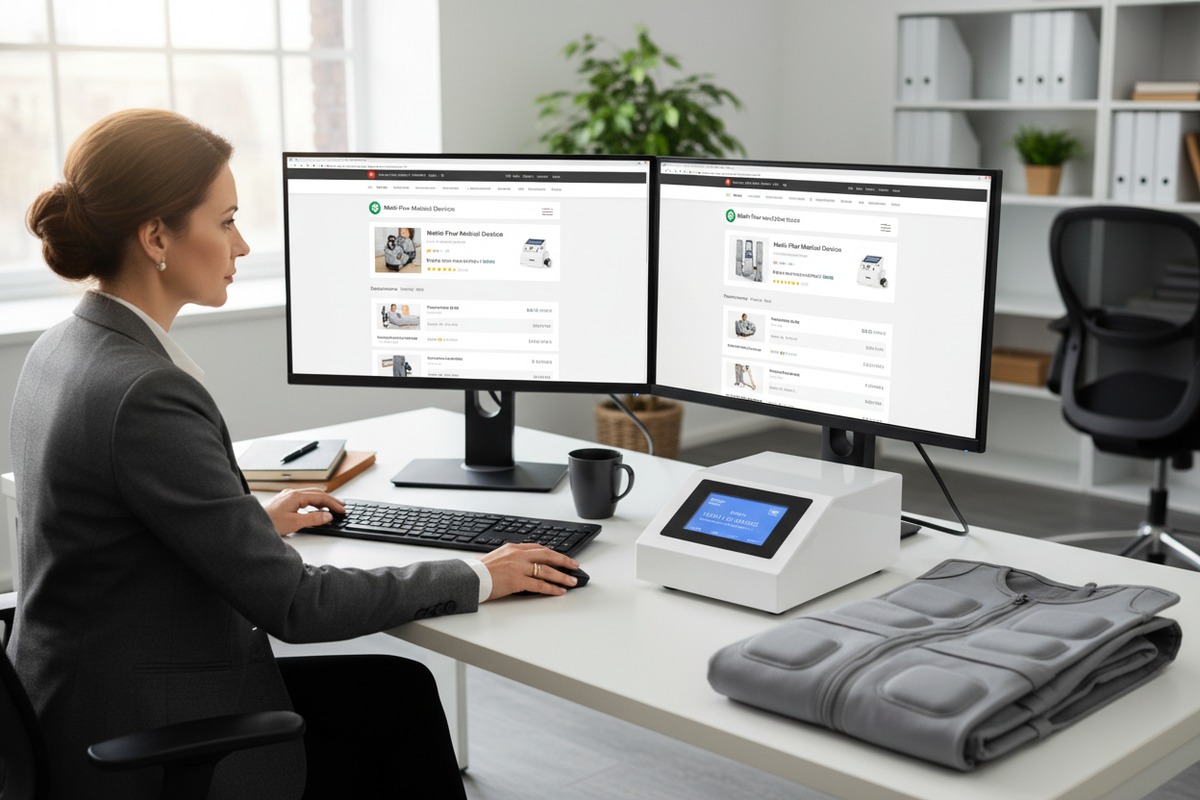
Years of exporting pressotherapy equipment from our Guangzhou factory taught me one hard truth: finding a supplier is easy, but finding a reliable one takes real work. Every month, I speak with brand owners who lost money to fake certifications, poor quality, or ghost factories that vanished after payment. The good news? These risks are avoidable with proper cross-verification.
To cross-verify China pressotherapy machine suppliers, compare profiles on Alibaba and Made-in-China, check for “Verified Supplier” or “Audited Supplier” badges, request business licenses and verify them through China’s official government database, confirm certifications like ISO 13485 and CE with the issuing bodies, and arrange third-party inspections through SGS, Bureau Veritas, or TÜV Rheinland.
This guide walks you through each verification step. I will share practical methods we use daily to help our international partners feel confident in their sourcing decisions. Let’s start with the basics of filtering for verified manufacturers on both platforms.
How do I effectively filter for verified pressotherapy machine manufacturers on Alibaba and Made-in-China?
When our team prepares supplier lists for potential OEM partners, we always start with platform-level filters. Without them, you waste hours scrolling through trading companies that have no factory at all. The challenge is knowing which badges actually matter.
On Alibaba, filter for "Verified Supplier" status, which requires third-party inspection by SGS or TÜV. On Made-in-China, look for "Audited Supplier" badges, indicating on-site verification of documentation, production capacity, and export capabilities. Both platforms allow you to filter by business type to show only manufacturers.

Understanding Alibaba Badges
Alibaba offers several supplier tiers. The "Gold Supplier" badge shows a company paid for membership. It signals commitment to the platform but does not guarantee quality. The "Verified Supplier" badge goes further. It means a third-party inspection company has physically visited the factory.
The verification process includes business license authentication, facility confirmation, and performance benchmarking against delivery and communication metrics. According to industry sources, this verification is maintained dynamically based on continuous compliance with platform standards.
Understanding Made-in-China Badges
Made-in-China uses an "Audited Supplier" scheme. Under this program, inspectors verify the supplier's documentation, export capacity, and manufacturing capability. On-site verification checks raw materials, production plants, and finished goods. Made-in-China partners with SGS, Bureau Veritas 1, TÜV Rheinland, and CTI for these audits.
You can read audit reports for these suppliers online for free. This transparency helps you make informed decisions before contacting the supplier.
Comparing Both Platforms
| Feature | Alibaba | Made-in-China |
|---|---|---|
| Top Verification Badge | Verified Supplier | Audited Supplier |
| Third-Party Auditors | SGS, TÜV, Intertek | SGS, Bureau Veritas, TÜV Rheinland 2, CTI |
| Audit Report Access | Click badge for PDF | Free online viewing |
| Business Type Filter | Yes (Manufacturer/Trading) | Yes (Manufacturer/Trading) |
| Payment Protection | Trade Assurance | Platform escrow options |
Practical Steps to Filter Suppliers
- Enter "pressotherapy machine" in the search bar.
- Apply the "Verified Supplier" or "Audited Supplier" filter.
- Select "Manufacturer" under business type to exclude trading companies.
- Check years of operation. Many platforms now show Verified Supplier PRO status for suppliers with at least 5 years of industry presence.
- Review response rate and response time. Fast responders often indicate professional operations.
Remember, badges are a starting point. They reduce risk but do not eliminate it. A badge confirms the company exists and passed a basic audit. It does not guarantee the products match your specifications.
What red flags should I look for when comparing supplier profiles across both B2B platforms?
In our experience exporting pressotherapy machines to the US and Europe, we have encountered many supplier profiles that looked perfect online but fell apart under scrutiny. Recognizing red flags early saves you months of frustration and significant financial losses.
Key red flags include mismatched company names across platforms or documents, reluctance to provide business licenses, blurry or edited certification images, requests for payment to personal bank accounts, unusually low pricing compared to market standards, and unwillingness to allow factory audits or video calls. Any of these signals should pause your sourcing process.

Document Inconsistencies
The first check is simple but powerful. Compare the company name on Alibaba or Made-in-China with the name on their business license. Use China's National Enterprise Credit Information Publicity System 3 (NECIPS) to verify registration and status. Many fraudulent suppliers use borrowed or fake documentation with mismatched names.
Check that the business scope on the license includes manufacturing. Some suppliers claim to be manufacturers but their license only covers trading. This matters because manufacturers have direct quality control. Traders add a layer between you and the factory.
Communication Warning Signs
| Red Flag | What It Means |
|---|---|
| Delays sending license copies | May not have valid documentation |
| Blurry or edited images | Possible document forgery |
| Refuses video tours | May not own the factory shown |
| Pushes for personal bank transfers | High fraud risk |
| Overly aggressive sales tactics | Desperation or inexperience |
| Cannot explain technical specifications | May be trading company without product knowledge |
Price Red Flags
If the quote seems too good to be true, quality or compliance may be sacrificed. Pressotherapy machines from reputable Guangzhou manufacturers typically range from $450 to $700 per unit for standard models. Quotes significantly below this range deserve extra scrutiny.
Low prices can indicate substandard components, missing certifications, or plans to bait-and-switch with cheaper products after payment. Always request a breakdown of what is included in the price.
Certification Verification Steps
Certifications are frequently counterfeited. A CE mark or ISO 13485 4 logo on a website means nothing without verification. Request the actual certificate with registration numbers. Then contact the issuing body directly to confirm validity.
For CE marking 5, check if the supplier can provide the Declaration of Conformity and technical file. For ISO 13485, verify the certificate number with the certification body listed on the document. For FDA clearance, search the FDA 510(k) database 6 using the supplier's product information.
Cross-Platform Comparison
Search the same supplier on both Alibaba and Made-in-China. Legitimate manufacturers often list on multiple platforms. Compare their factory addresses, product ranges, and company descriptions. Inconsistencies suggest problems.
Also check if the supplier appears on Global Sources. This platform caters to larger buyers and often has more detailed supplier information, including product certifications.
How can I verify if a pressotherapy machine supplier truly has the OEM capabilities my brand requires?
Our engineering team has worked on dozens of custom pressotherapy machine projects. The difference between a successful OEM partnership and a failed one usually comes down to verifying capabilities before signing any agreement. Many suppliers claim OEM expertise they do not actually possess.
To verify OEM capabilities, request detailed information about past OEM projects including client references, ask for technical drawings or samples of customizations they have completed, conduct a factory audit focusing on their R&D department and tooling equipment, and start with a small trial order to test their ability to meet your specifications before committing to larger volumes.

Types of OEM Services
Not all OEM services are equal. Clarify exactly what you need and confirm the supplier can deliver.
| OEM Level | Description | Supplier Requirements |
|---|---|---|
| Private Label | Your logo on existing product | Basic printing or engraving equipment |
| Minor Customization | Color changes, packaging design | Design team, flexible production line |
| Product Modification | Different pressure settings, added features | Engineering capability, testing equipment |
| Full Custom Development | New product from your specifications | Strong R&D, prototyping capability, mold making |
Questions to Ask About OEM Experience
Direct questions reveal a lot about true capabilities. Ask for specific examples of OEM work they have completed. Request photos of customized products with different branding. Ask how long custom development projects typically take.
Suppliers with real OEM experience can show you a portfolio. They can explain their design process. They know typical lead times for tooling and prototyping. If a supplier struggles to answer these questions, they may lack the experience they claim.
Factory Audit Focus Areas
When conducting a factory audit for OEM verification, pay special attention to:
- R&D department size and equipment
- CAD/CAM software and design capabilities
- Mold-making facilities or partnerships
- Testing laboratories for quality control
- Sample room with past OEM projects
- Documentation of client-specific specifications
Our facility maintains dedicated engineering staff and prototyping equipment specifically because OEM clients need to see proof of capability. A factory that lacks these resources will struggle with custom projects.
Trial Orders and Sample Testing
Never commit to large OEM volumes without testing first. Order samples of their standard products to evaluate base quality. Then request a prototype of your custom design. This step reveals their actual capability to execute your vision.
Standard pressotherapy machine samples typically ship within 7-14 days. Custom prototypes take longer, often 30-60 days depending on complexity. Factor this timeline into your sourcing schedule.
Protecting Your Intellectual Property
OEM relationships involve sharing proprietary information. Before disclosing detailed specifications, secure a Non-Disclosure Agreement (NDA) 7 signed by the supplier. While enforcement in China can be challenging, a signed NDA demonstrates the supplier's professionalism and understanding of international business standards.
Consider whether your custom designs are worth protecting through patents or registered designs in China. This provides additional legal protection if your supplier shares your specifications with competitors.
Which key performance indicators should I use to evaluate a supplier's quality control and logistics reliability?
When we onboard new distribution partners, we share detailed KPIs that demonstrate our production and delivery performance. These metrics matter because they predict your experience as a customer. Suppliers who track and share these numbers typically run more professional operations.
Key performance indicators for quality control include defect rates below 2%, documented inspection processes at multiple production stages, and third-party certifications like ISO 9001 or ISO 13485. For logistics reliability, track on-time delivery rates above 95%, average lead times, and communication responsiveness within 24 hours. Request documentation proving these metrics before committing to orders.

Quality Control Metrics
| KPI | Good Performance | Excellent Performance |
|---|---|---|
| Defect Rate | Below 3% | Below 1% |
| First Pass Yield | Above 95% | Above 98% |
| Incoming Material Inspection | 100% coverage | With documented reports |
| In-Process Inspection | At key stages | Every production step |
| Final Inspection | 100% of units | With photos and reports |
| Customer Complaint Rate | Below 2% | Below 0.5% |
Quality Management Systems
Look for suppliers with ISO 9001 8 certification as a minimum quality standard. For medical-adjacent devices like pressotherapy machines, ISO 13485 certification indicates compliance with medical device quality management requirements. These certifications require documented procedures and regular audits.
According to industry data, manufacturers with ISO 13485 certification demonstrate verified business legitimacy and compliance with platform-specific performance metrics including on-time delivery, response efficiency, and post-sale accountability.
Logistics Performance Indicators
Reliable delivery matters as much as product quality. Late shipments cost you sales and damage your customer relationships. Ask potential suppliers for their historical delivery performance.
| Logistics KPI | Industry Standard | Top Performer |
|---|---|---|
| On-Time Delivery Rate | 90%+ | 98%+ |
| Average Lead Time (standard products) | 14-21 days | 7-14 days |
| Average Lead Time (custom orders) | 30-45 days | 21-30 days |
| Shipping Documentation Accuracy | 98%+ | 99.5%+ |
| Response Time to Inquiries | 24-48 hours | Under 12 hours |
Third-Party Inspection Services
For additional assurance, arrange independent quality inspections through companies like SGS, Bureau Veritas, or TÜV Rheinland. These inspections typically cost between $250 and $400 and provide detailed reports with photos before shipment.
Types of inspections include:
- Pre-production inspection: Verifies raw materials and components
- During production inspection: Checks quality at 20-40% completion
- Pre-shipment inspection: Final check before goods leave the factory
A pre-shipment inspection gives buyers a detailed report that highlights strengths, weaknesses, and potential risks. This objective evaluation significantly reduces the chances of receiving defective or non-compliant products.
Evaluating After-Sales Support
Quality extends beyond the factory. Evaluate the supplier's after-sales capabilities including warranty terms, spare parts availability, and technical support responsiveness.
Leading manufacturers like Longest Medical offer professional after-sales service teams with dedicated customer service staff, R&D experts providing technical support, and medical experts offering clinical application guidance. Look for suppliers who can match these service levels.
Standard warranty periods for pressotherapy machines range from 12 to 24 months. Some top manufacturers offer extended warranties. Ask about spare parts policies and typical response times for technical support requests.
Sample KPI Request Template
When contacting suppliers, ask for specific data:
- Defect rate for past 12 months
- On-time delivery percentage for past 6 months
- Average response time to customer inquiries
- Customer reorder rate (indicates satisfaction)
- Number of quality complaints and resolution rate
Suppliers who cannot provide this data likely do not track it. This suggests less mature quality management systems.
Conclusion
Cross-verifying China pressotherapy machine suppliers requires checking multiple data points across platforms, verifying documents through official channels, and using third-party inspections 9. Take time with this process. A few weeks of thorough verification prevents months of quality problems and financial losses later.
Footnotes
1. Describes the global testing, inspection, and certification services provided by Bureau Veritas. ↩︎
2. Explains the independent testing, inspection, and certification services offered by TÜV Rheinland. ↩︎
3. Official platform for verifying business registration and credit information in China. ↩︎
4. Authoritative source (British Standards Institution), directly about the ISO 13485 standard, accessible, HTTPS. ↩︎
5. Provides information on the CE marking requirements for products sold in the EEA. ↩︎
6. Official FDA website, direct link to the searchable 510(k) database, accessible, HTTPS. ↩︎
7. Defines the purpose and legal implications of a Non-Disclosure Agreement in business. ↩︎
8. Authoritative source (British Standards Institution), directly about the ISO 9001 standard, accessible, HTTPS. ↩︎
9. Details the services offered by leading companies for independent quality verification. ↩︎

 English
 Español de México
 Deutsch
 Français
 العربية
 Русский
