
When our production floor ships pressotherapy machines 1 to distributors worldwide, we often hear the same concern: “How do I know if I’m choosing the right supplier?” The stakes are high. A bad choice leads to defective units, missed deadlines, and lost customers.
To create an effective supplier evaluation scorecard for pressotherapy machines, you must define weighted metrics across four key areas: product quality and certifications, manufacturing capabilities, OEM and private labeling services, and logistics reliability. Assign numerical scores to each criterion and compare suppliers objectively.
This guide walks you through every step. You will learn which metrics matter most, how to verify quality standards, and what to look for in a long-term manufacturing partner. Let’s dive in.
What key metrics should I include in my pressotherapy machine supplier scorecard?
Selecting the right metrics can feel overwhelming. Our export team has reviewed hundreds of buyer checklists over the years. The most successful distributors focus on measurable, specific criteria rather than vague impressions.
Your pressotherapy machine supplier scorecard should include metrics for product quality, regulatory compliance, pricing structure, delivery performance, technical support, and innovation capacity. Weight each metric based on your business priorities, with quality and compliance typically receiving the highest importance.

Start With Your Business Priorities
Before listing metrics, ask yourself: What matters most to my customers? A spa owner prioritizes reliability and ease of use. A medical clinic demands strict regulatory compliance. Your scorecard should reflect these priorities.
We recommend organizing metrics into six categories. Each category addresses a different aspect of supplier performance.
Core Metric Categories
| Category | Key Metrics | Suggested Weight |
|---|---|---|
| Product Quality | Defect rate, compression accuracy, material durability | 25% |
| Regulatory Compliance | FDA clearance, CE certification, ISO 13485 2 | 20% |
| Pricing & Cost | Unit price, MOQ flexibility, payment terms | 15% |
| Delivery Performance | On-time rate, lead time, order accuracy | 15% |
| Technical Support | Response time, training availability, spare parts | 15% |
| Innovation | R&D investment, product roadmap, customization | 10% |
How to Score Each Metric
Use a simple 1-5 scale. A score of 5 means excellent performance. A score of 1 indicates serious problems. Multiply each score by the category weight to get a weighted score.
For example, if a supplier scores 4 in Product Quality (weight 25%), their weighted score is 4 × 0.25 = 1.0. Add all weighted scores to get a total. Compare totals across suppliers.
Metrics Specific to Pressotherapy Machines
Pressotherapy machines have unique requirements. Your scorecard should include:
- Number of compression chambers: More chambers mean smoother, more effective treatment
- Pressure range accuracy: Machines should deliver consistent pressure within ±5%
- Suit material quality: Durable materials extend product lifespan
- Control unit interface: User-friendly controls reduce training time
- Safety features: Automatic pressure release and overheat protection
Avoid Common Mistakes
Many buyers track too many metrics. This creates noise and hides important signals. Limit your scorecard to 8-12 critical metrics. Focus on factors that directly impact patient safety, product reliability, and your bottom line.
How do I verify a manufacturer's quality control and technical standards for my equipment?
Quality problems destroy reputations. One batch of defective pressotherapy suits can cost you months of customer trust. Our quality control team catches issues before shipment, but buyers must know how to verify these processes themselves.
Verify a manufacturer's quality control by requesting ISO 13485 certification, reviewing their inspection protocols, auditing their production facility, examining defect rate data, and confirming regulatory documentation such as FDA 510(k) clearance or CE marking. Always request sample units for independent testing.

Essential Certifications to Request
Certifications prove a manufacturer follows established quality standards. For pressotherapy machines, look for:
| Certification | What It Means | Why It Matters |
|---|---|---|
| ISO 13485 | Medical device quality management system | Ensures consistent manufacturing processes |
| CE Marking 3 | Meets European safety standards | Required for EU market access |
| FDA 510(k) 4 | Cleared by US Food and Drug Administration | Required for US medical device sales |
| ISO 9001 5 | General quality management | Baseline quality assurance |
Ask About Inspection Protocols
A reliable manufacturer inspects at multiple stages. Our facility, for instance, performs incoming material inspection, in-process checks, and final pre-shipment inspection. Ask suppliers to describe each stage.
Request documentation. Good suppliers provide inspection reports, test results, and quality certificates without hesitation. If a supplier avoids these requests, consider it a red flag.
Factory Audit Checklist
If possible, visit the factory. If not, request a video tour or hire a third-party auditor. Look for:
- Clean, organized production floor
- Calibrated testing equipment with recent calibration certificates
- Trained quality control personnel
- Clear documentation and traceability systems
- Proper storage conditions for materials and finished goods
Product Testing You Should Perform
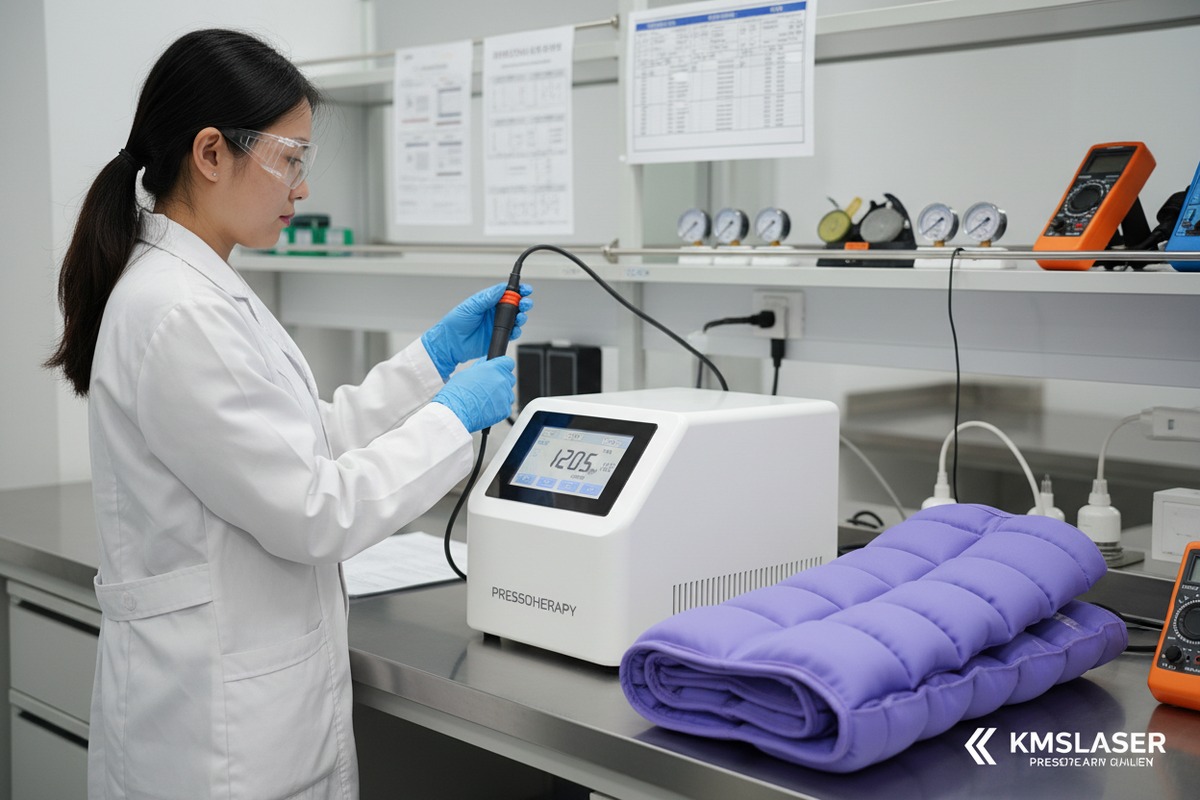
Do not rely solely on supplier data. Order samples and conduct your own tests:
- Pressure accuracy test: Use a calibrated pressure gauge to verify output
- Cycle durability test: Run the machine for 500+ cycles and check for degradation
- Material stress test: Stretch suit fabrics to test durability
- Safety feature test: Confirm automatic shutoffs work correctly
Technical Standards for Pressotherapy
Pressotherapy machines should meet specific technical parameters:
- Pressure range: typically 20-250 mmHg
- Pressure accuracy: within ±5% of set value
- Compression chambers: 4-24 depending on suit design
- Treatment modes: sequential, peristaltic, or combination
- Noise level: below 60 dB during operation
Document these requirements in your scorecard. Score suppliers based on how well their products meet each standard.
What criteria should I use to rank a supplier's OEM and private labeling capabilities for my brand?
Building your own brand requires more than just slapping a logo on a product. When our engineering team develops custom solutions for clients, we consider branding as part of the entire product experience. Your evaluation should do the same.
Rank OEM and private labeling capabilities by evaluating customization depth, branding options, minimum order quantities, design support services, intellectual property protection, and packaging customization. The best suppliers offer flexible MOQs, dedicated design teams, and comprehensive brand integration from control units to user manuals.
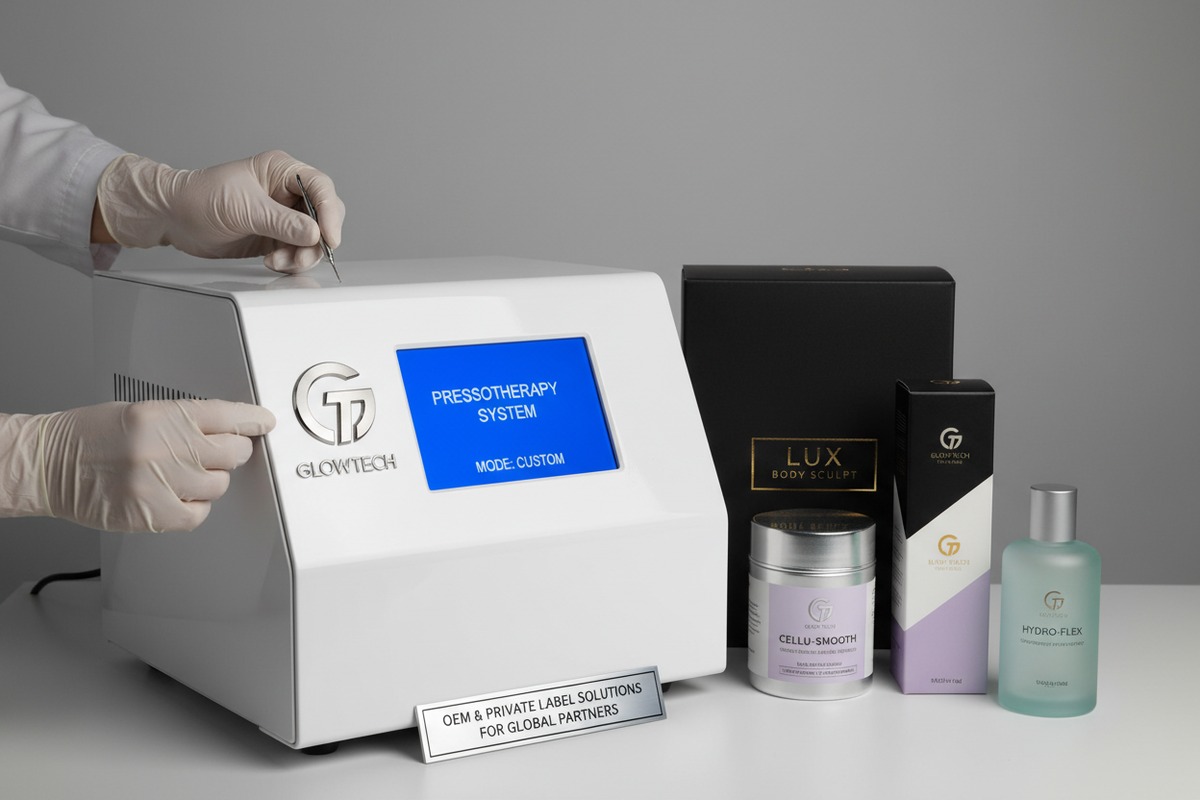
Levels of Customization
Not all OEM services are equal. Understand what each level means:
| Customization Level | What's Included | Typical MOQ |
|---|---|---|
| Basic Labeling | Logo on control unit, branded packaging | 10-50 units |
| Interface Customization | Custom UI colors, startup screen, menu language | 50-100 units |
| Cosmetic Design | Custom housing colors, panel layouts, control buttons | 100-200 units |
| Full ODM | Custom features, unique specifications, new mold development | 200+ units |
Questions to Ask About Branding
When evaluating suppliers, ask:
- Can you print my logo on the control unit, suits, and accessories?
- What file formats do you accept for logos and artwork?
- Can you customize the software interface with my brand colors?
- Do you offer custom packaging design services?
- What is the lead time for branded versus standard orders?
Design Support Services
Strong OEM partners offer more than manufacturing. They provide design expertise. Look for suppliers who:
- Have in-house industrial designers
- Offer 3D renderings before production
- Provide engineering consultation for custom features
- Help optimize designs for manufacturability
- Suggest improvements based on market trends
Intellectual Property Protection
Protecting your brand is critical. Intellectual Property Protection 6 Evaluate:
- Does the supplier sign NDA and IP protection agreements?
- Do they have a track record of respecting client designs?
- Can they provide references from other OEM clients?
- What legal recourse exists if they copy your designs?
Packaging and Presentation
Your product experience starts with unboxing. Evaluate packaging capabilities:
- Custom box printing with your brand identity
- Professional product photography for marketing
- Multi-language user manuals under your brand
- Warranty cards and registration materials
- Accessory organization and presentation
MOQ Flexibility
New brands often struggle with high minimum orders. A good supplier offers tiered pricing that allows smaller initial orders. This reduces your risk while you test the market. Ask about sample order pricing and scaling discounts.
How do I measure a supplier's reliability regarding lead times and door-to-door logistics in my evaluation?
Delayed shipments kill sales. One late order can mean empty shelves during your busiest season. Our logistics team works with freight partners worldwide, and we have seen how small delays cascade into major problems. Your scorecard must capture logistics reliability accurately.
Measure supplier reliability by tracking on-time delivery percentage, average lead times, order accuracy rates, shipping damage frequency, and communication responsiveness. Request historical performance data, verify logistics partnerships, and assess their capacity to handle demand fluctuations and emergency orders.

Key Logistics Metrics
Build these metrics into your scorecard:
| Metric | Target | How to Measure |
|---|---|---|
| On-Time Delivery Rate | >95% | Orders delivered by promised date |
| Lead Time Consistency | ±3 days | Variance from quoted lead time |
| Order Accuracy | >99% | Correct products, quantities, configurations |
| Shipping Damage Rate | <1% | Units damaged during transit |
| Documentation Accuracy | 100% | Correct customs paperwork, certificates |
Understanding Lead Time Components
Lead time includes multiple stages:
- Production time: Manufacturing the units
- Quality inspection: Final checks before shipment
- Export preparation: Packing, documentation, customs clearance
- Transit time: Sea, air, or land transport
- Import clearance: Destination country customs
- Last-mile delivery: Final transport to your warehouse
Ask suppliers to break down lead times by stage. This helps identify where delays typically occur.
Evaluating Logistics Partnerships
A supplier's shipping performance depends on their logistics partners. Ask:
- Which freight forwarders do you work with?
- Do you have negotiated rates with major carriers?
- Can you handle DDP (Delivered Duty Paid) shipments 7?
- What tracking systems do you use?
- How do you handle customs documentation?
Communication During Shipping
Problems happen. What matters is how quickly you learn about them. Evaluate:
- Does the supplier provide proactive shipping updates?
- How quickly do they respond to shipping inquiries?
- Do they offer real-time tracking links?
- Who is your point of contact for logistics issues?
Handling Demand Fluctuations
Your business may have seasonal peaks. Ask suppliers:
- What is your maximum monthly capacity?
- How much advance notice do you need for large orders?
- Can you hold safety stock for us?
- What are your policies for rush orders?
- Do you offer split shipments?
Risk Mitigation
Logistics risks include port delays, carrier issues, and documentation errors. Good suppliers:
- Use multiple shipping routes and carriers
- Maintain relationships with backup freight partners
- Purchase cargo insurance
- Double-check all export documentation
- Provide contingency plans for common problems
Evaluating Past Performance
Request historical data. Ask for:
- Delivery performance reports from the past 12 months
- Examples of how they handled shipping problems
- References from clients in your region
- Copies of successful customs clearance documentation
Conclusion
A well-designed supplier scorecard protects your business and builds stronger partnerships. Define your metrics, weight them appropriately, verify quality processes, evaluate OEM capabilities, and track logistics reliability. Use data to make decisions, not gut feelings.
Footnotes
1. Explains what pressotherapy is and its medical applications. ↩︎
2. Provides a comprehensive overview of the ISO 13485 standard for medical devices. ↩︎
3. Replaced with an official European Medicines Agency (EMA) page detailing medical device regulations and CE marking. ↩︎
4. Replaced with an official FDA page providing an overview of 510(k) clearances. ↩︎
5. Replaced with an authoritative BSI (British Standards Institution) page on ISO 9001 Quality Management Systems. ↩︎
6. Defines intellectual property and explains its importance and types of protection. ↩︎
7. Explains the DDP Incoterm, seller responsibilities, and risk transfer in shipping. ↩︎
8. Defines supply chain disruptions, their causes, and impacts on business operations. ↩︎


 English
 Español de México
 Deutsch
 Français
 العربية
 Русский
Join the Conversation
Have a question or insight to share? We read every comment — whether you're a distributor, salon owner, or just curious about the technology. Your real-world experience helps others make better decisions. Drop your thoughts below.